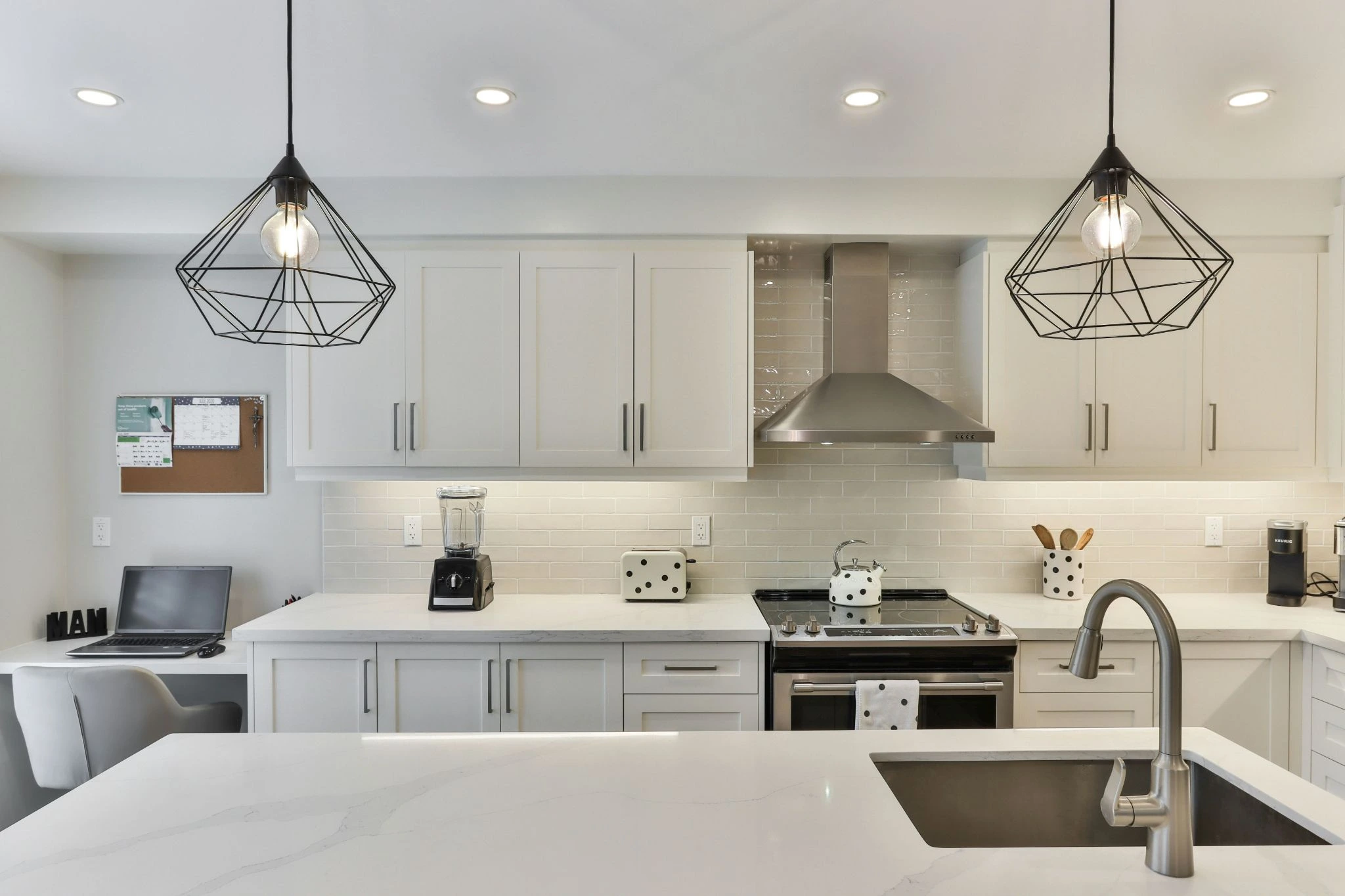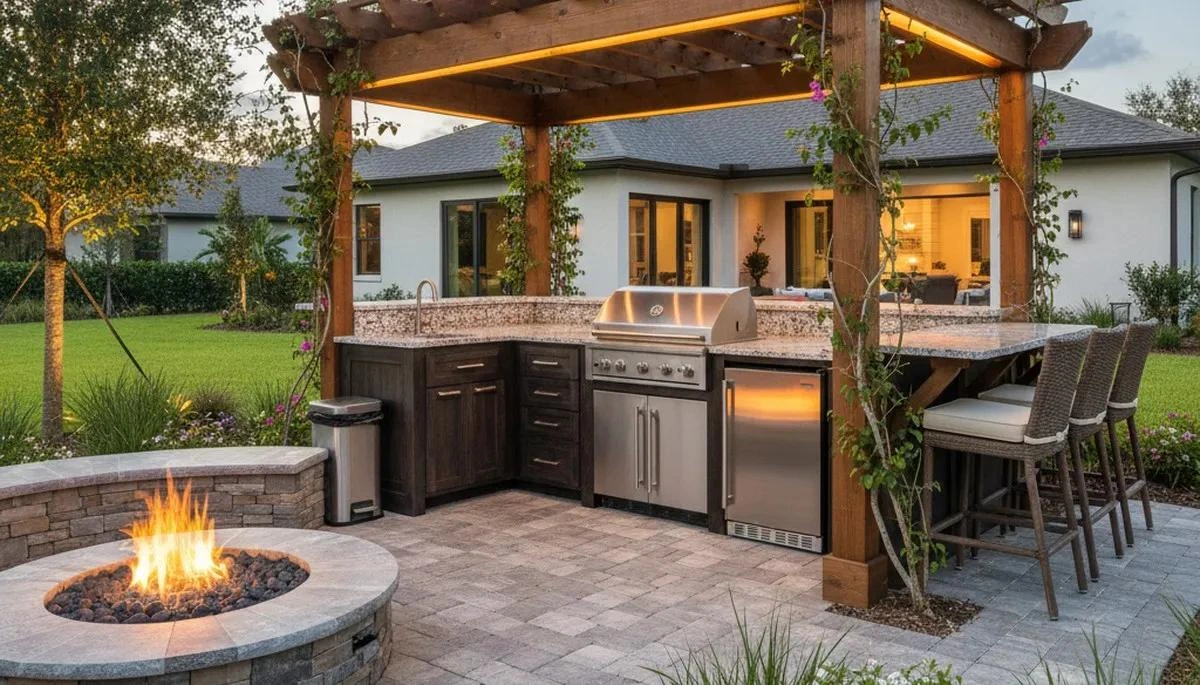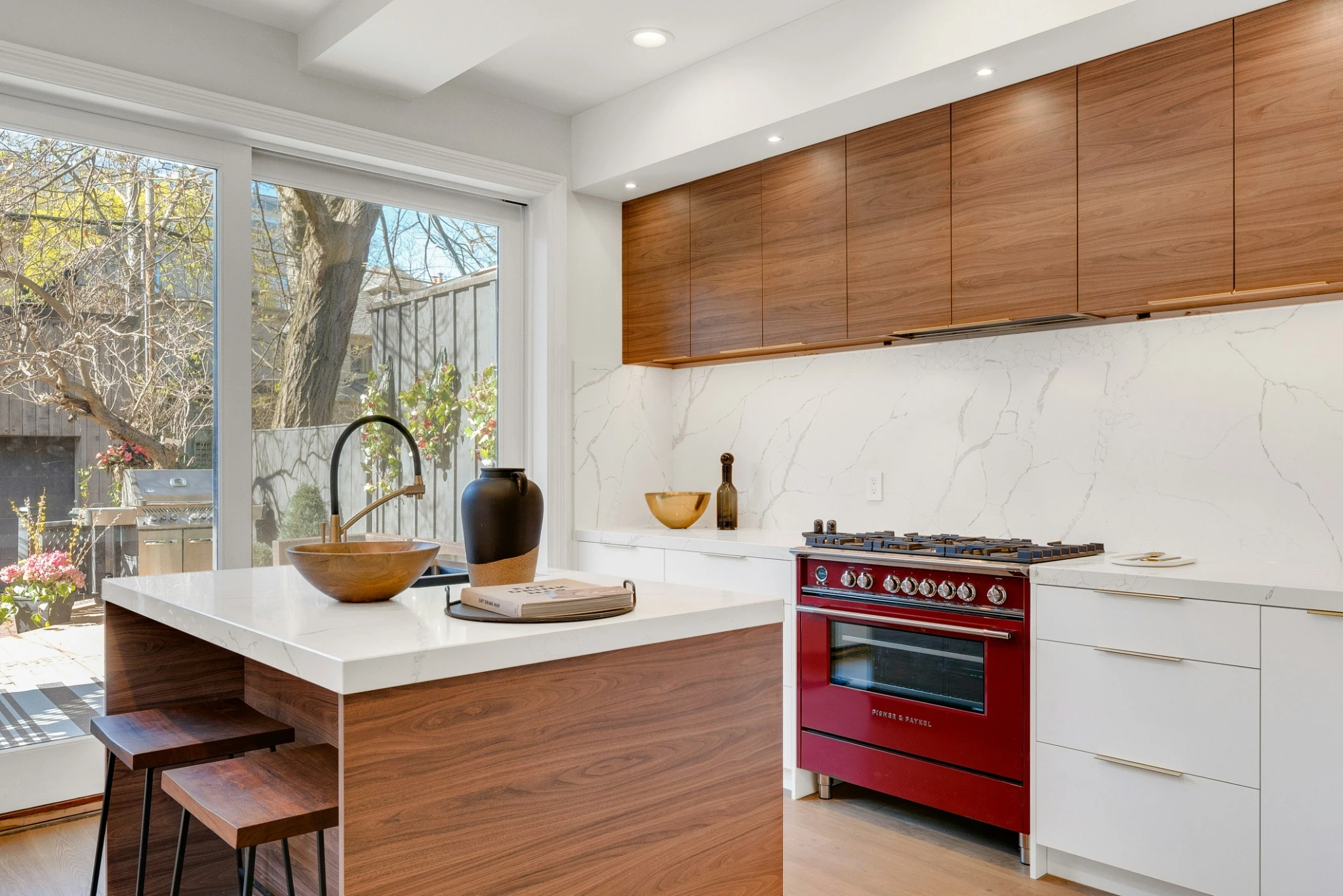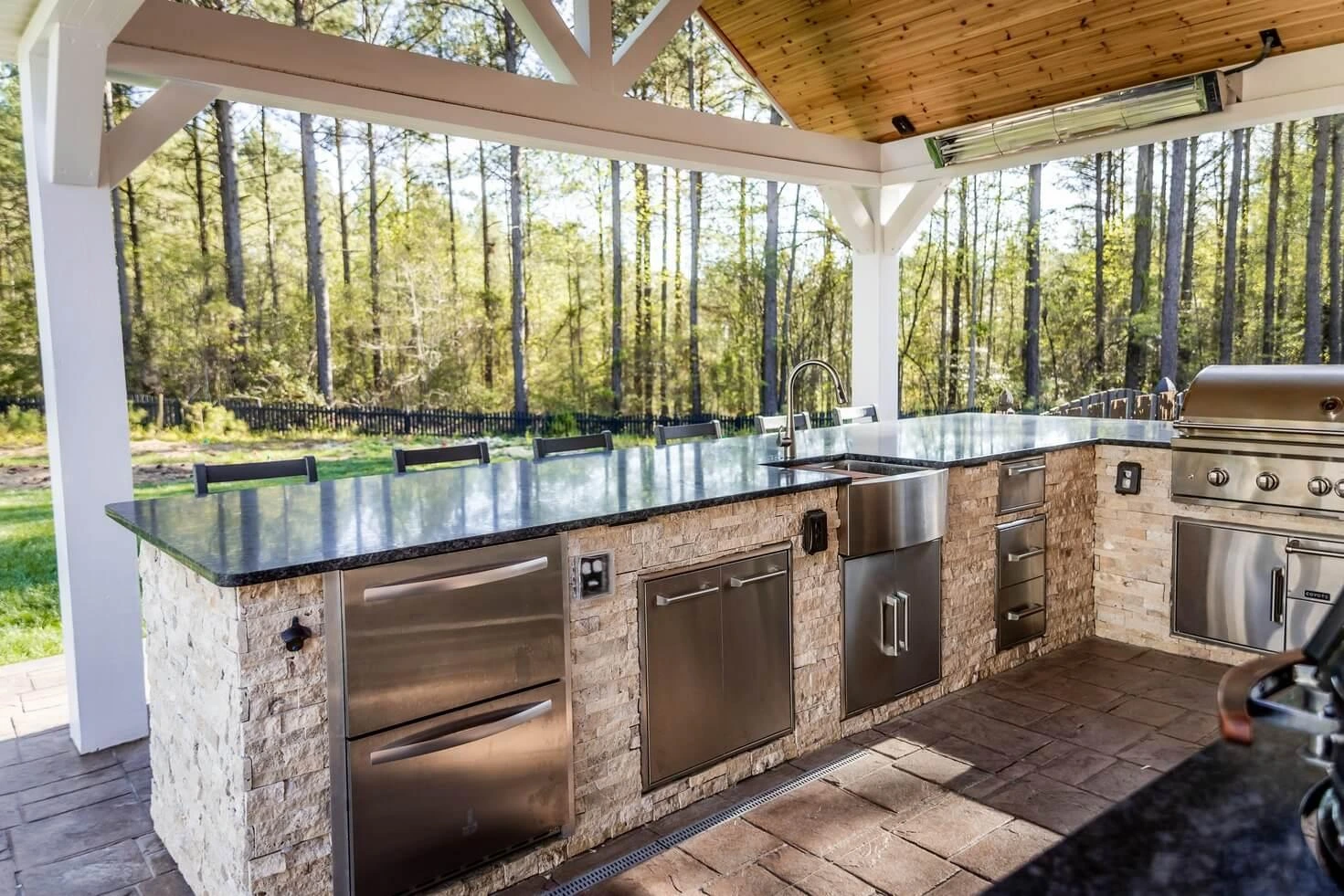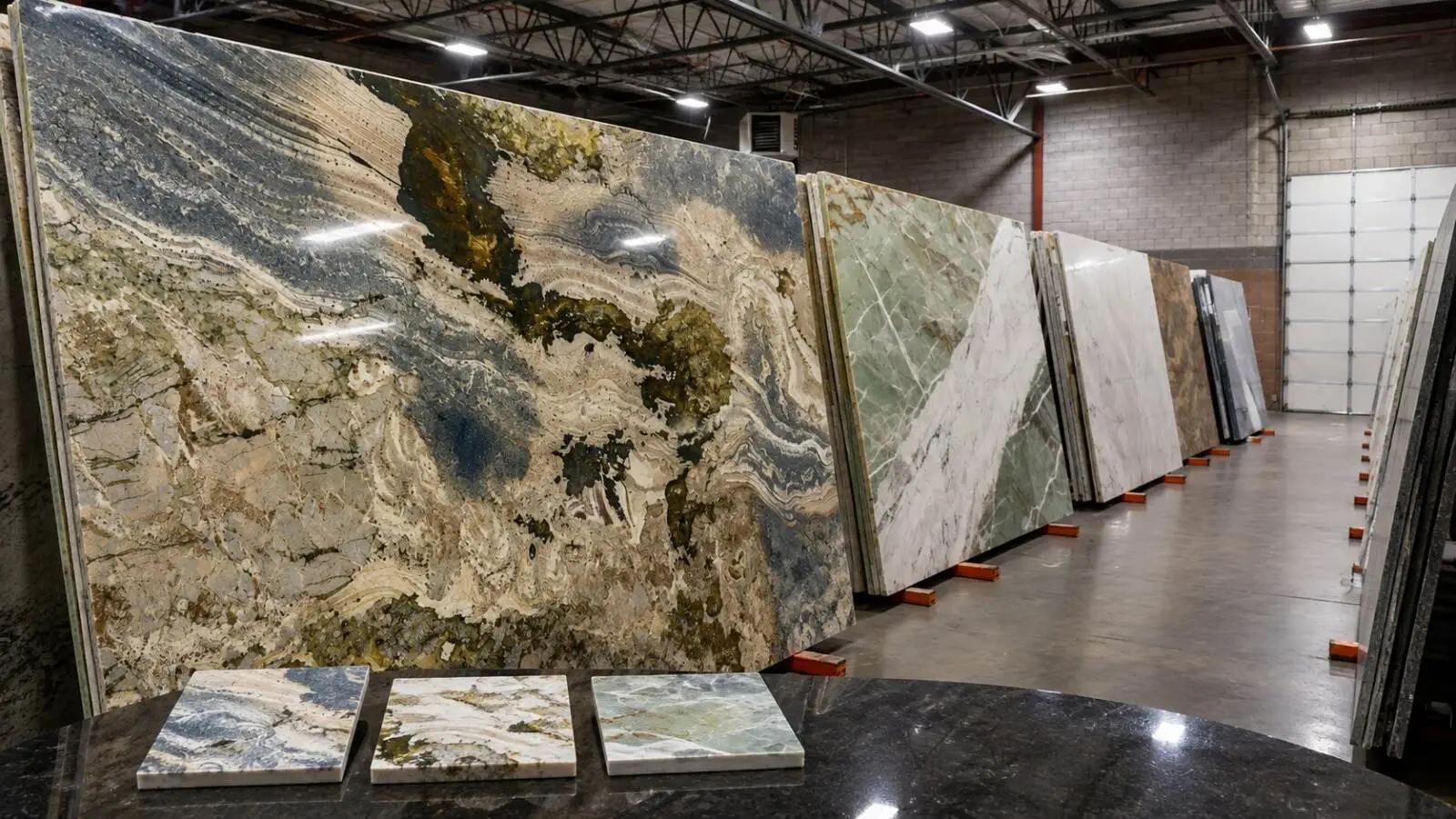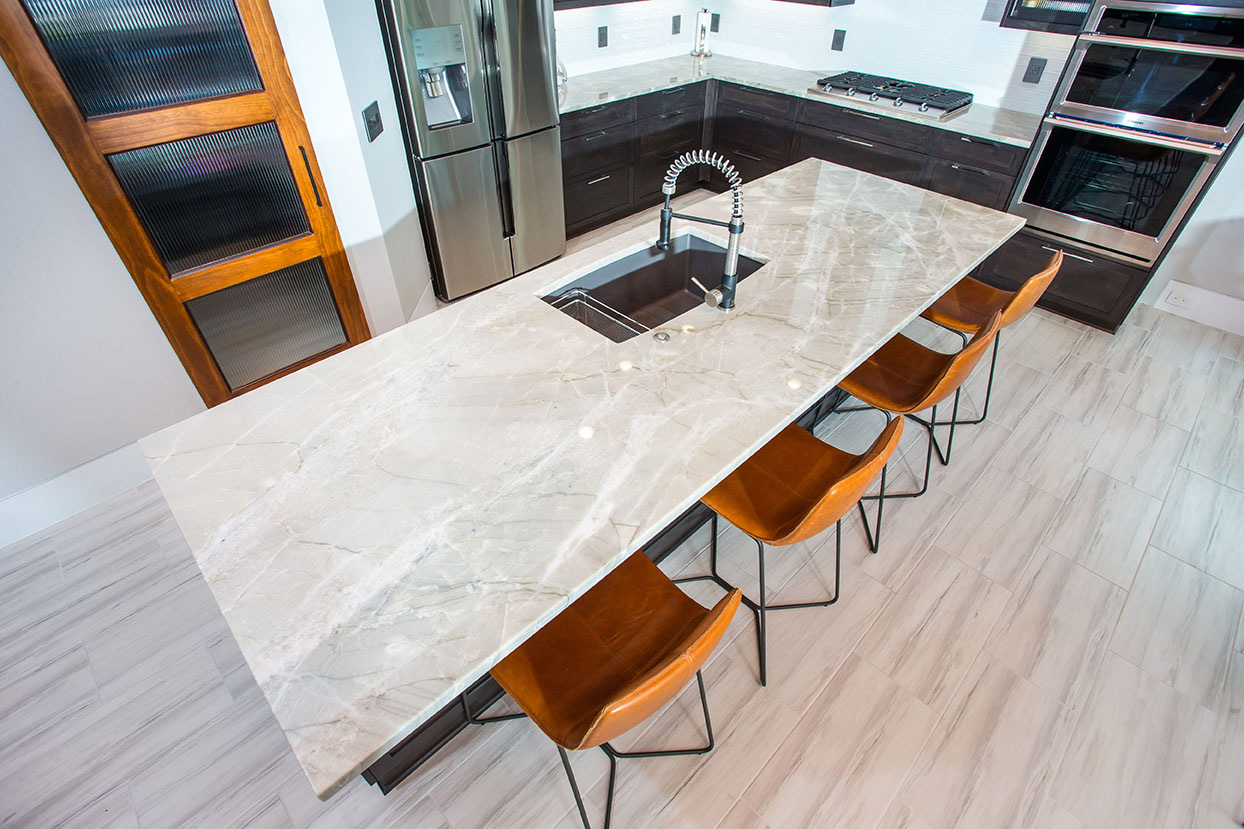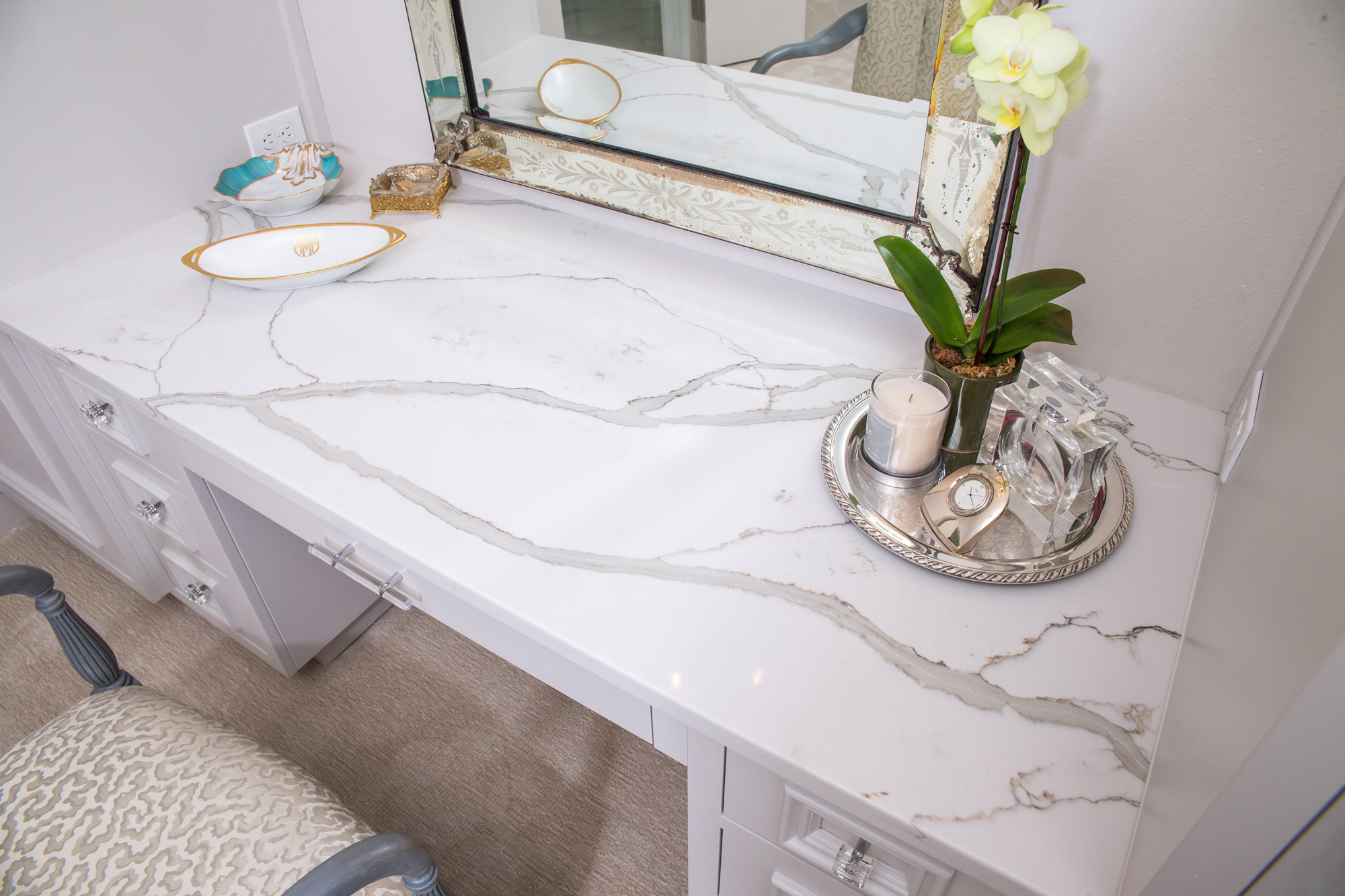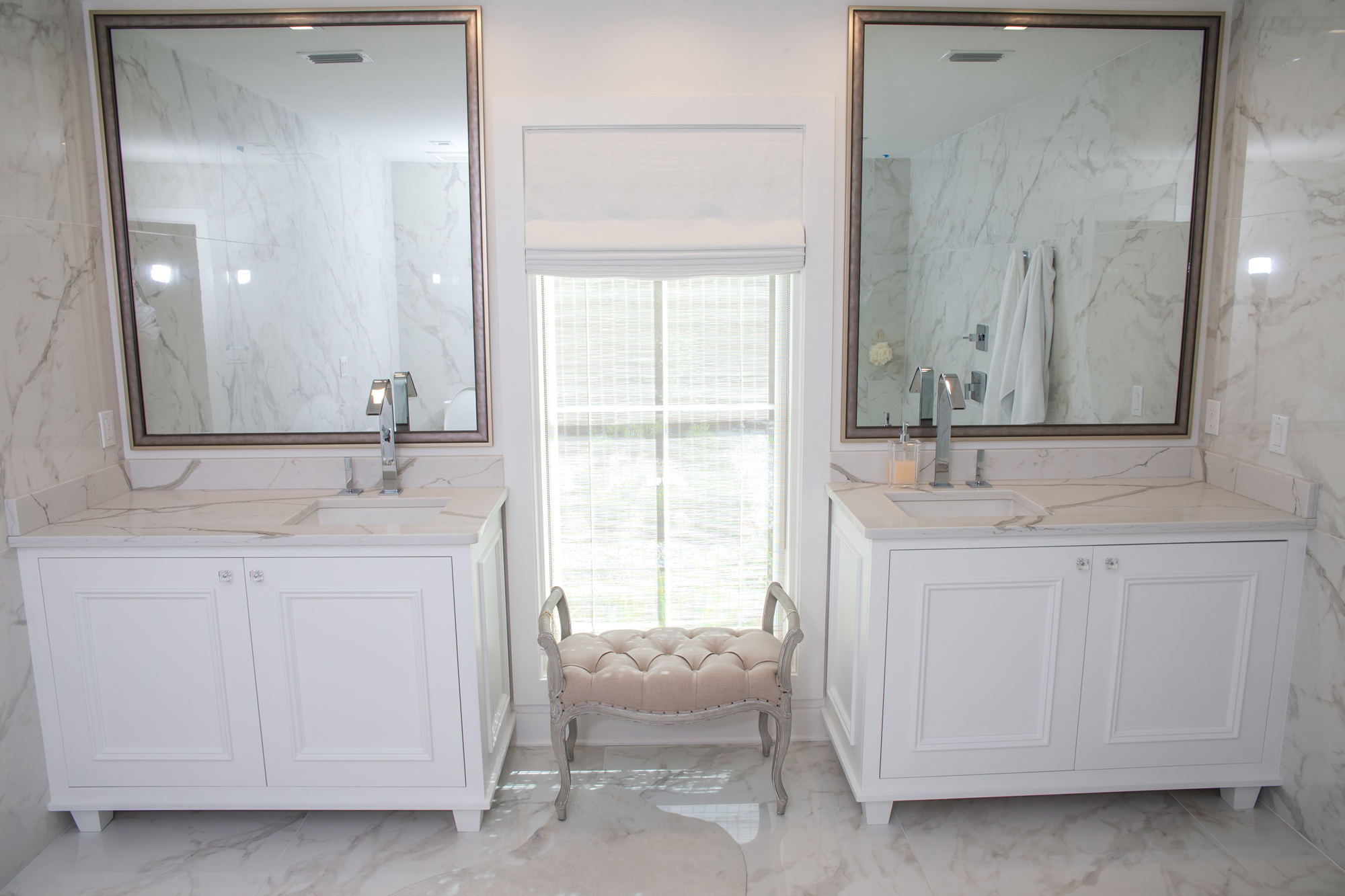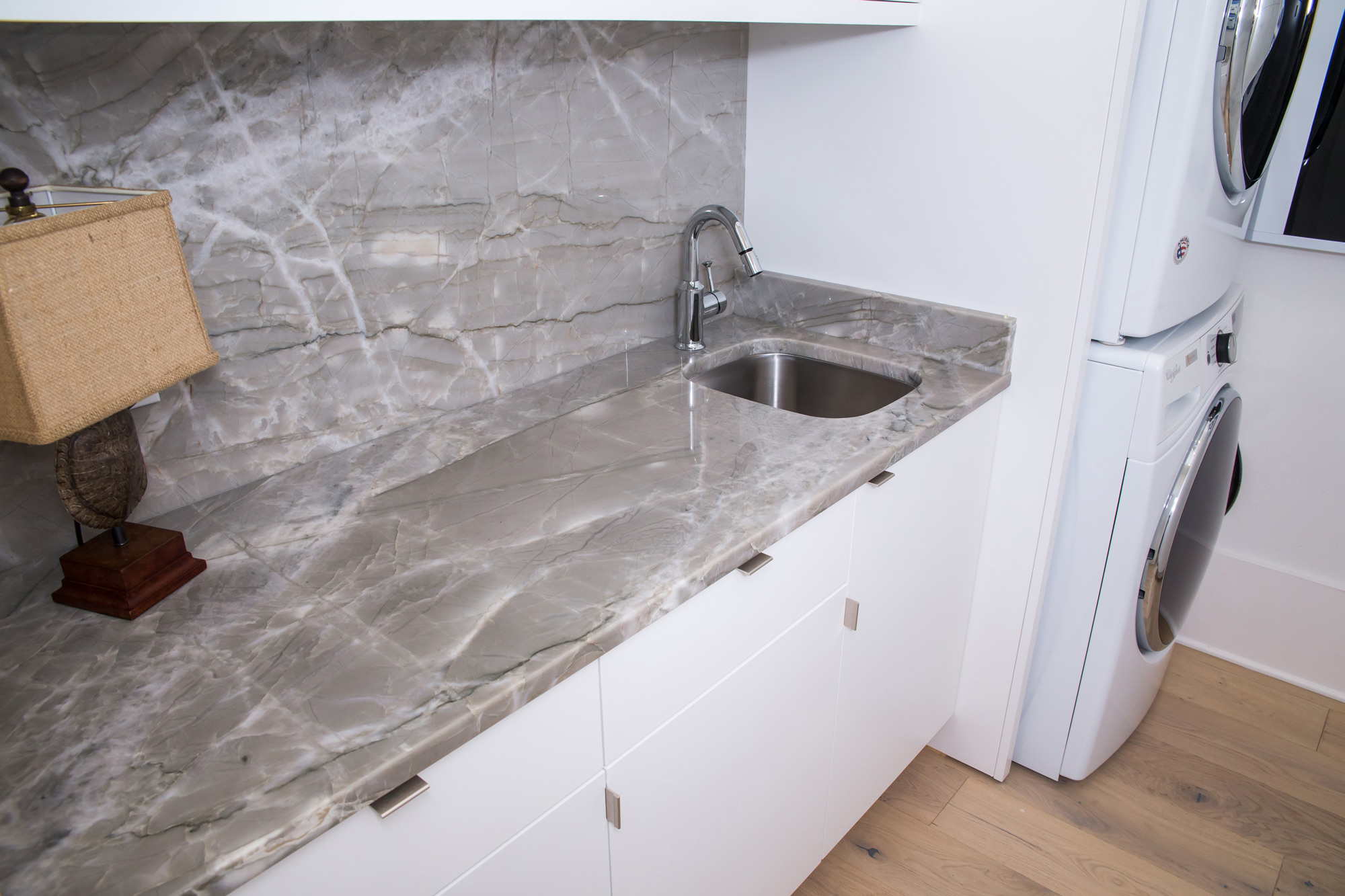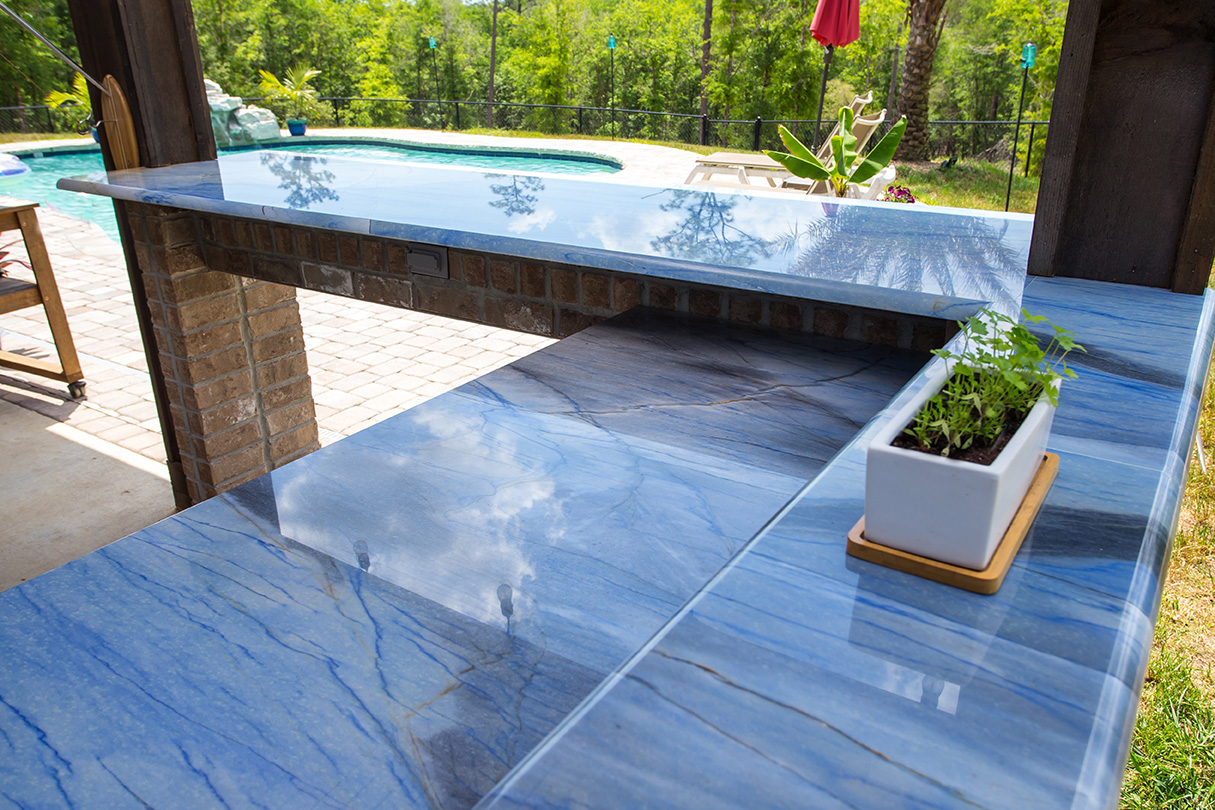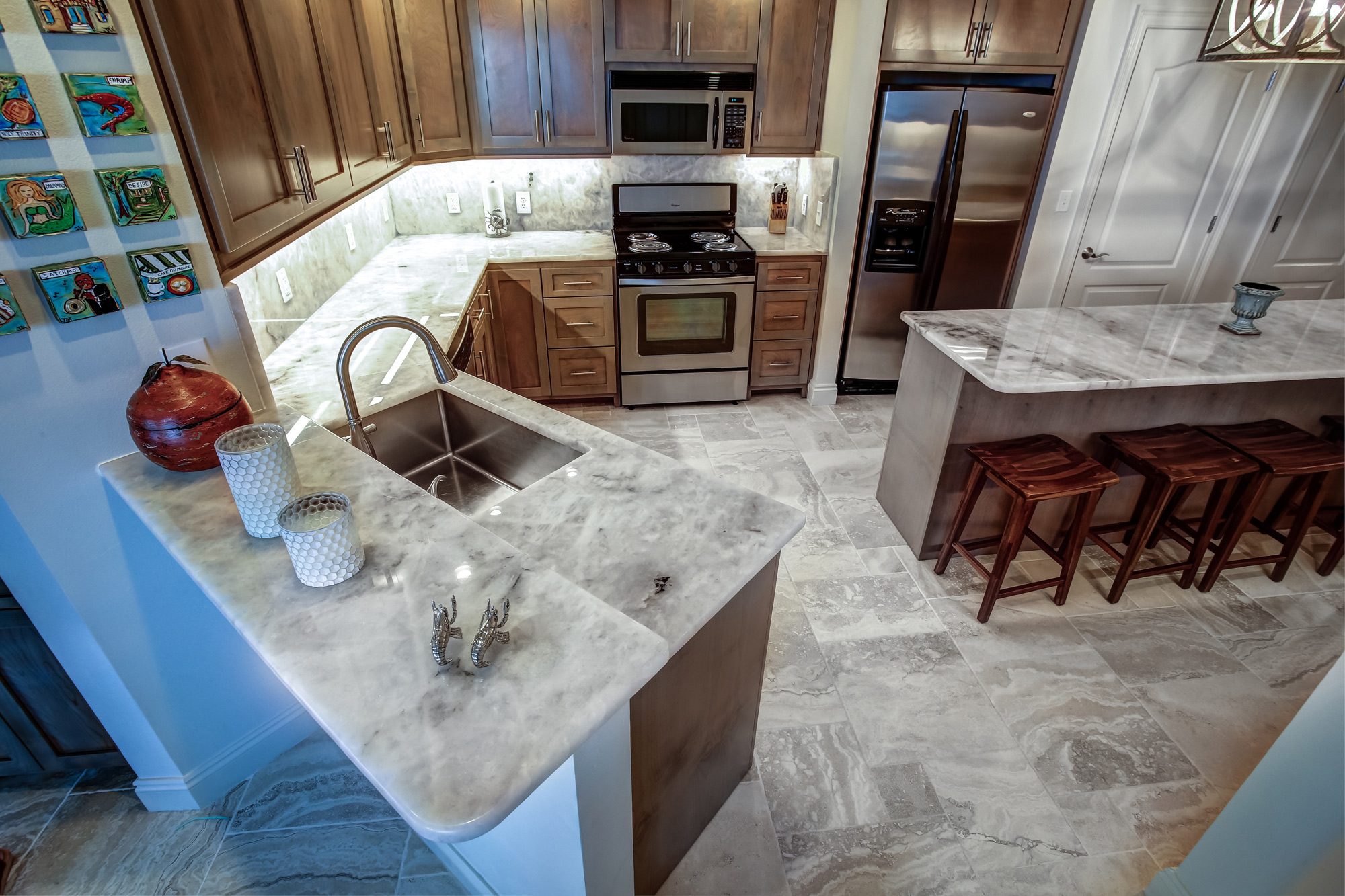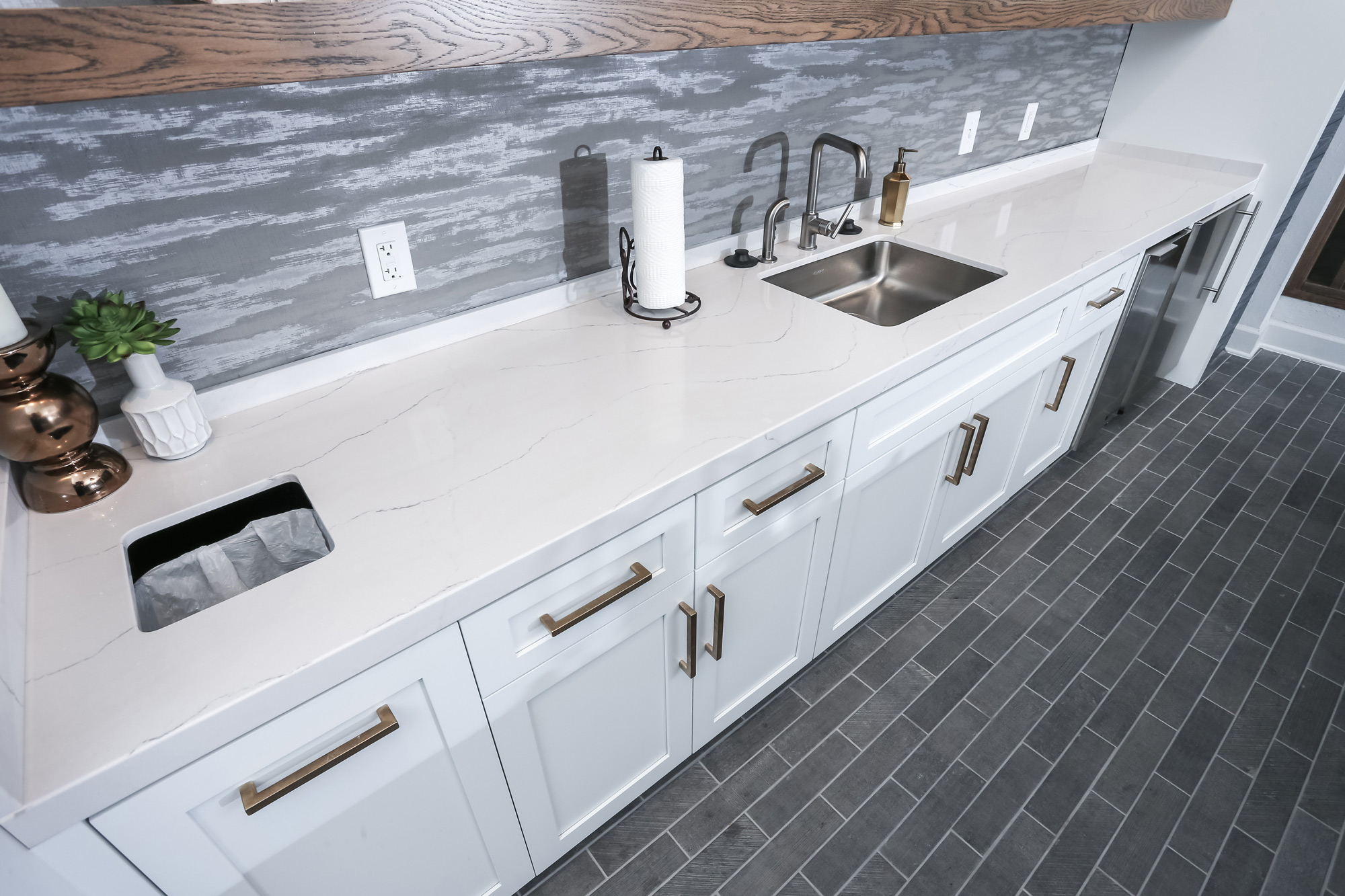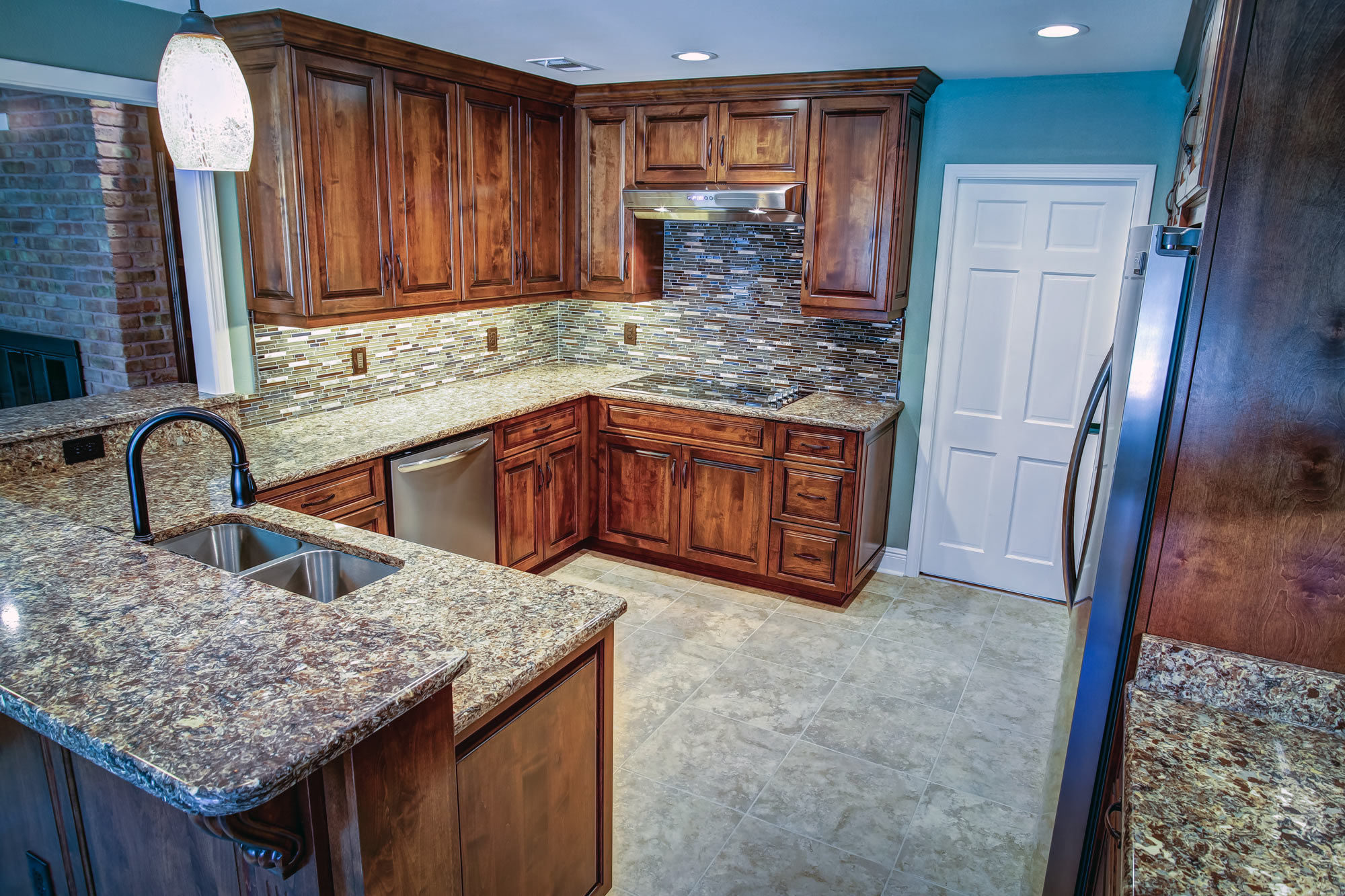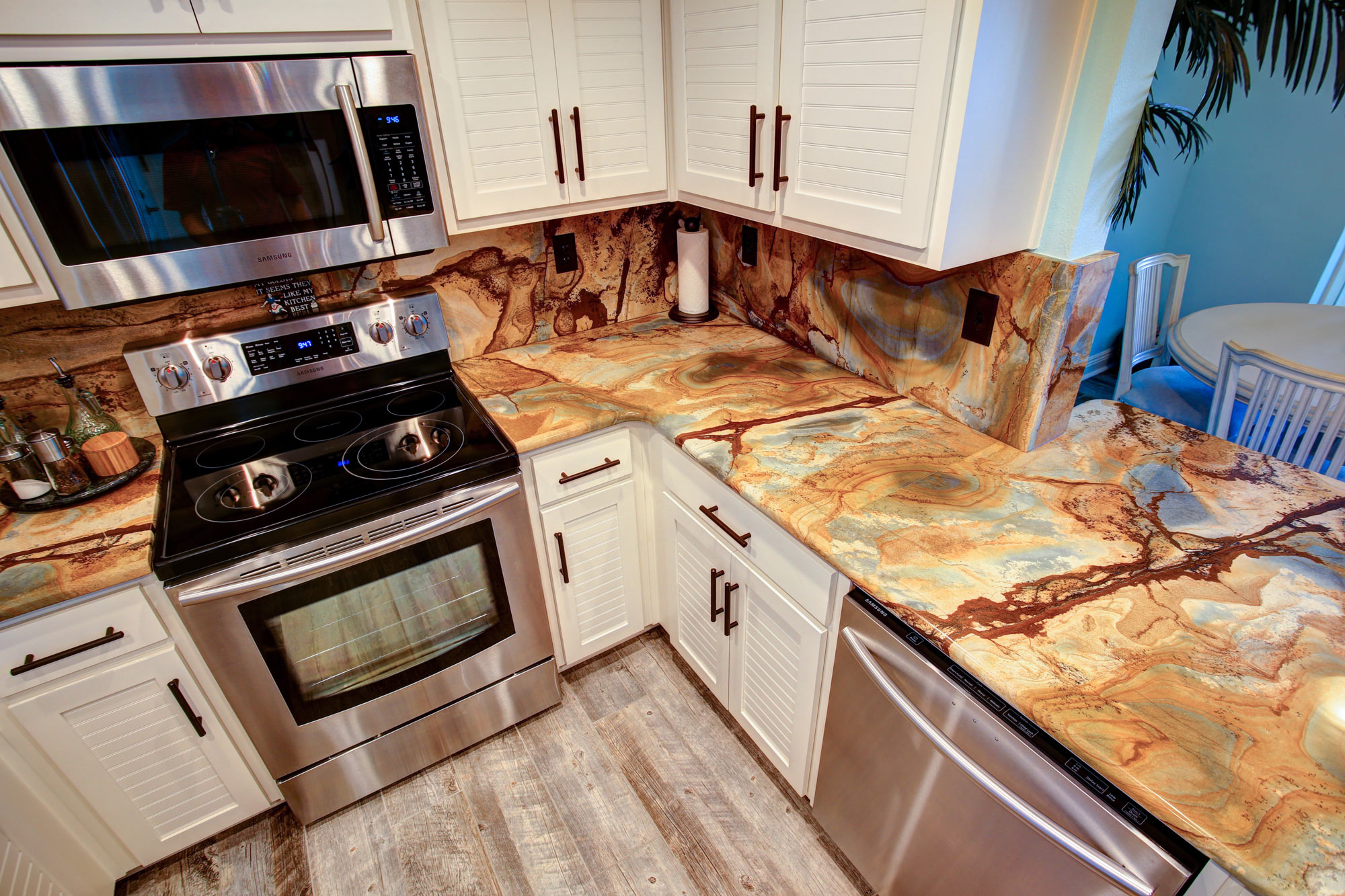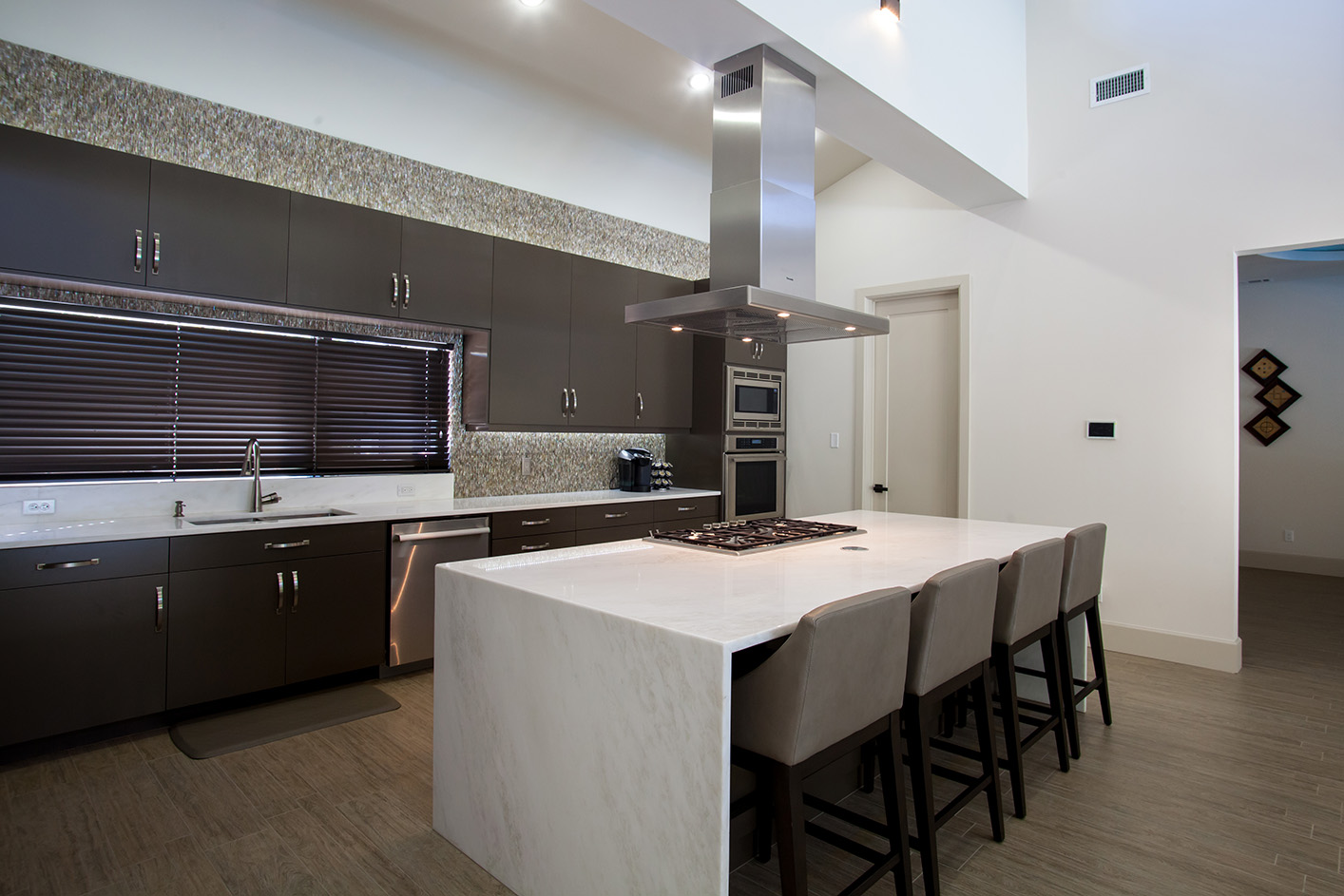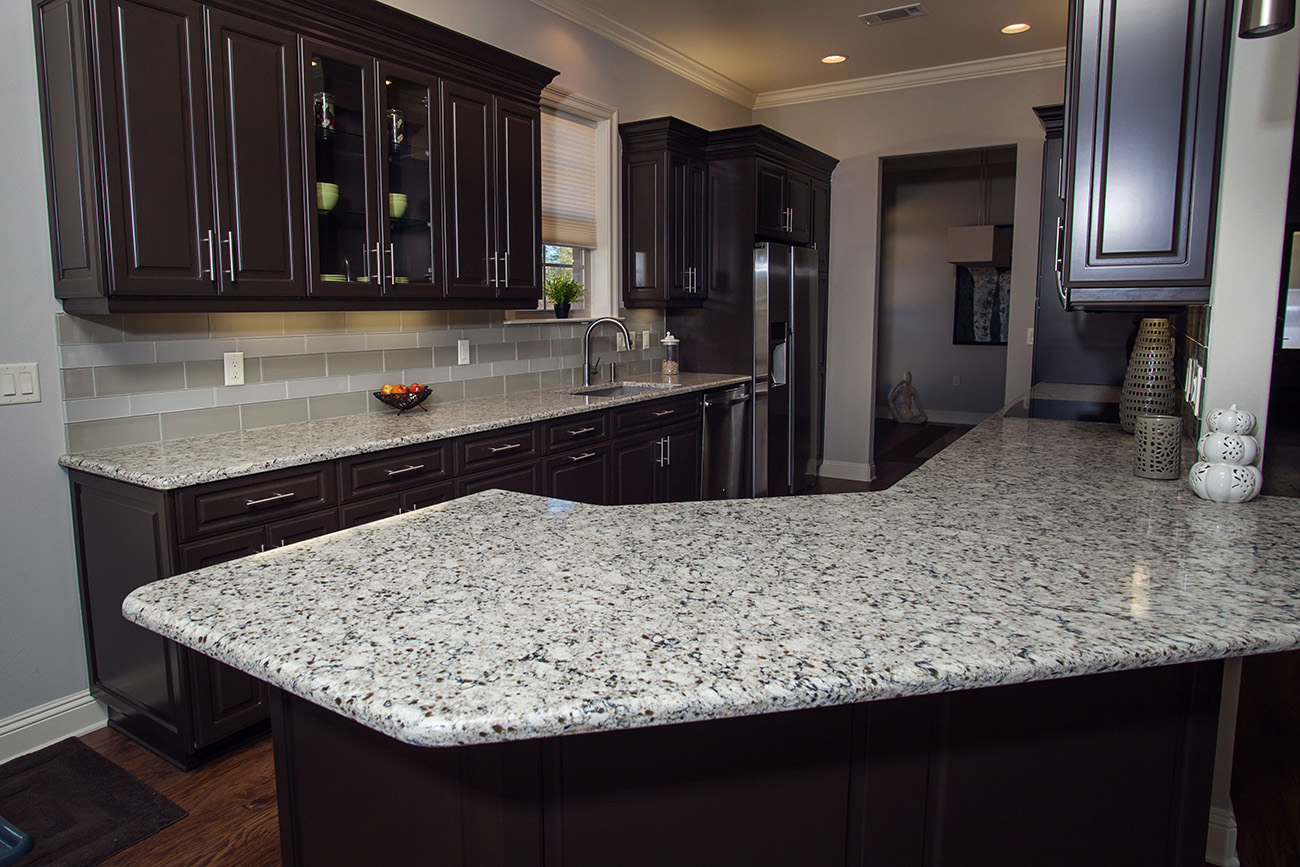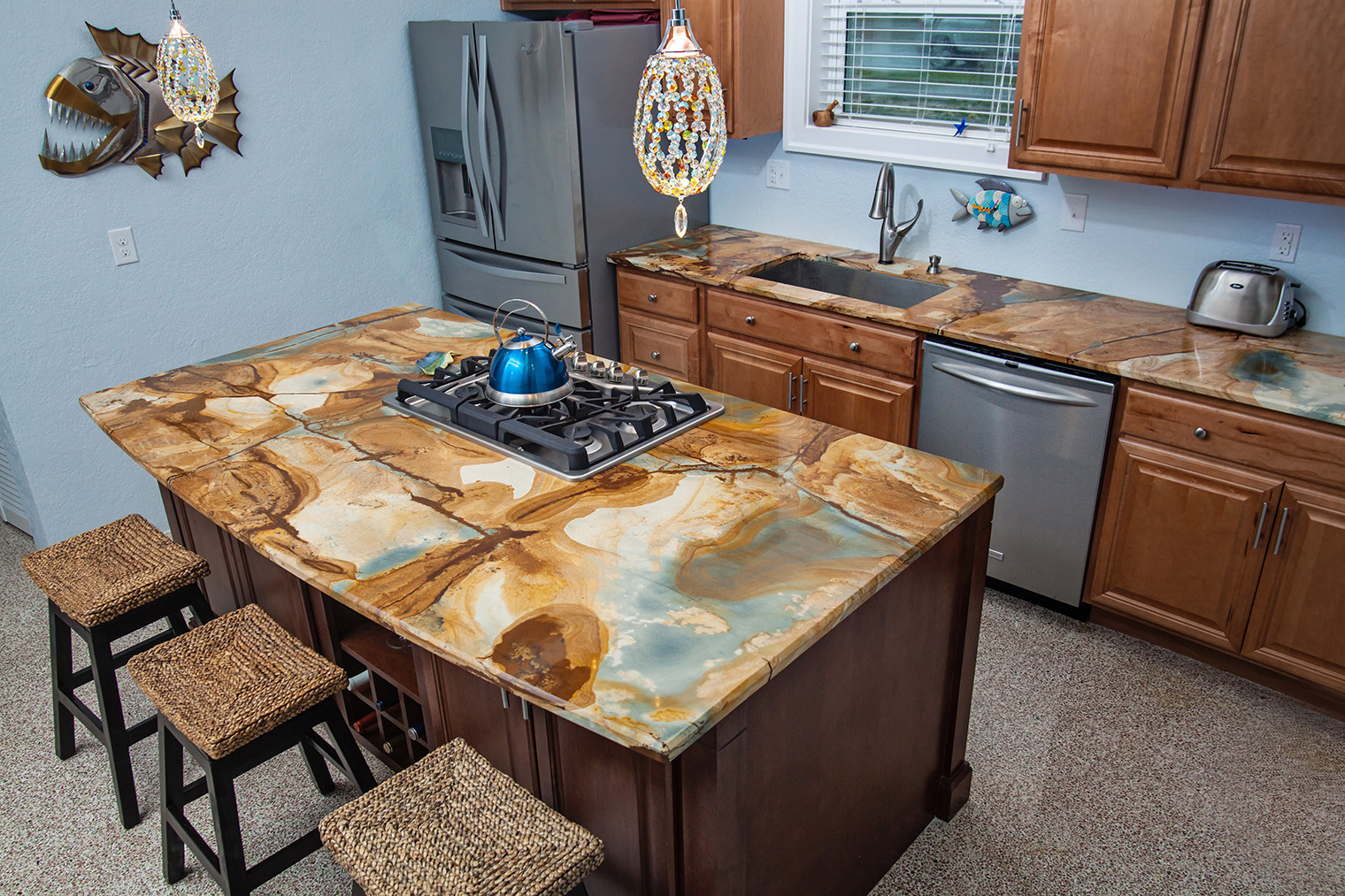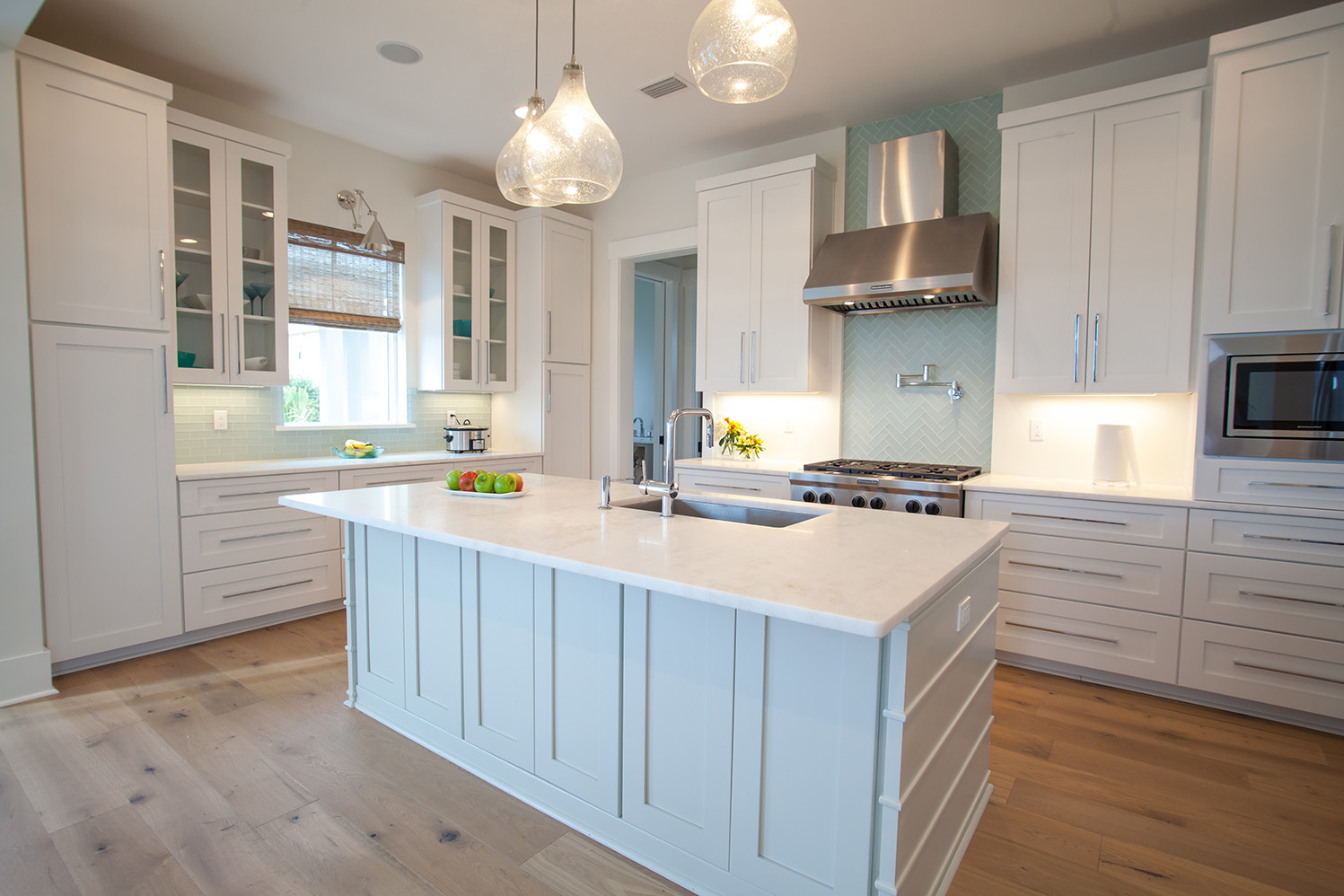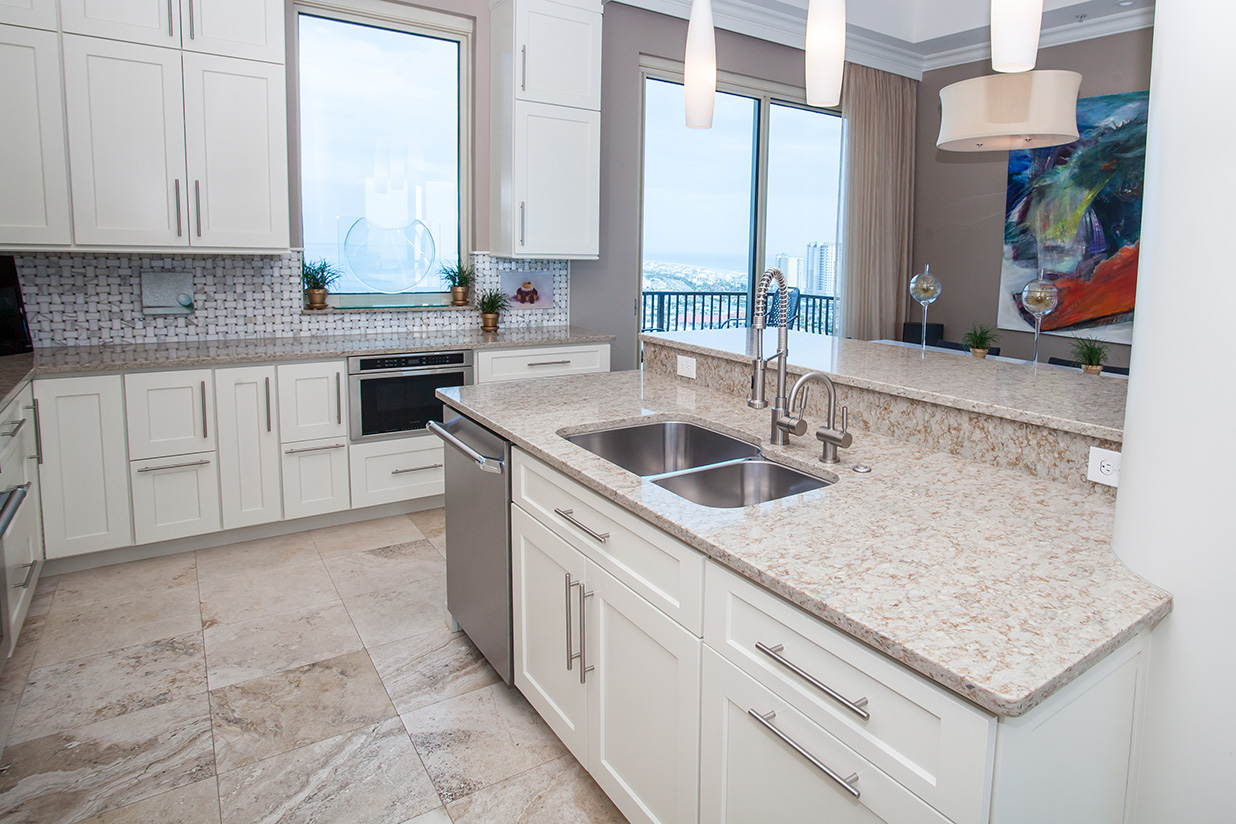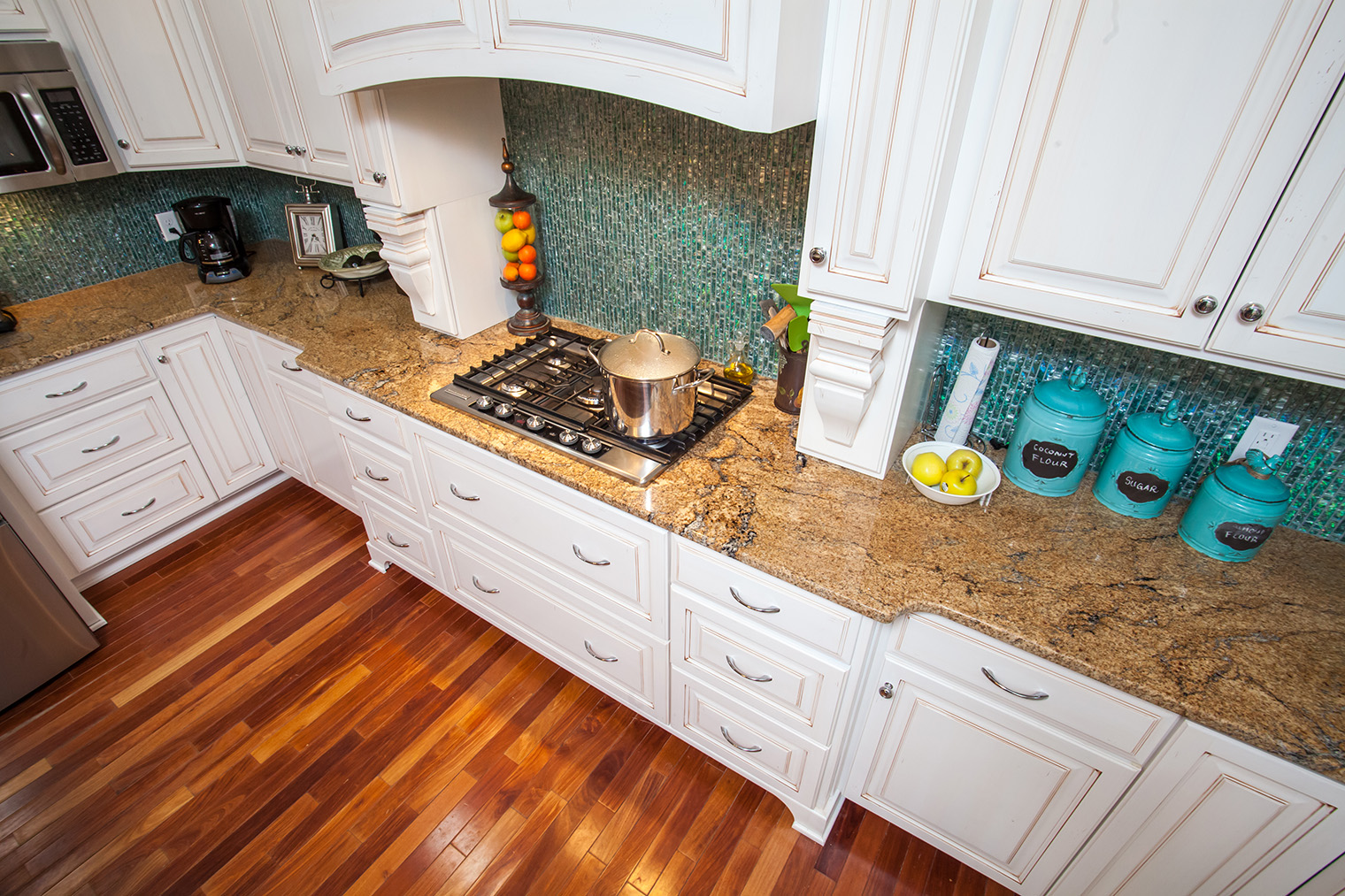
Waterfall countertops are a stunning kitchen feature where the countertop material extends vertically down the sides of an island or cabinet, creating a seamless and modern look. This design not only adds a luxurious touch to your kitchen but also protects cabinet sides from everyday wear, spills, and bumps. With the flowing stone, your island becomes a natural focal point, perfect for Florida homes with open floor plans.
The cost of a waterfall countertop typically ranges depend on per square foot, depending on the material you choose. On top of that, fabrication for the vertical edge usually adds to your project. Popular materials include durable quartz, elegant marble, granite, and unique natural stone, each offering a different balance of beauty, maintenance, and durability. Whether you want a bold centerpiece or a subtle luxury upgrade, waterfall countertops are an investment that combines style with lasting value.
How a Waterfall Edge Actually Works?
The magic of a waterfall countertop lies in its seamless vertical edge. This edge is usually created with a 45-degree mitered joint, where the horizontal top surface meets the vertical drop. Two pieces of stone are cut at precise angles to make them look like one single piece. Even a tiny gap, like 1/8 of an inch, can ruin the effect, making the waterfall look like two separate stones instead of a smooth flow.
Modern fabrication uses CNC technology for precise cuts. For stones with bold veining, the pattern has to flow perfectly from the top down the side. Some fabricators even use digital layout technology to plan the exact look before making any cuts. This level of precision is what makes waterfall countertops stand out in modern kitchen design. Without it, the luxurious and sleek look simply won’t work.
Why Choose a Waterfall Countertop?

There are many reasons to choose a waterfall countertop:
- Visual Appeal: The continuous flow of stone creates a stunning focal point in your kitchen. Bold veining in granite or marble makes the countertop a showstopper.
- Functional Protection: The vertical edge protects your cabinets from spills, kicks, and everyday wear.
- Room Divider: In open floor plans, a waterfall island can act as a subtle divider while maintaining visual flow.
- Home Value: In the real estate market, a professionally installed waterfall countertop signals quality and can increase your property’s value.
Waterfall countertop a perfect combination of style and function, making them a smart investment for any kitchen remodel.
Is a Waterfall Right for Your Kitchen?
These Vertical-Side Countertops are not ideal for every kitchen. Here’s a quick guide:
Works Well In:
- Modern and contemporary kitchens with clean lines
- Transitional designs mixing traditional and modern styles
- Open floor plans need a visual anchor
- Islands 3×5 ft or larger
Not Ideal For:
- Small kitchens where the proportions feel off
- Traditional or colonial kitchens with ornate moldings
- Spaces where sharp modern lines clash with existing design
Quick Style Test: Look at your cabinet doors. Flat panels with sleek hardware? Your kitchen is ready for a waterfall. Raised panels with decorative molding? You might need a simpler countertop style.
Materials for Waterfall Countertops
Choosing the right material affects the look, durability, and cost of your waterfall countertop. Here’s a breakdown:
| Material | Maintenance | Durability | Best For |
|---|---|---|---|
| Quartz | Low | High | Modern kitchens |
| Granite | 6-month seal | Very high | Unique designs |
| Marble | High | Medium | Elegant kitchens |
| Quartzite | 6-month seal | Very high | High-end look |
| Porcelain | Low | Very high | Ultra-thin modern style |
Quartz
Engineered from 90–93% natural quartz crystals combined with resins and pigments. Quartz is non-porous, low-maintenance, and highly stain-resistant, making it ideal for kitchens and bathrooms. It does not require sealing and offers consistent color and pattern options.
Granite
A natural igneous stone composed primarily of quartz and feldspar. Granite is known for its strength, heat resistance, and unique natural patterns. It is ideal for busy kitchens but requires annual sealing to prevent staining.
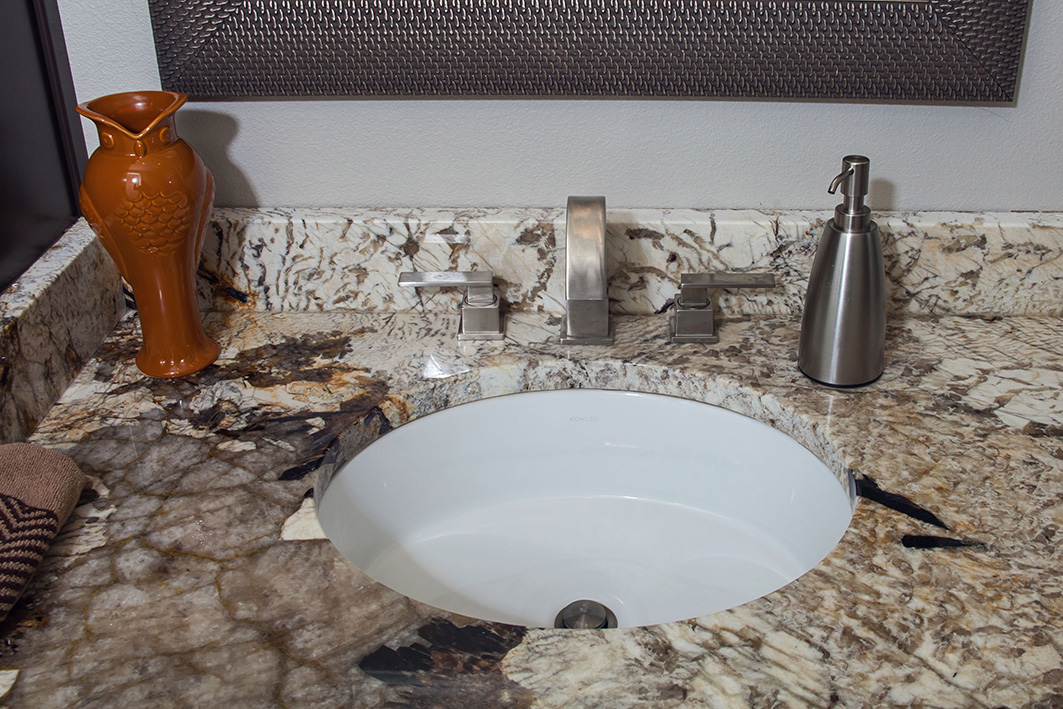
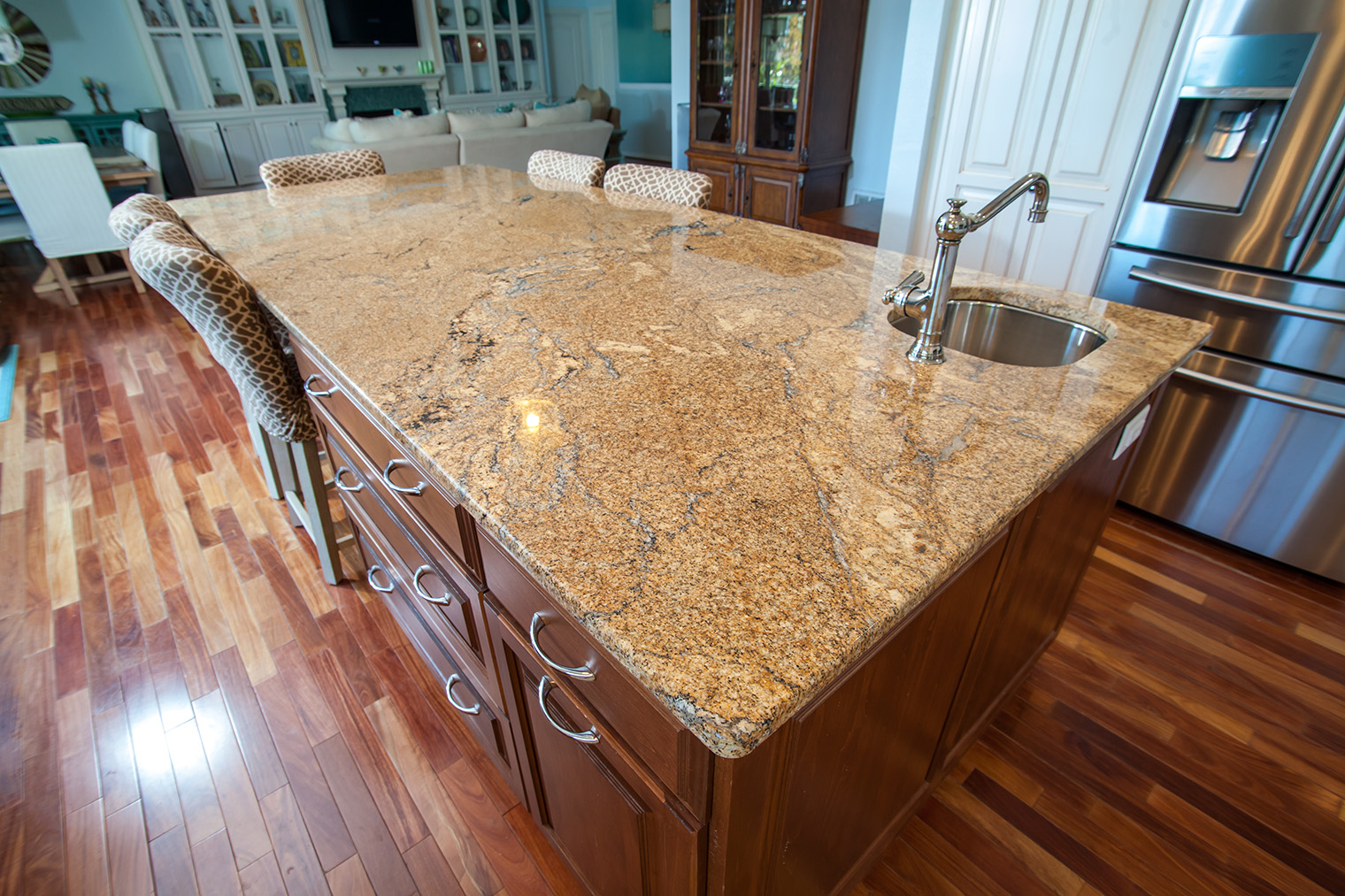
Waterfall Granite Countertops: Style, Uses & Benefits
Marble
A luxurious natural stone valued for its elegant veining and timeless beauty. Marble is softer and more porous than granite, requiring regular maintenance and sealing. It is best suited for bathrooms and low-traffic areas.
Quartzite
A natural metamorphic stone formed under extreme heat and pressure. Quartzite is extremely hard, heat-resistant, and more durable than granite, often resembling marble in appearance. It requires periodic sealing and is suitable for high-traffic areas.
Porcelain
Manufactured from clay and minerals fired at extremely high temperatures. Porcelain is non-porous, highly durable, UV-resistant, and extremely low-maintenance, making it suitable for both indoor and outdoor applications.
How Much Do Waterfall Countertops Cost in Florida?
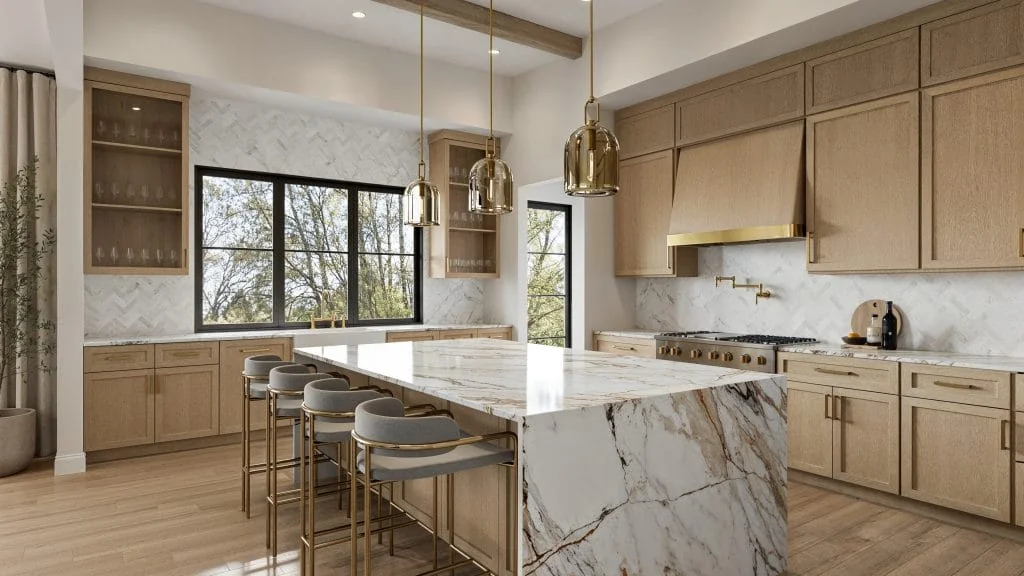
Waterfall countertops generally cost more than traditional countertops because they require extra material for the vertical edges and precise, expert installation to achieve the seamless look. For a single waterfall side, you can expect to pay on top of your standard countertop project. If you’re planning a double waterfall island, the cost typically rises or more. Call our sales office for pricing estimates.
For a standard 3×5-foot kitchen island with one waterfall side, the total project cost ranges depending on the square foot. Keep in mind that these costs can vary depending on the stone type, pattern matching, custom dimensions, and any additional labor needed to level the floor or handle heavy slabs.
Additional costs:
- Floor leveling in older homes
- Custom dimensions or book-matched patterns
Tip: Always get a detailed quote from your installer to avoid surprises.
Why Expert Installation Makes All the Difference?
Waterfall countertops are not a DIY project; professional installation is essential for a flawless, long-lasting result. Here’s why:
- CNC Cutting: Precise, computer-controlled cuts create seamless mitered joints, making the countertop look like one continuous piece.
- Pattern Matching: Stones with bold veining must align perfectly from the top surface to the vertical side to maintain a smooth, flowing look.
- Heavy Slabs: Some waterfall slabs can weigh 600 pounds or more, requiring experience and special equipment to move and install safely.
- Floor Leveling: Older homes often have uneven floors; professionals ensure the waterfall edge sits perfectly without gaps or misalignment.
- Longevity & Quality: Expert installers guarantee your countertop looks perfect, functions properly, and lasts for decades, giving you peace of mind and a stunning kitchen centerpiece.
Using a professional installer, like Superior Granite, ensures your countertop looks perfect and lasts for decades.
Waterfall Countertops: Benefits and Drawbacks
These vertical-side countertops offer a stunning combination of style and function, but they do come with some considerations. Here’s a closer look:
Benefits:
- Sleek, Modern Focal Point: A waterfall countertop instantly draws the eye and becomes the centerpiece of any kitchen. Bold veining or a striking material makes your island stand out beautifully.
- Cabinet Protection: The vertical edge shields cabinet sides from spills, bumps, and everyday wear, helping maintain your kitchen’s appearance for years.
- Adds Home Value: Professionally installed waterfall countertop signal quality and can increase the resale value of your home.
- Room Divider: In open floor plans, the waterfall edge acts as a subtle divider while keeping the visual flow of the space smooth and modern.
Drawbacks:
- Higher Cost: Waterfall countertops are more expensive than standard countertops due to extra material and precise fabrication.
- Requires Expert Fabrication: Poorly executed mitered joints or misaligned patterns can ruin the look, so professional installation is essential.
- Limited Seating: The vertical sides can limit seating options on islands, making them less ideal for bar-style arrangements.
- Not Ideal for Every Kitchen: Smaller kitchens or traditional spaces with ornate cabinets may not suit a waterfall design, as it can clash with the existing style.
Creative Waterfall Countertop Design Ideas for Your Kitchen
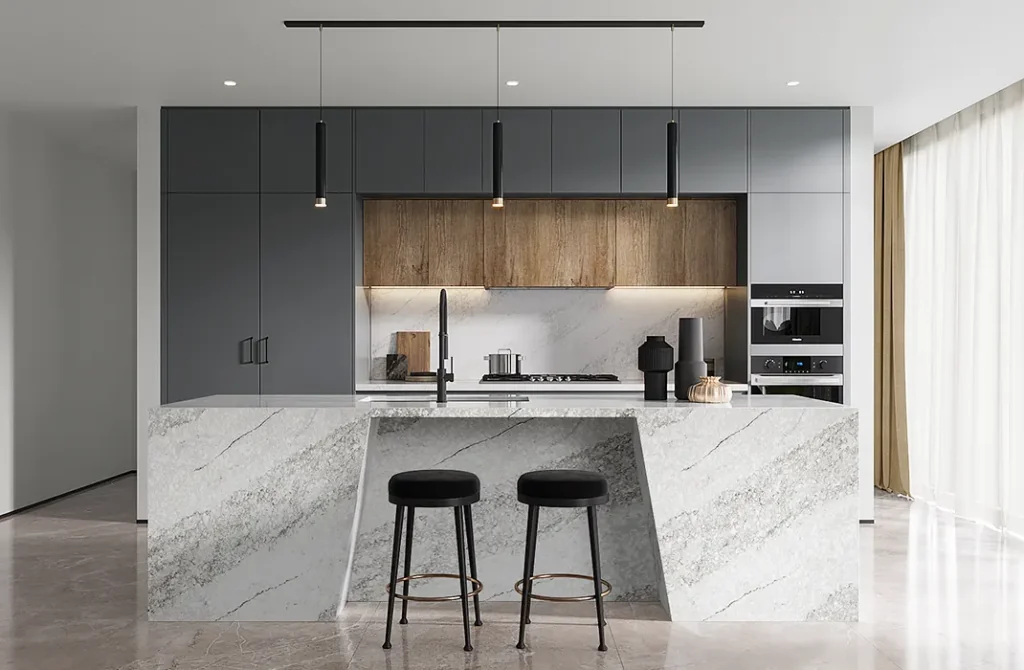
- Bold Veining: Use granite or marble with dramatic veining to make the waterfall the centerpiece.
- Contrasting Colors: Pair a dark waterfall island with lighter cabinets for visual impact.
- Undermount Sink: A clean, seamless look with an undermount sink is ideal for modern kitchens.
- Mixed Materials: Combine quartz for the countertop and wood accents for cabinets for a warm yet sleek look.
Tip: Keep your design functional and stylish, your waterfall should look stunning and last.
Easy Tips to Care for Your Waterfall Countertop
Keeping your waterfall countertop looking beautiful is easier than you might think. Here are some simple care tips:
- Wipe spills daily with a soft cloth and mild soap
- Seal natural stones once or twice a year (Granite, Marble, Quartzite)
- Quartz requires no sealing
- Check seams occasionally, especially after Florida’s hot summers and humidity
- Avoid placing heavy items on vertical edges
By following these simple tips, your waterfall countertop will stay stunning and functional for years, keeping your kitchen stylish, modern, and worry-free.
Final Thoughts
Waterfall countertops are a stunning, modern, and durable choice for Florida kitchens. They combine style and practicality, protecting cabinets while creating a luxurious centerpiece. Choosing the right material, professional installation, and thoughtful design ensures your waterfall countertop will last for years and increase your home’s value.
With the right care and maintenance, your waterfall countertop will continue to impress family, friends, and potential buyers alike. Investing in a waterfall design is not just about beauty; it’s a smart upgrade that enhances both functionality and resale value.
Pensacola, FL
Visit Us: 7011 Pine Forest Road, Pensacola, FL 32526
Call Us: (850) 941-0270
Hours: Monday – Friday: 8 a.m. – 5 p.m., Saturday: 9 a.m. – 2 p.m.
Pace, FL
Visit Us: 4590 Jernigan Road, Pace, Florida 32571
Call Us: (850) 994-1872
Hours: Tuesday – Friday: 9 a.m. – 5 p.m., Saturday: 9 a.m. – 2 p.m.
Fort Walton Beach, FL
Visit Us: 35 Miracle Strip Pkwy SW, Fort Walton Beach, Florida 32548
Call Us: (850) 301-0716
Hours: Tuesday – Friday: 8 a.m. – 5 p.m., Saturday: 9 a.m. – 2 p.m.
Get quotes now and start your project!
FAQS
1. How much does a waterfall countertop cost in Florida?
Waterfall countertops are more expensive than standard countertops because of the extra material and precise fabrication required. A single waterfall side typically adds, while a standard 3×5-foot island with one waterfall ranges from square feet. Costs vary depending on stone type, pattern complexity, and installation requirements.
2. Which material is best for a waterfall countertop?
Quartz is the most popular choice due to its low maintenance and consistent patterns, which make seamless edges easier to achieve. Granite and marble offer unique natural beauty, while quartzite and porcelain provide a balance of durability and luxury. The best choice depends on your kitchen style, maintenance preference, and budget.
3. Can any installer make a waterfall countertop?
No. Waterfall countertops require experienced fabricators with CNC technology and precision tools, such as Superior Granite. Poorly executed mitered edges or misaligned patterns can ruin the seamless look. Always check portfolios and ask for completed waterfall projects before hiring an installer.
4. Does a waterfall countertop increase home value?
Yes. A well-executed waterfall countertop adds visual appeal and luxury, signaling quality to potential buyers. In Florida’s modern kitchen market, it can increase your home’s resale value, especially in open floor plans or high-end neighborhoods.
5. How to maintain a waterfall countertop?
Daily care is simple: wipe spills with a soft cloth and mild soap. Natural stones like granite, marble, and quartzite should be sealed annually, while quartz requires no sealing. Check seams occasionally, especially in Florida’s hot and humid climate, to ensure the countertop remains perfect.
6. Can I use any countertop material for a waterfall design?
Most materials work, but some are easier than others. Quartz, granite, marble, quartzite, and porcelain are popular options. The choice affects durability, maintenance, and installation complexity, so consult your fabricator to select the best material for your design and budget.
7. How long does it take to install a waterfall countertop?
Installation time varies depending on material, island size, and preparation needs. On average, a waterfall countertop installation can take 3–7 days, including measuring, cutting, and finishing. Homes with uneven floors or complex layouts may require extra time for proper leveling.
8. Are waterfall countertops durable for everyday use?
Yes. Materials like quartz, granite, and quartzite are highly durable and heat-resistant. The vertical waterfall edge also protects cabinets from damage. While marble is elegant, it requires more care due to its susceptibility to scratches and acidic spills.
9. Can I add electrical outlets to a waterfall island?
Adding outlets directly to a waterfall side is challenging because of the continuous vertical stone. If needed, special planning with filler strips or integrated power modules is required. Discuss this with your installer during the design phase to ensure safety and aesthetics.
10. Do waterfall countertops work in small kitchens?
A waterfall countertop can be visually overwhelming in small kitchens. They work best on islands or counters that are at least 3×5 feet. In smaller spaces, a waterfall may look oversized, and a simple backsplash or standard edge may be a better design choice.