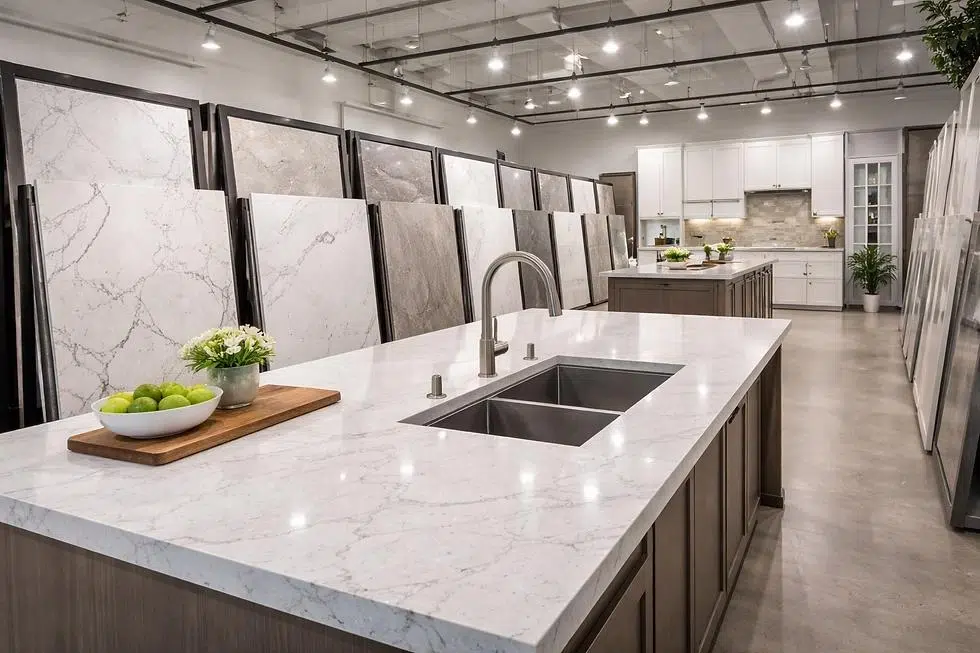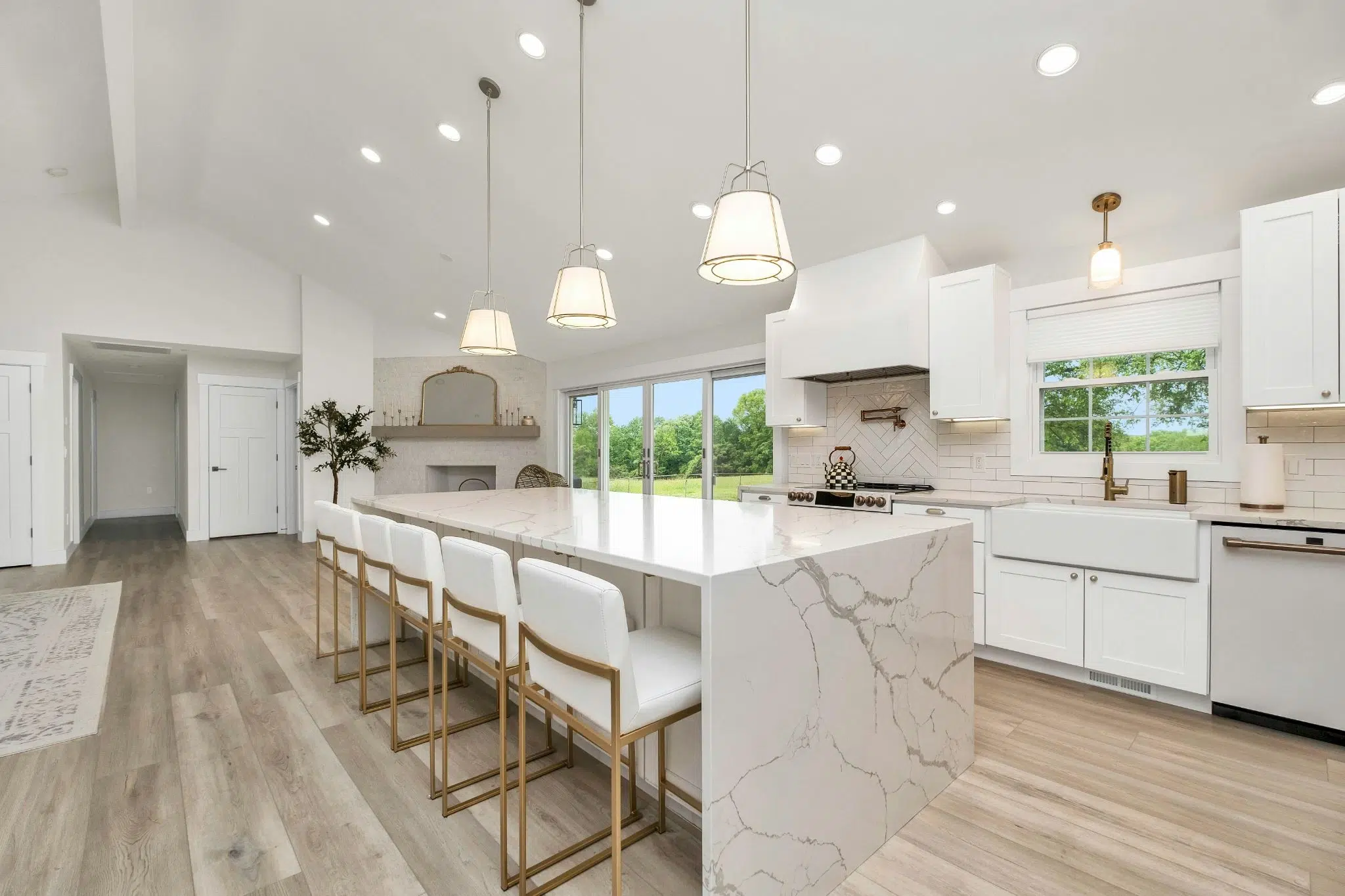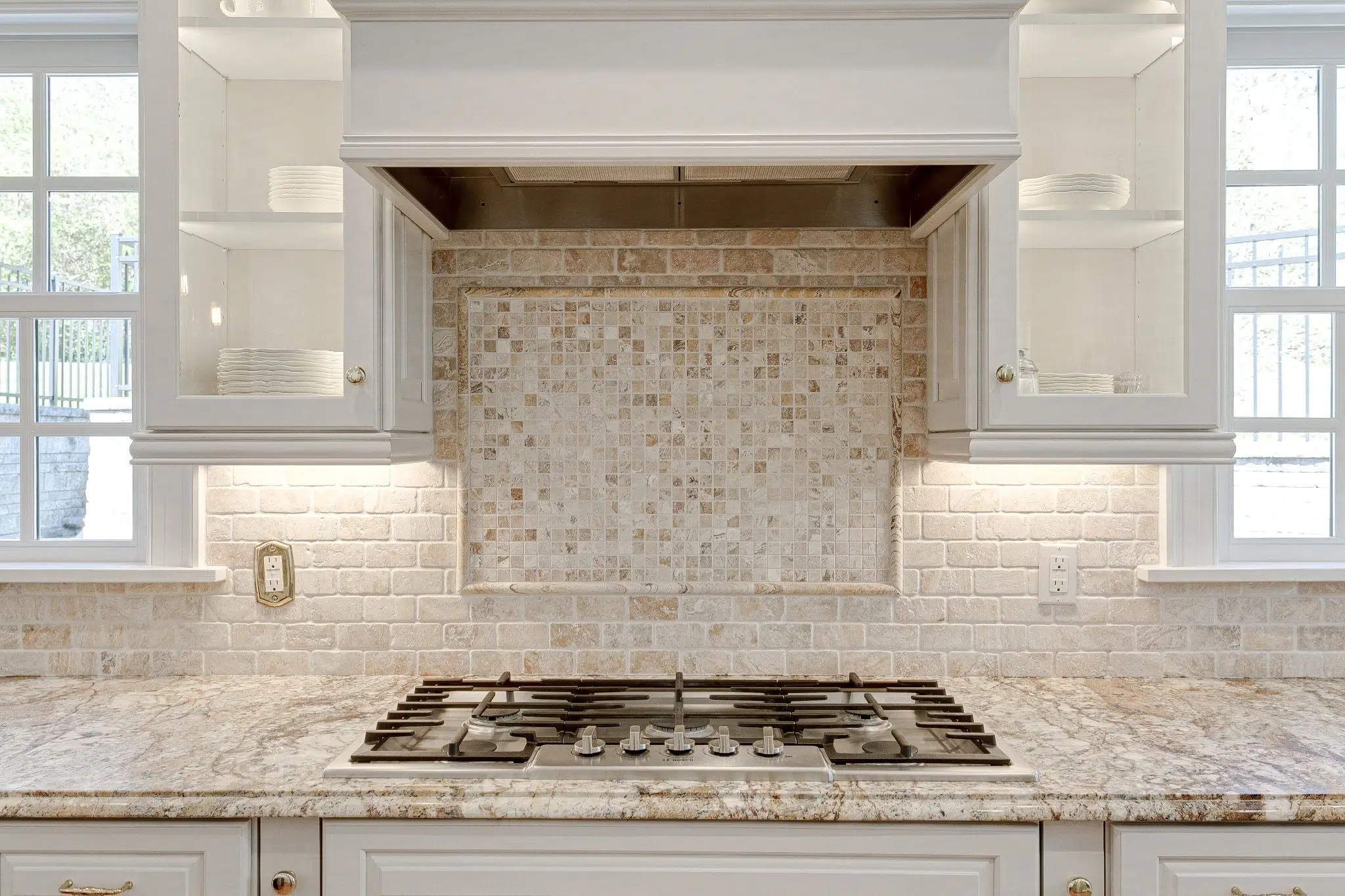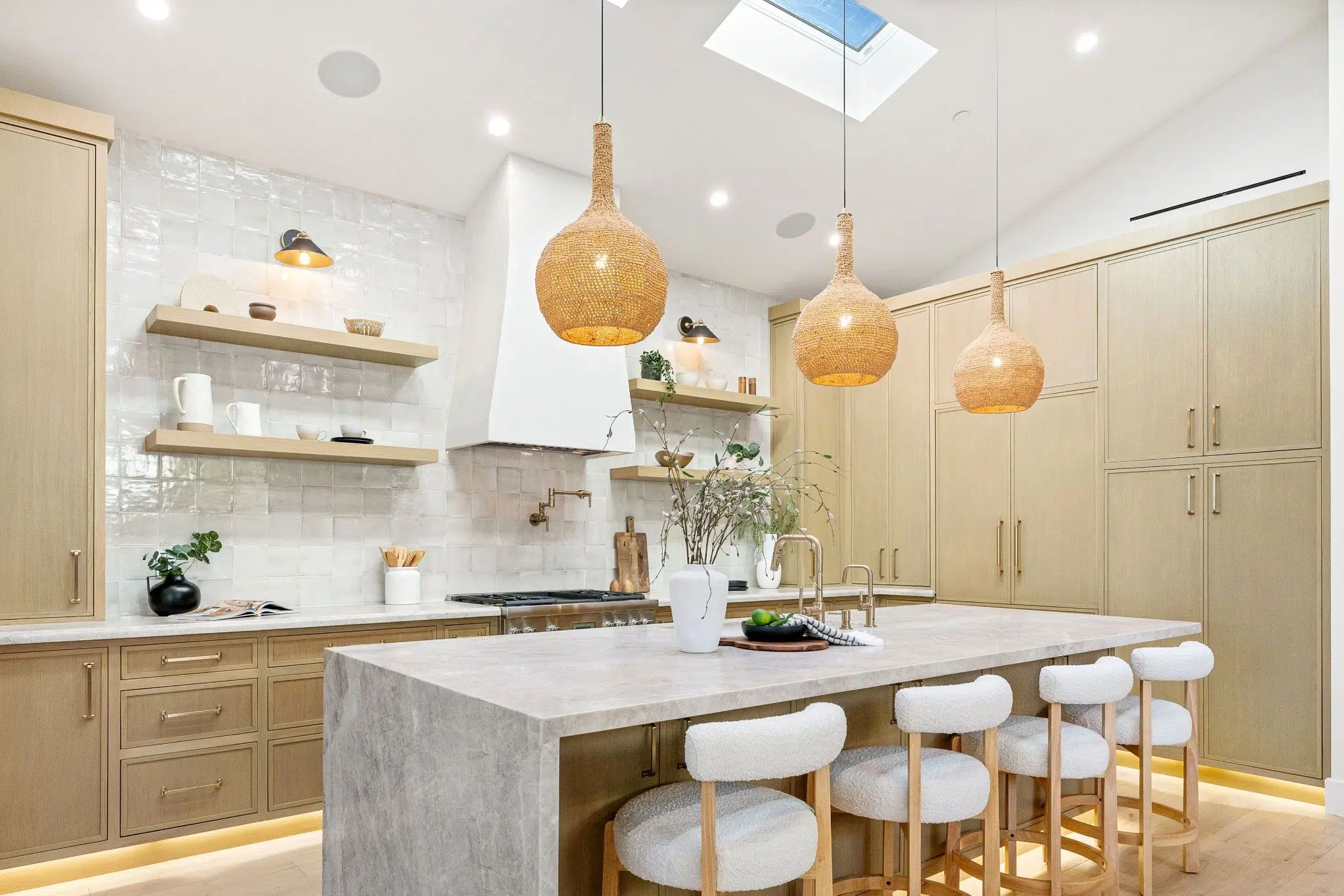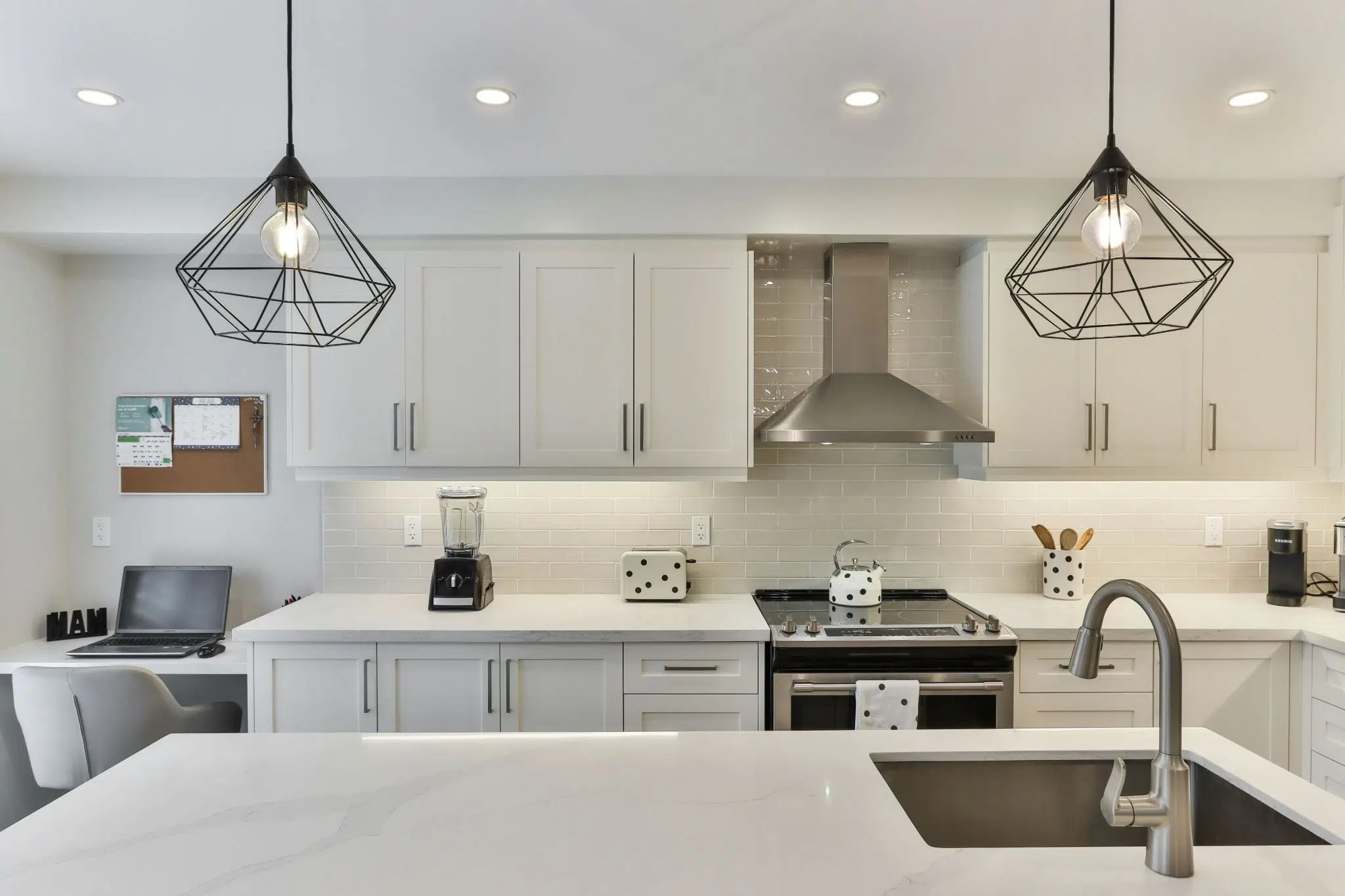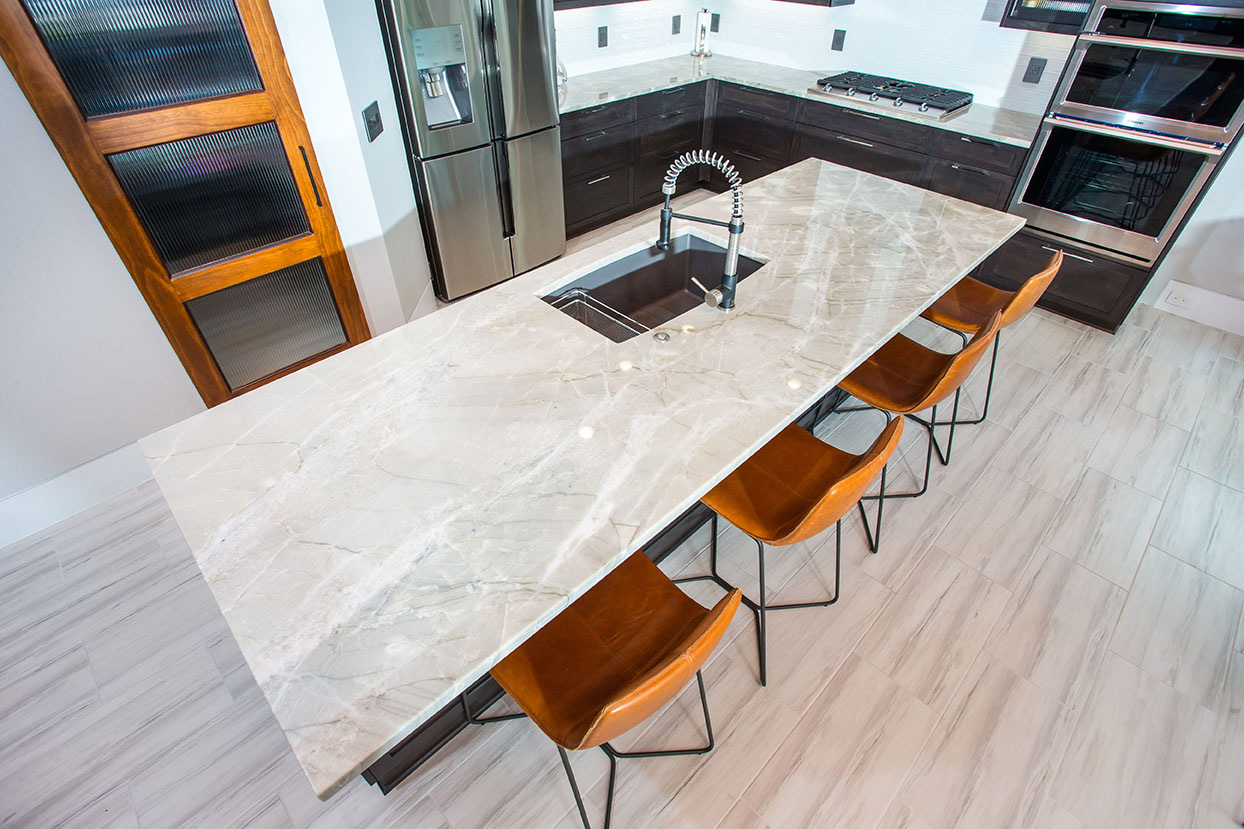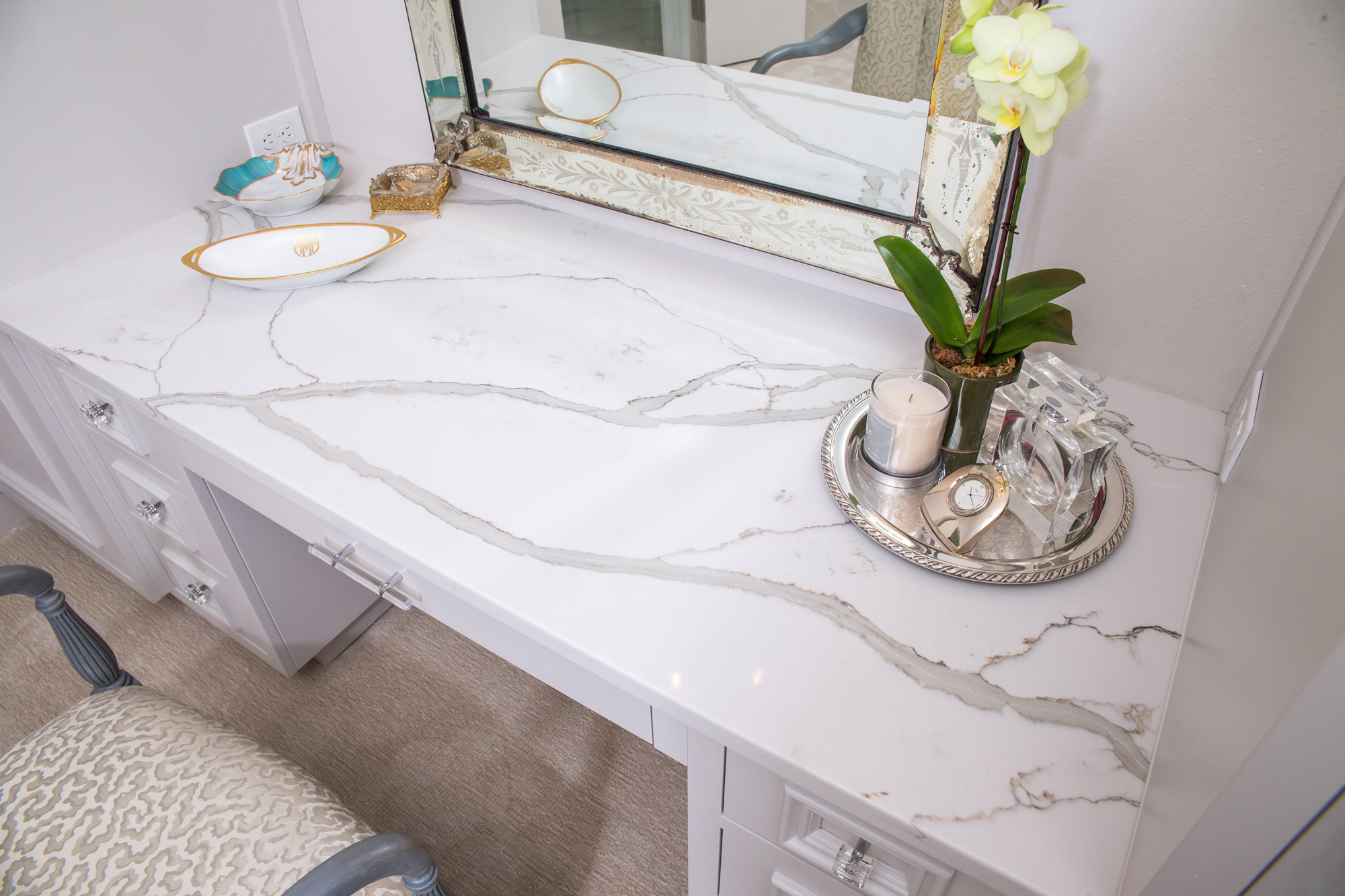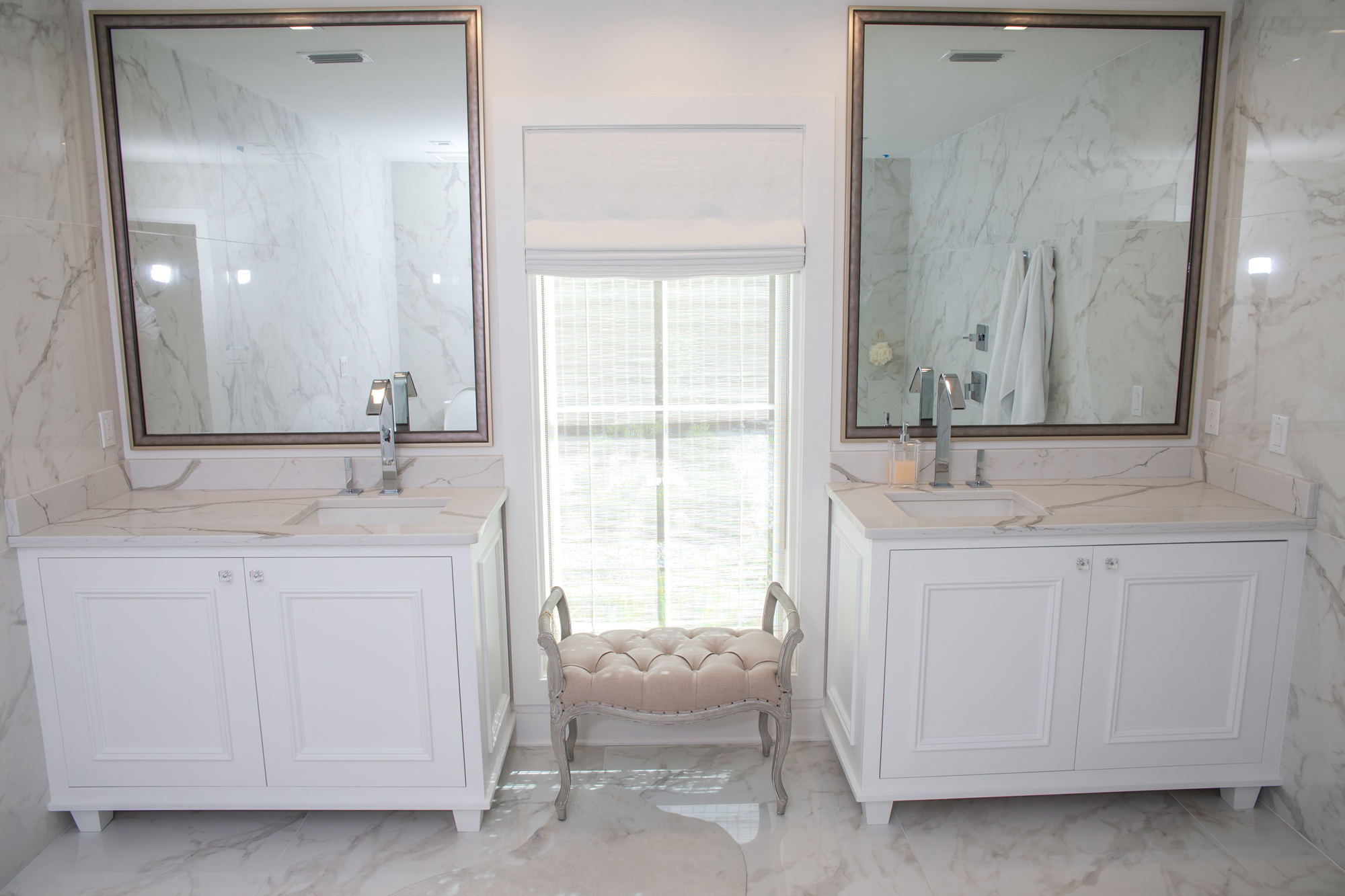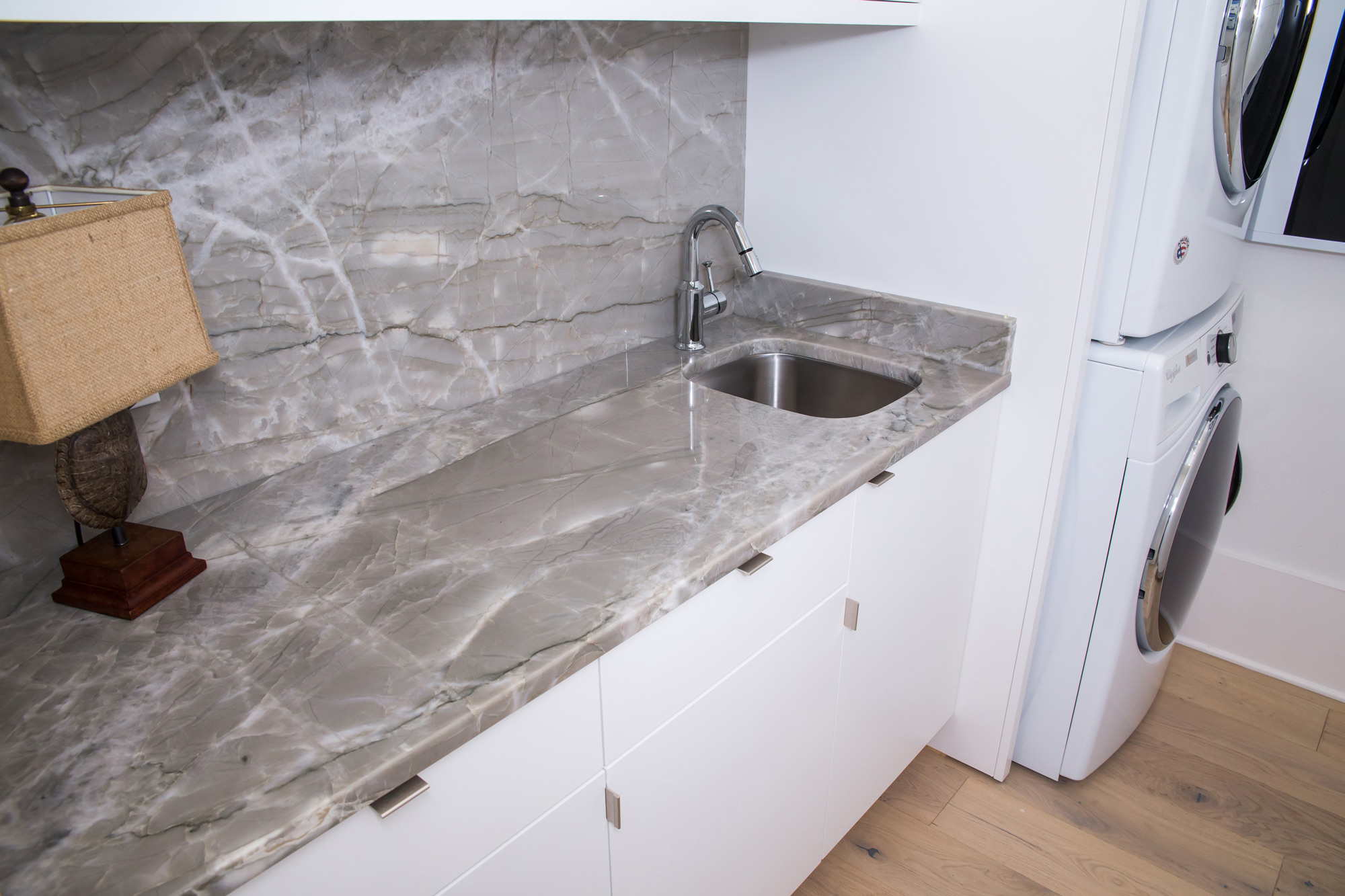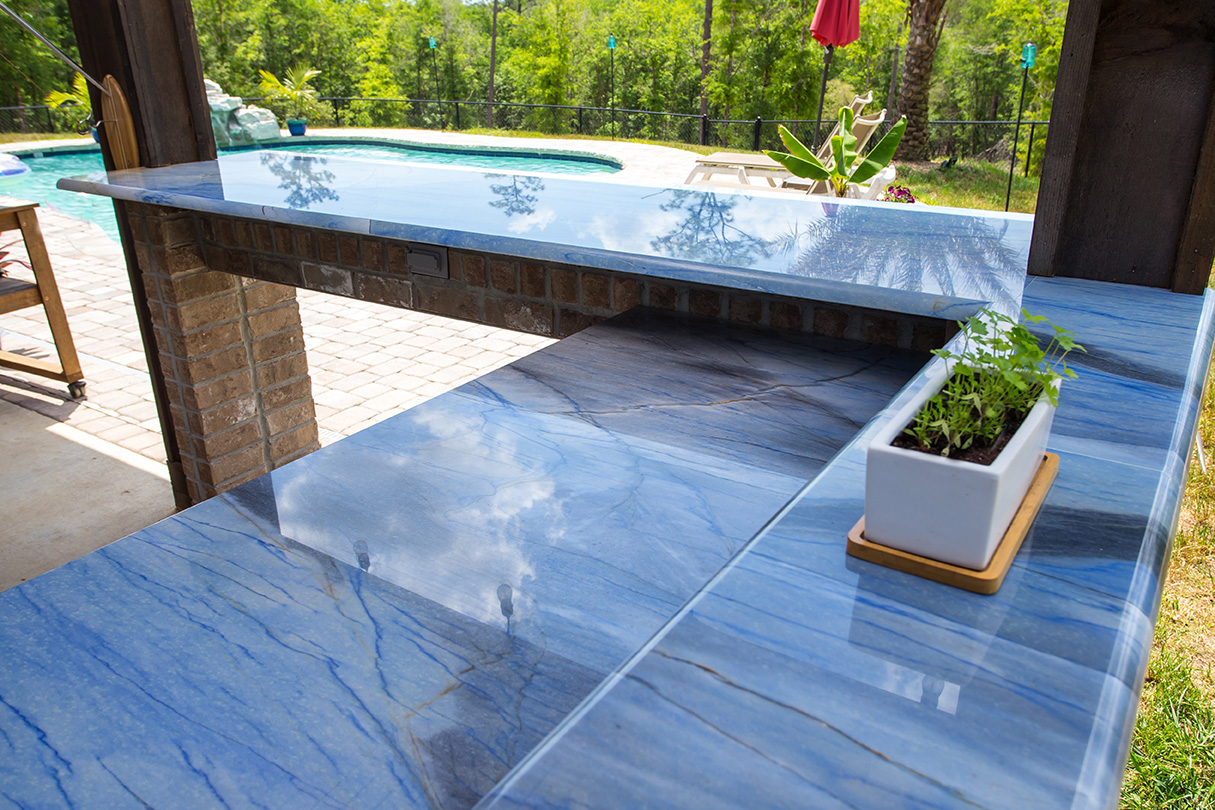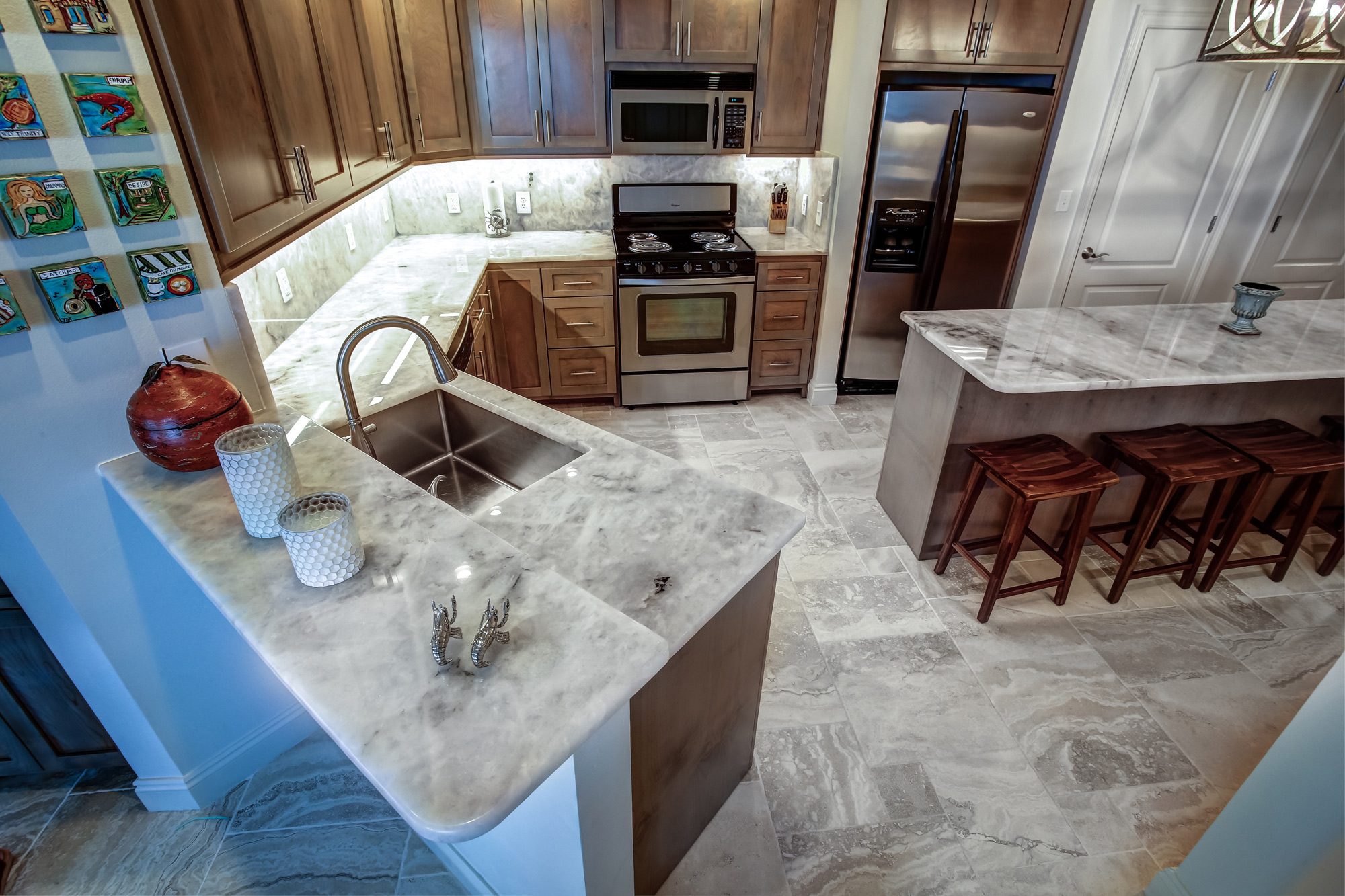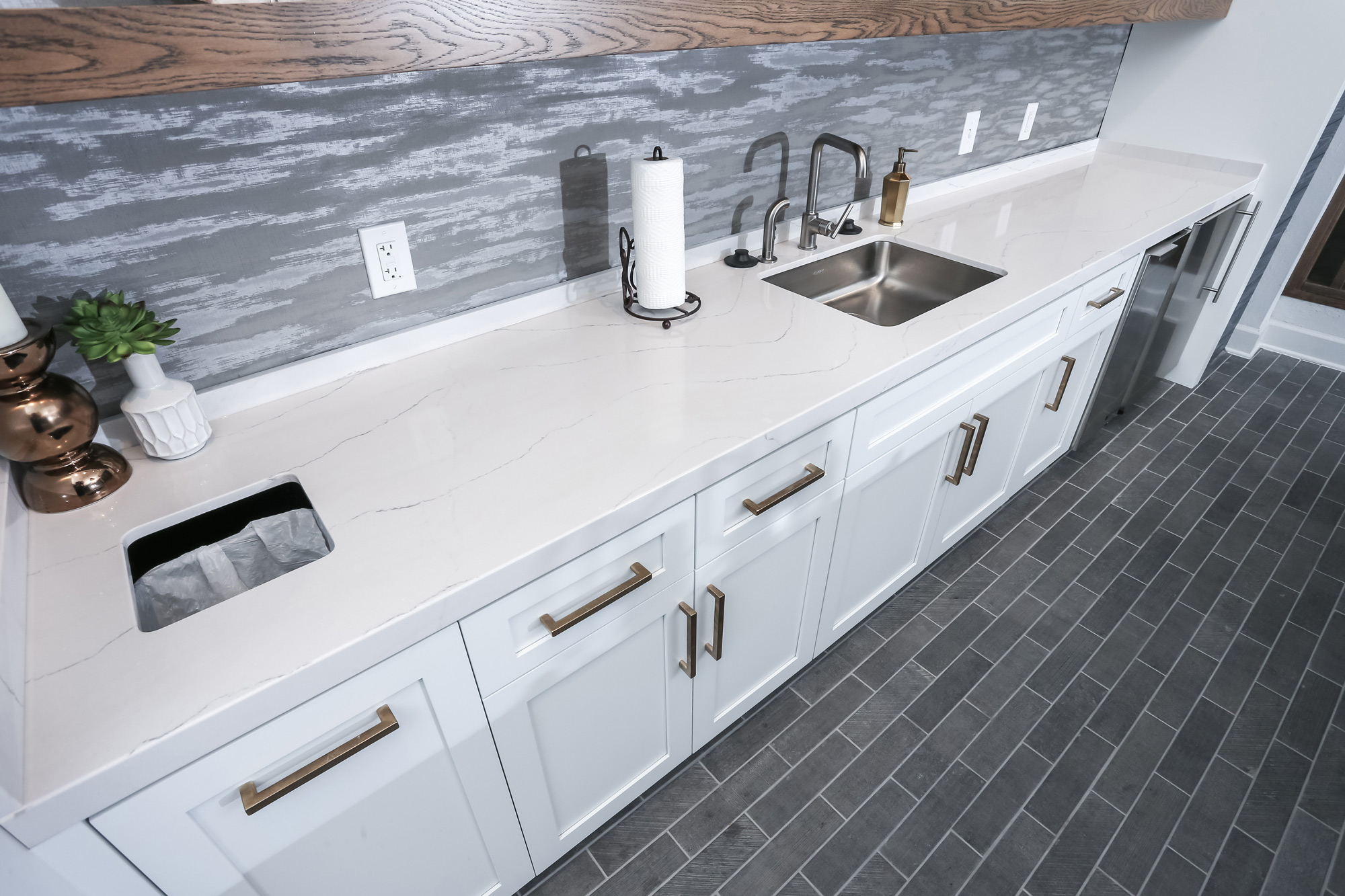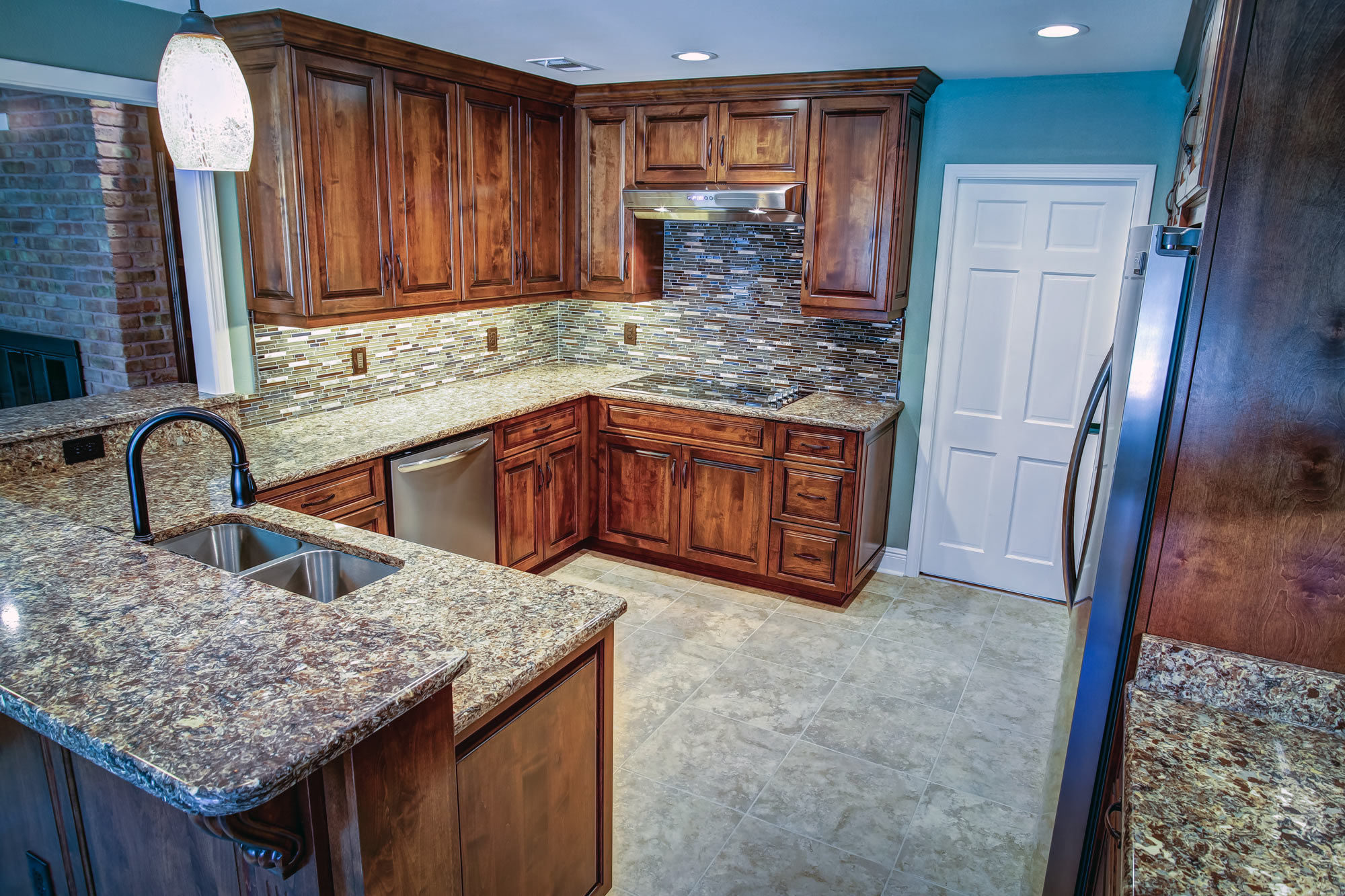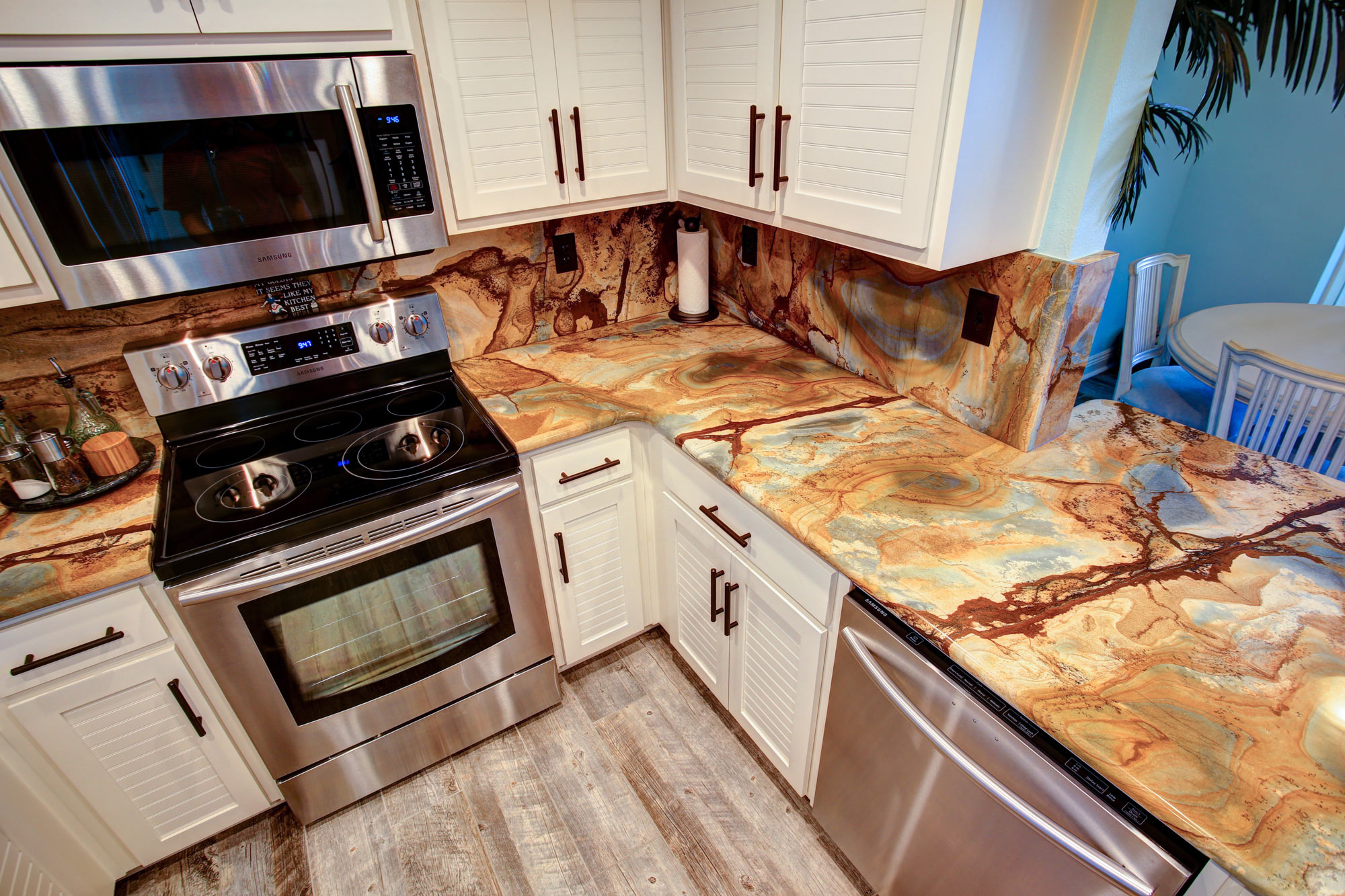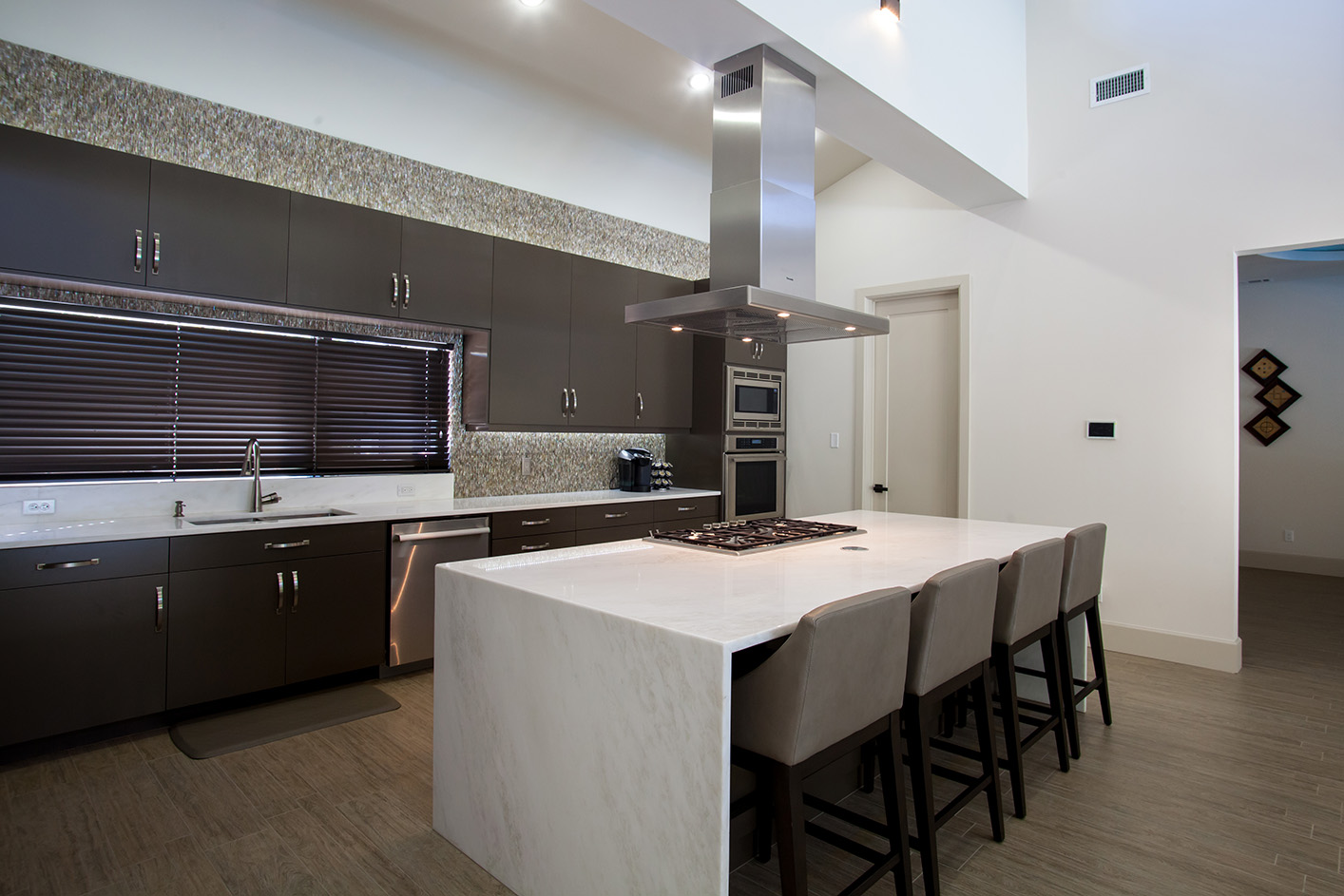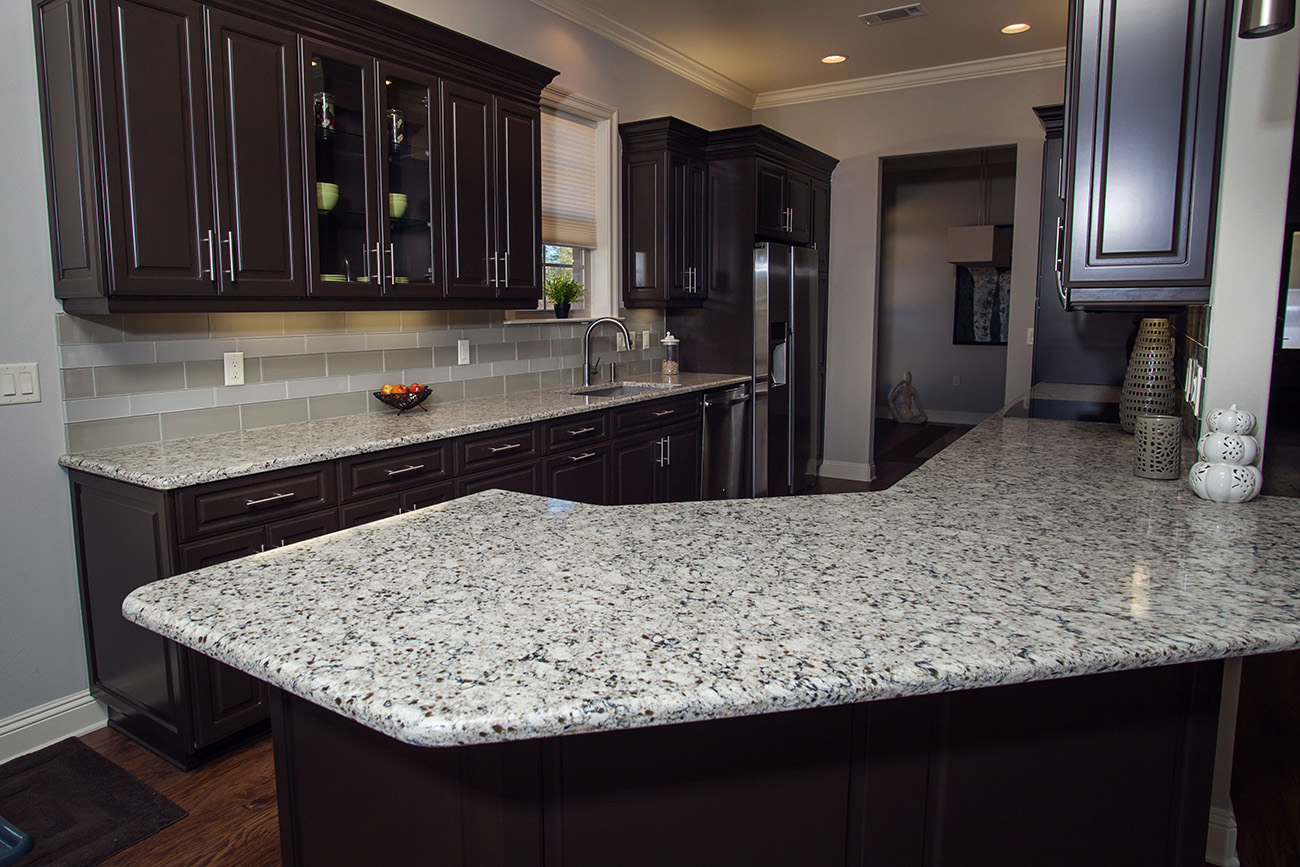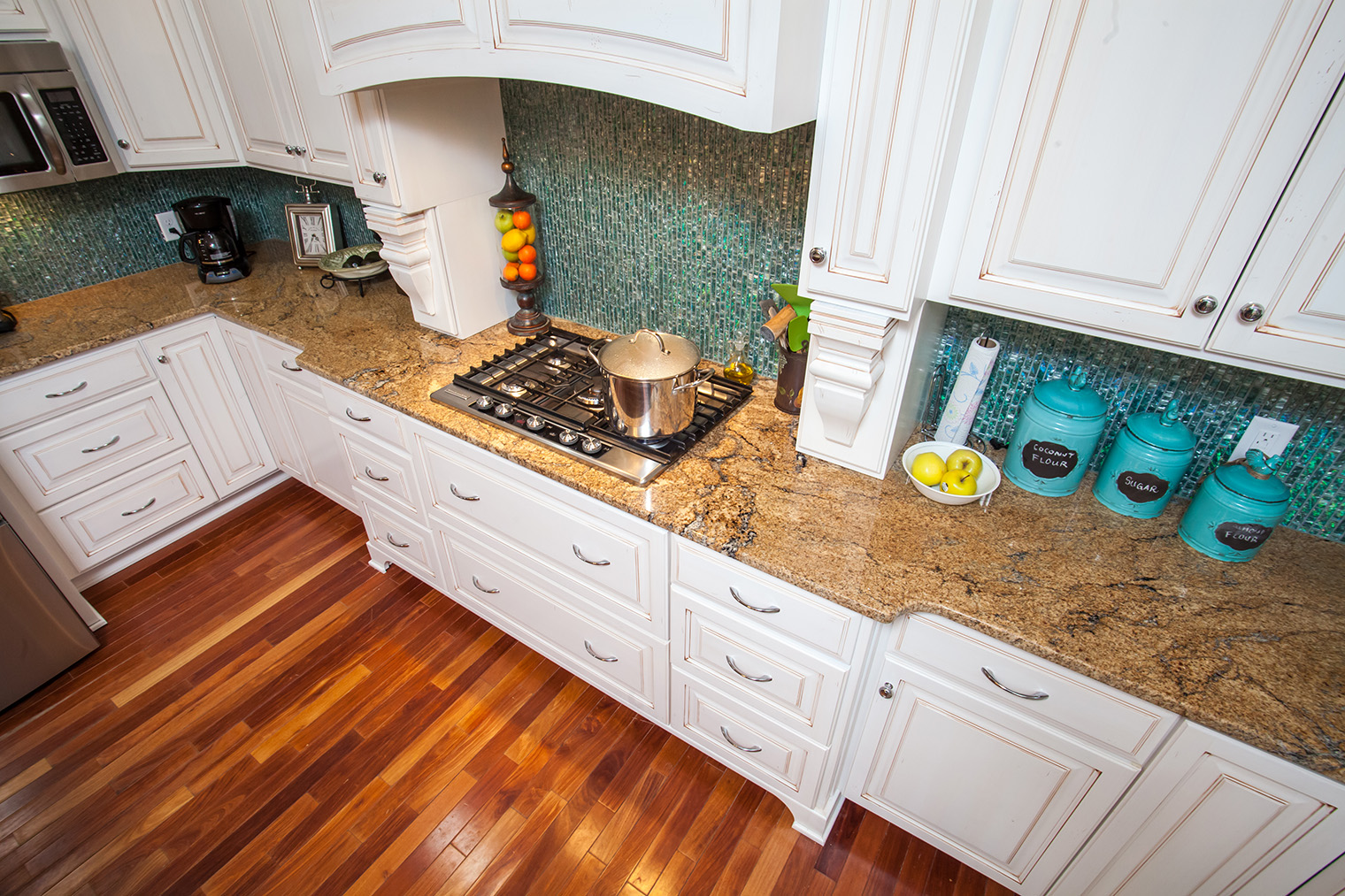
Engineered Stone vs Natural Stone is an important choice for anyone planning new countertops. Engineered stone provides a consistent look, is highly resistant to stains and impacts, and requires very little maintenance, making it ideal for modern and busy homes. Natural stone, however, offers unique and organic beauty, but it is more porous, needs sealing, and has varied patterns. While natural stone can give timeless appeal and even increase resale value, the best choice depends on your budget, lifestyle, and aesthetic preferences.
Engineered stone countertops are often stronger when it comes to resisting chips and cracks, while natural stone countertops are extremely durable, but softer stones need more care. Both options offer excellent surface quality for kitchens and bathrooms, so your decision should be based on whether you prioritize durability and ease or natural, one-of-a-kind elegance.
What is Engineered Stone?
Engineered stone is made by mixing crushed natural stone with resins and pigments. This creates a surface that is strong, smooth, and looks the same every time. Popular engineered stones include quartz countertops.
Engineered stone is ideal for modern kitchens and bathrooms, homes with kids or pets, and busy households where low maintenance is a priority.
Pros and Cons
| Pros | Cons |
| Non-porous, so resists stains and bacteria | Quartz is NOT heat safe. |
| Very strong, resists scratches and chips | Made with resins, so there is a small environmental impact |
| Uniform look, so colors and patterns stay the same | Some cheaper versions may look less natural |
| No sealing needed | Slightly less natural appearance than real stone |
| Easy to clean with soap and water | Can be damaged by very sharp or heavy objects |
Maintenance Tips for Engineered Stone
- Avoid placing hot pots directly on the surface
- Wipe spills immediately, especially oil and coffee
- Clean with mild soap and a soft cloth
- Keep away from direct sunlight for long periods to prevent fading
What is Natural Stone?
Natural stone comes directly from the earth, cut into slabs for countertops. Popular options include granite, marble, and quartzite. Each piece is unique, with its own patterns and colors.
Natural stone is perfect for high-end kitchens and bathrooms, homes where beauty and uniqueness matter more than low maintenance, and heat-intensive areas, especially granite.
Pros and Cons
| Pros | Cons |
| One-of-a-kind patterns, no two slabs are the same | Porous, needs regular sealing |
| Heat-resistant, especially granite | Can stain or chip if not careful |
| Adds natural beauty and elegance | Requires special cleaners |
| Can increase home resale value | Softer stones like marble may scratch easily |
| Timeless and unique appearance | Needs extra care compared to engineered stone |
Maintenance Tips for Natural Stone
- Seal granite annually (once per year).
- Wipe spills immediately, especially citrus, wine, or oil
- Use pH-neutral cleaners
- Avoid abrasive pads or cleaners
- Keep humidity and sun exposure in mind, especially in coastal areas
Key Differences Between Engineered and Natural Stone
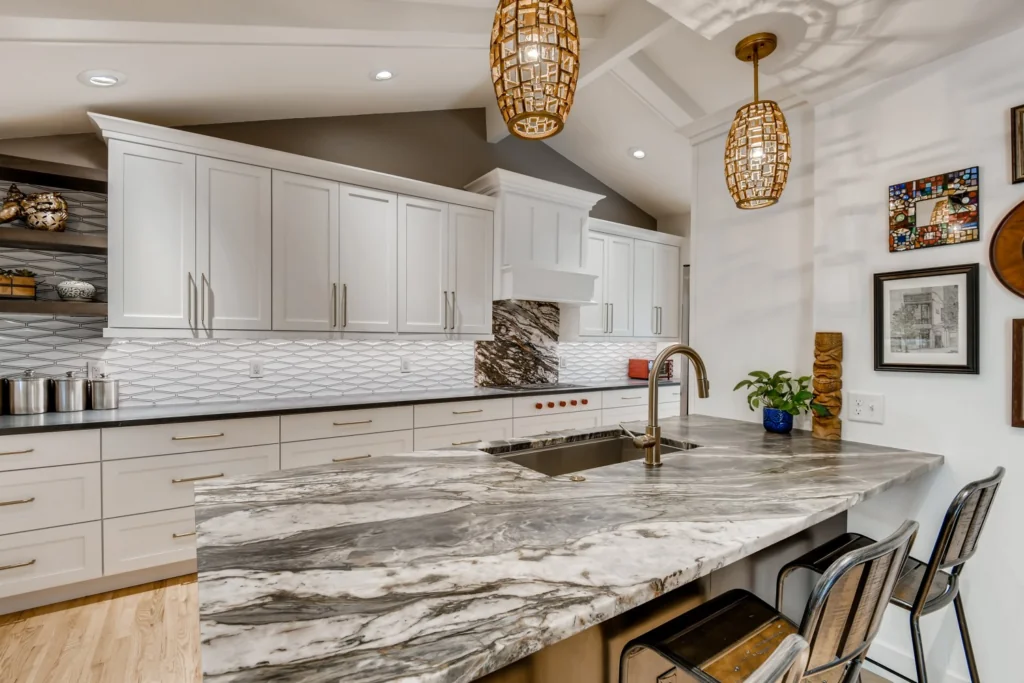
Choosing between Engineered Stone vs Natural Stone depends on your home, style, and lifestyle. These differences can help you pick the right countertop for your needs. Check out our beautiful stone countertops gallery to see design ideas and inspiration.
Appearance
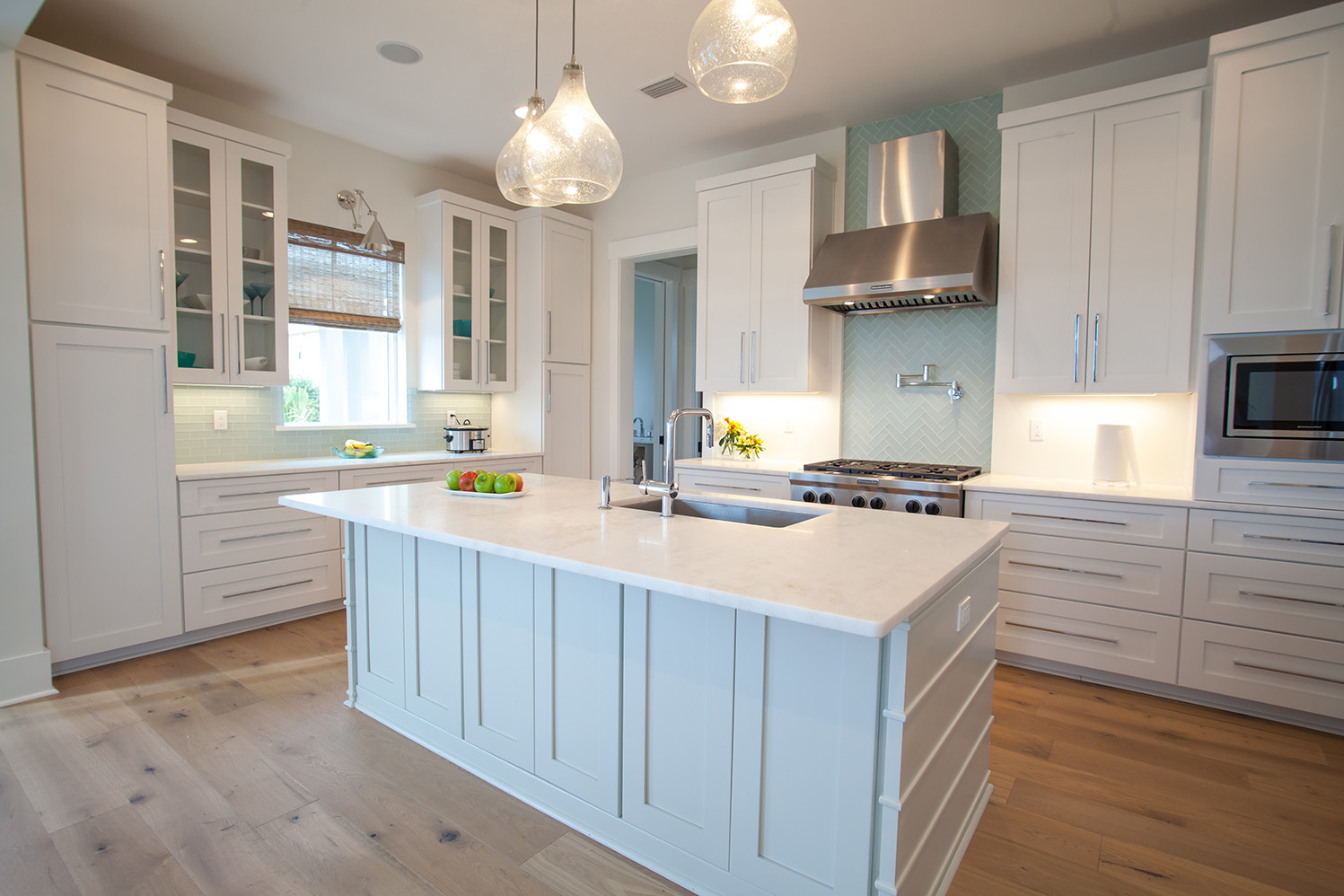
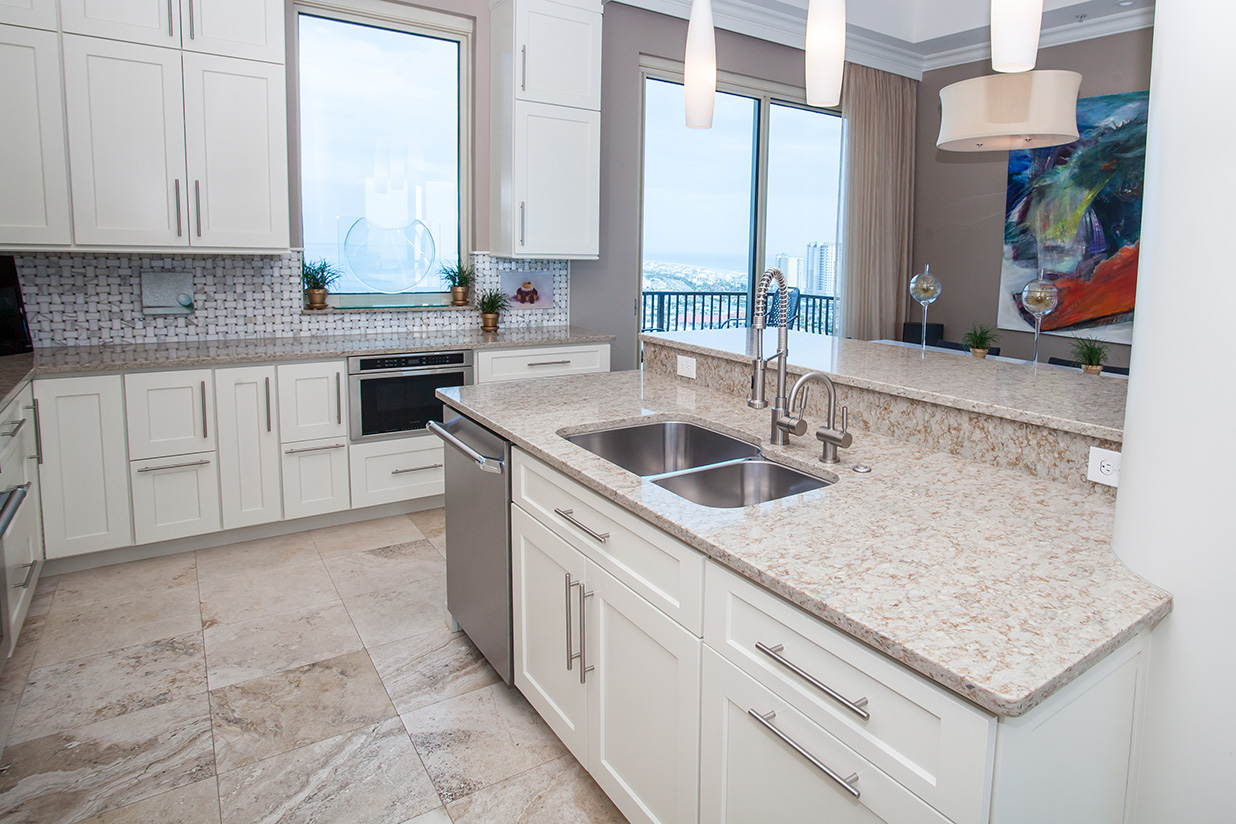
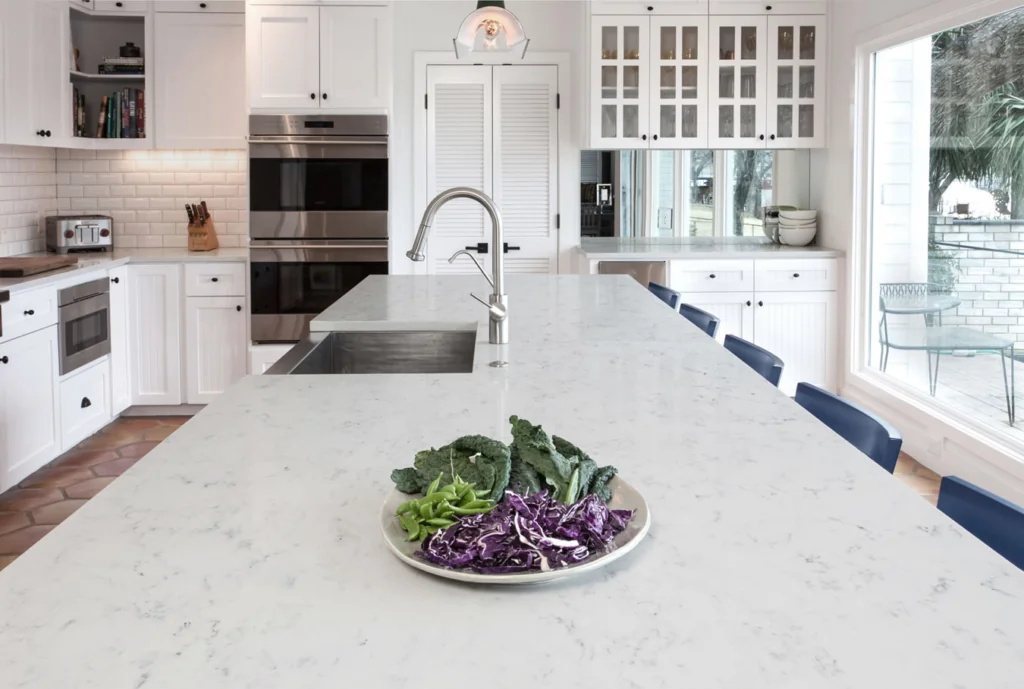
Engineered stone is uniform and consistent, so your countertops all match perfectly. It works really well for modern kitchens and bathrooms, giving a clean and simple look. Colors and patterns are predictable, which makes designing your space easier.
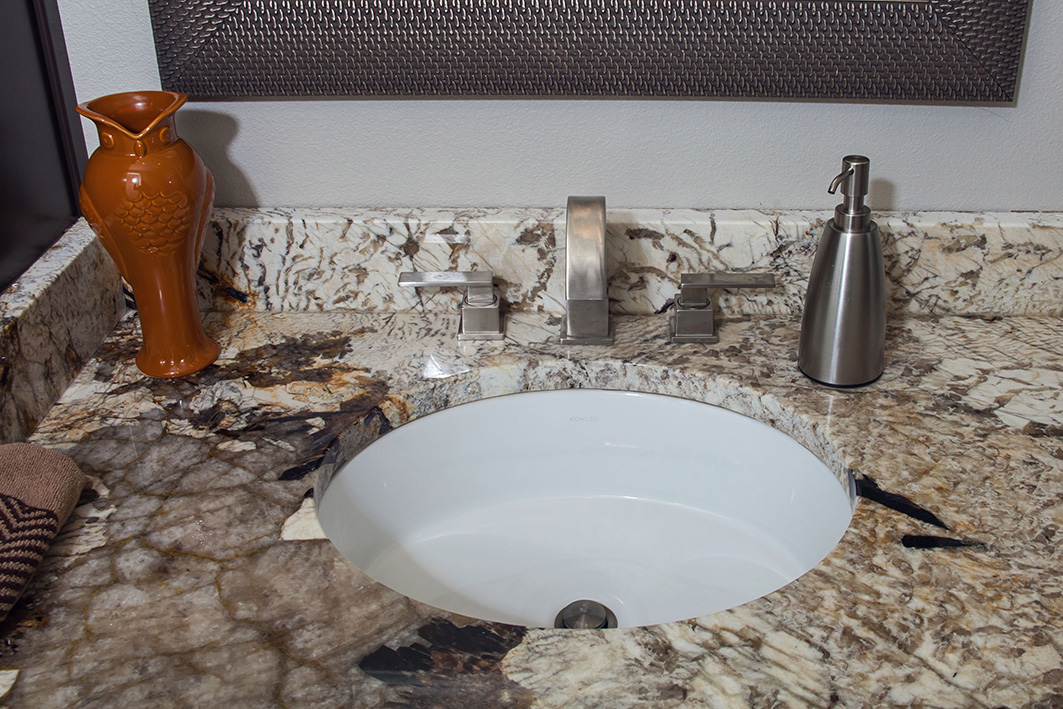
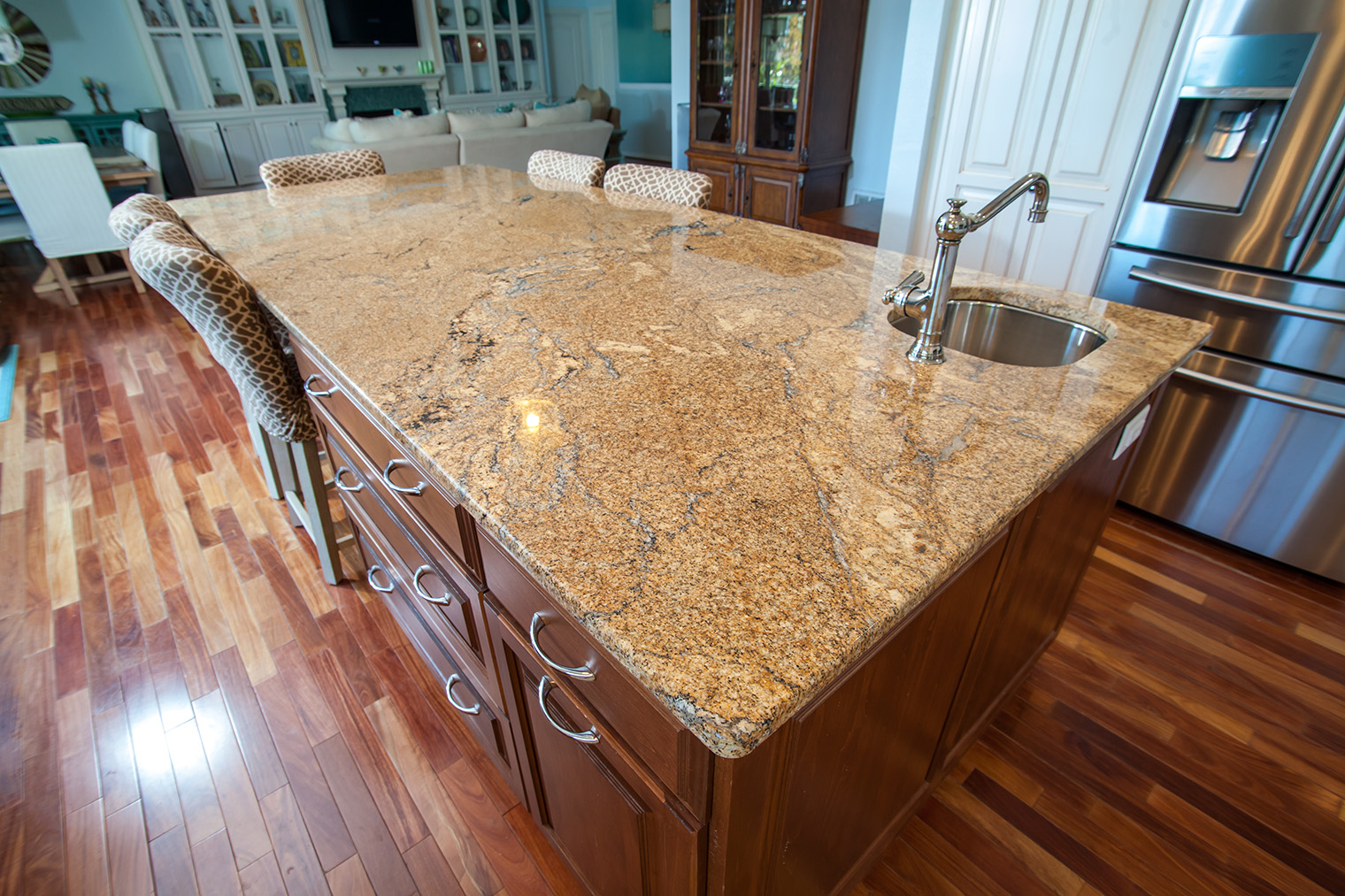
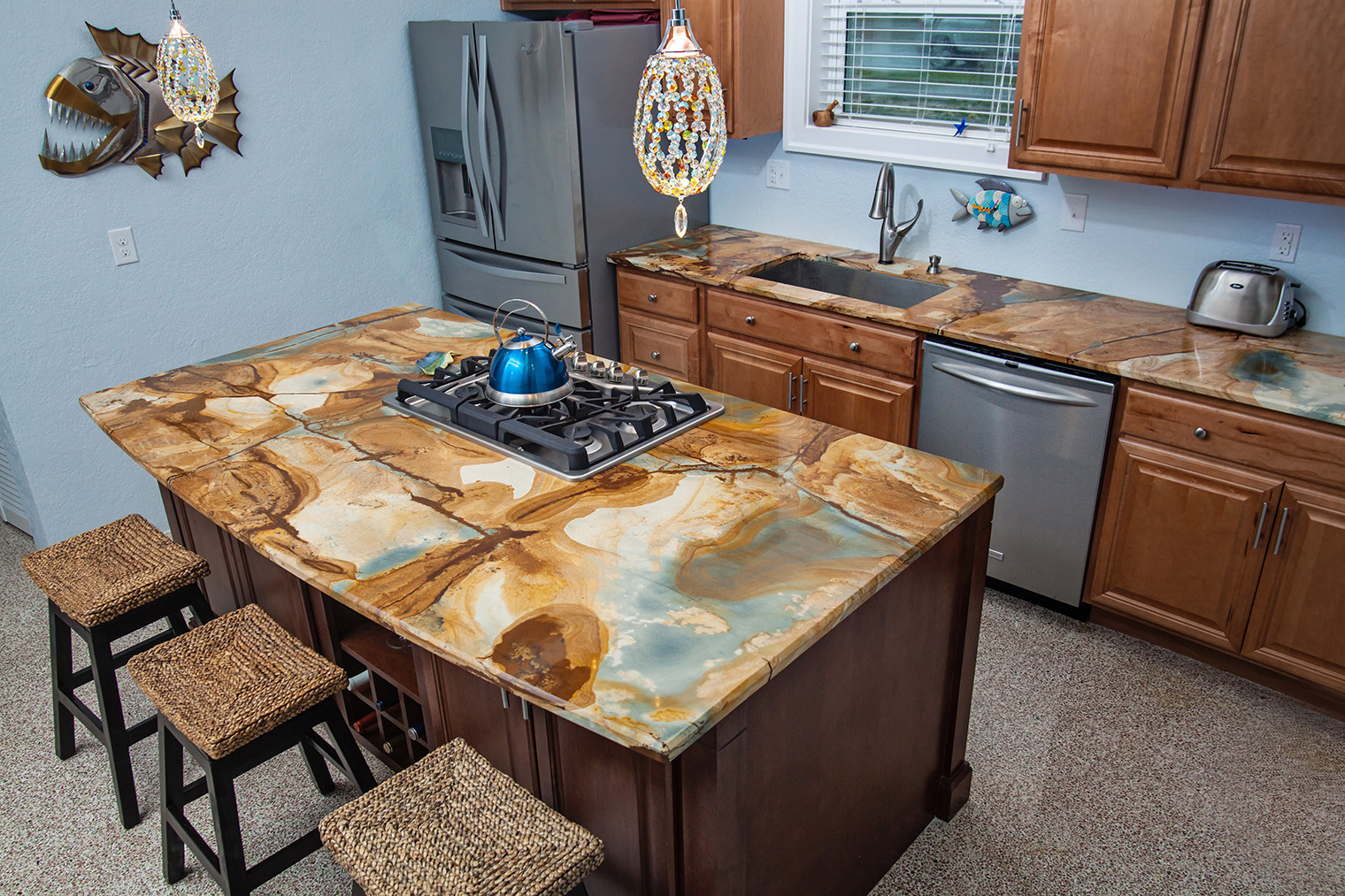
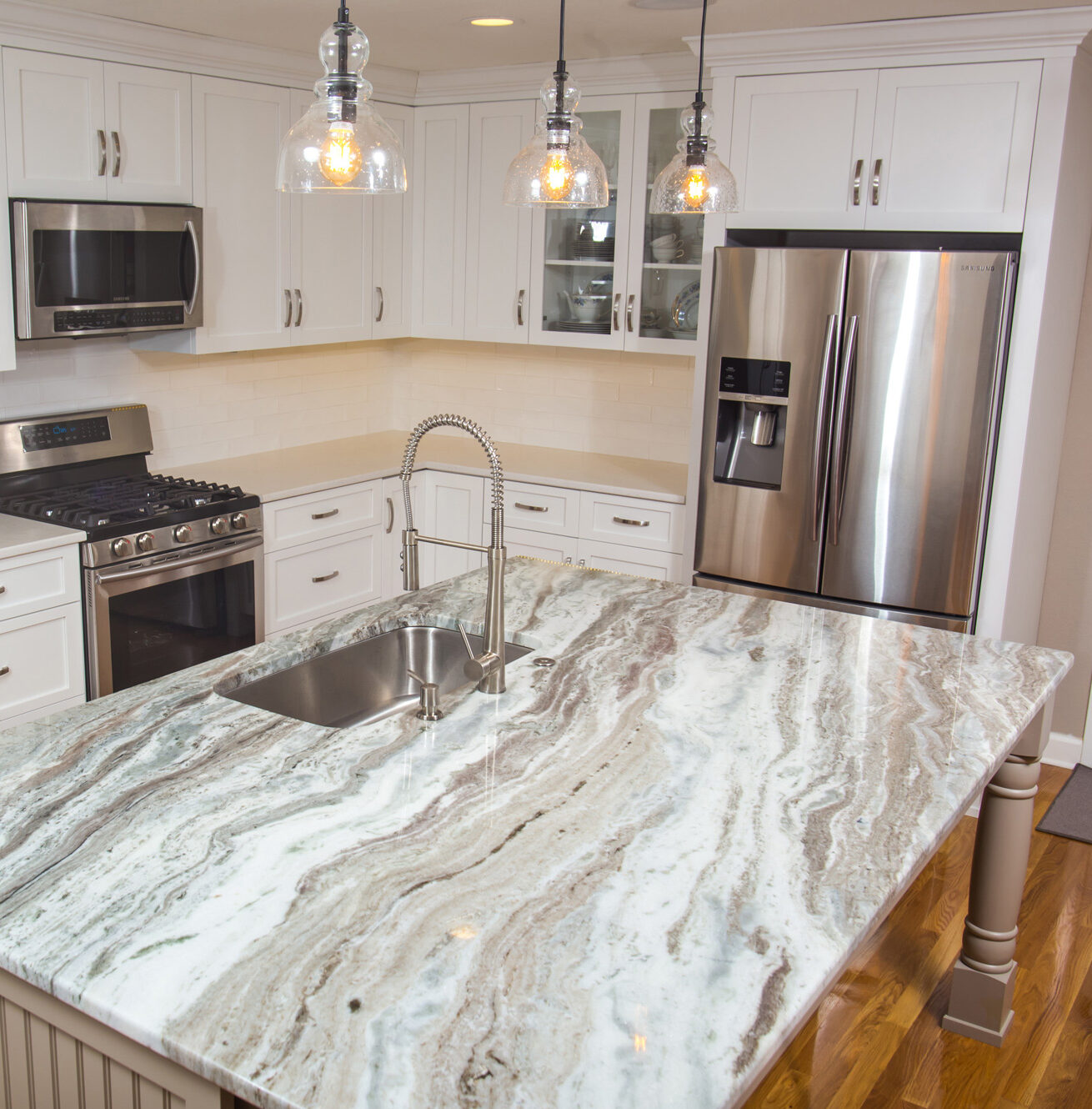
Natural stone is unique, with patterns and colors that are never the same twice. It adds a natural, one-of-a-kind look to your kitchen or bathroom. If you want a bold, standout surface, natural stone is the better choice.
Durability
Engineered stone is strong and resistant to chips or cracks, making it ideal for busy homes or families with kids. It handles daily use very well and stays looking new for years.
Natural stone is also durable, but softer stones like marble can scratch more easily. Granite is extremely strong and can last decades with proper care. Both materials are long-lasting, just in different ways.
Maintenance
Engineered stone is easy to clean and doesn’t need sealing. Spills and stains wipe away quickly, making it perfect for low-maintenance homes.
Seal quartzite, dolomite, calcite, and marble semi-annually (every 6 months).
Heat Resistance
Natural stone, like granite, has high heat resistance and can withstand hot pots without damage. Quartz is not heat safe. Excessive or prolonged heat can permanently scorch, discolor, and damage the resin surface. Treat it like Formica as far as heat is concerned.
Stone Cost
Engineered stone is predictable in price and works well for modern kitchens on a moderate budget. Natural stone prices vary because each slab is unique, and rare, high-end stones carry a higher price tag.
Natural stone prices vary depending on the specific type and rarity of the slab you choose. Because each natural slab is a unique piece of earth-born stone, high-end or rare varieties carry a higher premium, making them a luxurious addition to any home. Many homeowners choose it for its natural beauty and timeless elegance.
Market Value
Engineered stone gives a modern look and has a moderate impact on resale value. It still makes kitchens attractive to buyers. Natural stone, like granite or marble, can increase home value because of its elegance and uniqueness. Many buyers see it as a premium feature.
Environmental Impact
Engineered stone uses resins and needs some manufacturing, but some brands offer eco-friendly options. Natural stone has low processing and comes from the earth. Both can be environmentally responsible if sourced carefully.
Quick Look: Engineered vs Natural Stone
| Feature | Engineered Stone | Natural Stone |
|---|---|---|
| Appearance | Uniform and consistent, easy to match | Unique, one-of-a-kind patterns and colors |
| Durability | Resistant to chips and cracks, strong for busy homes | Very strong, but softer stones like marble may scratch |
| Maintenance | Low maintenance, easy to clean, no sealing | Requires regular sealing: Granite must be sealed annually (once per year). Quartzite, dolomite, calcite, and marble must be sealed semi-annually (every 6 months) |
| Heat Resistance | NOT heat safe; prone to scorching. Always use hot pads or trivets. | High, especially granite, is safe for hot cookware |
| Market Value | Moderate | Often higher, premium look adds value |
| Environmental Impact | Uses synthetic resins, small footprint | Low processing, natural extraction, and eco-friendly if sourced responsibly |
Color, Pattern & Design Options
Choosing the right color and pattern is important to match your kitchen or bathroom style. Both engineered and natural stone offer many design options to create a beautiful and functional space.
- Engineered stone comes in consistent colors and patterns, perfect for modern kitchens
- Natural stone offers unique veining and organic patterns, perfect for a statement kitchen
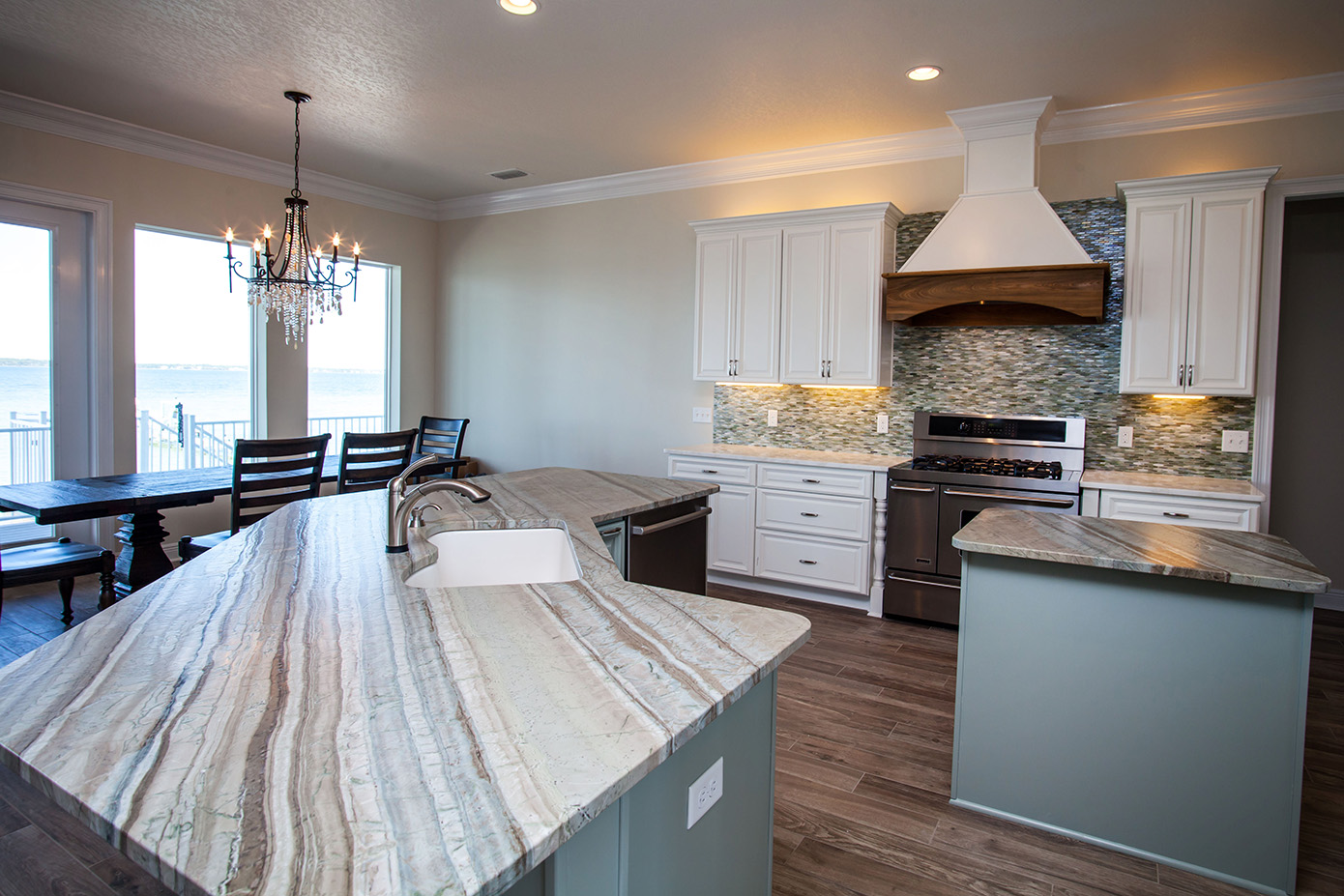
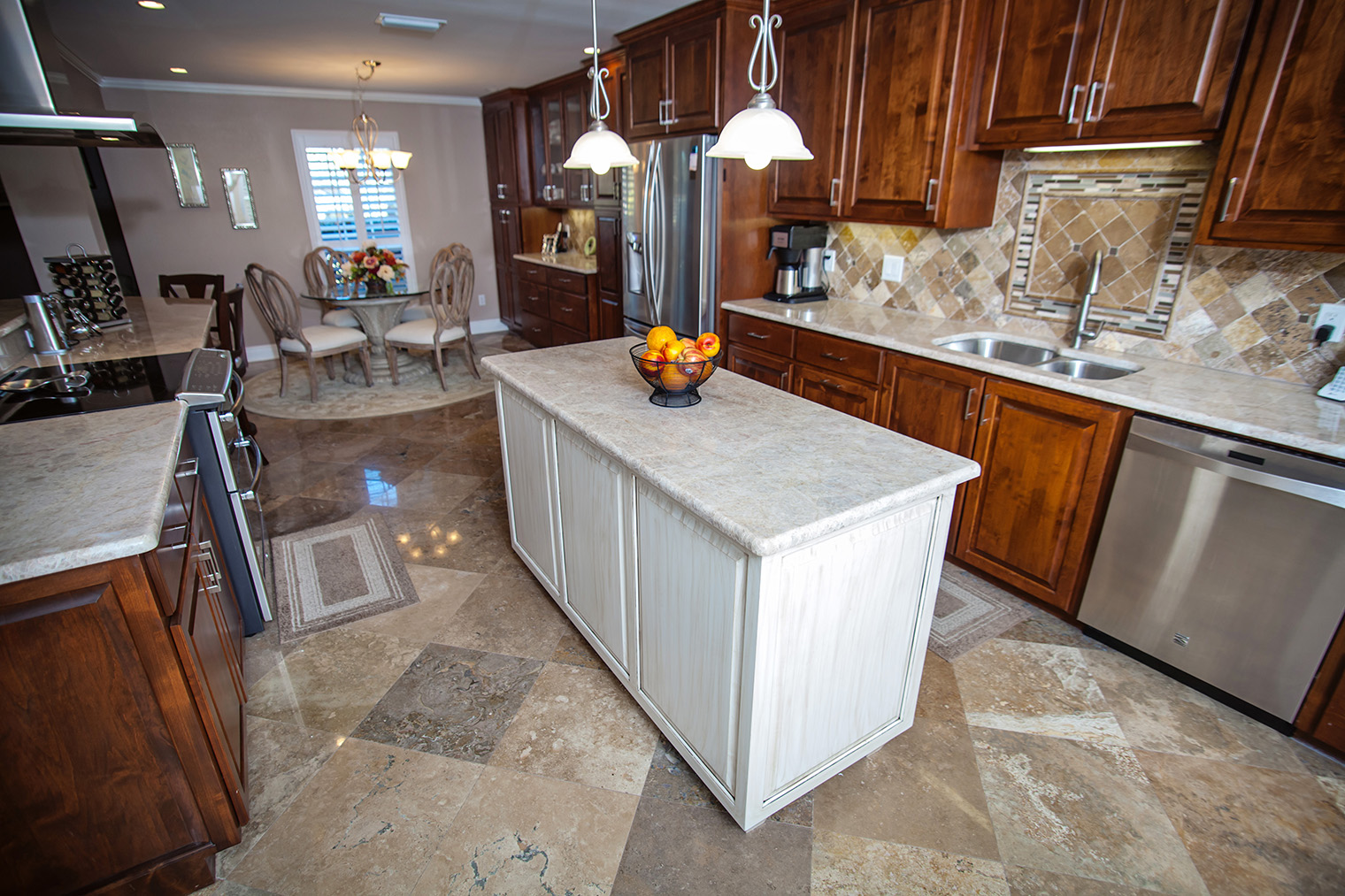
- Florida homeowners can match countertops with cabinet colors, backsplashes, and flooring
Finding Your Perfect Granite Countertop Color
Which One Should You Choose?
It all depends on your lifestyle and what matters most to you.
Go for natural stone if you:
- Want a truly unique, one-of-a-kind countertop
- Love the natural, organic look of real stone
- Don’t mind doing a little extra care to keep it looking great
Choose engineered stone if you:
- Prefer a consistent and uniform appearance
- Want something very easy to maintain and strong
- Have a busy home and need surfaces that can handle daily use
Picking between natural and engineered stone isn’t about which is “better,” it’s about which fits your home and your needs. Both options are beautiful and practical in their own ways.
Countertop Installation Tips
Countertop installation is very important to make sure it lasts for many years. Always measure your space carefully and choose a professional installer who has experience with both engineered and natural stone. Proper support and leveling are key to preventing cracks or uneven surfaces.
Pre-Template Requirements: A decision-maker MUST be present. Cabinets must be level, and farm sinks installed. Provide all appliance model numbers to your salesperson before templating. Pre-Installation Requirements: Turn off water valves and clear out all items beneath the sink/cooktop bases. Post-Installation: You must wait 48 hours before scheduling a plumber for undermount sinks.
Take your time selecting the right edges, finishes, and placement. Following these simple steps helps your countertop look beautiful and function perfectly in your kitchen or bathroom.
Things to Consider Before Choosing
- Lifestyle: For busy households, engineered stone is easier to maintain, but if you want a luxurious or elegant look, natural stone is the better choice.
- Kitchen/Bathroom Use: Engineered stone works best in high-use areas like busy kitchens, while natural stone is ideal for display or low-use areas where beauty is the priority.
- Long-Term Care: Engineered stone requires only occasional cleaning, but natural stone needs sealing and careful maintenance to keep it looking its best.
Ready to choose the perfect countertop
Keeping your countertops clean and well-maintained helps them last longer and look beautiful. A few simple tips can make daily care very easy.
- Engineered Stone: Clean with soap and water; avoid abrasive pads to prevent scratches.
- Natural Stone: Use a pH-neutral cleaner and wipe spills immediately to avoid stains.
- General Tip: Always use soft cloths or sponges when cleaning any stone surface.
- Extra Care: Do not put hot pans on the counters. Always use a trivet or potholder between the countertop and any hot pan or heat source. Treat it like Formica as far as heat is concerned.
Conclusion
Choosing between engineered stone vs natural stone depends on what matters most to you. If you want low maintenance and a uniform look, engineered stone is a great choice. If you prefer natural beauty and elegance, natural stone is the better option.
Both types are strong and durable, so you can pick based on your lifestyle, budget, and design preference. Both options will give your kitchen or bathroom a beautiful and functional countertop that lasts for years.
Ready to choose the perfect countertop?
Contact us today to explore our full range of engineered and natural stone options. Our experts will help you pick the best stone for your style, budget, and lifestyle.
Pensacola, FL
Visit Us: 7011 Pine Forest Road, Pensacola, FL 32526
Call Us: (850) 941-0270
Hours: Monday – Friday: 8 a.m. – 5 p.m., Saturday: 9 a.m. – 2 p.m.
Pace, FL
Visit Us: 4590 Jernigan Road, Pace, Florida 32571
Call Us: (850) 994-1872
Hours: Tuesday – Friday: 9 a.m. – 5 p.m., Saturday: 9 a.m. – 2 p.m.
Fort Walton Beach, FL
Visit Us: 35 Miracle Strip Pkwy SW, Fort Walton Beach, Florida 32548
Call Us: (850) 301-0716
Hours: Tuesday – Friday: 8 a.m. – 5 p.m., Saturday: 9 a.m. – 2 p.m.
Contact us today to schedule a free consultation!
FAQs
Q1: Which is better, Engineered Stone vs Natural Stone?
Engineered stone is easier for low maintenance. Natural stone is great if you want unique beauty and don’t mind extra care.
Q2: Do I need to seal engineered stone?
No, engineered stone usually doesn’t need sealing because it is non-porous. This makes it low-maintenance and easy to clean, so spills and stains can be wiped away quickly without extra care.
Q3: Can I put hot pans directly on Quartz?
No. Engineered quartz is NOT heat safe. Excessive or prolonged heat can permanently scorch and damage the resin surface. Always use a trivet.
Q4: How often do natural stone countertops need to be sealed?
Granite must be sealed annually. Premium quartzite, dolomite, calcite, and marble must be sealed semi-annually (every 6 months) to protect against stains.
Q5: What is the difference between granite and quartz countertops?
Granite is natural and unique; quartz (engineered stone) is uniform, low-maintenance, and very durable.