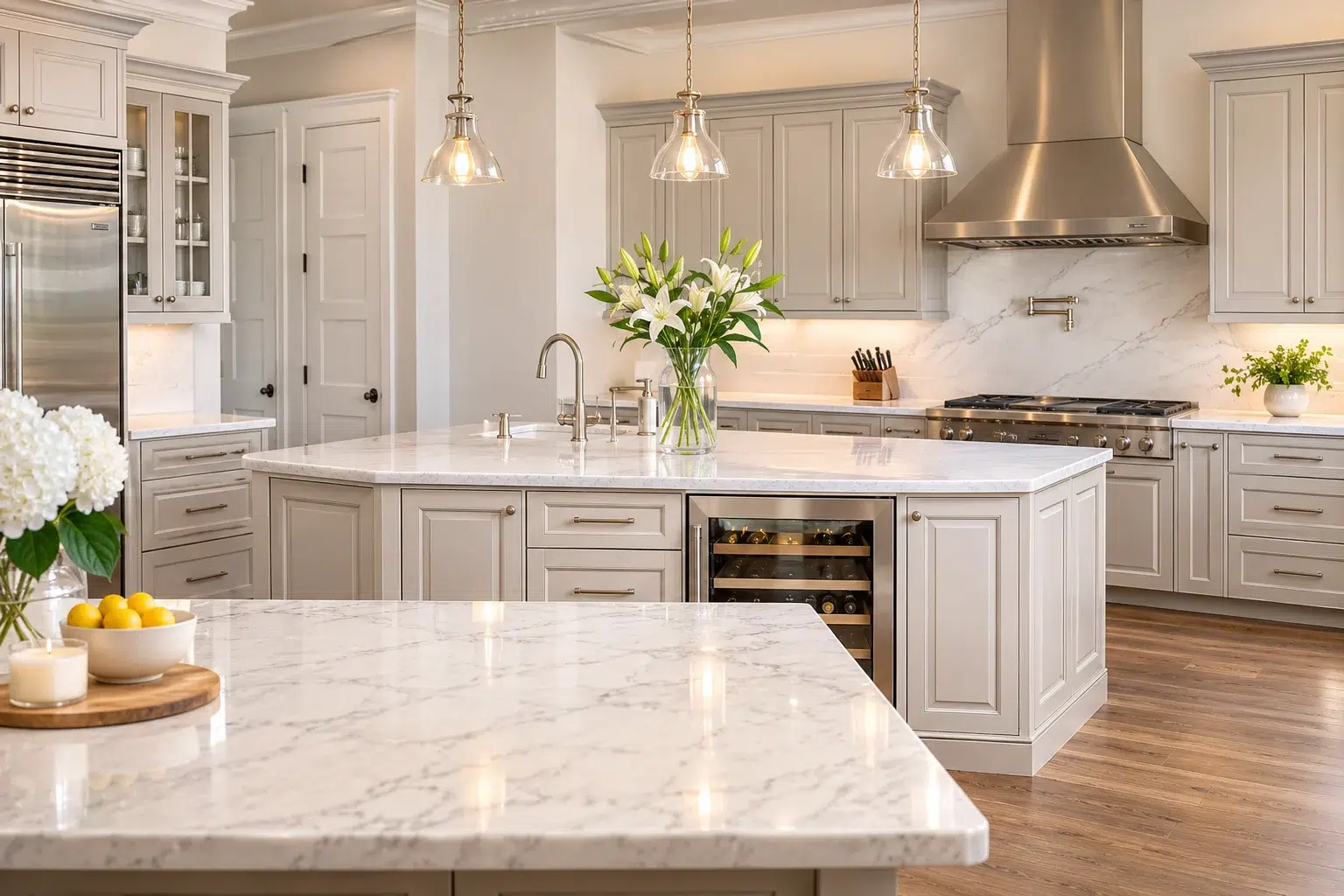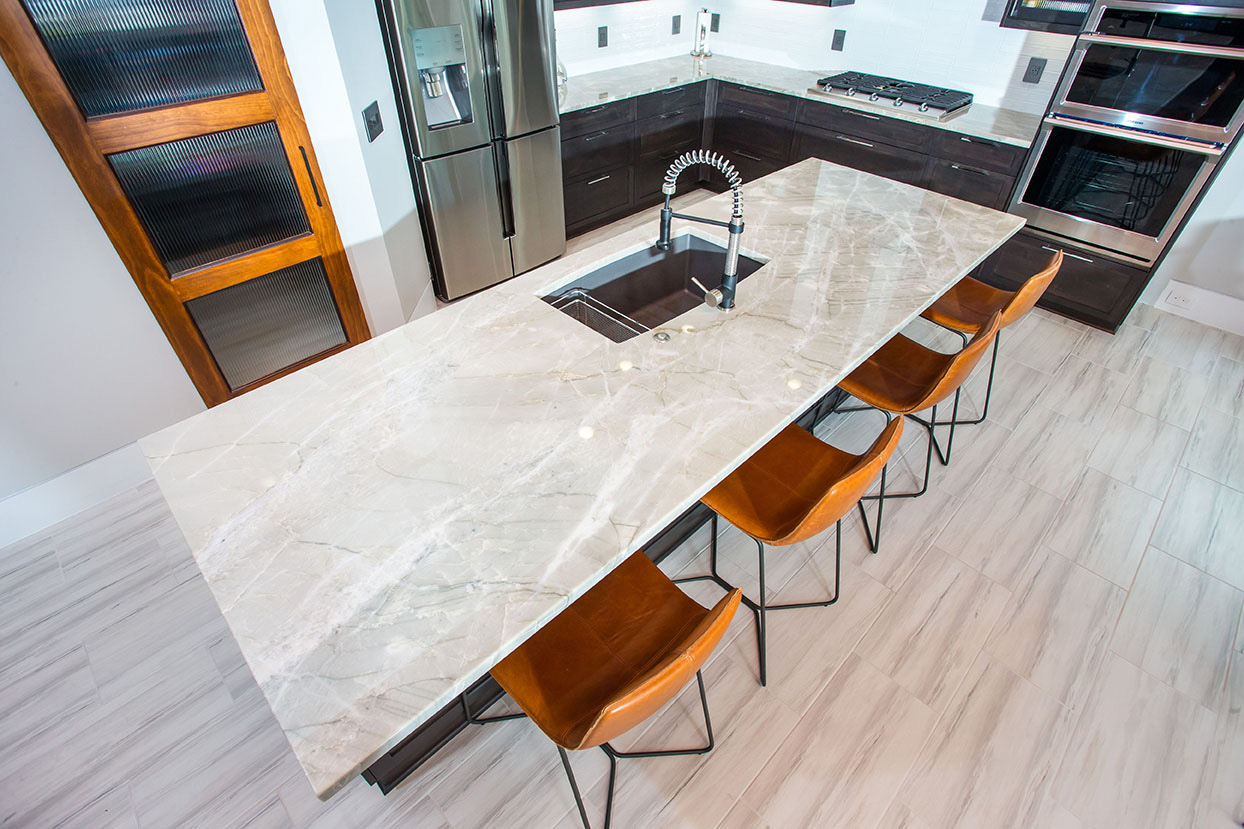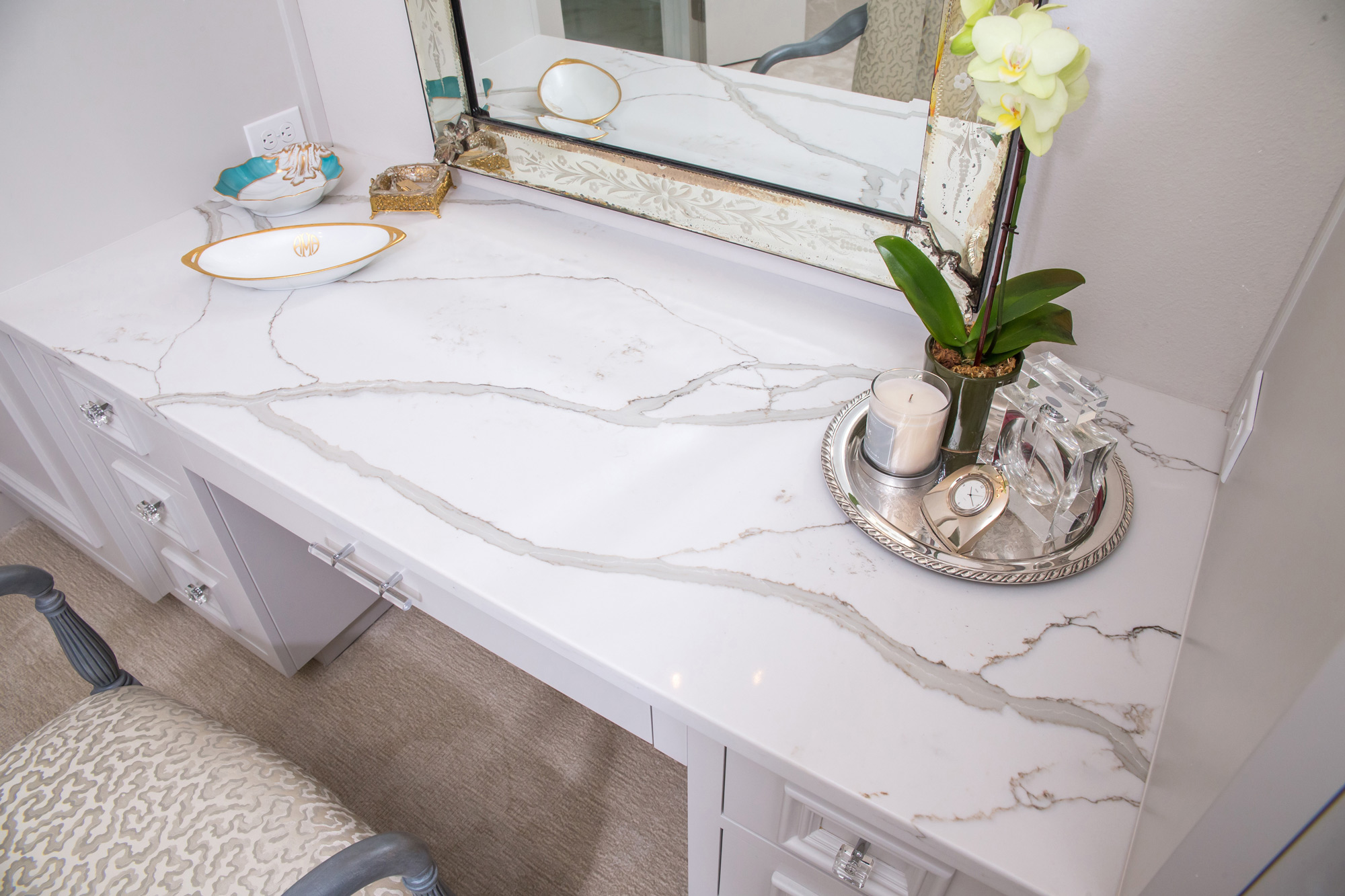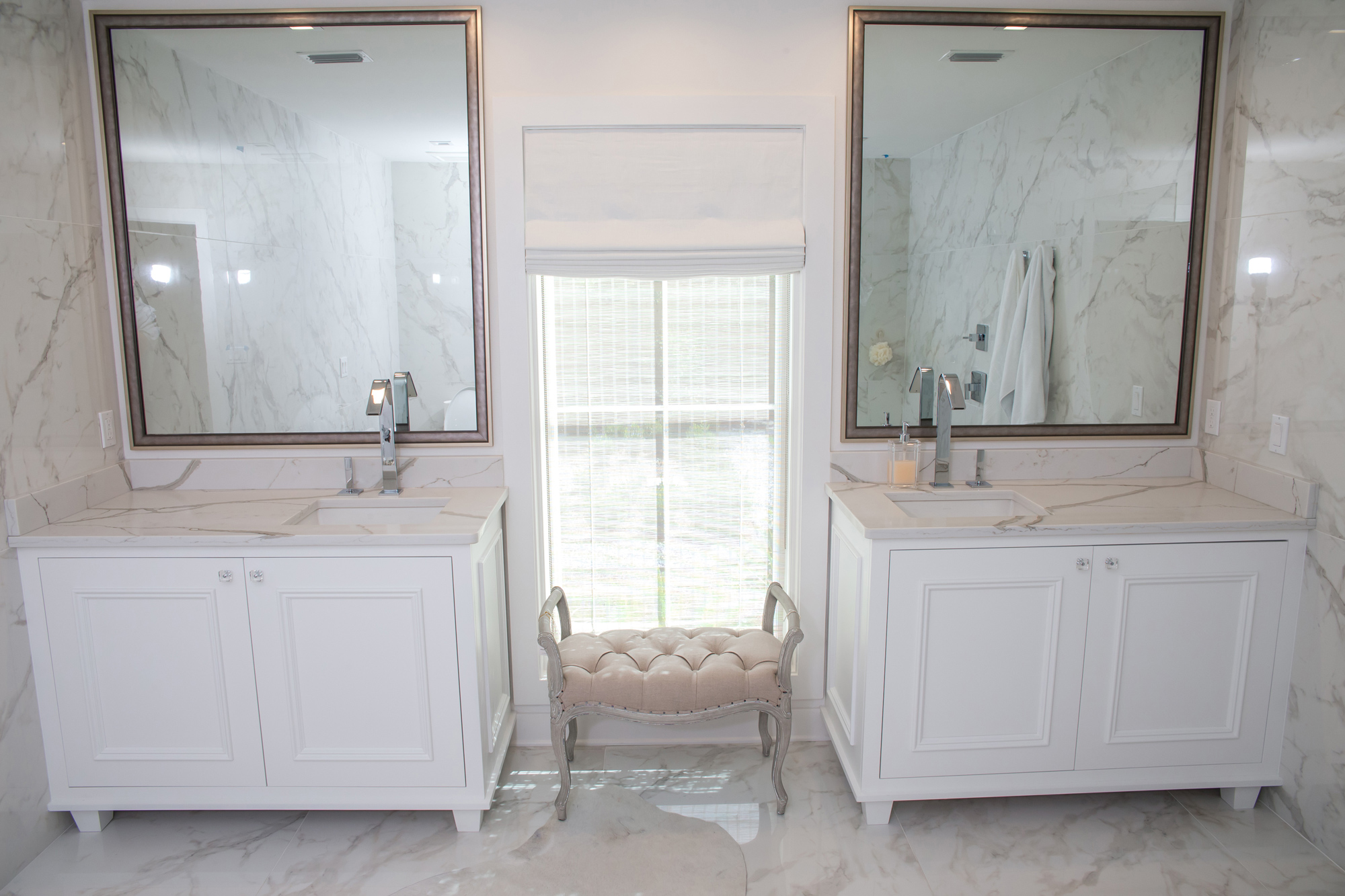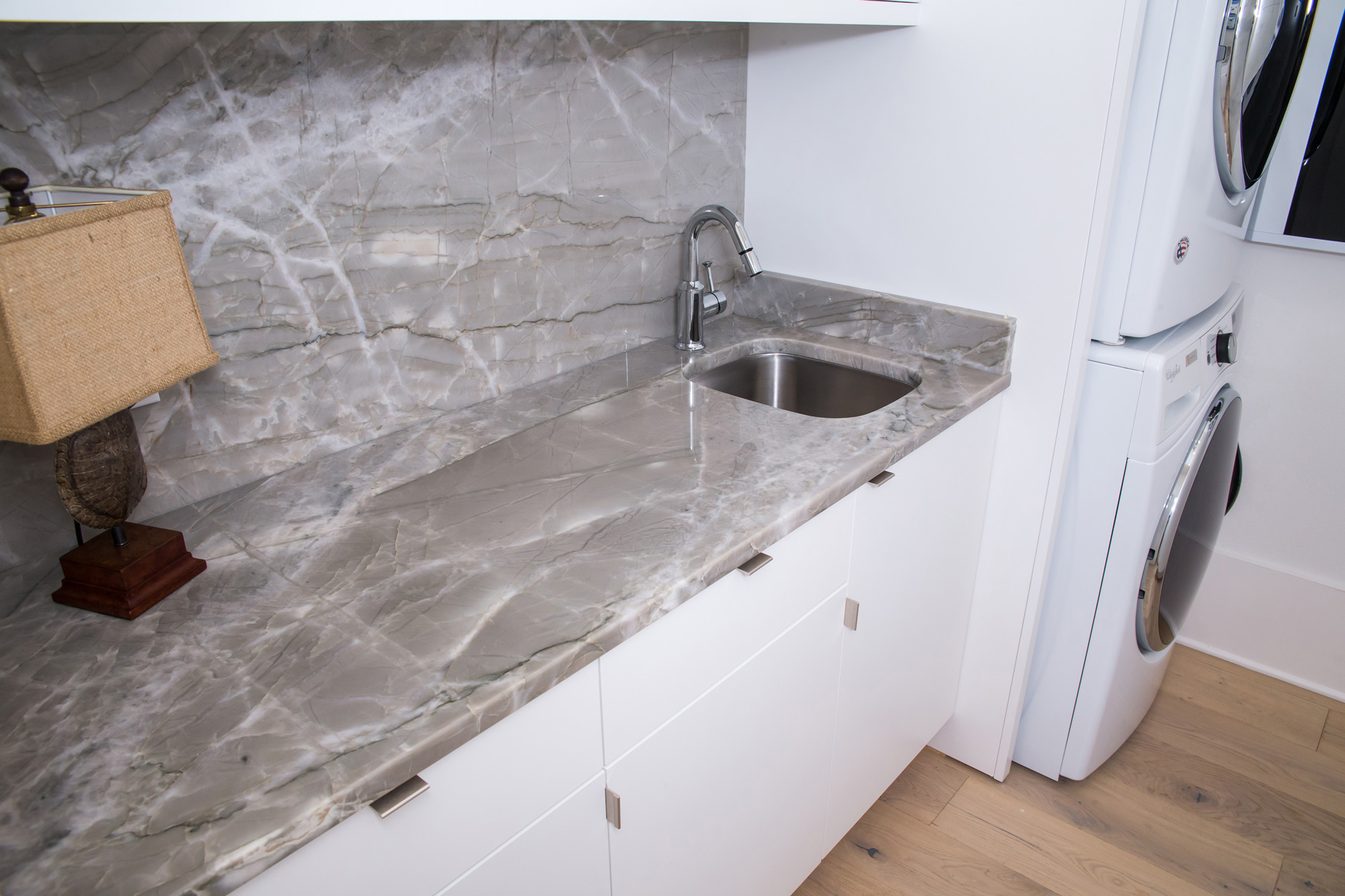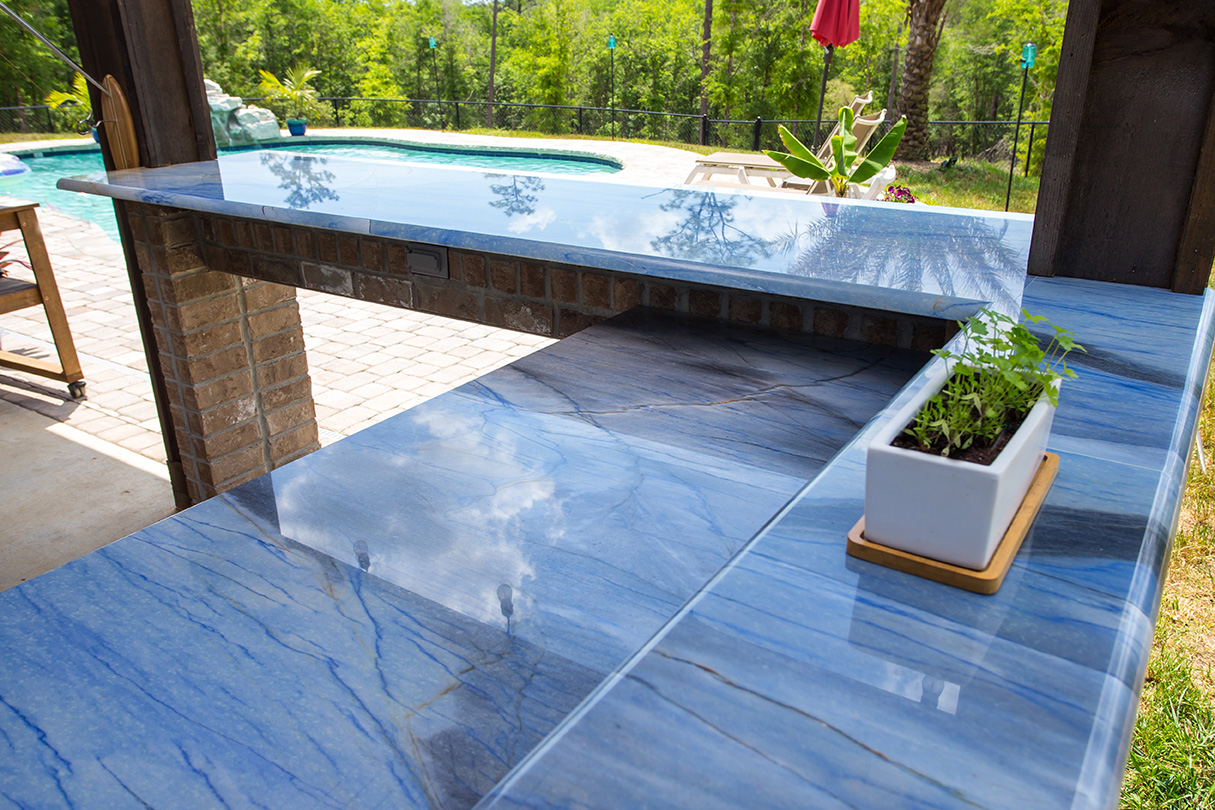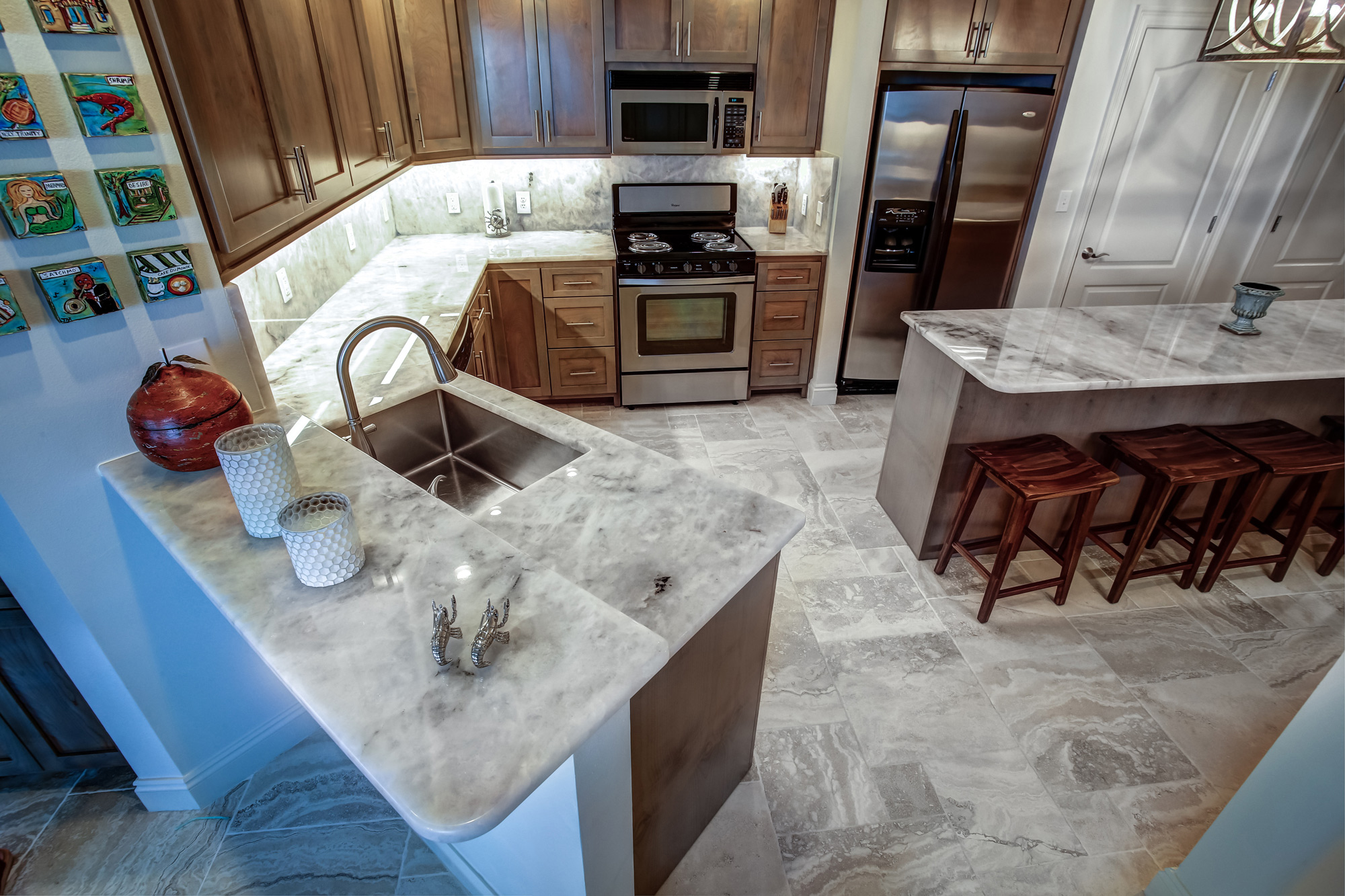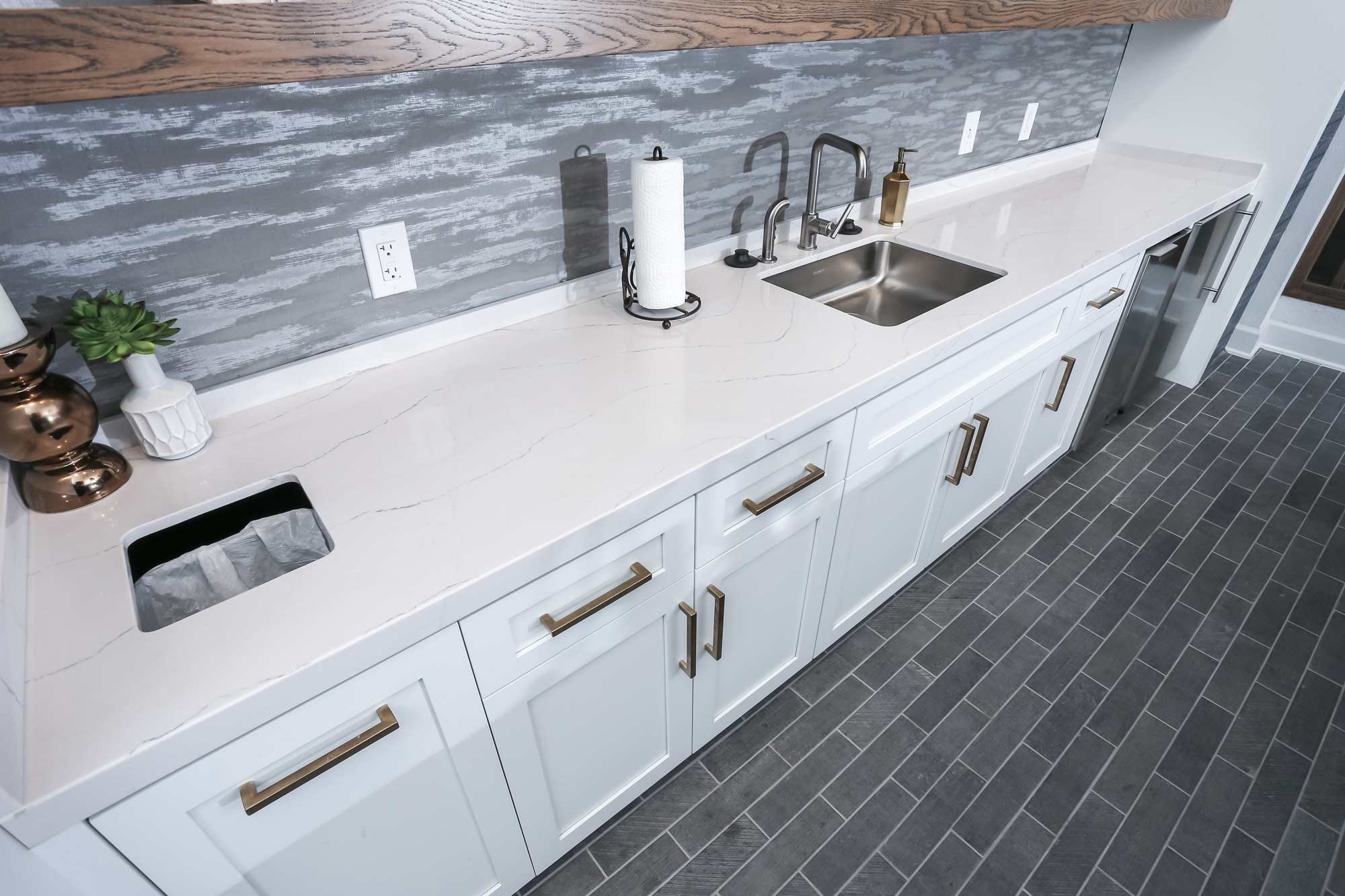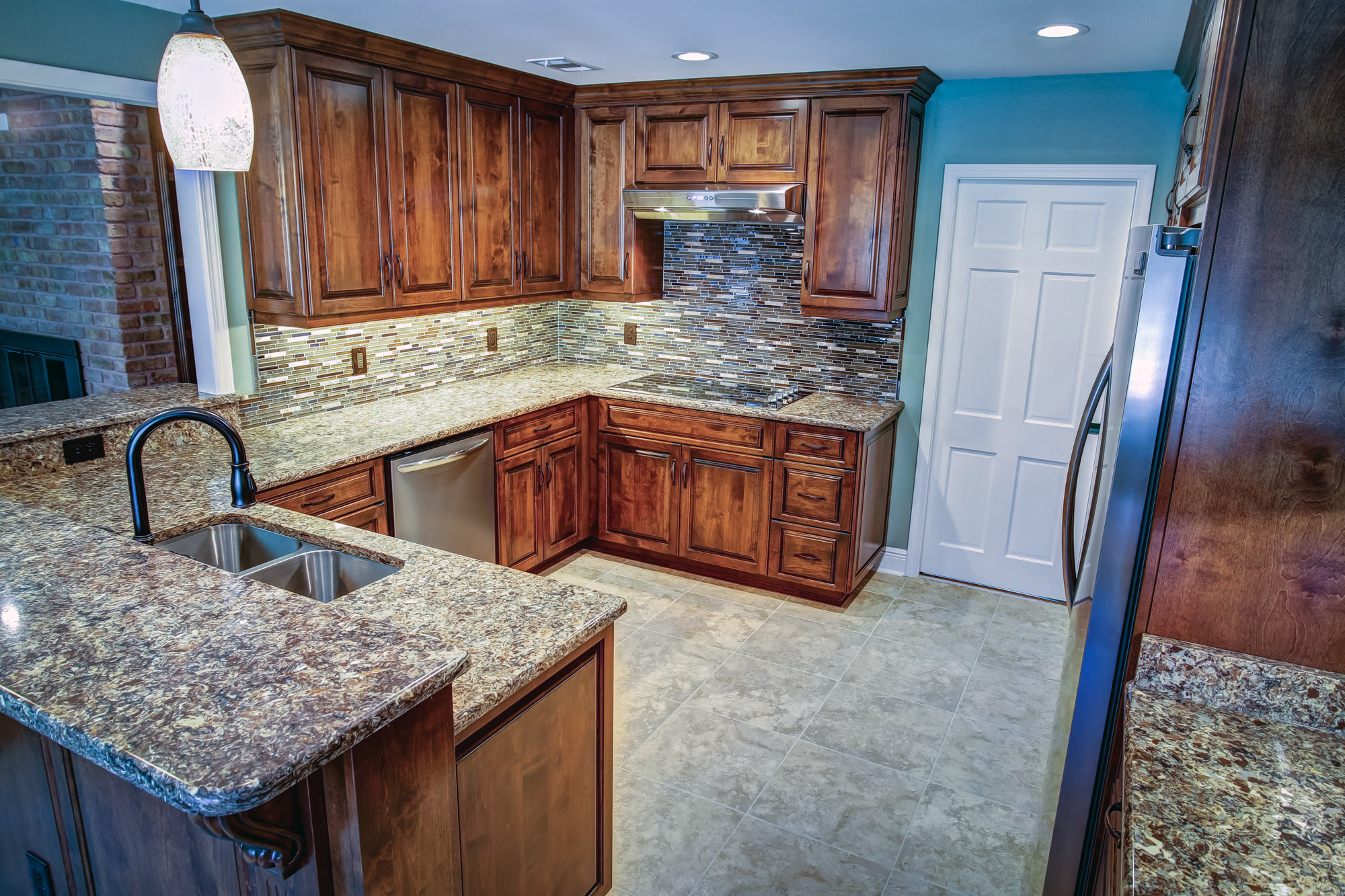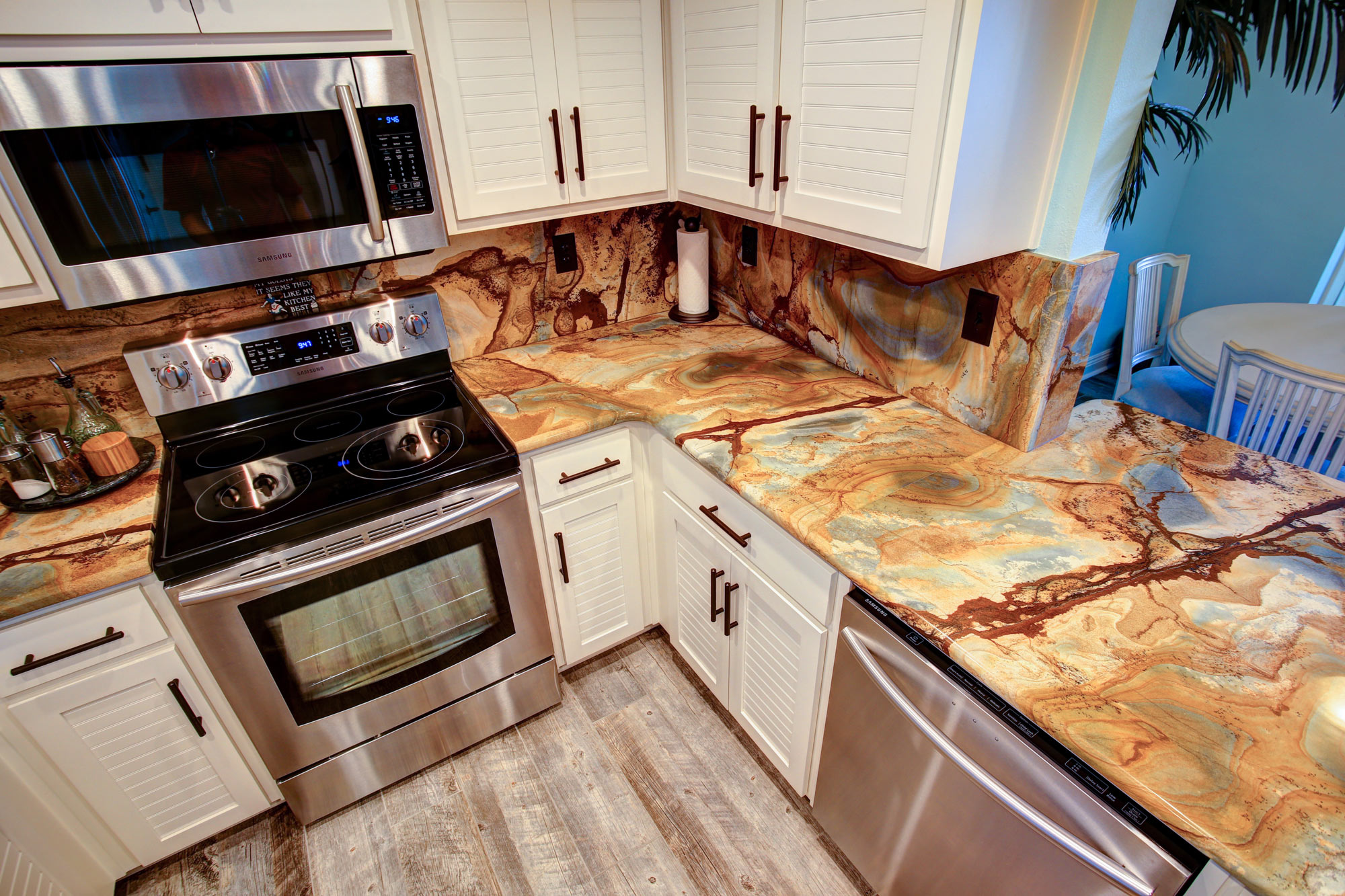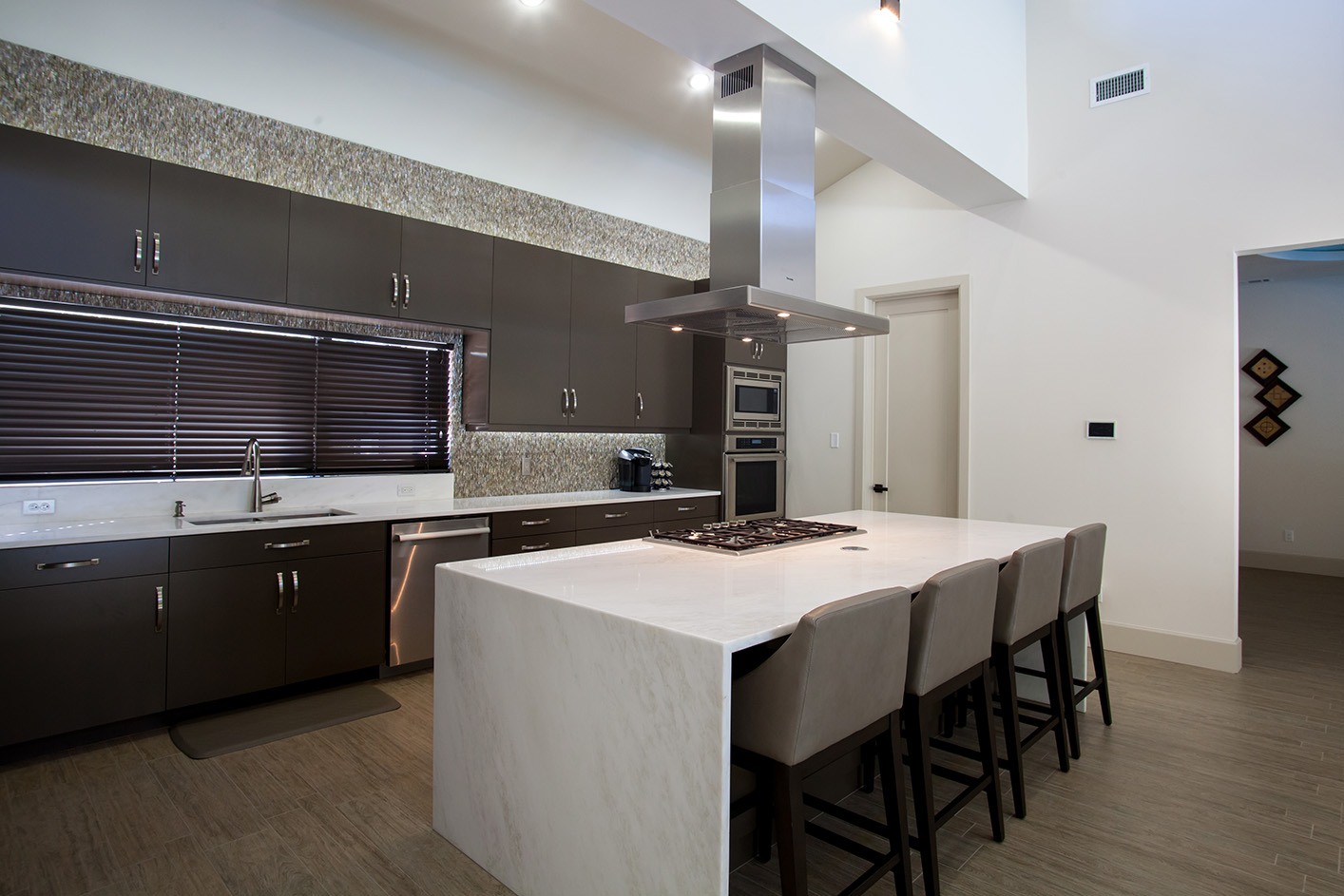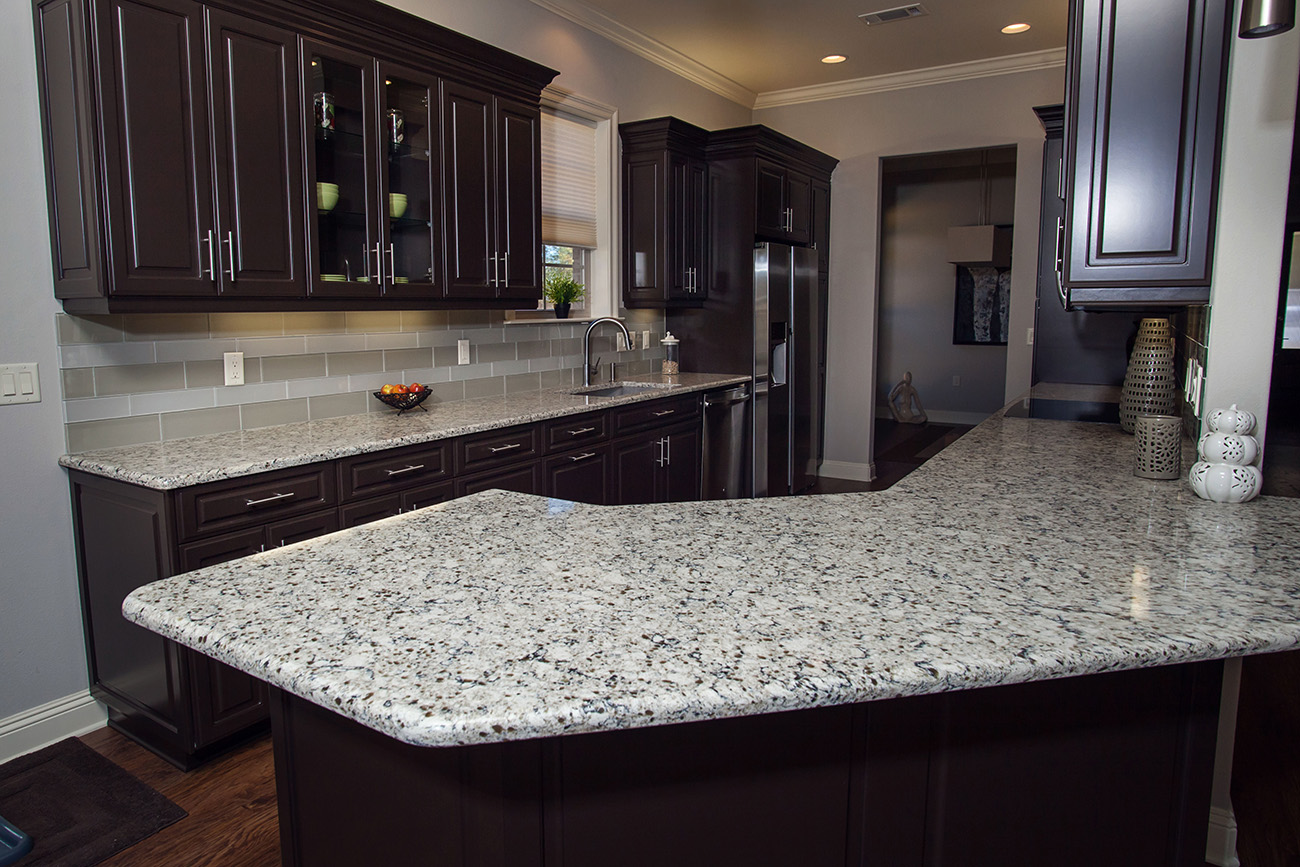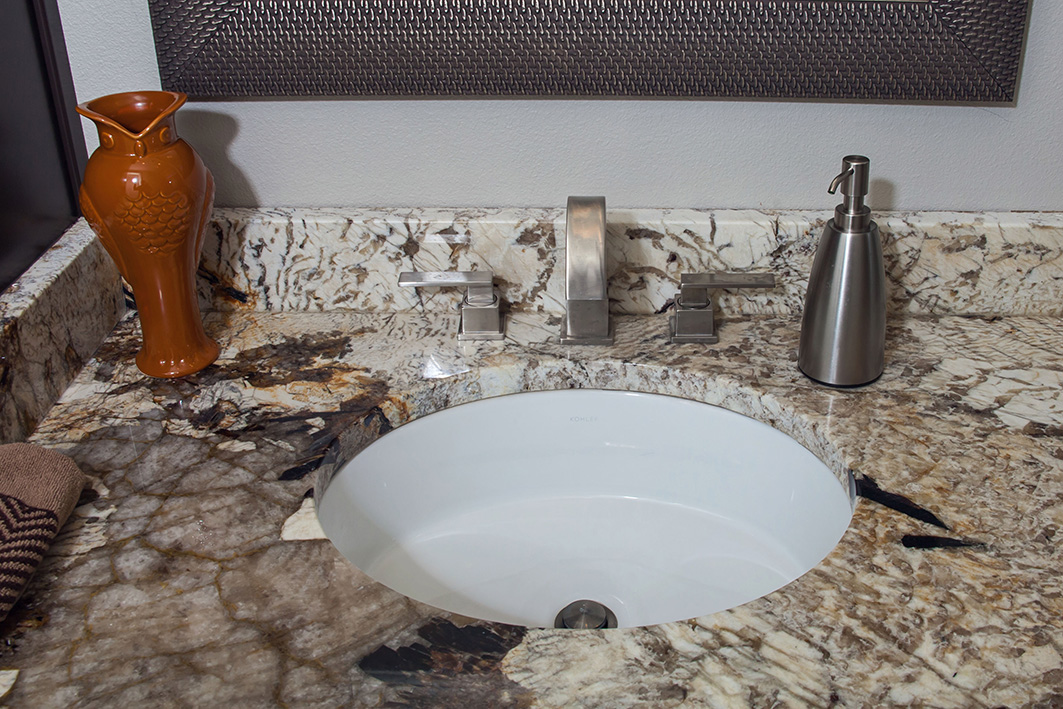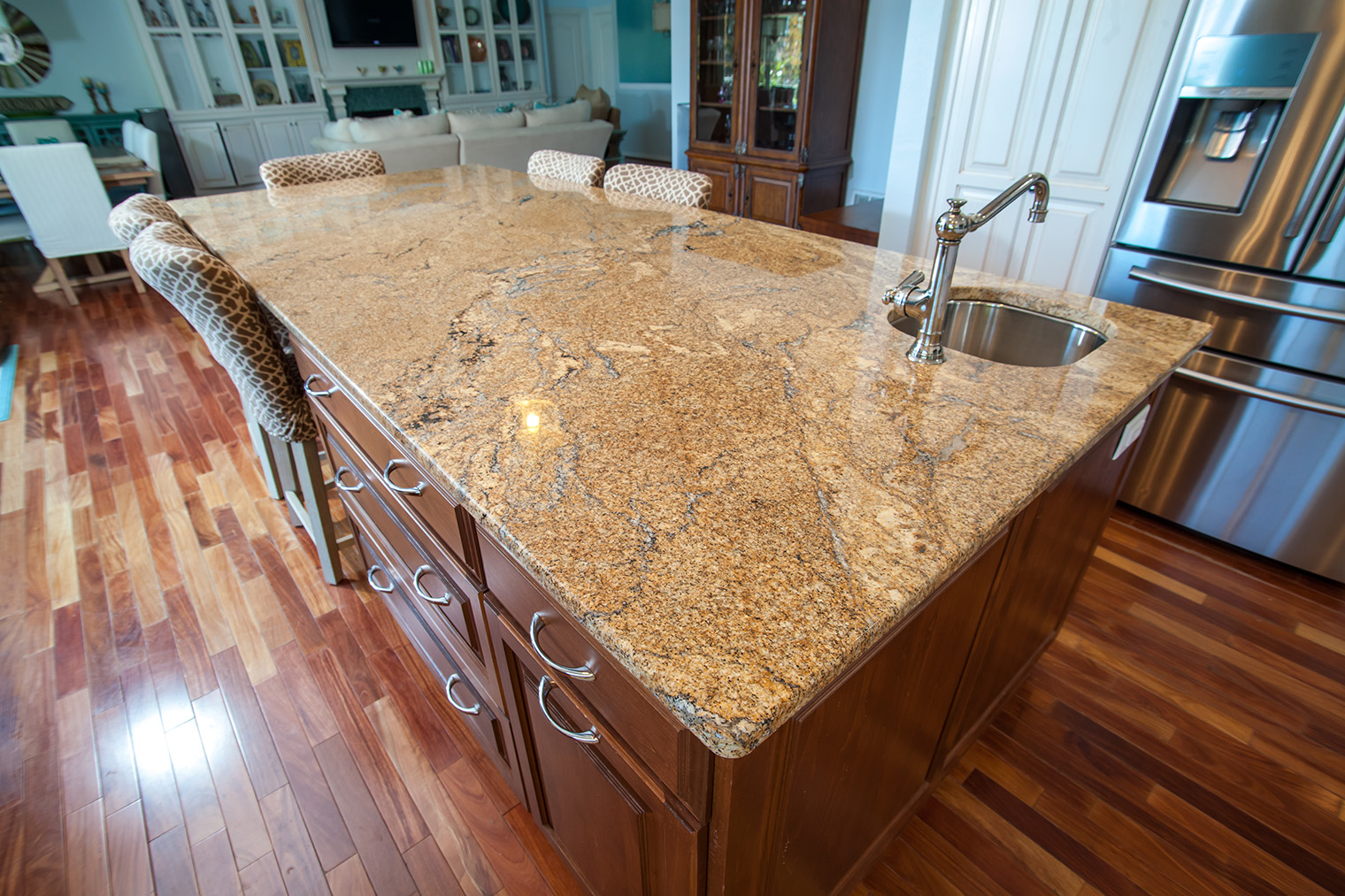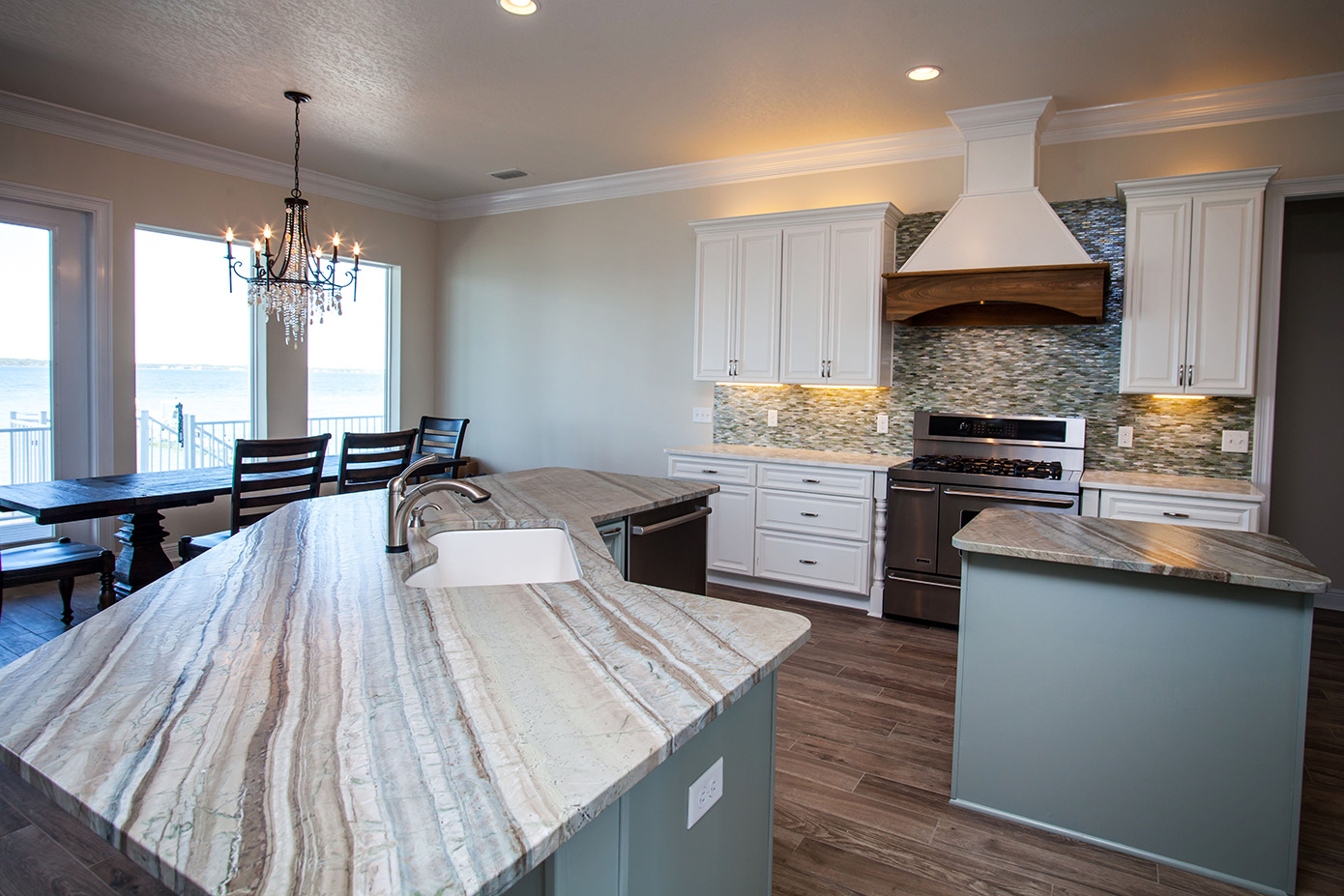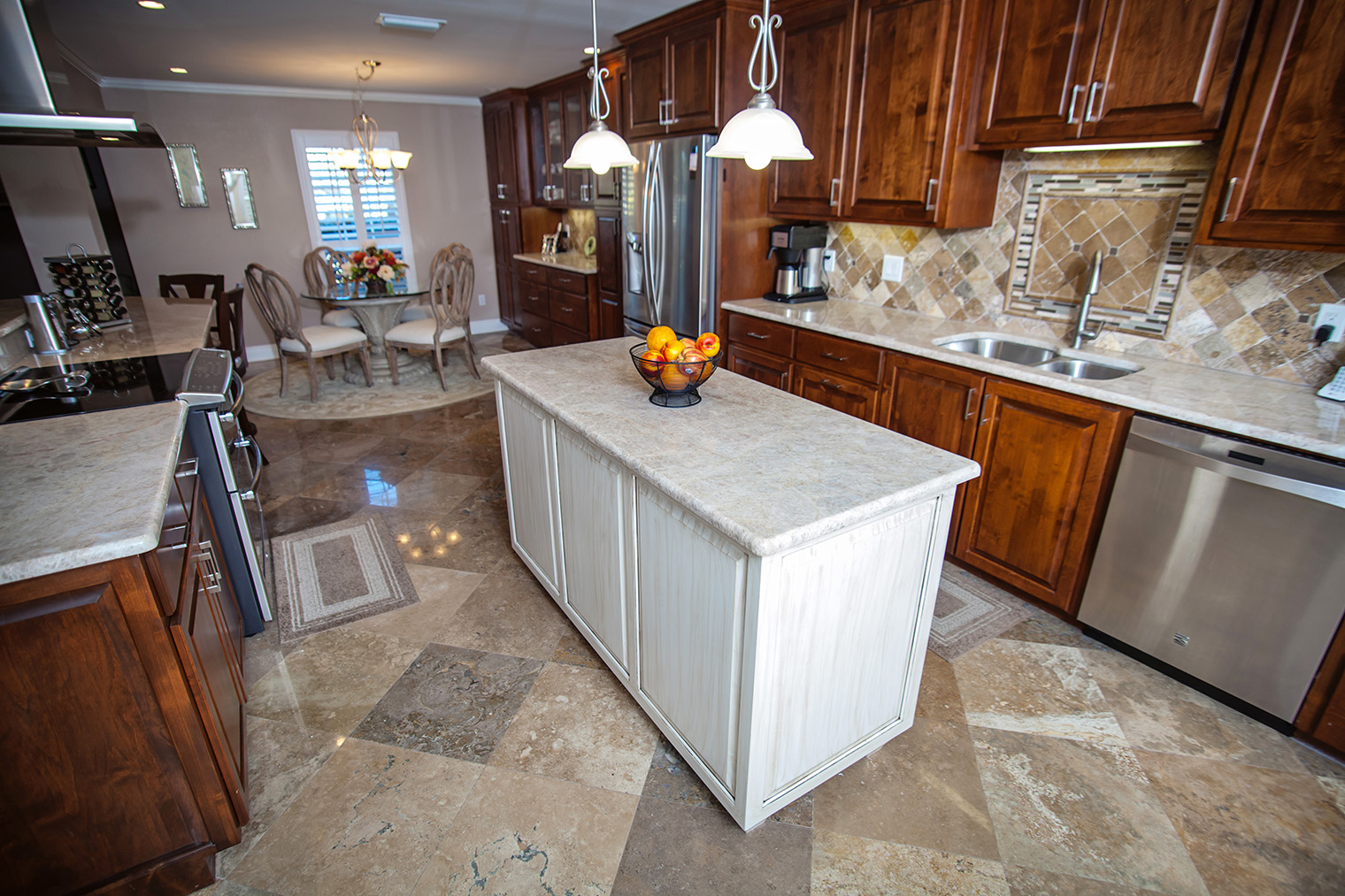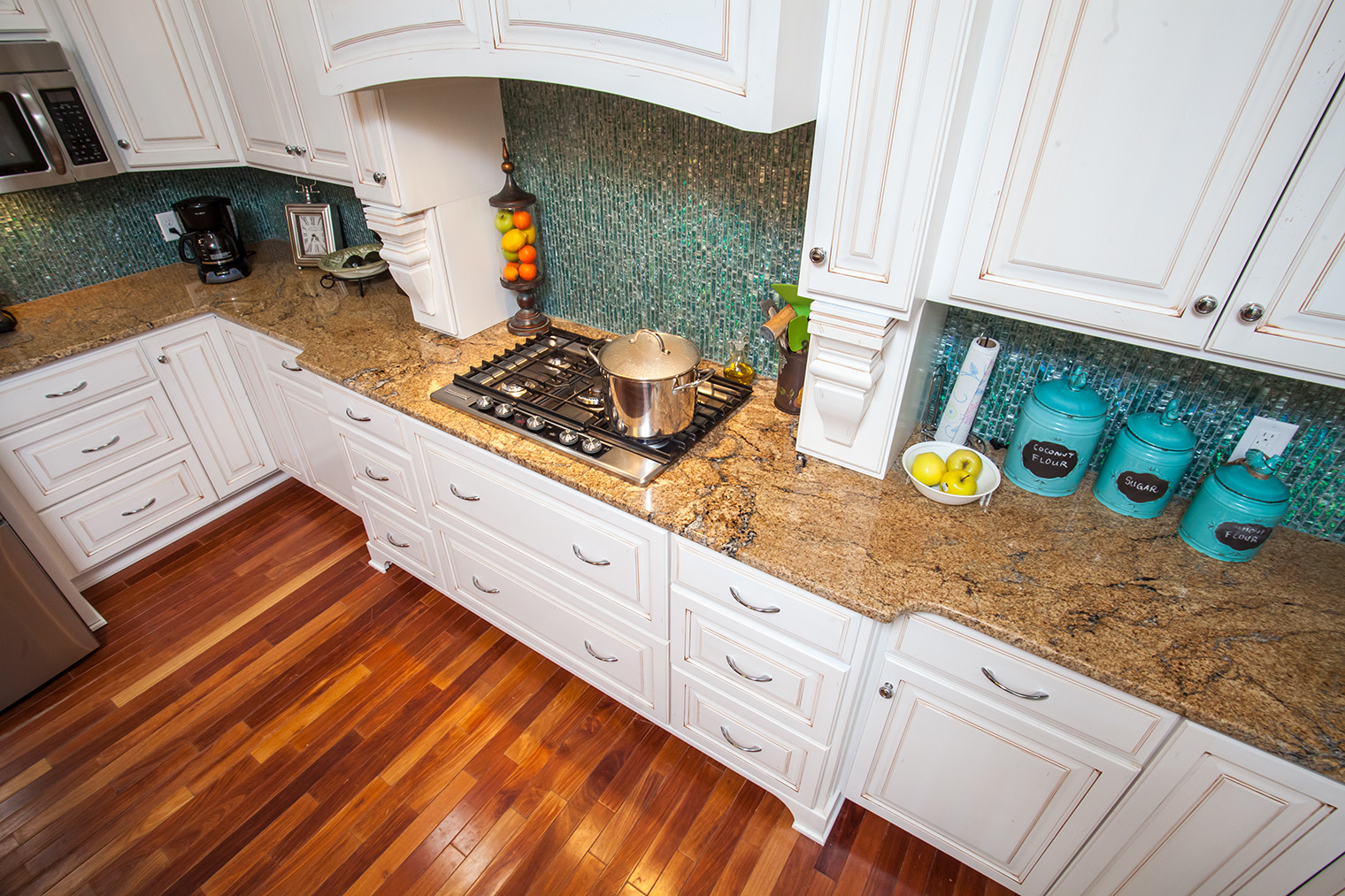
Countertop edges come in a handful of shapes. The most common types of countertop edges are eased, beveled, bullnose, ogee, and mitered. The right one depends on your stone, your style, and how you use your kitchen.
It’s a small detail with a big effect. The edge changes how the whole room looks. It also affects how easy the counter is to clean and how likely it is to chip. So it pays to choose one on purpose.
At Superior Granite, we’re a family-owned company that opened in 2005. We have showrooms in Pensacola, Pace, and Fort Walton Beach, and our sales associates can walk you through your edge options. This guide breaks down each style, so you know what to ask for.
What Is a Countertop Edge Profile, and Why Does It Matter?
An edge profile is the shape cut into the front edge of your countertop. It’s made during fabrication, after your slab is measured and cut to size. The profile changes how the counter looks, how it feels under your hand, and how well it holds up day to day.
Here’s why it matters:
- Look. A clean edge feels modern. A curved, detailed edge feels traditional.
- Feel. Rounded edges are softer to the touch than sharp ones.
- Chipping. Sharp corners can chip, especially on softer stones.
- Cleaning. Deep curves can hold crumbs and grime.
- Cost. For granite, the price depends on the slab and the edge style, so your edge can change your quote.
You choose your edge during fabrication. There are plenty of options for customizing edges, finishes, and extra add-ons, so ask your sales associate what’s available for your stone. Some people call these countertop edge profiles. Others say countertop edge styles. They mean the same thing.
What Are the Types of Countertop Edges?
Most countertops use one of five edges: eased, beveled, bullnose, ogee, or mitered. Eased and beveled look clean and modern. Bullnose is soft and rounded. Ogee is ornate and traditional. Mitered edges look thicker. Here’s a closer look at each one.
Eased Edge
An eased edge is a square edge with the sharp corner softened slightly. It’s simple and modern, and it’s one of the easiest shapes to live with.
Beveled Edge
A beveled edge has the corner cut at an angle. It gives you a crisp, clean line with a little more definition than an eased edge.
Bullnose Edge
A bullnose edge is rounded, either fully or only along the top. It’s soft to the touch, so it’s often a good fit for homes with kids.
Ogee Edge
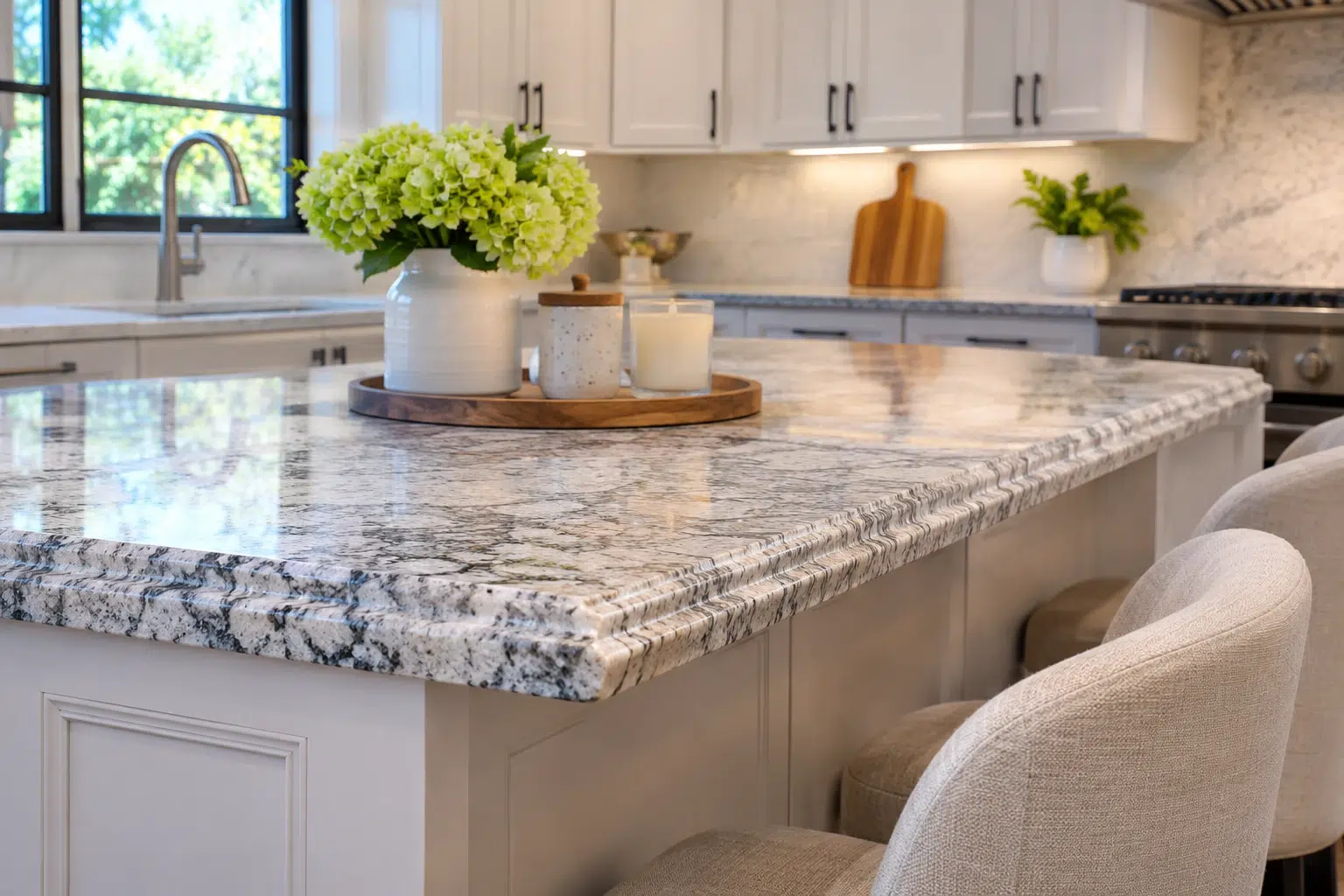
An ogee edge has a decorative S-shaped curve. It gives a classic, traditional look. The curves can collect crumbs, so it needs a little more attention when you clean.
Mitered Edge
A mitered edge joins two pieces of stone at an angle, so the edge looks thicker. Some fabricators offer it, so ask whether it’s available for your stone.
You might also hear about a waterfall edge, where the stone continues down the side of the cabinet. So which one’s best? It depends on your stone, your cabinets, and your routine. The next sections help you sort that out.
How Does Your Stone Affect Your Edge Choice?
Your stone shapes which types of countertop edges make sense. The softer the stone, the more careful you should be with sharp corners. Granite and quartz handle most edges well. Marble and calcite are softer, so rounded shapes often suit them better.
Here’s how each one behaves:
- Granite. It’s one of the hardest natural stones, and it resists scratches and heat. That gives you plenty of edge options.
- Quartz. It resists scratches and chipping. The resin mixed into quartz gives it a little flexibility, so it’s less prone to breaking. It can also be custom-fabricated in any shape and size. Quartzite is a natural stone that’s harder than granite. Curious about it? Read our guide to eased edges on quartzite countertops.
- Marble. It’s softer and more porous than granite. A heavy object can chip or crack it, and sharp edges are more at risk.
- Calcite. It’s soft, so it can scratch, stain, and etch more easily. Gentle, rounded edges are often the safer pick.
Want to compare stones in person? Browse our natural stone options, then ask which edges suit the one you like.
How Do You Match Your Edge to Your Cabinets, Flooring, and Style?
Match the edge to the feel of the room. Clean, simple cabinets pair well with eased or beveled edges. Detailed, traditional cabinets pair well with ogee or bullnose. Busy flooring or bold hardware usually calls for a simpler edge, so nothing fights for attention.
| Your room | Edge that often fits | Why |
| Simple, flat cabinet doors | Eased or beveled | The clean lines echo the doors. |
| Detailed, traditional cabinets | Ogee or bullnose | The curves match the detail. |
| Patterned or busy flooring | A simple edge | It keeps the room from feeling crowded. |
| Bold or decorative hardware | A simple edge | The hardware stays the star. |
None of this is a rule. It depends on your taste. Here’s a simple trick, though. Bring a cabinet door or a flooring sample to the showroom. Then hold your edge choice up against it.
Which Edge Fits Your Daily Routine?
Simple, rounded edges are usually the easiest to live with. They have fewer places for crumbs to hide. And they’re less likely to chip than sharp corners.
Think about how you use your kitchen:
- Young kids at home. Rounded edges, like bullnose or a softly eased edge, often make sense.
- You want easy cleaning. Pick an edge with fewer curves and grooves.
- Heavy daily use. Granite or quartz with a simple edge is a solid combination.
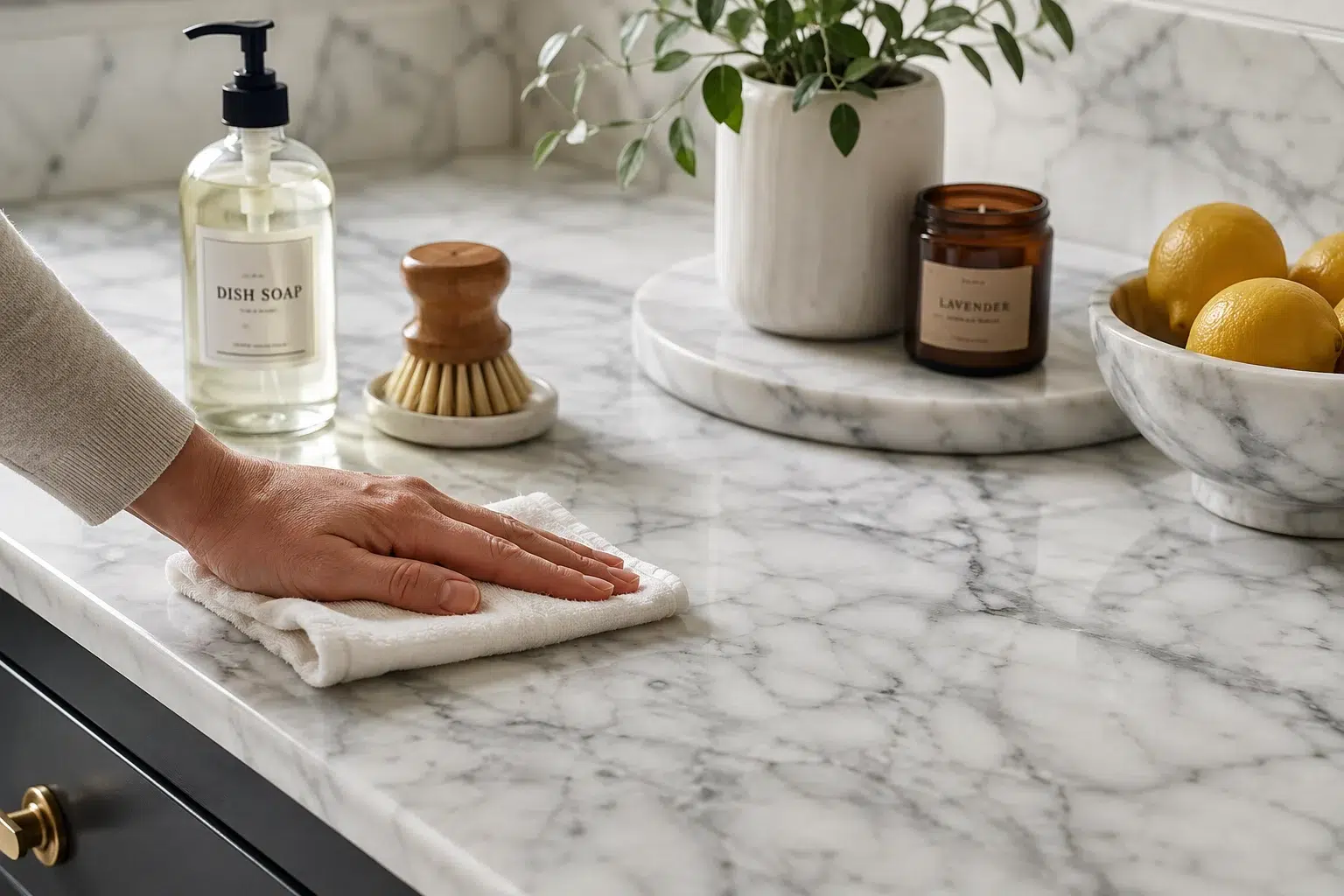
For everyday cleaning, warm soapy water and a microfiber cloth work well. Skip bleach, ammonia, and abrasive sponges.
How Do You Choose Your Edge, Step by Step?
Pick your stone first. Then match your edge to your style and routine, and decide before fabrication starts. Here’s the order that works.
- Choose your stone. Your stone sets the limits for your edge.
- Look at your cabinets and flooring. Decide whether you want a clean look or a detailed one.
- Think about your routine. Kids, cooking, and cleaning all play a part.
- Ask your sales associate about edge options. They can tell you what’s available for your stone.
- Decide before fabrication. Your edge comes after you’ve picked your stone and we’ve taken measurements during our professional templating process. Then we cut your slab during countertop fabrication, and that’s when the edge gets shaped. Ask how your edge choice shows up in your quote.
At Superior Granite, we’re a family-owned company with showrooms in Pensacola, Pace, and Fort Walton Beach. We work with homes and businesses, and our dedicated staff can walk you through your options.
Ready to Talk Edge Options in Pensacola?
Picking from the types of countertop edges is easier when you talk it through with the team that shapes them. Superior Granite is a family-owned company with showrooms in Pensacola, Pace, and Fort Walton Beach. We sell, fabricate, and install natural stone and quartz for homes and businesses.
If you’re looking at countertop edge options in Pensacola, stop by and bring a cabinet door. Ask Superior Granite for a free estimate, and we’ll talk through your stone and your style. You can also contact us to get started.
Pensacola, FL
Visit Us: 7011 Pine Forest Road, Pensacola, FL 32526
Call Us: (850) 941-0270
Hours: Monday – Friday: 8 a.m. – 5 p.m., Saturday: 9 a.m. – 2 p.m.
Pace, FL
Visit Us: 4590 Jernigan Road, Pace, Florida 32571
Call Us: (850) 994-1872
Hours: Tuesday – Friday: 9 a.m. – 5 p.m., Saturday: 9 a.m. – 2 p.m.
Fort Walton Beach, FL
Visit Us: 35 Miracle Strip Pkwy SW, Fort Walton Beach, Florida 32548
Call Us: (850) 301-0716
Hours: Tuesday – Friday: 8 a.m. – 5 p.m., Saturday: 9 a.m. – 2 p.m.
Get quotes now and start your project!
FAQs
1. Do all types of countertop edges work with every stone?
Not always. Granite and quartz handle most edges well. Softer stones like marble and calcite can chip on sharp corners, so rounded shapes often suit them better. Ask your sales associate which edges work for the stone you choose.
2. Which edge is best for a family with young kids?
Rounded edges, like bullnose or a softly eased edge, are often a good fit. They don’t have sharp corners, so bumps hurt less and chips are less likely. Ask your sales associate which rounded options are available for your stone.
3. What if I can’t decide between two edges?
Think about your cabinets and your daily routine. A simple edge is often the safest choice because it suits many styles and is easy to clean. Bring a cabinet door to the showroom and talk it through with your sales associate.
4. Can I use different edges in one kitchen?
Often, yes, but it depends on your layout and your fabricator. Most kitchens look best with one edge throughout. If you want a different look on an island, ask your sales associate whether that’s possible for your stone.
5. Does the edge style change the price?
It can. For granite, the price depends on the slab and the edge style. Ask for your edge to be listed in your quote. We offer free estimates, so you can compare options before you decide.
6. When do I choose my edge?
Before fabrication starts. First, you pick your stone, then we take precise measurements during templating. The edge is part of the customization that happens during fabrication, so decide early and ask your sales associate about your options.
7. Does the edge change how thick my countertop looks?
All of the material we sell is 3cm thick. Some edges can make a counter look thicker, and some fabricators build up the edge to do that. Ask your sales associate what’s possible for your stone.
8. Can I get a free estimate before I choose?
Yes. We offer free consultations and estimates. Visit one of our showrooms or contact us, and bring your layout and the stone you like. Our team will look at your space and give you accurate pricing before you commit.