Choosing a countertop material is one of the most important decisions you’ll make in a kitchen or bathroom renovation. Get it right, and you have a surface that looks great, performs well, and holds up for decades. Get it wrong, and you spend years working around a material that was never the right fit for how you actually live.
The problem is that most homeowners start with the wrong question. They walk into a showroom, fall in love with a slab, and figure out the practical details later. That’s where regret begins. These 10 questions change that. Answer them honestly before you commit to any material, and the right choice usually becomes obvious on its own.
How Will You Actually Use This Space?
This is the question that matters most, and the one most people skip entirely. A kitchen that sees daily cooking, hot pans, and kids doing homework on the island has completely different material needs than a guest bathroom used twice a week.
Harder, more durable stones like granite and quartzite are built for busy kitchens. Softer stones like marble and calcite are better suited to bathrooms or low-traffic areas where they won’t face the same daily pressure. The material should match the space, not the other way around.
How Much Maintenance Are You Willing to Do?
Be honest here; not “could you maintain it” but will you, consistently, over years. Different countertop materials require very different levels of ongoing care.
Quartz countertops need no regular sealing. For granite countertops and across all our locations, sealing once a year is the recommendation. Quartzite requires sealing once a month for the first three months, then semi-annually after that, with extra attention to edges and faucet holes. Marble, Calcite, and Dolomite need semi-annual sealing.
For cleaning across all natural stones, warm soapy water is the safest choice. Avoid bleach, ammonia, citrus-based cleaners, and abrasive scrubs; these damage both the stone and the sealant.
How Important Is Heat Resistance to You?
If you cook regularly, this question matters more than most homeowners realize. Granite and quartzite handle direct heat well; hot items from the stovetop or oven can go directly on the surface without damage. One exception for granite: hot glass dishes like Pyrex can crack from thermal shock, so those still need a trivet. Soapstone is also heat-resistant.
Quartz is the one to watch. Its resin content means it can scorch under prolonged heat; always use a trivet. Marble and calcite should never have hot items placed directly on them either. If heat resistance is non-negotiable for your kitchen, granite, quartzite, and soapstone are options worth considering.
How Scratch-Resistant Does It Need to Be?
The Mohs hardness scale gives you the clearest picture of how each material holds up to daily wear:
| Stone | Mohs Hardness |
|---|---|
| Quartzite | 7 |
| Quartz | 7 |
| Granite | 6–6.5 |
| Dolomite | 3.5–4 |
| Marble / Calcite | 3 |
You can cut directly on granite or quartzite without damaging the stone, though it will dull your knives. Never cut on marble or calcite. For anyone choosing a kitchen countertop material in a Pensacola household that cooks regularly, scratch resistance should rank near the top of the priority list.
How Do You Feel About Natural Variation and Seams?
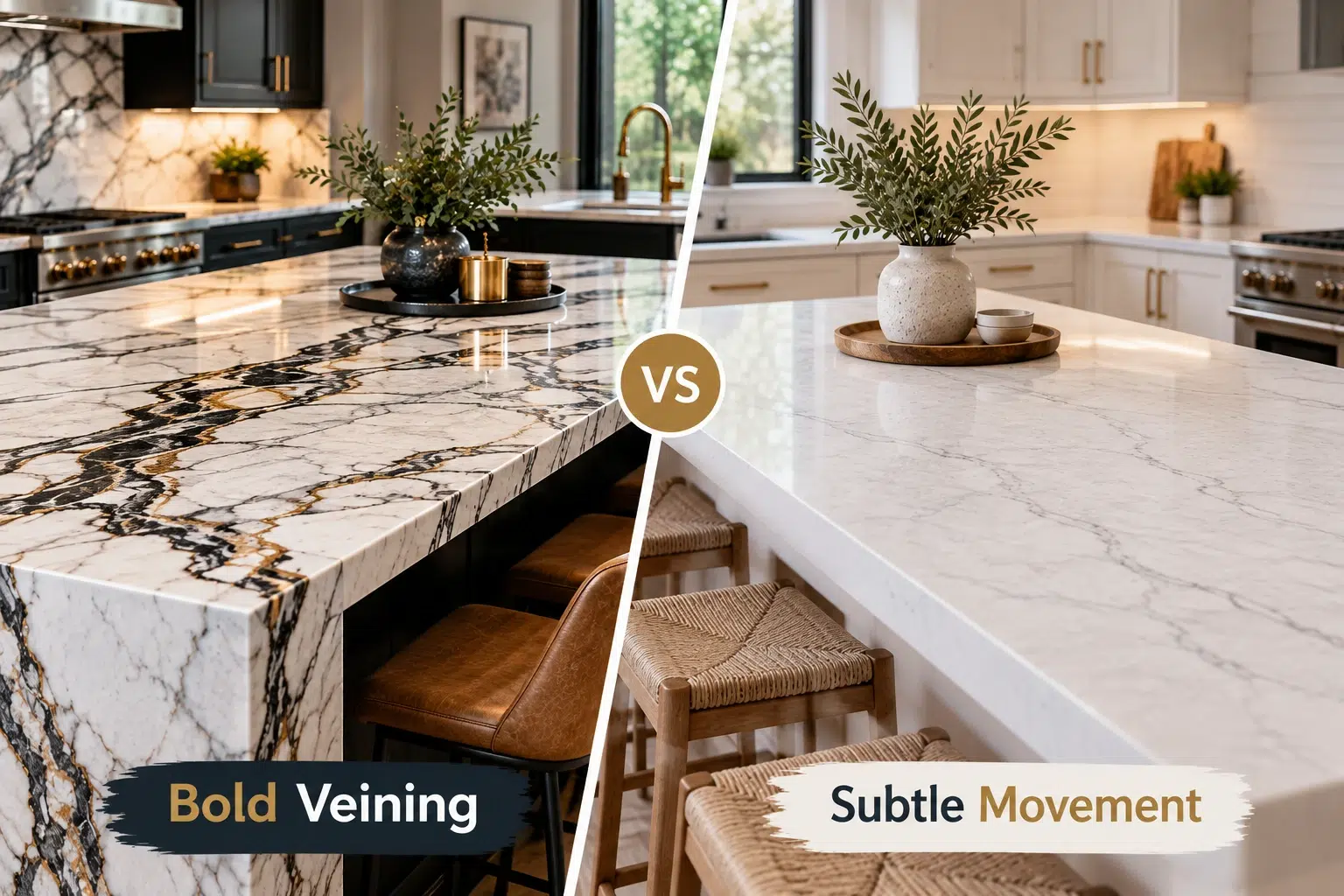
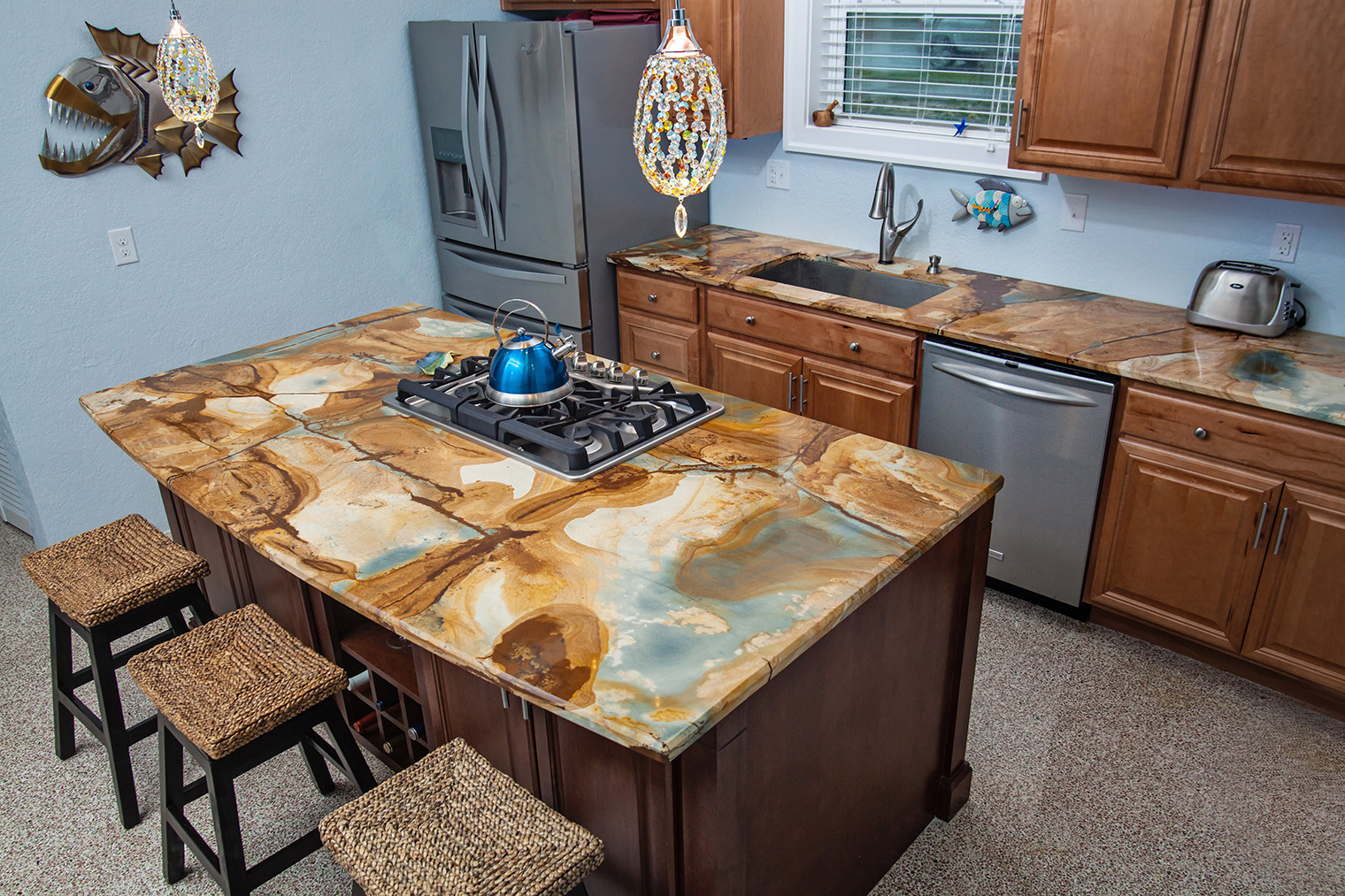
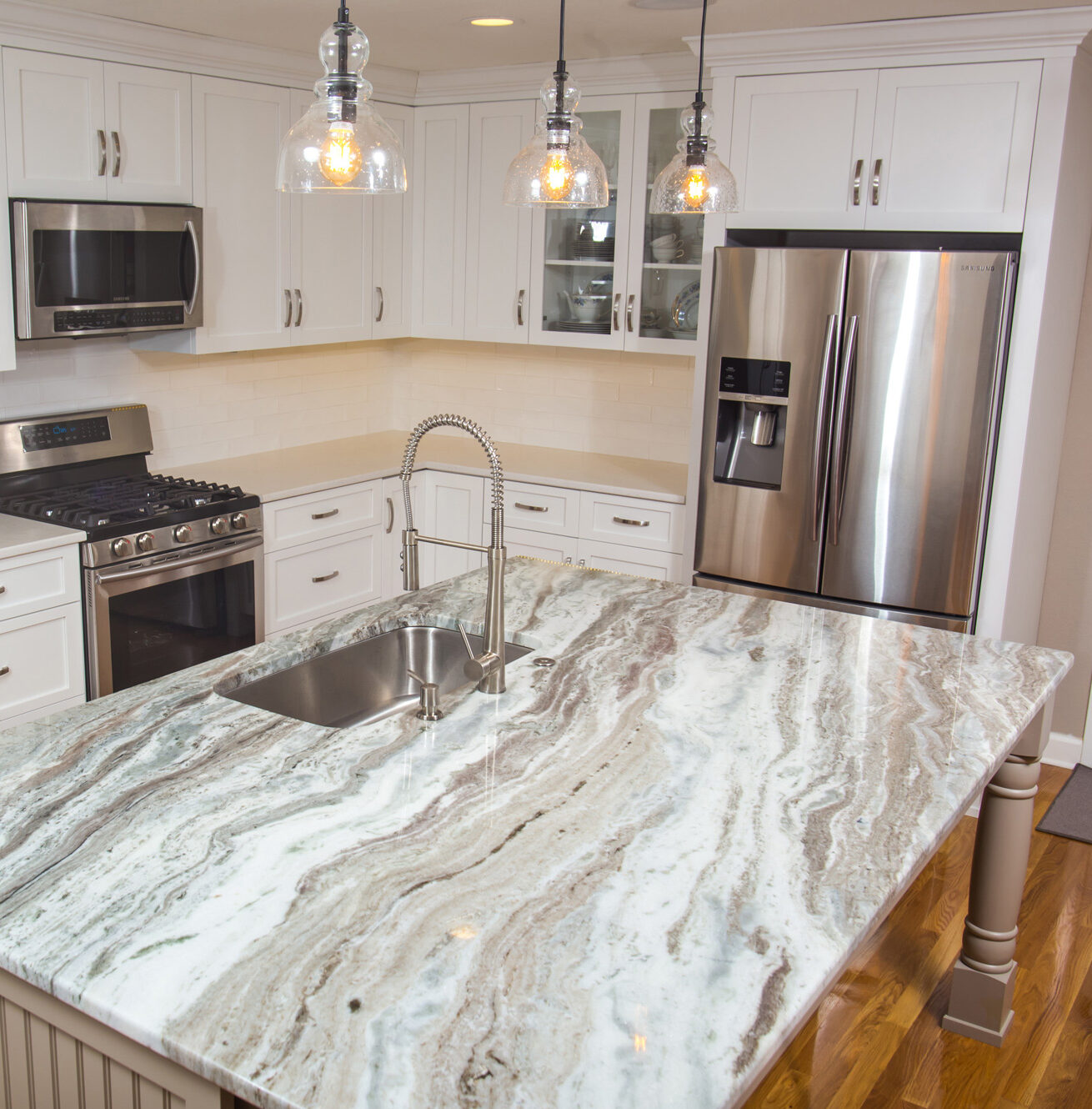
Natural stone comes from the earth; every slab has its own veining, color movement, and mineral patterns. Natural stone can show variation from slab to slab, which matters particularly for larger projects using multiple slabs. Quartzite specifically can vary in color and movement between slabs, so when veining continuity matters, it’s worth discussing slab matching with your fabricator before cuts are made.
Quartz is engineered to a consistent pattern; what you see in the sample is what arrives across every slab. For homeowners who need uniformity across a large installation, that consistency is a real advantage. Book-matched slabs create a mirrored, seamless look where veining flows continuously; if that detail matters to you, raise it early in the selection process.
How Important Are Stain and Etch Resistance?
Staining and etching are two different problems, and understanding the difference matters when you’re choosing a countertop material. Staining happens when liquid penetrates a porous stone and leaves a mark; proper sealing reduces this risk significantly. Etching is a chemical reaction caused by acidic substances like lemon juice, wine, vinegar, or alcoholic drinks. It shows up as dull spots on the surface, and sealing won’t prevent it.
Quartz is non-porous and resistant to both. Granite is porous but seals well and doesn’t etch the way marble does. Marble, calcite, and dolomite are prone to both staining and etching; on soft stones, acids can cause visible damage in less than 20 minutes if a spill is left sitting. The rule across all natural stones: wipe up spills immediately.
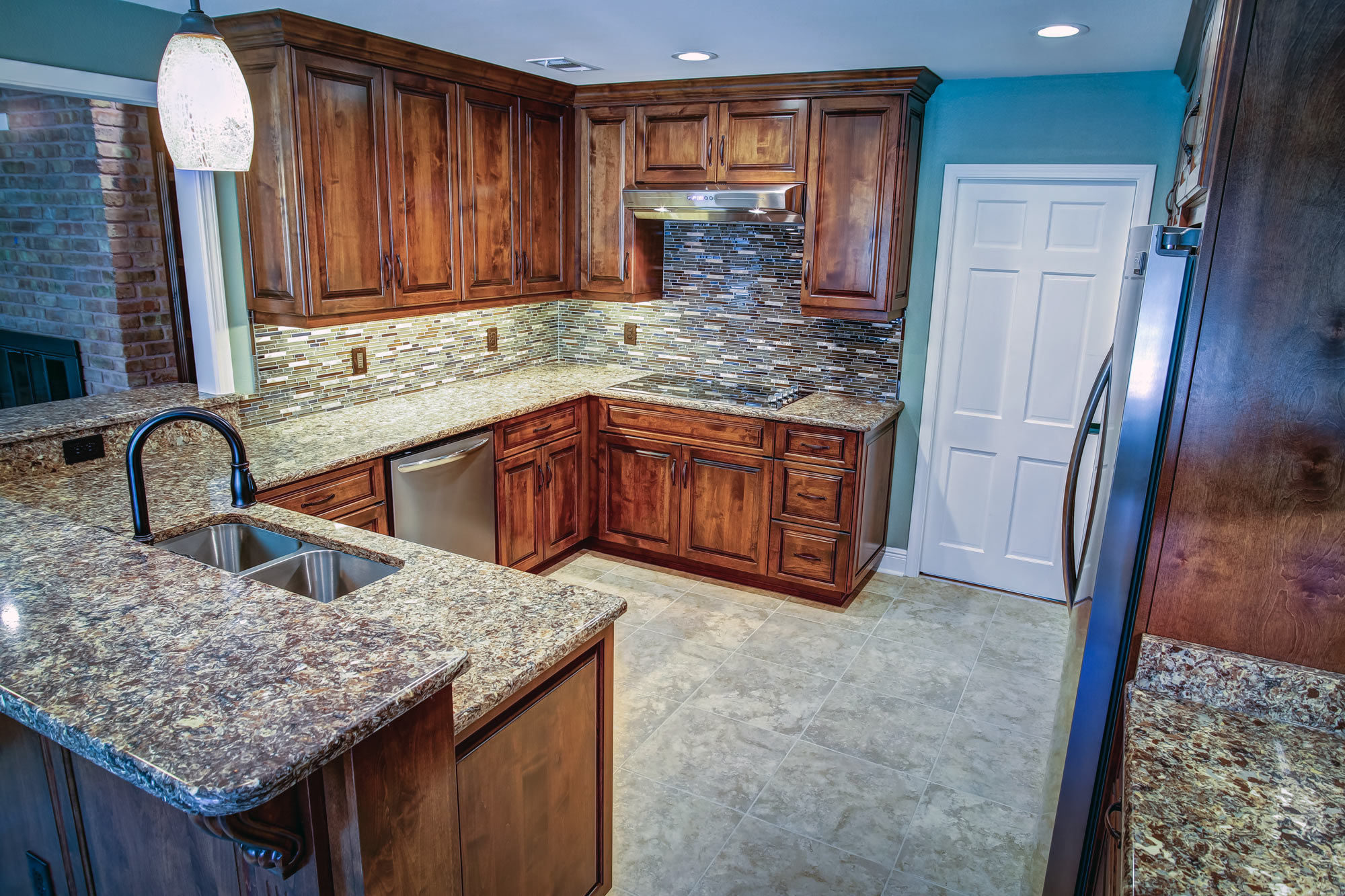
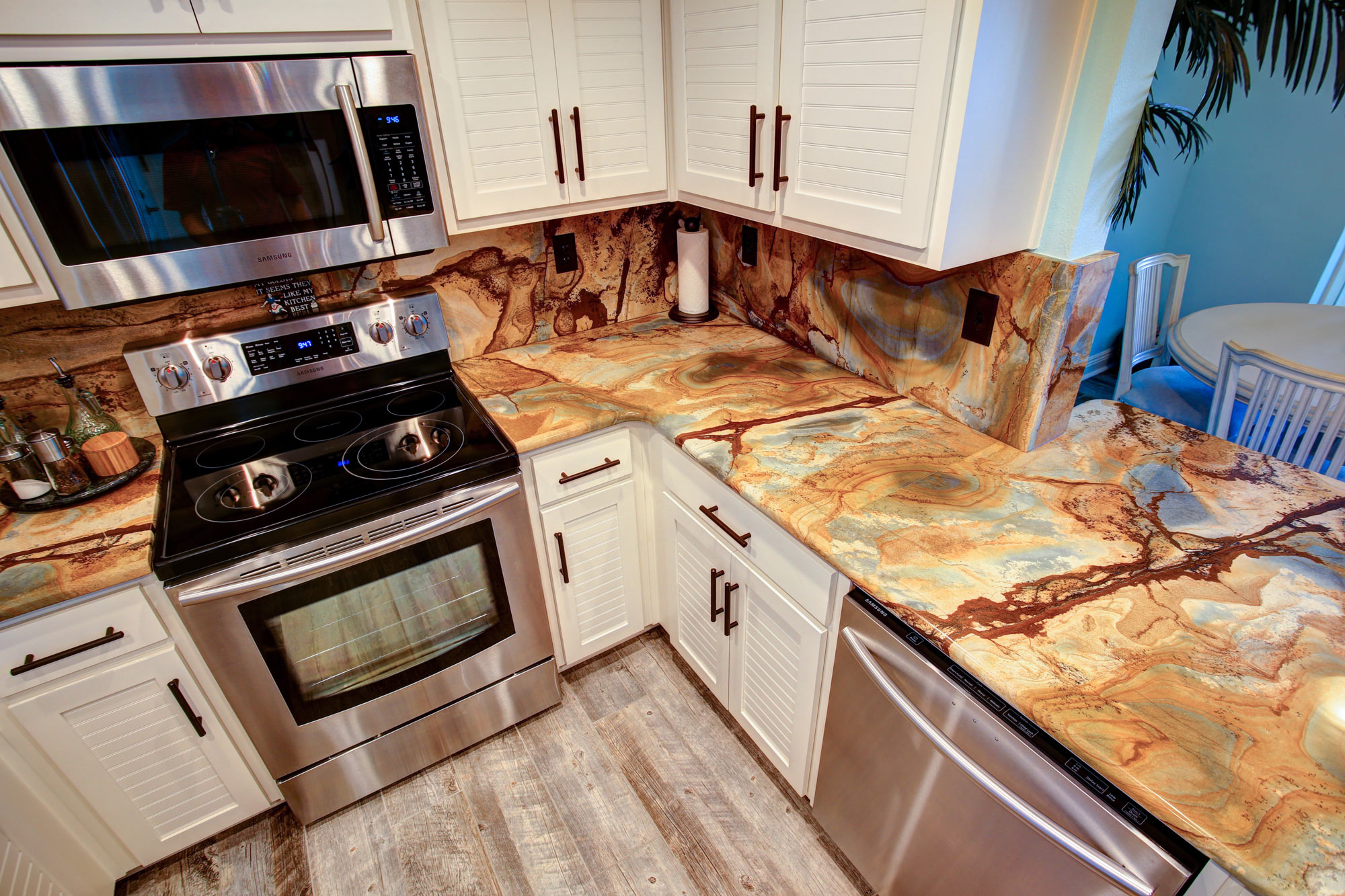
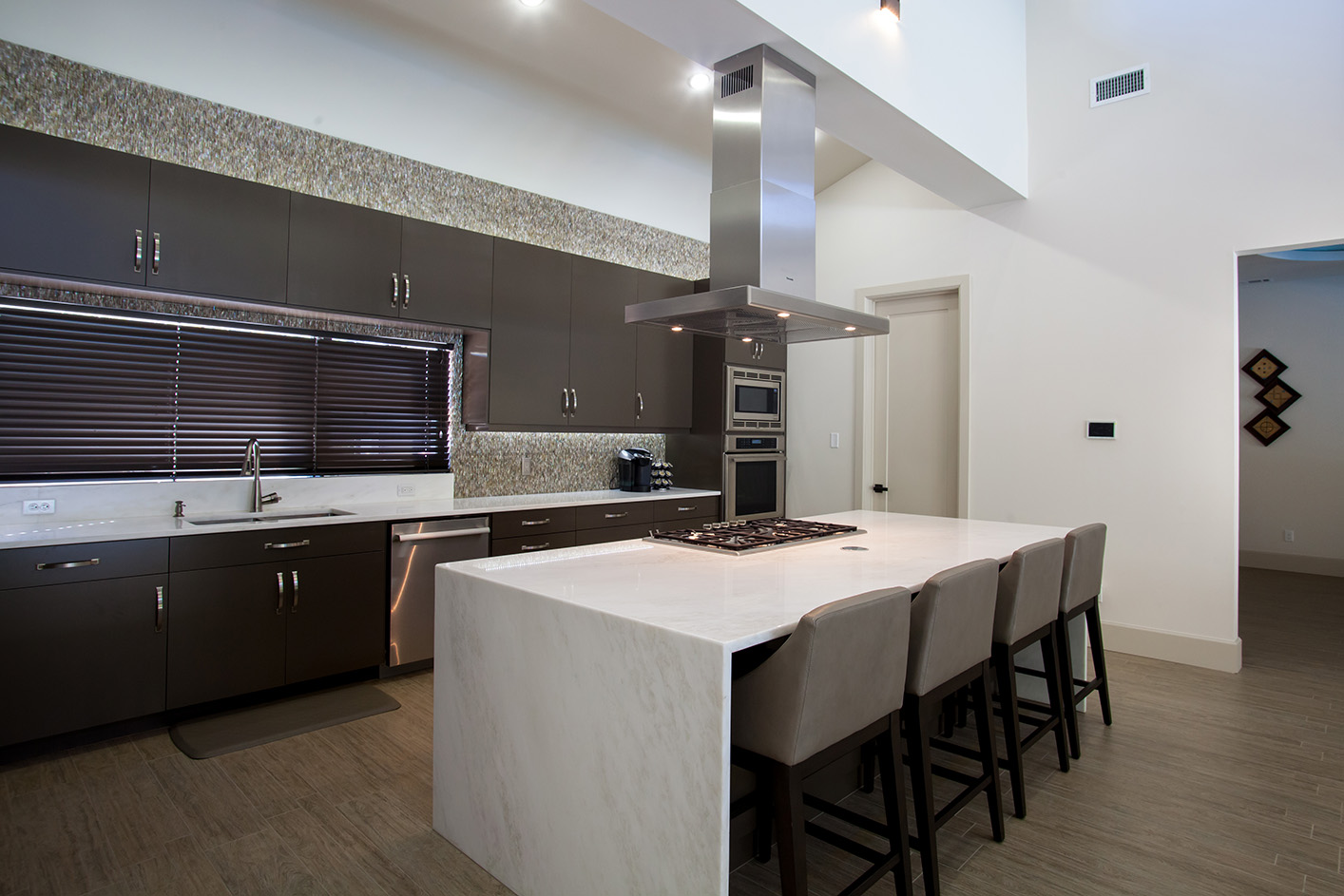
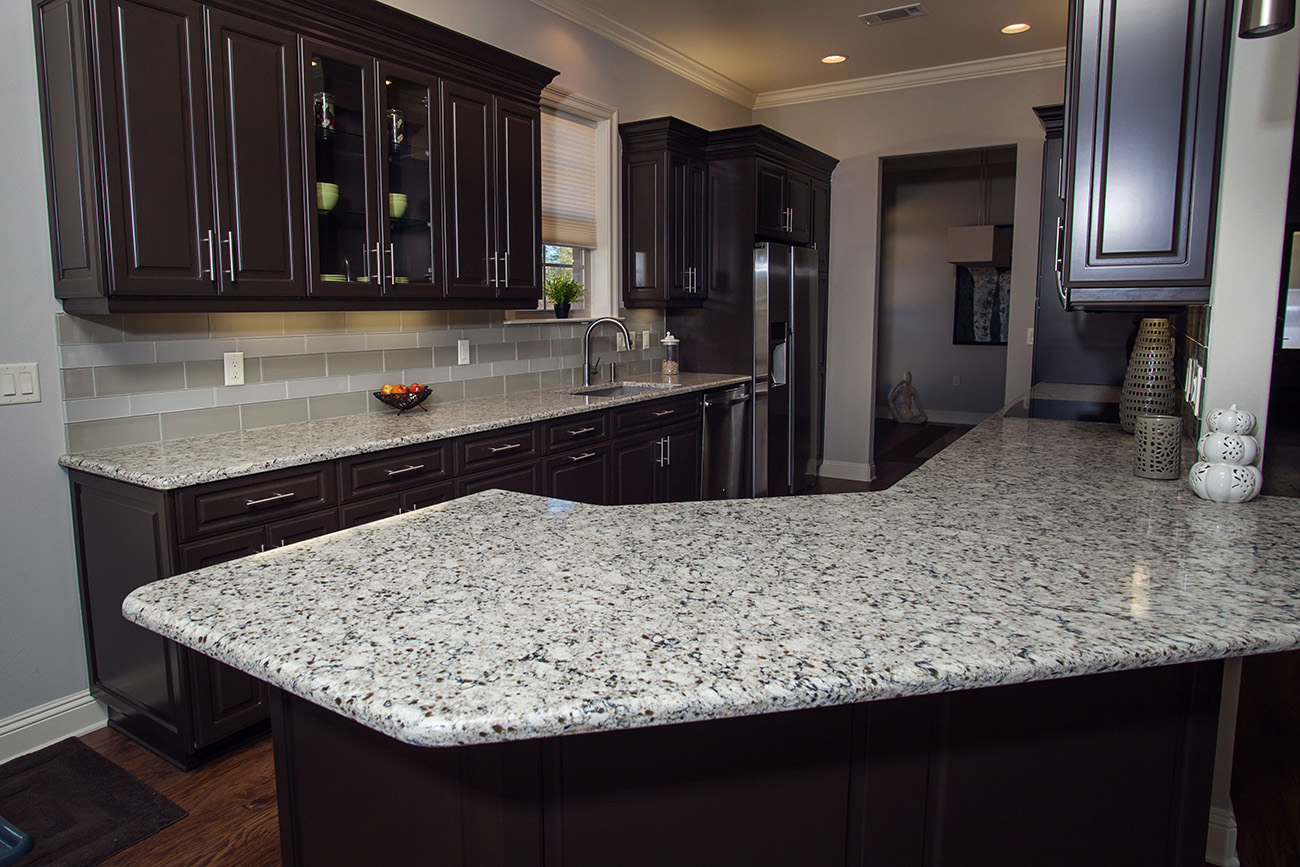
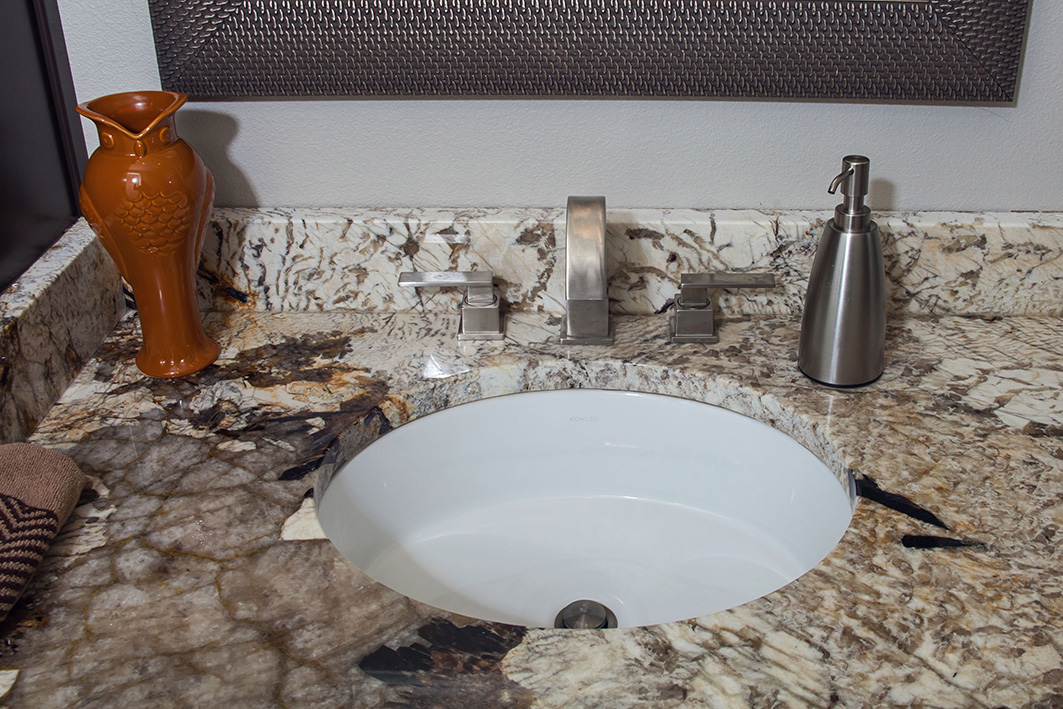
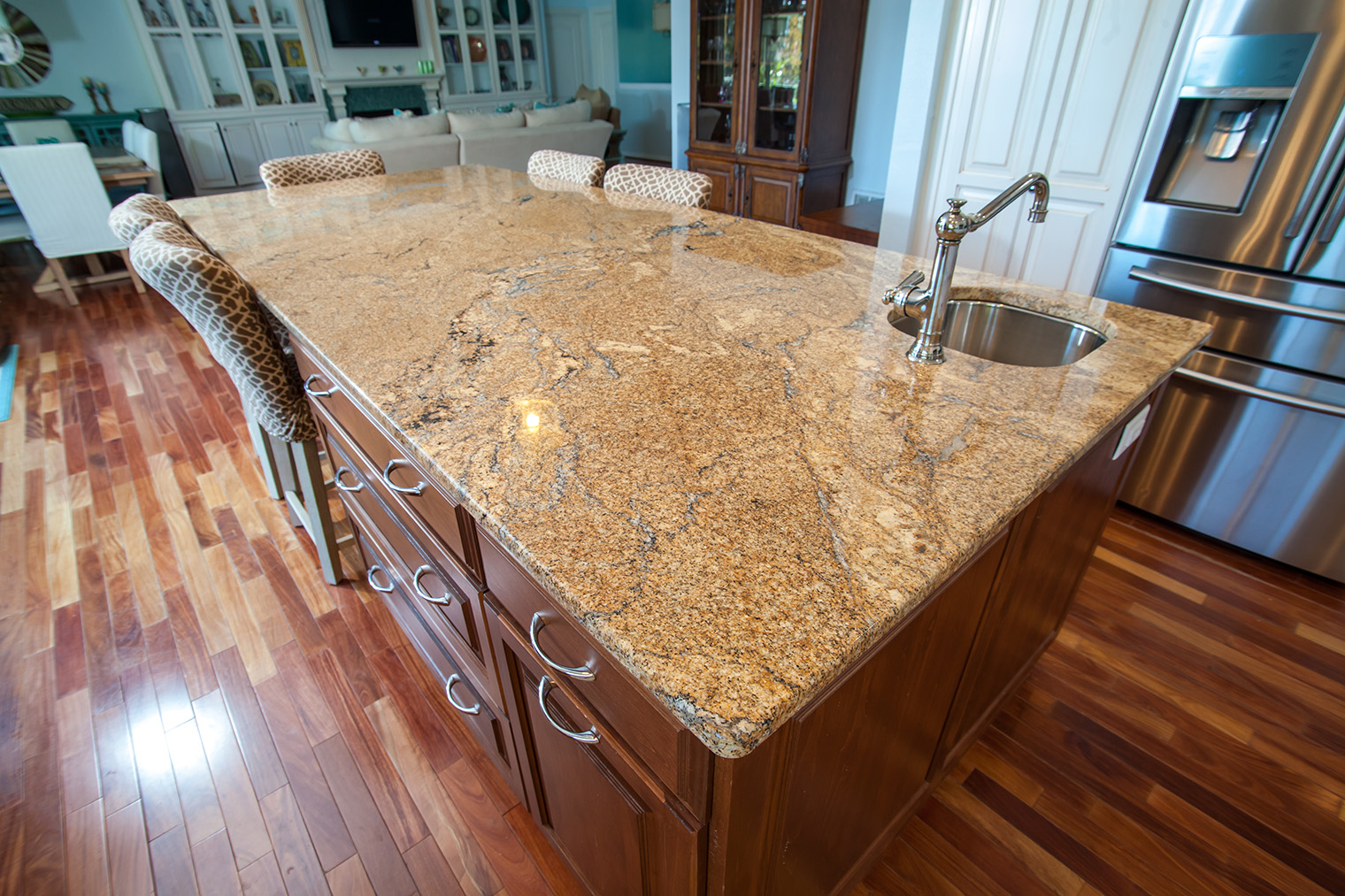
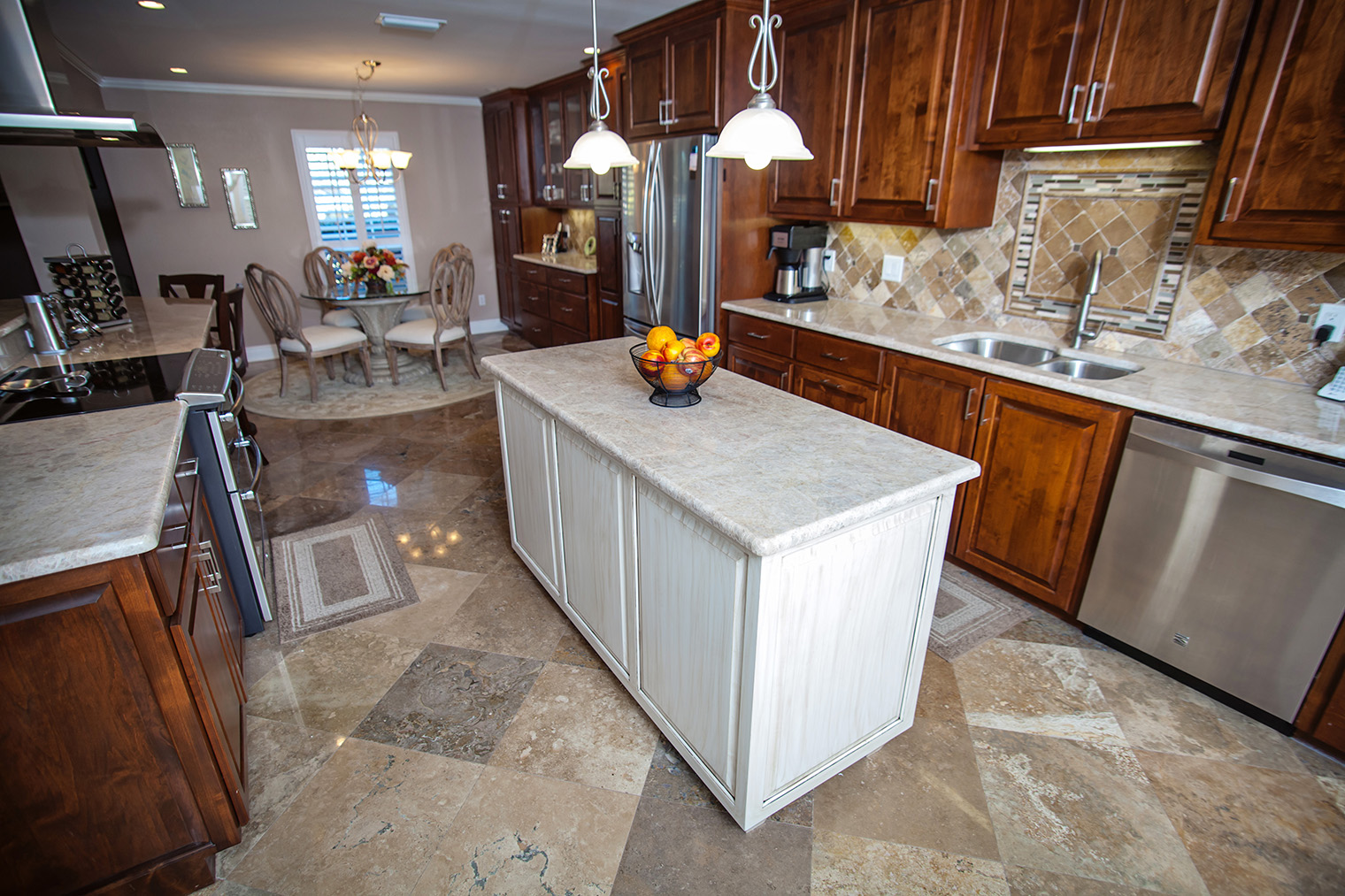
What Look Do You Want From Your Countertop?
Different countertop material options offer genuinely different aesthetics; here’s a quick breakdown:
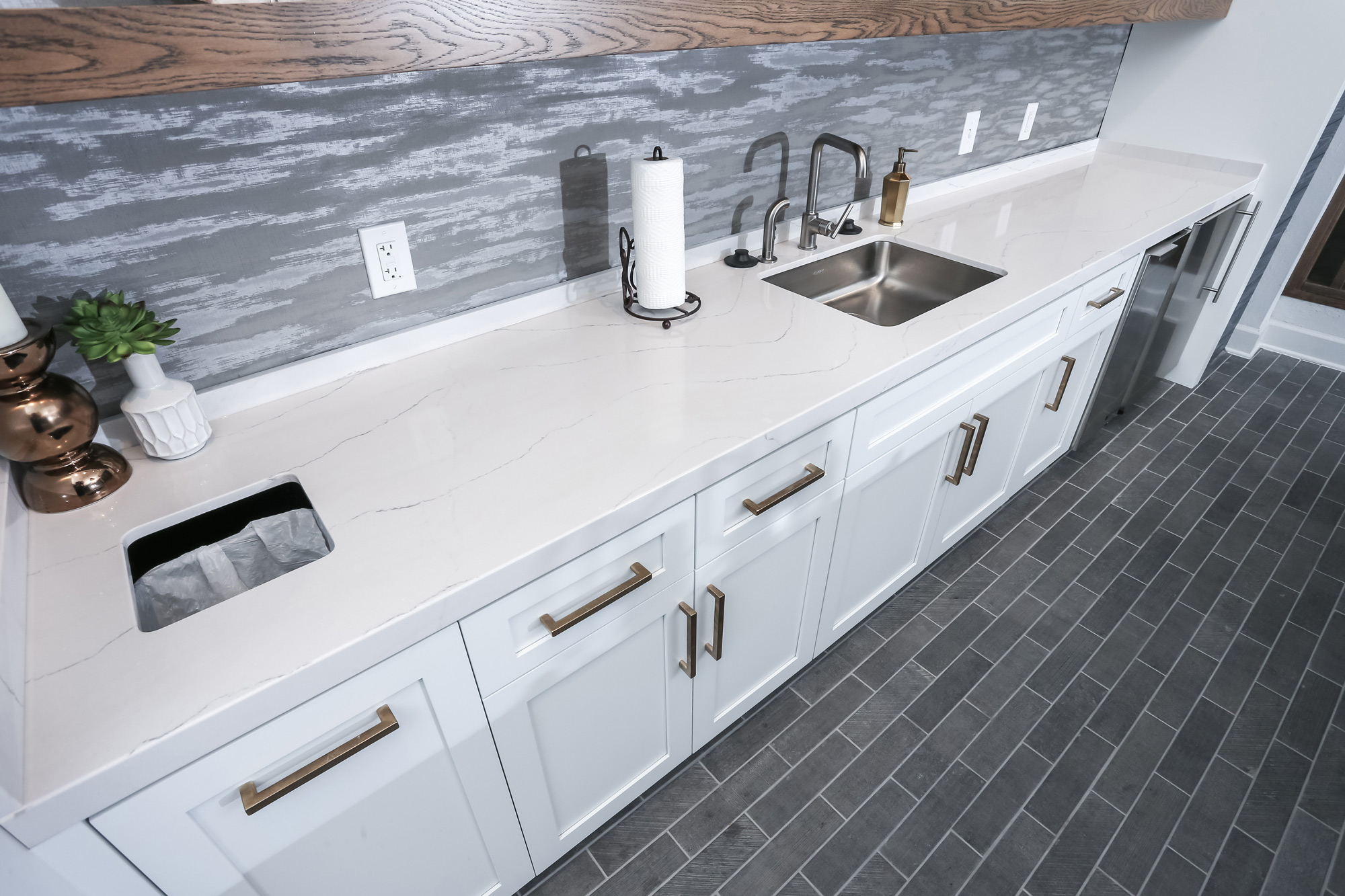
- Quartz: Clean, consistent patterns with no natural variation. Some versions mimic marble convincingly with none of the upkeep.
- Granite: Natural movement and speckle, with no two slabs alike. Wide range of colors for both traditional and contemporary kitchens.
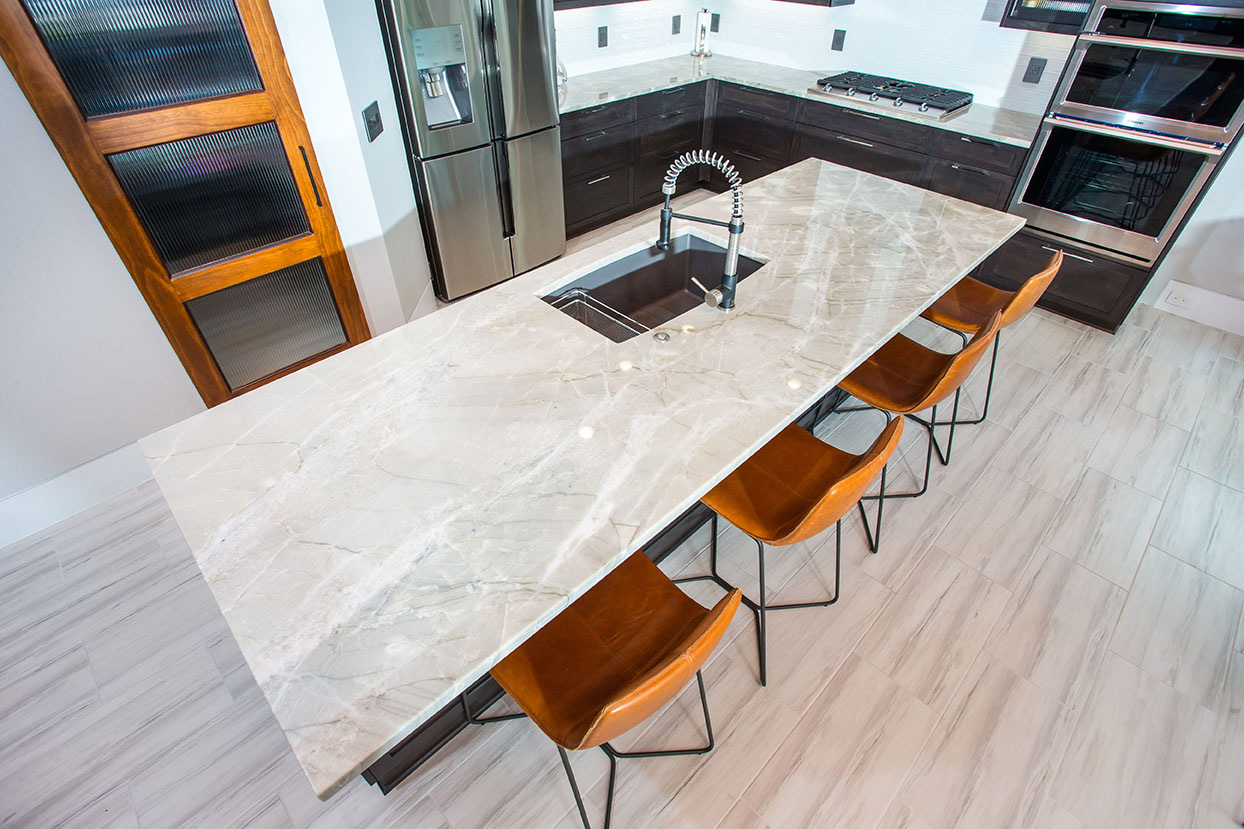
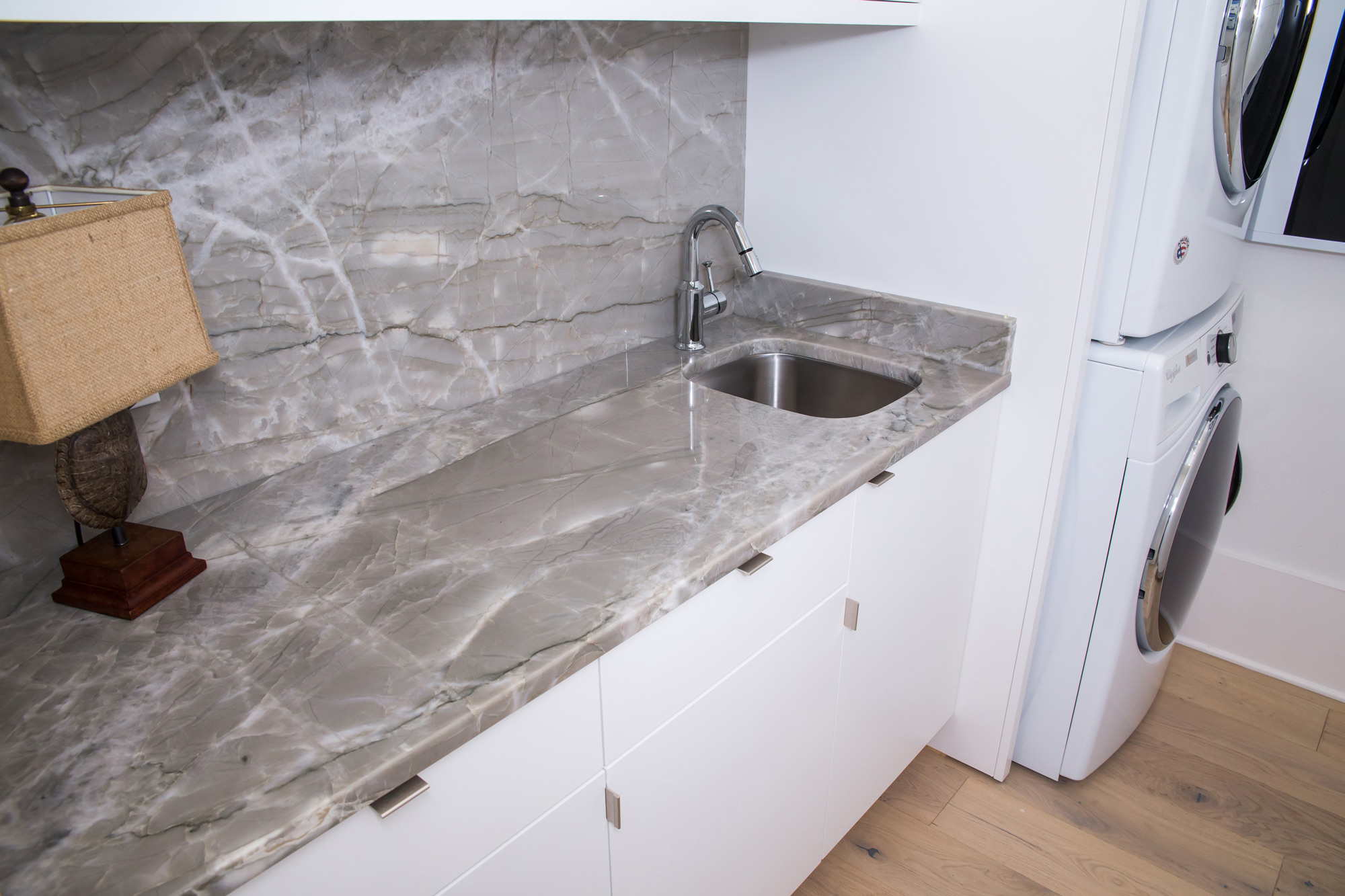
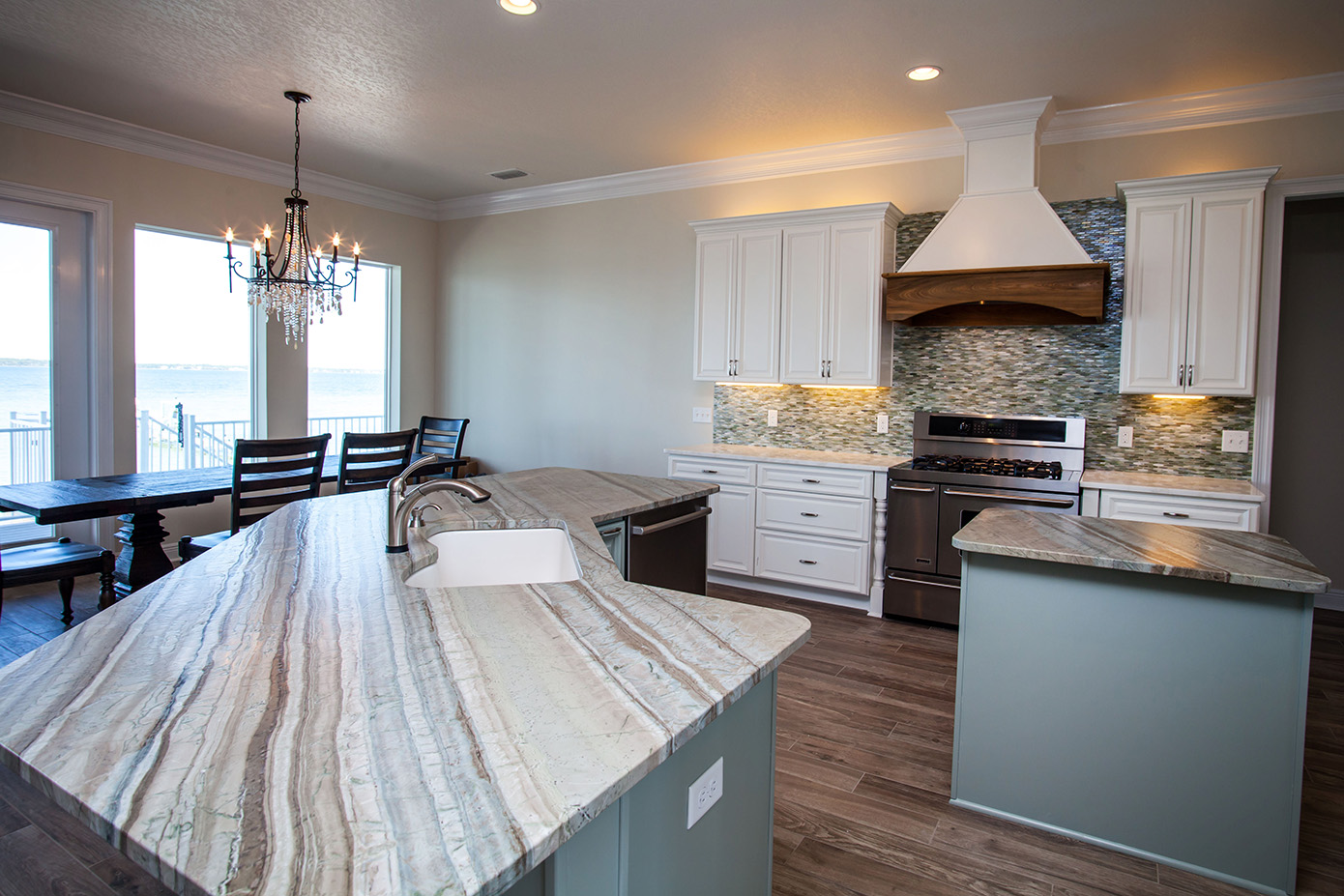
- Quartzite: Marble-like veining with the durability of a much harder stone. Great for homeowners who love the marble look without the maintenance.
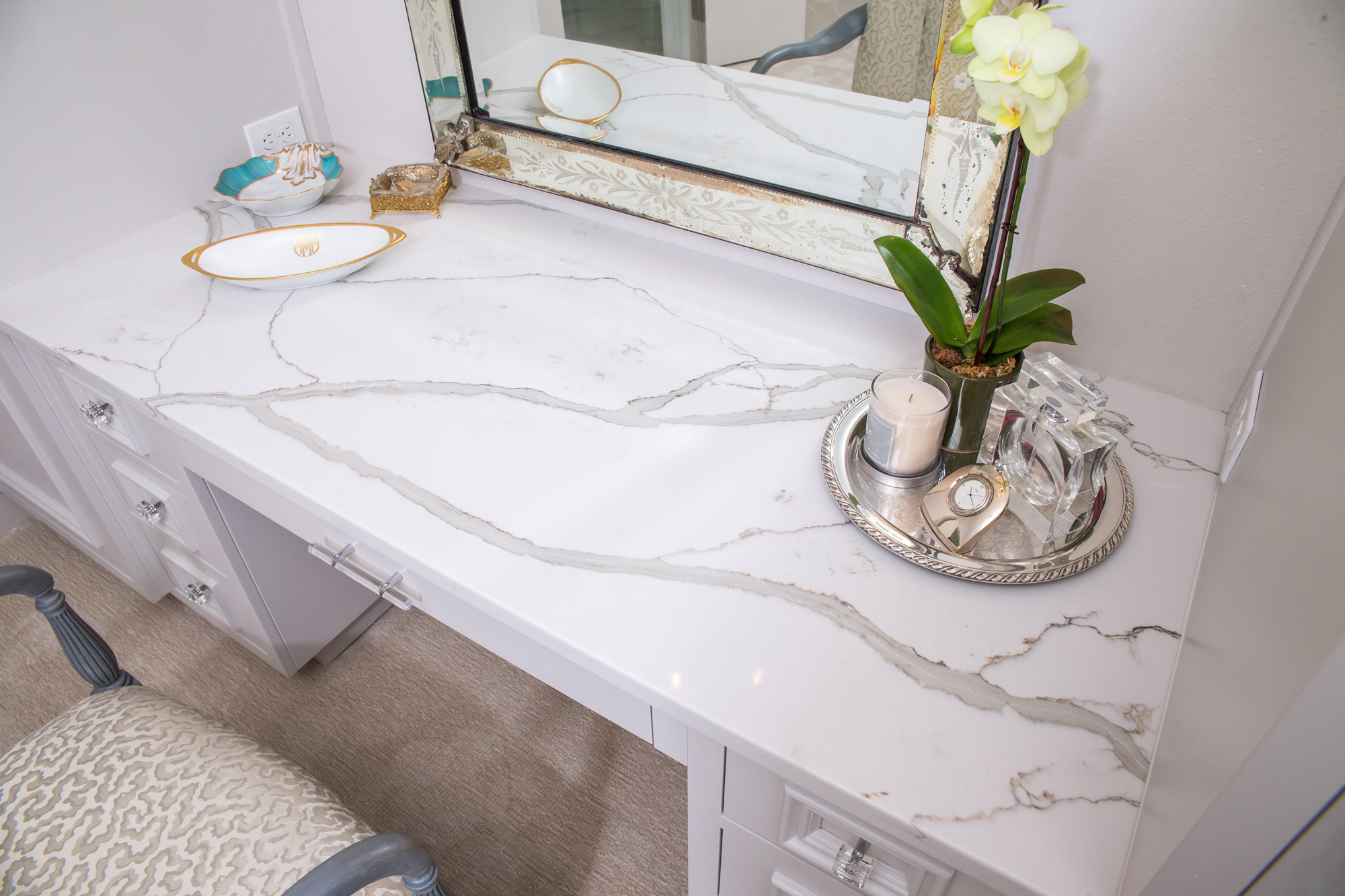
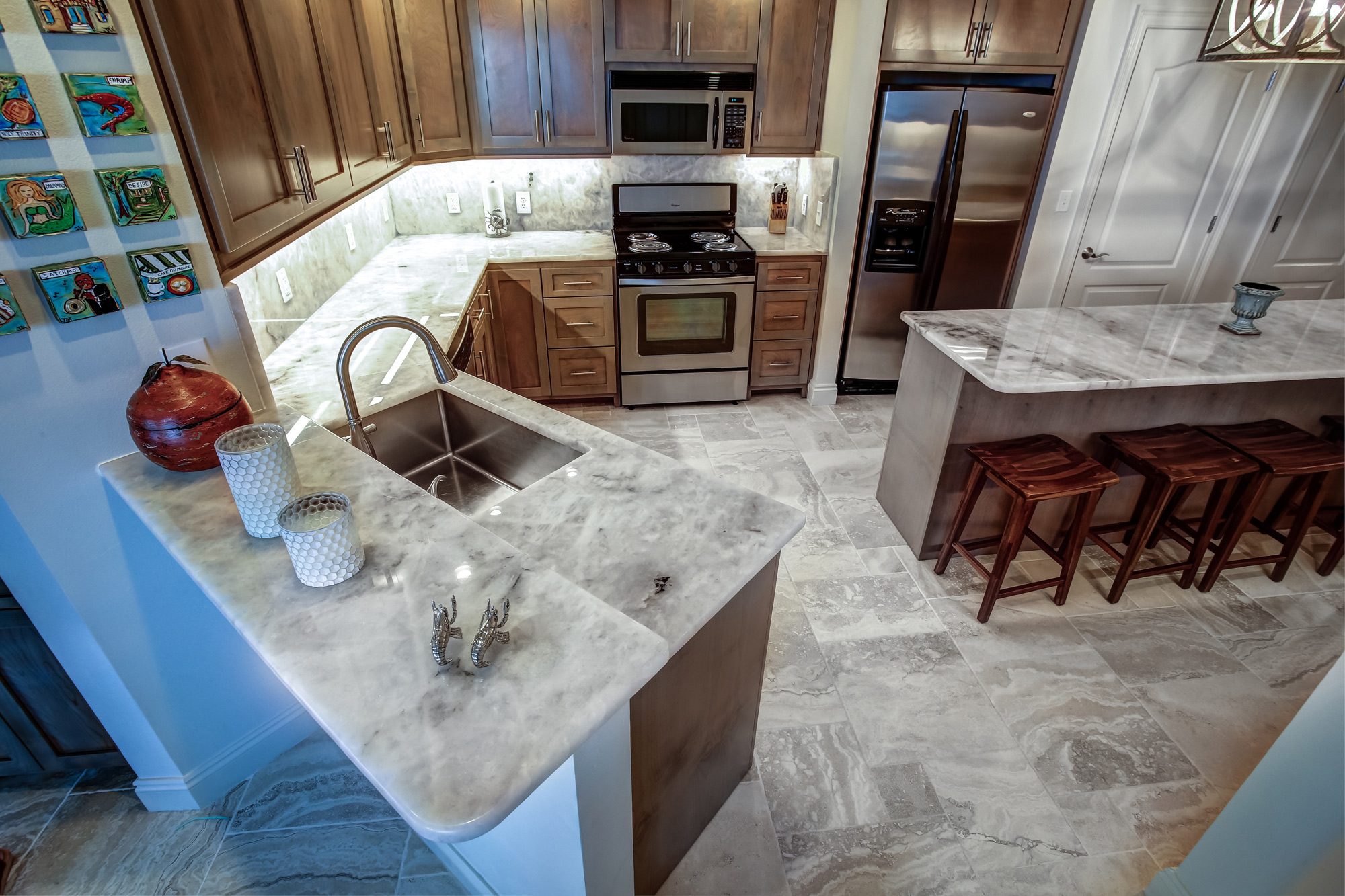
- Marble and Calcite: Timeless luxury look that no engineered material fully replicates. Distinctive depth, cool surface, and translucency.
- Limestone and Soapstone: Warmer and more organic. Limestone is popular for a beachy or rustic aesthetic. Soapstone deepens in color over time.
One practical note: darker surfaces show fingerprints, water marks, and dust more easily than lighter ones and need more frequent cleaning to stay looking sharp.
Where Will the Countertop Be Installed?
- Kitchens: Performance-focused materials like granite, quartzite, and quartz are the most practical choices for daily cooking and heavy use.
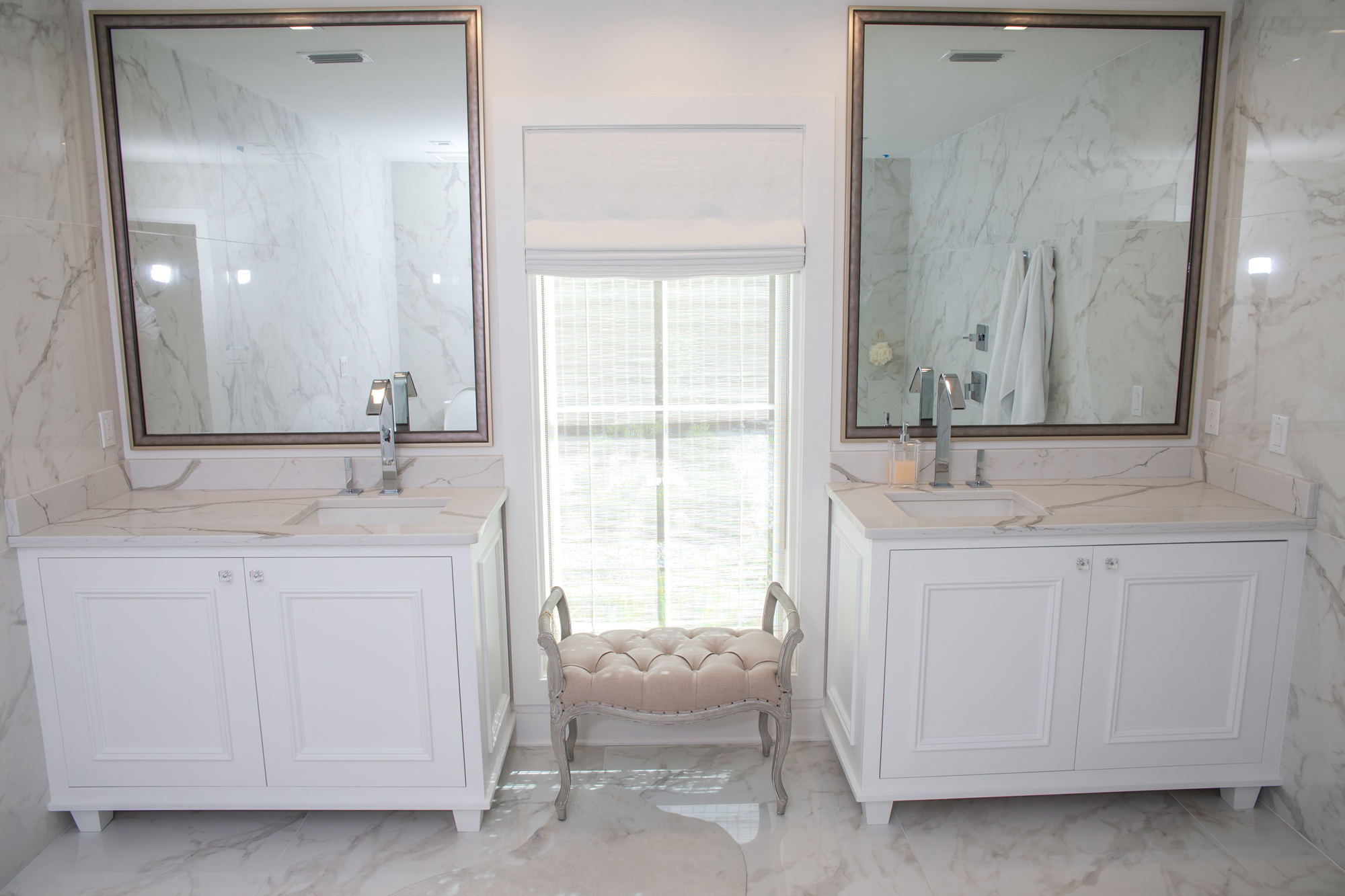
- Bathrooms: Softer stones like marble and calcite become more viable where heat and daily wear are beautiful in low-traffic spaces, even if they’d require too much attention in a kitchen.
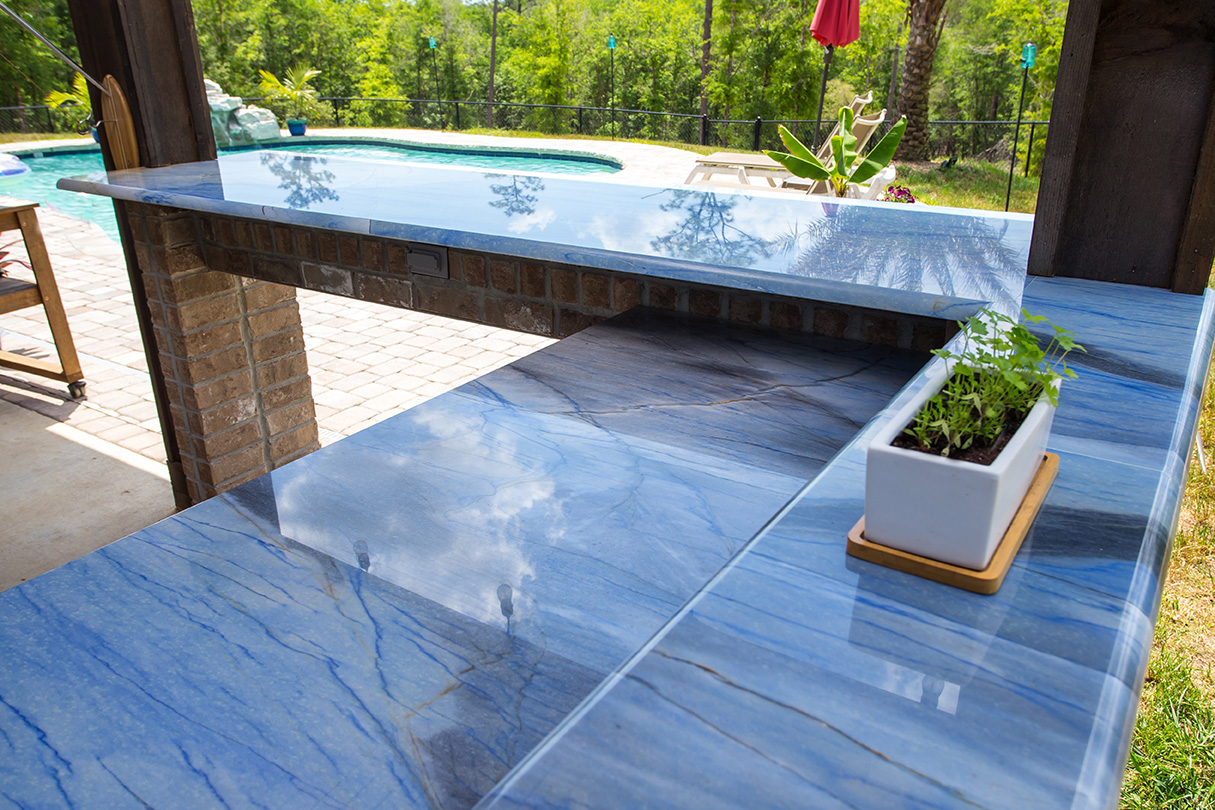
- Outdoors: The material needs to handle UV exposure, temperature swings, and weather. Granite and quartzite work outdoors when kept covered to prevent fading.
- Indoor-only materials: Quartz, marble, calcite, dolomite, and soapstone aren’t suitable for outdoor use. When homeowners across Pensacola choose a countertop material for outdoor kitchens, granite and quartzite are worth considering, especially when the surfaces are properly protected.
What Should You Consider About Your Budget?
The material cost is only part of the total investment. Fabrication, edge profiling, sink cutouts, and any customization waterfall edges, book-matching, slab backsplashes- all add to the final number. Get a realistic total project estimate, not just a per-square-foot material price.
Within materials, granite has become more accessible as supply and processing technology have improved; it’s one of the stronger value options in natural stone. Quartzite tends to be priced higher than quartz, and more movement in a slab generally means a higher price across natural stone. All material should be first-quality and 3 cm thick; the industry standard for countertop applications. The goal isn’t the cheapest option. It’s the right material for the space, sized and budgeted correctly from the start.
Have You Seen the Full Slab Before Deciding?
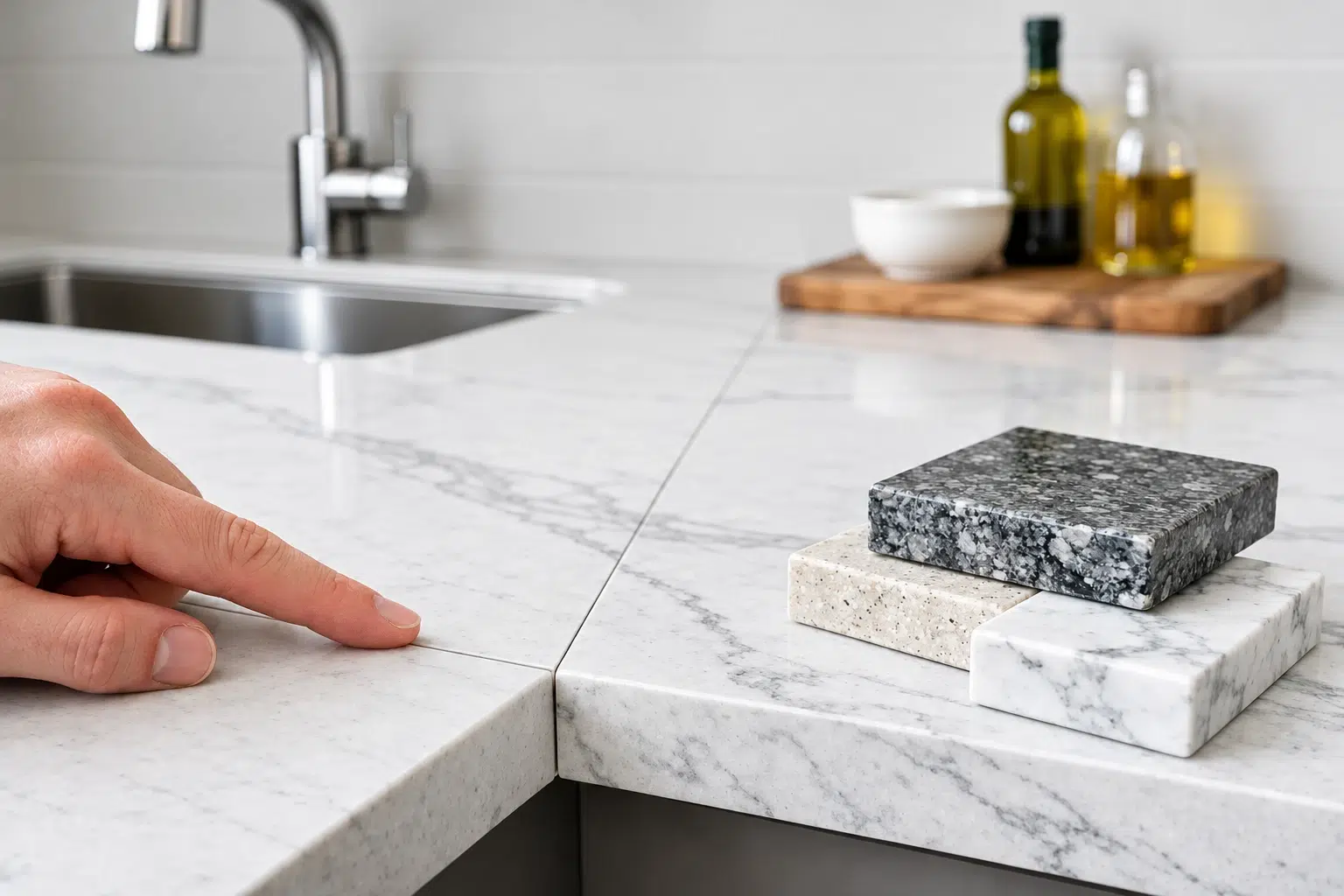
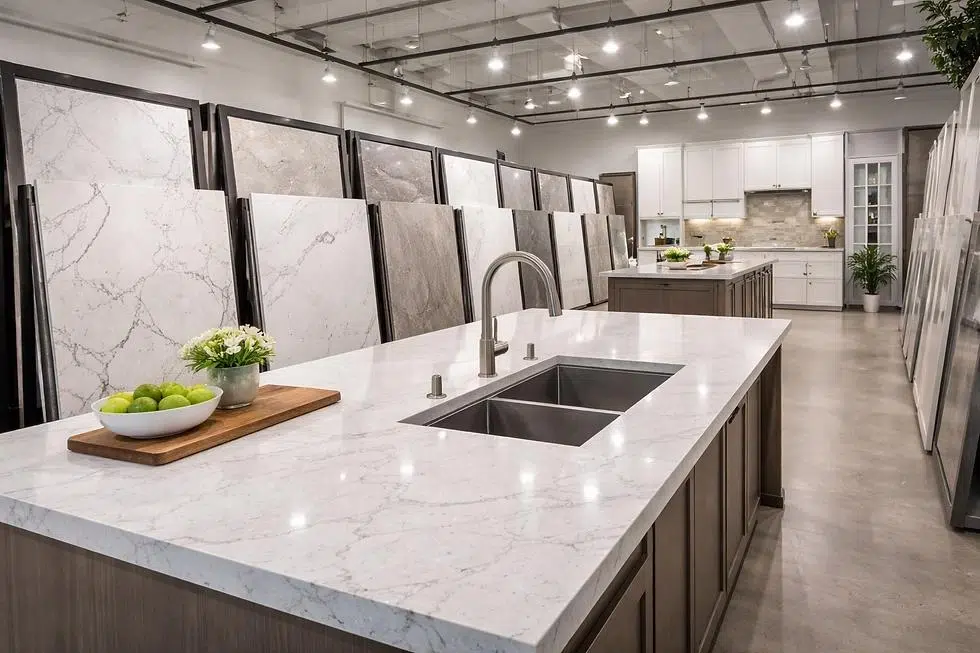
Small samples give you color and general texture; they tell you almost nothing about how the full slab actually looks. Veining that appears subtle on a 4-inch sample can become dramatic across 10 feet of counter. You genuinely cannot know until you see the whole picture. Before committing to any natural stone, view the full slab in person, in natural light, and understand which portion will become your countertop.
Bring your cabinet door and flooring sample when you visit; seeing how the stone reads against your actual materials is far more useful than guessing from memory. Hundreds of colors are available across different stone types. One of the best ways to find the right fit is simply to walk in and see what’s in stock, full slabs, in person.
Before Your Countertop Template Appointment
Once you’ve made your material decision, the next step is templating, and a few things need to be in place before that appointment happens.
- All cabinets must be set and level before the template team arrives
- Any plumbing, cabinetry, or wall changes must be completed before the appointment
- Farmhouse or apron-front sinks must be fully installed before templating; the countertop is fabricated around the sink that’s already in place
- Have your sink, faucet, range, cooktop, and sink accessory model numbers ready to share with your sales associate before template day
- Clear off existing countertops before the team arrives
- A representative with decision-making authority should be present during the template to answer questions and approve details on the spot
Getting these details in order before the appointment keeps the project moving and avoids delays.
Choosing Based on What Actually Matters
After working through these 10 questions, the right direction usually becomes clear.
- Low maintenance first? Look at quartz, which requires no regular sealing and offers resistance to staining and etching.
- Natural variation matters? Only natural stone delivers genuinely unique slabs; granite, quartzite, marble, and the others each have a character no engineered material can replicate.
- Durability and heat are non-negotiable? Granite and quartzite consistently perform well across both.
- Outdoor use? Focus on materials suited for exterior applications.
- Is appearance the biggest driver? Let it lead, but pair it with an honest look at what that material requires to stay looking that way five years from now.
Final Thoughts
The best countertop isn’t the most expensive one in the showroom. It’s not the one that looked stunning in a magazine. It’s the one that fits how you actually use your space, matches what you’re realistically willing to maintain, and delivers the look you want for years to come.
Choosing a countertop material well comes down to asking the right questions before you fall in love with a slab. Work through these 10 honestly, and the decision becomes much clearer. Visit a showroom, see full slabs in person, bring your cabinet samples, and talk through your project with someone who knows the material before anything is measured or cut.
Pensacola, FL
Visit Us: 7011 Pine Forest Road, Pensacola, FL 32526
Call Us: (850) 941-0270
Hours: Monday – Friday: 8 a.m. – 5 p.m., Saturday: 9 a.m. – 2 p.m.
Pace, FL
Visit Us: 4590 Jernigan Road, Pace, Florida 32571
Call Us: (850) 994-1872
Hours: Tuesday – Friday: 9 a.m. – 5 p.m., Saturday: 9 a.m. – 2 p.m.
Fort Walton Beach, FL
Visit Us: 35 Miracle Strip Pkwy SW, Fort Walton Beach, Florida 32548
Call Us: (850) 301-0716
Hours: Tuesday – Friday: 8 a.m. – 5 p.m., Saturday: 9 a.m. – 2 p.m.
Get quotes now and start your project!
FAQs
1. What is the most important question to ask before choosing a countertop material? How you will actually use the space. Daily use, traffic level, and whether the countertop is for a kitchen or bathroom should shape the material decision before appearance is considered.
2. Which countertop material requires the least maintenance?
Quartz does not require regular sealing and is resistant to staining and etching. It is a practical option for homeowners who prefer minimal upkeep.
3. What is the most heat-resistant countertop material?
Granite and quartzite handle direct heat well; hot items can be placed on them without a trivet. Soapstone is also heat-resistant. Quartz can scorch and always requires a trivet or hot pad.
4. Which countertop materials can be used outdoors?
Granite and quartzite can be used outdoors, though covering them when not in use helps prevent fading. Quartz, marble, calcite, dolomite, and soapstone are generally suited to indoor applications.
5. What is the hardest countertop material?
Quartzite and quartz both rate 7 on the Mohs hardness scale, making them the hardest options in the countertop category. Granite follows at 6 to 6.5. Marble and calcite are the softest natural stone options at Mohs 3.
6. How do I choose between granite and quartz?
Granite is a natural stone; every slab is unique, it handles heat directly, and it needs annual sealing. Quartz is engineered; consistent in pattern, non-porous, requires no sealing, but can scorch from direct heat. The right choice depends on how much natural variation you want and how you use the space.
7. What should I prepare before my countertop template appointment?
Cabinets should be set and level. Any plumbing or wall changes should be completed. Sink, faucet, range, and cooktop model numbers should be ready to share. Farmhouse sinks must be fully installed before the template appointment. A decision-maker should be present on the day.