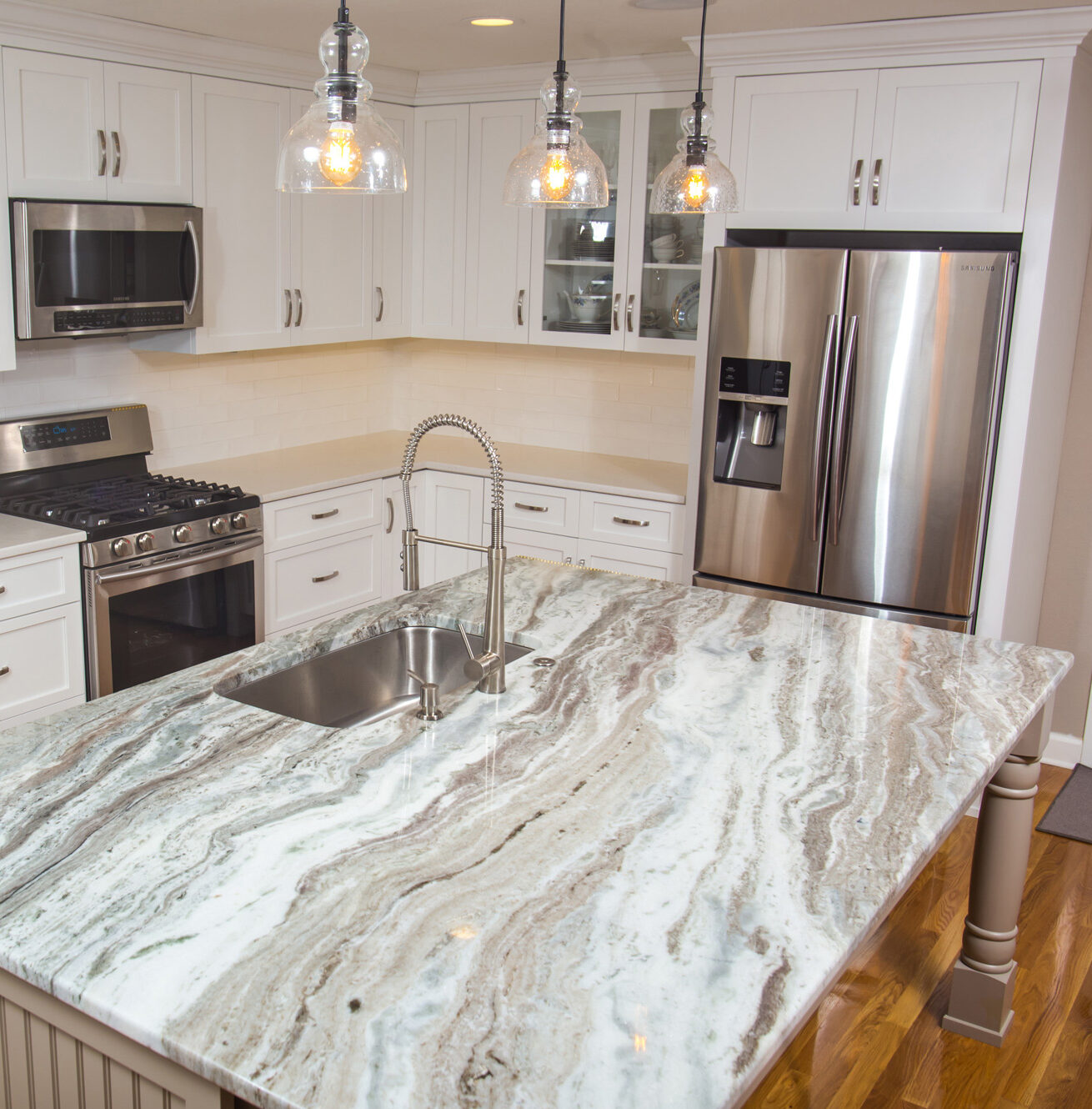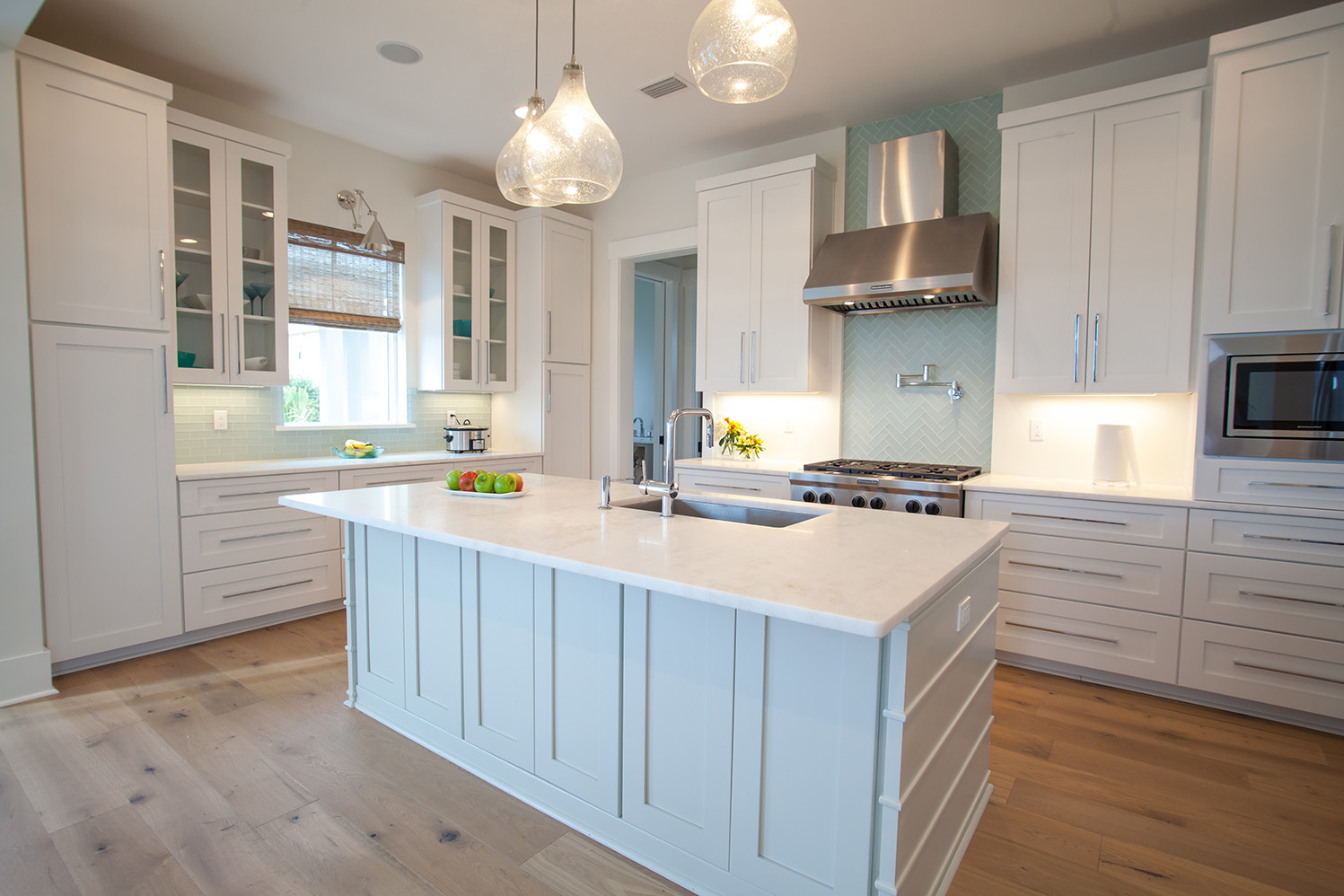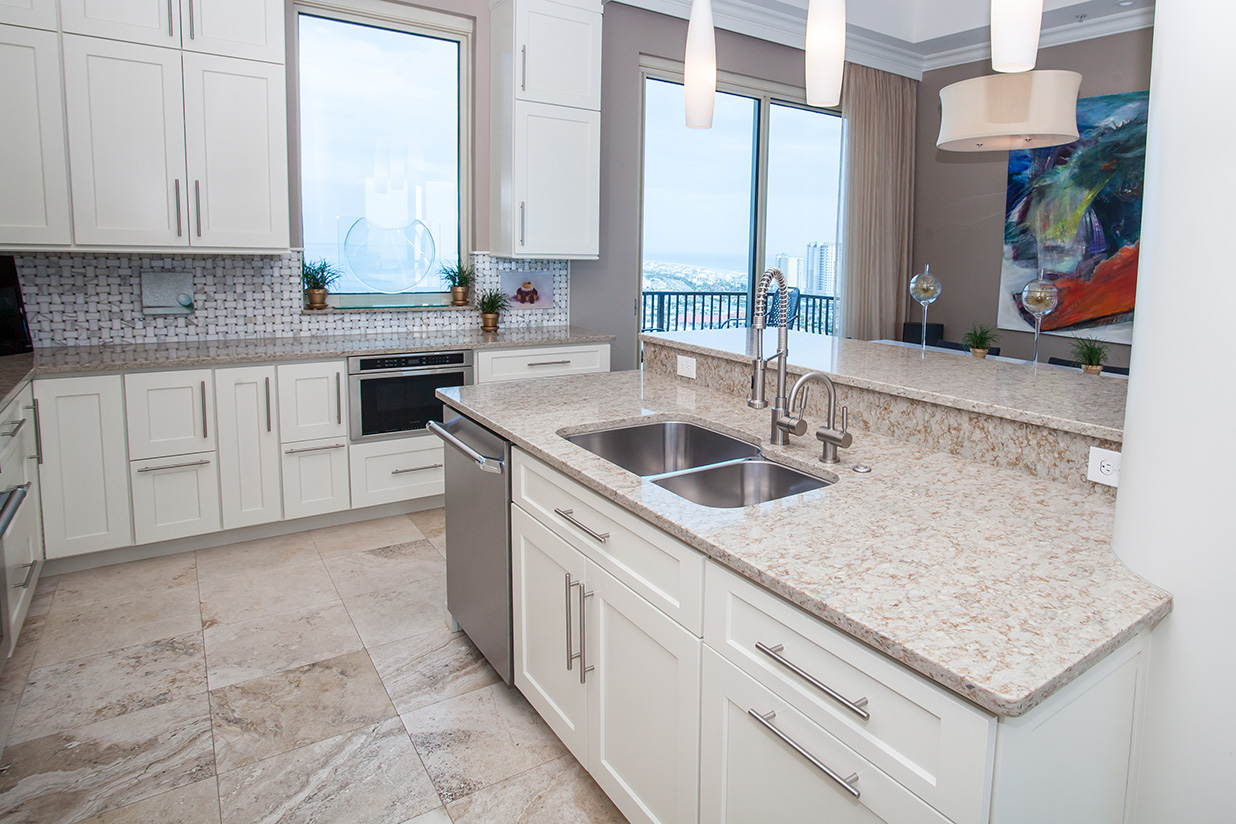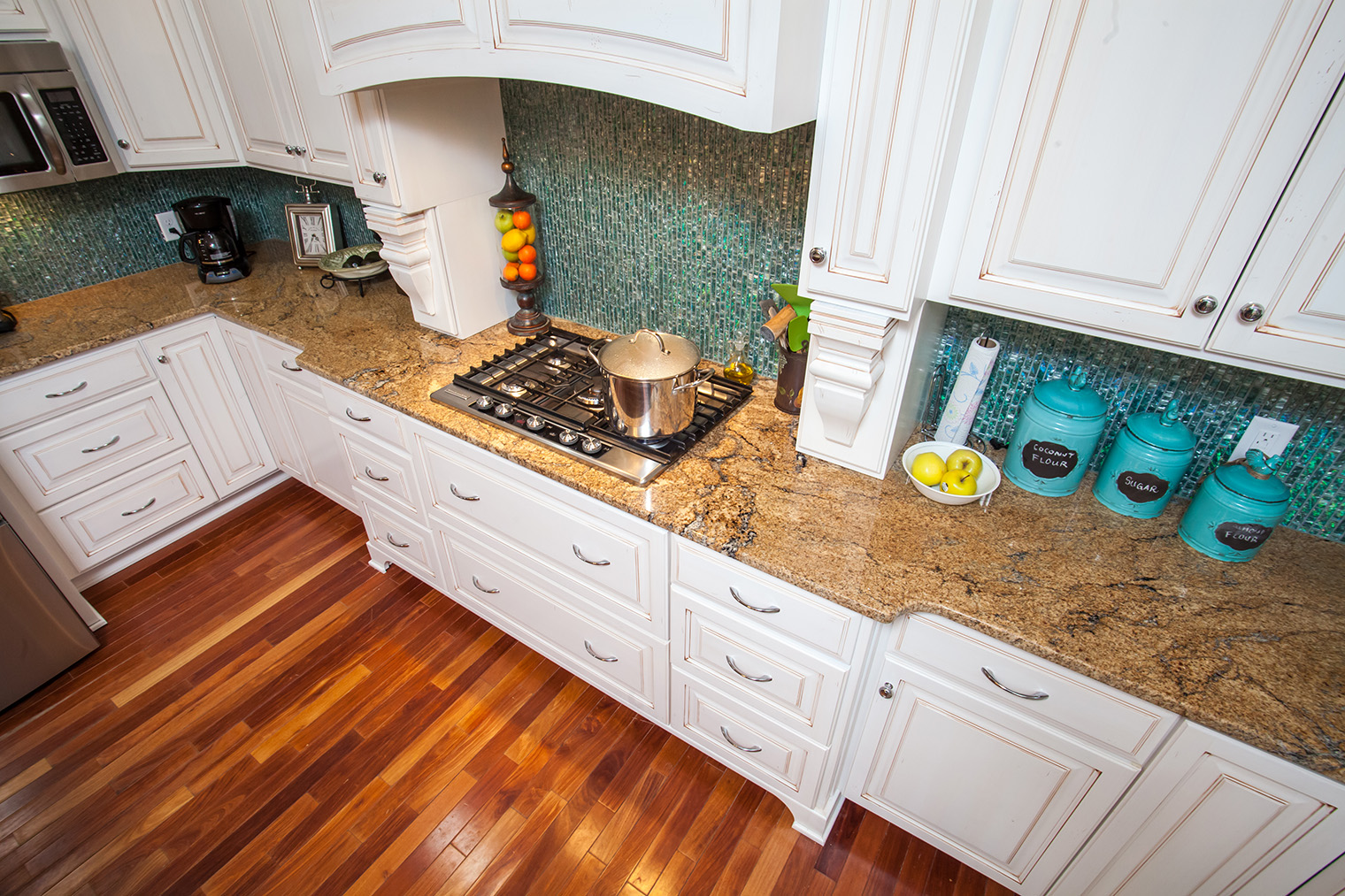
Someone told you to seal your quartz countertop. They meant well, but they were wrong. This happens constantly because most homeowners assume all stone surfaces need the same care routine. They see granite being sealed and assume quartz works the same way. It doesn’t. Not even close.
So do you need to seal quartz? No. And once you understand why, you’ll also understand exactly what quartz needs to stay looking its best for years. At Superior Granite, we’ve answered this question hundreds of times across our showrooms, and this guide covers everything.
What Is Quartz Actually Made Of?
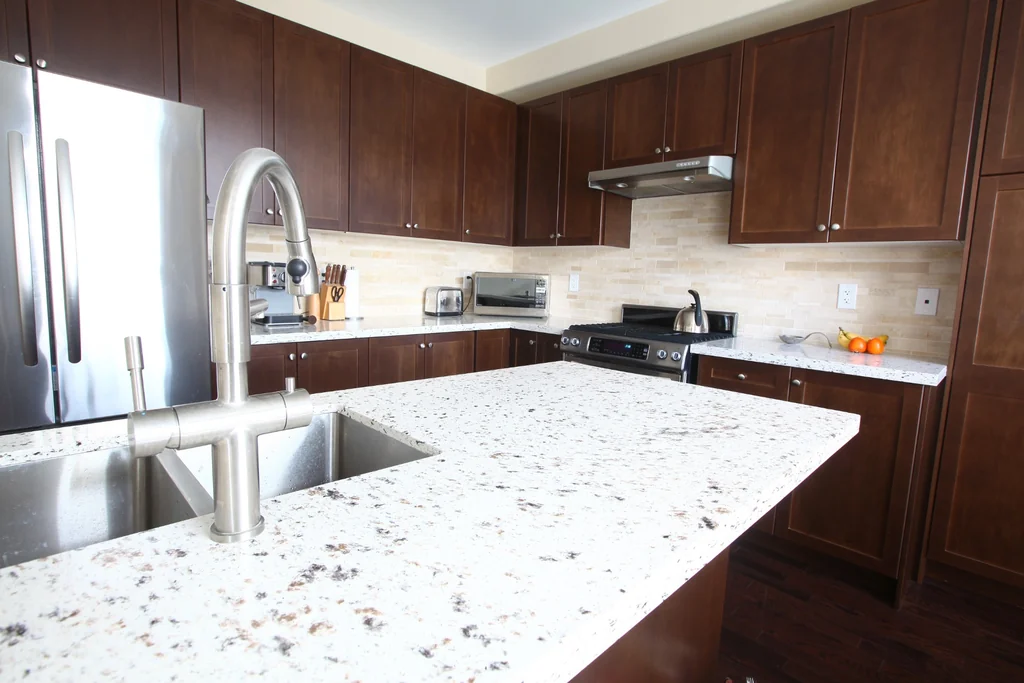
Quartz is not a natural stone. It’s an engineered product made from roughly 90-93% crushed natural quartz crystals bound together with polymer resins and pigments. That manufacturing process, the resins specifically, is what makes quartz fundamentally different from every natural stone countertop on the market.
Those resin binders fill every microscopic gap in the material during production. The result is a completely non-porous surface. No pores. No fissures. No pathways for liquid, bacteria, or staining agents to travel through.
This isn’t something that develops over time or wears off. It’s built into the material from the day the slab is made. Consistent patterns, consistent colors, consistent performance, that’s what engineered stone delivers.
Why Quartz Never Needs Sealing
Sealing serves one purpose: to fill the microscopic pores in natural stone before liquid can enter and cause staining or bacterial growth. Granite needs it. Marble needs it. Quartzite needs it. Every natural stone needs it because every natural stone is porous.
Do you need to seal quartz? No, because quartz has no pores to fill. The resin binders already created a permanent, built-in barrier during manufacturing. Applying a sealant to quartz is solving a problem that doesn’t exist.
You will never need to schedule a sealing appointment for quartz. Not once a year. Not once a decade. The answer is simply never, and that’s one of the biggest practical advantages quartz has over natural stone.
What Happens If You Seal Quartz Anyway?
Most homeowners assume that sealing can’t hurt even if it isn’t necessary. That assumption is wrong.
Because quartz is non-porous, the sealant has nowhere to absorb. It sits on top of the surface rather than penetrating it. Over time, that creates a buildup layer that:
- Attracts dirt and dust more readily than unsealed quartz
- Creates cloudiness, streaking, or uneven luster across the surface
- Makes the countertop look grimy and dull, the opposite of the intended effect
- Can potentially void the manufacturer’s warranty on the product
Sealing quartz doesn’t protect it. It actively makes it look worse. Save the sealant for your granite or quartzite; your quartz countertop has no use for it.
Quartz vs Natural Stone: The Sealing Comparison
Not all countertop materials behave the same way, and sealing is where the differences become most obvious. Natural stones are porous by nature, which means they absorb liquids, stains, and bacteria without a protective sealant. Quartz works completely differently.
Here’s a clear breakdown of every material we carry and exactly what it needs:
| Stone | Needs Sealing? | How Often | Key Reason |
| Quartz | Never | Never | Non-porous resin built in |
| Granite | Yes | 1x per year | Porous natural stone |
| Quartzite | Yes | Monthly x3, then 2x/year | Porous, edges are more vulnerable |
| Marble | Yes | 2x per year | Soft, porous, etches easily |
| Dolomite | Yes | 2x per year | More porous than granite |
| Calcite | Yes | 2x per year | Etches in under 20 minutes |
| Soapstone | Never | Never | Naturally non-porous talc |
| Porcelain | Never | Never | Fired at over 2,000°F |
| Limestone | Yes | 2x per year | Porous, fades with UV |
Quartz shares its non-porous status with only two other materials, soapstone countertops and porcelain countertops, both non-porous for entirely different reasons.
Quartz Countertop Care Tips: What It Actually Needs
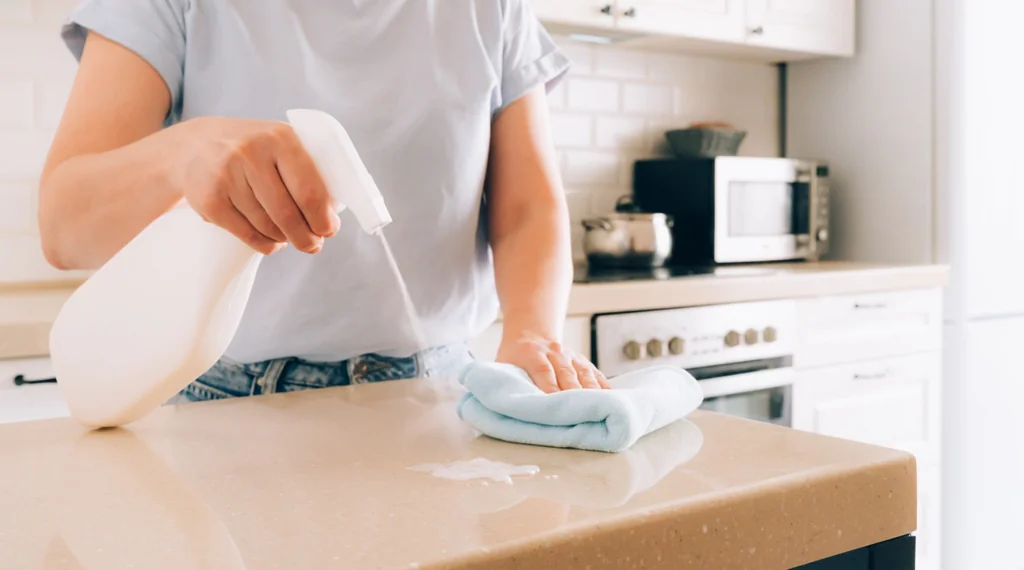
No sealing doesn’t mean no care. Good quartz countertop maintenance is straightforward; it just looks different from natural stone care.
Everyday cleaning
Warm, soapy water and a microfiber cloth are the best everyday option. Dawn dish soap works perfectly; just avoid anything citrus-scented or essential oil-based. For a ready-made cleaner, these are all safe options that won’t damage the surface:
- Simple Green
- Bar Keeper’s Friend
- Formula 409 Glass and Surface Cleaner
- Lysol
- Greased Lightning
- Windex
- Mild soap and water
For tougher stains
Magic Eraser handles most stubborn marks without damaging the surface. For dried or particularly stubborn spills, use the powder version of Bar Keepers Friend together with the Magic Eraser, rinse thoroughly afterward, and wipe down with a damp cloth to remove any residue.
What to avoid entirely
Bleach, ammonia, and any products containing trichloroethane or methylene chloride cause permanent discoloration and surface damage. These chemicals show up in nail polish remover, furniture strippers, silver polish, oven cleaners, and many bleach-based household products. If any of these contact your quartz, wipe immediately and rinse with water.
Never use abrasive sponges, green 3M Scotch-Brite pads, or anything comparable; they dull the finish permanently. When trying any new cleaning product, test it on a hidden area first before using it across the full surface.
One more thing worth knowing: darker quartz colors show dirt, fingerprints, dust, and watermarks more readily than lighter colors. If you have a dark quartz countertop, plan for more frequent cleaning to keep it looking sharp.
What Quartz Can’t Handle: The Real Limits
Quartz is one of the most durable countertop options available. But it has real limits, and knowing them upfront prevents permanent damage.
Heat: the biggest risk
The polymer resins that make quartz non-porous are also its greatest vulnerability when it comes to heat. Excessive or prolonged heat scorches and damages the resin permanently. Always use a trivet or hot pad between any hot cookware and the quartz surface. This is non-negotiable. Treat quartz the same way you’d treat a laminate surface when it comes to heat, with full protection every time.
Harsh chemicals
Products containing trichloroethane or methylene chloride cause permanent discoloration on contact. These compounds appear in car batteries, nail polish remover, furniture strippers, silver polish, and oven cleaners. If any of these contact your quartz, wipe it off immediately and rinse the area thoroughly with water.
UV exposure: indoor use only
Quartz is strictly an indoor material. The resin component yellows with prolonged UV exposure, which means no outdoor kitchens, no outdoor applications of any kind. For fireplace surrounds, quartz is only safe near electric fireplaces where heat output is low and controlled. Gas and wood-burning fireplaces are off-limits.
Heavy blunt impact
Quartz is durable, but dropping a cast iron skillet, a hammer, or any heavy object directly onto the surface can crack or chip it. Take care when moving heavy items on or near the countertop.
Homeowners investing in quartz countertop installation in Pensacola, FL, who understand these limits upfront get decades of beautiful, low-maintenance performance from their surfaces.
Common Quartz Myths Debunked
There’s a lot of misinformation out there about quartz, and some of it comes from well-meaning people who treat it like natural stone. Here’s the truth behind the most common ones:
Myth 1: Quartz needs annual sealing
This one’s wrong. Quartz is non-porous. It has never needed sealing and never will. The answer isn’t once a year; it’s never.
Myth 2: Sealing quartz makes it more durable
Not quite. Sealant can’t penetrate a non-porous surface. It sits on top, builds up, and makes the countertop look worse, not better.
Myth 3: Quartz is completely maintenance-free
Partially true. No sealing is required, but it still needs proper cleaning, heat protection, and chemical-safe products. Low maintenance, not zero maintenance.
Myth 4: Quartz can be used outdoors
The resin in quartz yellows with prolonged UV exposure, and once that happens, it can’t be reversed. For outdoor kitchens or patio countertops, granite, quartzite, or porcelain are the right call. Quartz is strictly for indoor use, no exceptions.
Myth 5: Quartz and quartzite are the same material
Completely false and one of the most expensive mix-ups in countertop buying. Quartz is engineered and never needs sealing. Quartzite is a natural metamorphic stone that absolutely does. They can look similar in certain colors but perform in completely different ways.
Myth 6: Hot pans are fine on quartz
Quartz is non-porous. The resin scorches under sustained high heat. A trivet is not optional; it’s required every single time, no exceptions.
Expert Tips for Long-Lasting Quartz
These quartz countertop care tips make a real difference over the years:
- Wipe spills immediately. Quartz resists penetration, but prolonged exposure to harsh substances still causes issues
- Always use a cutting board; direct knife contact creates surface scratches over time
- Never use abrasive sponges or pads; they permanently dull the finish
- Always use a trivet or hot pad; no exceptions, ever
- Dark quartz needs more frequent cleaning; fingerprints and watermarks are much more visible on darker colors
- For stains, reach for Magic Eraser first, then powder Bar Keepers Friend for anything more stubborn
- Test any new cleaning product on a hidden area before using it on the full surface
- Keep bleach and ammonia-based products away from quartz entirely; permanent damage is possible
- Don’t install quartz outdoors or near gas or wood-burning fireplaces
If you’re still deciding between quartz and other materials, our team at custom countertop installation in Pace, FL can walk you through every option in person, from care requirements to color selection, and help you find the right fit for your home and your lifestyle.
Conclusion
Do you need to seal quartz? No. Not once. Not ever. The resin binders built into quartz during manufacturing handle what sealing does for natural stone permanently, from day one. What quartz actually needs is simple: the right cleaners, a trivet for heat, no harsh chemicals, and a little more frequent wiping if you have darker colors.
Visit any of our Superior Granite showrooms in Pensacola, Pace, or Fort Walton Beach to see our full quartz selection in person. Our team will walk you through every option, answer your care questions, and help you find the right surface for your home and your life.
Pensacola, FL
Visit Us: 7011 Pine Forest Road, Pensacola, FL 32526
Call Us: (850) 941-0270
Hours: Monday – Friday: 8 a.m. – 5 p.m., Saturday: 9 a.m. – 2 p.m.
Pace, FL
Visit Us: 4590 Jernigan Road, Pace, Florida 32571
Call Us: (850) 994-1872
Hours: Tuesday – Friday: 9 a.m. – 5 p.m., Saturday: 9 a.m. – 2 p.m.
Fort Walton Beach, FL
Visit Us: 35 Miracle Strip Pkwy SW, Fort Walton Beach, Florida 32548
Call Us: (850) 301-0716
Hours: Tuesday – Friday: 8 a.m. – 5 p.m., Saturday: 9 a.m. – 2 p.m.
Get quotes now and start your project!
FAQs
1. Do you need to seal quartz countertops?
No never. Quartz is engineered to be non-porous from manufacturing. The resin binders fill every microscopic gap, so there are no pores for a sealant to fill. Sealing is unnecessary and can cause buildup and dulling.
2. What happens if I seal my quartz countertop?
The sealant sits on top rather than absorbing in. Over time, it builds up, attracting dirt and creating cloudiness or streaking that makes the surface look worse. It can also void the manufacturer’s warranty.
3. How do I clean quartz countertops properly?
Warm soapy water and a microfiber cloth for everyday cleaning. Magic Eraser for tougher stains. Powder Bar Keepers Friend with the Magic Eraser for stubborn dried spills. Avoid bleach, ammonia, and abrasive sponges.
4. Can quartz stain without sealing?
Quartz is highly stain-resistant due to its non-porous surface. Everyday food and liquid spills wipe right off. Harsh chemicals like nail polish remover, furniture strippers, and bleach-based products can cause permanent discoloration if not wiped immediately.
5. What cleaners are safe for quartz countertops?
Simple Green, Formula 409, Lysol, Greased Lightning, Windex, Bar Keeper’s Friend, and mild soap and water are all safe. Avoid anything with bleach, ammonia, trichloroethane, or methylene chloride.
6. Can I put hot pans on quartz?
No. The resin scorches under sustained heat. Always use a trivet or hot pad every time, without exception.
7. How long does quartz last without sealing?
Indefinitely. Sealing was never part of the equation. With proper care, quartz countertops last 15-25 years or longer. What shortens its lifespan is heat damage, harsh chemicals, and heavy impact, not the absence of a sealant.