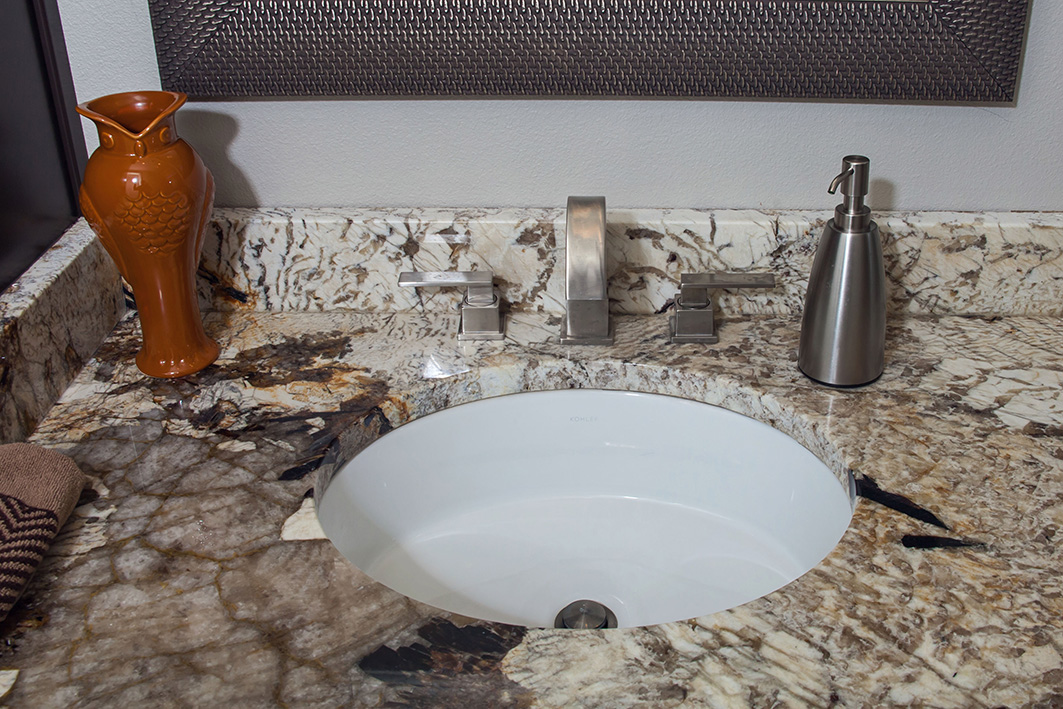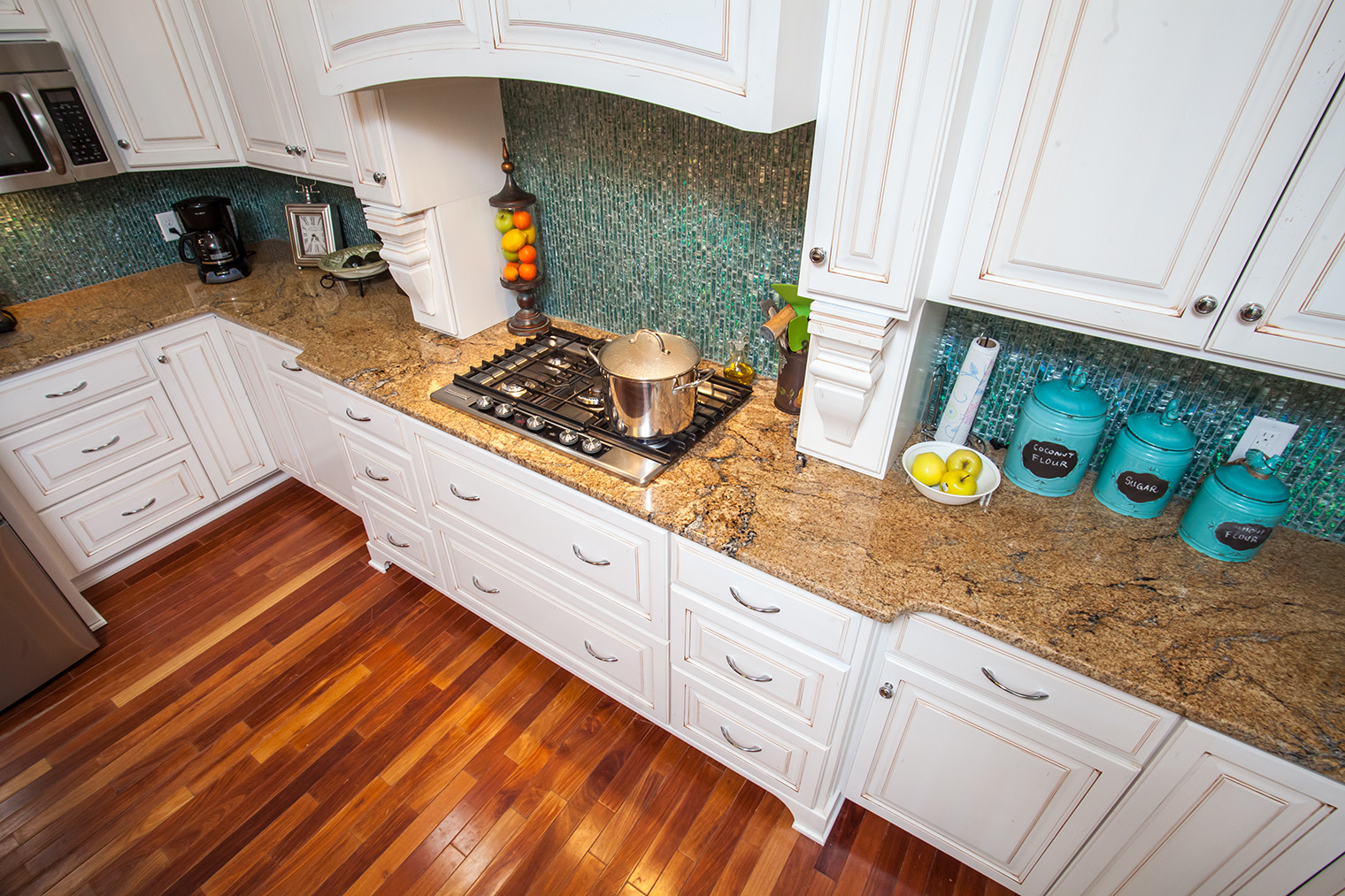
Matching a countertop to your cabinets does not mean finding the same shade. It means choosing colors that look right together. The best countertop and cabinet colors share the same undertone, or they contrast on purpose, and they look good in the light your kitchen actually gets. When one of those things is off, two beautiful materials can look like they belong in different rooms. This guide shows you how to read undertones, decide between a close match and a deliberate contrast, and test your choice before you commit.
Start With What You Can’t Easily Change
Most kitchens have a few fixed points: the cabinets, the flooring, and the wall color. These are harder and more expensive to change than a countertop, so they usually set the direction. When you match your countertops with your cabinets, start by writing down the color of each fixed item and whether it looks warm or cool.
Order matters less than you might think. Some people pick cabinets first and choose a stone to suit them. Others fall in love with a slab and then choose cabinet paint or stain to go with it. Both approaches can work, as long as you compare the two side by side before you decide.
In our process, you pick your stone first, and then we move to templating, where we take precise measurements once your cabinets are set and level. Keeping countertop and cabinet colors in mind from the start helps you avoid surprises at that stage.
Understand Undertones: Warm, Cool, and Neutral
An undertone is the subtle color beneath the main one. Two whites can look very different side by side because one leans yellow and the other leans blue. Warm undertones lean toward cream, beige, yellow, or red. Cool undertones lean toward gray, blue, or green. Neutral sits in between.
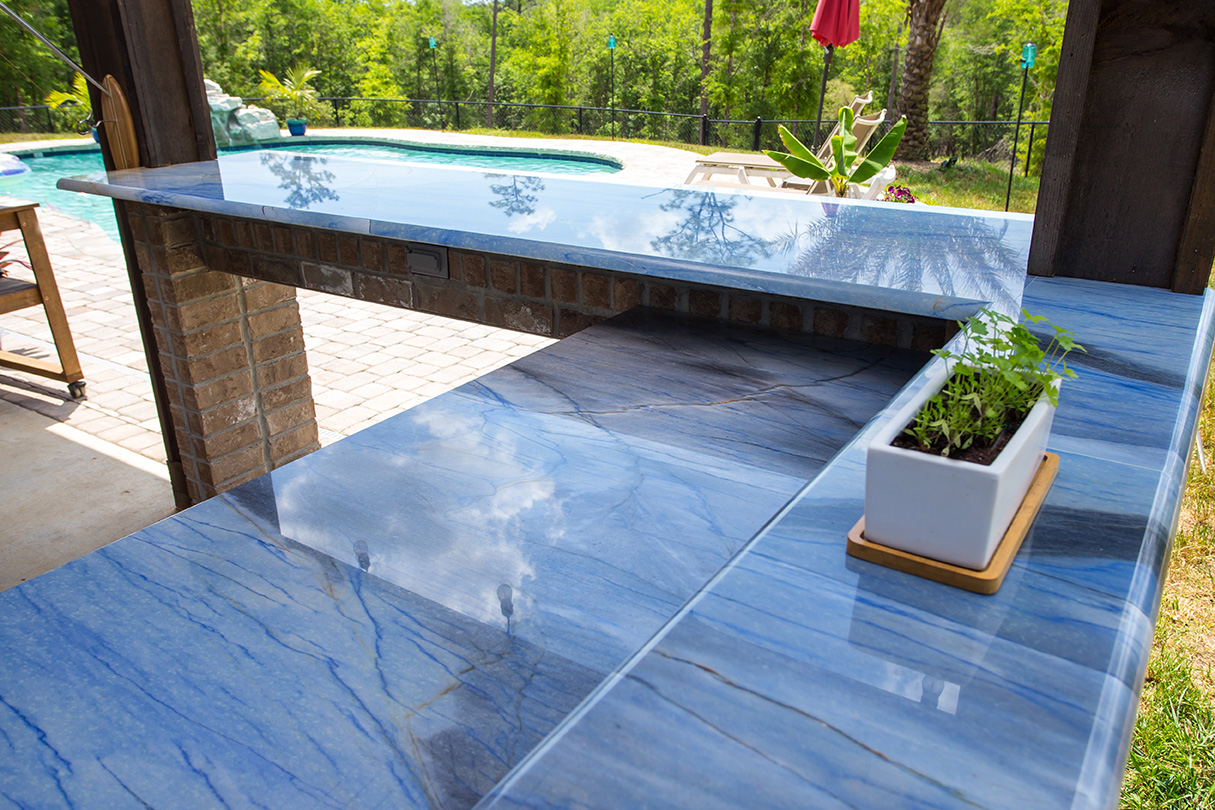
These countertop undertones matter because mismatched temperatures can make both surfaces look dull. A warm white cabinet next to a cool, blue-toned countertop often looks slightly off. A warm, creamy stone beside crisp, cool white cabinets can make the cabinets look stark. Matching warm and cool undertones- warm with warm and cool with cool- is the simplest way to keep a kitchen looking calm and planned. Neutral colors give you the most flexibility.
To find your cabinet undertone, hold a plain white sheet of paper or a white paint swatch next to the cabinet door. The difference usually becomes clear right away. This one step makes your countertop and cabinet colors feel connected instead of accidental.
Match or Contrast? Two Ways to Pair Them
There are two good strategies, and the key is to commit to one.
- Tone on tone: choose a countertop close to the cabinet color for a calm, unified look.
- Contrast: choose a countertop clearly lighter or darker than the cabinets for a more dramatic look.
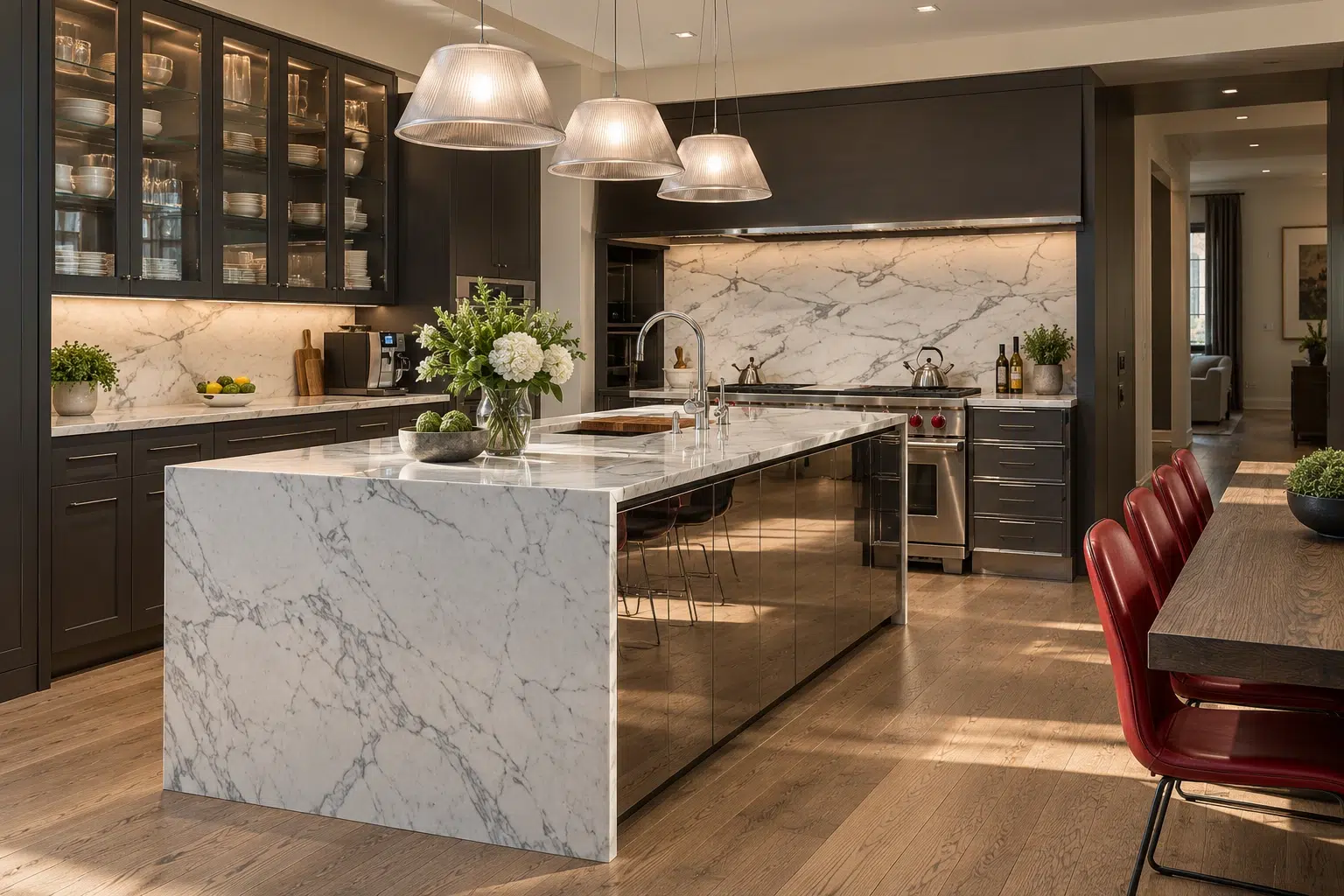
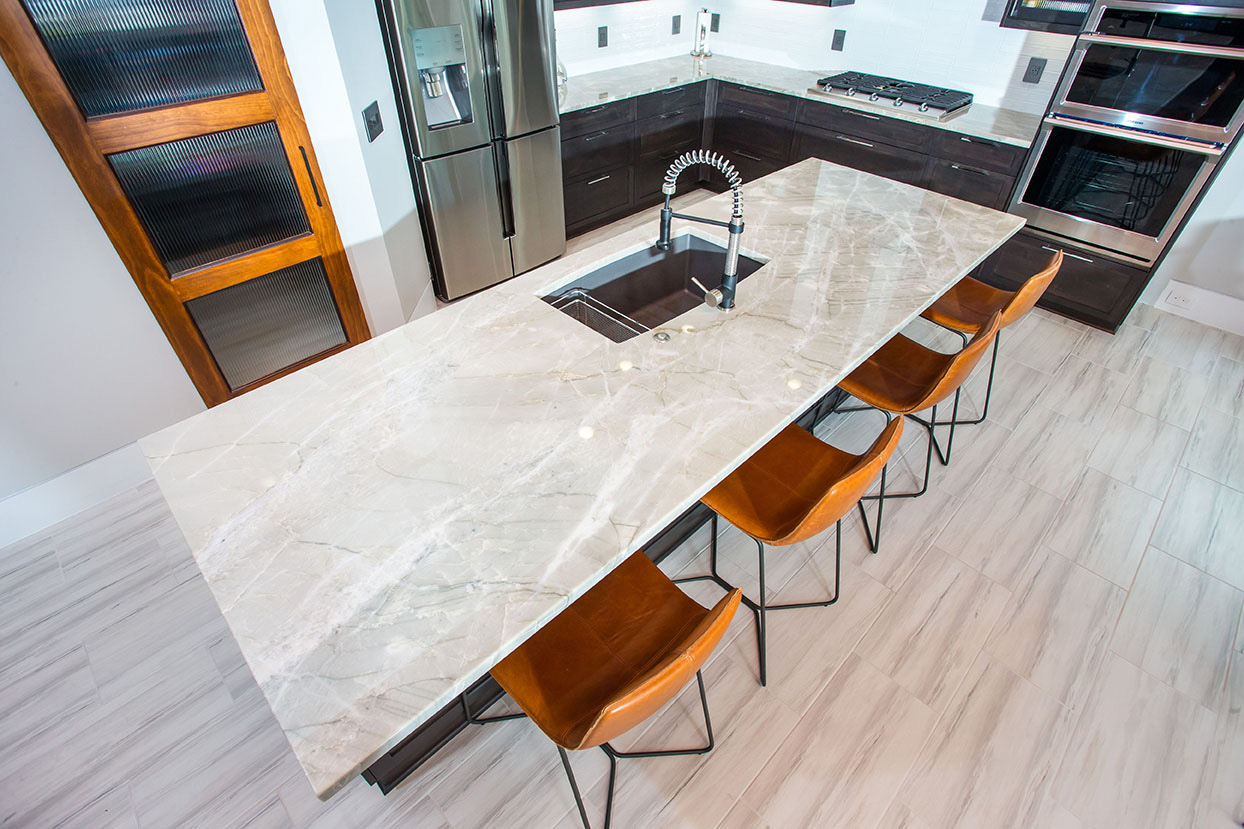
The contrast between countertops and cabinets should look deliberate. A near-match that is just slightly off can bother you every day, so if you want a close match, compare the real materials side by side. Contrast has its own caution. A countertop that is much darker than dark cabinets can make the room feel heavy, and a lighter countertop often balances dark or brown cabinets better. Either way, the strongest countertop and cabinet colors have a clear plan behind them, not a lucky guess.
What Works With Your Cabinets
The right countertop depends on the color and style of the cabinets it will sit beside. Start with the cabinet color, then look at the style and finish.
By color
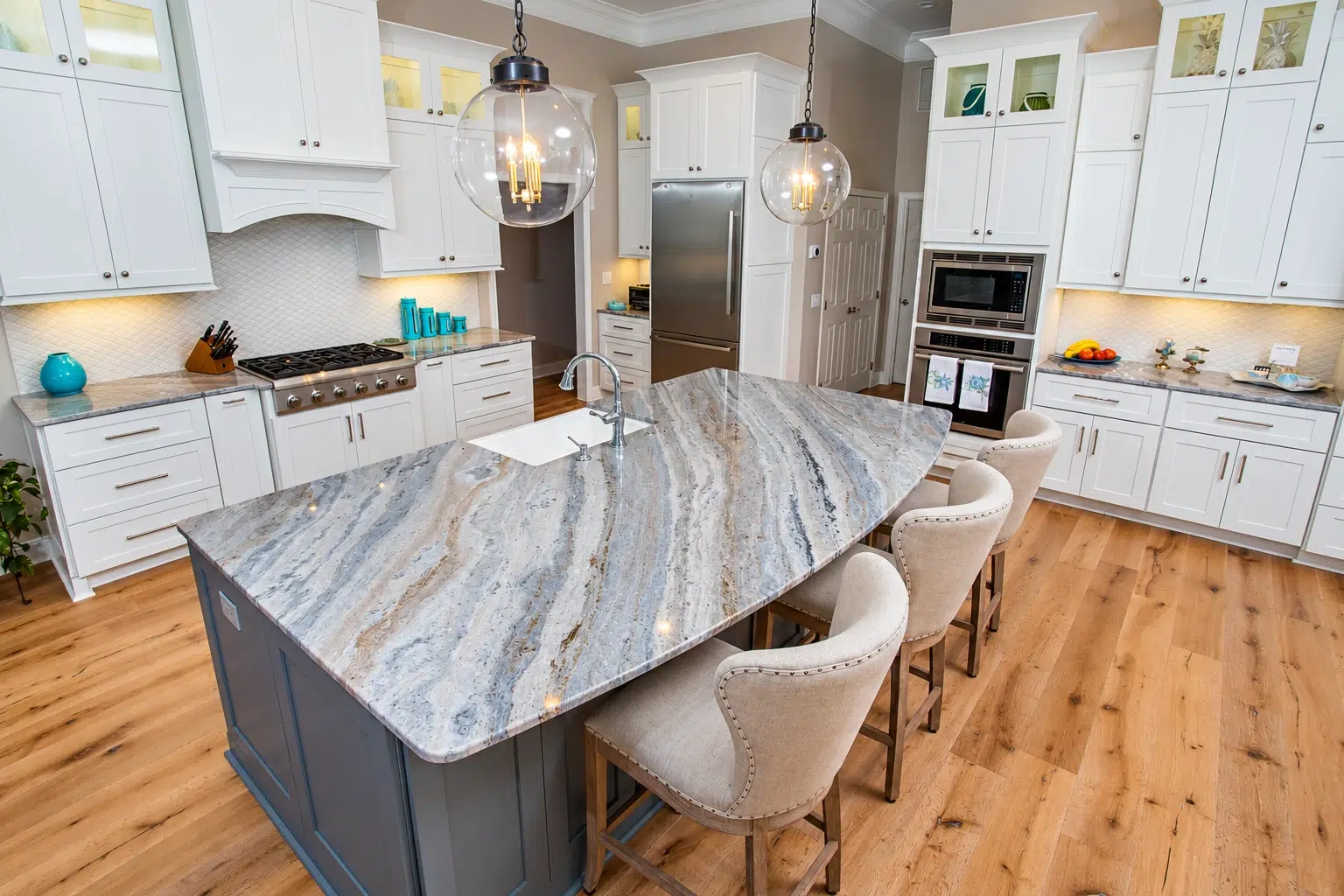
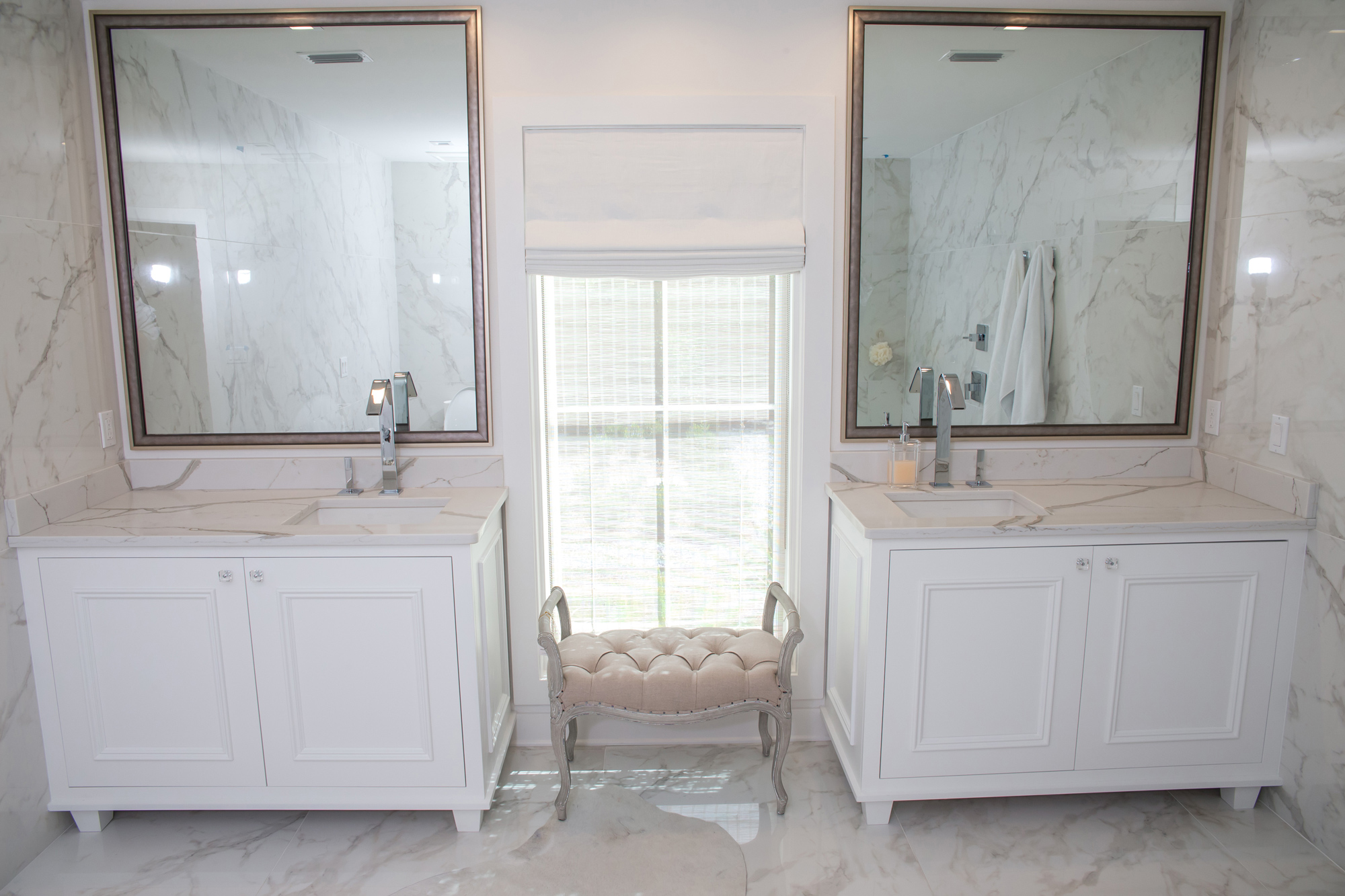
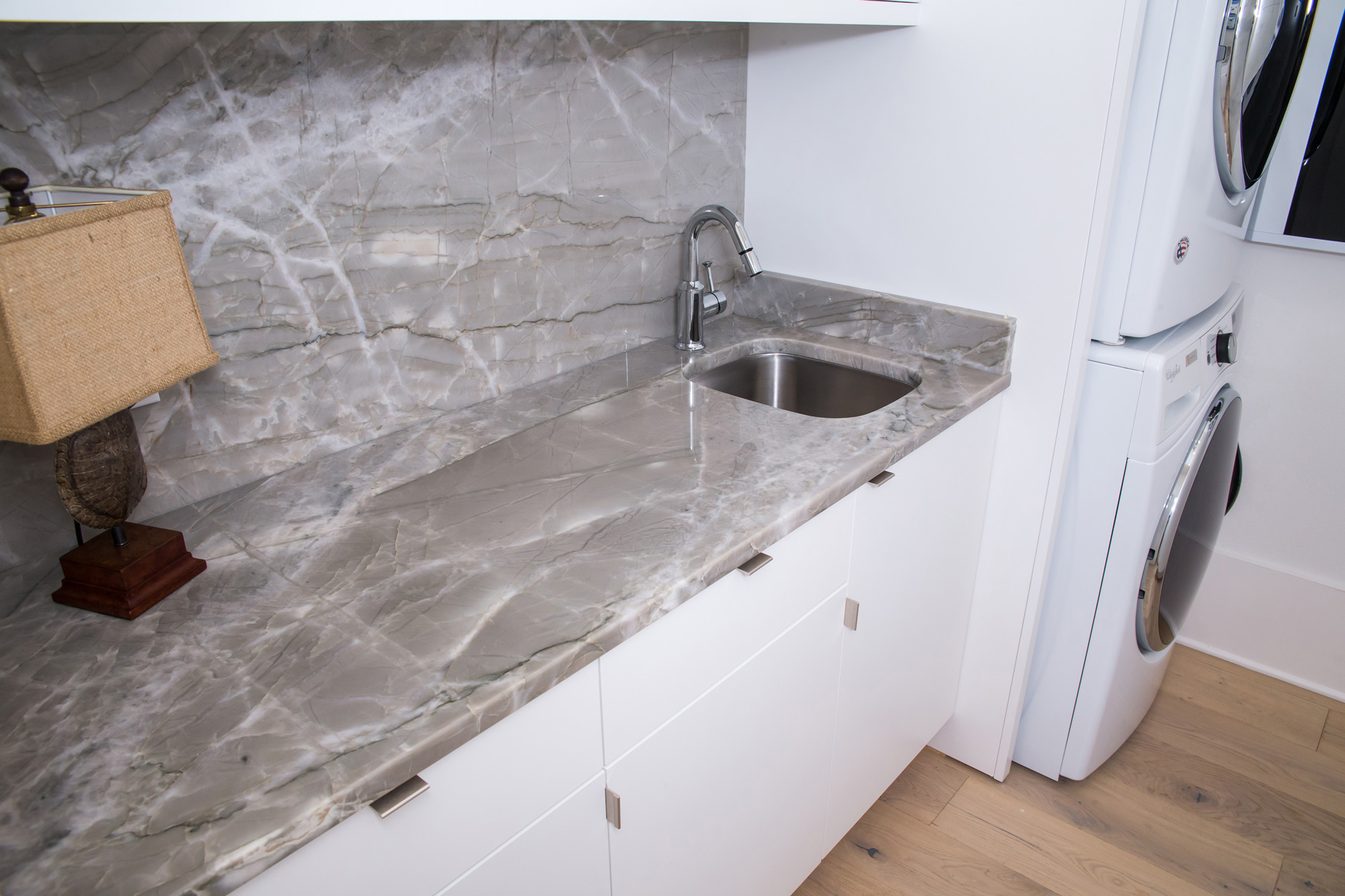
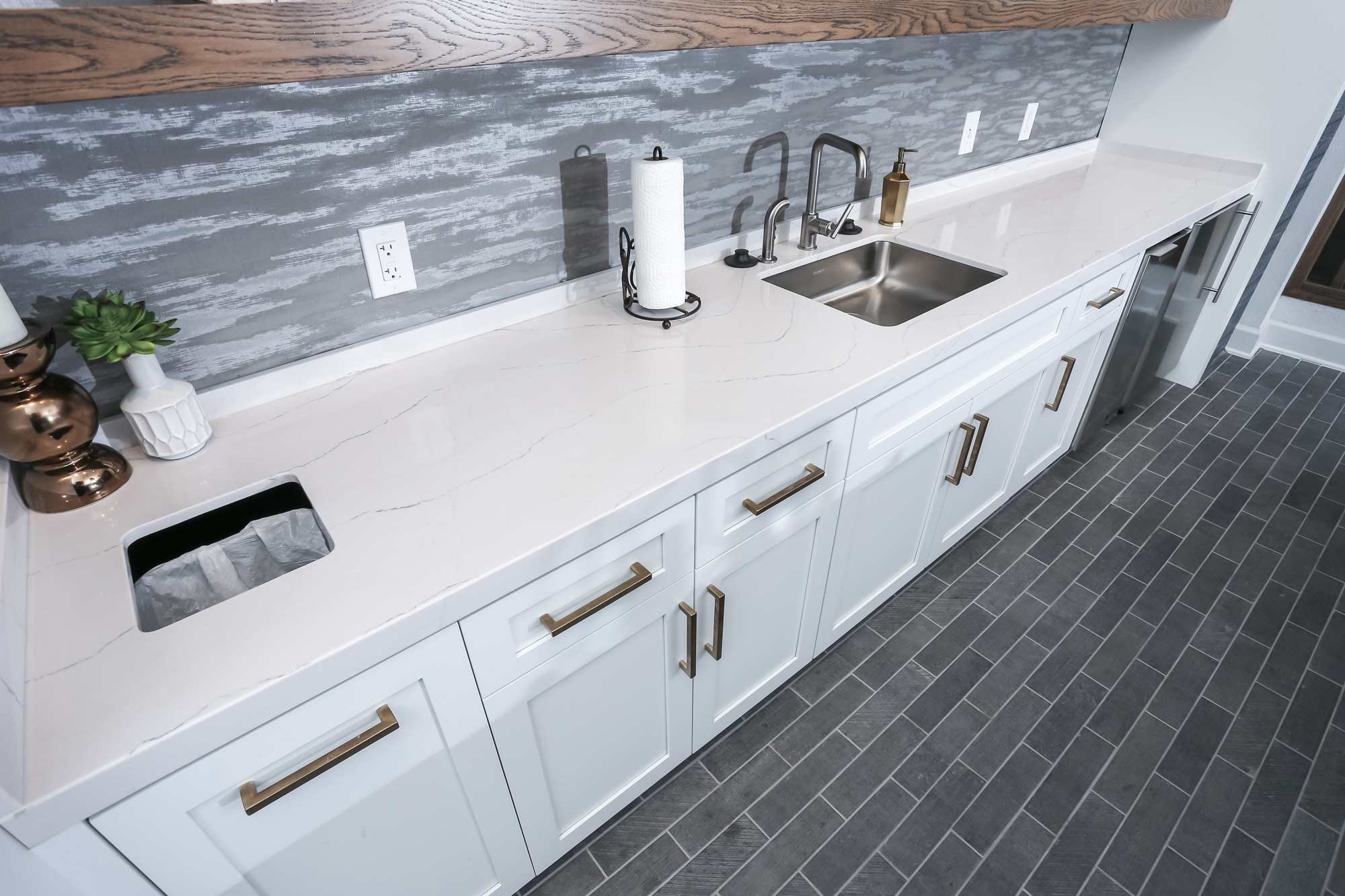
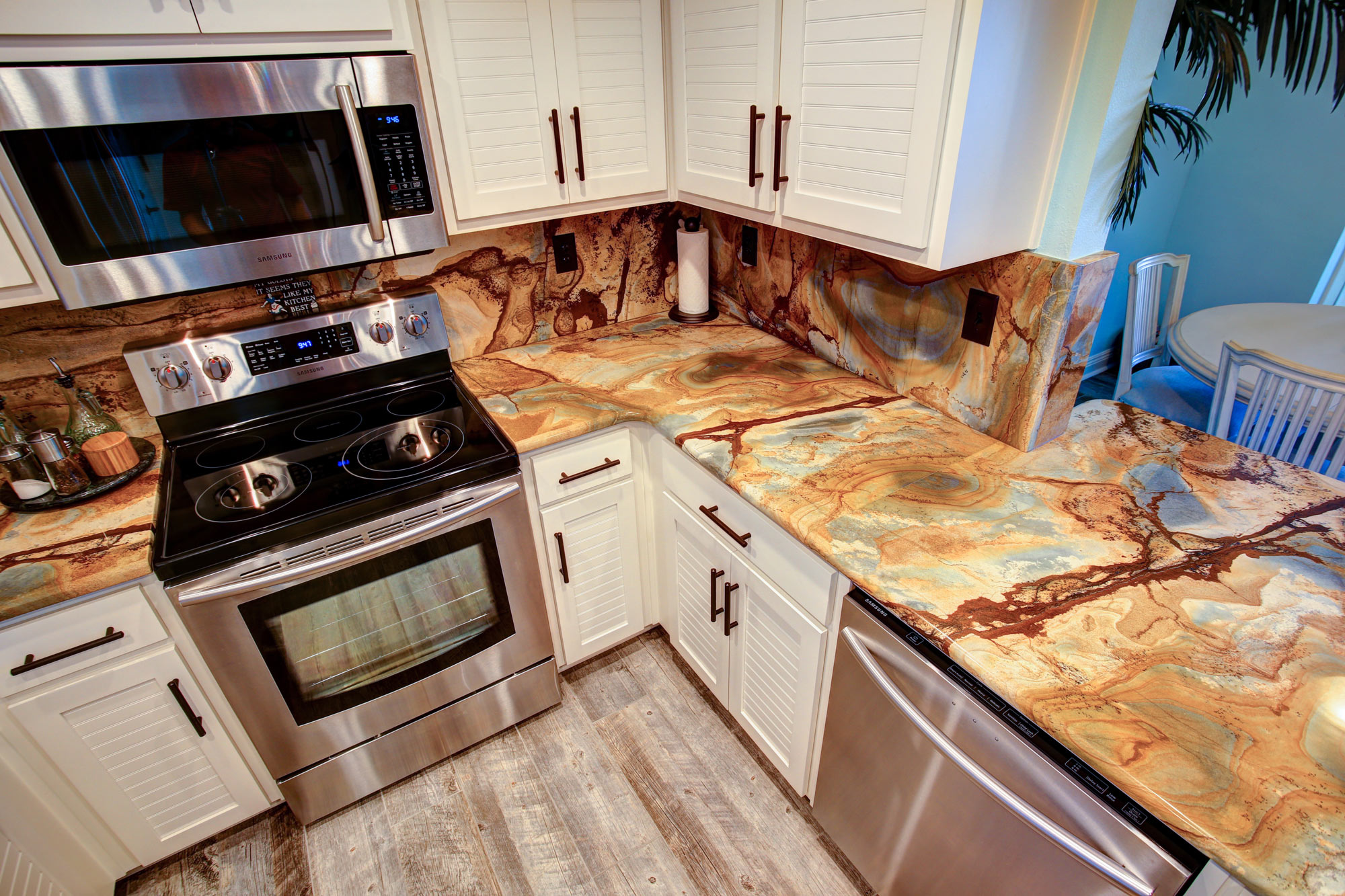
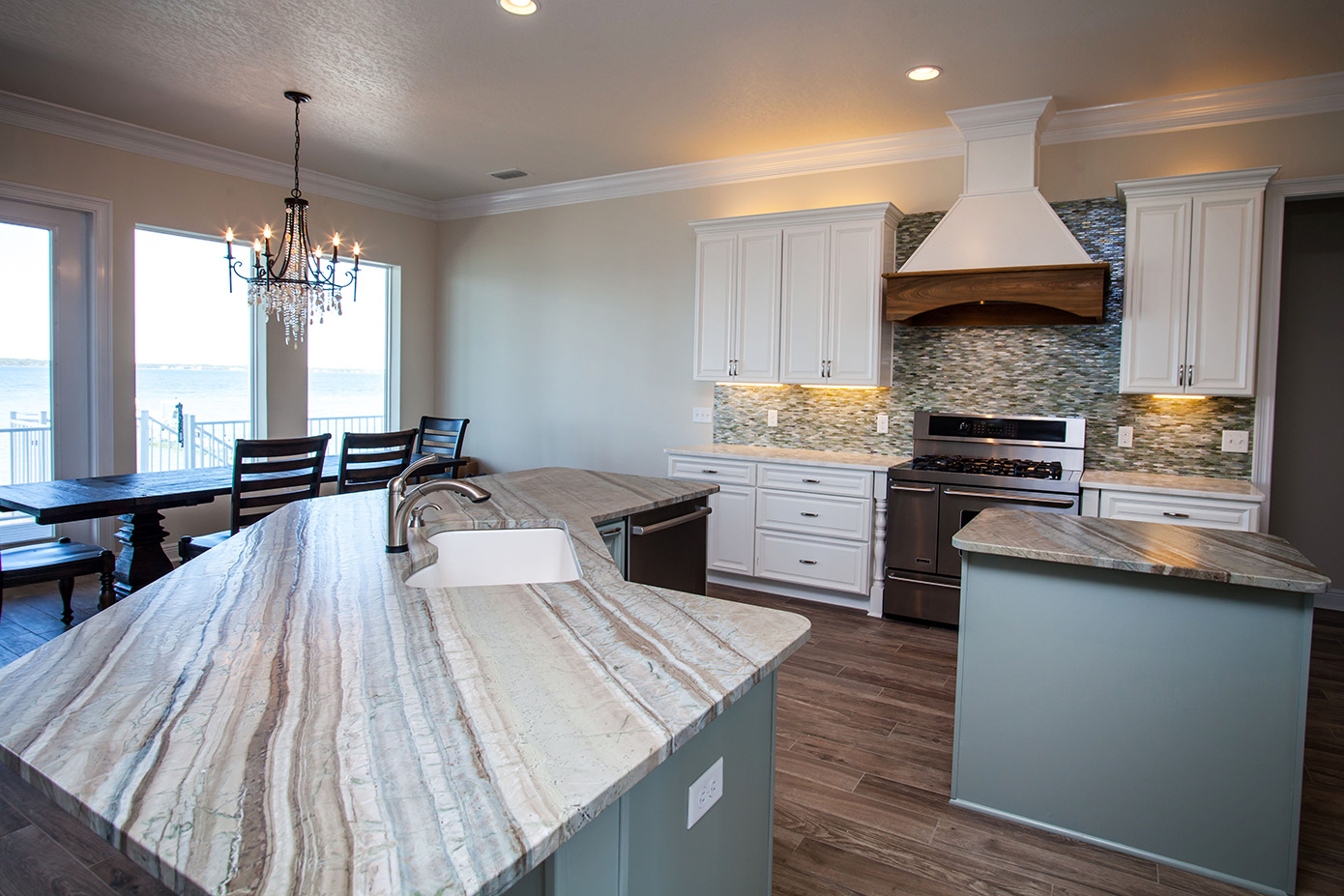
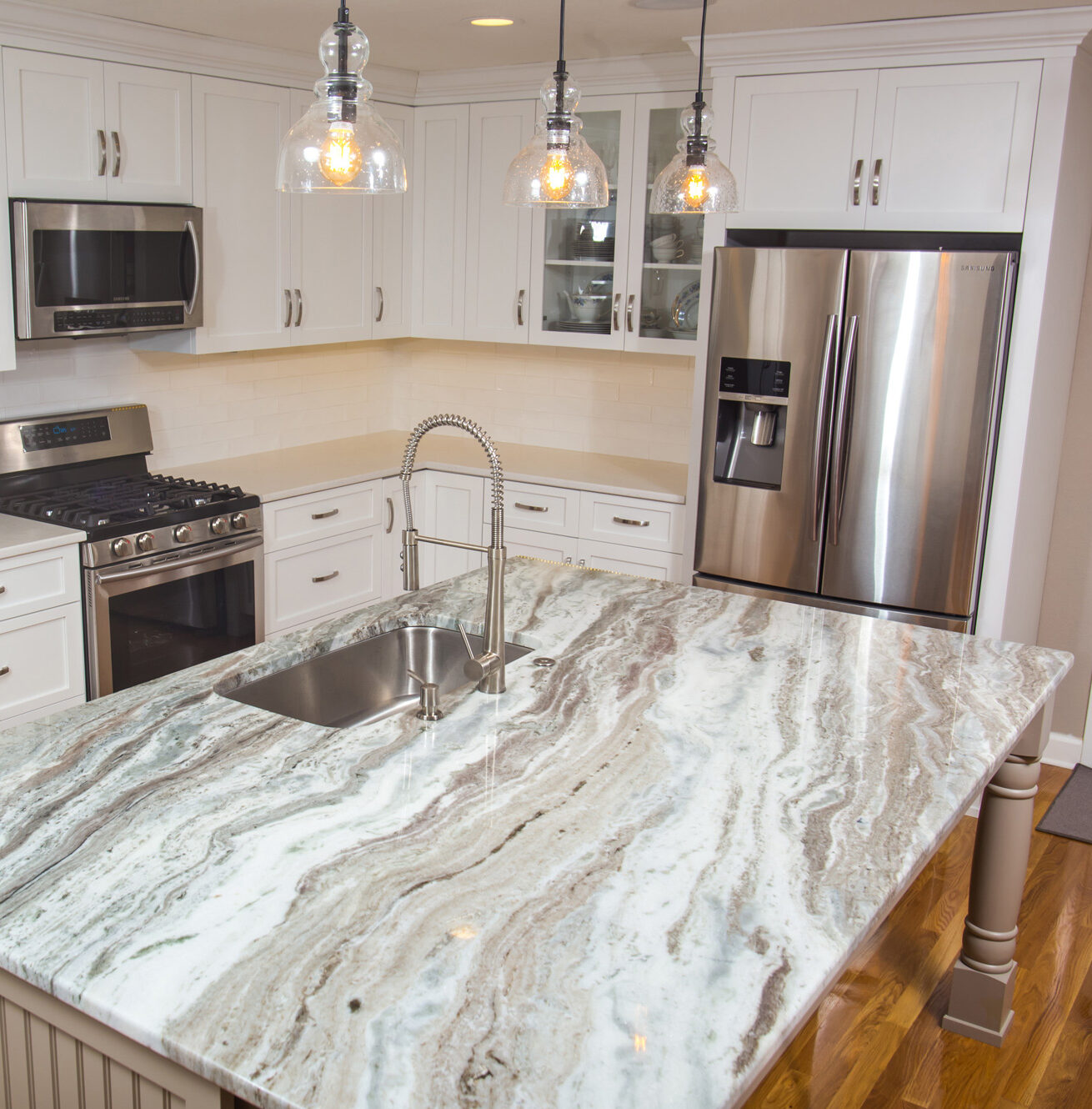
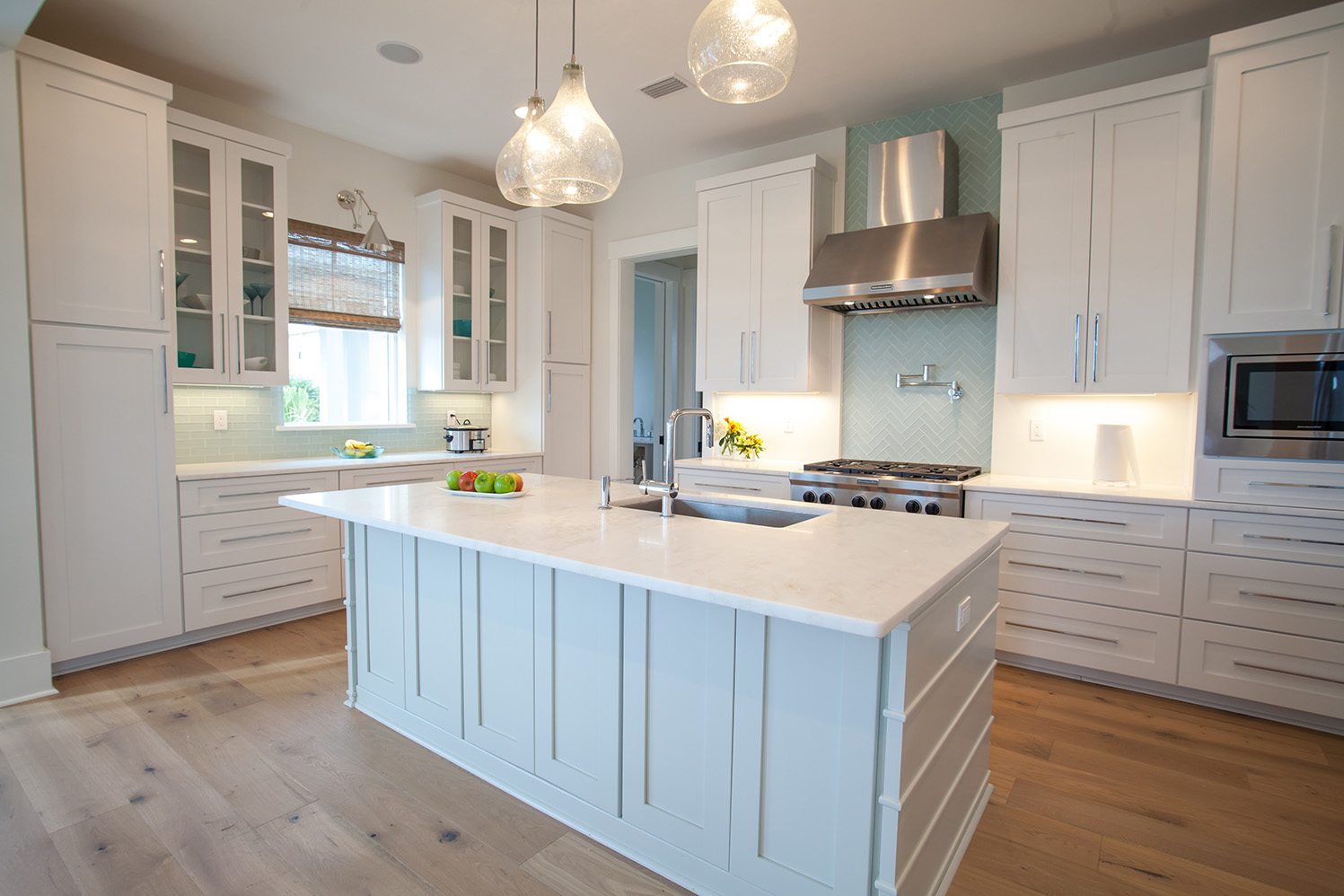
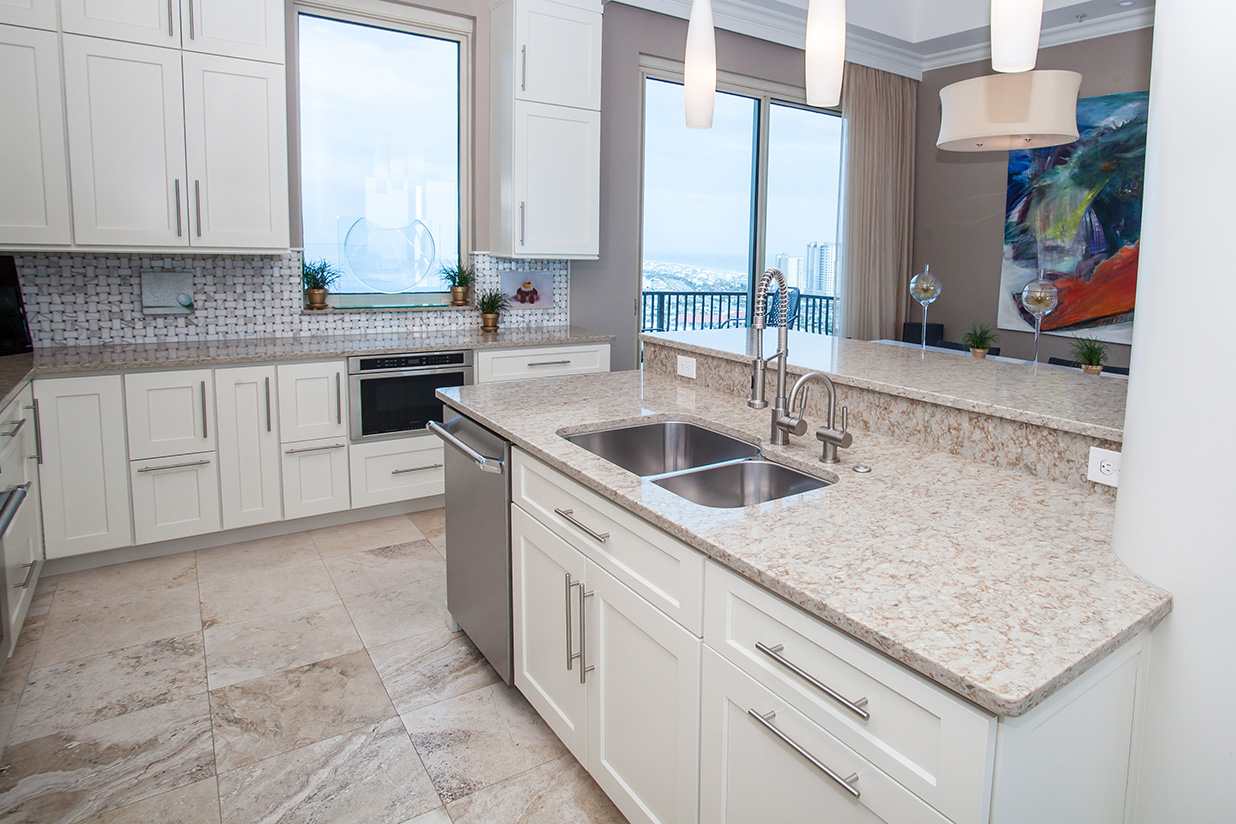
White cabinets. Countertops for white cabinets depend on which white you have. Warm whites, with cream, beige, or yellow undertones, usually pair best with warm or neutral stone. Cool whites, with blue or gray undertones, usually pair best with gray, charcoal, or cool-toned stone.
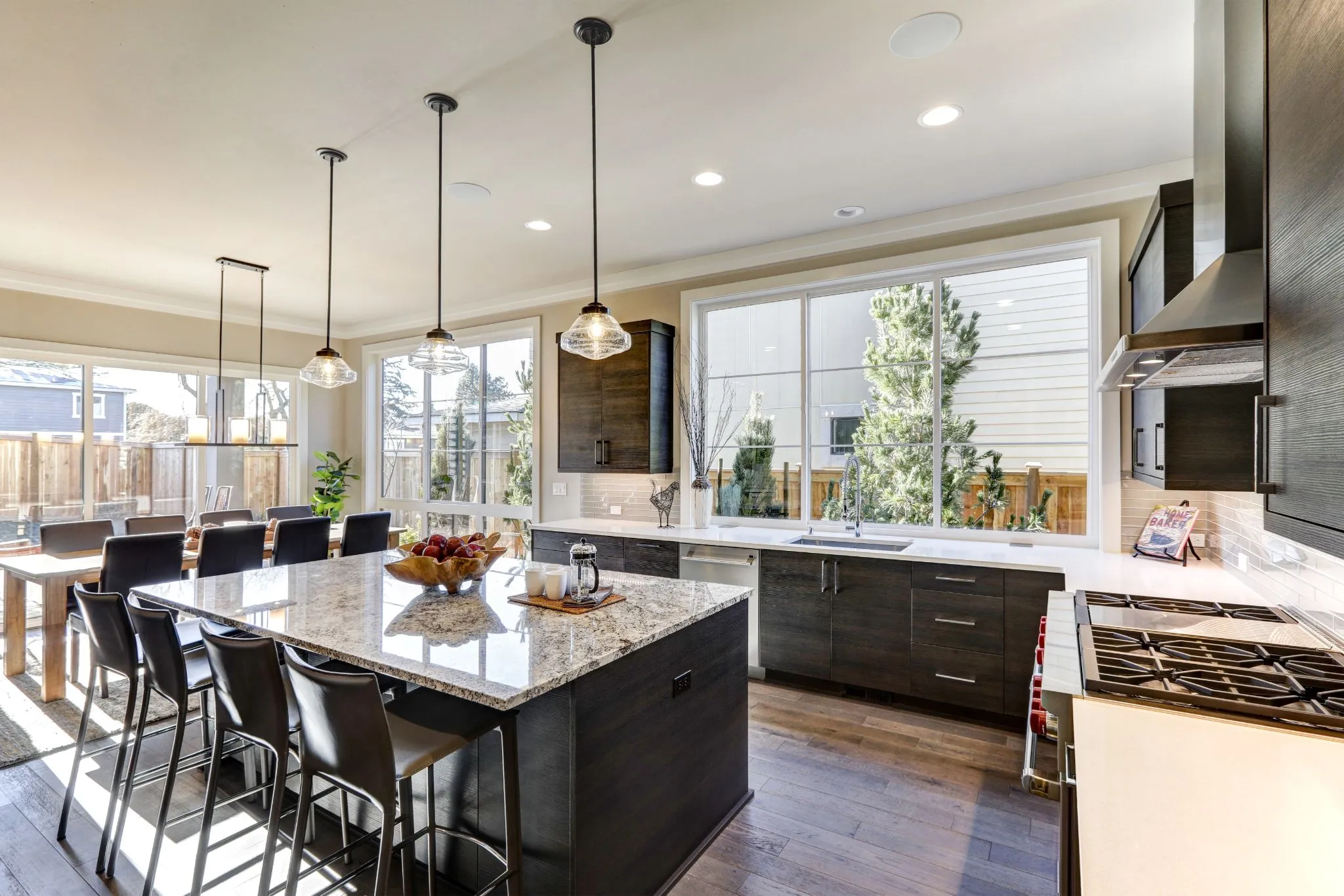
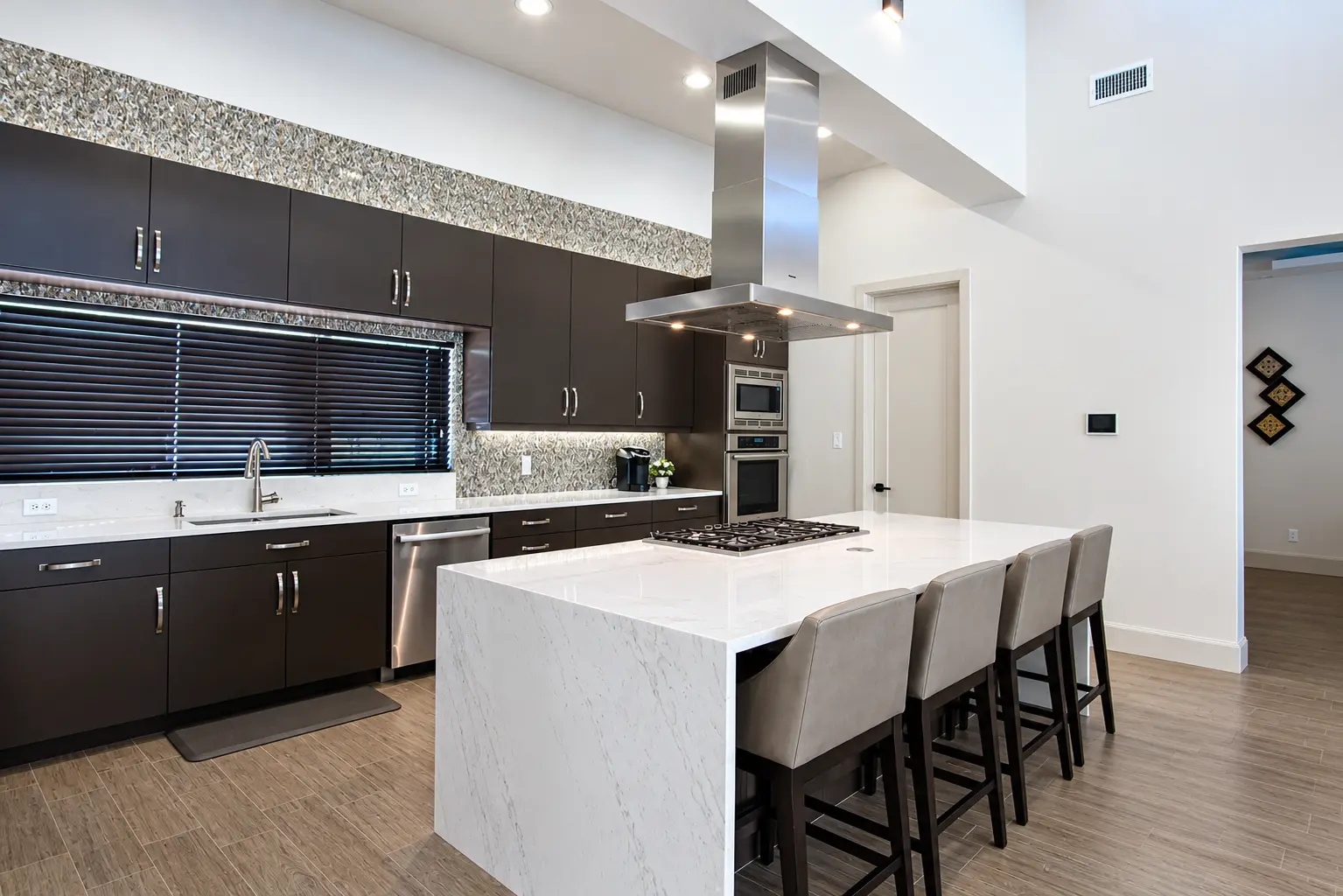
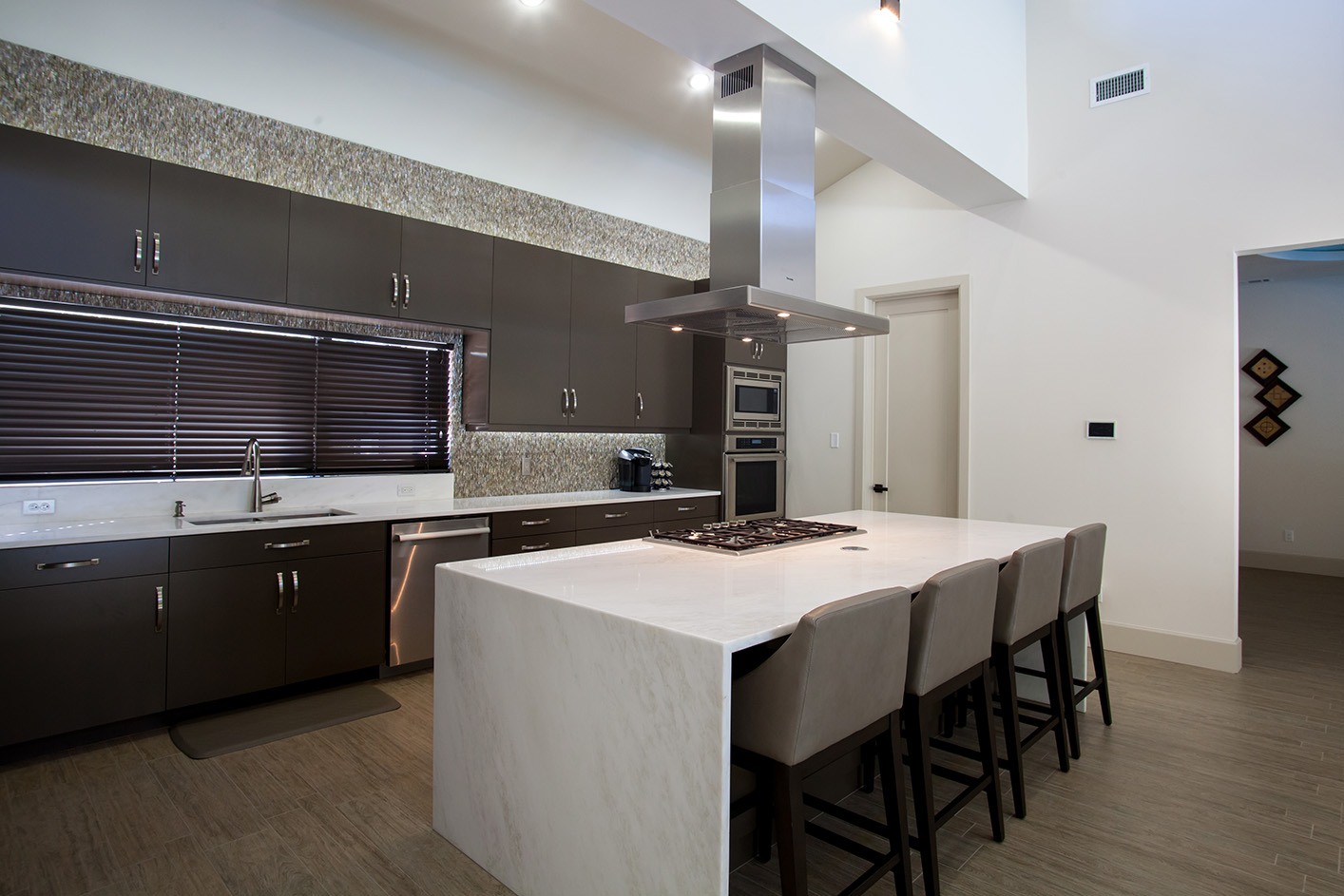
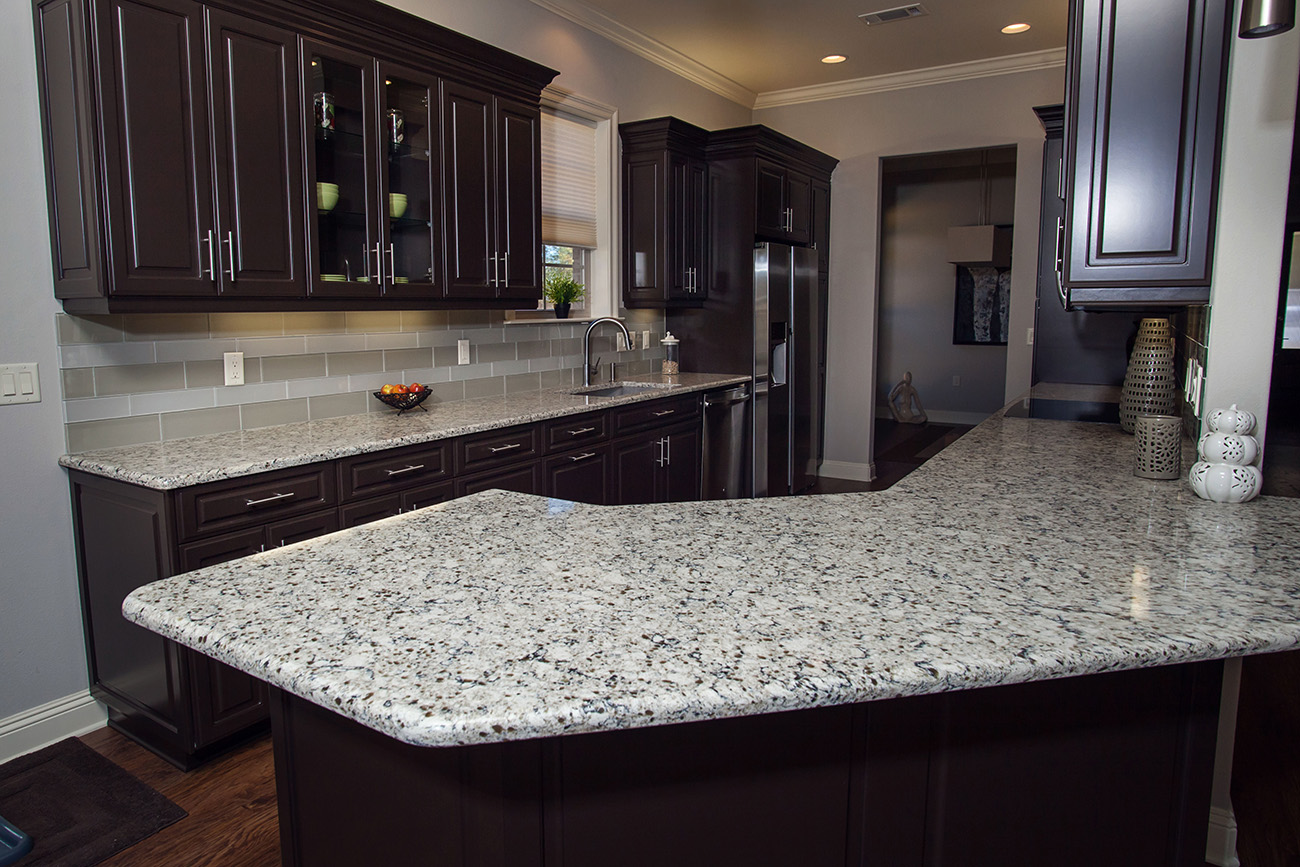
Dark cabinets. Countertops for dark cabinets are often easier to balance when they are lighter than the cabinets, which keeps the kitchen from feeling heavy. A very dark stone against very dark cabinets can flatten the room.
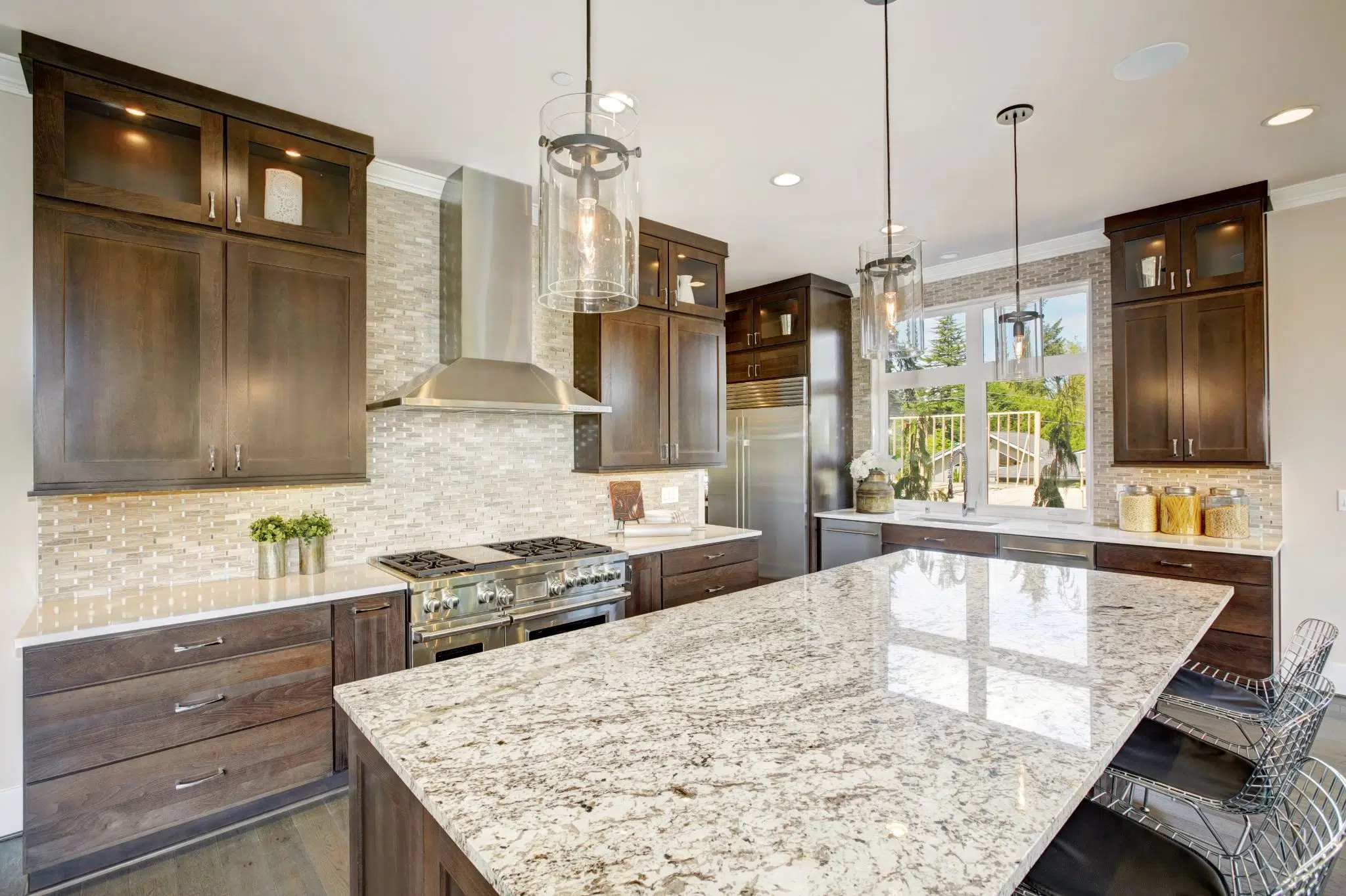
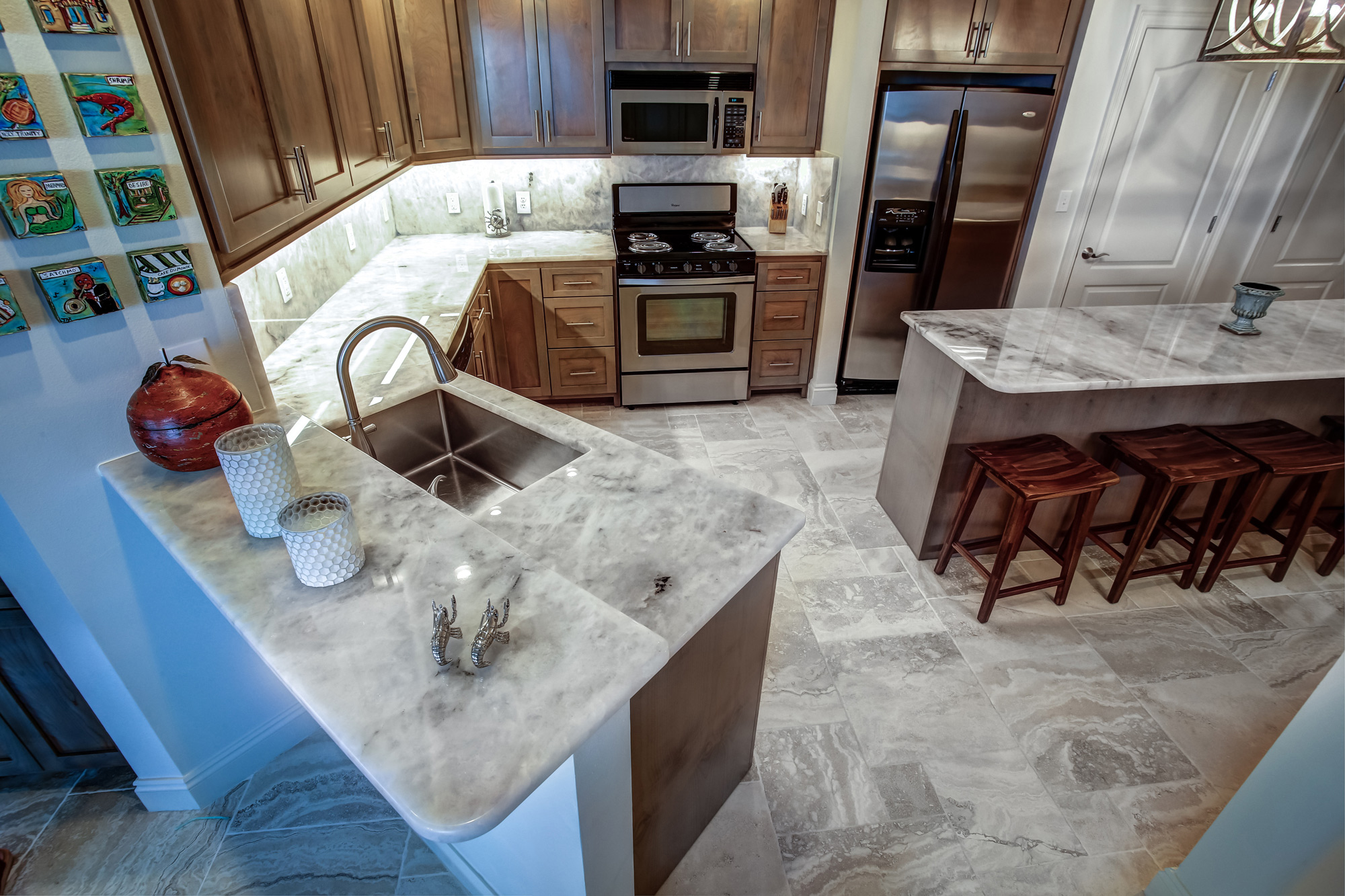
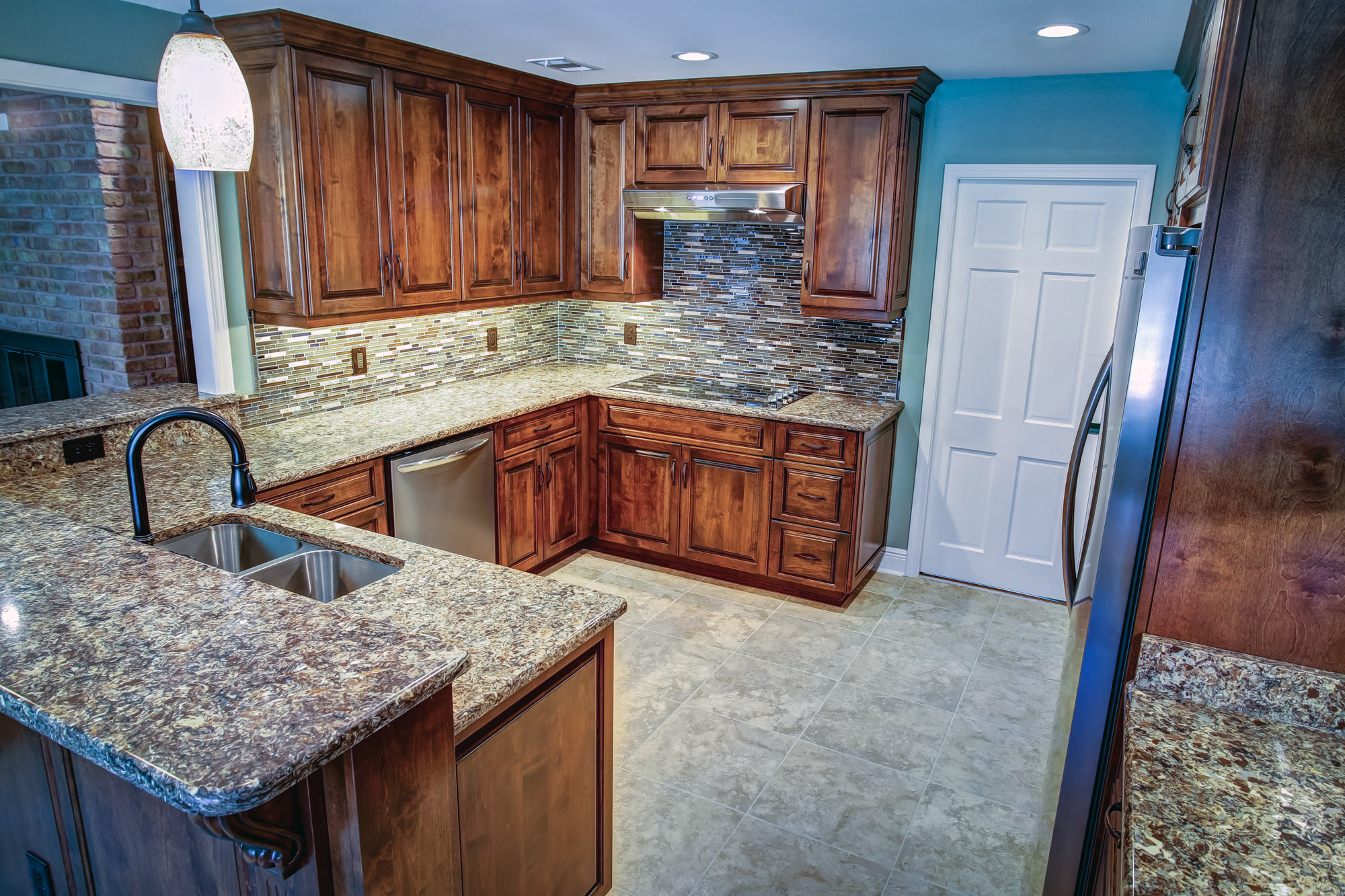
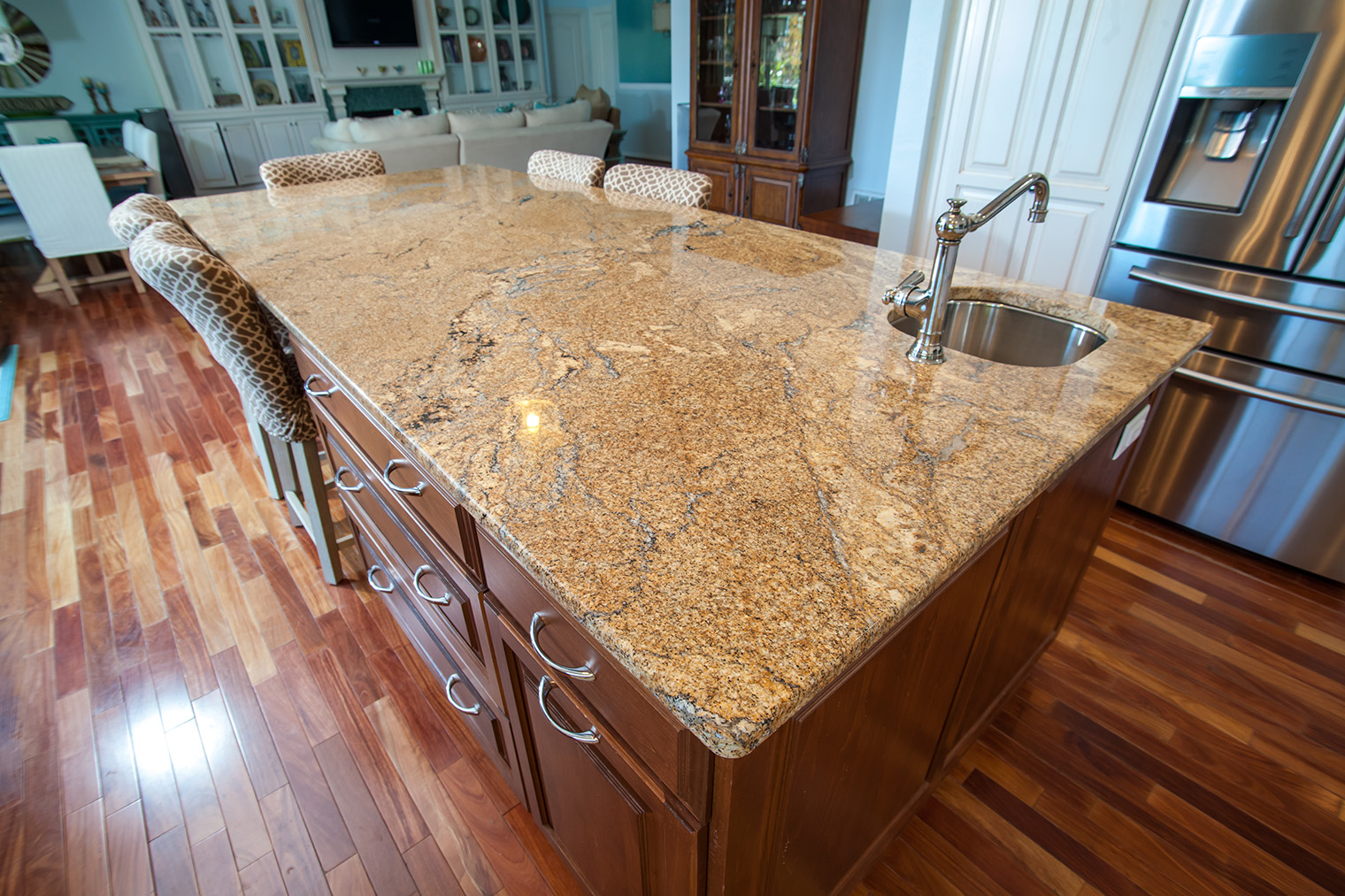
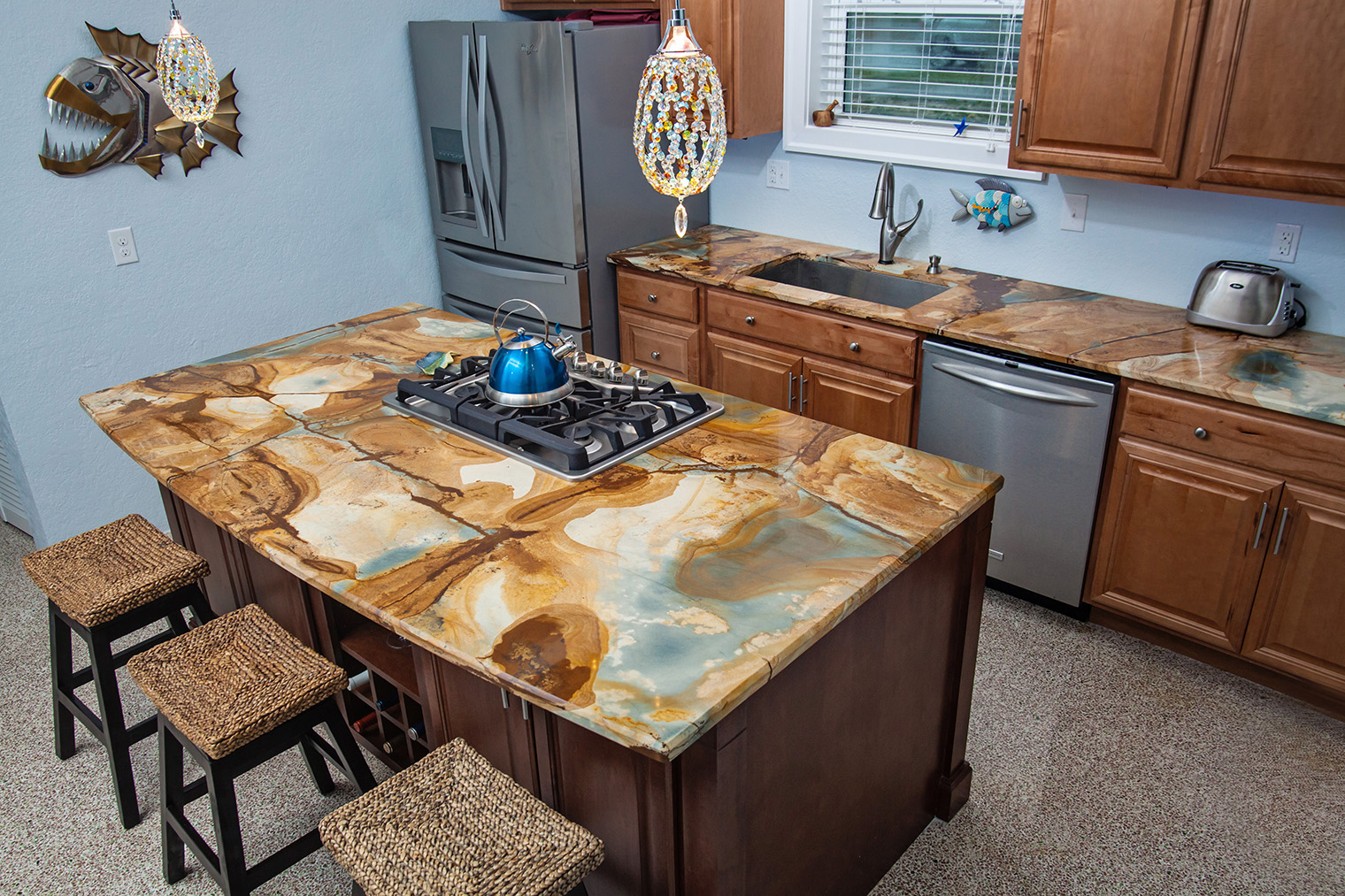
Wood cabinets. Countertops for wood cabinets should respect the wood’s undertone. Warm woods such as cherry or walnut tend to pair well with warm or neutral stone, while a cool gray stone can clash. If the wood has a strong grain, a calmer stone usually lets the grain stand out.
By style and finish
Painted cabinets usually have one clear undertone, which makes them easier to match. Stained wood shows more variation in color and grain, so check the undertone in more than one spot. Glossy cabinets reflect more light and feel more modern, so they often suit sleek or high-contrast stone. Matte cabinets suit softer tones. Traditional cabinets with a lot of detail look best with a countertop that complements the craftsmanship rather than competing with it. Clean, simple cabinets give you more freedom. Whatever your style, choosing countertop and cabinet colors together keeps the finished kitchen feeling coordinated.
Pick a Stone Whose Color Fits
Once you know your undertone and your strategy, look at the stones that come in the colors you need. Knowing how to choose a countertop color is mostly about narrowing the field, and this quick guide covers the color tendencies of the stones we carry. You can also read more about our natural stone and quartz options.
| Stone | Color tendency | Good to know |
| Granite | Wide range of colors and types | Check the full slab, since patterns vary |
| Quartz | Consistent colors and patterns | Darker colors show dirt, dust, and fingerprints more easily |
| Quartzite | Usually white to gray | Color can vary from slab to slab |
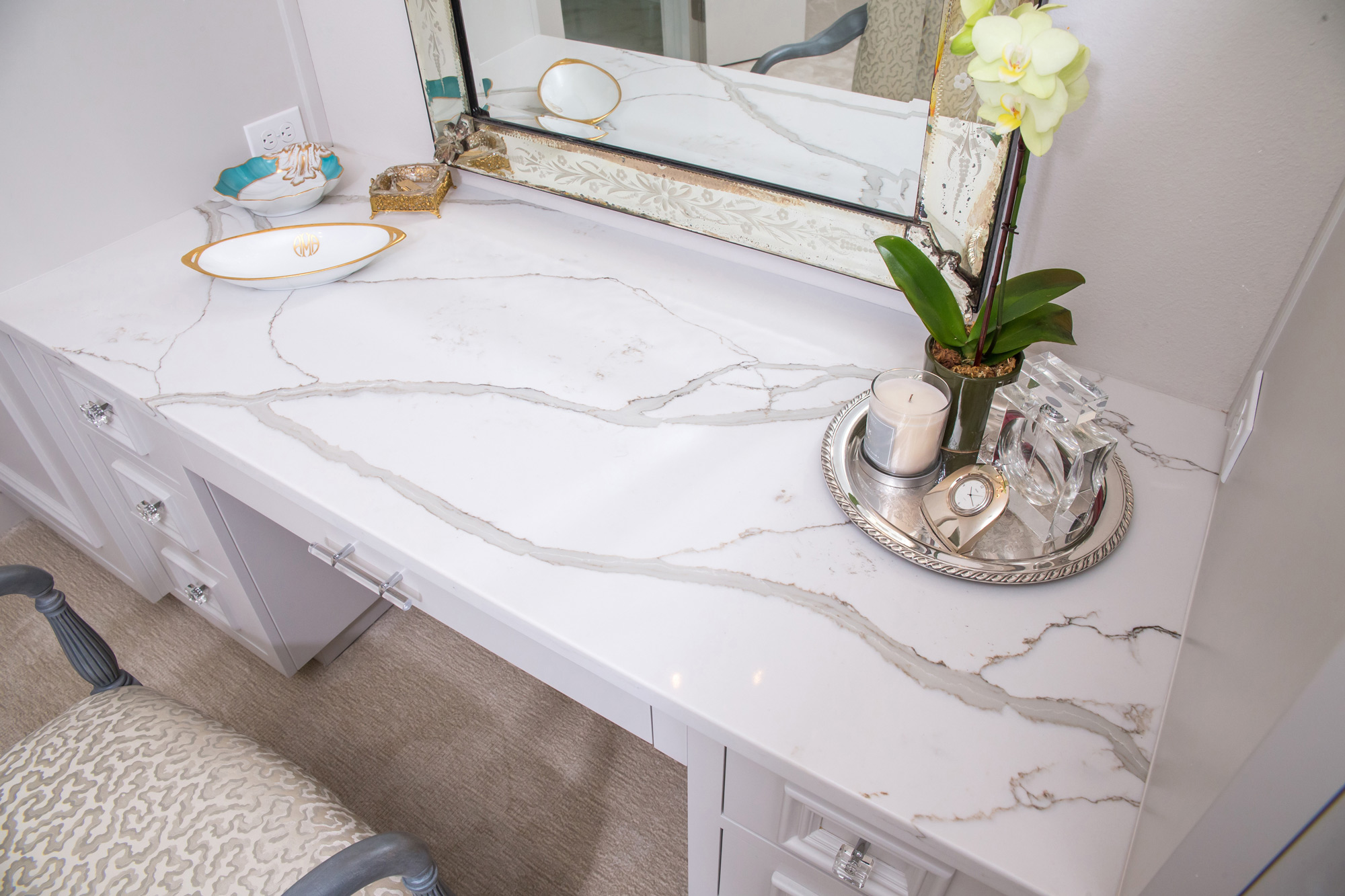
| Calcite | Soft, creamy white | Often mistaken for marble |
| Dolomite | White, gray, or cream | The veined look of marble |
| Soapstone | Light grey that deepens to dark charcoal | Matte finish that darkens over time |
Pick the stone whose undertone sits comfortably beside your cabinets, and your countertop and cabinet colors will start to feel like a single plan.
Test in Your Own Light
Light changes color more than most people expect. Natural light, warm bulbs, and cool bulbs can each shift how a stone and a cabinet look together. Warm incandescent light tends to bring out yellow and orange, while cool fluorescent light can add a blue or green tint. That’s why you should check natural light and countertop color together, at the times of day you actually use your kitchen. Under-cabinet lighting can also reveal undertones you did not notice in the showroom.
Photos are not a reliable test, since camera settings and lighting change how colors appear. Bring a cabinet door, a flooring sample, and a paint swatch, and hold them next to the actual slab.
At Superior Granite, we keep hundreds of colors in stock, and a dedicated staff is there to help with your space. If you are looking for a countertop showroom in Pensacola, you can bring your samples and compare them with full slabs in person. Whether you want a natural stone countertop in Pensacola or a granite countertop in Pace, our showrooms in Pensacola, Pace, and Fort Walton Beach let you compare colors side by side, and we serve the areas around them. Our team at Superior Granite is happy to help you compare. Seeing the slab next to your cabinets is the best way to confirm your countertop and cabinet colors before anything is cut.
Final Thoughts: Choose Colors That Work Together
The right match comes down to a few steps: read your undertones, decide between a close match and a deliberate contrast, check the combination in your own light, and see the real slab beside your cabinet. When your countertop and cabinet colors work together, the whole kitchen looks planned.
When you are ready, visit Superior Granite or contact us for a free estimate and to start comparing slabs.
Pensacola, FL
Visit Us: 7011 Pine Forest Road, Pensacola, FL 32526
Call Us: (850) 941-0270
Hours: Monday – Friday: 8 a.m. – 5 p.m., Saturday: 9 a.m. – 2 p.m.
Pace, FL
Visit Us: 4590 Jernigan Road, Pace, Florida 32571
Call Us: (850) 994-1872
Hours: Tuesday – Friday: 9 a.m. – 5 p.m., Saturday: 9 a.m. – 2 p.m.
Fort Walton Beach, FL
Visit Us: 35 Miracle Strip Pkwy SW, Fort Walton Beach, Florida 32548
Call Us: (850) 301-0716
Hours: Tuesday – Friday: 8 a.m. – 5 p.m., Saturday: 9 a.m. – 2 p.m.
Get quotes now and start your project!
FAQs
1. Should I choose my countertop or my cabinets first?
Either order can work, so choose the one that leaves you with the fewest compromises. If you already love a particular slab, it can be easier to pick cabinet paint or stain to suit it. If your cabinets are already installed, your stone has to fit them. Just remember that cabinets need to be set and level before we template.
2. Do my countertops have to match my cabinets exactly?
No. Exact matches are hard to achieve because paint, wood, and stone have different textures and finishes. Colors that share an undertone and look intentional together usually work better than an identical shade.
3. Can I pair warm cabinets with a cool countertop?
It can work if the contrast looks deliberate, but mismatched temperatures often look dull. If you are unsure, a neutral stone can act as a bridge between the two.
4. How do I tell if my cabinets have warm or cool undertones?
Check them in both morning and evening light, and remember that floors and walls have undertones too. A cream cabinet next to a taupe floor with pink undertones can pull in different directions, so look at everything together before you choose a stone.
5. Can my island be a different color from my cabinets?
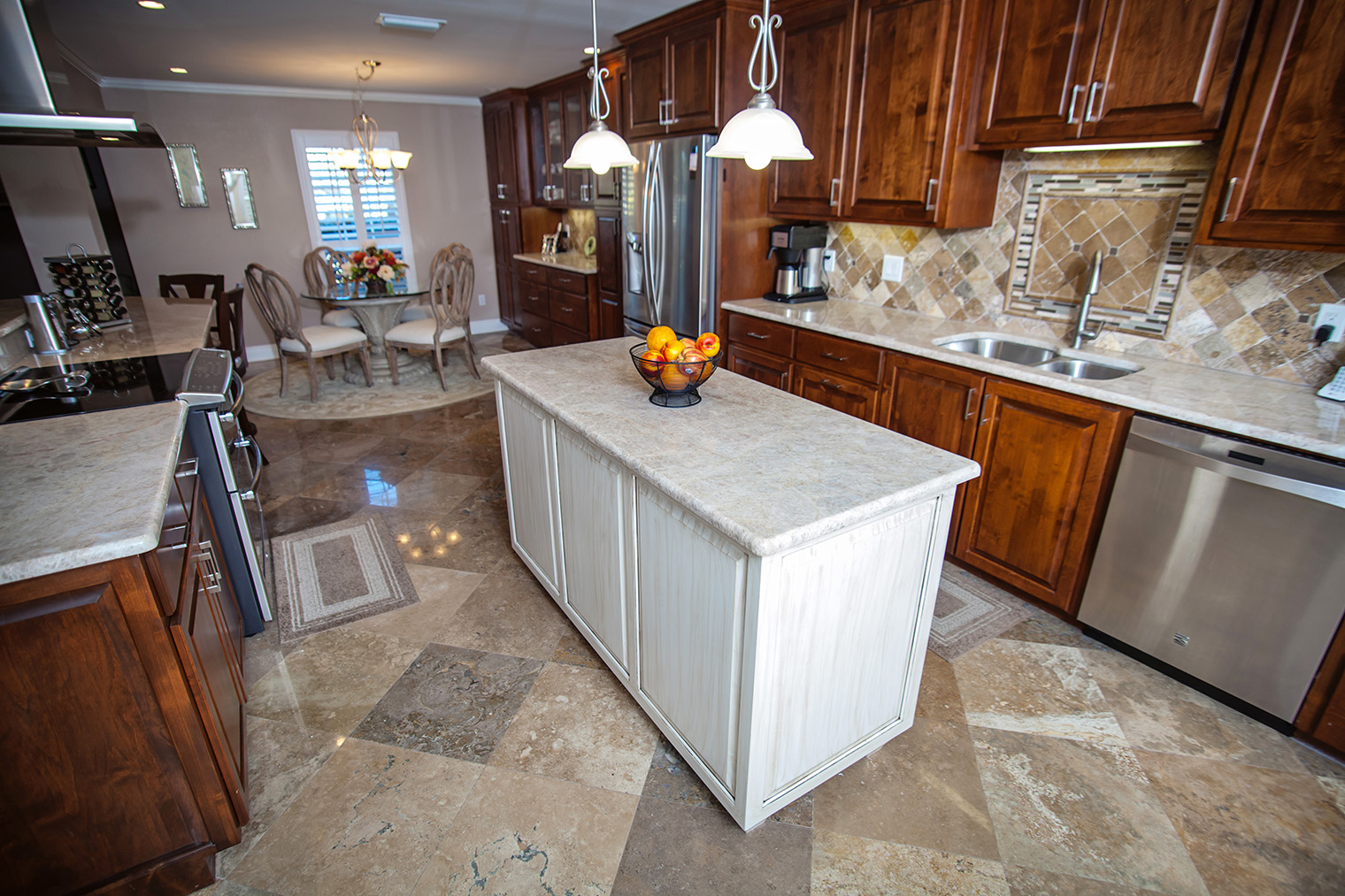
Yes. An island in a different color can act as a focal point. Keep its undertone consistent with the rest of the kitchen, and look at the slab beside your cabinets before you decide.
6. Do my cabinets need to be installed before the template?
Yes. All cabinets must be set and level before we arrive. Any changes involving plumbing, cabinetry, or walls also need to be finished first, and your existing countertops should be cleared off.
7. What if I already have my countertop and still need to pick cabinets?
Look closely at the stone. If its pattern includes flecks or veins of a secondary color, choose a cabinet color that echoes one of them. Then check whether the stone leans warm or cool, and choose a cabinet with the same temperature.
8. Can I get a free estimate before I choose?
Yes. We offer free estimates. Visit a showroom or contact us, and bring your layout and the colors you are considering so the quote reflects your exact choices.