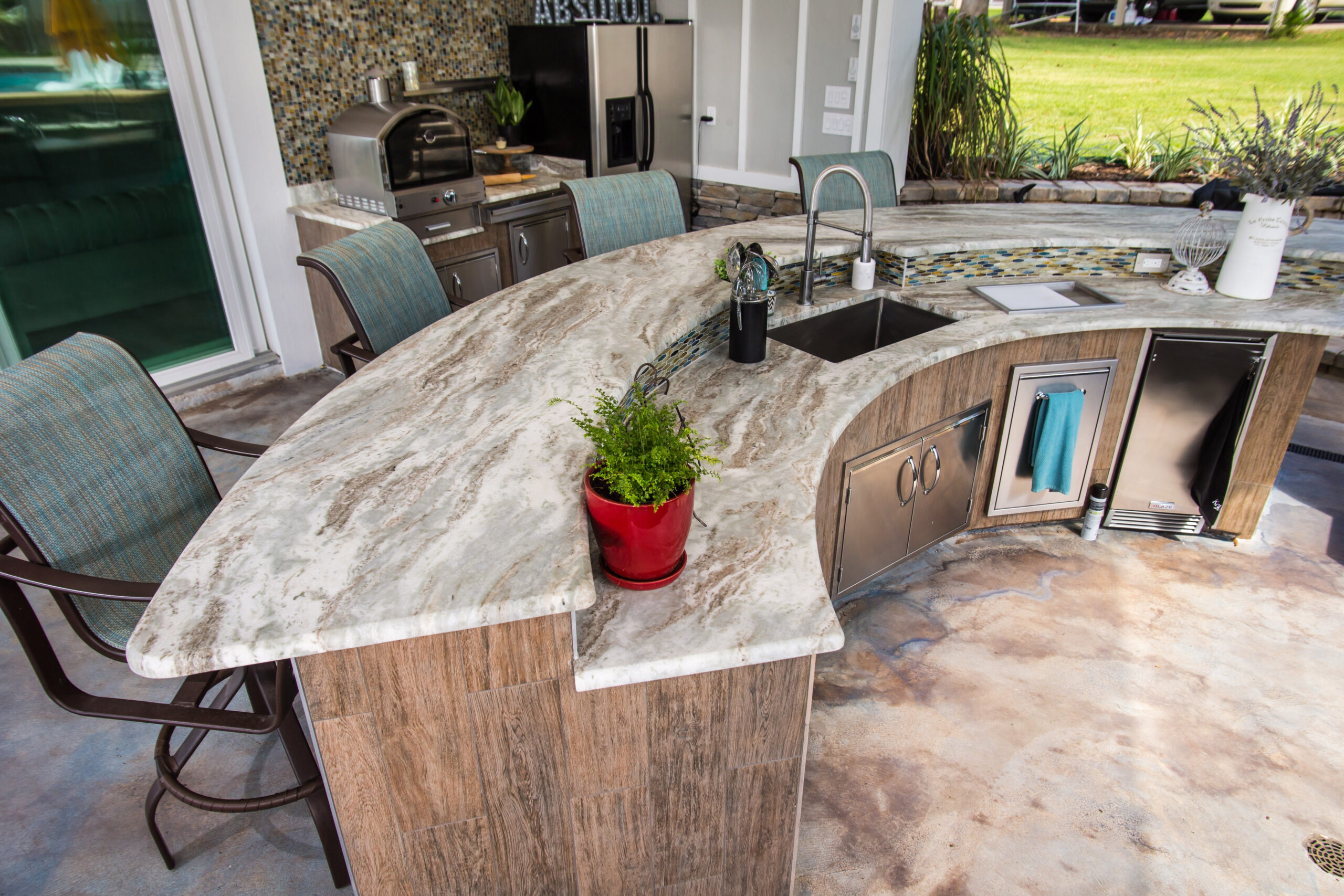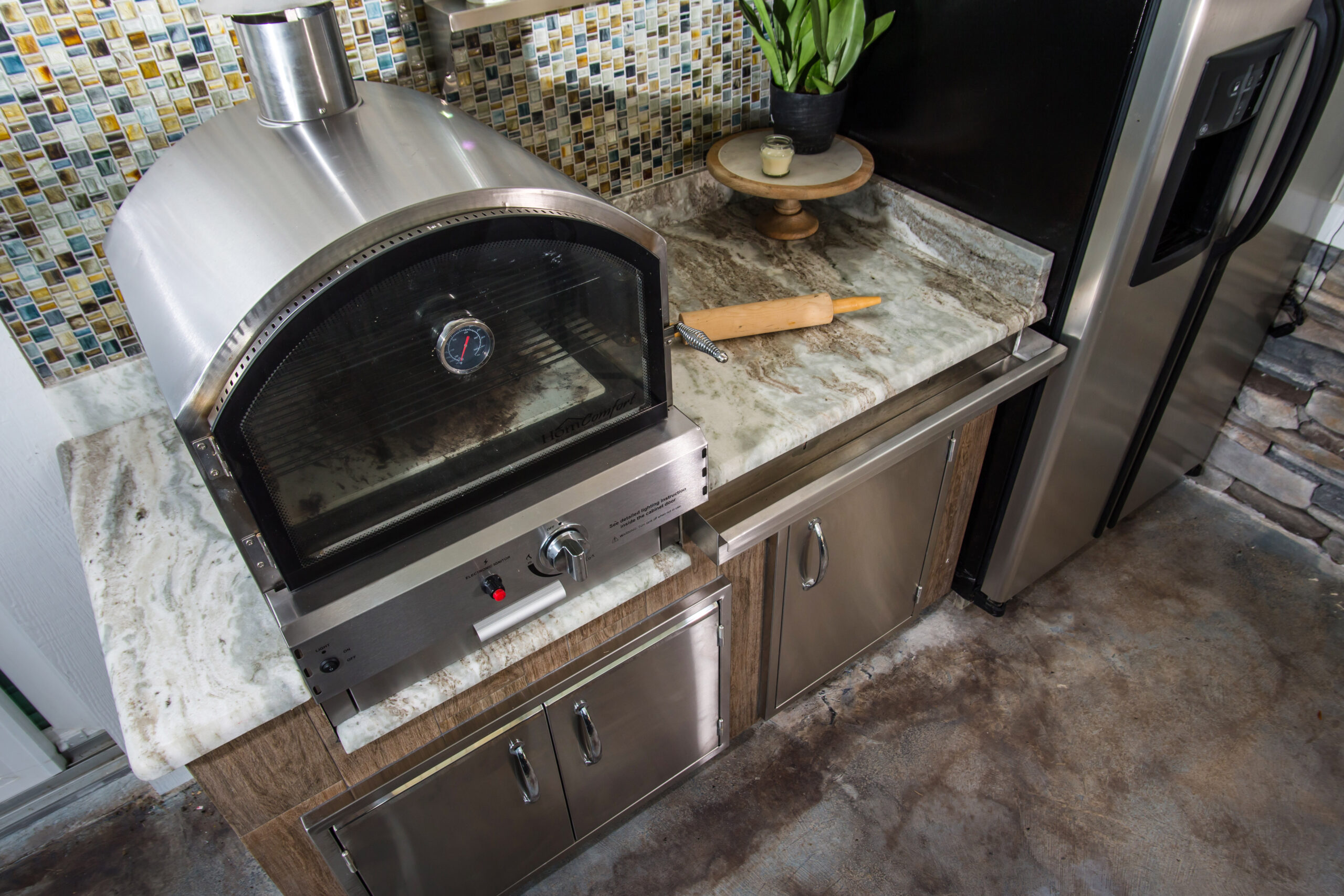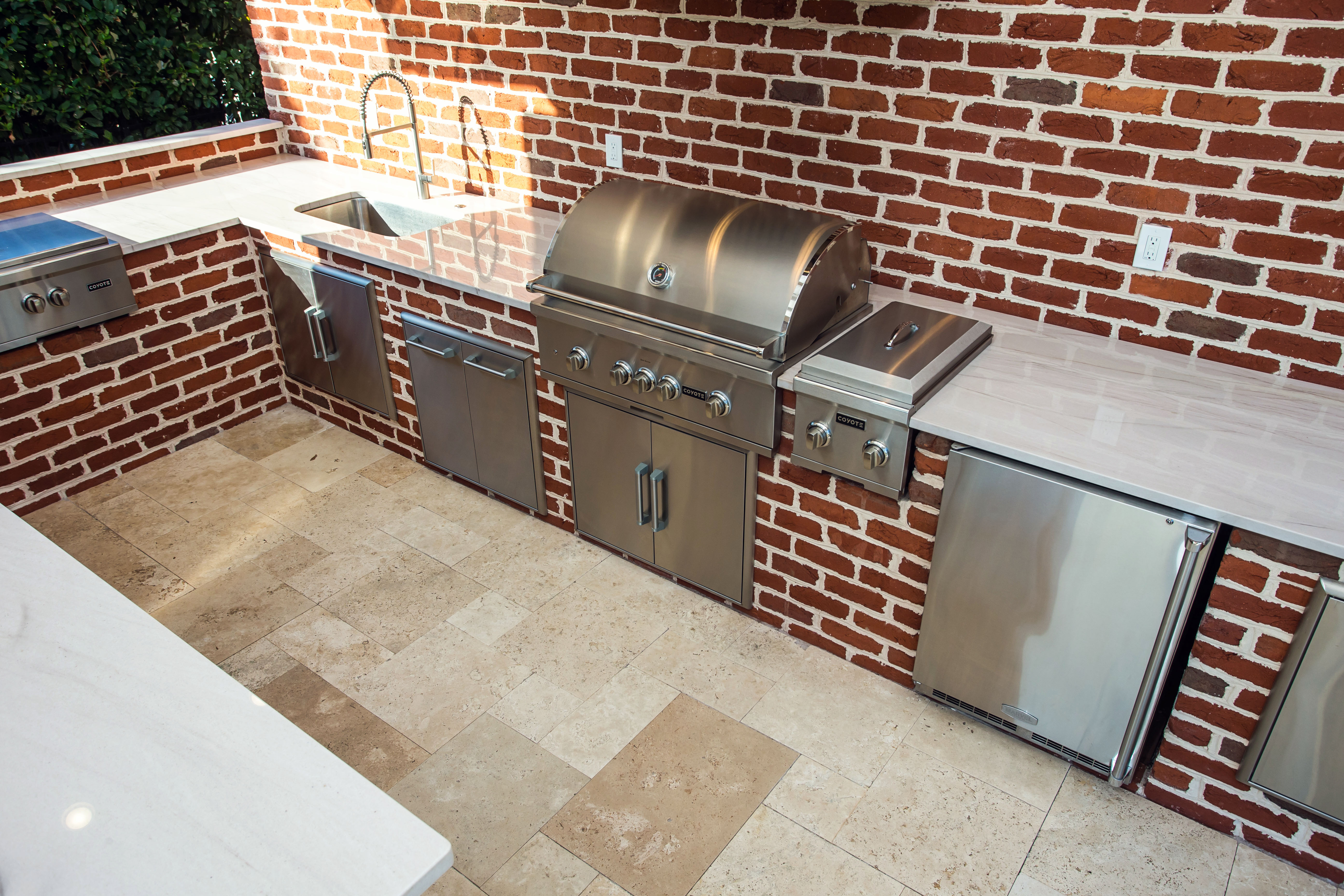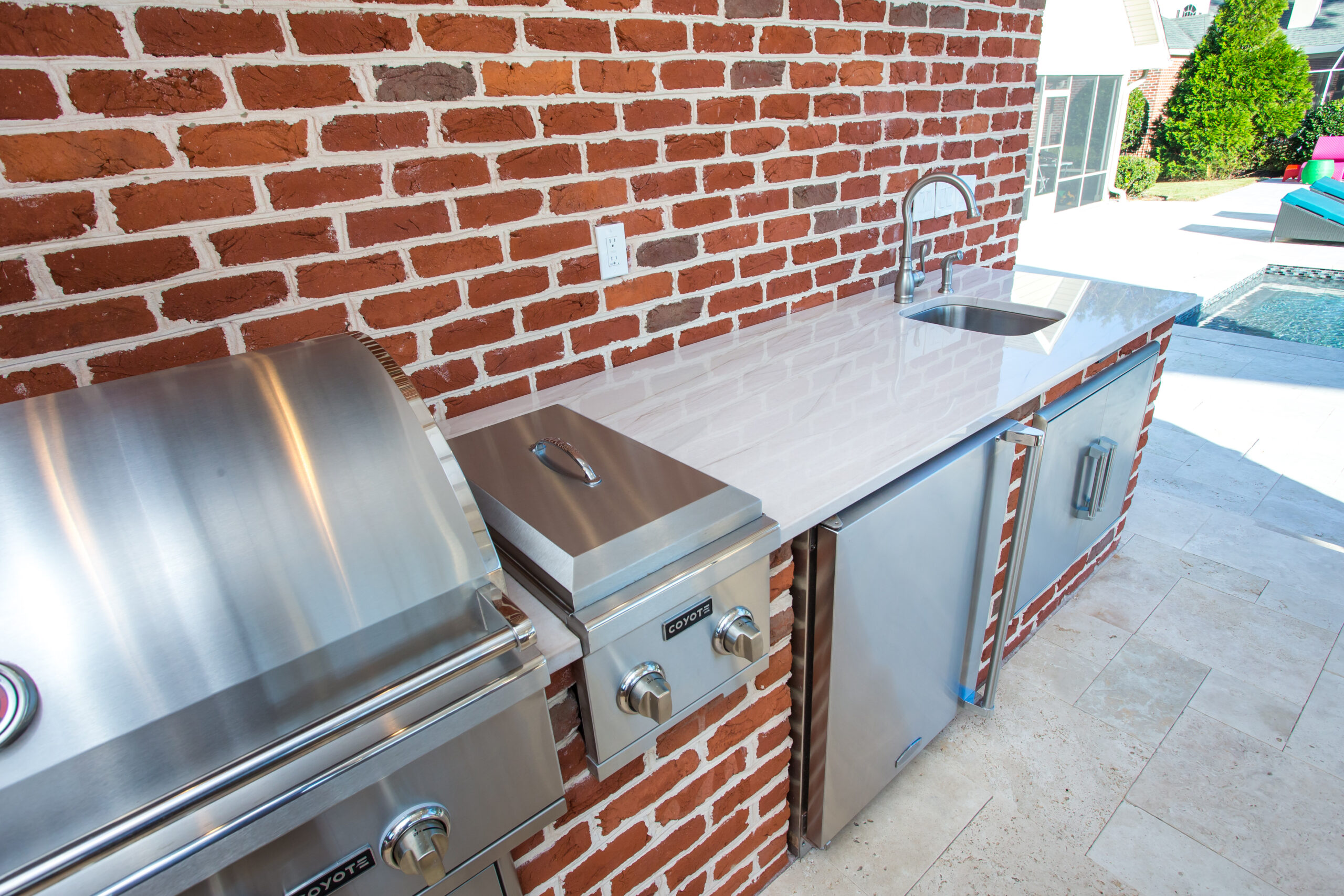
Close your eyes and imagine: the sunlight is on your face, the smell of a ribeye steak sizzling on the grill in from of you, perhaps your children or friends are splashing and laughing in the pool within earshot. Drink in hand, you’re enjoying every moment of your outdoor kitchen/grill area and making memories that last a lifetime. Sounds pretty amazing, yes? IT IS!
If you’ve ever had a construction project you are well aware of the many options typically available to you. With Spring here and Summer just around the corner, outdoor kitchen and grill areas are being used to enjoy the sunshine and make as many memories as possible. There are pros and cons to almost everything and the materials used outdoors are no exception.
When choosing the appropriate countertop for an outdoor kitchen, durability and resilience is top priority, even before aesthetics. Selecting a beautiful material won’t matter if it doesn’t hold up over time. Superior Granite will help you make an informed, educated choice that works best for YOU.
WHAT ARE THE BEST OPTIONS FOR AN OUTDOOR APPLICATION?
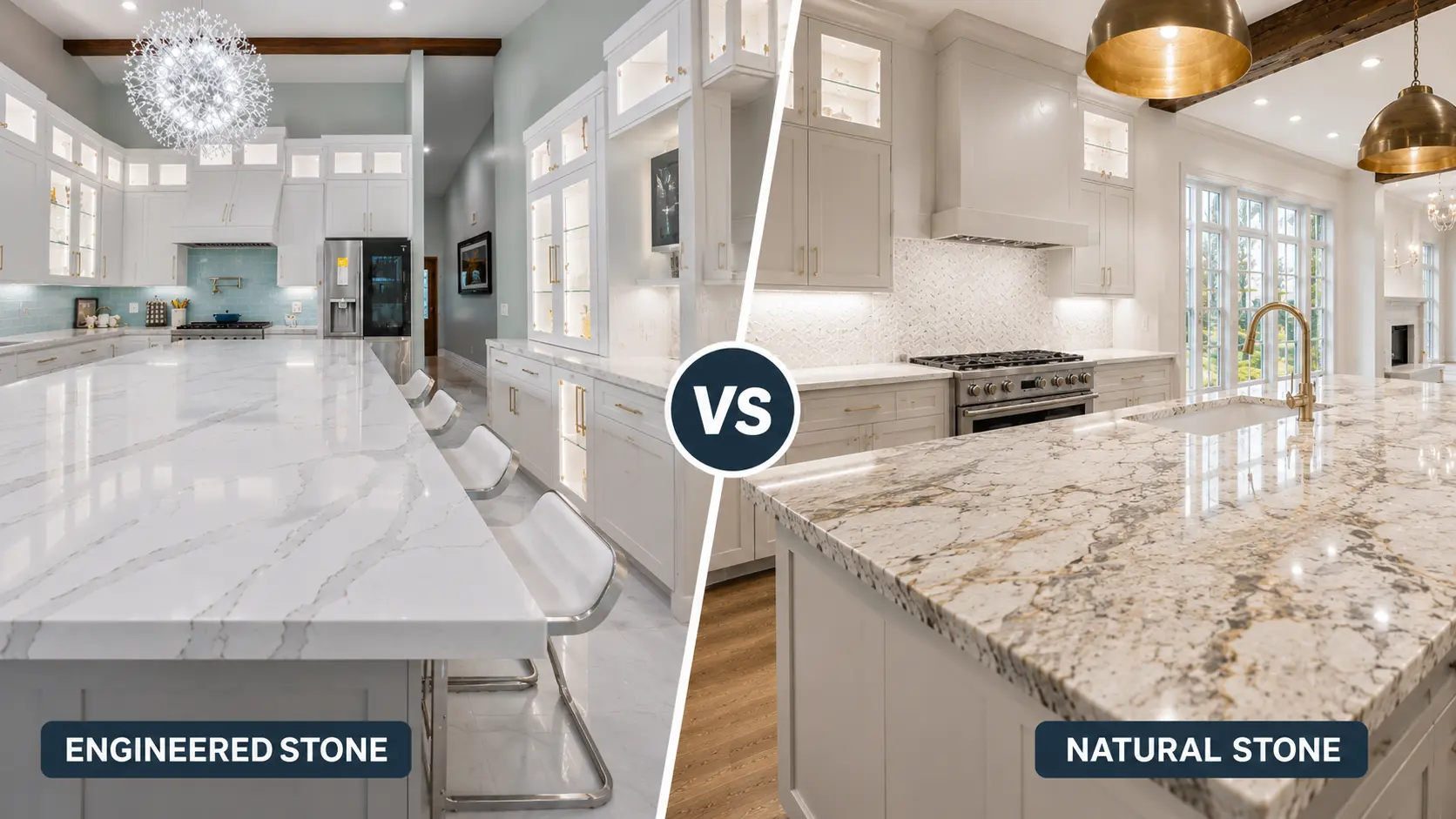
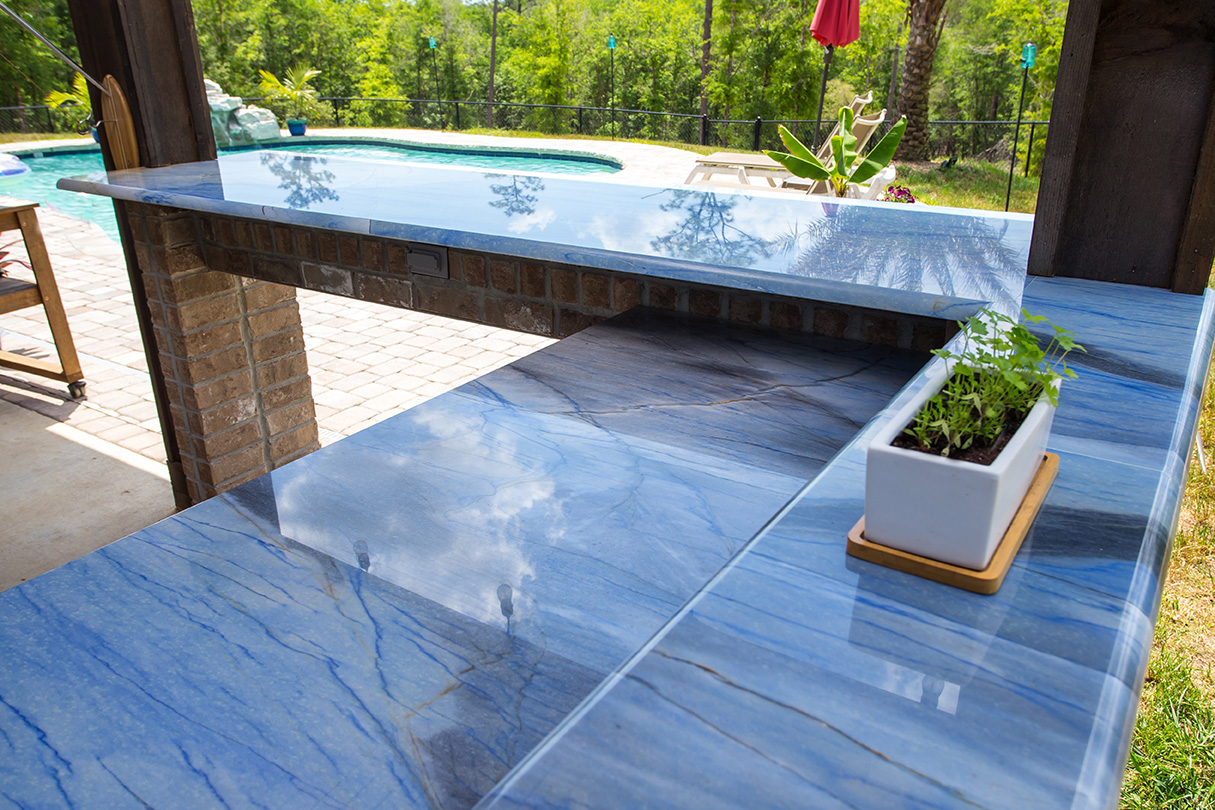
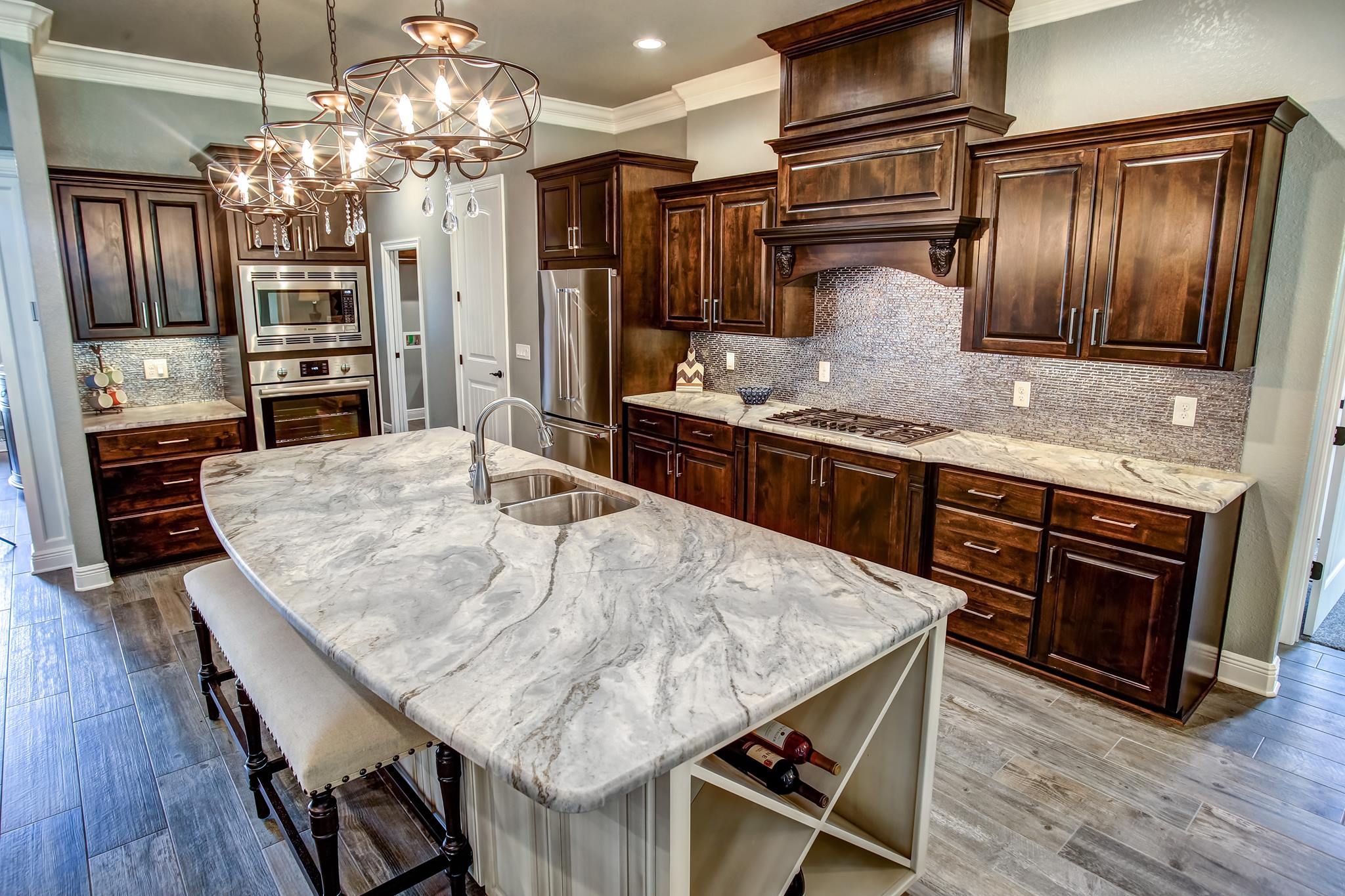
Granite and Quartzite are the densest natural stone options available for a countertop. They are the least porous and can withstand outdoor elements better than their softer stone counterparts. If you have a pavilion or covering over your outdoor kitchen or grill, your countertops will be out of direct sunlight and precipitation making them far less likely to fade from UV rays. It is important that when selecting a natural stone your ask your Superior Granite sales rep about fill or resin, as it can yellow in direct sunlight. Keeping your natural stone countertops sealed properly is essential to their success. The sealer is made to fill in the pores of the stone which will protect against bacteria from food preparation and protect the surface from stains. Softer natural stones, such as Dolomite, may be used at the homeowner’s discretion, but we recommend only in areas that have a covering and having a texture applied to the surface of the slab. While texturing the stone won’t keep it from scratching or possibly staining, it does make it much less noticeable. Porcelain slabs are perfectly suited for outdoor areas as they do not need to be sealed, are heat and stain resistant, and won’t fade in the sun. The glaze in porcelain slabs also give them amazing depth. They look beautiful in any area, outdoors included!
WHAT OPTIONS SHOULD I AVOID?
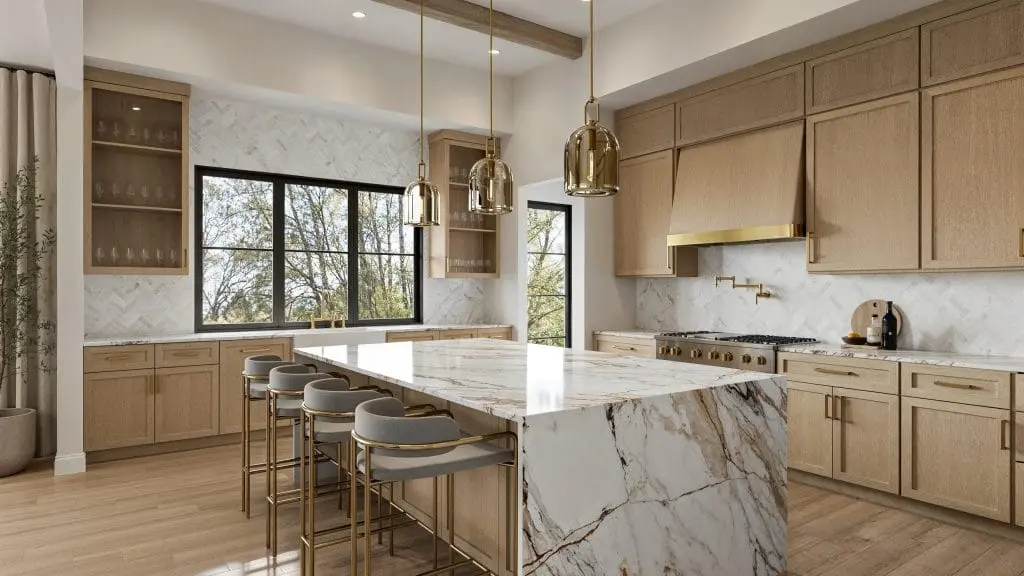
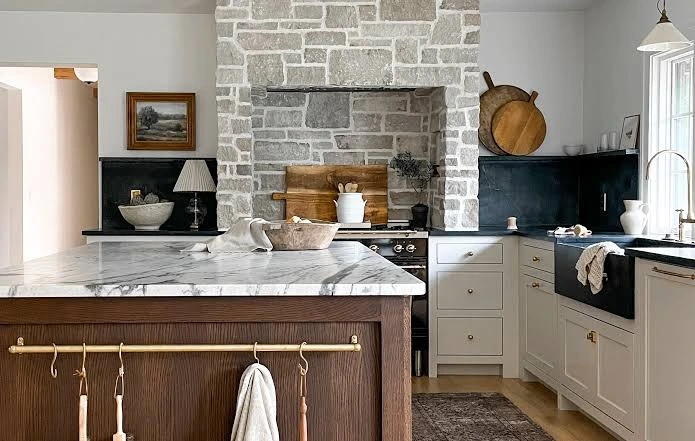
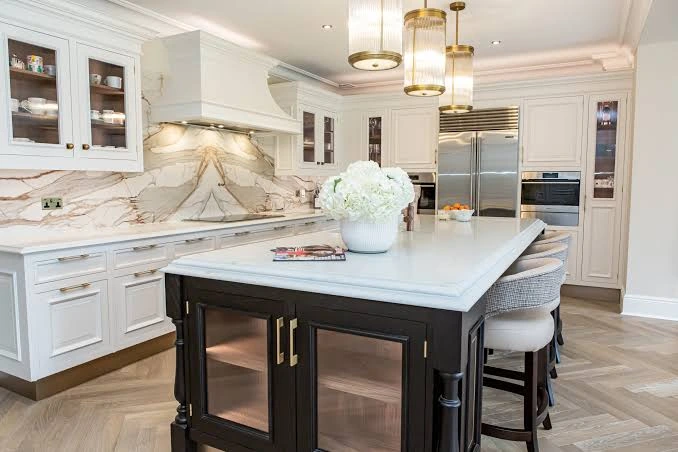
Quartz is a manufactured material that is not specified for outdoor use. Because resin is used as a binding agent in quartz slabs, it will likely yellow and/or discolor over time. Even in undirect sunlight quartz will almost certainly fade and is not recommended to go outside. Very soft natural stones such as Marble, Travertine, Limestone, and Calcite may look beautiful when first installed. However, they are very porous, making them susceptible to scratches and stains. Liquids absorb quickly into the surface where bacteria and germs can grow. This makes food preparation less hygienic than their denser natural stone counterparts. Even if sealed properly, these natural stones can still absorb smells and liquids and are not recommended in an outdoor application.
Ultimately, Superior Granite makes it our primary goal to help you choose the best material for your project, regardless of the location. Call or stop by one of our three locations and we can get started today. See you very soon!