Most homeowners spend weeks picking their countertop. They spend about ten minutes picking their sink. That’s a mistake, and it shows up fast.
Your sink choice affects how your countertop is cut, how your kitchen runs every single day, and whether your project stays on schedule or hits avoidable delays. The wrong sink with the wrong stone countertop creates real problems. The right combination looks incredible and functions even better.
At Superior Granite, serving homeowners across Pensacola, Pace, and Fort Walton Beach, we’ve seen every sink and stone combination possible. The types of kitchen sinks available today each come with a different mounting style, a different look, and specific things you need to know before your countertop template appointment.
Undermount Sink
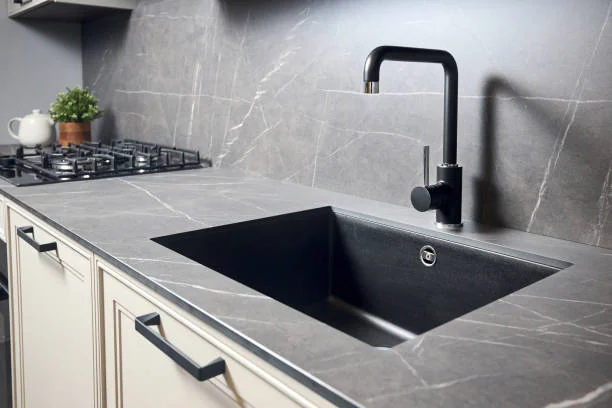
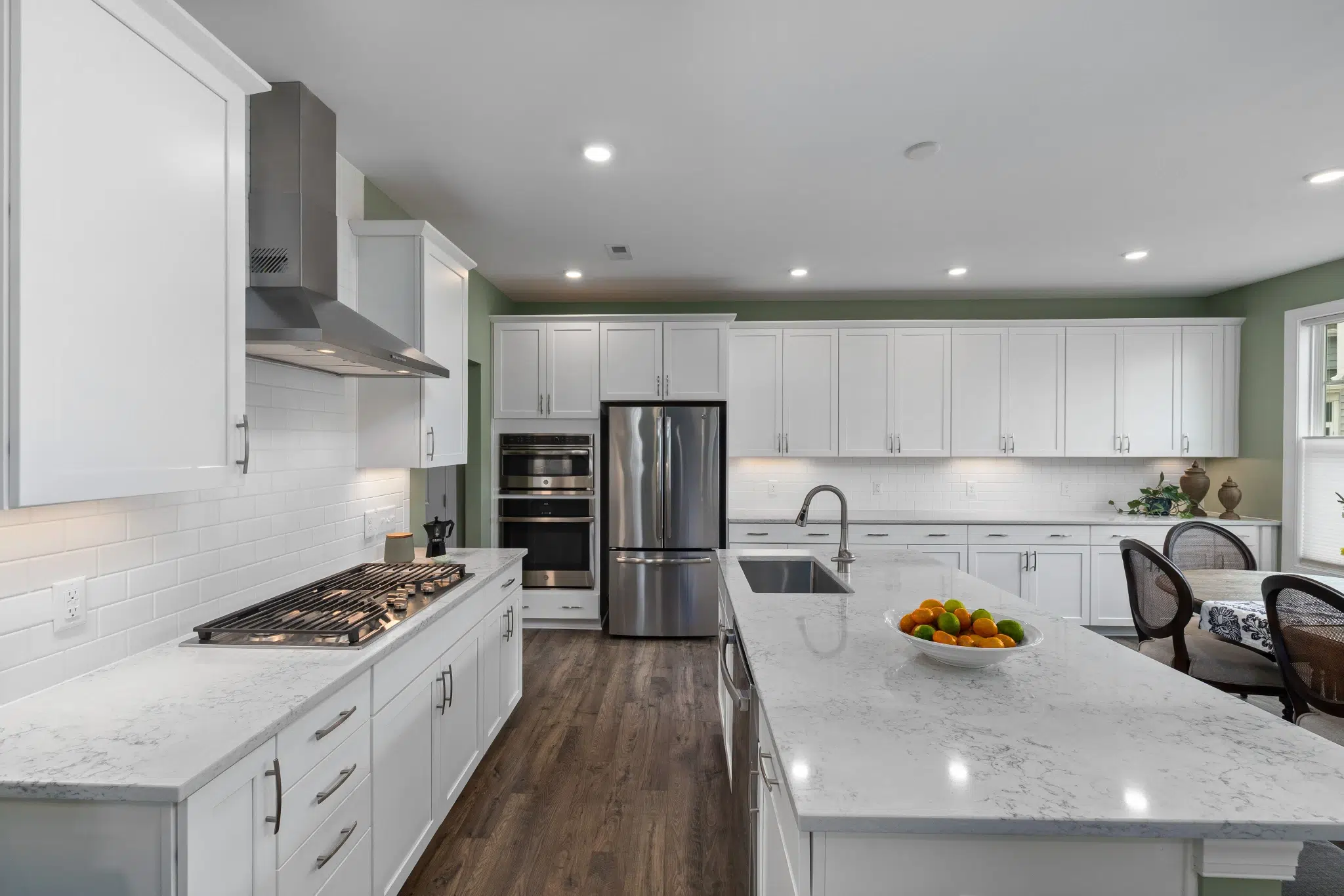
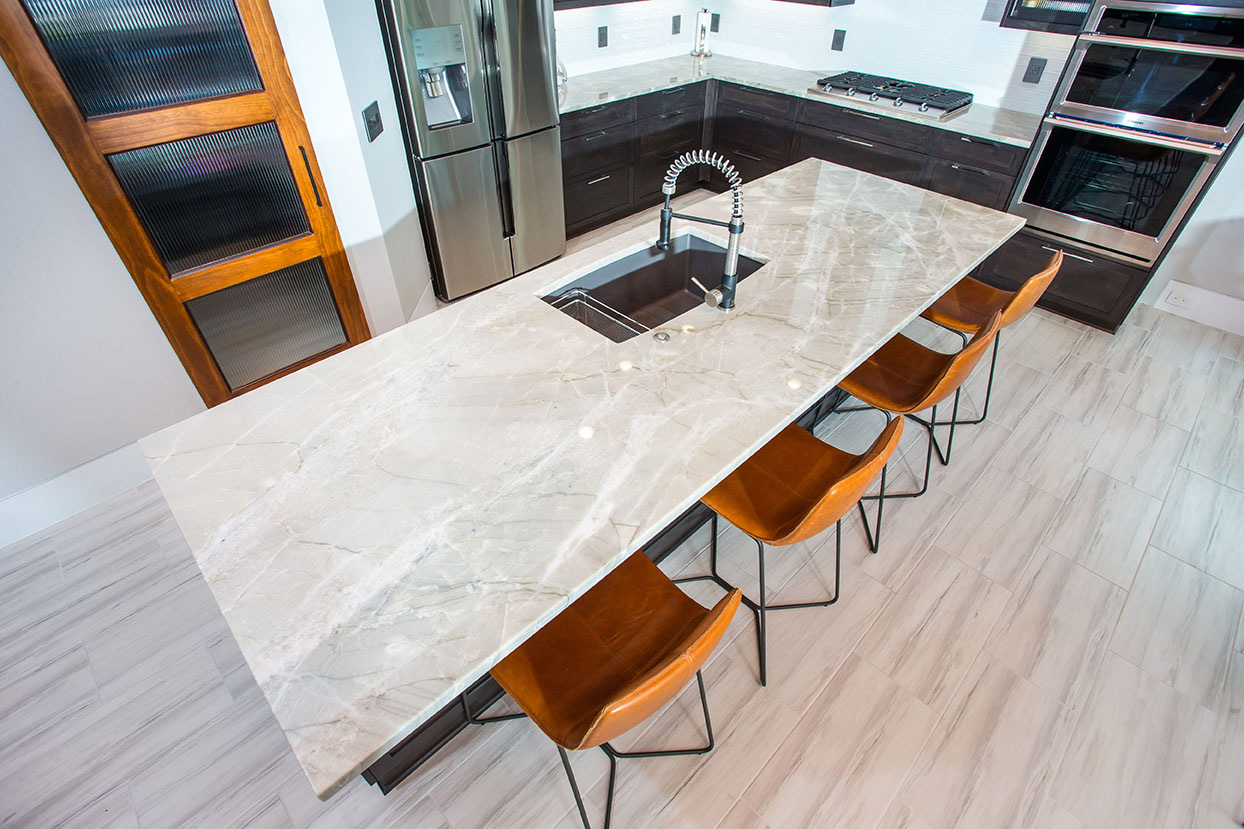
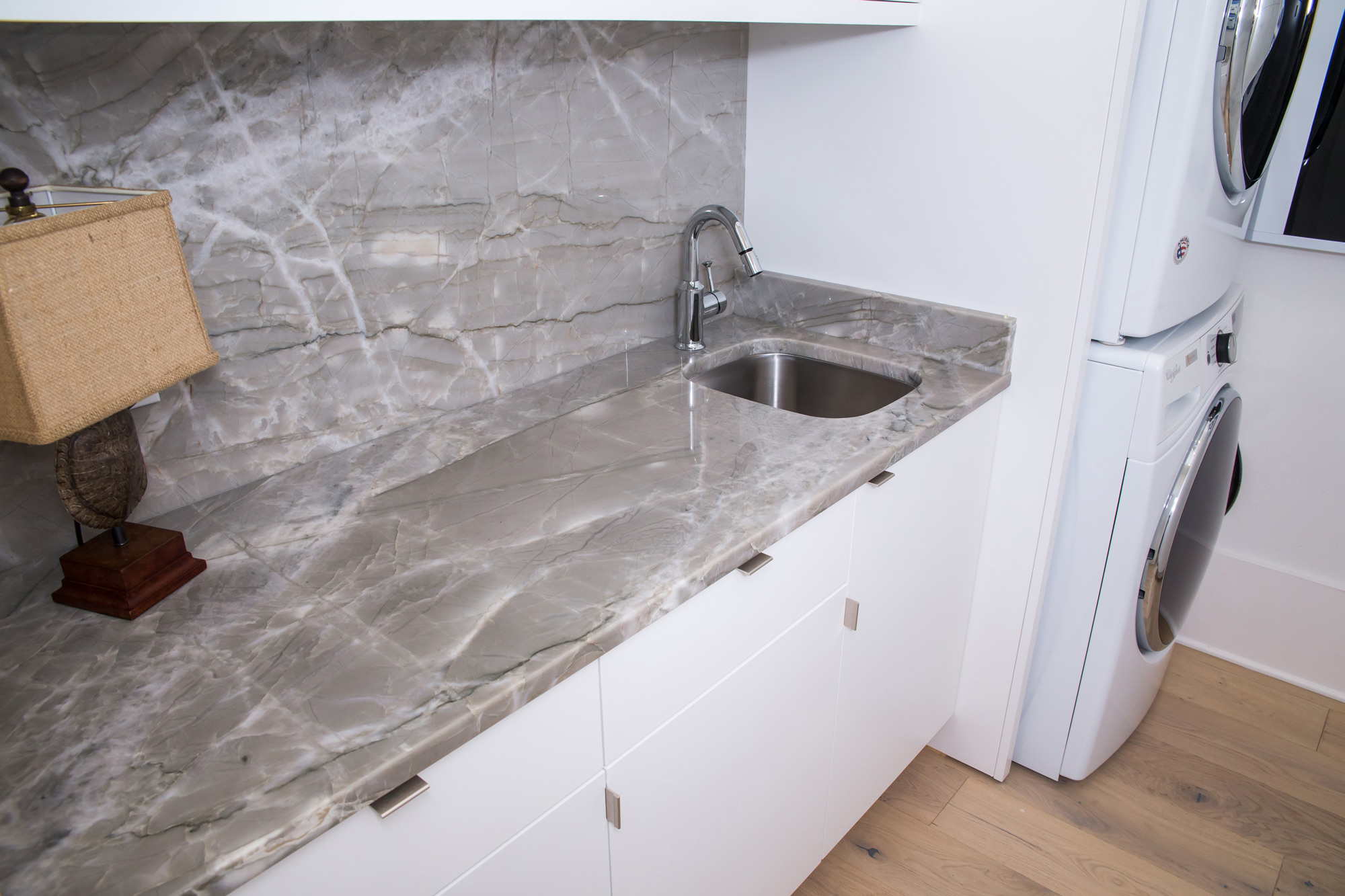
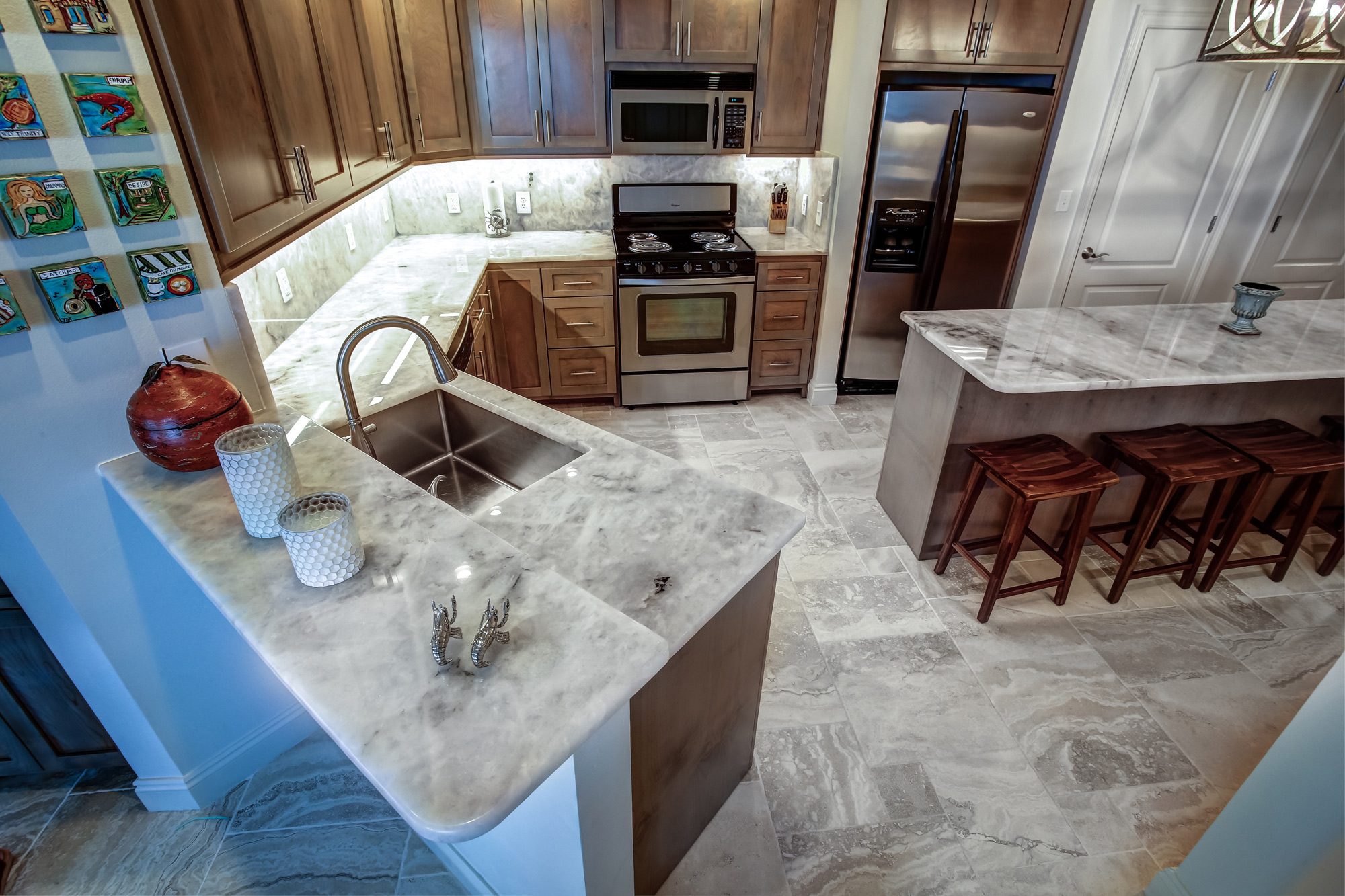
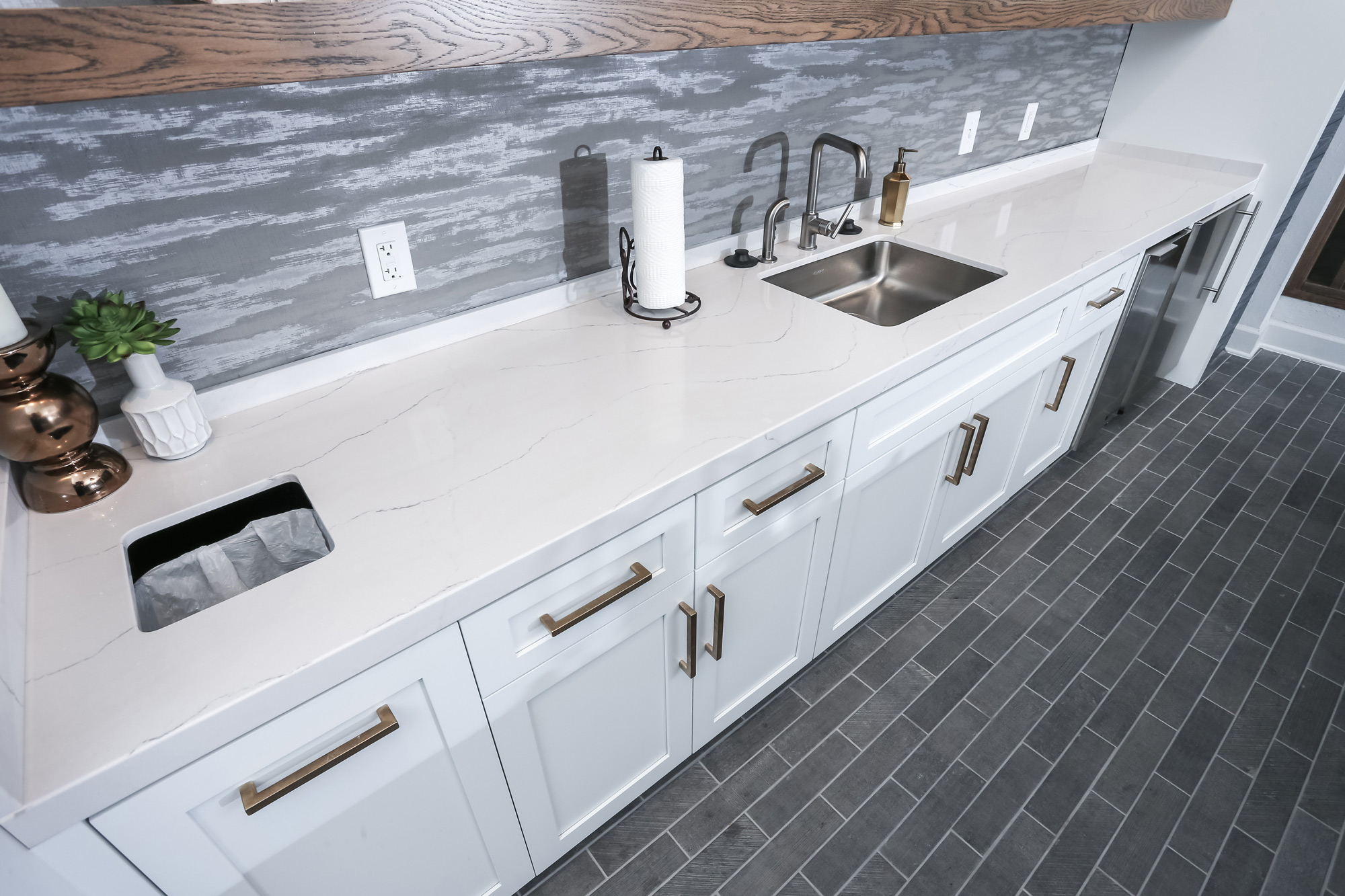
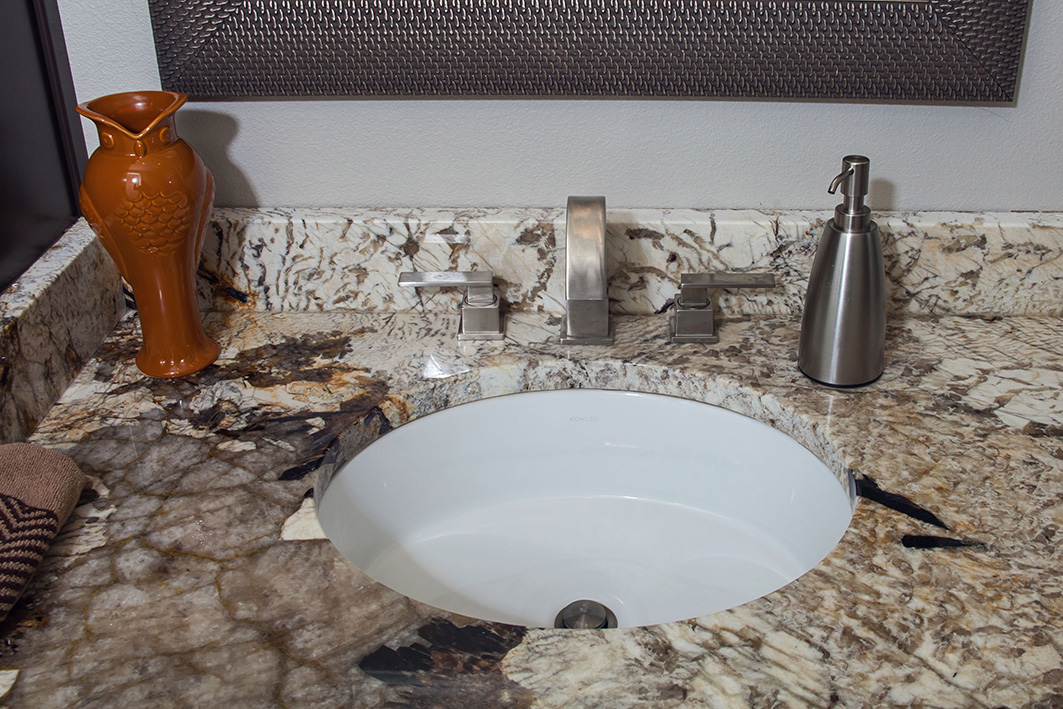
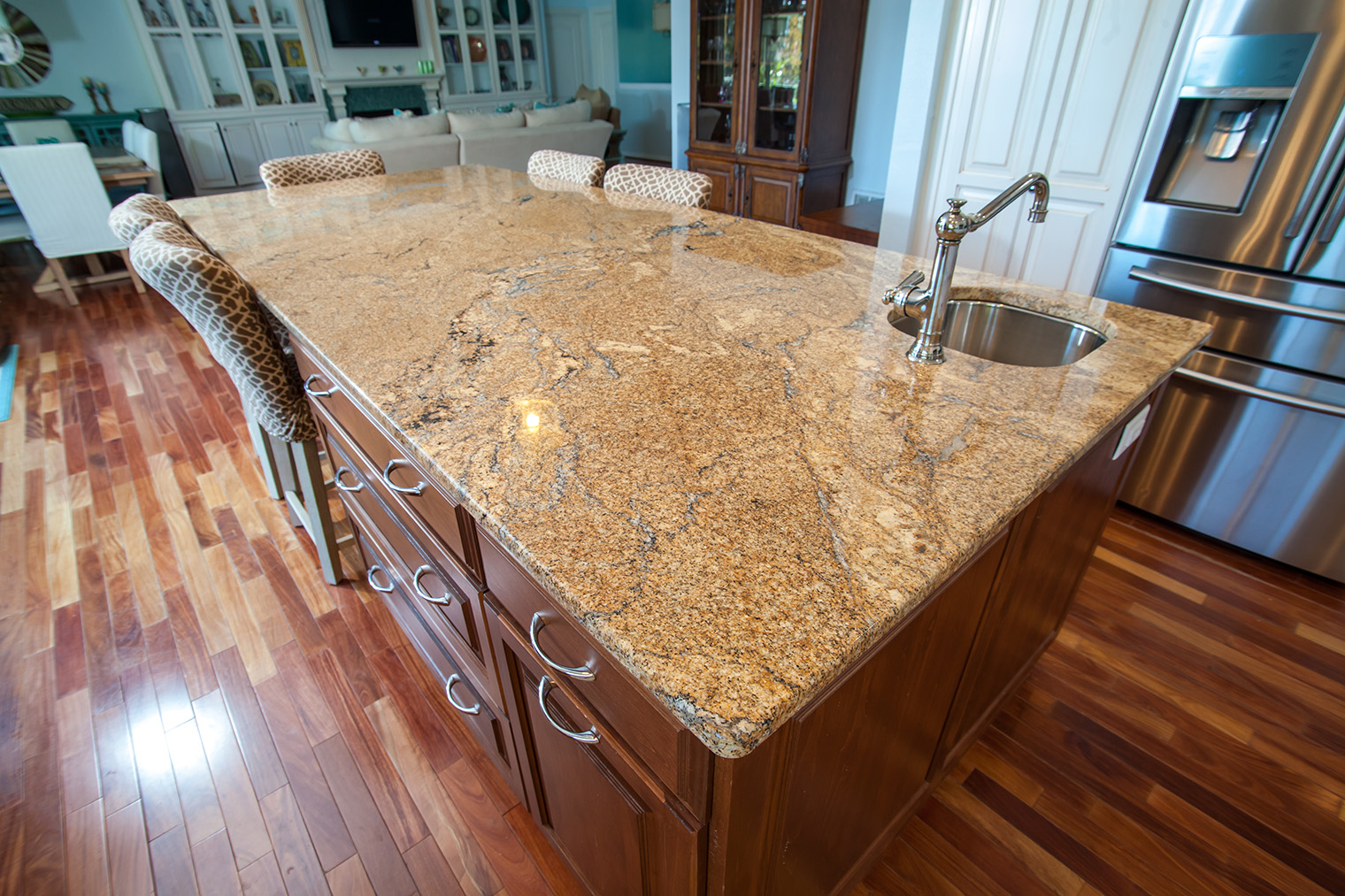
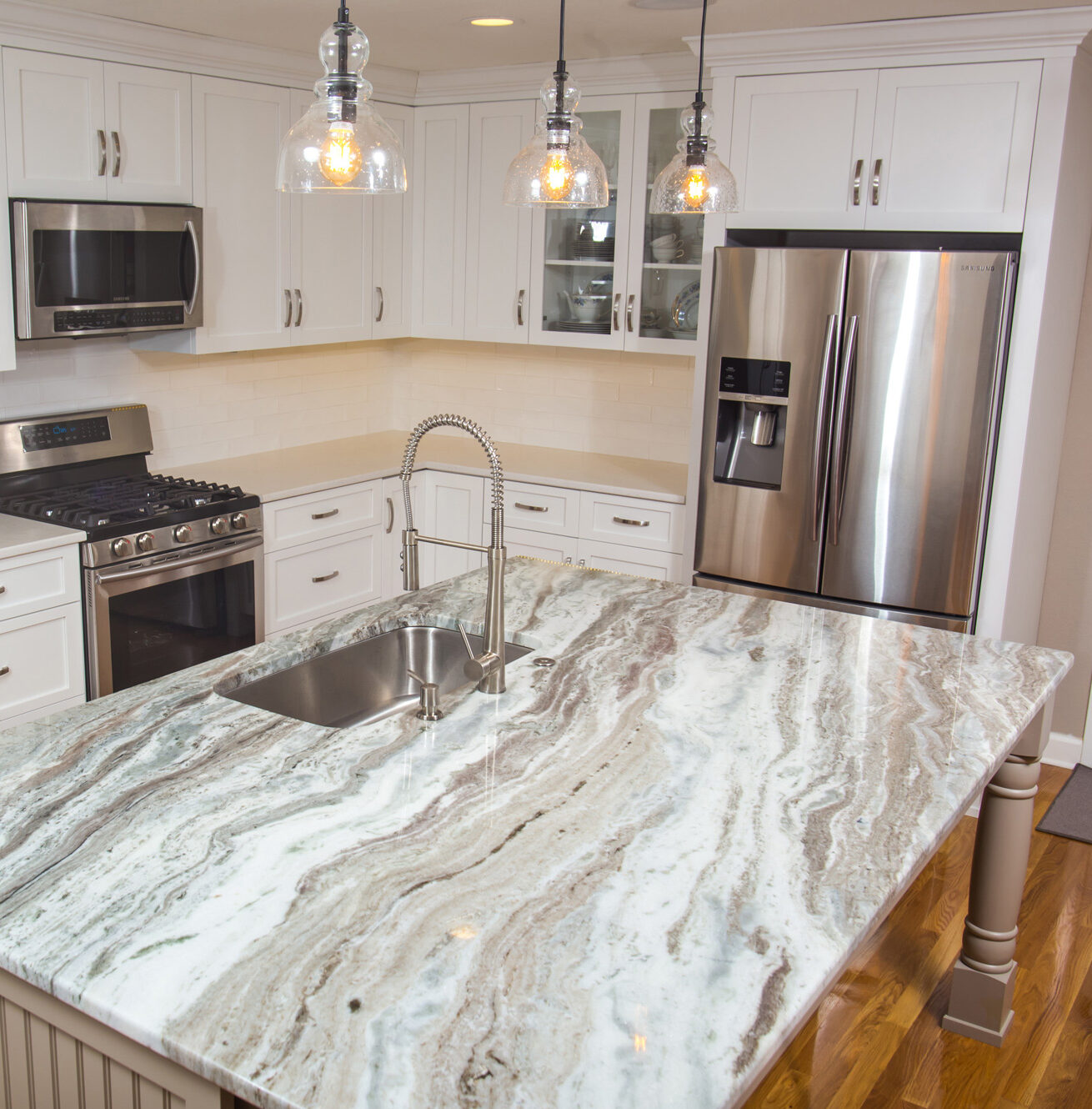
The undermount sink mounts beneath the countertop surface, and it has a clean edge where the counter meets the basin. It’s one of the most popular types of kitchen sinks for natural stone countertops precisely because of that look.
Granite, quartz, quartzite, and marble all show off beautifully with an undermount installation. The full countertop surface stays visible, crumbs wipe directly into the basin, and the kitchen feels cleaner and more upscale overall. This style requires professional installation.
For homeowners investing in a stone countertop, undermount is almost always the first recommendation. It lets the stone do the talking without a rim cutting across the surface.
Pros:
- Clean look; no rim interrupting the stone surface
- Easy cleanup; crumbs and spills wipe directly into the sink
- Best visual match for granite, quartz, quartzite, and marble
Cons:
- Requires professional installation; not DIY friendly
- Only works with stone countertops; not laminate
- Higher installation cost compared to drop-in
- Not replaceable
Drop-In Sink (Top-Mount)
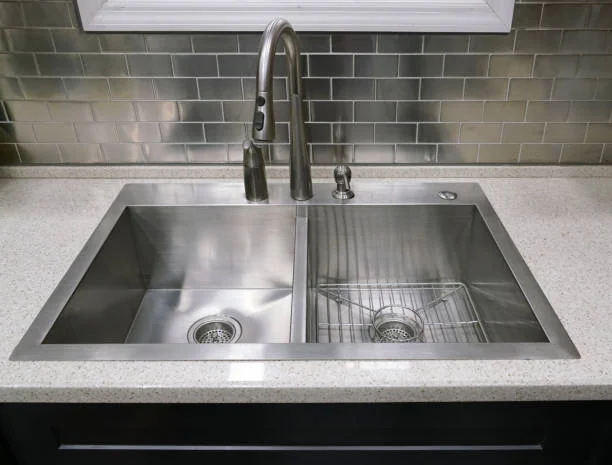
The drop-in sink, also called a top-mount sink, drops into a pre-cut hole in the countertop, with a visible rim sitting on top of the surface. It’s one of the most straightforward types of kitchen sinks to install, and it works with virtually any countertop material.
Stone countertops, tile, laminate, butcher block: a drop-in sink works across all of them. That flexibility makes it a solid choice for budget-conscious renovations or kitchens where the countertop material hasn’t been finalized yet.
The trade-off is the visible rim. Dirt, grime, and moisture collect along that rim edge over time. It takes more attention to keep clean, and it doesn’t deliver the seamless look that undermount sinks do with stone countertops.
Pros:
- Works with any countertop material: stone, tile, laminate, and more
- Easiest and most affordable to install
- Simple to replace without disturbing the countertop
Cons:
- Visible rim collects dirt and moisture over time
- Less sleek appearance compared to undermount
- Not the best aesthetic match for high-end natural stone
Farmhouse Sink (Apron-Front)
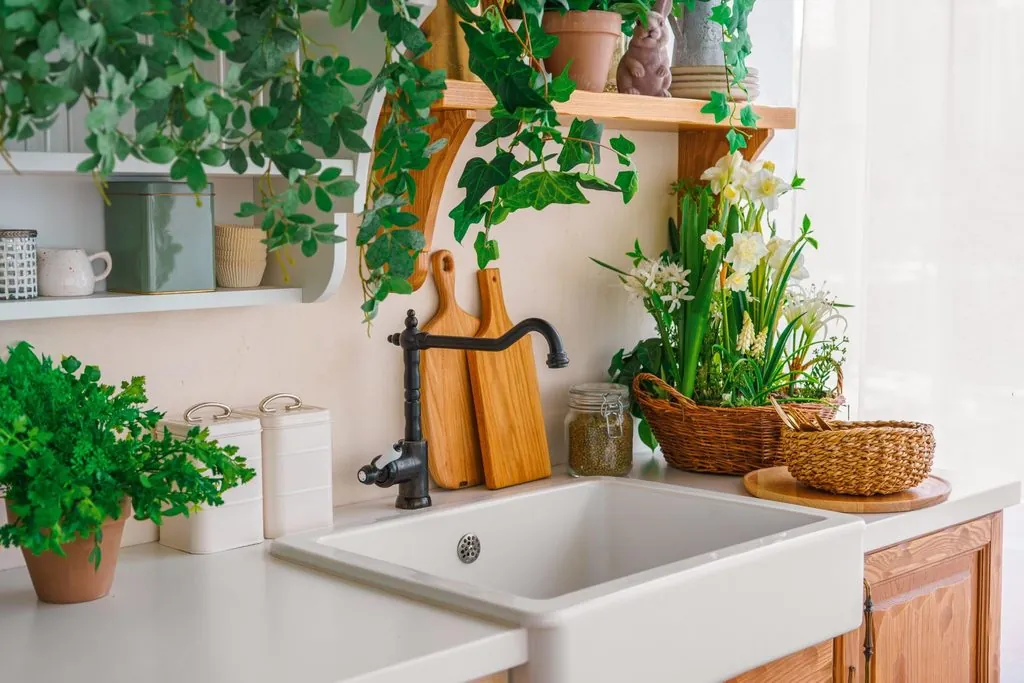
The farmhouse sink, also called an apron-front sink, features a large exposed front panel that extends to the edge of the cabinet. Deep basin, bold design, and a look that works in rustic, traditional, and modern farmhouse kitchens equally well.
There is one rule about farmhouse sinks that most homeowners don’t hear until it causes a delay: the sink must be fully installed before your countertop template appointment. This is not optional. The countertop is templated and fabricated around the sink that’s already in place, so if the sink isn’t there on template day, the appointment gets rescheduled, and your project gets pushed back.
Cabinet modification is also required. Standard base cabinets don’t accommodate an apron-front sink; the front cabinet frame needs to be cut or replaced to allow the exposed panel to sit properly. Factor that into your planning and budget before ordering.
Pros:
- Deep basin handles large pots, sheet pans, and oversized cookware
- Bold design statement; works in rustic, farmhouse, and transitional kitchens
- Works beautifully with granite and quartz countertops
Cons:
- Must be fully installed before countertop template; no exceptions
- Requires custom or modified base cabinet
- Higher overall cost; sink plus cabinet modification
Single-Bowl Sink
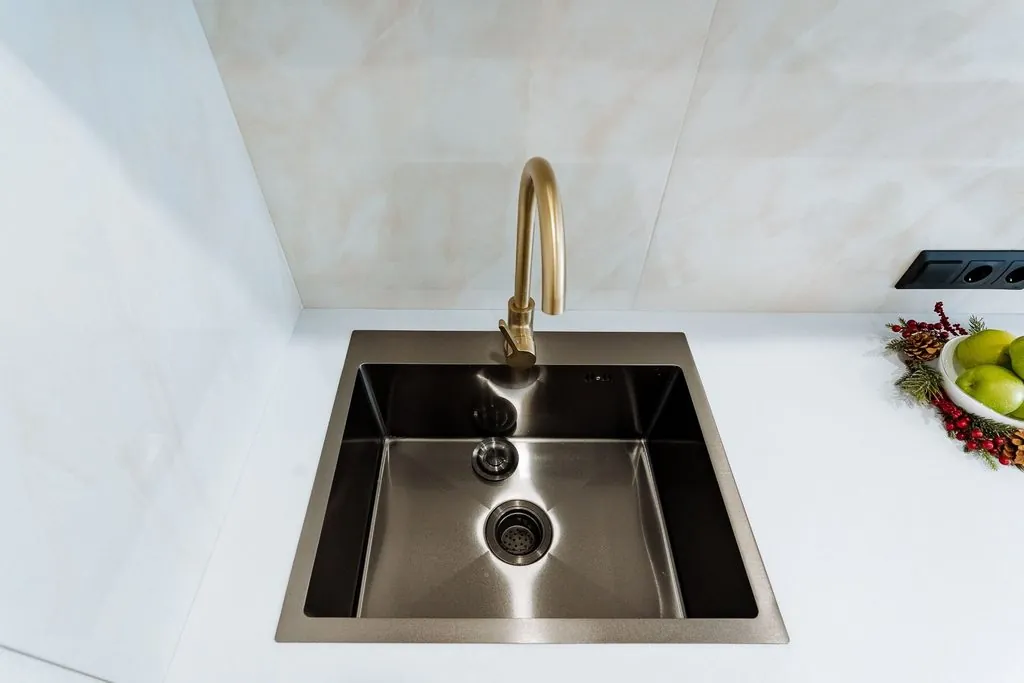
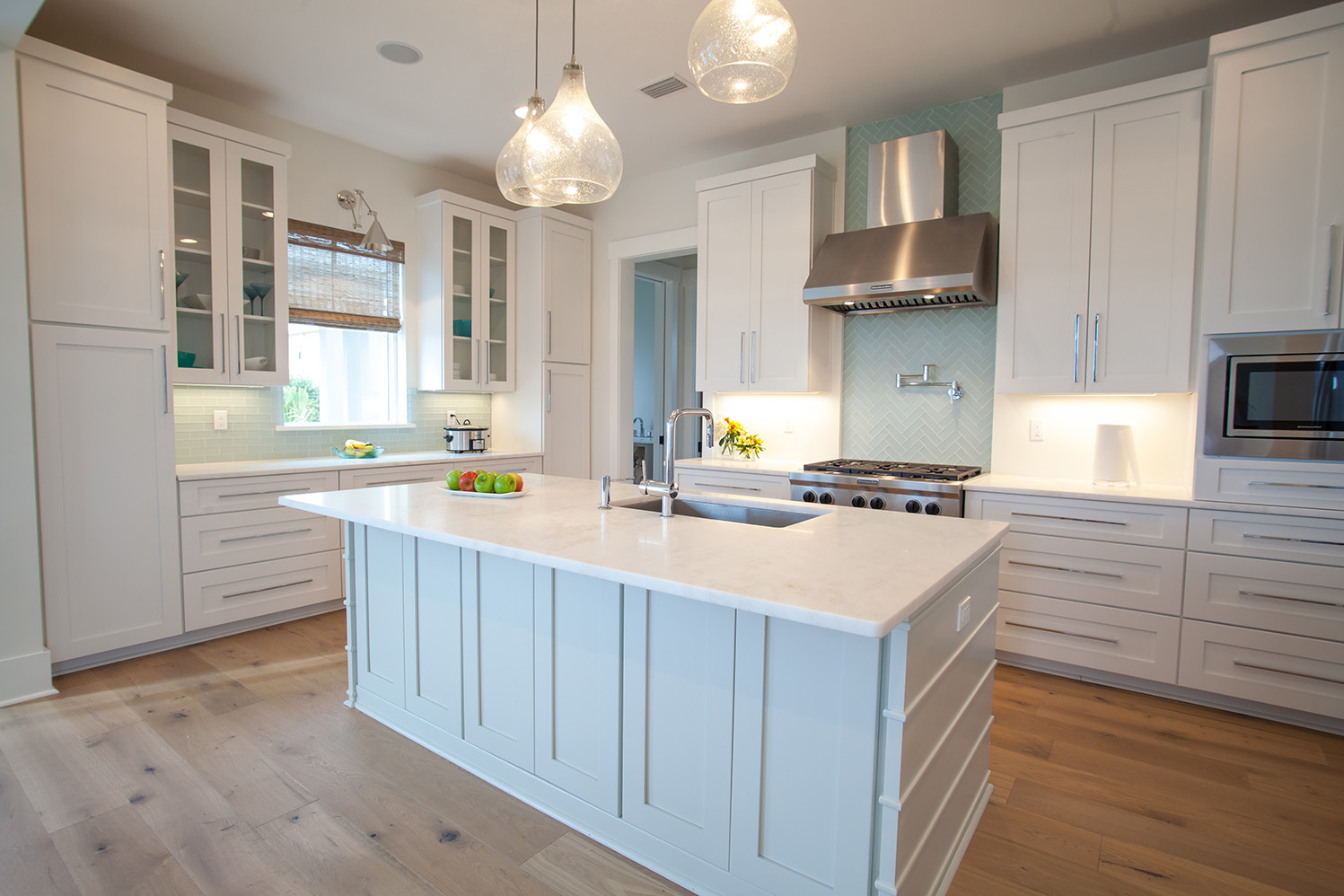
A single-bowl sink is exactly what it sounds like: one large, open basin with no divider. It’s a clean, minimal look that works in almost any kitchen, and it’s particularly well-suited to kitchens that deal with large cookware regularly.
Among the different types of kitchen sinks, single-bowl options require a simpler cutout during countertop fabrication in Pace and at all our locations. One clean opening, no complex measurements for a divider. Your sink model number still needs to be confirmed before template day; the exact dimensions of that basin directly affect how the countertop is cut.
For smaller kitchens, a single-bowl sink makes more practical sense than a double. Less counter space lost to the sink, and a cleaner visual line across the stone surface.
Pros:
- Fits large pots, pans, and baking sheets without issue
- Clean, minimal look; works in modern and traditional kitchens
- Simpler fabrication cutout; straightforward and precise
Cons:
- No separation for multitasking; washing and prep in the same space
- Less organized workflow for large families
- Not ideal for high-volume cooking kitchens
Double-Bowl Sink
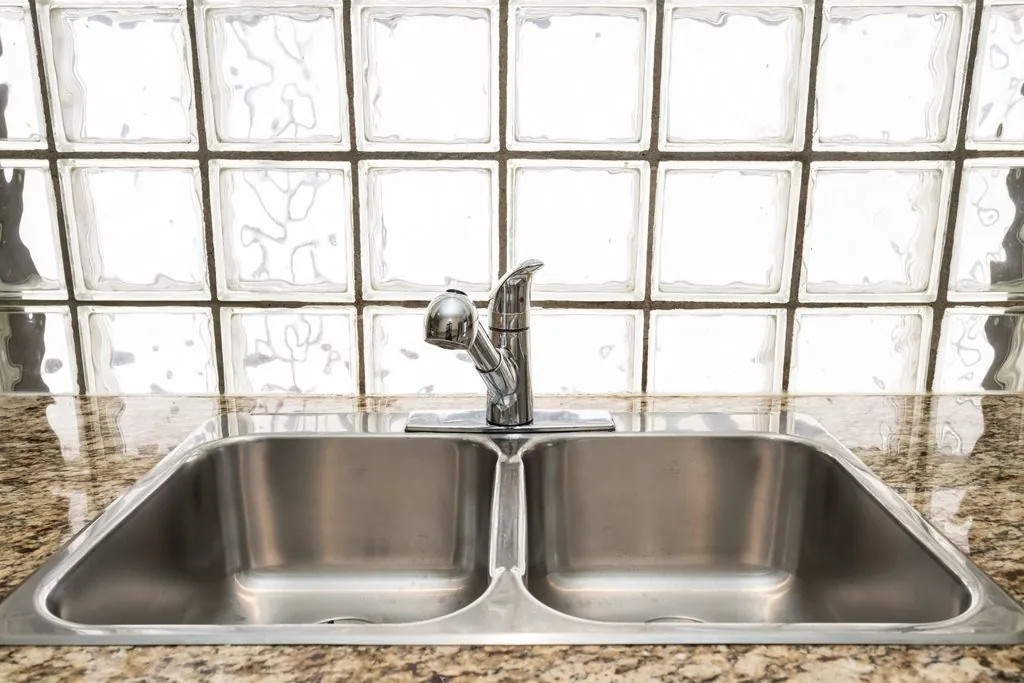
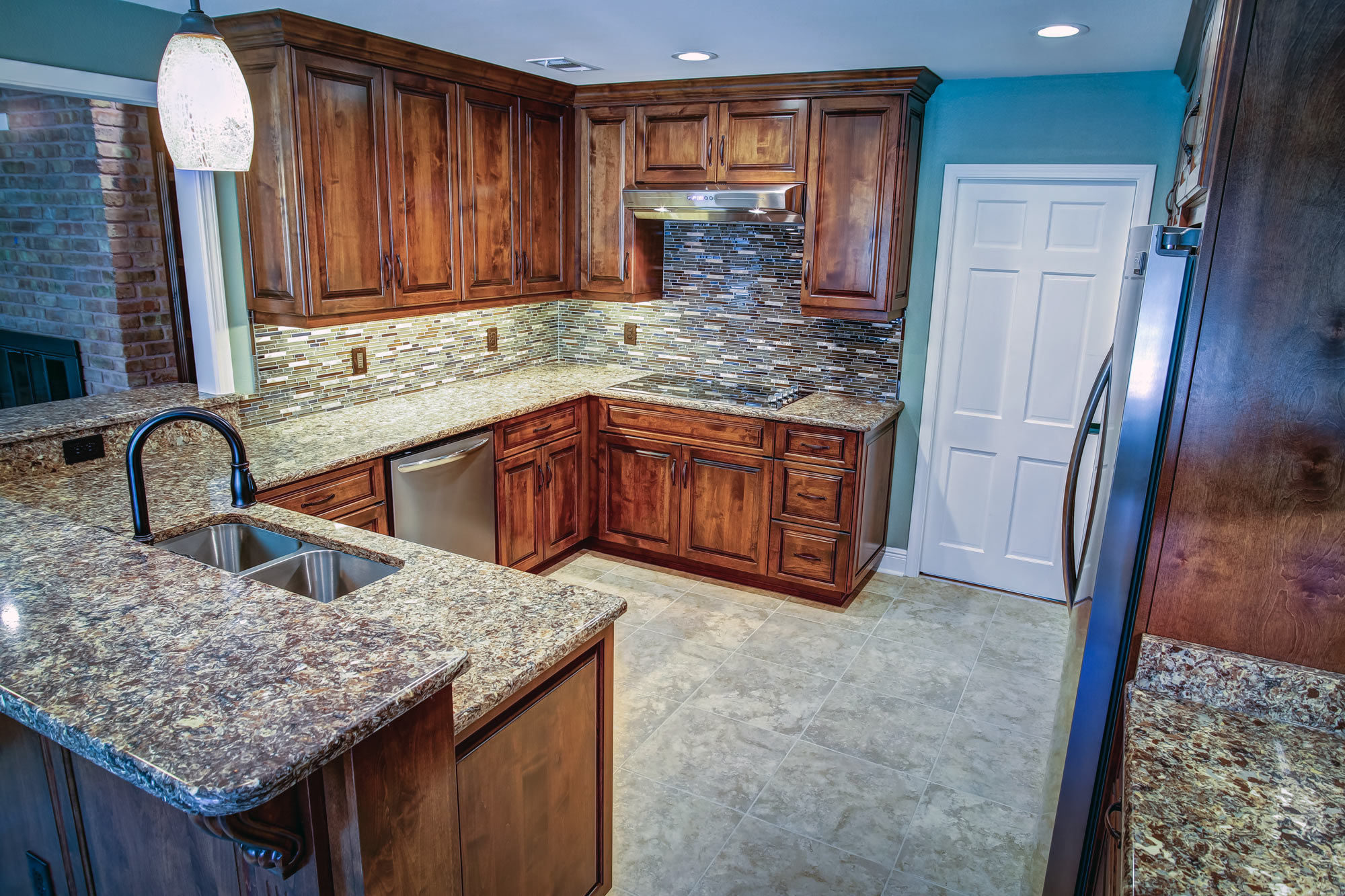
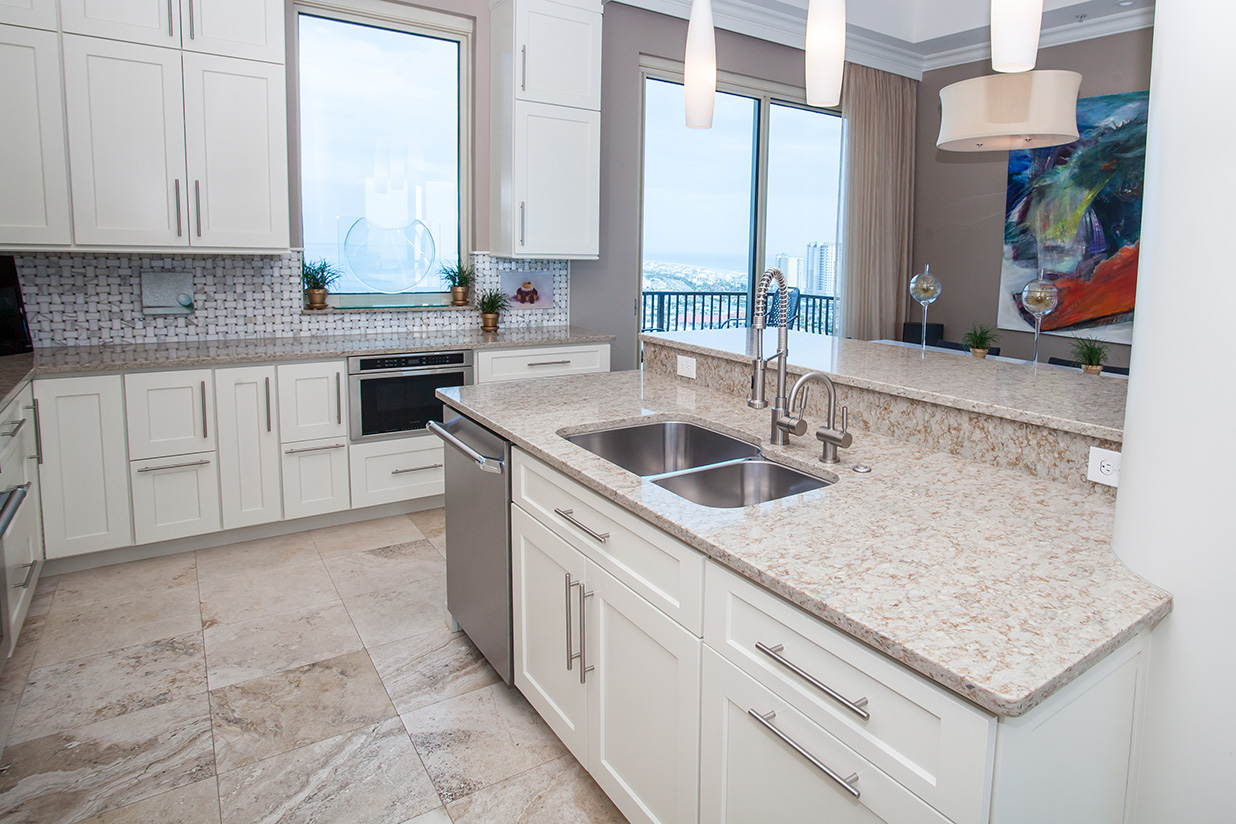
A double-bowl sink splits the basin into two sections: one side for washing and one side for rinsing, soaking, or drying. It’s the most common sink configuration in American kitchens, and for good reason. It adds a layer of organization to the kitchen workflow that a single bowl simply can’t match.
The fabrication cutout for a double-bowl sink is more precise; the divider placement, overall dimensions, and depth all need to be confirmed before templating. This is exactly why providing your sink model number to your sales associate before the template appointment matters. Without that information, accurate measurements can’t be planned.
The one consistent trade-off with double-bowl sinks: each basin is smaller. If you regularly cook with large stock pots or commercial-sized sheet pans, fitting them into one side of a double bowl can be a challenge.
Pros:
- Wash and rinse simultaneously; no mixing tasks
- Organized workflow; great for large families and frequent cooking
- Works with all stone countertop materials
Cons:
- Each basin is smaller; large cookware may not fit comfortably
- More complex cutout; dimensions must be confirmed before template
- Takes up more counter space than a single-bowl
Integrated Sink
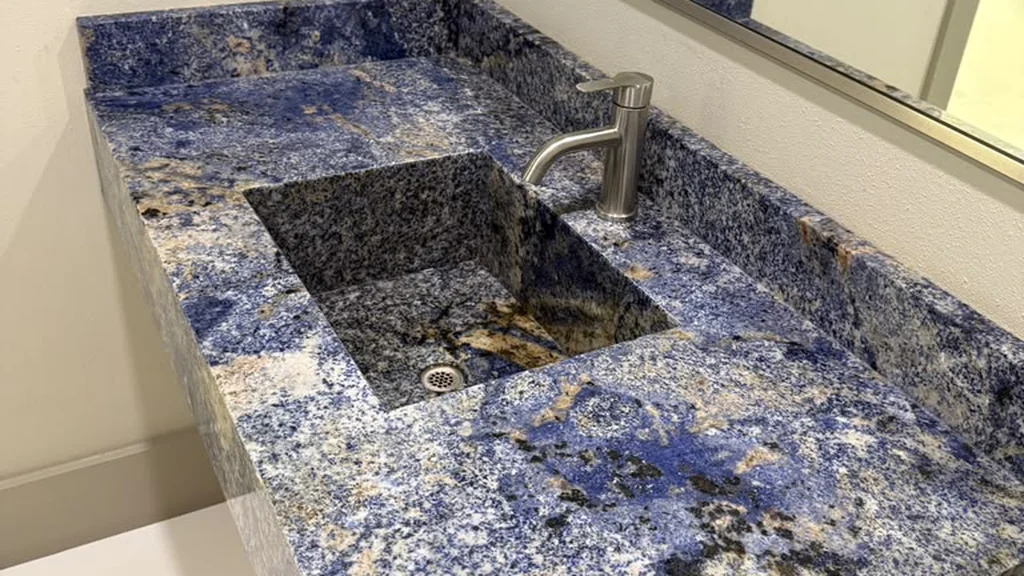
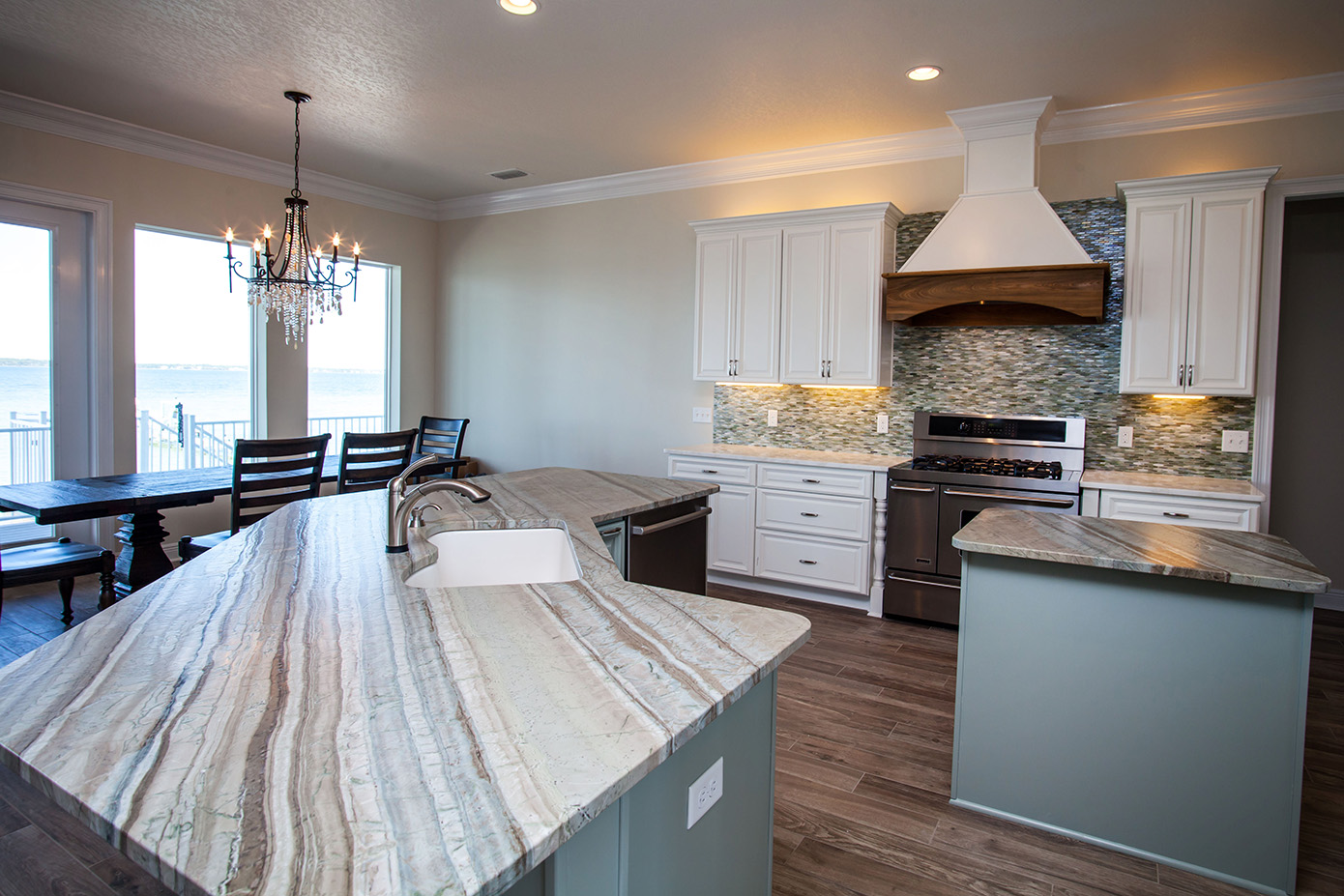
An integrated sink is fabricated from the same material as the countertop; one continuous surface from counter to basin with no rim and no transition point. It’s the most seamless of all the types of kitchen sinks, and it’s becoming a defining feature of high-end modern kitchens in 2026.
The cost is higher than any other sink type. And because the sink and countertop are one piece, damage to the sink often means addressing the countertop as well. It’s a long-term commitment, but for the right kitchen, it’s the cleanest finish available.
Pros:
- Fully seamless look; zero visible transitions between counter and sink
- Easiest to clean; no gaps, no seams, nowhere for grime to collect
- Most hygienic option of all sink types
Cons:
- Highest cost; sink and countertop are one piece
- Damage to the sink may require full countertop-level repair
- Limited style flexibility compared to separate sink options
Which Kitchen Sink Works Best With Stone Countertops?
Not every sink pairs equally well with every countertop material. Here’s a quick reference:
| Sink Type | Best Stone Match | Why It Works |
|---|---|---|
| Undermount | Granite, Quartz, Quartzite, Marble | Seamless look, strong support from solid stone |
| Drop-In | All stones | Universal compatibility, no structural requirements |
| Farmhouse | Granite, Quartz | Needs solid surface support for exposed front panel |
| Single-Bowl | All stones | Simple cutout, works across all materials |
| Double-Bowl | All stones | Precise cutout; stone handles detailed fabrication well |
| Integrated | Granite, Quartz | Same-material fabrication; seamless and strong |
So, Which Kitchen Sink Is Best for You?
The right sink depends on how you cook, how your kitchen is laid out, and what countertop material you’re working with. Here’s a simple decision guide:
- You want a sleek, modern look with stone countertops. Undermount sink. It pairs perfectly with granite, quartz, quartzite, and marble, and it shows off the full beauty of the stone surface.
- You’re on a budget or replacing an existing sink. Drop-in sink. It works with any material, installs quickly, and keeps costs manageable.
- You love a bold farmhouse or traditional kitchen style. Farmhouse sink. Just make sure it’s installed before your template appointment; no exceptions.
- Your kitchen is smaller, or you cook with large pots. Single-bowl sink. One open basin, clean look, and simpler fabrication.
- You have a large family or cook multiple dishes at once. Double-bowl sink. The two-basin setup keeps the kitchen organized and functional.
- You want the most seamless, high-end finish possible. Integrated sink. It’s the top-tier option for modern kitchens where every detail matters.
What to Confirm Before Your Template Appointment
This section matters more than most homeowners realize. Before your countertop template is scheduled, have this information ready for your sales associate:
- Sink model number: the cutout is planned around your exact sink dimensions
- Faucet model number: hole placement depends on your faucet style
- Sink accessories model numbers: soap dispensers, sprayers, and filtration systems all need planned openings
- Farmhouse sink: must be fully installed before template day, no exceptions
- Undermount sink: plan for a 48-hour wait after installation before your plumber can reconnect
Whether you’re looking for the best countertop installer in Pensacola or an affordable kitchen countertop, Superior Granite’s teams across all three locations walk every customer through the process before the template appointment. Getting these details confirmed early keeps the project on schedule and makes sure fabrication is planned around exactly what you’ve chosen.
If you’re still deciding on a sink style, stop by one of our showrooms. Our sales associates can match the right sink type to your stone selection, kitchen layout, and timeline before anything is measured or cut.
Pensacola, FL
Visit Us: 7011 Pine Forest Road, Pensacola, FL 32526
Call Us: (850) 941-0270
Hours: Monday – Friday: 8 a.m. – 5 p.m., Saturday: 9 a.m. – 2 p.m.
Pace, FL
Visit Us: 4590 Jernigan Road, Pace, Florida 32571
Call Us: (850) 994-1872
Hours: Tuesday – Friday: 9 a.m. – 5 p.m., Saturday: 9 a.m. – 2 p.m.
Fort Walton Beach, FL
Visit Us: 35 Miracle Strip Pkwy SW, Fort Walton Beach, Florida 32548
Call Us: (850) 301-0716
Hours: Tuesday – Friday: 8 a.m. – 5 p.m., Saturday: 9 a.m. – 2 p.m.
Get quotes now and start your project!
FAQs
1. What are the different types of kitchen sinks?
The six main types of kitchen sinks are undermount, drop-in, farmhouse, single-bowl, double-bowl, and integrated. Each has a different mounting style, look, and compatibility with countertop materials.
2. Which kitchen sink type is best for granite countertops?
Undermount sinks are the most popular choice for granite; the seamless edge shows off the full stone surface. Farmhouse and integrated sinks also work well with granite for a bold or ultra-modern look.
3. What is the difference between undermount and drop-in sinks?
Undermount sinks mount beneath the countertop with no visible rim. Drop-in sinks sit in a cut hole with a visible rim on top. Undermount looks cleaner but costs more and requires a solid surface countertop.
4. Do I need to install my farmhouse sink before the countertop template?
Yes; without exception. Farmhouse and apron-front sinks must be fully installed before your template appointment. The countertop is fabricated around the sink already in place, so if it’s not installed on template day, the appointment is rescheduled.
5. How long do I need to wait before calling a plumber after undermount sink installation? Wait 48 hours before scheduling your plumber after an undermount sink installation. The adhesive and silicone need time to cure fully. This rule does not apply to drop-in or farmhouse sinks.
6. Why do I need to provide my sink model number before the template?
The cutout dimensions are planned around your exact sink model. Without that information, accurate measurements can’t be taken. Faucet and accessory model numbers should also be confirmed at the same time.
7. Is a single-bowl or double-bowl sink better for stone countertops?
Both work well with stone countertops. A single-bowl sink is better for large cookware and smaller kitchens. A double-bowl sink works better for large families and high-volume cooking where separating tasks matters.
8. What is an integrated sink?
An integrated sink is fabricated from the same material as the countertop: one seamless surface with no rim or seam. It’s the most hygienic and visually seamless option, and it’s a growing trend in modern kitchen design.
9. Which kitchen sink type is easiest to clean?
Integrated sinks are the easiest to clean; no seams, no rim, no gaps where grime collects. Undermount sinks are the second easiest because there’s no rim to clean around on the countertop surface.