Why Countertop Thickness Matters
Selecting the right countertop thickness is more than just an aesthetic choice—it impacts durability, functionality, and overall design. Whether you’re opting for granite, quartz, marble, or solid surfaces, the thickness you choose plays a crucial role in how your countertops perform over time.
In this guide, we’ll explore standard countertop thickness options, compare materials, and help you determine the best fit for your kitchen or bathroom.
Standard Countertop Thickness Options
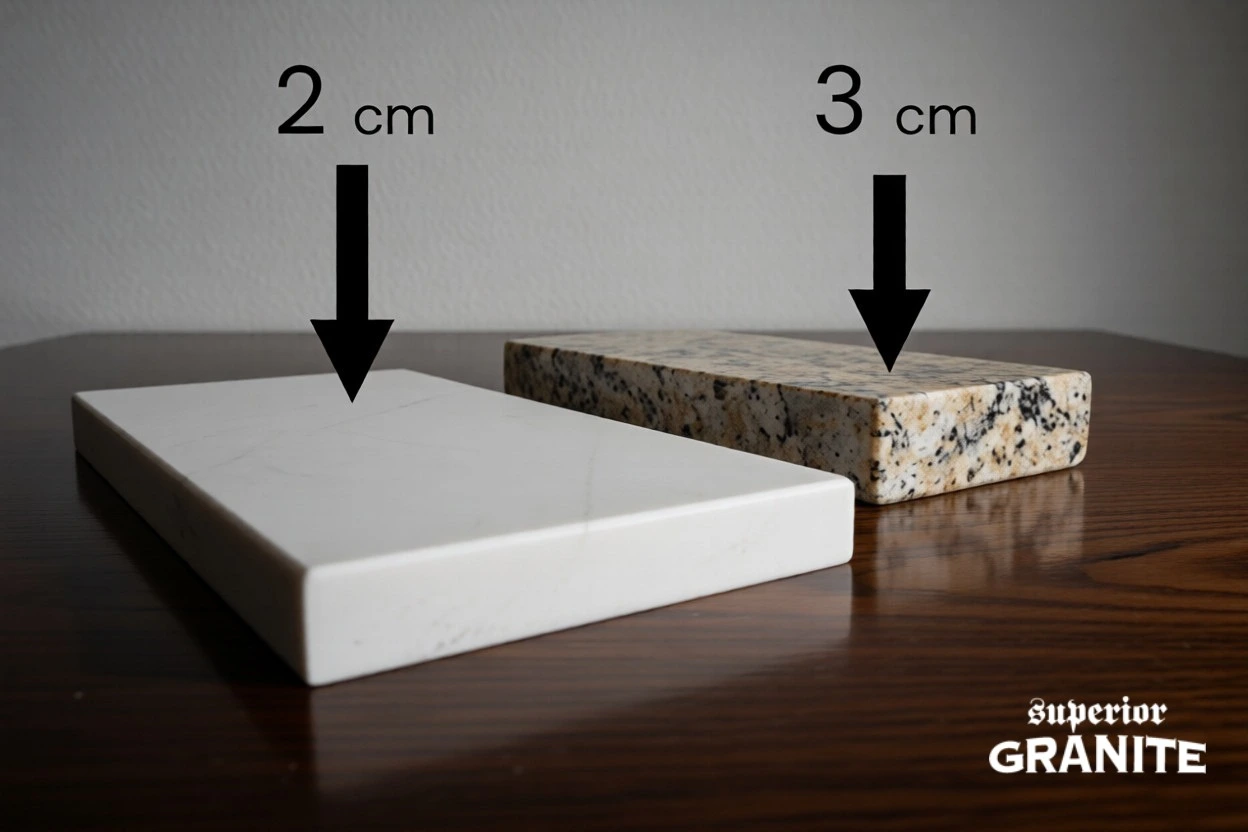
1. 2 cm (3/4 inch) Countertops
This is the thinnest standard for countertops and is most commonly used in bathrooms or for budget-conscious kitchen renovations. While it offers a sleek and modern look, it may require additional support to prevent cracking or breaking, especially for natural stone countertops like granite or marble.
Pros:
- Lightweight, making it easier to install.
- Cost-effective for budget-friendly projects.
- Works well for bathroom vanities or accent countertops.
Cons:
- Less durable and more prone to breakage.
- Requires additional support when using natural stone materials.
- Limited design options compared to thicker countertops.
2. 3 cm (1 1/4 inch) Countertops – The Industry Standard
This is the most popular thickness for kitchen countertops, especially for granite, quartz, and marble surfaces. The added thickness provides extra durability while maintaining an elegant and timeless appearance.
Pros:
- More durable and resistant to cracking.
- Eliminates the need for additional support.
- Offers a luxurious and high-end aesthetic.
- Works well with various countertop edge profiles.
Cons:
- Slightly more expensive due to the added material.
- Heavier than 2 cm countertops, requiring strong cabinetry support.
3. 1.5 to 2-inch Countertops (Double-Laminated Edges)
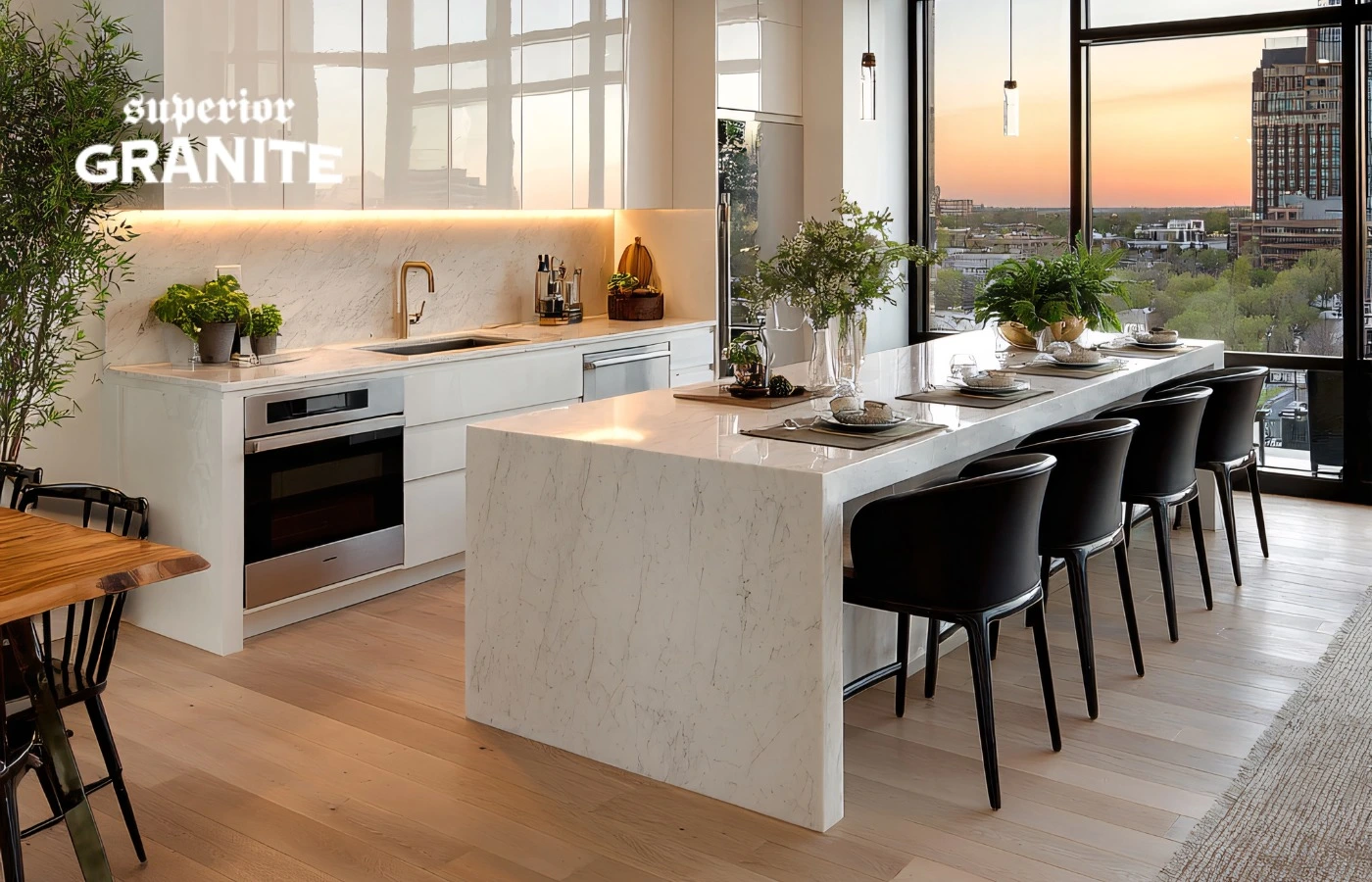
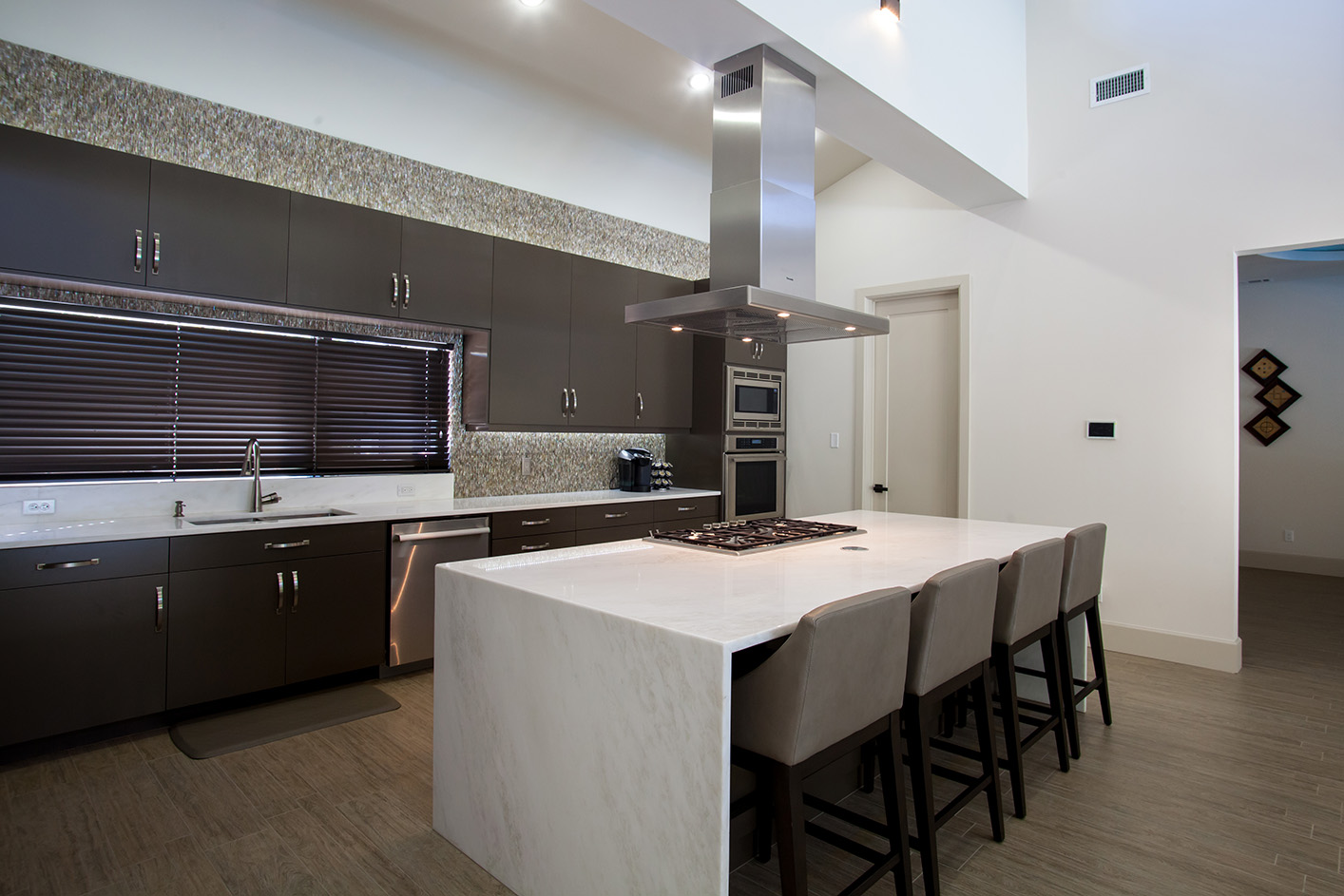
For a bold and luxurious kitchen design, homeowners often opt for double-laminated edges. This technique involves gluing two slabs together at the edges to create the illusion of an ultra-thick countertop.
Pros:
- Gives a dramatic, high-end look.
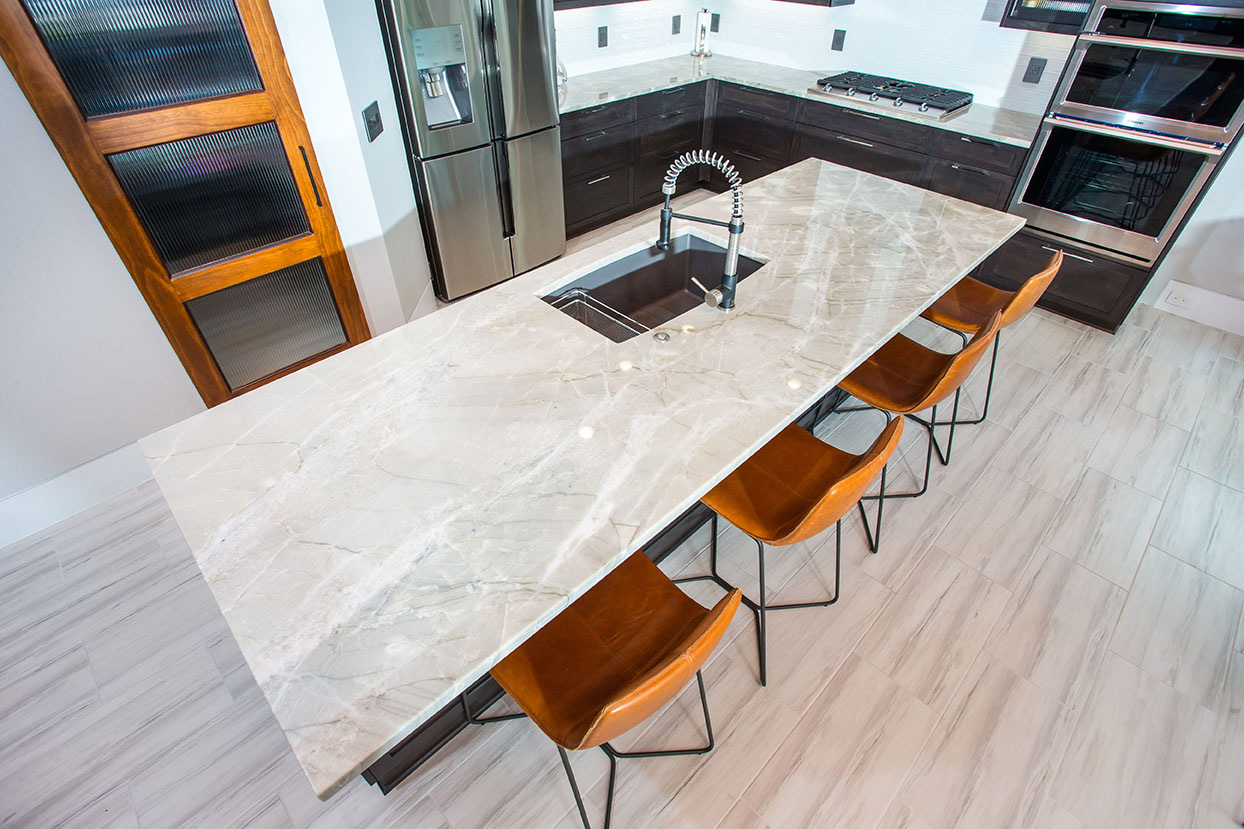
- Perfect for large kitchen islands and statement pieces.
- Increases perceived value of your home.
Cons:
- More expensive due to additional labor and material.
- Heavier and may require reinforced cabinetry.
- Not necessary for durability—primarily a visual choice.
Readout: Which Countertop Material Handles Heat, Stains, & Scratches?
Countertop Thickness by Material
Granite Countertops
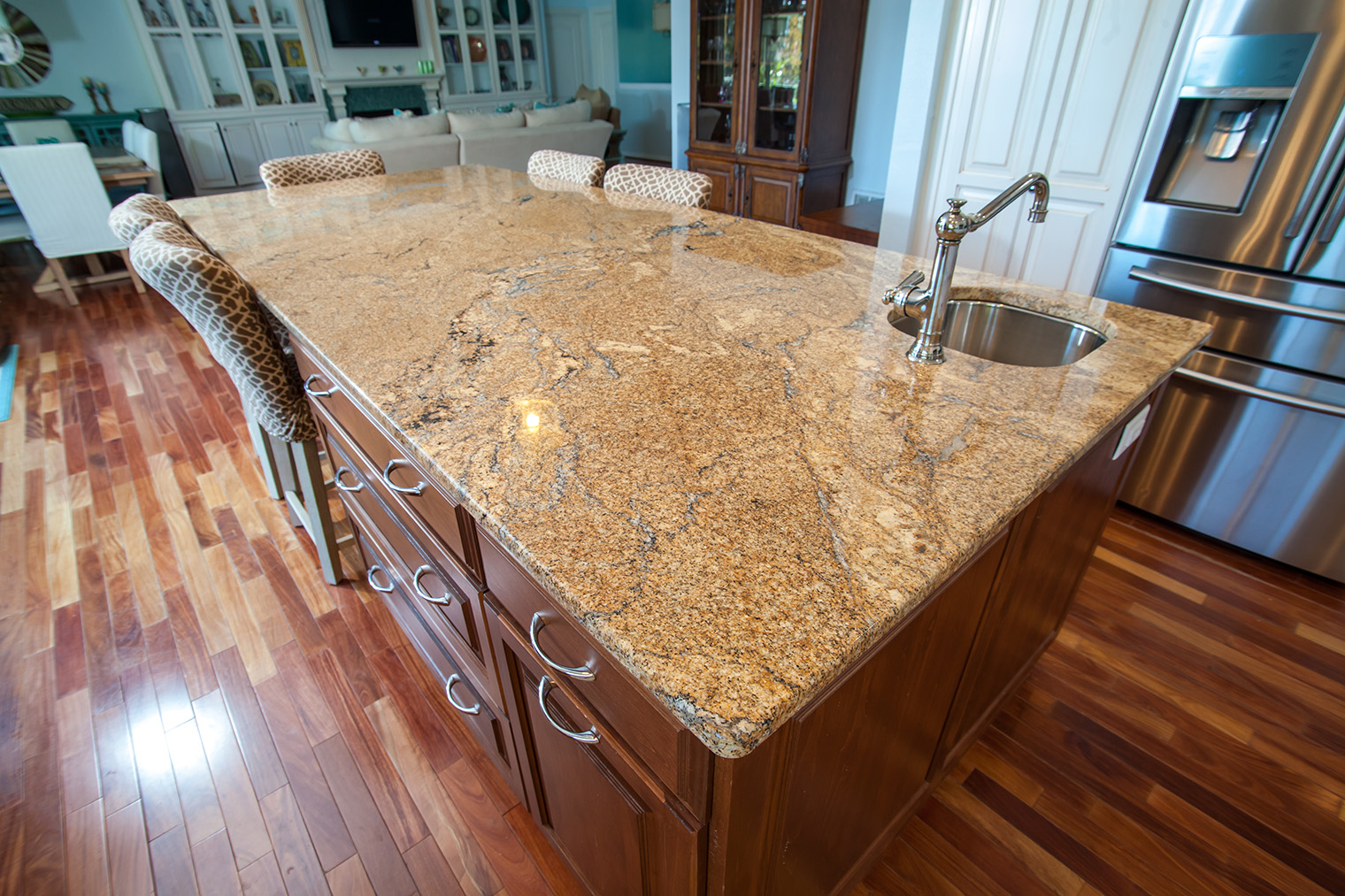
Granite is a natural stone known for its durability and stunning patterns. It’s typically available in 3 cm thickness, though 2 cm granite is also an option for bathrooms and smaller applications.
- Best thickness: 3 cm for kitchens, 2 cm for bathrooms.
- Support needed for 2 cm: Yes, to prevent cracking.
- Popular finishes: Polished, honed, leathered.
Quartz Countertops
Quartz is an engineered stone that combines natural quartz with resins for durability. It’s available in both 2 cm and 3 cm thickness.
- Best thickness: 3 cm for a solid, no-support-required look.
- Support needed for 2 cm: Sometimes, depending on the design.
- Popular finishes: Matte, polished, textured.
Marble Countertops
Marble is a softer natural stone, making thickness crucial for longevity. For instance, it’s often used in bathrooms or low-traffic areas.
- Best thickness: 3 cm for durability.
- Support needed for 2 cm: Yes, to prevent chips and cracks.
- Popular finishes: Honed, polished.
Solid Surface Countertops (Corian, etc.)
These countertops are made from acrylic and polyester resins, offering seamless installation and custom thickness options.
- Best thickness: 2 cm or 3 cm, depending on budget and design.
- Support needed for 2 cm: Rarely, as these materials are lightweight.
- Popular finishes: Matte, satin.
How to Choose the Right Thickness for Your Space
For Kitchens
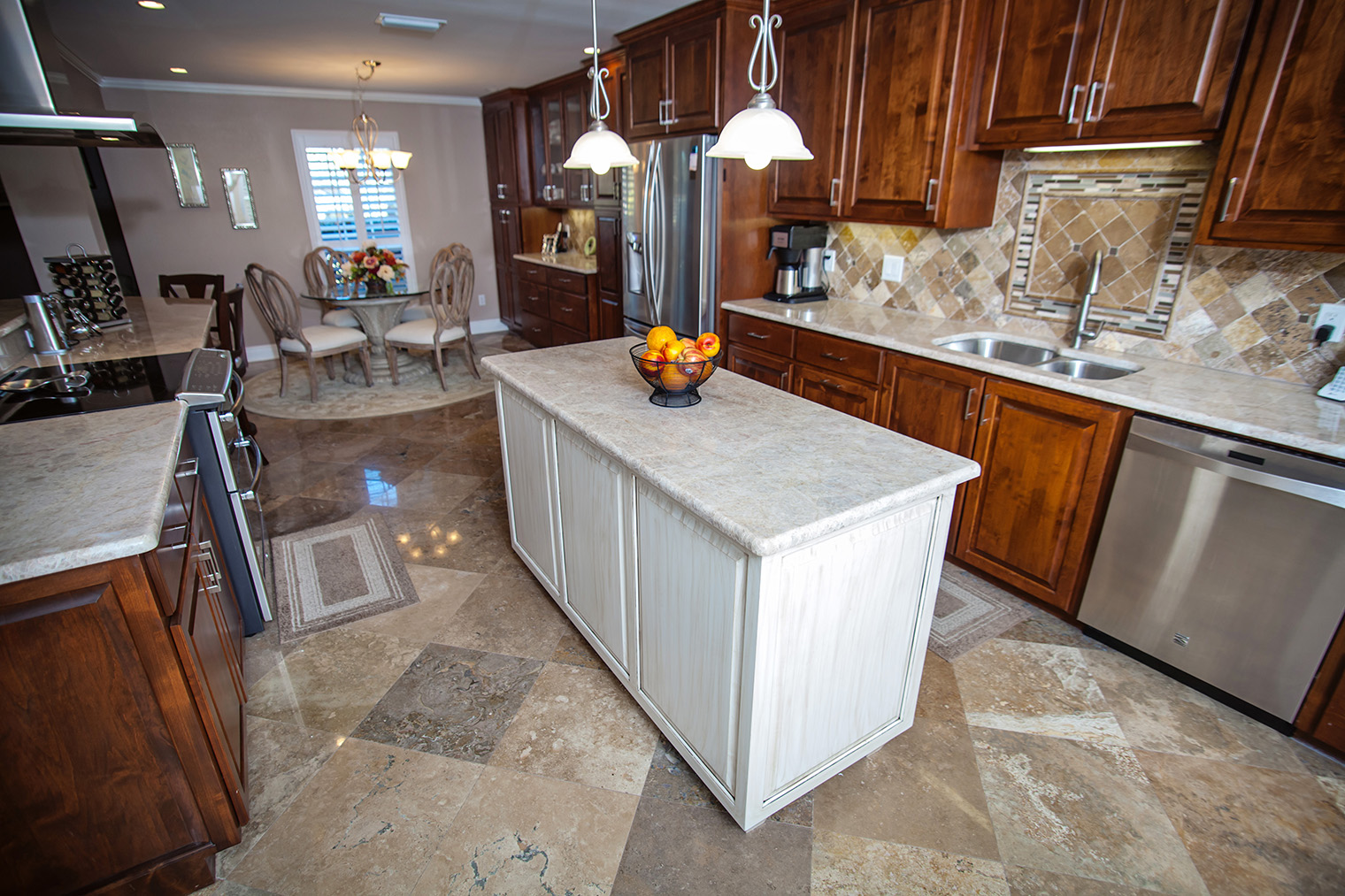
- 3 cm granite or quartz is the best option for most kitchens.
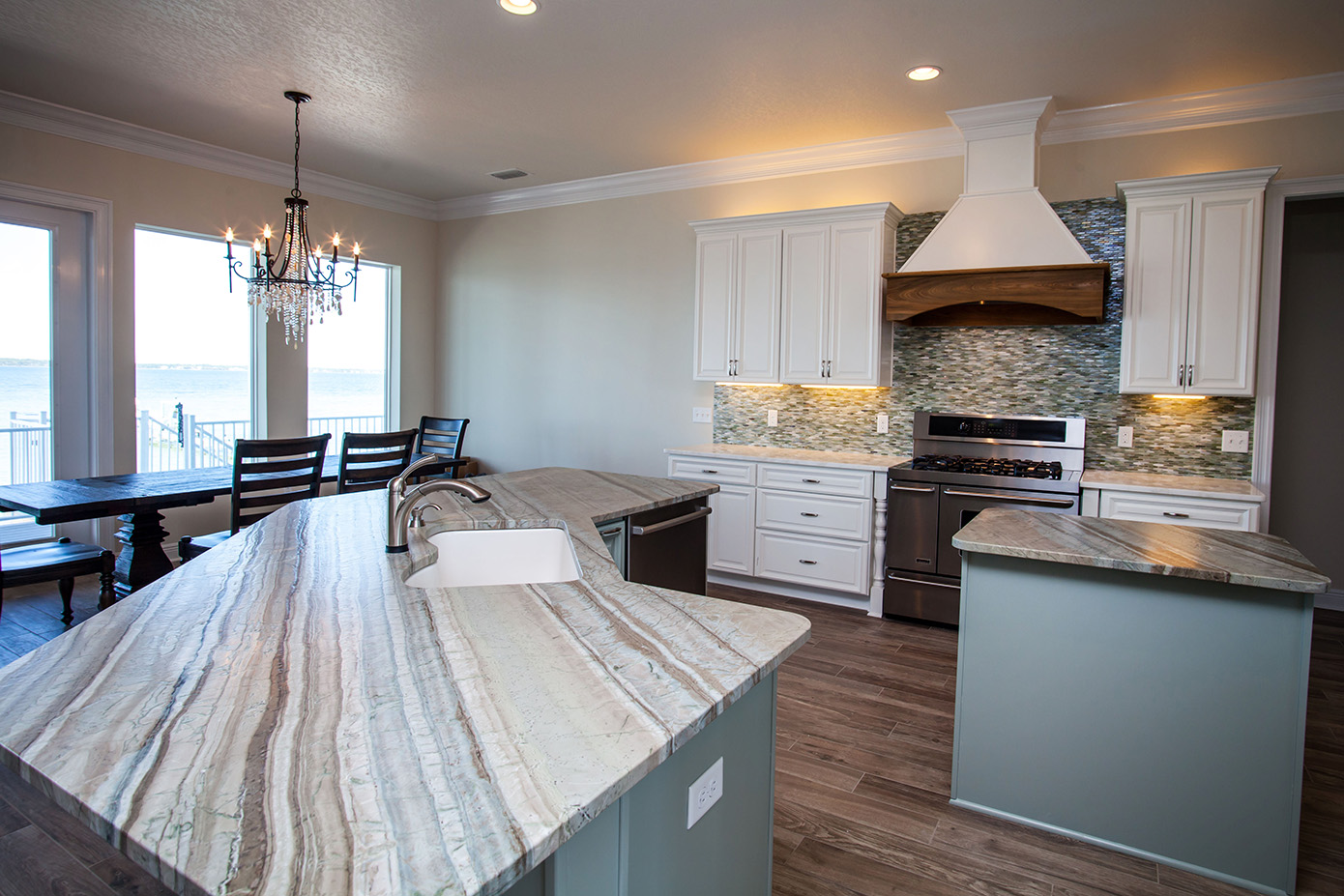
- If you want a bold island, consider a double-laminated edge.
- If using 2 cm, ensure proper support underneath.
For Bathrooms
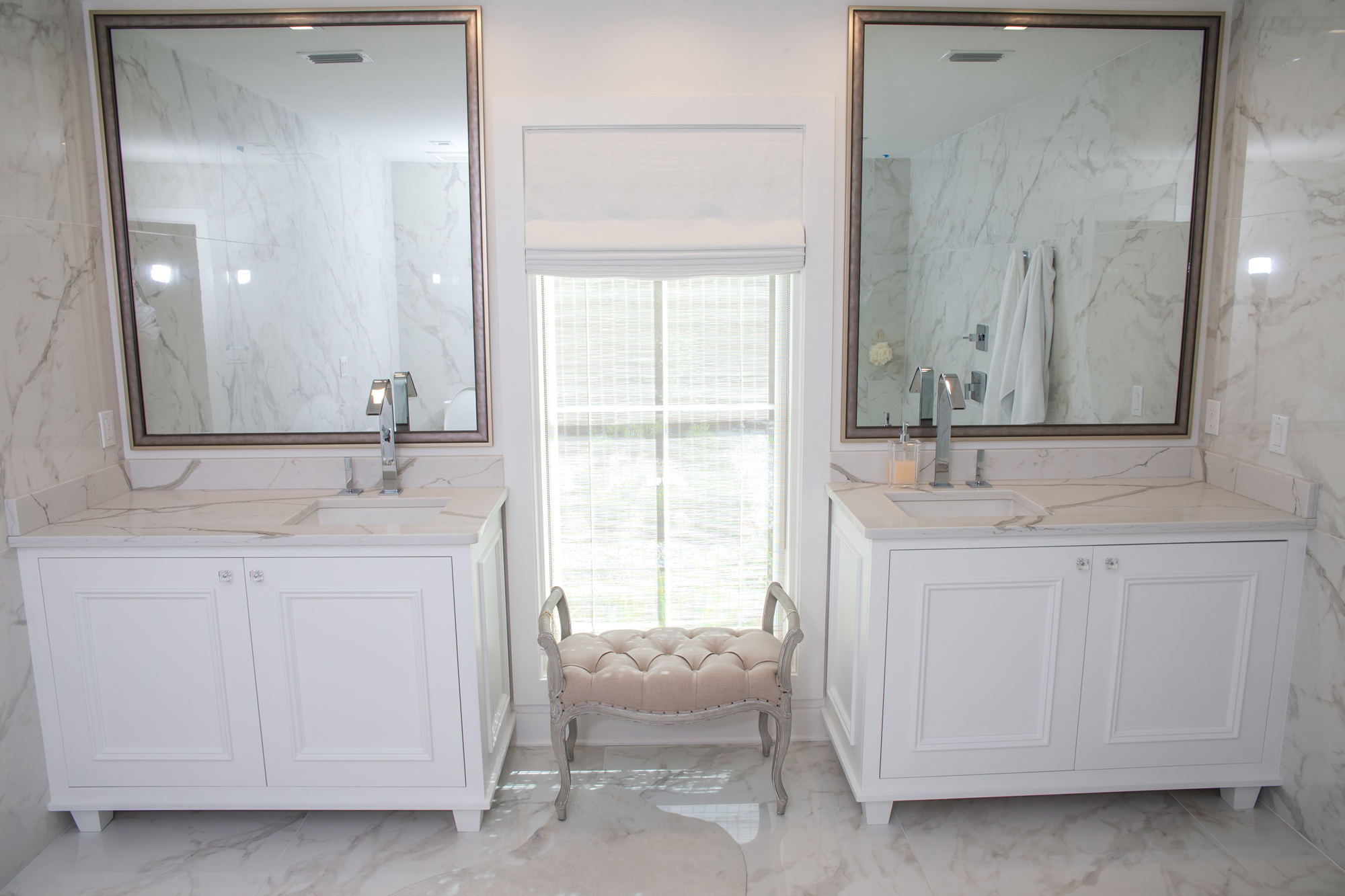
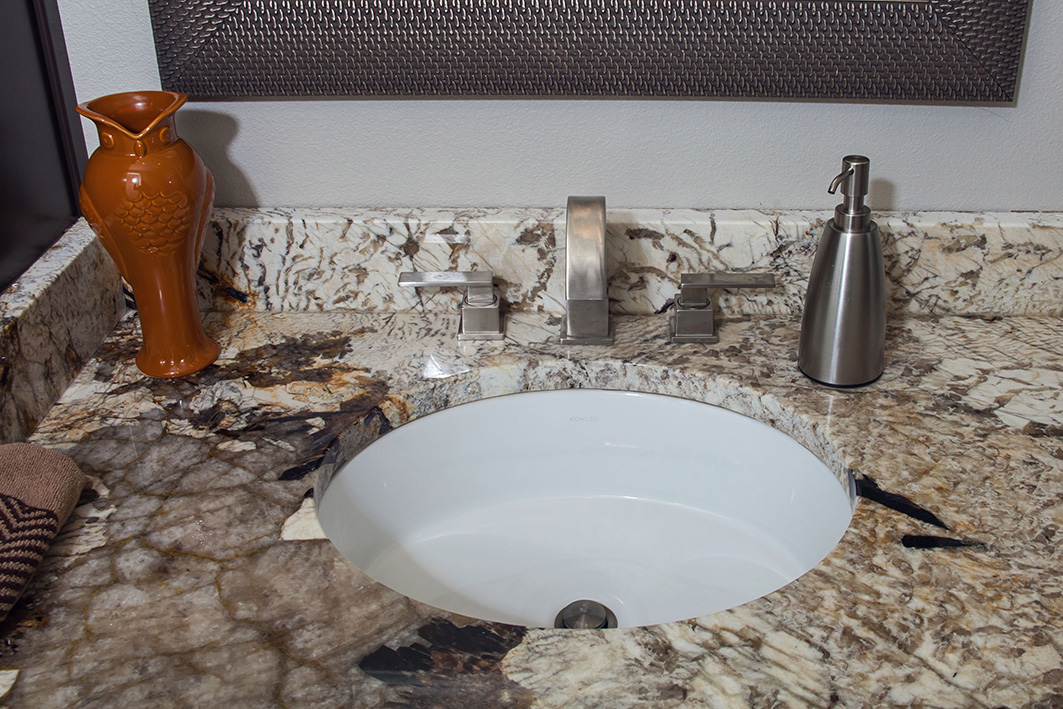
- 2 cm quartz or marble works well for vanities.
- 3 cm offers better durability, especially in high-use bathrooms.
Outdoor Kitchens
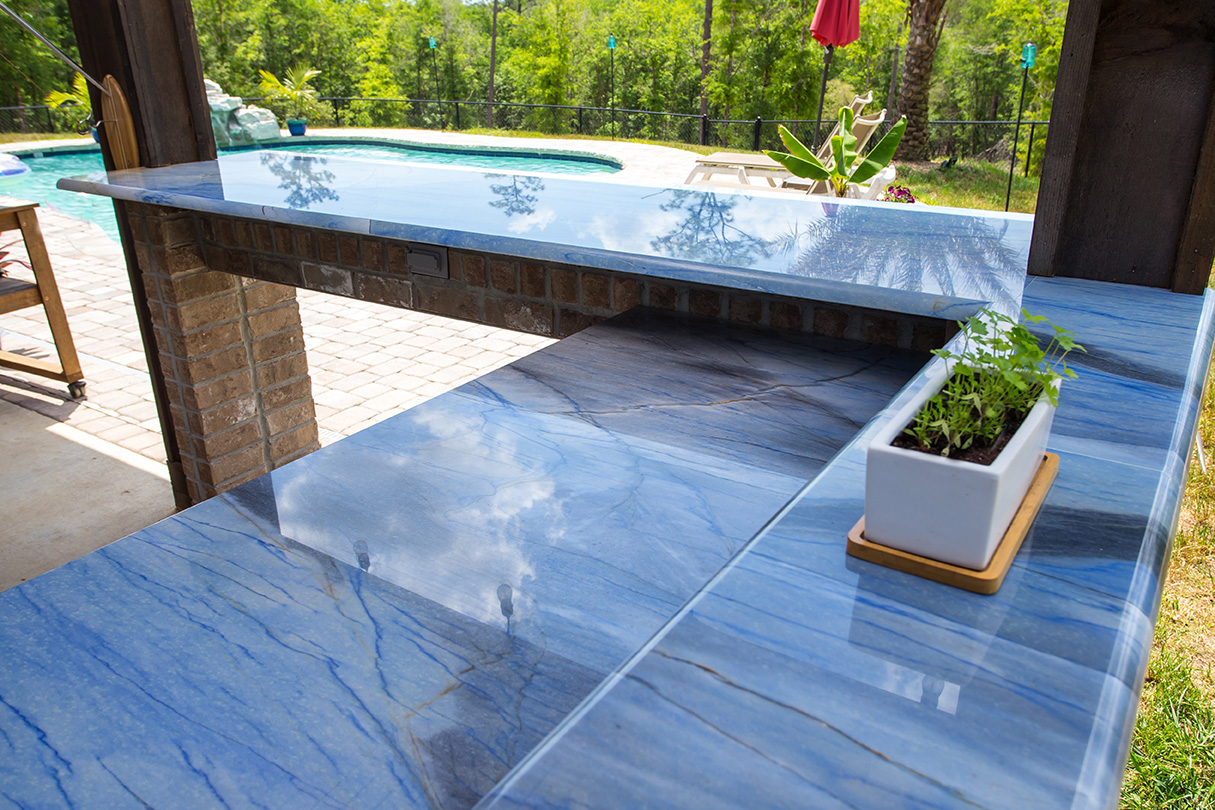
- 3 cm granite or quartzite is ideal for durability against the elements.
- Avoid marble, as it is prone to staining and weathering.
Edge Profiles and Thickness Impact
The edge profile you choose also affects how thick your countertop appears. Some popular options include:
- Straight edge: Clean and modern.
- Beveled edge: Adds a slight angle for elegance.
- Ogee edge: A classic, ornate design that enhances thicker countertops.
- Bullnose edge: A rounded finish for a softer look.
Laminated edges allow you to create the illusion of a thicker countertop without using a full slab of material.
Final Thoughts
Choosing the right countertop thickness is a balance of durability, aesthetics, and cost. Whether you’re renovating a kitchen, bathroom, or outdoor space, understanding the pros and cons of 2 cm, 3 cm, and double-laminated countertops ensures that you get the best fit for your home.
Moreover, at Superior Granite, we offer a wide selection of granite, quartz, and marble countertops, ensuring that every customer gets the perfect combination of beauty, durability, and affordability. Visit us today to explore our collection and find the best option for your space!