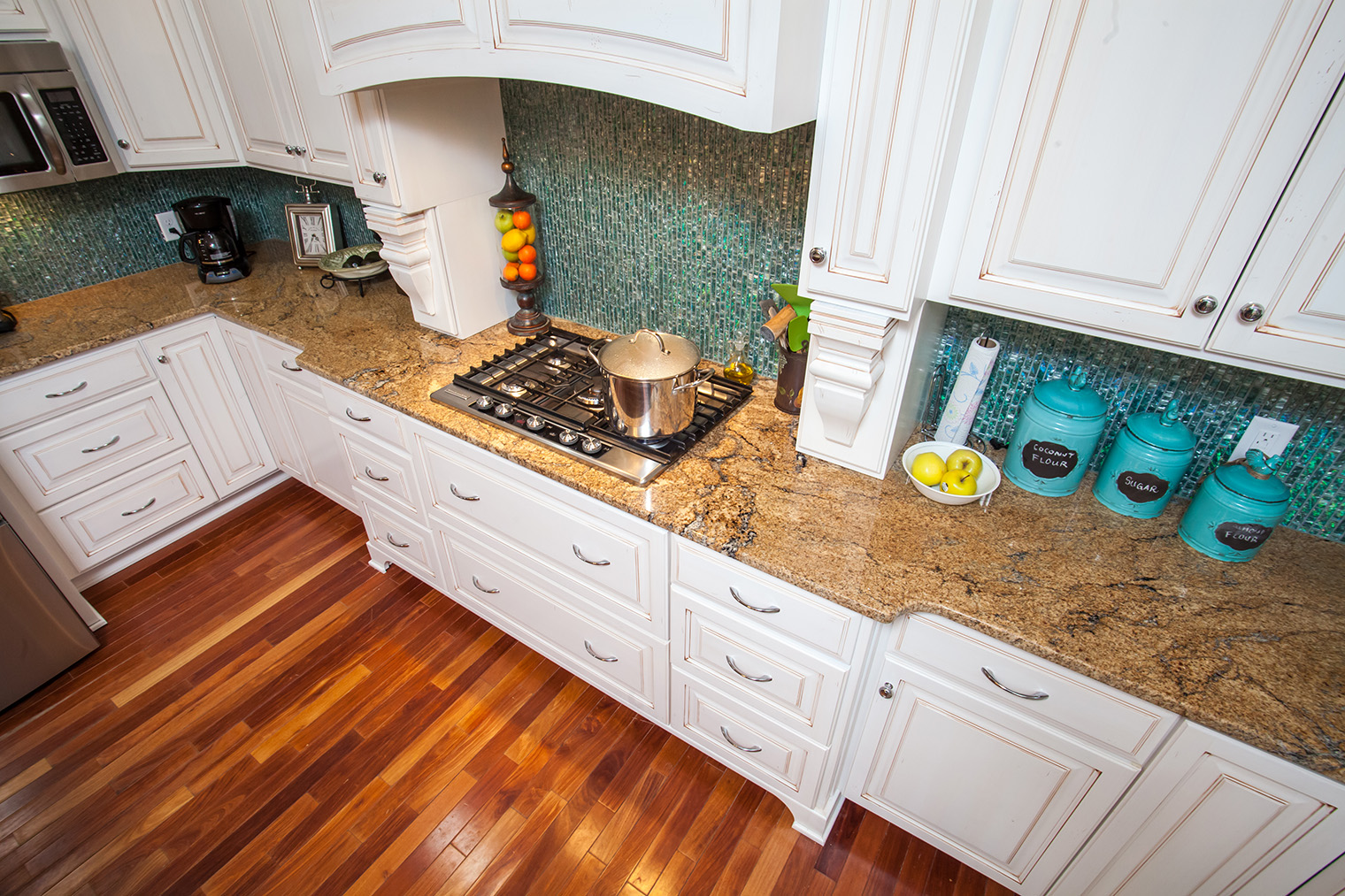
No, granite countertops cracking from regular Florida heat is a myth. Granite is an exceptionally durable natural stone built to handle high temperatures and strong sunlight. While cracks are rare, they are usually caused by improper installation, structural unlevelness, or the thermal shock of hot glass cookware, not by normal climate heat.
Understanding Granite and Heat Resistance
Formed under extreme pressure and heat, granite easily withstands temperatures far exceeding Florida’s climate. Even under direct sunlight in an outdoor kitchen, it remains structurally stable. While engineered quartz can warp or fade from UV rays, granite retains its strength, making it ideal for Gulf Coast indoor and outdoor spaces.
Why does granite rarely crack in Florida Heat?
Granite performs exceptionally well in hot climates because it does not expand or contract significantly under temperature shifts. As a dense, hard stone, it retains its shape without warping under long-term sunlight. The misconception that granite countertops crack in Florida heat usually stems from a misunderstanding; the true culprit is not atmospheric heat, but sudden temperature differences.
The Real Cause: Thermal Shock
- f climate heat isn’t to blame, what actually causes granite to crack?
- Thermal Shock: While you can safely place hot pots directly from a grill or stove onto granite, placing hot glass or Pyrex dishes on the cool stone causes thermal shock, which can shatter the dish or stress the countertop.
- Improper Installation: If cabinets are unlevel or lack structural support, pressure points form beneath the slab, eventually causing weight-stress cracks.
- Impact and Fissures: Heavy impacts from dropped objects can crack the stone or worsen preexisting natural fissures.
Installation Matters More Than Climate
Professional installation is vital to prevent cracks. If cabinet surfaces are uneven or support is weak, pressure points form that can lead to weight-stress cracks over time. When installed correctly by experts, a durable granite countertop easily lasts for decades without any issues.
Outdoor Kitchens in Florida
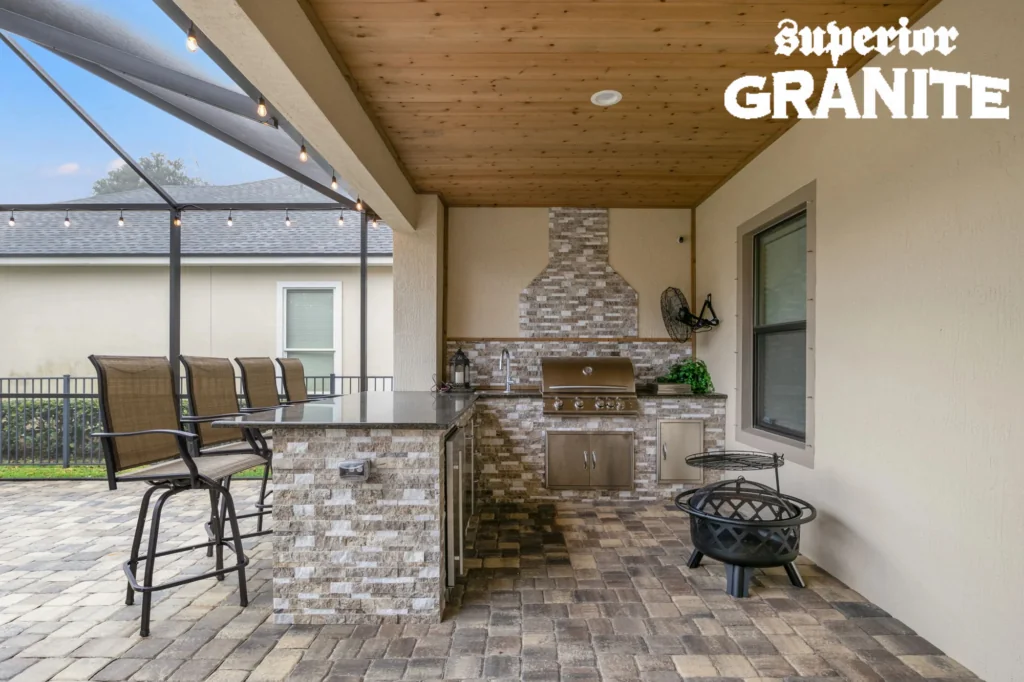
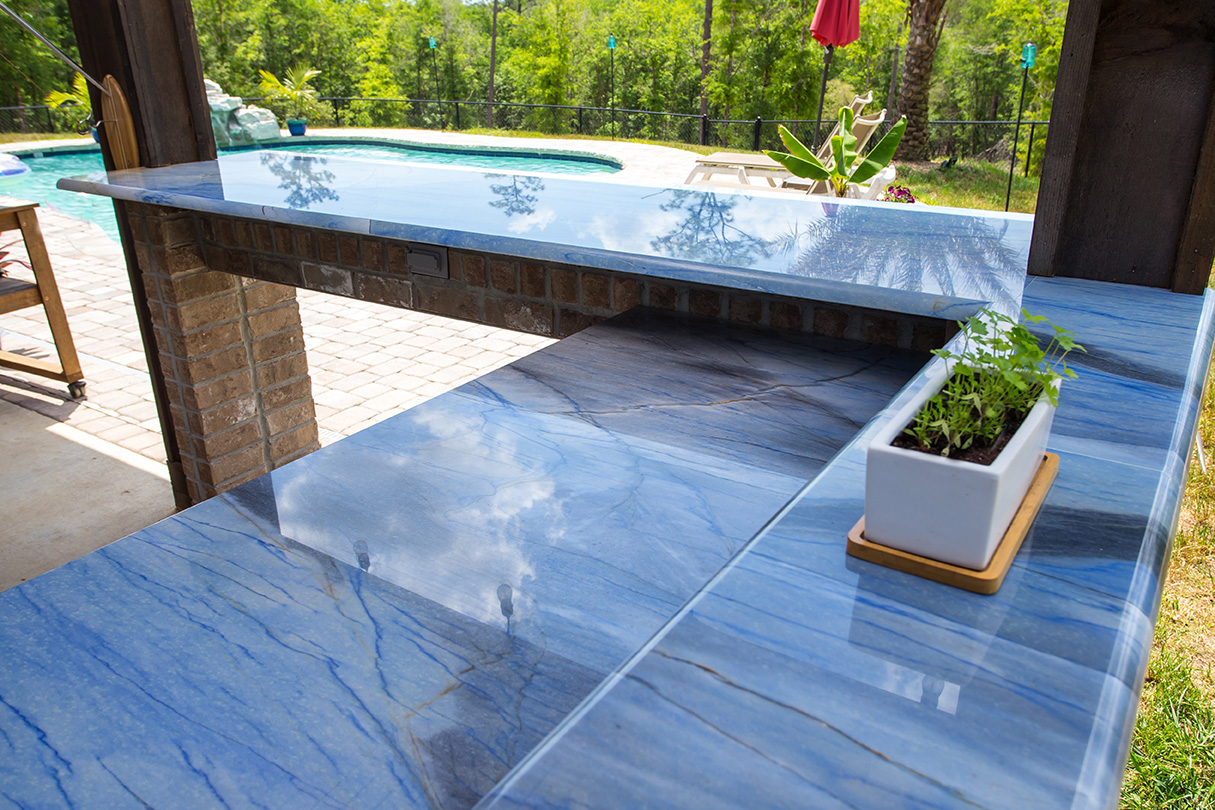
Granite is the premier choice for Florida outdoor kitchens, patios, and BBQ areas. It resists intense sun, humidity, and heat far better than engineered quartz, which can warp or fade under UV rays. While long-term outdoor sunlight might slightly fade certain granite colors over time, this change is strictly cosmetic and never affects the strength of the stone.
| Feature | Granite Countertops | Quartz Countertops | Marble Countertops |
|---|---|---|---|
| Heat Resistance | Very High | Medium | Medium |
| Crack Risk in Heat | Very Low | Medium | Medium |
| Outdoor Suitability | Excellent | Poor (Indoors Only) | Limited (Bath Only) |
| Maintenance Required | Low | Low | High |
| Lifespan | 20–50 Years | 15–25 Years | 10–20 Years |
This table clearly shows why granite is a preferred choice, especially in hot climates like Florida.
Preventing Damage to Granite Countertops
Maintain your granite’s pristine look for decades with these handbook rules:
- Routine Cleaning: Wash surfaces with warm, soapy water (like non-citrus Dawn dish soap) and a microfiber cloth. Never use bleach, ammonia, vinegar, or essential oil cleaners.
- Regular Sealing: Natural stone is naturally porous. To prevent deep stains and keep your surface looking brand new, you must completely reseal your natural stone every 6 months.
- Use Cutting Boards: Never cut directly on the countertop or place unprotected sharp objects on them, as it can damage the surface and quickly dull your knives.
Long-Term Performance & Cracking Realities
Granite is one of the hardest natural materials available, scoring 6–6.5 on the Mohs scale. Environmental weather changes including extreme humidity, persistent sunlight, and intense atmospheric heat will not weaken its structural integrity or cause it to crack. Actual damage only occurs under preventable conditions:
- Improper installation or unlevel structural cabinets.
- Blunt force impact from dropping heavy objects.
- Extreme thermal shock from sudden temperature differentials (like hot glass cookware). Long-term outdoor changes remain strictly cosmetic such as minor color fading leaving your stone perfectly sound for decades.
Conclusion
Granite remains an exceptional, long-lasting investment for hot climates like Florida. Environmental heat and sunlight pose no threat to its structural performance. Real risks like thermal shock or pressure points are easily avoided through routine care and professional installation. Ready to upgrade your indoor or outdoor living space? Get quotes now and start your project!
Pensacola, FL
Visit Us: 7011 Pine Forest Road, Pensacola, FL 32526
Call Us: (850) 941-0270
Hours: Monday – Friday: 8 a.m. – 5 p.m., Saturday: 9 a.m. – 2 p.m.
Pace, FL
Visit Us: 4590 Jernigan Road, Pace, Florida 32571
Call Us: (850) 994-1872
Hours: Tuesday – Friday: 9 a.m. – 5 p.m., Saturday: 9 a.m. – 2 p.m.
Fort Walton Beach, FL
Visit Us: 35 Miracle Strip Pkwy SW, Fort Walton Beach, Florida 32548
Call Us: (850) 301-0716
Hours: Tuesday – Friday: 8 a.m. – 5 p.m., Saturday: 9 a.m. – 2 p.m.
Get quotes now and start your project!
FAQs
1. Do granite countertops crack in Florida heat?
No. Granite is an incredibly durable natural stone that withstands high weather temperatures seamlessly. Cracks only occur from structural pressure, improper installation, or sudden thermal shock from glass cookware.
2. What is thermal shock in granite?
Thermal shock happens when granite is exposed to a sudden change in temperature. For example, placing a very hot pan on a cold surface can cause stress inside the stone. This stress may lead to cracks because different parts of the stone expand at different rates.
3. Can I place hot pots and pans directly on granite?
Yes. You can safely place hot items directly from your oven, stove, or grill onto granite countertops. However, you should avoid placing hot glass or Pyrex dishes directly on the cool stone, as the extreme temperature contrast can cause thermal shock.
4. Is granite better than quartz in Florida weather?
Yes. Engineered quartz contains binding resins that warp, scorch, and yellow under direct UV rays and exterior heat. The company handbook explicitly notes quartz is for indoor use only, making natural granite the superior choice for outdoor applications.
5. Can sunlight damage granite countertops?
Sunlight does not damage granite structurally, but long-term exposure may slightly fade some colors. The stone itself remains strong and durable even after years of UV exposure. This is why granite is still widely used in outdoor kitchens.
6. How often do natural stone countertops need to be sealed?
To ensure maximum stain protection, you must reseal your natural stone countertops every 6 months. Regular cleaning with simple warm, soapy water keeps the sealant intact and your stone protected for decades
7. Does humidity affect granite countertops?
No, granite is naturally resistant to moisture and humidity. However, sealing the surface helps protect it from water absorption and stains. This is especially useful in Florida’s humid climate.
8. What are the main causes of granite cracks?
The main causes include improper installation, heavy impact like dropping objects, and sudden temperature changes. Natural flaws in the stone can also increase the risk, but heat alone is not a common cause.
9. Do outdoor granite countertops need special care?
Yes, outdoor granite needs regular cleaning and periodic sealing. This helps protect it from dirt, moisture, and long-term weather exposure. With proper care, outdoor granite remains durable and attractive.
10. Is granite a good investment for kitchens in hot climates?
Yes, granite is an excellent investment for hot climates like Florida. It is durable, heat-resistant, and long-lasting. It also adds value and beauty to your kitchen, making it a smart long-term choice.