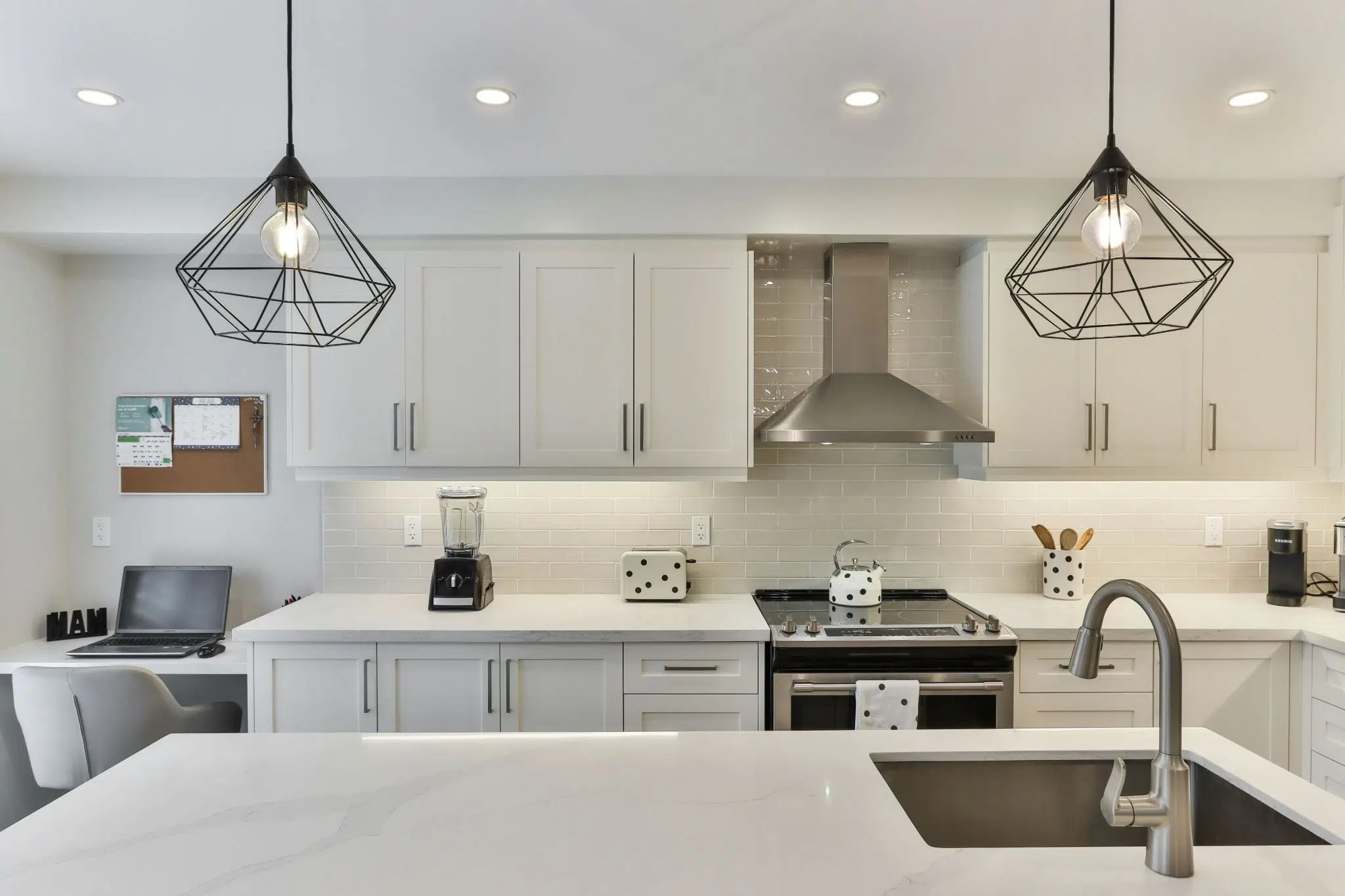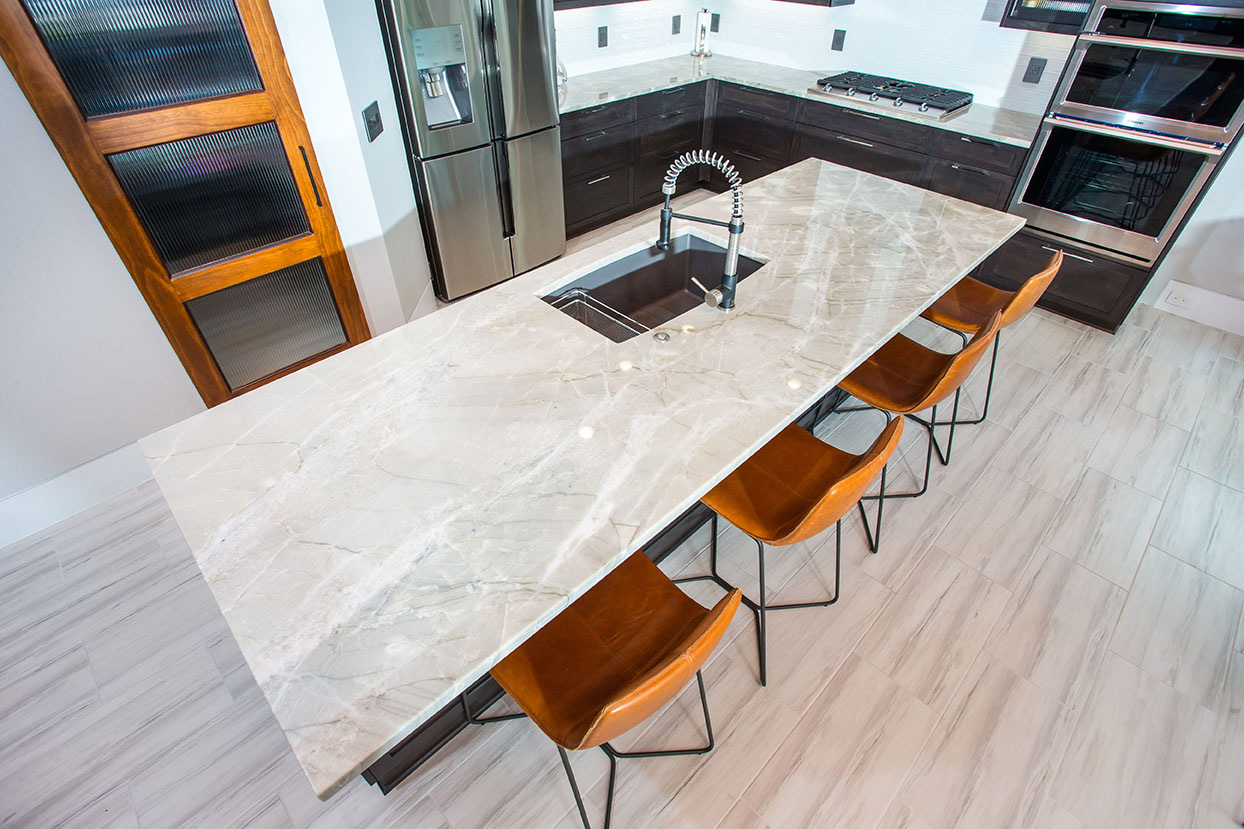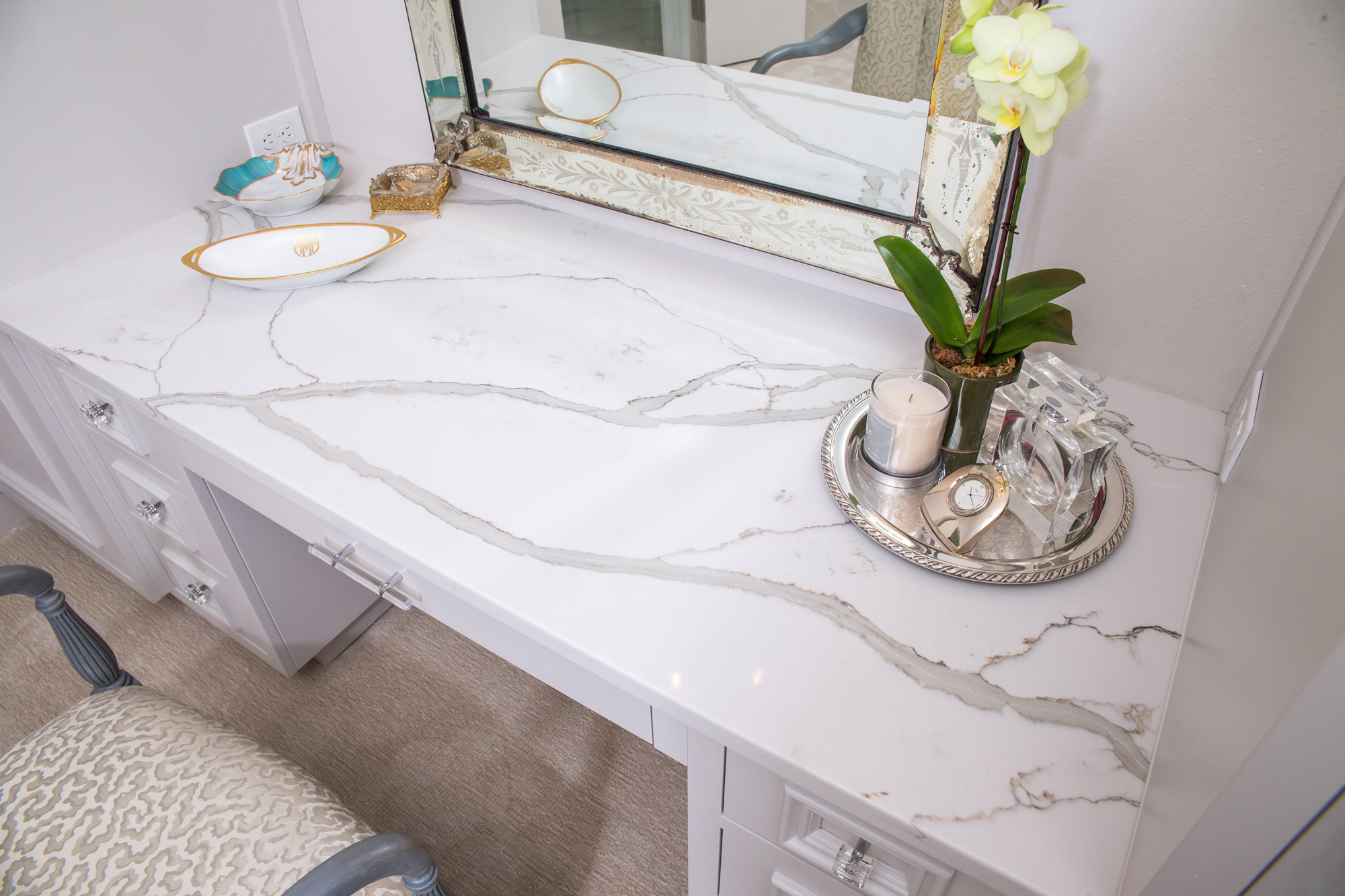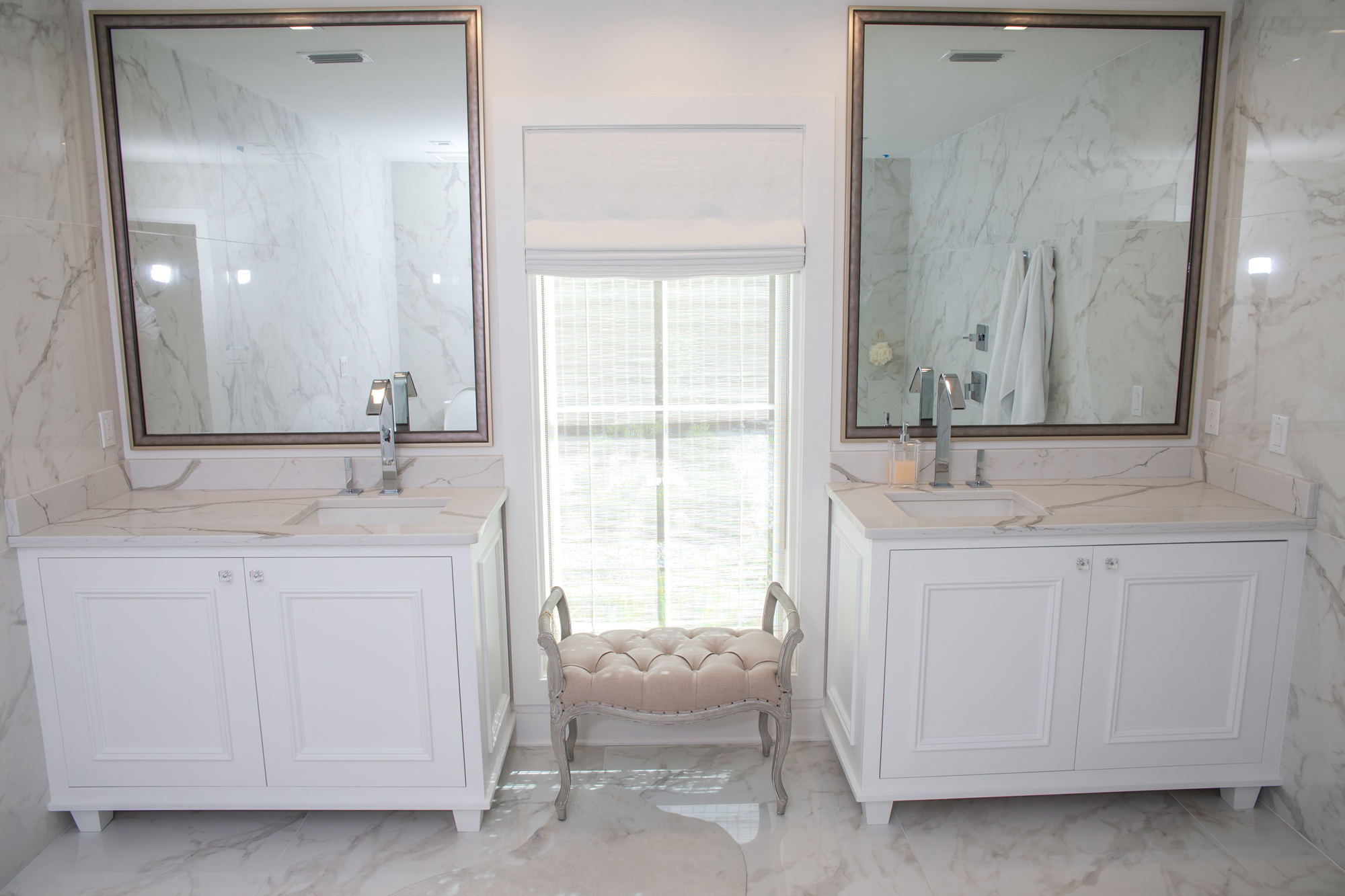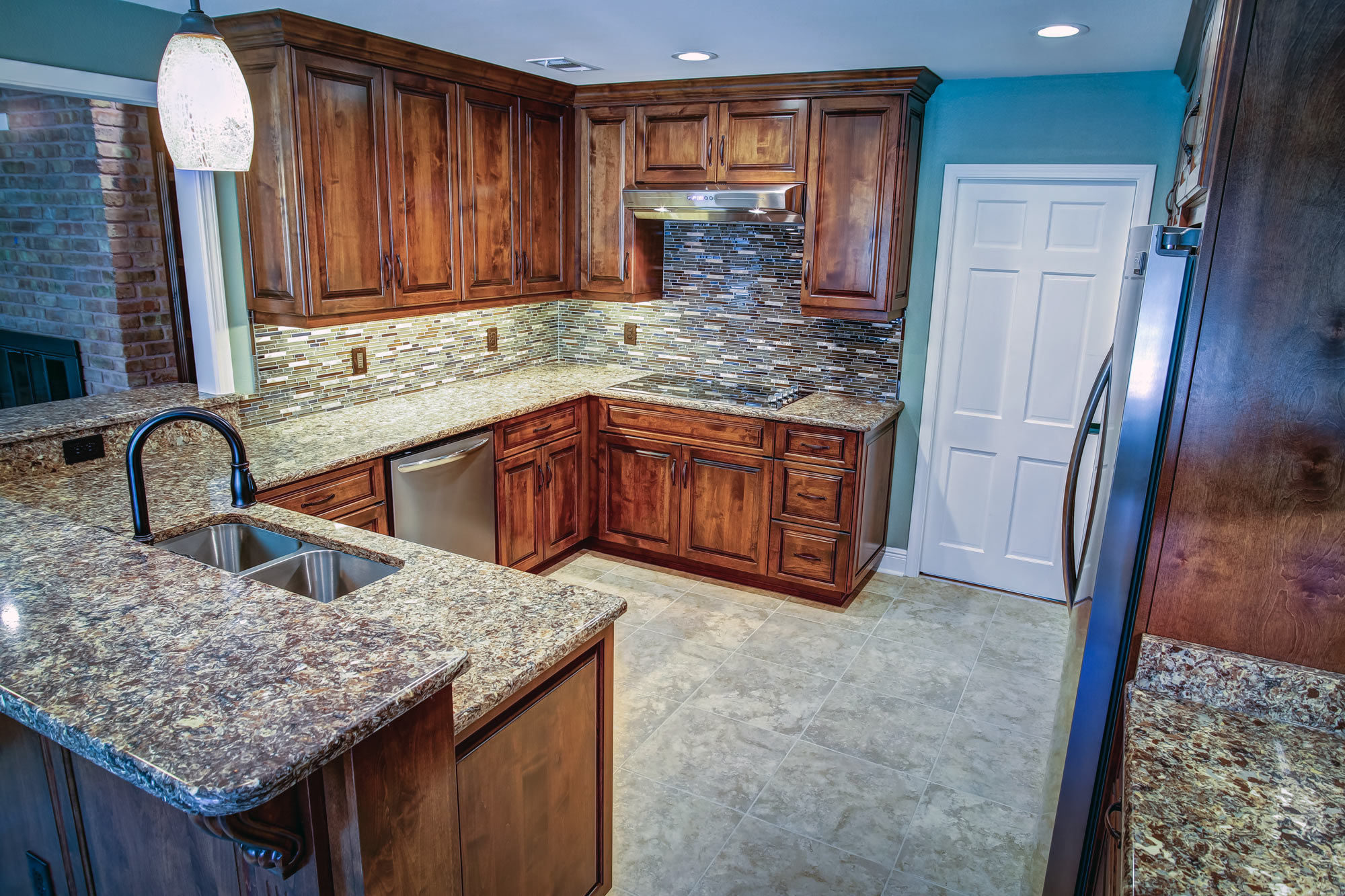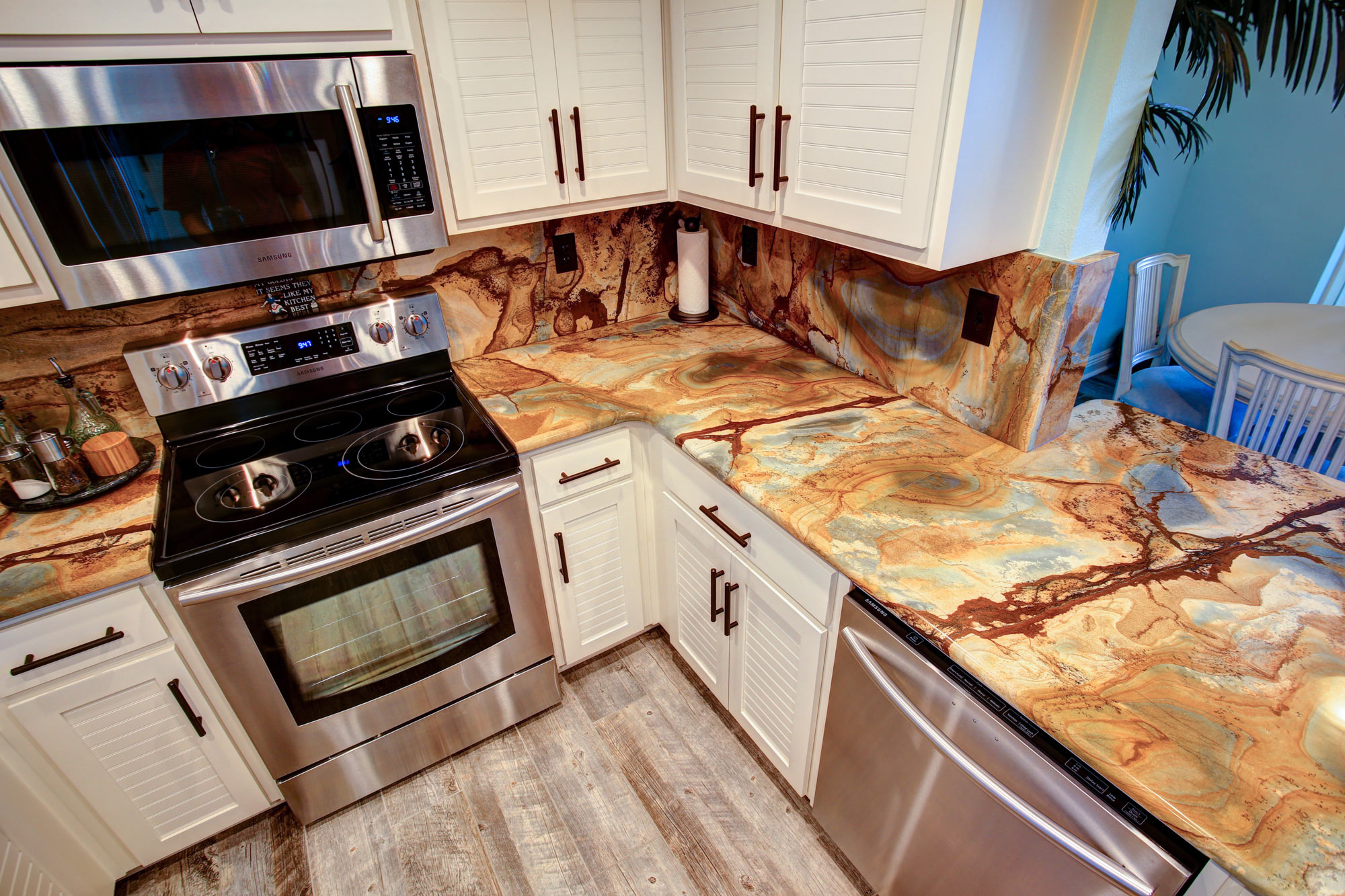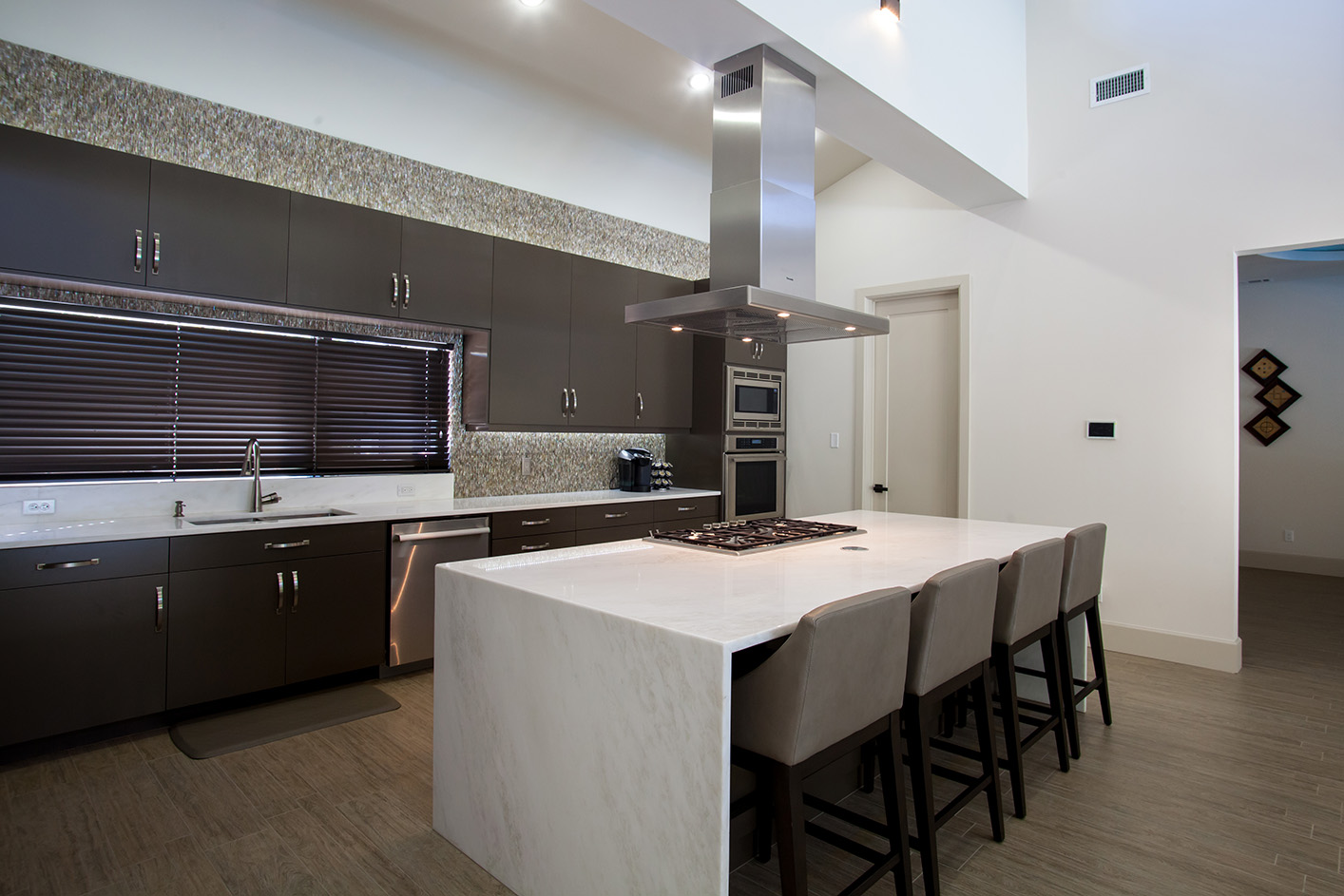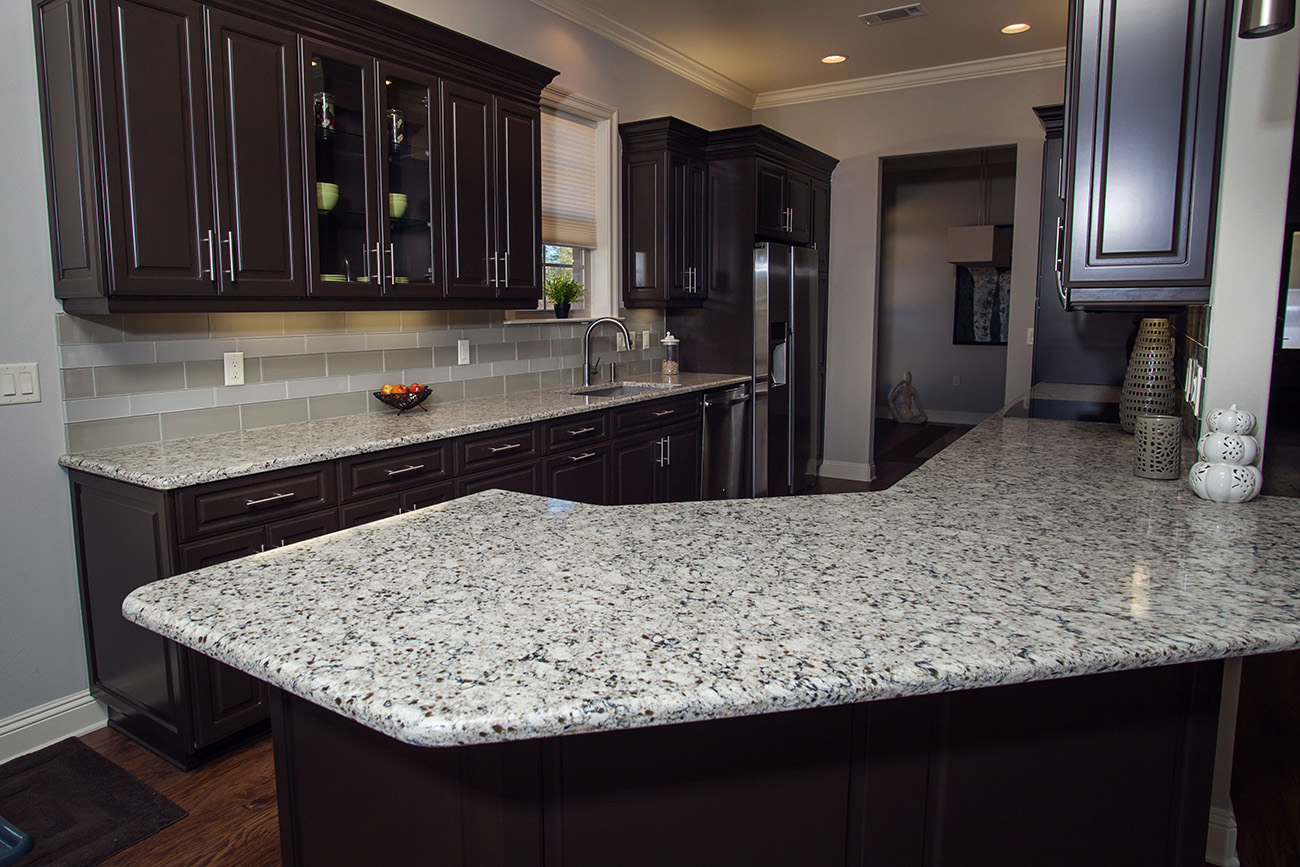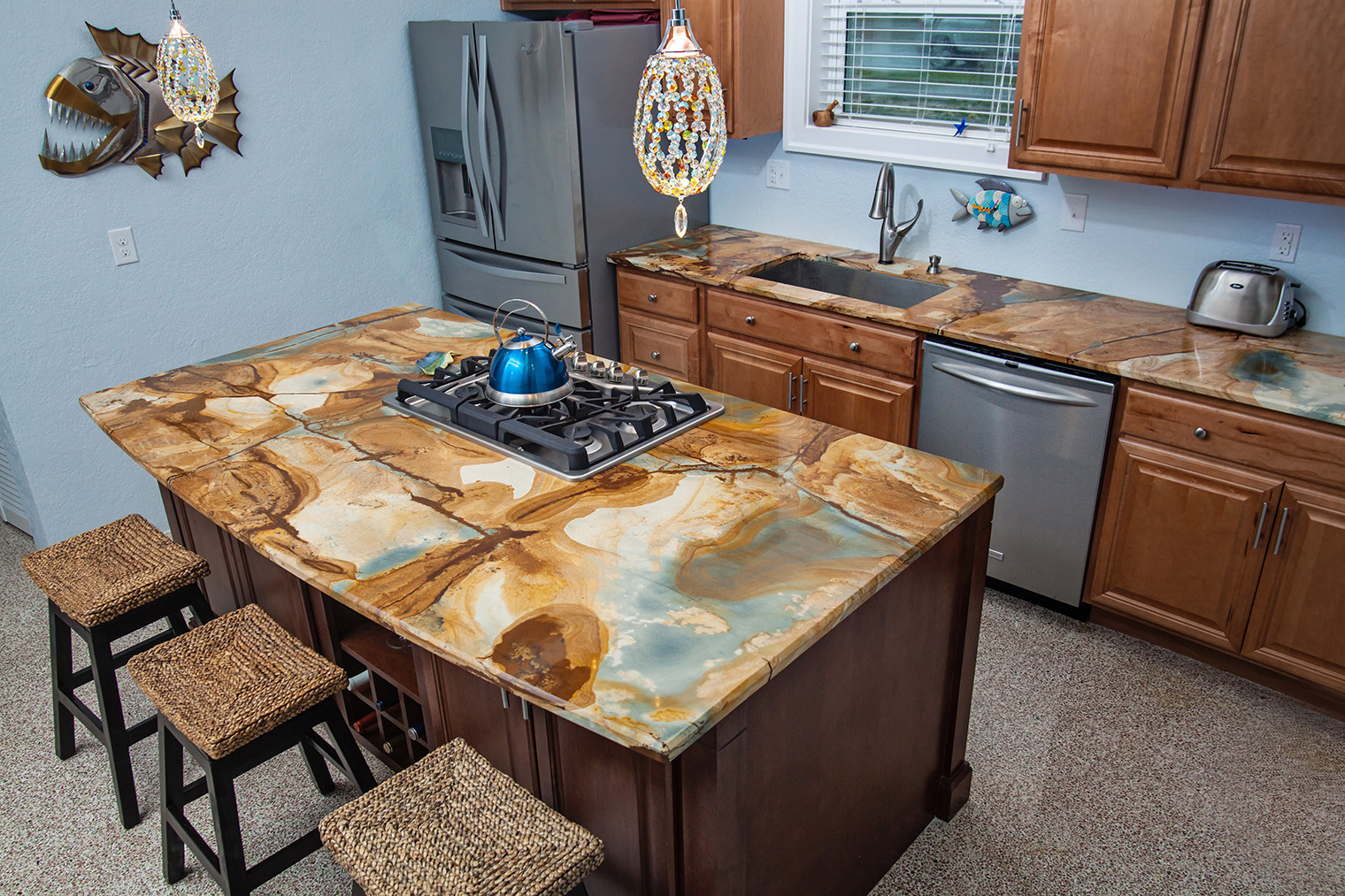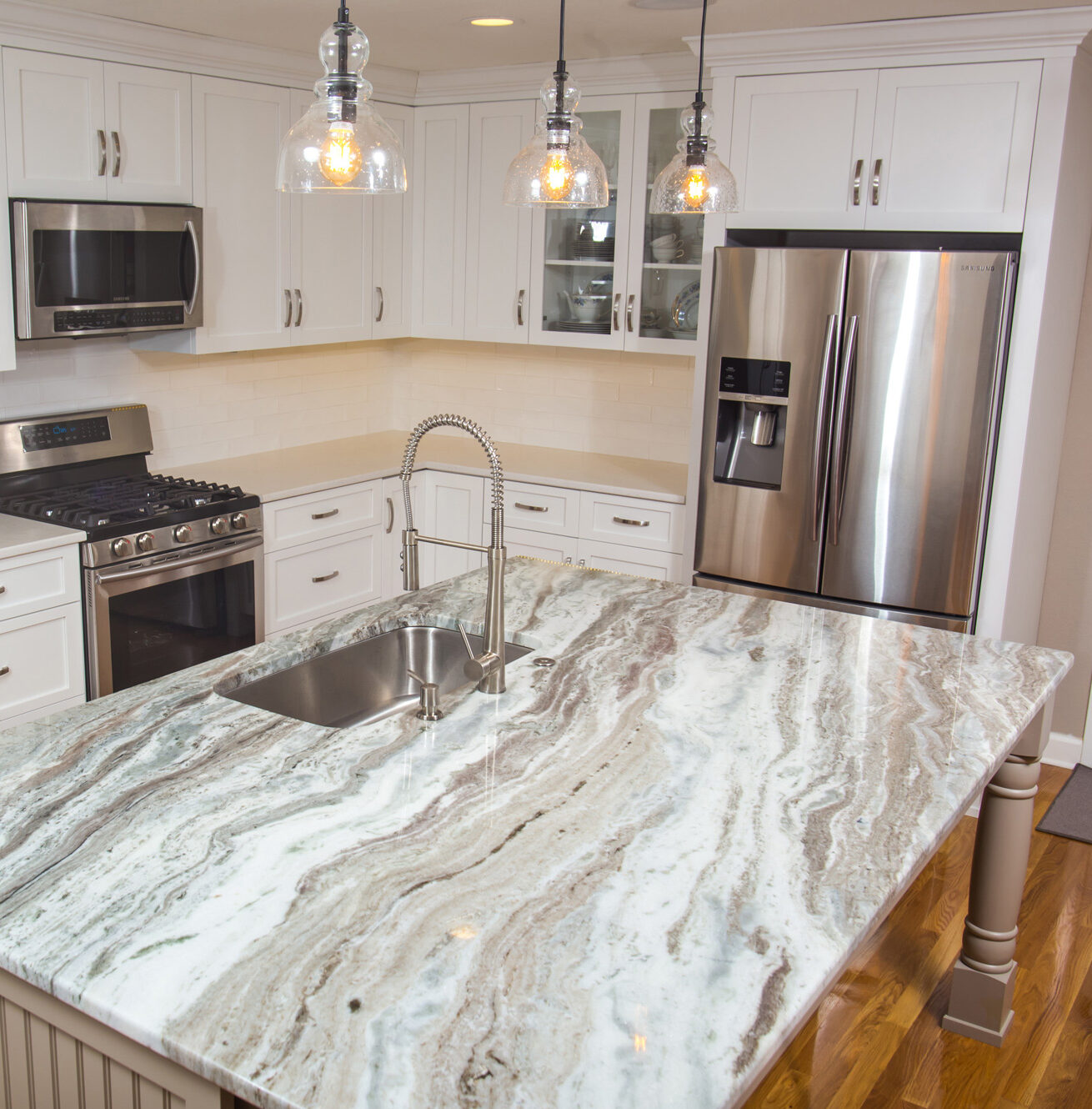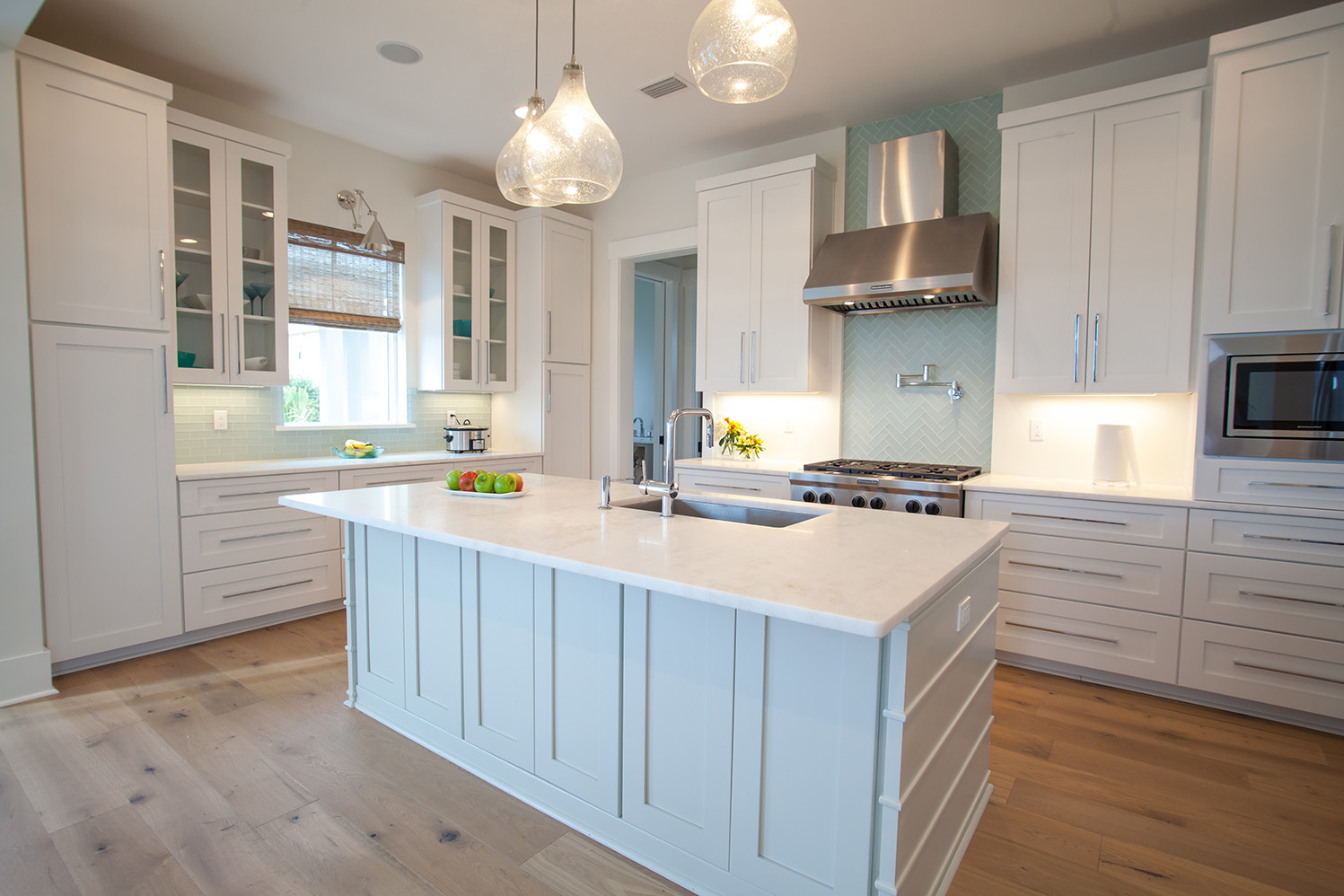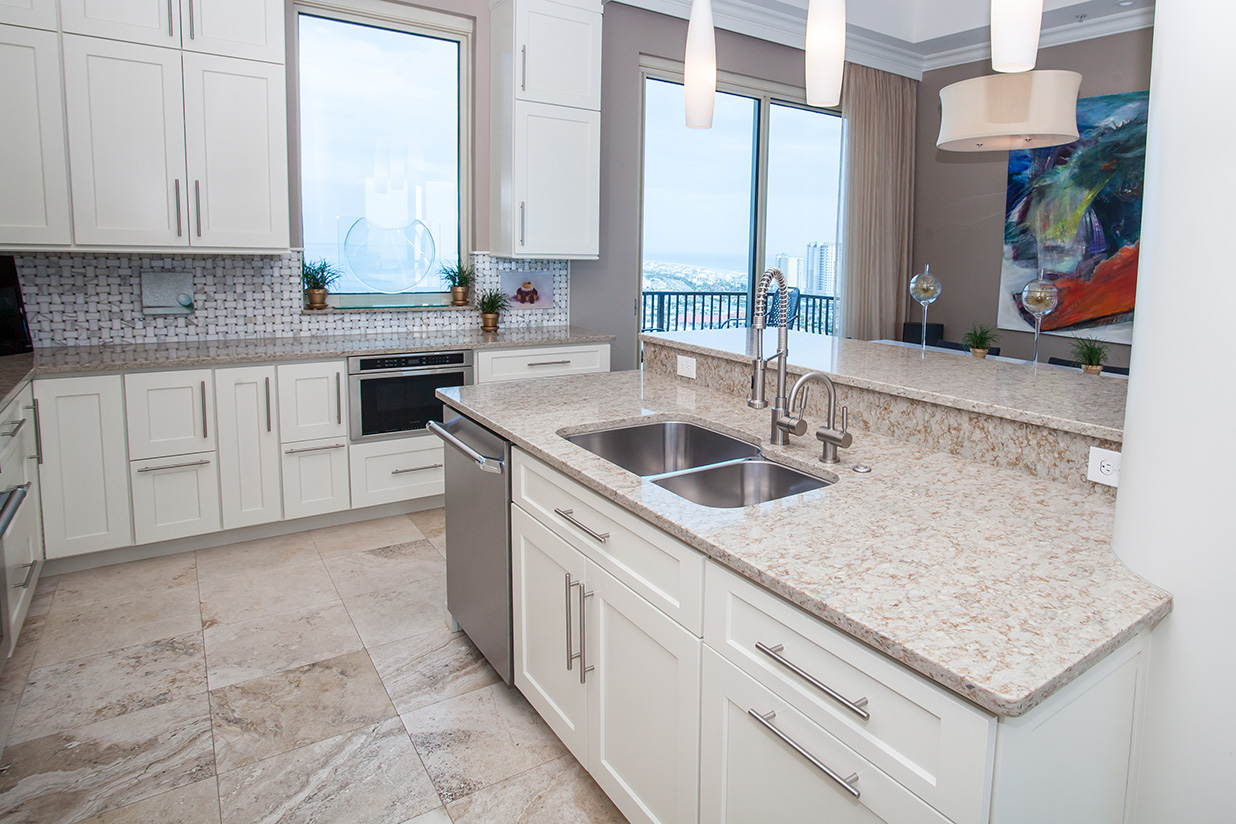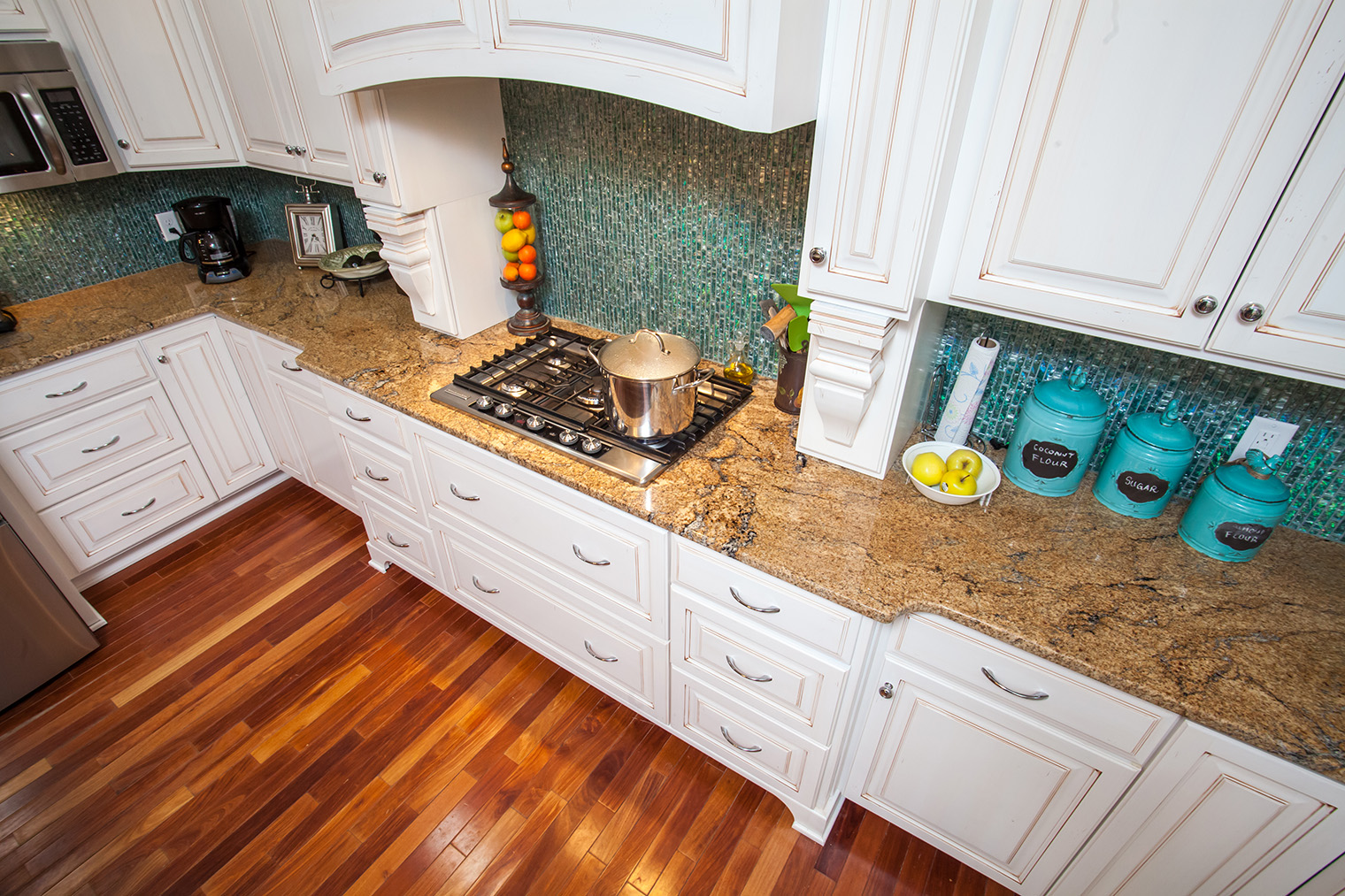
Engineered vs natural stone is the first fork in the road for almost every kitchen remodel. Quartz is man-made. Granite, quartzite, and dolomite come straight out of the ground. Neither wins across the board. The right pick depends on how you actually cook and clean.
Homeowners across Pensacola, Pace, and Fort Walton Beach ask us this question constantly. So at Superior Granite, we walk through the real differences before anyone picks a slab. This post breaks down engineered vs natural stone, why people choose each one, and how to care for both once they’re installed.
What Is Engineered Stone?
Quartz is the main engineered stone countertop on the market. It isn’t mined. It’s manufactured instead. Roughly 90-93% crushed natural quartz crystal gets bound together with resins and pigments. That mix is pressed into slabs under controlled conditions.
Because it’s engineered, every slab comes out consistent. No surprises between the showroom sample and what shows up at your house. It’s a highly durable, non-porous surface. It doesn’t need sealing at any point in its life. That single fact drives a lot of the engineered vs natural stone conversation before anything else even comes up.
We see this play out constantly across our Pensacola, Pace, and Fort Walton Beach showrooms. First-time remodelers walk in assuming “quartz” means one uniform product. It doesn’t. Coarse-ground quartz gives you a flecked, textured look. Finely ground quartz produces something smoother and more consistent. Both are still engineered, still non-porous, and still require zero sealing.
What Is Natural Stone?
Granite, quartzite, and dolomite are natural stone countertops. Each one forms differently underground. Granite is igneous rock, formed from cooled magma. Quartzite started as sandstone before heat and pressure turned it into something far harder. Dolomite is a sedimentary rock made of calcium magnesium carbonate.
None of it is manufactured. That’s the whole appeal. It’s also the tradeoff. Every slab is one of a kind. Veining and color shift in ways you can’t fully predict until the piece is cut. Natural stone is porous to different degrees, though, so most of it needs periodic sealing to stay stain-resistant. That’s the core engineered vs natural stone tradeoff in a nutshell: consistency versus character.
This is usually the point where homeowners start picturing their own kitchen. Do you want a slab that photographs the exact same way every time? Or one with movement and depth that no catalog photo can fully capture? Neither answer is wrong. It just depends on what you’re after.
Why Homeowners Choose Engineered (Quartz)
Quartz has become the default pick for busy households. It’s easy to see why once you look at the actual upkeep involved. Walk through any big-box showroom today, and quartz usually takes up more floor space than any single natural stone. That’s not an accident. Demand keeps climbing every year.
No Sealing, Ever
This is the big one. Granite needs sealing once a year. Quartzite and dolomite need it twice a year. Quartz needs none of it, ever. The resin binding makes the surface non-porous from day one. For homeowners who don’t want another item on the calendar, that settles it.
Consistent Color and Pattern, Slab to Slab
Buy quartz today, and a replacement piece years later will still match. Natural stone can’t promise that. Every quarry batch looks different. If you want a uniform look across a large kitchen, quartz countertops remove the guesswork entirely.
Stain and Scratch Resistance
Quartz resists scratching and staining better than most natural stones. No sealing is required to get there. It’s not indestructible, though. Excessive heat can still cause damage, so trivets still matter. Day-to-day spills and knife nicks aren’t a real concern here.
Why Homeowners Choose Natural Stone
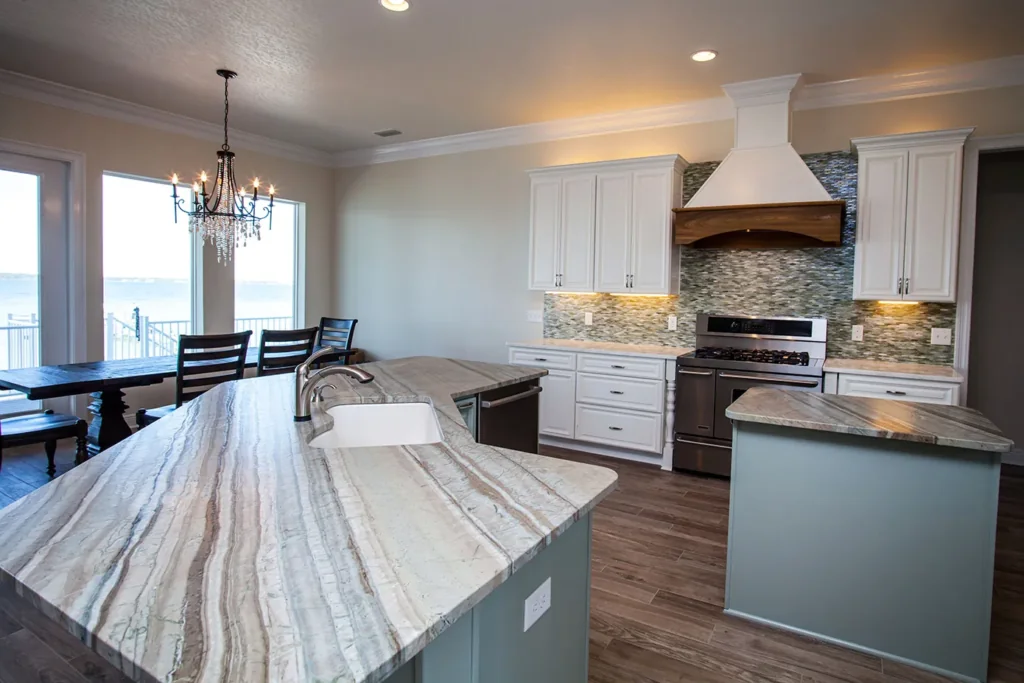
Plenty of homeowners look at all of that and still choose natural stone anyway. Here’s why.
Walk into any of our Pensacola, Pace, or Fort Walton Beach showrooms. You’ll see why this side of the engineered vs natural stone debate still wins plenty of kitchens. No two customers pick the exact same slab, because no two slabs look the same. That’s the draw.
Granite
Granite countertops are nearly impervious to heat. You can set a hot pan directly on one without a trivet. It’s also one of the hardest natural stones available. That makes it resist scratching well. Sealed properly once a year, it resists stains just as well as quartz does day to day.
Quartzite
Quartzite countertops sit at a 7 on the Mohs hardness scale. That’s harder than granite. The veining is dramatic and marble-like, in a way quartz can only imitate. It’s also more heat resistant than granite in most comparisons. The tradeoff is sealing twice a year, with extra attention needed at seams and cutouts.
Dolomite
Dolomite gives you that same soft, marble-like look. It comes at a friendlier price than actual marble. It’s more forgiving than marble against everyday scratching, too. Still, it’s softer than granite or quartzite. Lemon juice and wine can etch it if left sitting too long. Quick cleanup matters more here than with the harder stones.
| Stone | Mohs Hardness | Sealing Frequency |
|---|---|---|
| Granite | 6–6.5 | Once a year |
| Quartzite | 7 | Twice a year |
| Dolomite | 3.5–4 | Twice a year |
That table alone answers most of the engineered vs natural stone questions we get in the showroom. Hardness tells you how well a stone resists scratching. Sealing frequency tells you how much ongoing work it needs. Weigh both before falling in love with a color.
Caring for Your Countertop: Engineered vs. Natural
Care routines split hard along the same engineered vs natural stone line. It’s worth knowing what you’re signing up for before you commit to either of these kitchen countertop materials.
Quartz cleanup is simple. Warm soapy water handles most messes. For tougher stains, a Magic Eraser works well. Stubborn dried spills respond to Bar Keeper’s Friend in powder form. Avoid harsh solvents like nail polish remover or oven cleaner. Those can cause permanent discoloration. Never use abrasive pads like green Scotch-Brite, since they dull the surface over time.
Natural stone needs a gentler touch. Stick to warm soapy water, or a granite-safe cleaner if you want something stronger. Skip bleach, ammonia, vinegar, and anything citrus-based. Acidic cleaners etch the surface over time. Wipe up spills fast, especially wine and coffee. Never use scouring pads or steel wool on any natural stone countertop.
Sealing is where the real difference shows up. Quartz never needs it. Granite needs it annually. Quartzite and dolomite both need it twice a year. Pay extra attention around faucet holes and edges, since those spots are more porous than the polished face.
If you’re ever unsure which cleaner is safe for your specific slab, ask us. Bring it up next time you’re in one of our Pensacola, Pace, or Fort Walton Beach showrooms. Every stone reacts a little differently, and a quick question up front beats a stain you can’t undo later.
What Costs More: Engineered or Natural Stone?
Cost matters here too, even without an exact number attached. Granite tends to be the most affordable natural stone. It’s widely available and easier to process. Quartz usually costs more than granite. That’s mostly because of the manufacturing involved. Quartzite costs more than quartz. It’s more labor-intensive to cut and match.
One rule holds across the board: more movement and veining means a higher price. That’s true for engineered and natural stone alike. Exact pricing depends on your slab and layout. Get a real quote from your fabricator before deciding on cost alone. Wondering about the budget? Check out our breakdown on how much natural stone countertops cost in 2026 to plan your next kitchen upgrade.
So Which One’s Right for Your Kitchen?
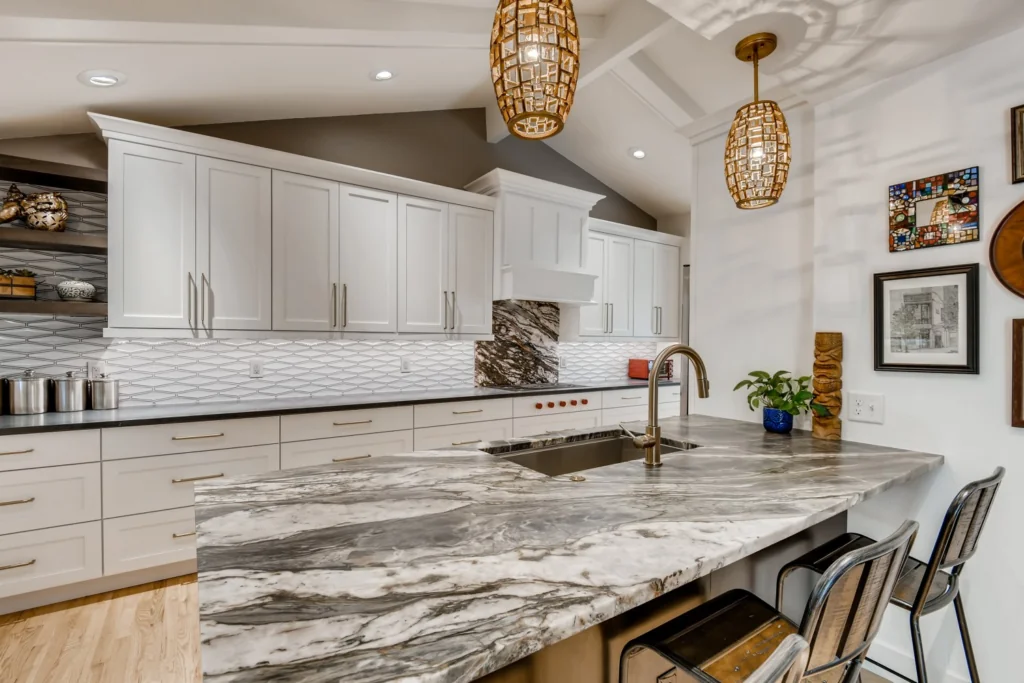
There’s no universal right answer here. It depends on your household.
Do you want zero maintenance and total consistency? Quartz wins that argument every time. Do you want a slab nobody else has, with real movement across the surface? Natural stone wins that one instead. Busy family kitchens often lean toward granite or quartz. Both hold up to daily abuse without much babysitting. Homeowners chasing a marble look without the marble price tag tend to land on dolomite.
Man-made countertops like quartz suit homeowners who want to set it and forget it. Natural stone suits homeowners who don’t mind a bit of upkeep in exchange for a slab that’s genuinely one of a kind.
Think about resale, too. Both engineered and natural stone read as upgrades to buyers. This particular decision usually comes down to your own daily habits. It’s rarely about what a future buyer might prefer. If you’re not sure yet, that’s normal. Most homeowners walking into our Pensacola, Pace, or Fort Walton Beach locations start the engineered vs natural stone conversation without a firm answer. They land on one after seeing actual slabs side by side, next to their own cabinet samples.
Key Differences Between Engineered and Natural Stone
| Factor | Engineered (Quartz) | Natural Stone |
| Sealing required | Never | Yes, periodic |
| Heat resistance | Good, but can scorch | Excellent (varies by stone) |
| Pattern consistency | Uniform, slab to slab | Unique, no two slabs alike |
| Scratch resistance | Excellent | Excellent, but softer stones like dolomite scratch easier |
| Acid/stain resistance | Impervious to acid | Can etch or stain if not sealed properly |
| Cutting directly on surface | Not recommended | Okay on granite/quartzite, dulls knives; avoid on dolomite |
| Best for | Low-maintenance kitchens | One-of-a-kind look |
At the end of the day, do what’s best for your kitchen. Not what’s trending, not what your neighbor picked, not what looks best in a magazine spread. Your countertop gets used every single day. The right choice is the one that fits how you actually live.
Countertop Installation Tips
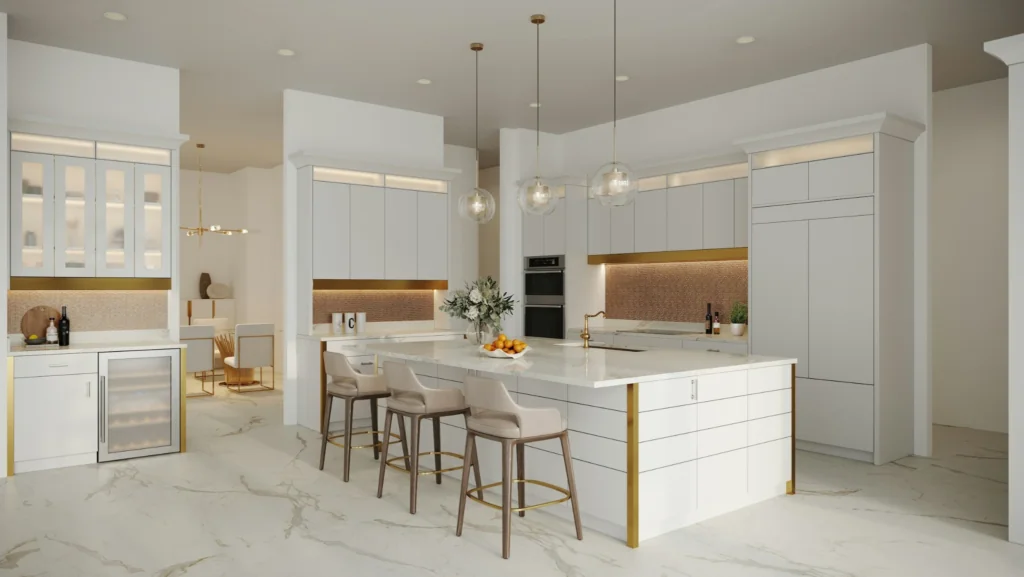
Picking the right material is only half the job. Countertop installation matters just as much, whether you go engineered or natural. A few real steps make the difference between a smooth project and a delayed one.
- Have someone with decision-making authority present during your template appointment. If nobody’s there to answer questions, Superior Granite has to reschedule, which pushes your whole timeline back.
- Make sure cabinets are fully set and level before our team arrives.
- Install any farm or apron sinks ahead of time.
- Give your salesperson the model numbers for your sink, faucet, range, and cooktop before your template visit. That one detail alone prevents a lot of avoidable delays later on.
- If you’re getting an undermount sink, plan to wait 48 hours after installation before scheduling your plumber.
Superior Granite’s goal across Pensacola, Pace, and Fort Walton Beach is to finish most installs in a single day, though unforeseen issues can sometimes call for a second trip.
What Our Customers Say
Don’t just take our word for it. Here’s what a real homeowner had to say about working with Superior Granite.
Paula Reichle, Google Review
“From the first meeting to the final installation, the entire process went perfectly. India was very informative and helpful with my many questions. Luis and Johnny did the installation and worked quickly, neatly, and the end product is beautiful. I absolutely love my new kitchen.”
To see more completed projects and read local reviews, visit our Google Business Profile. You can check out firsthand customer experiences and find your nearest showroom to start your kitchen upgrade.
Final Words
Engineered vs natural stone isn’t a competition with one winner. Quartz gives you consistency and zero upkeep. Granite, quartzite, and dolomite give you a one-of-a-kind slab with real character, in exchange for more care. Both hold up well when installed and maintained correctly. It really comes down to engineered vs natural stone preferences specific to your household, not a universal rule.
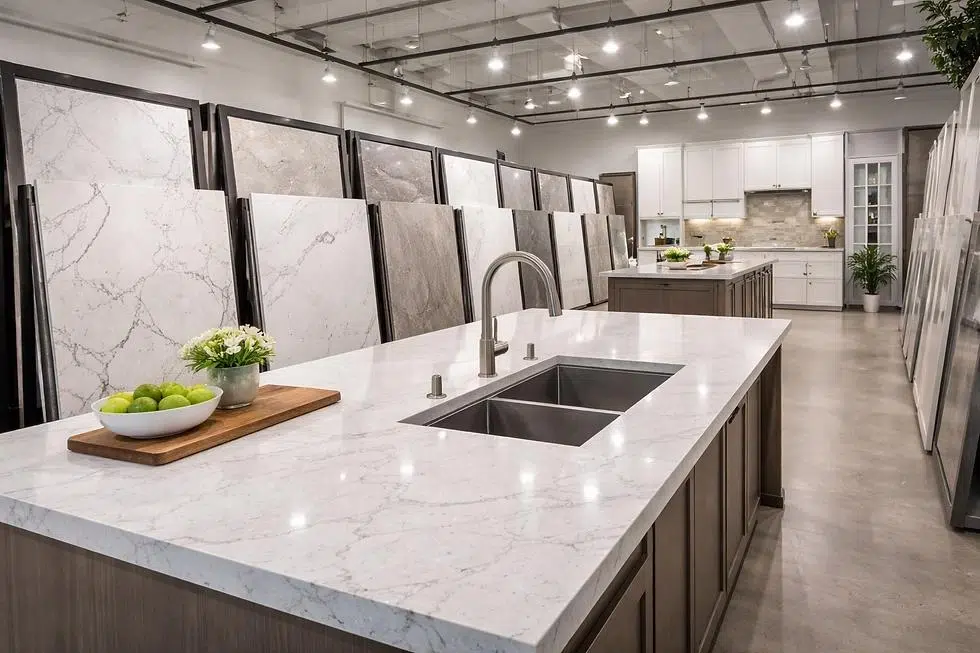
Ready to see both side by side? Visit a Superior Granite showroom in Pensacola, Pace, or Fort Walton Beach. Put your hand on the actual stone before you decide. Our team across all three locations can walk you through samples of each. We’ll answer questions about care and help you land on the option that actually fits your kitchen.
Pensacola, FL
Visit Us: 7011 Pine Forest Road, Pensacola, FL 32526
Call Us: (850) 941-0270
Hours: Monday – Friday: 8 a.m. – 5 p.m., Saturday: 9 a.m. – 2 p.m.
Pace, FL
Visit Us: 4590 Jernigan Road, Pace, Florida 32571
Call Us: (850) 994-1872
Hours: Tuesday – Friday: 9 a.m. – 5 p.m., Saturday: 9 a.m. – 2 p.m.
Fort Walton Beach, FL
Visit Us: 35 Miracle Strip Pkwy SW, Fort Walton Beach, Florida 32548
Call Us: (850) 301-0716
Hours: Tuesday – Friday: 8 a.m. – 5 p.m., Saturday: 9 a.m. – 2 p.m.
Contact us today to schedule a free consultation!
FAQs
1. Is engineered stone the same thing as quartz?
Yes. Quartz is the most common engineered stone product, made from crushed quartz crystal bound with resin.
2. Is natural stone more durable than quartz?
It depends on the stone. Quartzite is harder than quartz, but granite and dolomite vary. Quartz resists staining better without sealing. Sealed natural stone resists heat better, especially granite, which handles hot pans without a trivet.
3. Does quartz need to be sealed?
No. Quartz is non-porous by design. It never requires sealing, unlike granite, quartzite, and dolomite, all of which need periodic resealing to stay stain-resistant.
4. Which is cheaper, engineered or natural stone?
Pricing varies by material, availability, and slab size. Both can range widely depending on color and movement. Ask your fabricator for a quote based on the specific stone you’re considering.
5. Can I mix engineered and natural stone in the same kitchen?
Yes. Plenty of homeowners use quartz on an island and natural stone on perimeter counters, or the reverse, depending on use and look. There’s no rule against combining both in one space.