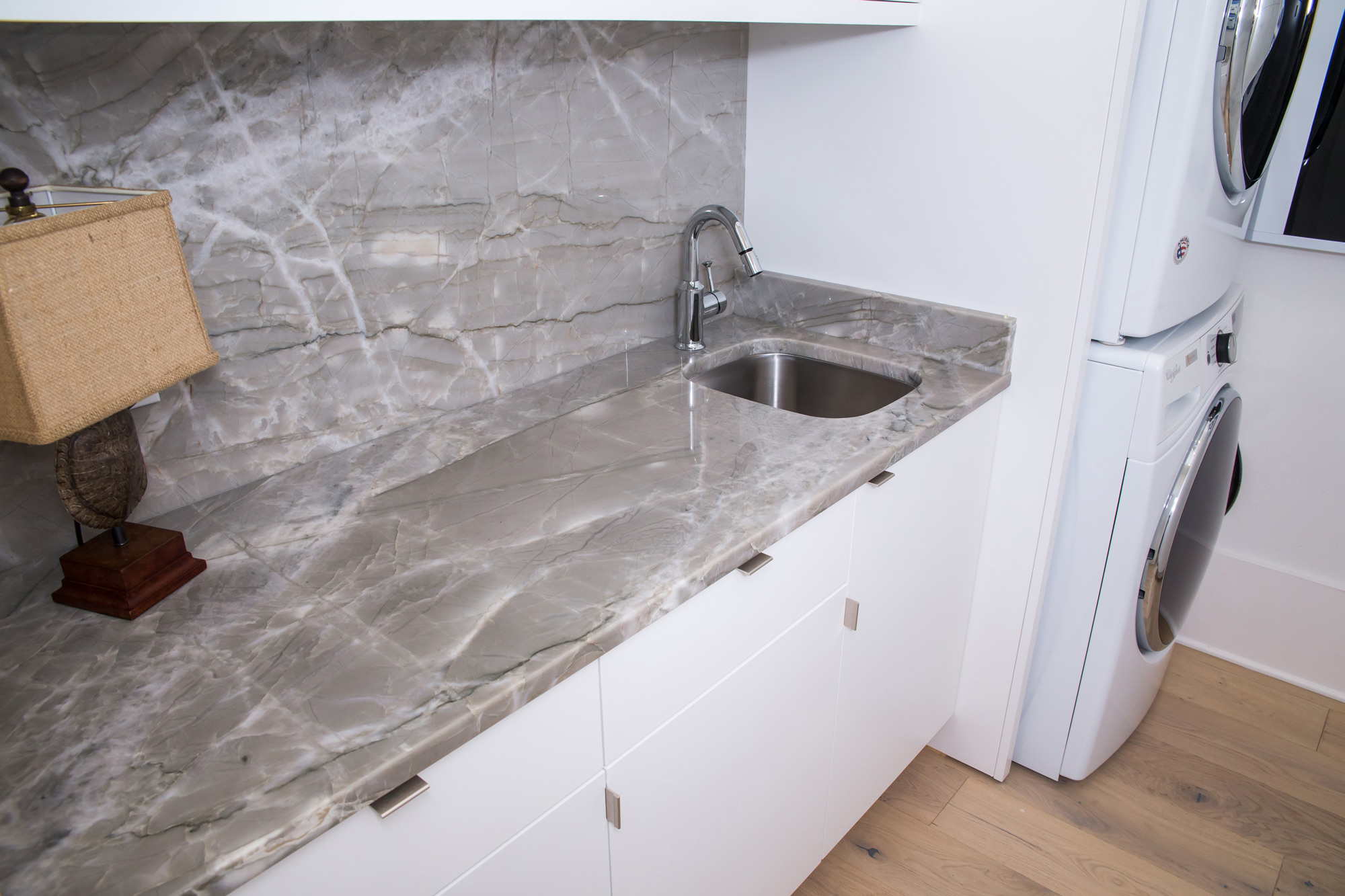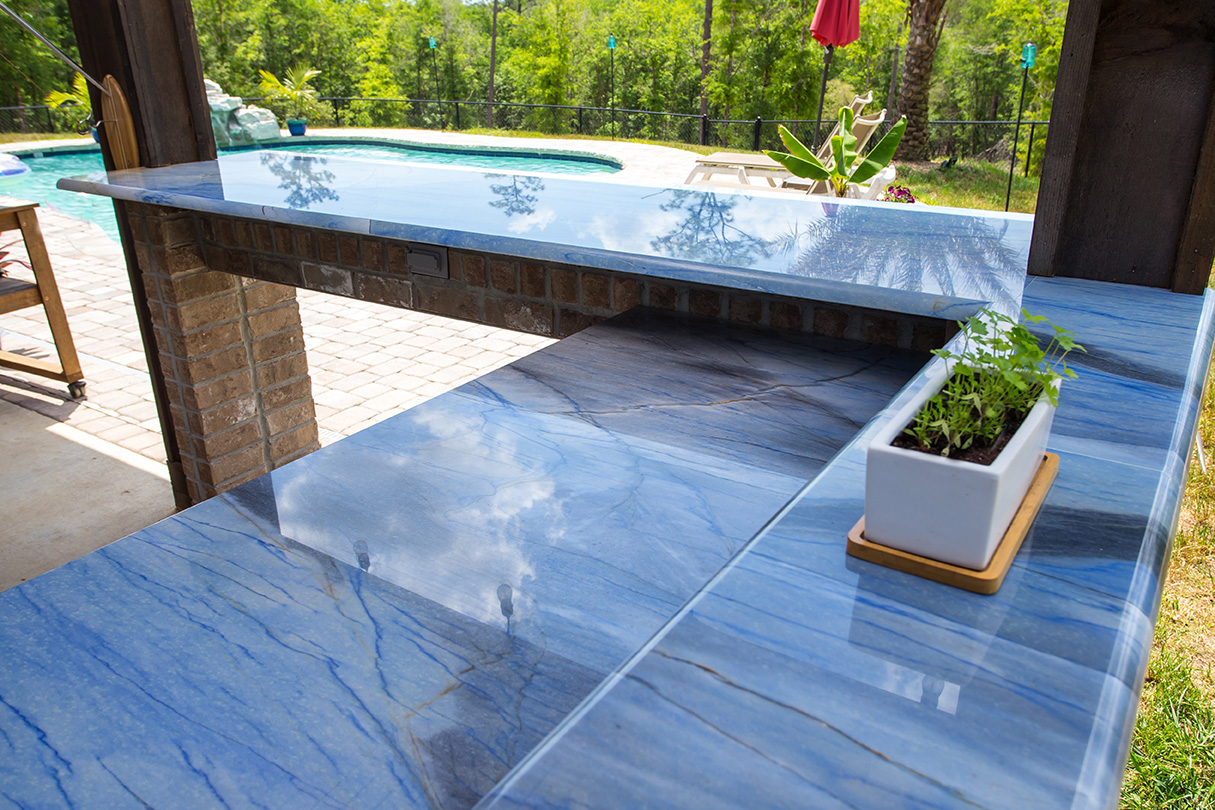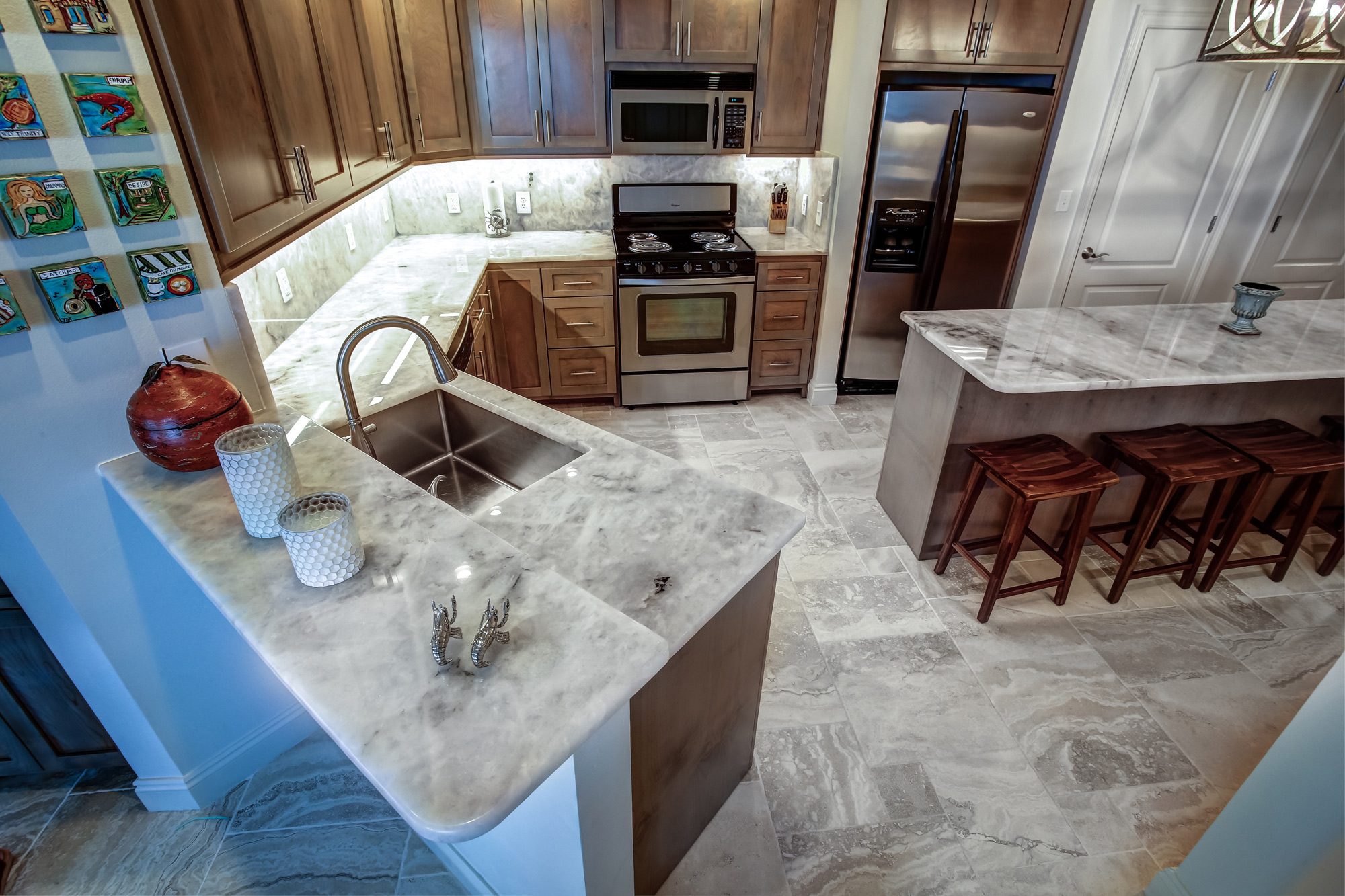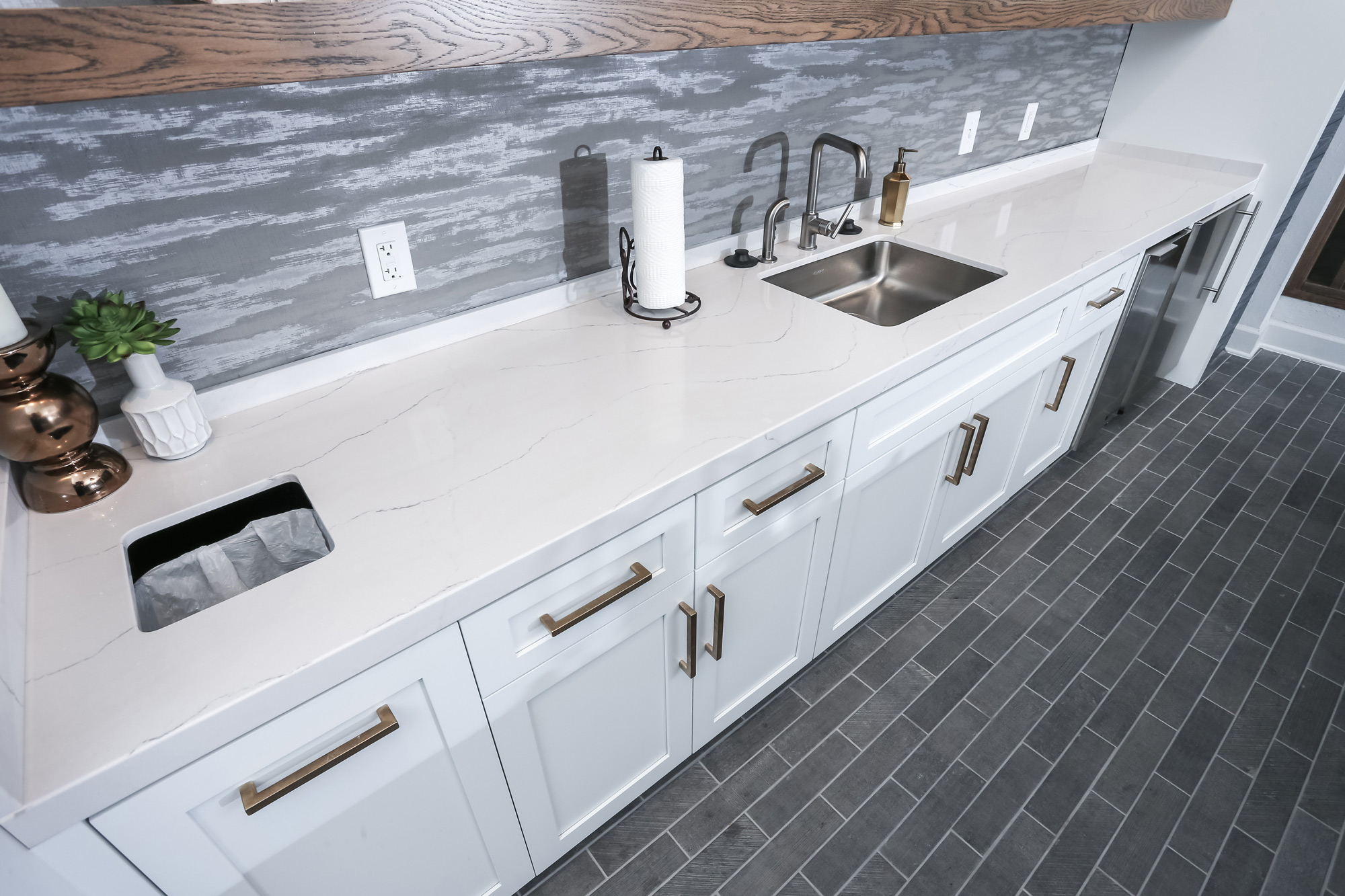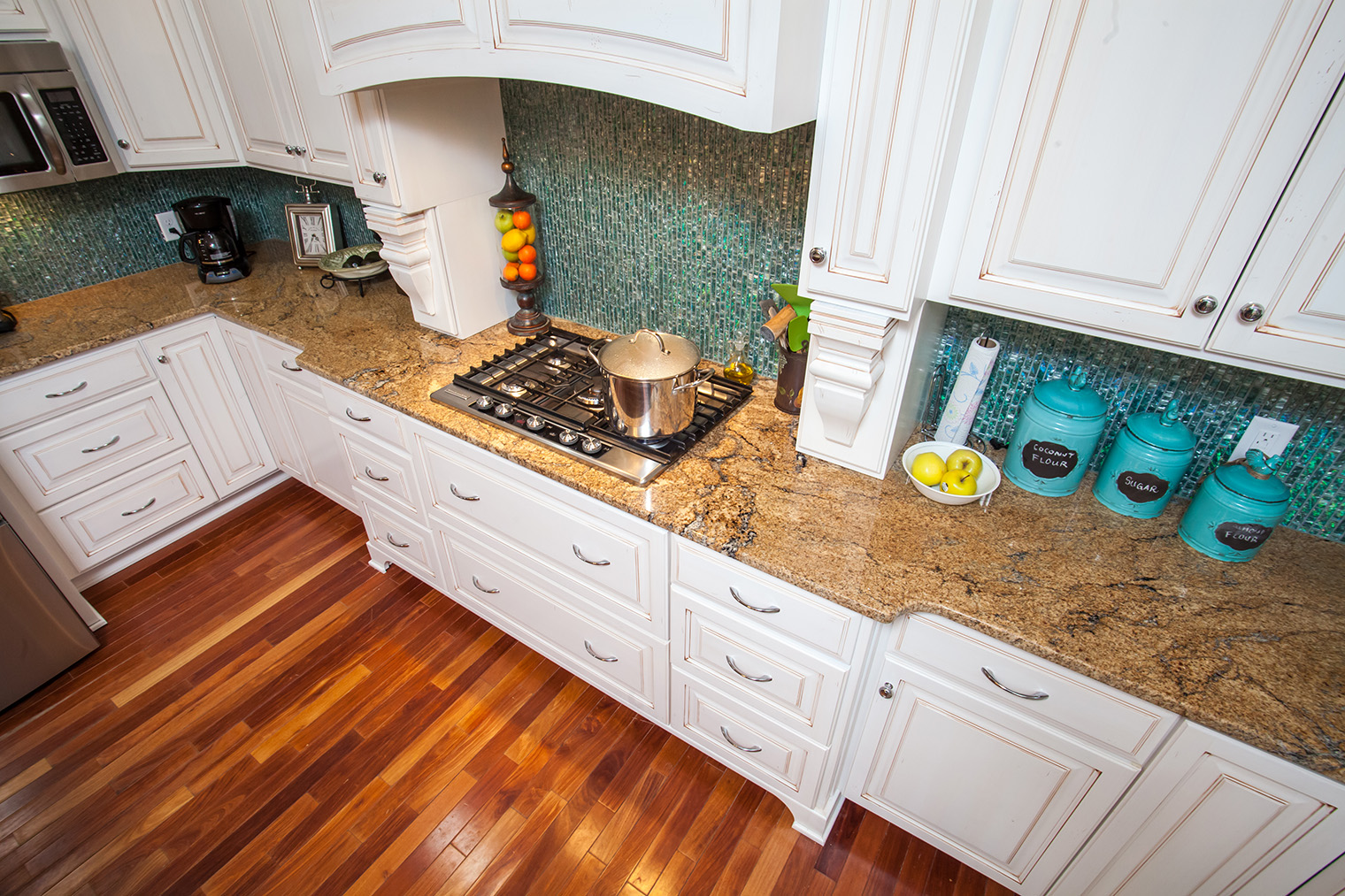
A countertop doesn’t just sit on your cabinets. The right one pulls the entire room together, sets the tone, ties the materials, and makes everything else feel intentional. The wrong one makes a beautiful kitchen feel like it’s missing something, even if you can’t put your finger on what.
Natural stone countertops do something no other material can. They bring organic texture, warmth, and a one-of-a-kind character that manufactured products simply can’t replicate. But picking the stone is only half the decision. The pairing is where most homeowners struggle.
What goes with white cabinets? Dark cabinets? Hardwood floors? Glossy tile? This guide answers all of it, clearly and practically. At Superior Granite, we’ve helped hundreds of Gulf Coast families get this right, and the difference between a good pairing and a great one almost always comes down to a few simple rules.
Why Natural Stone Changes a Room
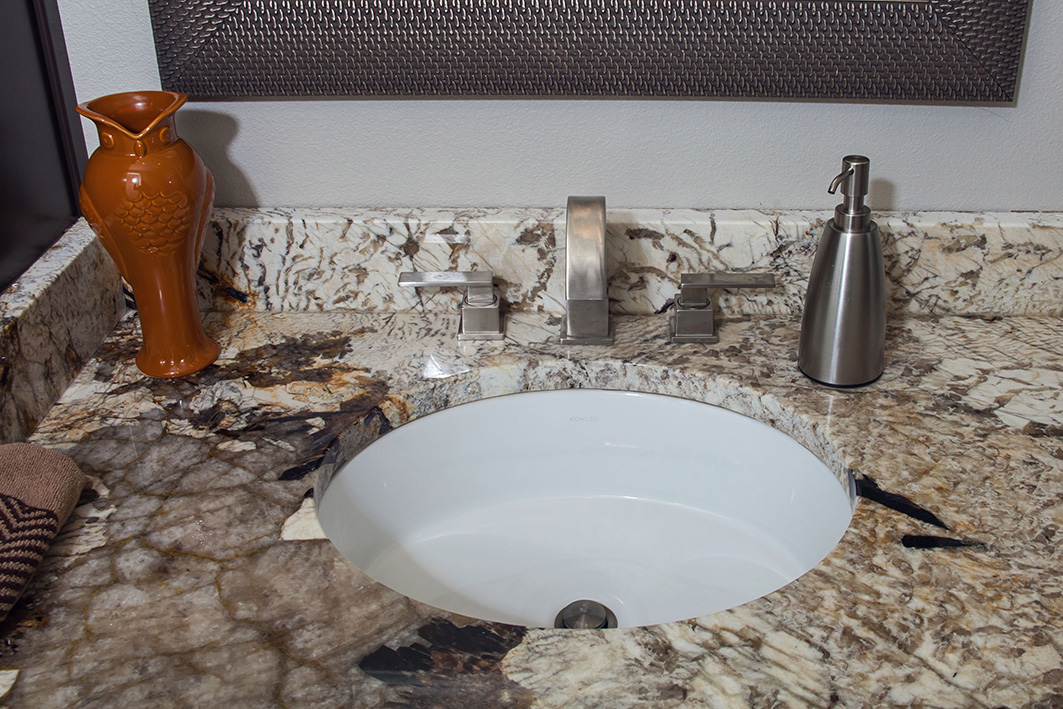
No manufactured material replicates the organic warmth of natural stone. The texture, the depth, the way light moves across the surface- it’s genuinely in a different category from laminate, tile, or anything engineered. Every slab is unique, and that individuality is exactly what gives a room character that photographs beautifully and feels even better in person.
Book-matched slabs take it further: two slabs cut from the same block, mirrored so the veining flows seamlessly from one piece to the next. Natural stone also increases home value in a way buyers immediately notice. Unlike trends, it doesn’t age the same way; granite or quartzite that looked stunning twenty years ago still looks stunning today.
Start Here: The One Rule That Makes Every Pairing Work
Before any pairing decision, you need to understand one thing: undertones. Every stone and every cabinet carries a temperature, warm or cool, even when it’s not immediately obvious.
Warm stones
Granite with gold, brown, or red veining. Quartzite with cream and caramel tones. Limestone with its earthy, sun-bleached warmth. These pair naturally with warm wood cabinets, cream, beige, and honey tones.
Cool stones
Grey marble, white quartzite with silver veining, sleek porcelain. These sit beautifully alongside grey, navy, sage, and crisp white cabinets.
Once you know your stone’s temperature, you have two directions to go:
- Contrast: dark stone with light cabinets, or vice versa. Creates drama and visual impact. The most striking kitchens usually work this way.
- Complement: stone and cabinets in the same tone family. Creates calm, cohesive sophistication. Harder to get wrong, beautiful when done well.
Both work. What doesn’t work is ignoring undertones entirely and picking based on colors in isolation. Always test your stone sample in the actual room under real lighting before making a final call.
Pairing Stone With White Cabinets
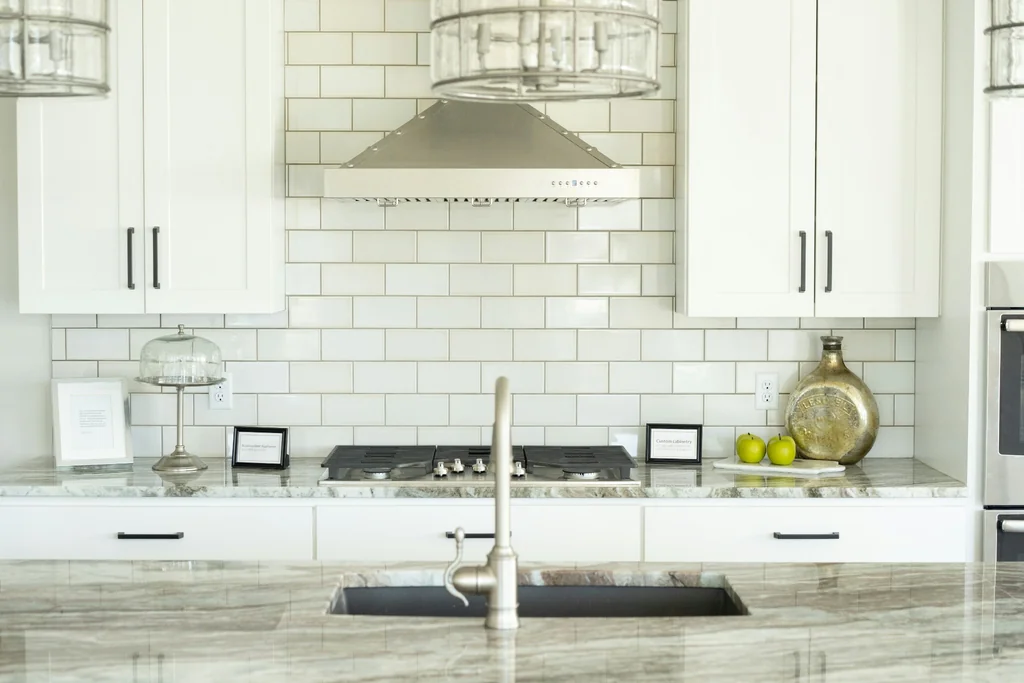
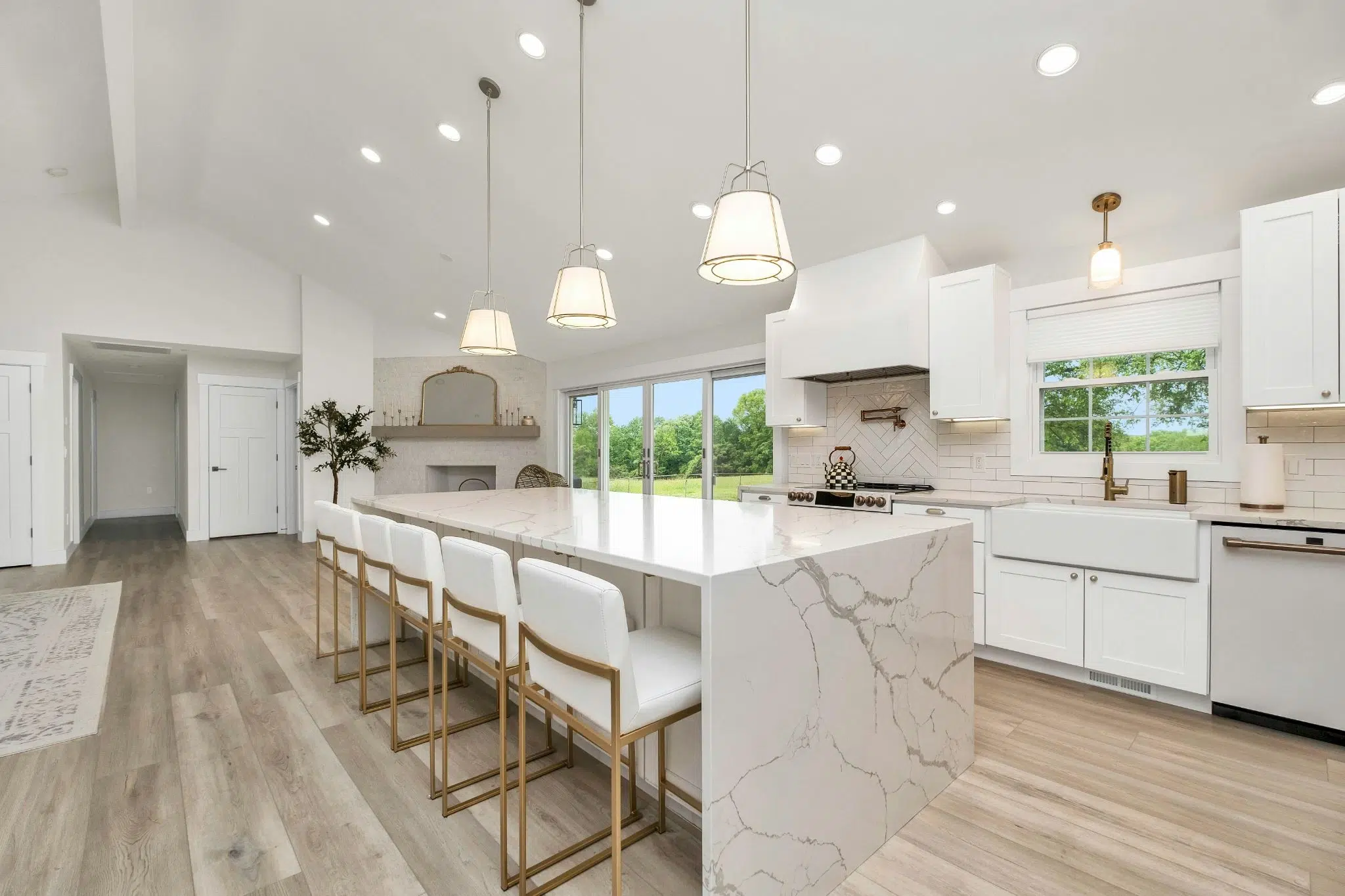
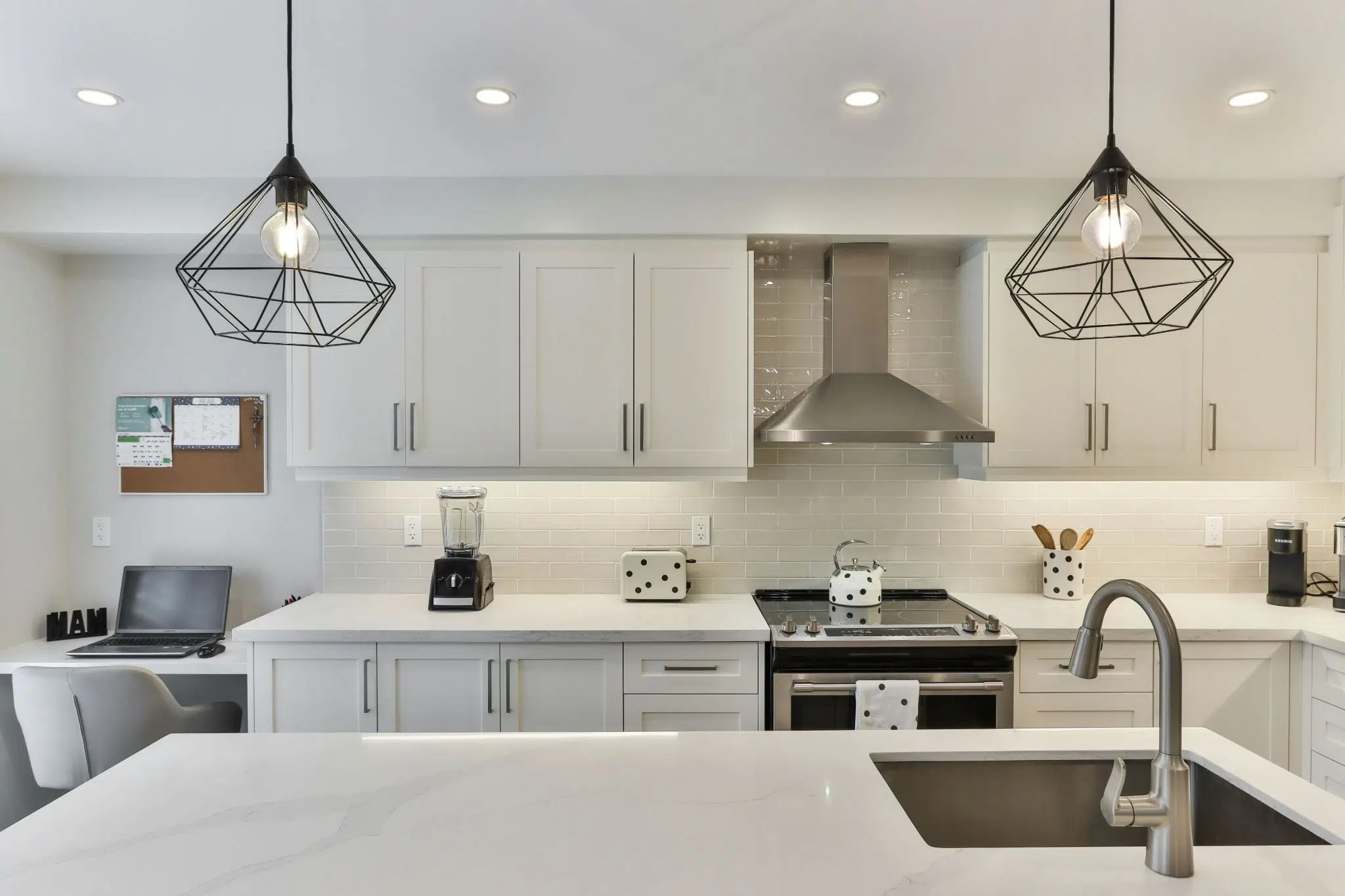
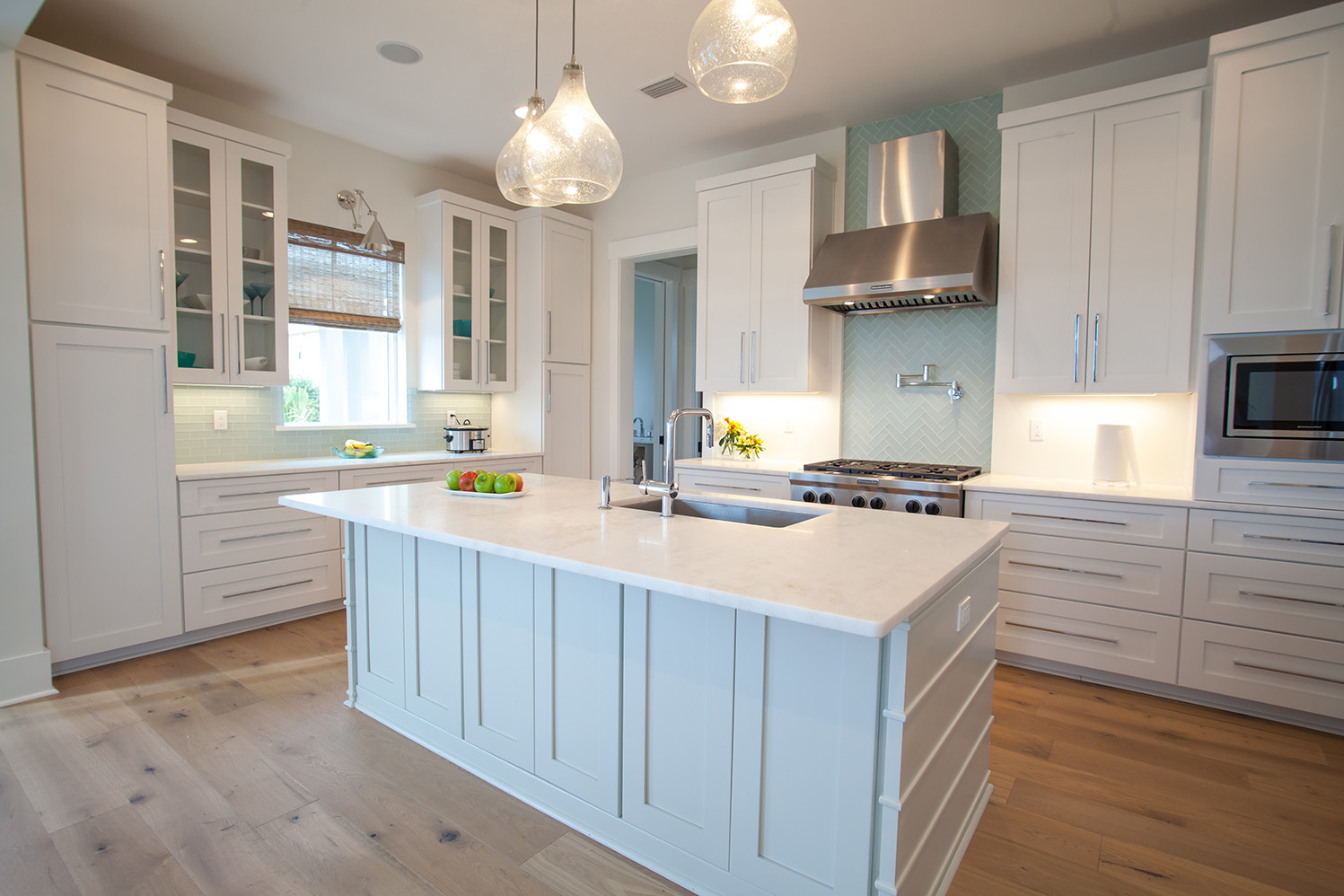
White cabinets are the most versatile starting point in any kitchen. They work with almost any stone, which is exactly why the decision still matters. The stone you choose against white cabinets sets the entire personality of the room.
Best options:
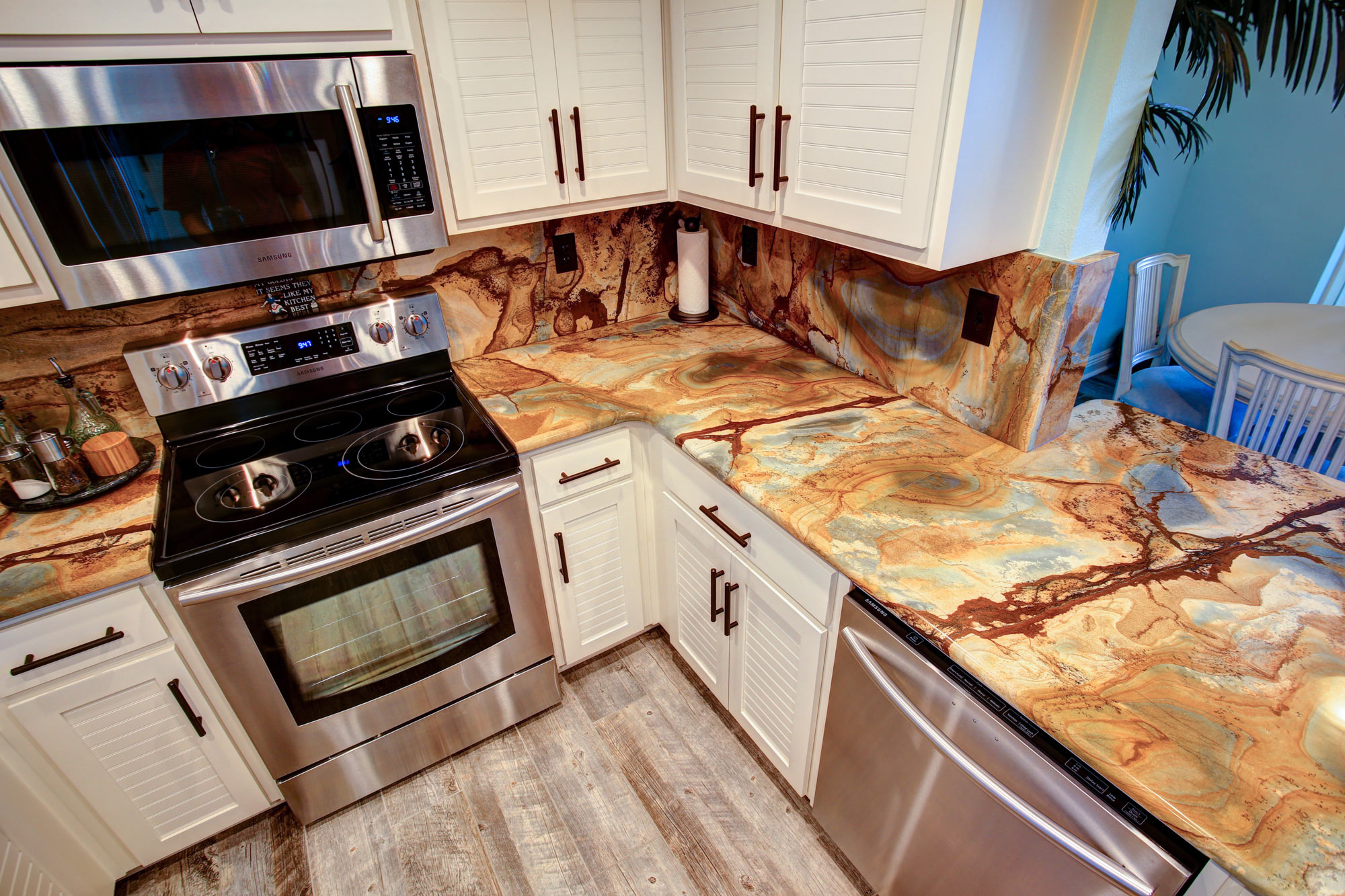
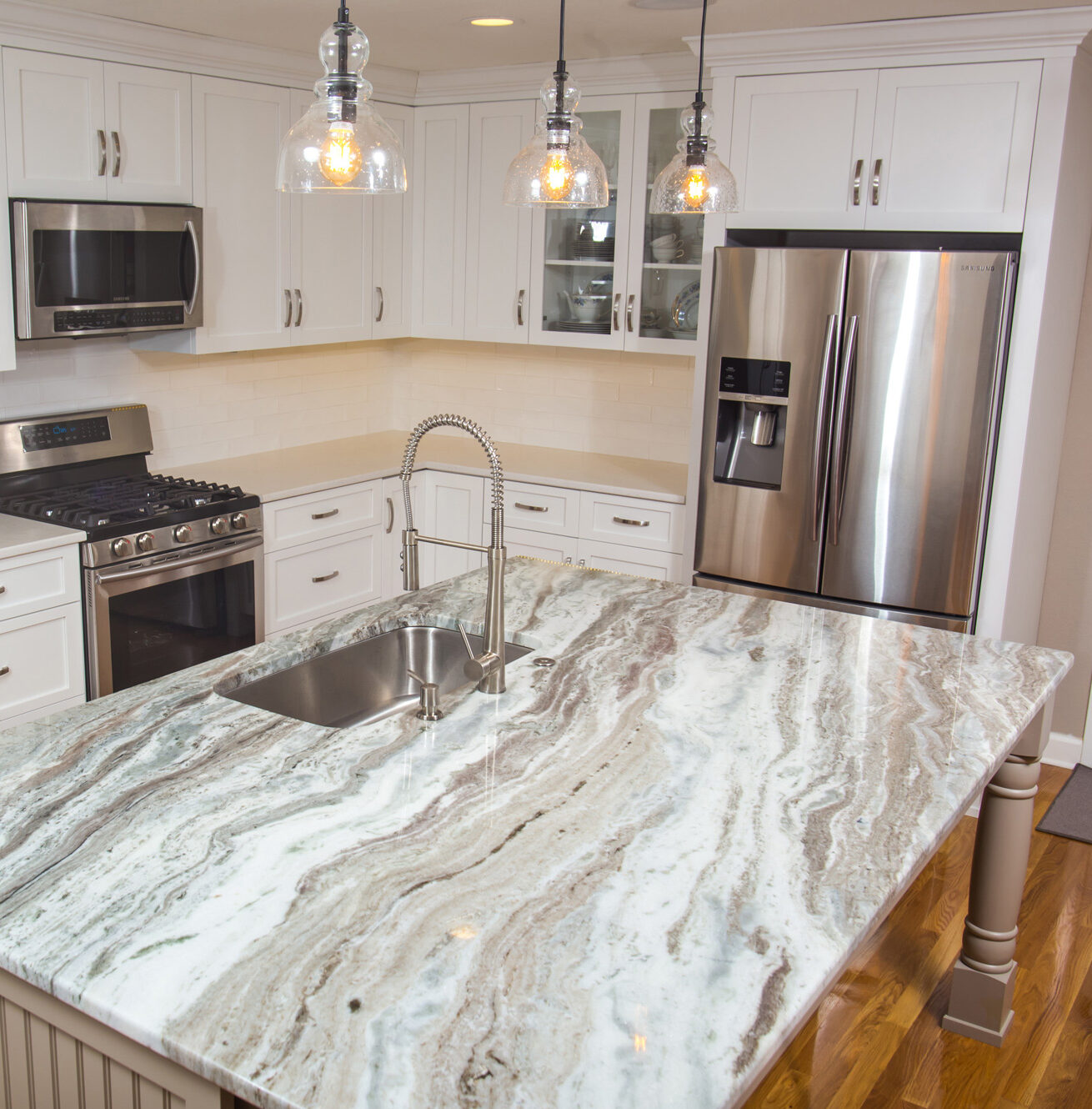
- Dark granite: bold veining pops dramatically against white. One of the most striking pairings available. The contrast is clean, modern, and genuinely impressive.
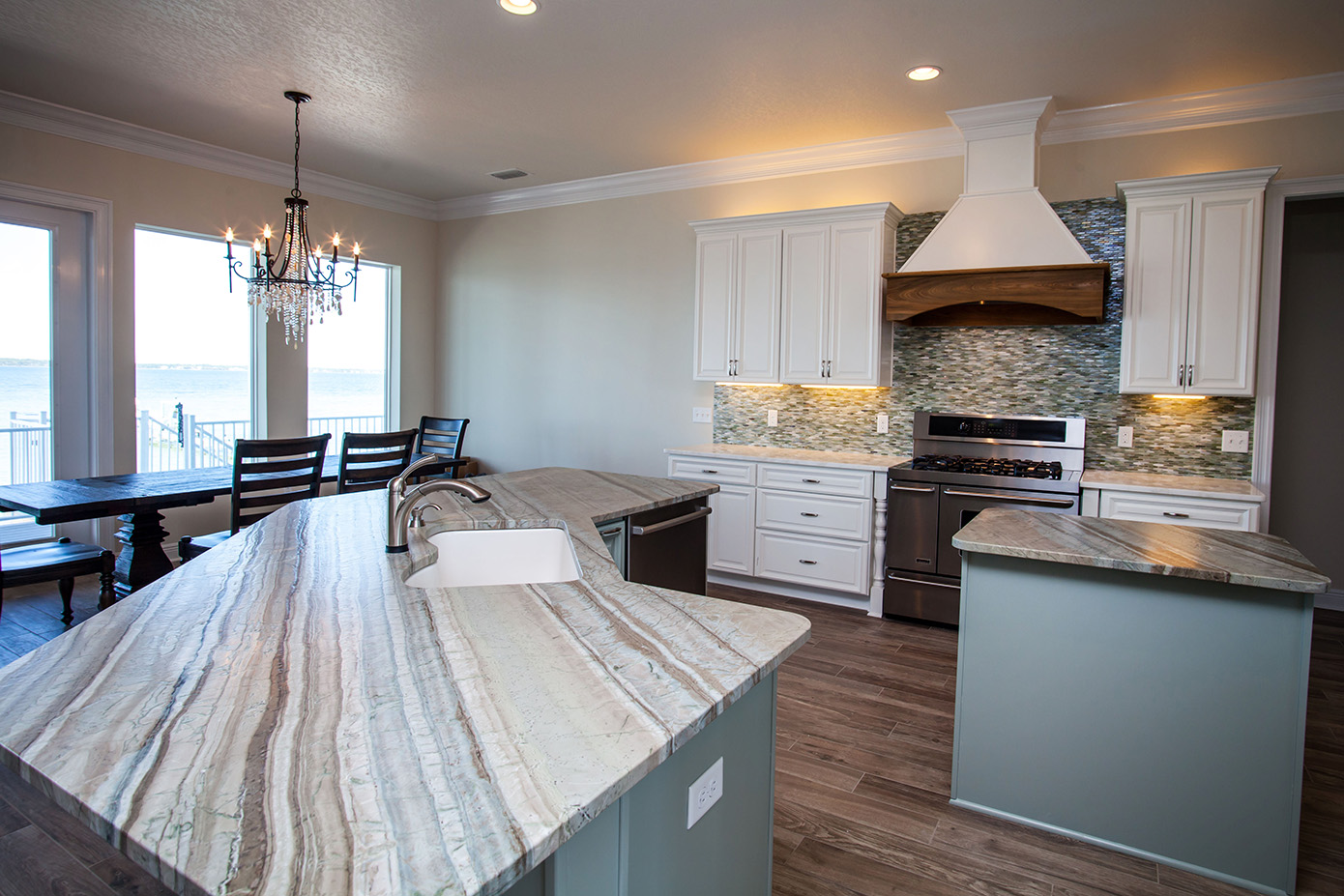
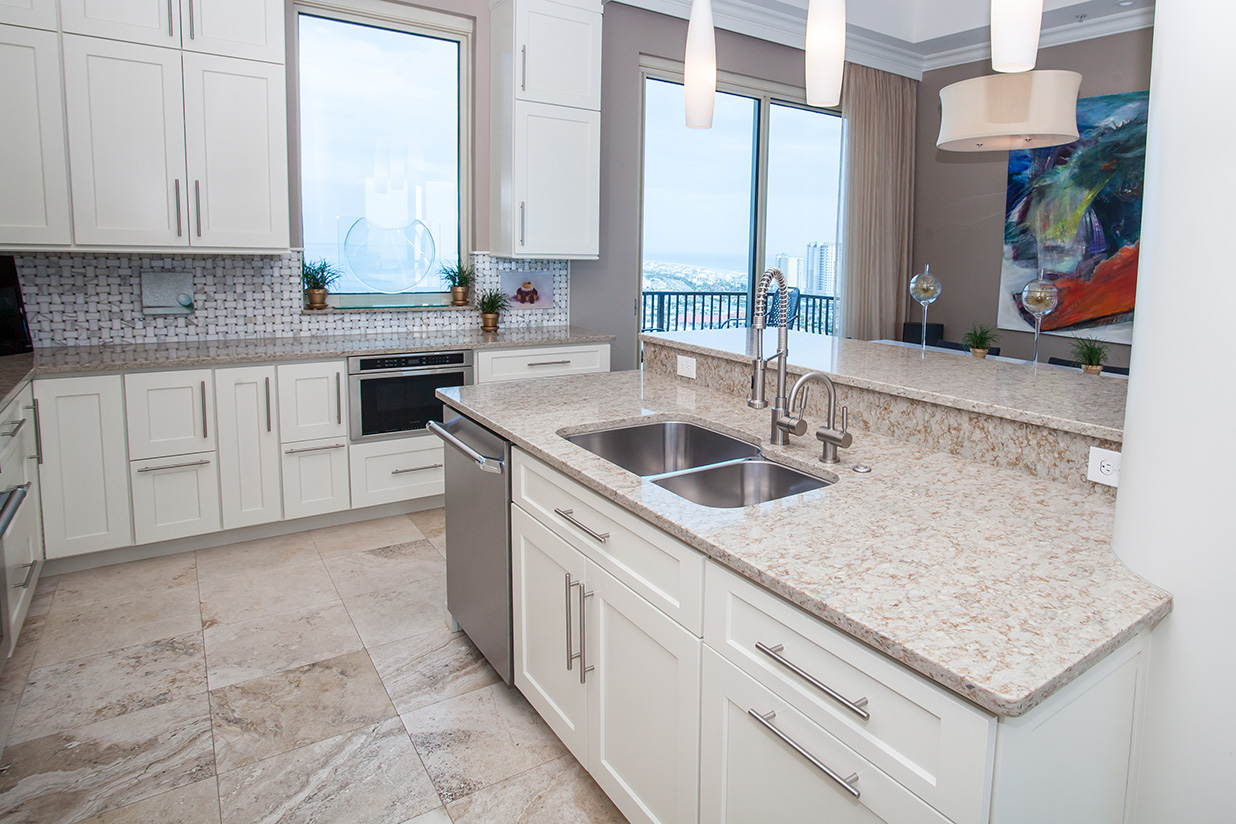
- Quartzite: lighter varieties give you a soft, airy marble look without the vulnerability of actual marble. Beautiful against white, easy to maintain.
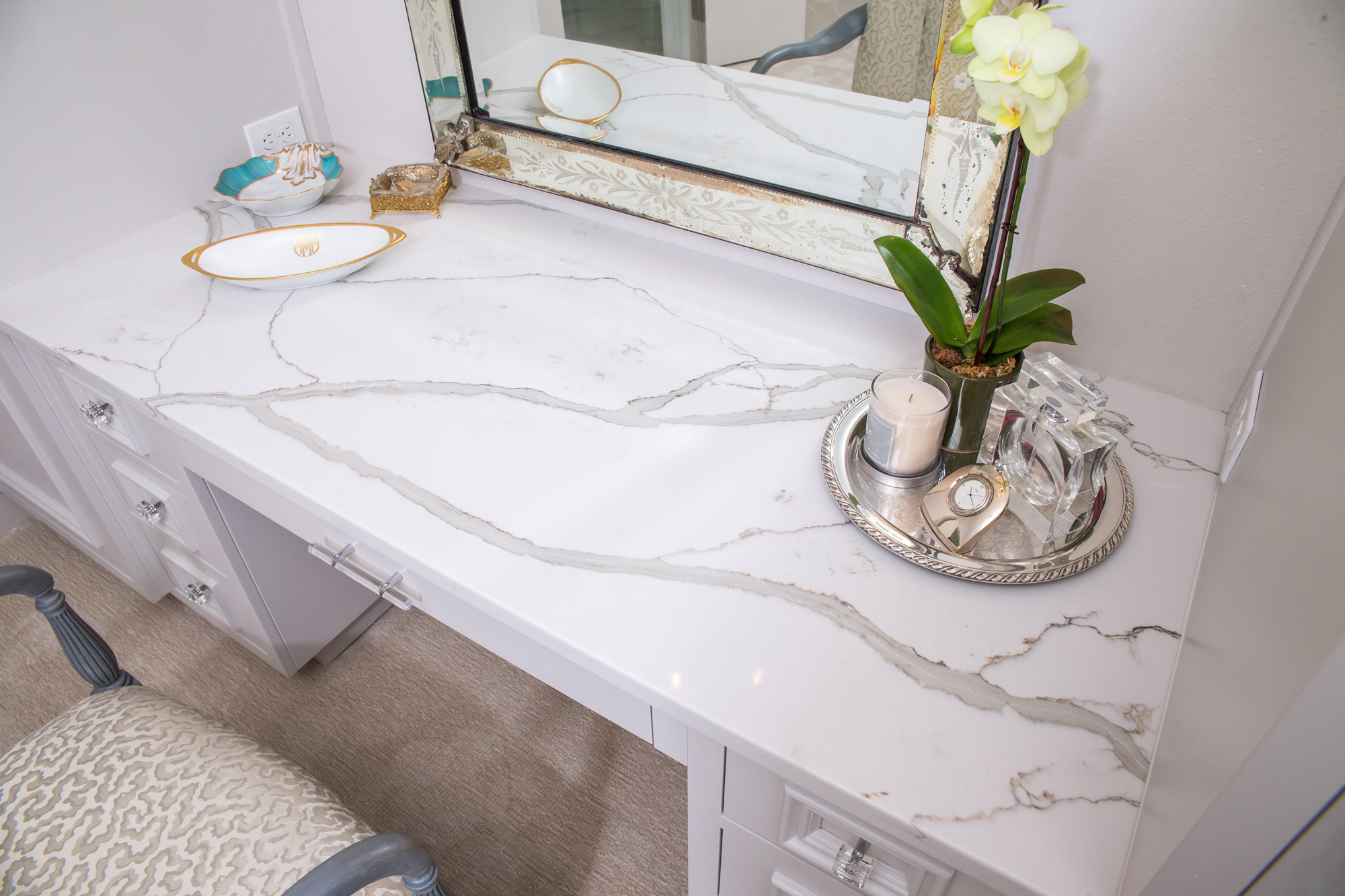
- Marble: the classic white-on-white pairing. Delicate veining against crisp white cabinets is timeless and genuinely hard to fault aesthetically.
- Dolomite: understated elegance. The white and grey tones complement the white cabinets beautifully without competing with them.
One detail that makes a real difference: glossy white cabinets pair better with a matte stone finish. Matte white cabinets pair better with a polished stone that adds some reflective contrast.
Calcite in a busy kitchen. It looks beautiful against white cabinets, but it etches in under 20 minutes when it comes into contact with acids. Save it for a bathroom vanity where it can be appreciated safely.
Homeowners looking at natural stone countertops in Pensacola consistently gravitate toward this pairing: white cabinets with a bold granite or soft quartzite, and it works beautifully in both modern and traditional kitchens.
White Granite Countertops: Pros and Cons and Design Ideas
Pairing Stone With Dark Cabinets
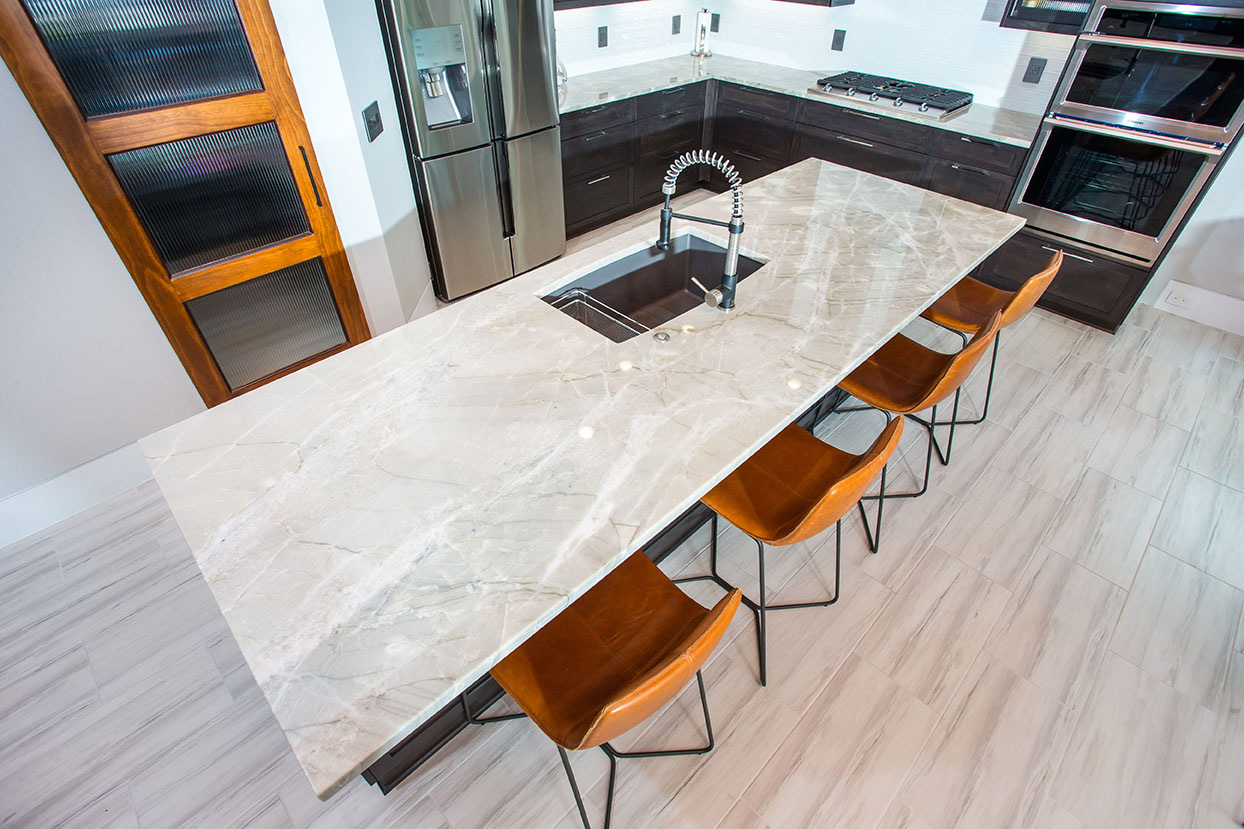
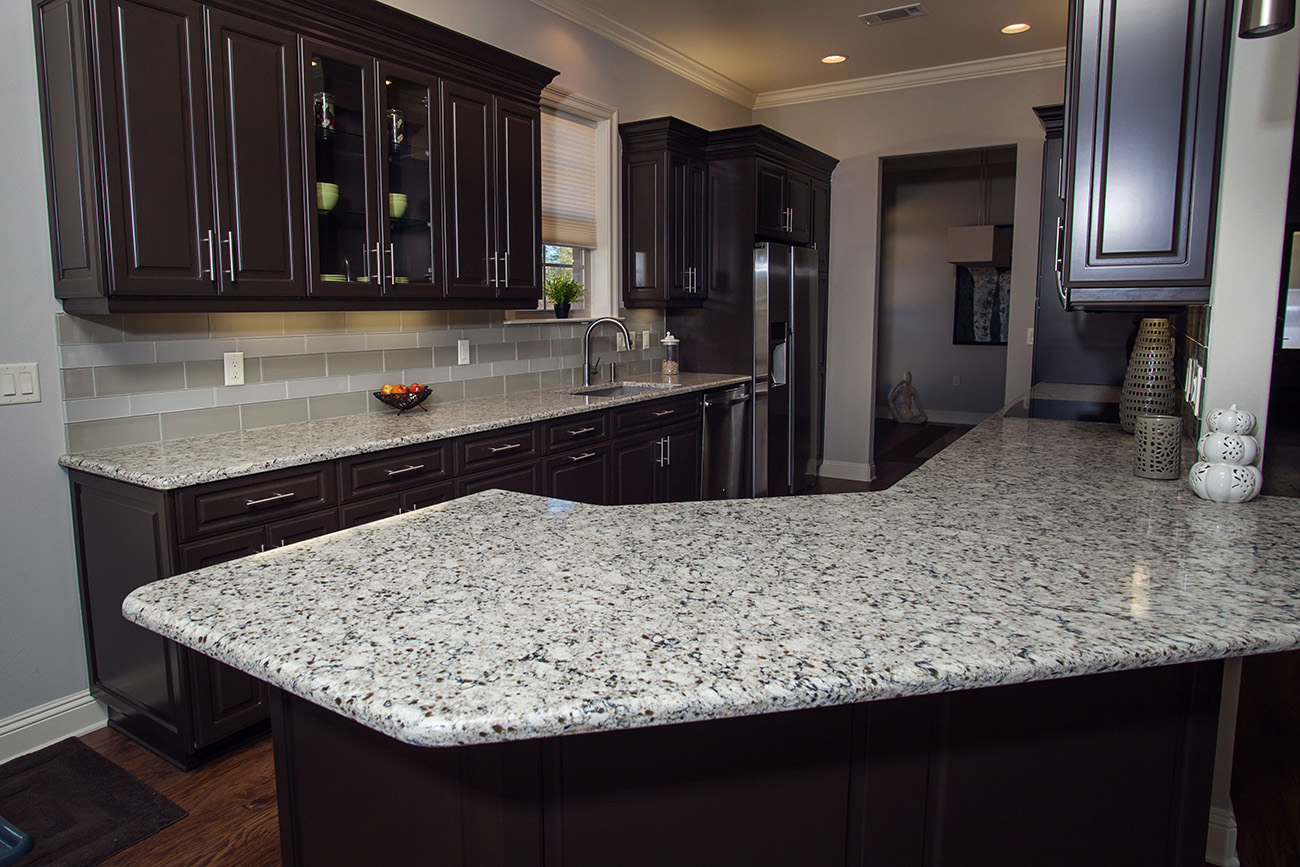
Dark cabinets need a countertop that holds its own. A stone that blends in too much loses its impact. A stone that clashes creates tension. The sweet spot is a stone that contrasts intentionally or echoes the cabinet’s depth with lighter veining.
Two approaches that always work:
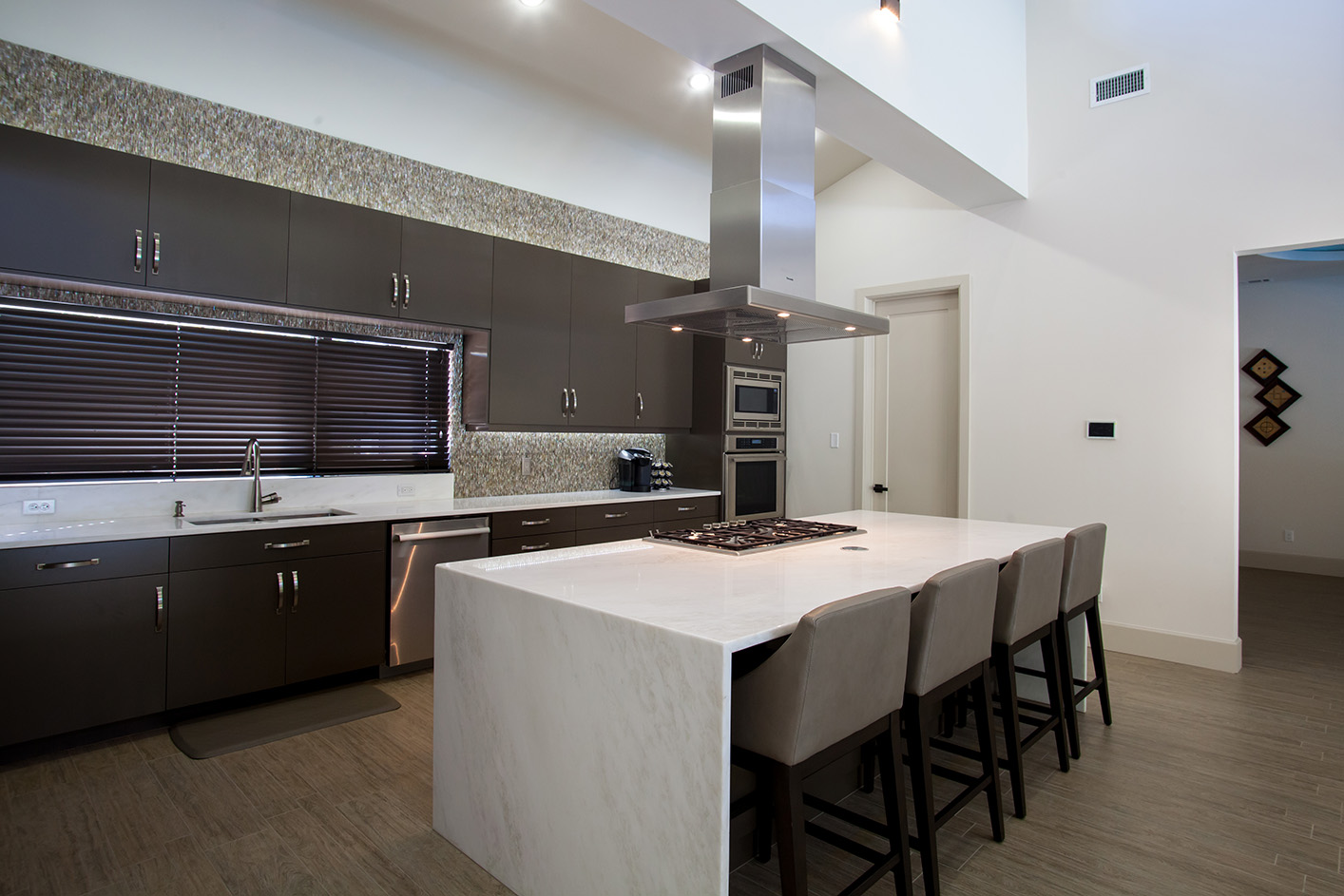
- Contrast: light stone against dark cabinets is one of the most striking design moves in any kitchen. White or cream quartzite against navy or charcoal cabinetry is a combination that consistently stops people in their tracks.
- Tone echo: dark stone with lighter veining against dark cabinets. The stone sits in the same family as the cabinet, but the veining gives it visual lift. Sophisticated, intentional, and quieter than full contrast.
Best options:
- White or cream quartzite: stunning against navy, charcoal, or dark grey. Harder than granite, marble-like appearance without marble’s demands.
- Light granite: warm beige tones against espresso or dark cherry cabinets. Rich, grounded, and timeless.
- Marble: white veining against dark cabinets is a classic luxury pairing. Best suited for lower-traffic kitchens or bathrooms where it can be properly maintained.
Dark stone with dark cabinets in a small room. Without enough natural light, the combination can feel closed in and heavy. Save it for larger kitchens with good light.
For homeowners choosing granite countertop installation in Pace, FL, with dark cabinetry, lighter granite varieties with warm veining consistently deliver the best results.
Pairing Stone With Real Wood Cabinets
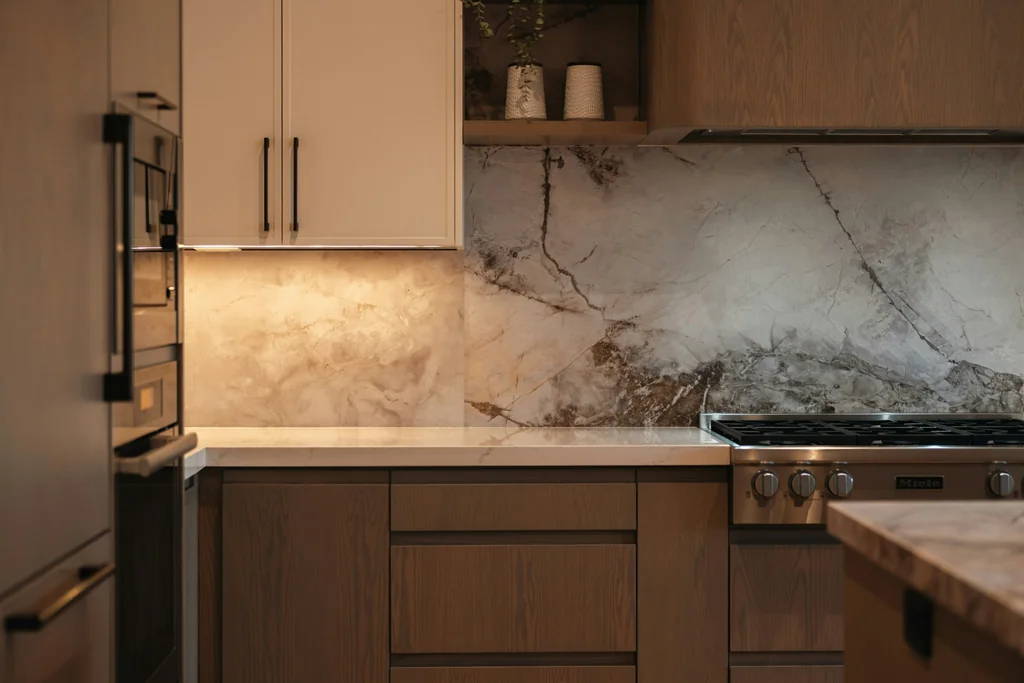
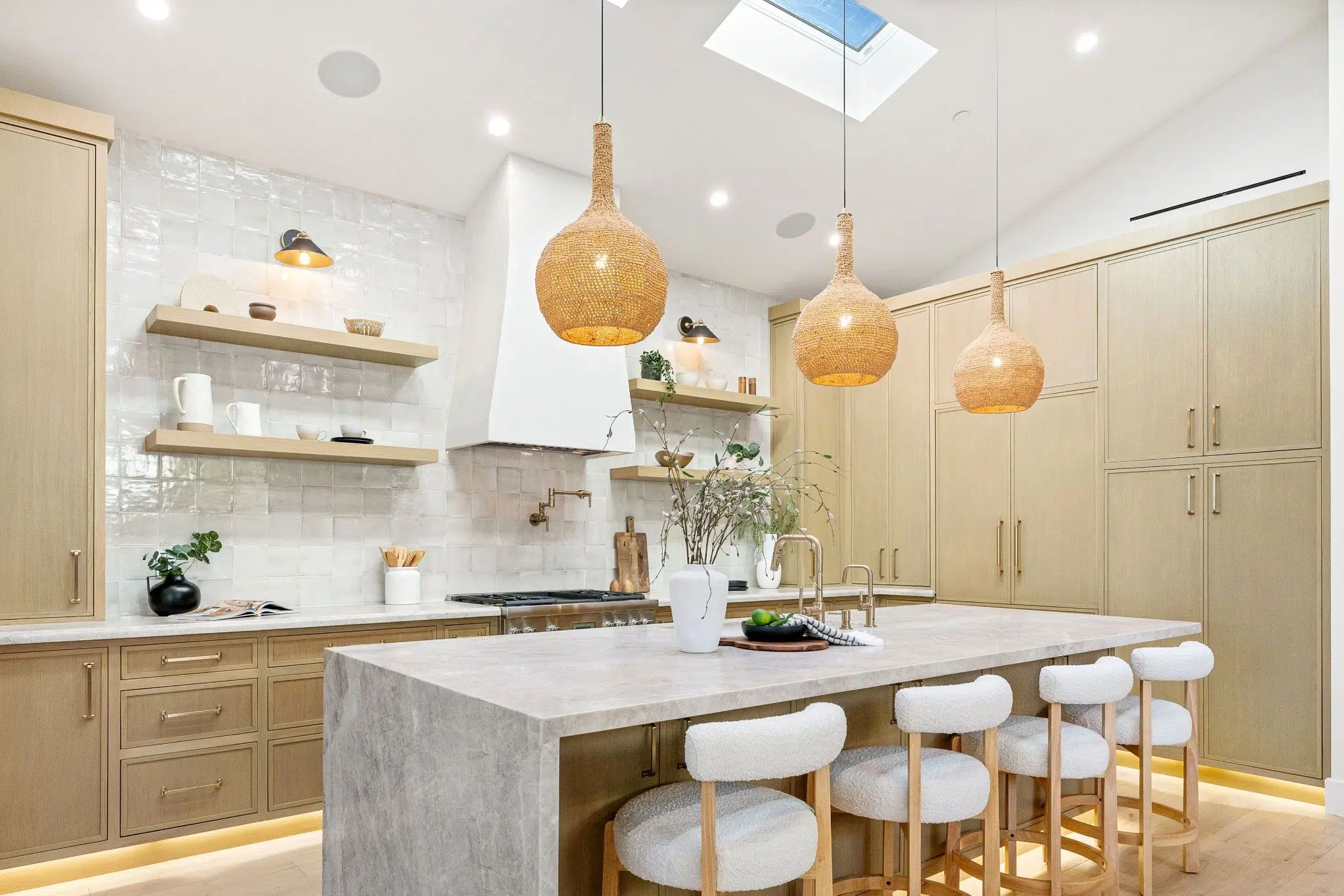
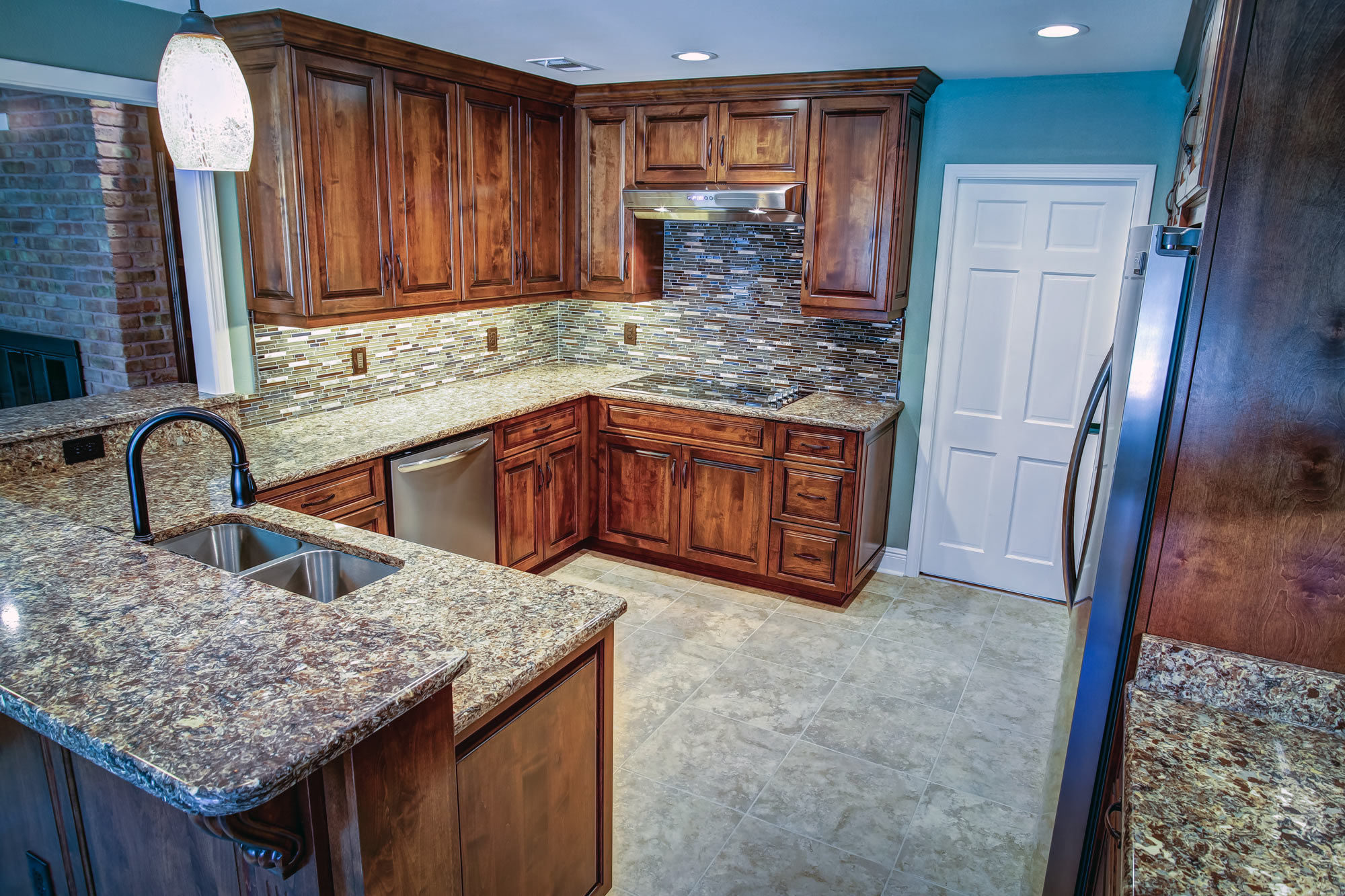
Wood and stone are the warmest, most organic combination in any kitchen. Both are natural materials; both have texture and variation, and when paired correctly, they create a room that feels genuinely alive, not designed.
The key rule here is straightforward: match the warmth. Wood is a warm material almost universally. Stone should sit in the same temperature family.
Best pairings by wood type:
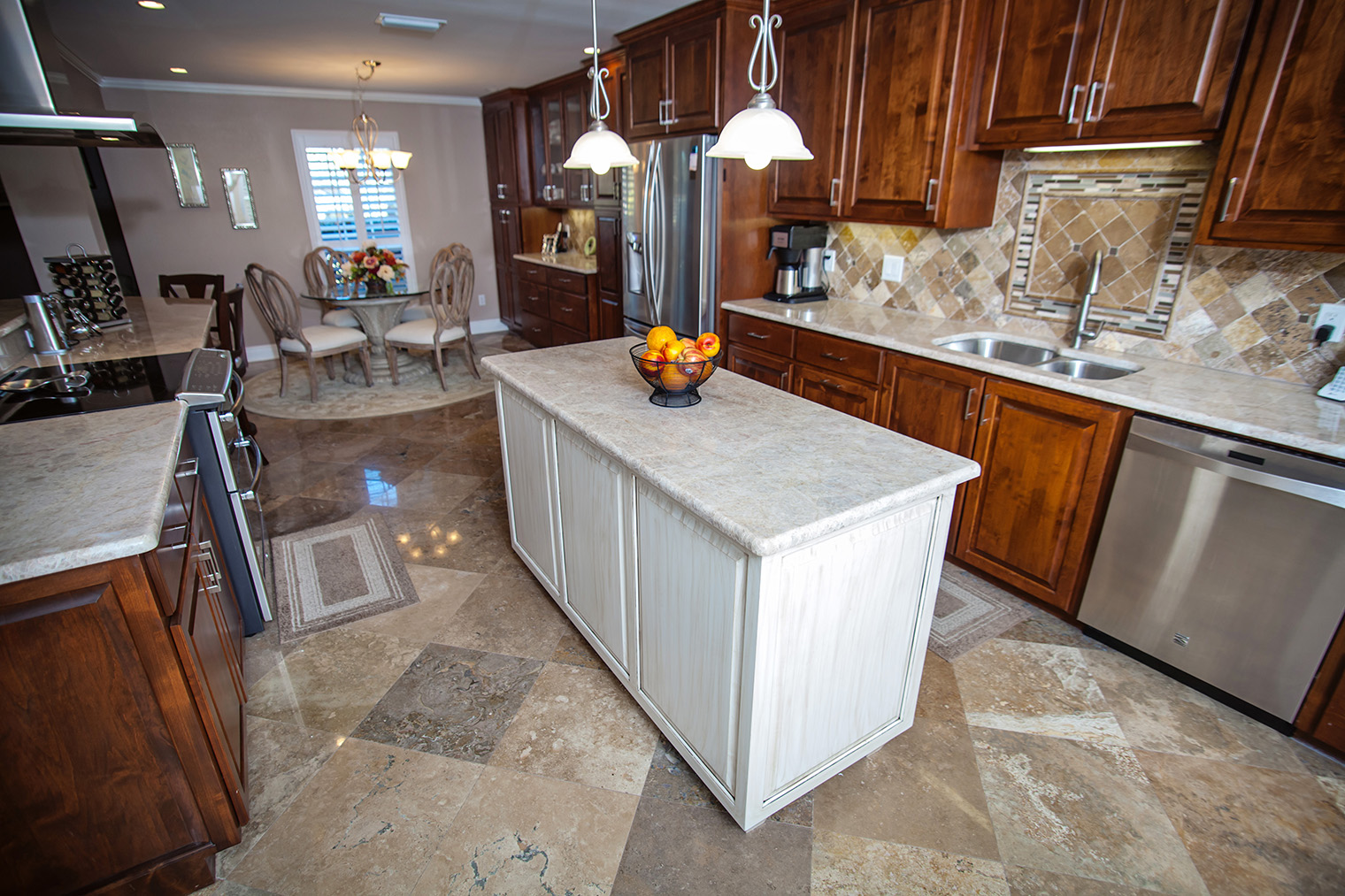
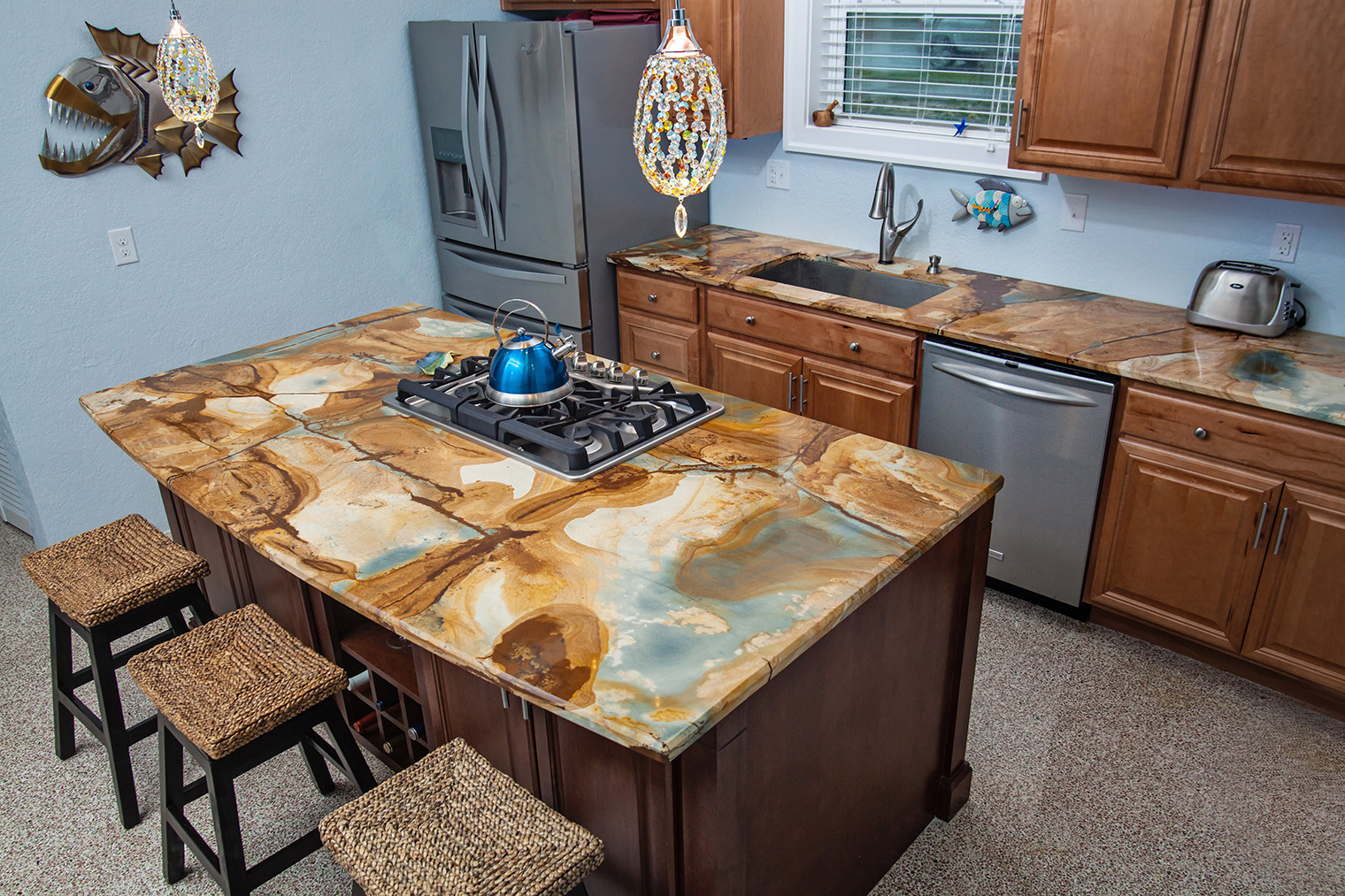
- Honey oak or maple: warm beige or gold granite, lighter quartzite varieties. The stone echoes the warm tone of the wood without competing with it.
- Cherry or walnut: dark granite with gold or caramel veining. Rich, dramatic, and genuinely luxurious. The combination feels expensive without trying.
- Painted wood: follow the white or dark cabinet rules depending on the paint color.
Stones that pair best with wood:
- Soapstone develops a rich patina over time that matures from light grey to deep charcoal. It ages alongside real wood in a way that feels completely natural and intentional.
- Limestone’s warm, matte, earthy tones mirror the natural warmth of wood grain. Perfect for that relaxed, organic look that’s especially popular in Gulf Coast Florida homes.
- Warm granite is nearly impervious to heat, can be cut directly on it, and it seals once a year. The most practical choice for a wood-cabinet kitchen that takes real daily use.
This pairing is especially popular with homeowners choosing the best countertops in Fort Walton Beach. The natural material combination suits the Gulf Coast’s relaxed, warm interior style perfectly.
Pairing Stone With Hardwood Floors
The floor is one of the largest surfaces in any kitchen, and it has a direct relationship with the countertop. Get this pairing right, and the whole room feels balanced. Get it wrong, and something always feels slightly off, even if you can’t identify exactly what.
Three rules that make it simple:
- Light stone + dark hardwood: balanced, grounded, sophisticated. The dark floor anchors the space and prevents the stone from feeling like it’s floating.
- Dark stone + light hardwood: open, bright, statement-making. The light floor keeps the room feeling airy while the dark stone provides visual weight.
- Busy veining stone + simple hardwood: let the stone be the focal point. Neutral beige or grey floors step back and let the natural pattern of the stone take center stage.
Best specific pairings:
- White quartzite + dark walnut floors: luxury contrast that feels high-end without being overdone. One of the most popular combinations in premium kitchen renovations.
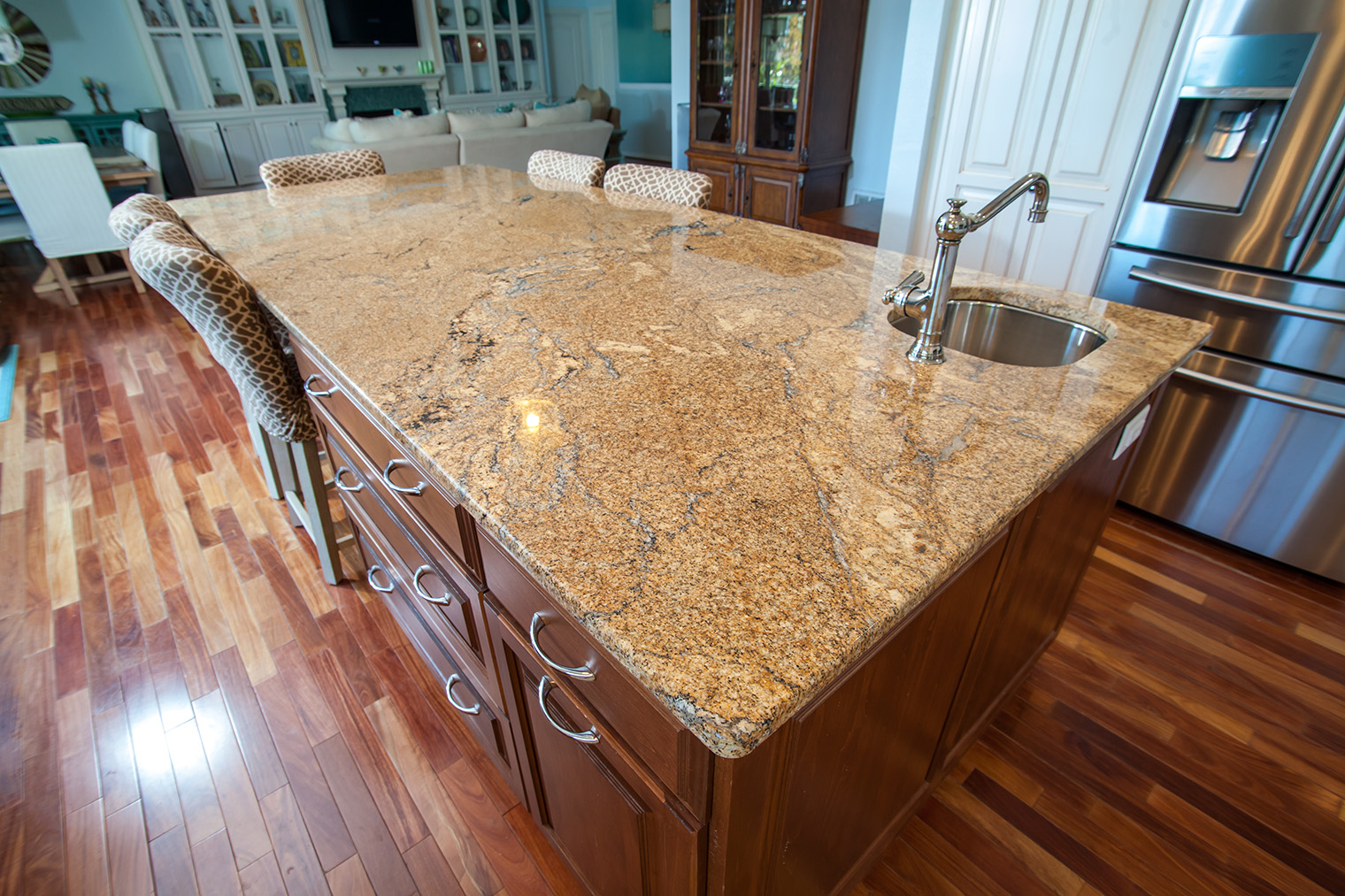
- Warm granite + oak hardwood: classic, timeless, consistently warm. The kind of kitchen that feels good to be in, regardless of what’s happening around it.
- Soapstone + wide plank hardwood: rustic, organic, coastal. Both materials develop character with age, which makes this combination better over time.
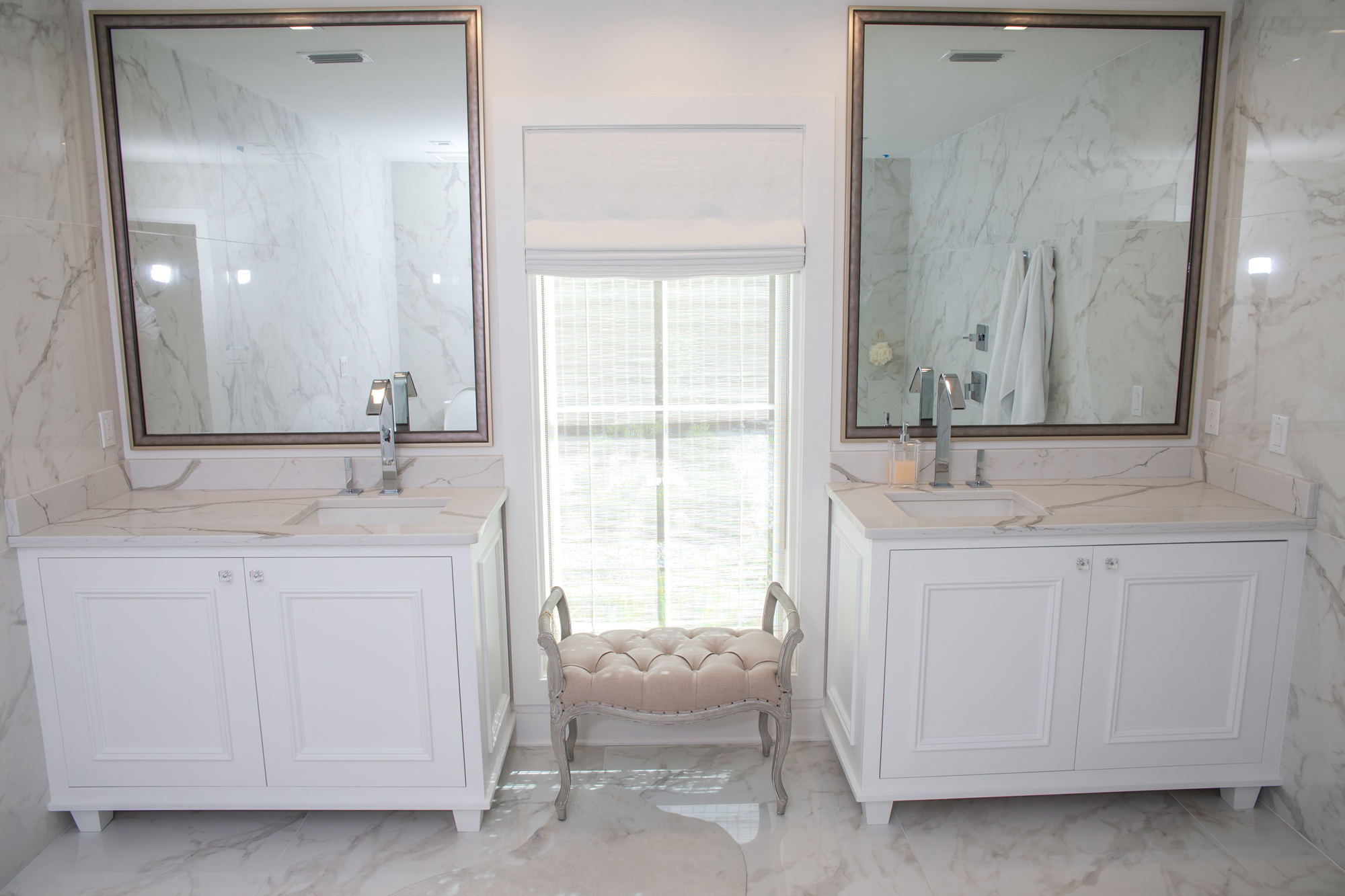
- Marble + light maple floors: bright, airy, elegant. Works beautifully in bathrooms and lower-traffic kitchen areas.
Matching stone and floor in the same tone. The room loses depth, and the countertop disappears visually. Always aim for some contrast between the two.
Pairing Stone With Glossy Tile
The most common kitchen combination is a stone countertop plus tile backsplash, and the most common mistake is trying to make both elements equally dramatic. One needs to lead. The other supports.
Stone as the star:
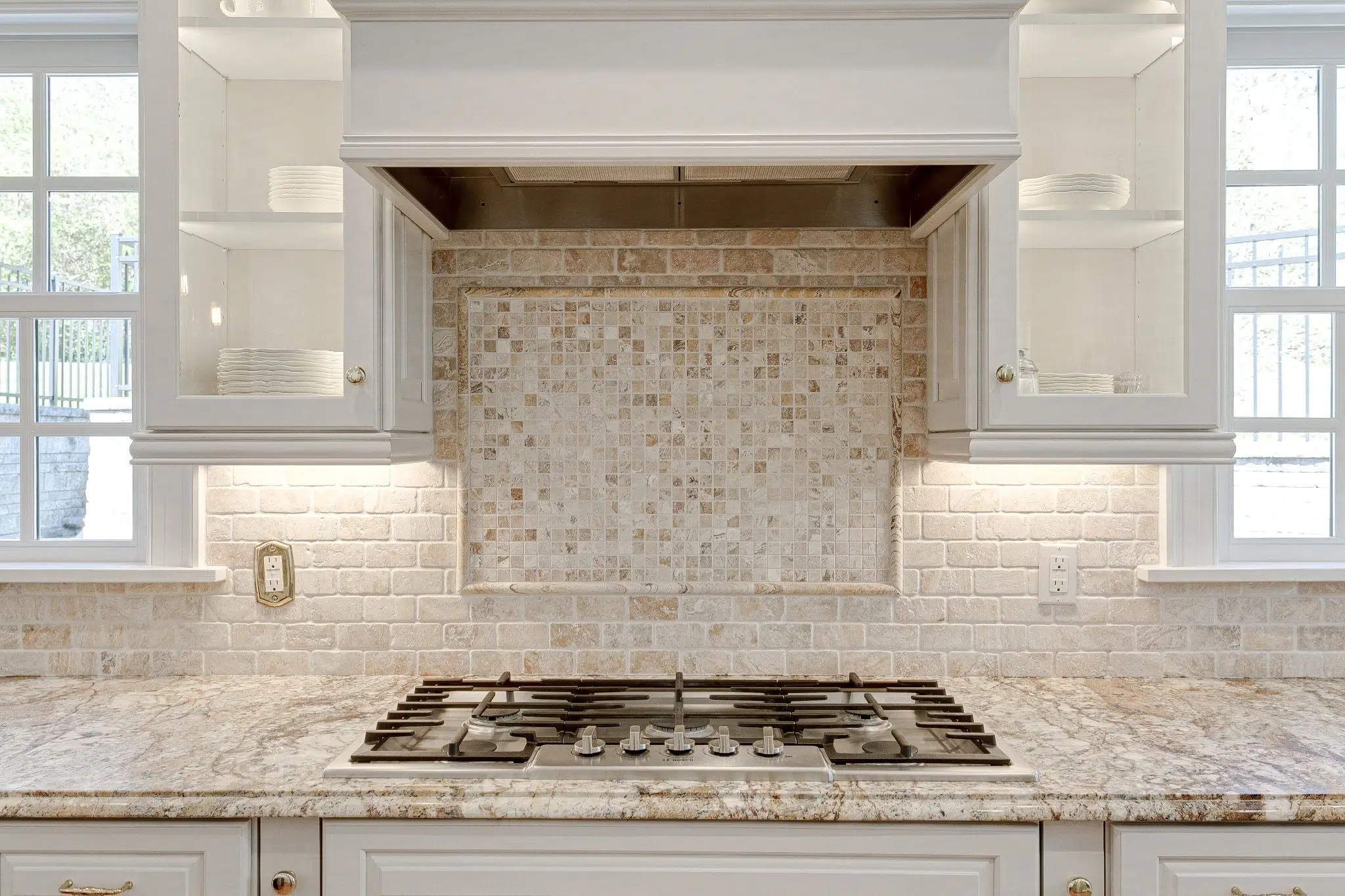
Choose a subtle, neutral tile: white subway, light grey mosaic, or simple ceramic. The tile frames the stone without competing with it. The veining, color, and character of the stone get full attention. This is the right approach when you’ve invested in a genuinely beautiful stone.
Tiles as the star:
Choose a simpler, more solid stone, honed granite, basic quartz, or porcelain with a clean pattern. Let the bold tile take center stage while the stone provides a calm, grounded base.
Best pairings:
- White marble + white glossy subway tile: the classic combination. Timeless, elegant, and almost impossible to get wrong.
- Dark granite + white glossy tile: high contrast, modern, and dramatic. The white tile reflects light and prevents the kitchen from feeling heavy.
- Quartzite + handmade ceramic tile: warm, artisanal, and perfect for the Gulf Coast aesthetic. Both materials have an organic quality that works beautifully together.
- Porcelain countertop + bold patterned tile: modern and completely low-maintenance. No sealing is required on either surface.
One detail worth knowing: grout color changes the feel significantly. Dark grout with light tile and light stone adds more definition and contrast. Light grout keeps everything softer and more cohesive.
Which Stone Works Where: A Simple Guide
Here’s a clean reference for every stone we carry, what it pairs best with, and where it genuinely belongs.
Granite
The most versatile pairing stone available. Works with any cabinet color, any floor type, any tile choice. Nearly impervious to heat; hot pans directly on the surface, no problem. Can be cut without damage. Seal once a year. The right answer for any busy kitchen that needs both beauty and performance.
Quartzite
Marble look with granite-level durability. Sits at a 7 on the Mohs hardness scale, harder than granite. Best with dark or white cabinets and lighter floors where the natural movement and veining can really show. Seal monthly for the first three months, then every six months. Pay attention to edges and faucet holes, more porous than the polished surface.
Marble
Timeless luxury that pairs beautifully with white cabinets, dark cabinets, and light floors. Best in lower-traffic areas, bathrooms, or elegant kitchens where it won’t be exposed to heavy daily cooking. Seal twice a year; do not cut directly on the surface; always use a trivet for hot items.
Dolomite
Understated elegance, more durable than marble, with a similar aesthetic. Best with neutral cabinets and wood tones, where it complements without competing. Seal twice a year. Common kitchen acids like tomato sauce, wine, and lemon can etch the surface if not wiped up immediately.
Soapstone
The most underrated pairing stone in any showroom. Composed primarily of talc, naturally non-porous, never needs sealing, heat-resistant. Develops a rich patina from light grey to deep charcoal over time. Best with wood cabinets and hardwood floors where its organic, rustic character feels completely at home.
Limestone
Warm, matte, earthy, the most coastal stone available. Pairs best with warm wood tones, neutral tiles, and the kind of relaxed, organic interiors that Gulf Coast Florida homes do so well. Seal regularly, wipe spills immediately, keep acids away.
Calcite
Soft, creamy, genuinely beautiful, and best reserved for bathroom vanities and low-traffic applications. It etches in under 20 minutes with acid contact. In a busy kitchen, that’s a significant daily risk. In a quiet bathroom, it’s one of the most luxurious stones available. Seal twice a year.
Porcelain
Fired at over 2,000°F during manufacturing, scratch-resistant, stain-resistant, UV-resistant, and completely non-porous. No sealing required. Works indoors and outdoors. Best with modern cabinets and bold tile pairings. The right choice for outdoor kitchens and for anyone who wants zero maintenance without sacrificing style.
Quartz
Engineered stone, consistent patterns, non-porous, no sealing ever. Best with modern white or grey cabinets where a clean, uniform look is the goal. Avoid near fireplaces or sustained high heat; the resin binders scorch. The most predictable stone available, which is exactly what some homeowners need.
Quick Pairing Reference
Use this table as a starting point, then come see the full slabs in person before making any final decision.
| Stone | White Cabinets | Dark Cabinets | Wood Cabinets | Hardwood Floors |
|---|---|---|---|---|
| Granite | Best | Best | Best | Best |
| Quartzite | Best | Best | Good | Best |
| Marble | Best | Good | Good | Good |
| Dolomite | Good | Good | Best | Good |
| Soapstone | Good | Good | Best | Best |
| Limestone | Good | Limited | Best | Good |
| Calcite | Bathroom only | Bathroom only | Bathroom only | Bathroom only |
| Porcelain | Best | Best | Good | Good |
| Quartz | Best | Good | Limited | Good |
Designing for the Gulf Coast
Gulf Coast homes have a specific design language: coastal, warm, airy, and connected to the outdoors. Natural stone fits that language better than almost anything else. But the abundant natural light along the Gulf Coast also changes how stone reads in a room, which means the pairings that work in a showroom can look slightly different once they’re installed.
The most popular Gulf Coast pairings:
- Limestone + white cabinets + light oak floors: the perfect coastal kitchen. Warm, matte, and effortlessly relaxed.
- Light quartzite + navy cabinets + wide-plank wood floor: modern coastal. Elegant without being formal.
- Warm granite + wood cabinets + terracotta tile: classic Florida farmhouse. Organic, warm, and genuinely timeless.
- Porcelain + white cabinets: the outdoor kitchen combination. UV-resistant, no sealing, handles any weather the Gulf Coast delivers.
For natural stone countertops in Pensacola, the most consistent feedback we hear is that homeowners wish they’d been bolder with the stone choice. The Gulf Coast light handles drama beautifully, dark granite reads warmer here than it does in northern markets, and the natural light keeps bold veining from feeling heavy.
Expert Tips Before You Decide
A few things that make a real difference, and most people only find out after the fact.
- Match undertones first: warm stone with warm cabinets, cool stone with cool cabinets. This one rule prevents the most common and expensive pairing mistakes.
- Let one element lead: stone, cabinets, or floor. Not all three. The room needs a focal point, and three competing elements create visual noise.
- Always test your sample in the actual room under your actual lighting. Showroom lighting is nothing like home lighting, and the difference matters more than most people expect.
- Book-matched slabs create more elegant pairings. When the veining flows naturally from one piece to the next, the countertop reads as a single cohesive surface rather than separate pieces.
- Bring your cabinet door and flooring samples to the stone yard. Seeing them together against full slabs, not small samples, is the only way to make a pairing decision you’ll actually be happy with.
- Lighter stones make small rooms feel larger. Darker stones anchor large rooms and give them weight. Match the stone’s visual mass to the room’s scale.
- Know your maintenance commitment before you fall in love. Marble looks stunning in every kitchen, but if you can’t commit to sealing twice a year and wiping spills immediately, it’s the wrong stone for your life.
- See the full slab, not just the sample. A 4-inch piece never tells the full story of what 9 feet of that stone will look like in your kitchen.
Conclusion
Natural stone countertops genuinely elevate a home, but the stone alone isn’t enough. The pairing is what makes it work. Match the undertones, let one element lead, and always see the full slab before you commit.
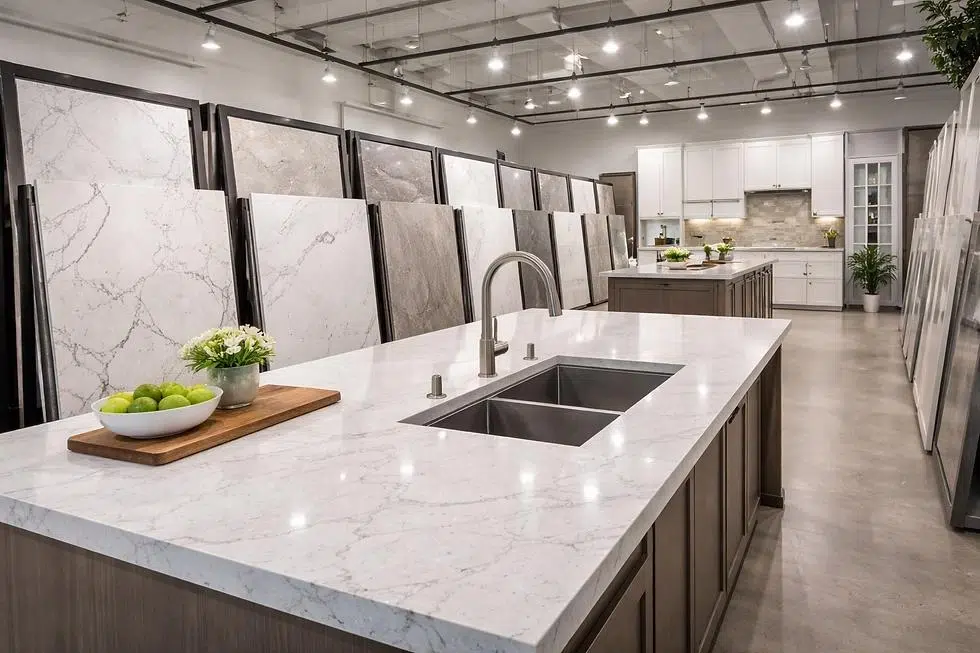
At Superior Granite, we carry hundreds of colors, first-quality 3cm material, and every slab is book-matched for a seamless finish. Bring your cabinet and flooring samples and see the slabs in person. Natural stone countertop selection is always better in real life than on a screen. Visit us at our natural stone countertop showroom in Pensacola, Pace, or Fort Walton Beach and let our team help you find the pairing that actually works.
Pensacola, FL
Visit Us: 7011 Pine Forest Road, Pensacola, FL 32526
Call Us: (850) 941-0270
Hours: Monday – Friday: 8 a.m. – 5 p.m., Saturday: 9 a.m. – 2 p.m.
Pace, FL
Visit Us: 4590 Jernigan Road, Pace, Florida 32571
Call Us: (850) 994-1872
Hours: Tuesday – Friday: 9 a.m. – 5 p.m., Saturday: 9 a.m. – 2 p.m.
Fort Walton Beach, FL
Visit Us: 35 Miracle Strip Pkwy SW, Fort Walton Beach, Florida 32548
Call Us: (850) 301-0716
Hours: Tuesday – Friday: 8 a.m. – 5 p.m., Saturday: 9 a.m. – 2 p.m.
Get quotes now and start your project!
FAQs
1. What natural stone countertop goes best with white kitchen cabinets?
Dark granite creates the boldest contrast against white. Quartzite gives a softer marble-like look, and marble is the timeless classic; choose based on whether you want drama or calm sophistication.
2. What stone countertop works best with hardwood floors?
Light stone with dark hardwood creates balance; dark stone with light hardwood keeps the room open. Never match stone and floor in the same tone; the room loses depth.
3. What is the best natural stone for a coastal Florida kitchen?
Limestone is the most naturally coastal stone, warm, matte, and perfectly suited to Gulf Coast interiors. Granite is the most practical working kitchen choice, and porcelain is best for outdoor kitchens.
4. Which natural stone countertop adds the most home value?
Granite and quartzite consistently perform best for resale value, durability, premium, and recognizability to buyers. Natural stone outperforms engineered materials for perceived value every time.
5. What is the easiest natural stone countertop to maintain?
Soapstone never needs sealing. Granite needs just one seal per year and handles heat, cutting, and daily use without issue. Both reward you for choosing them.
6. How long does installation take, and what should I expect during the process?
Installation time varies by project, but it typically includes templating, fabrication, and installation. Some jobs may require a second visit, and our team works to complete everything efficiently while maintaining quality.