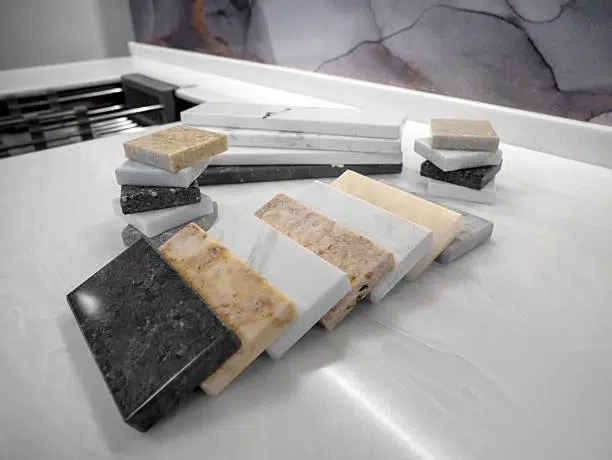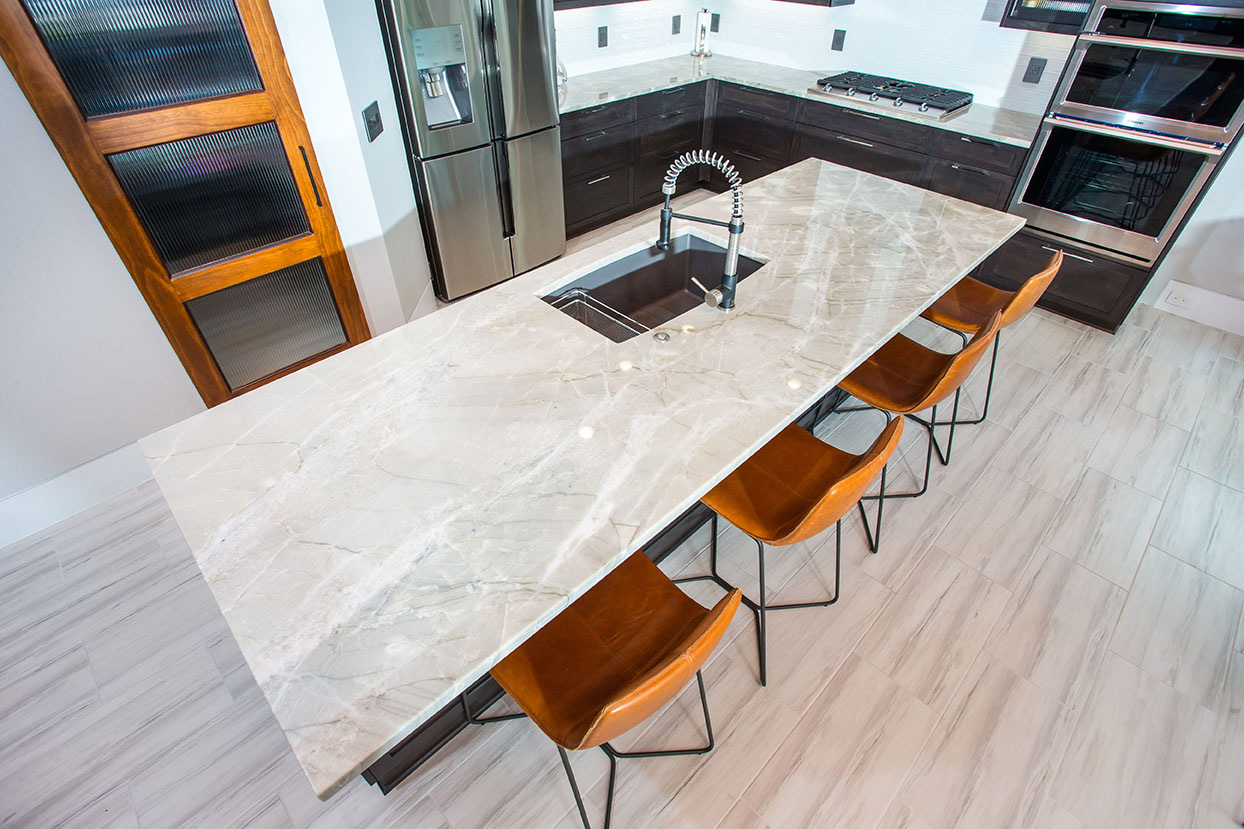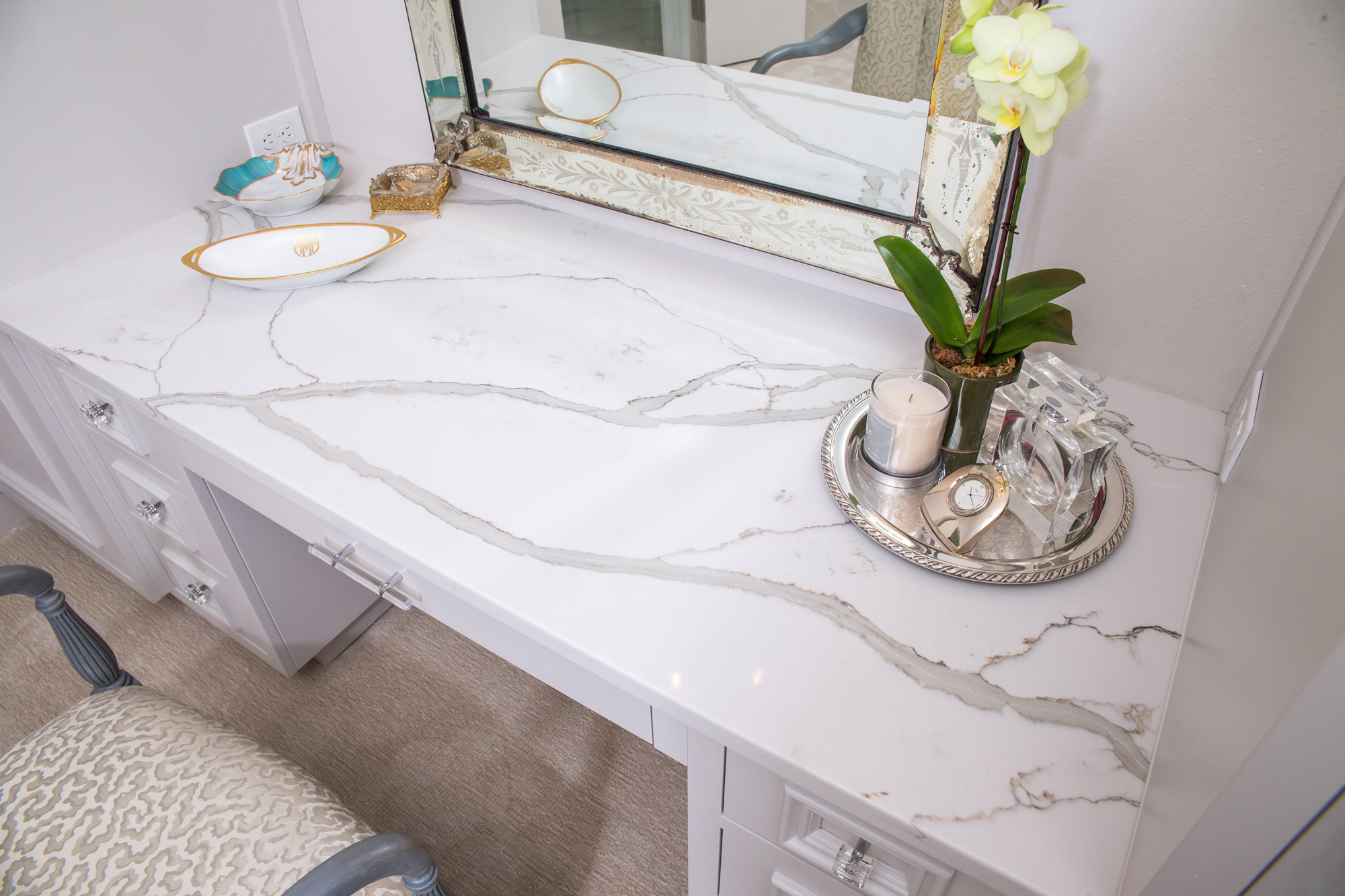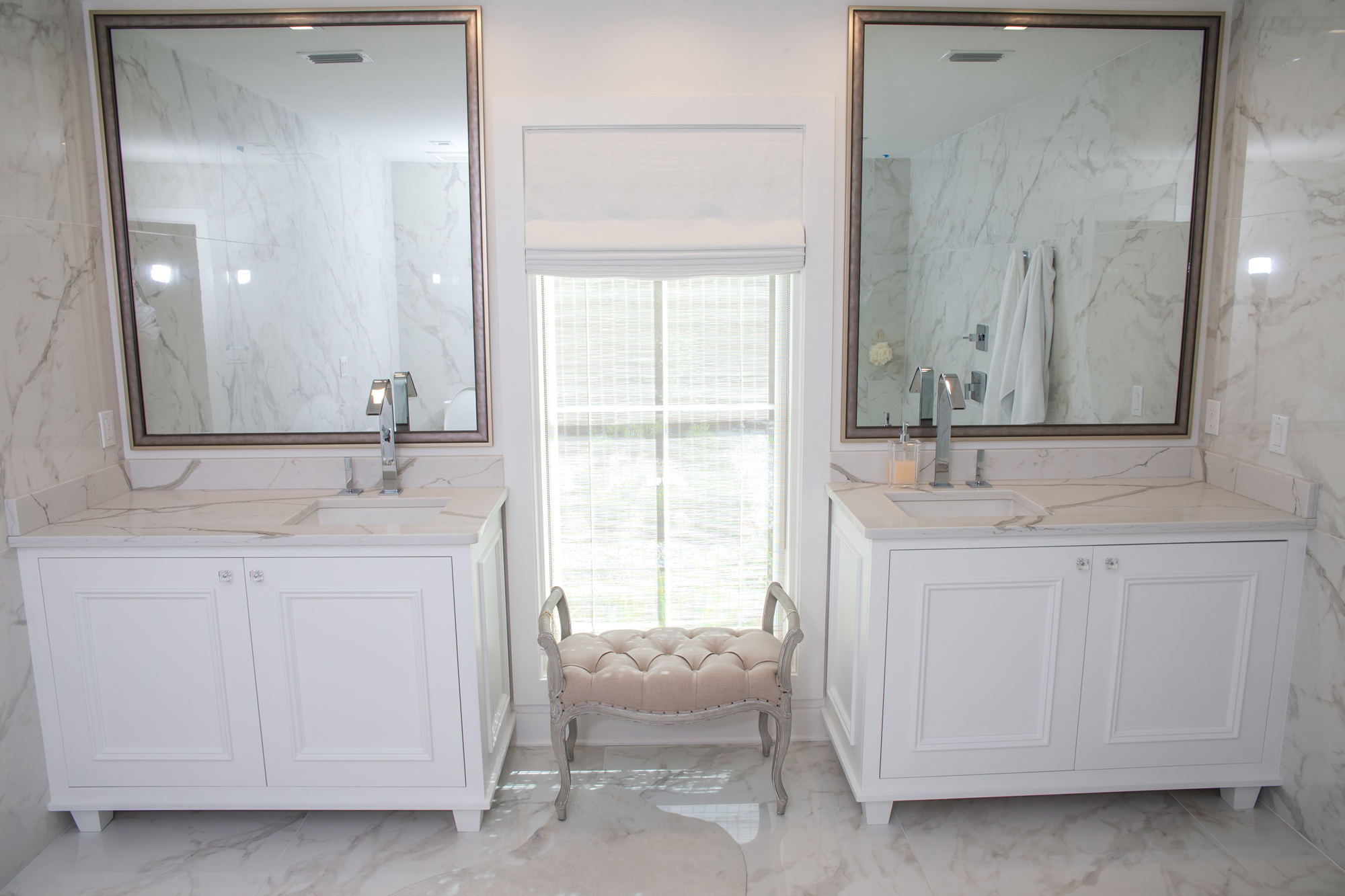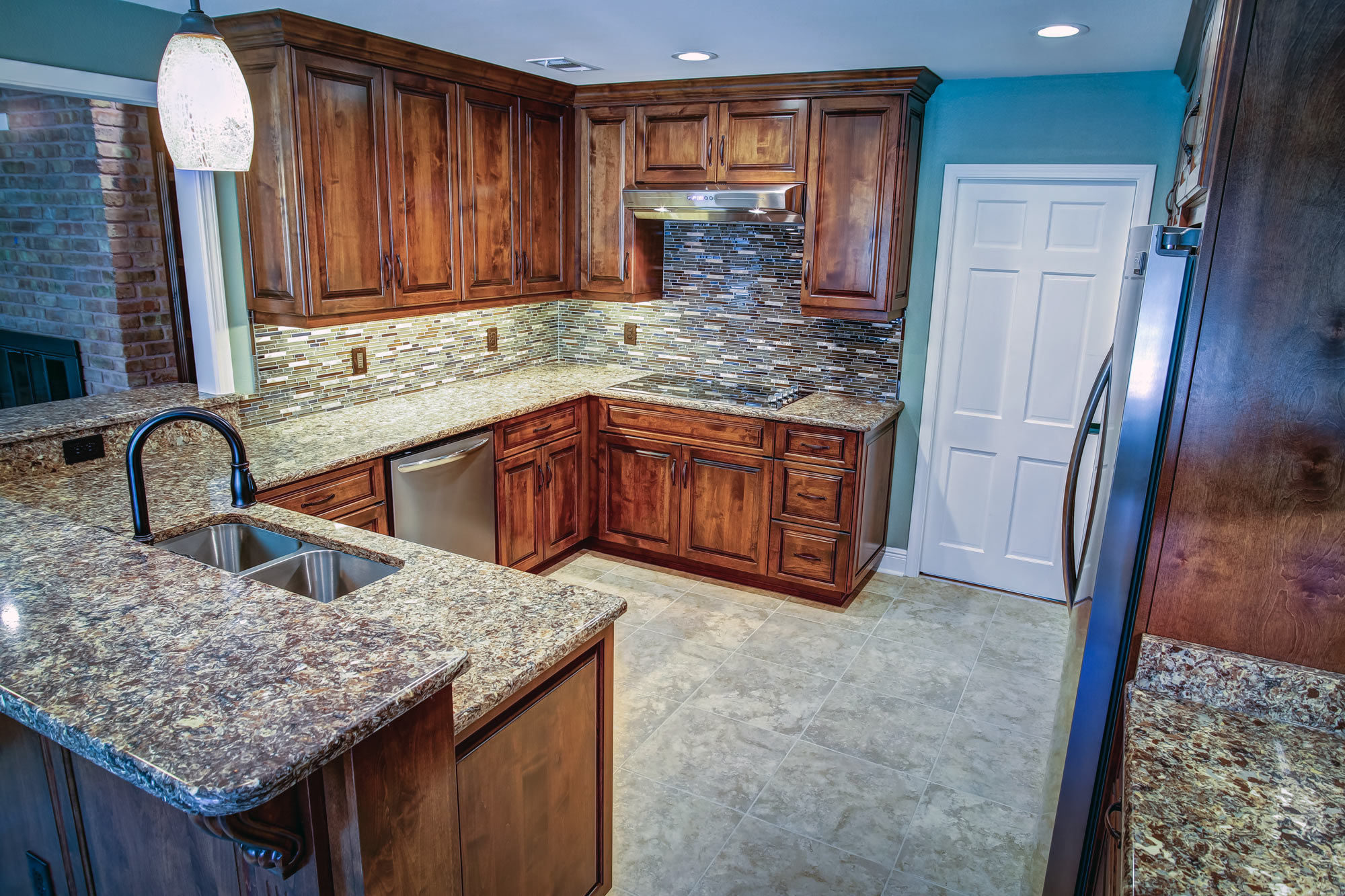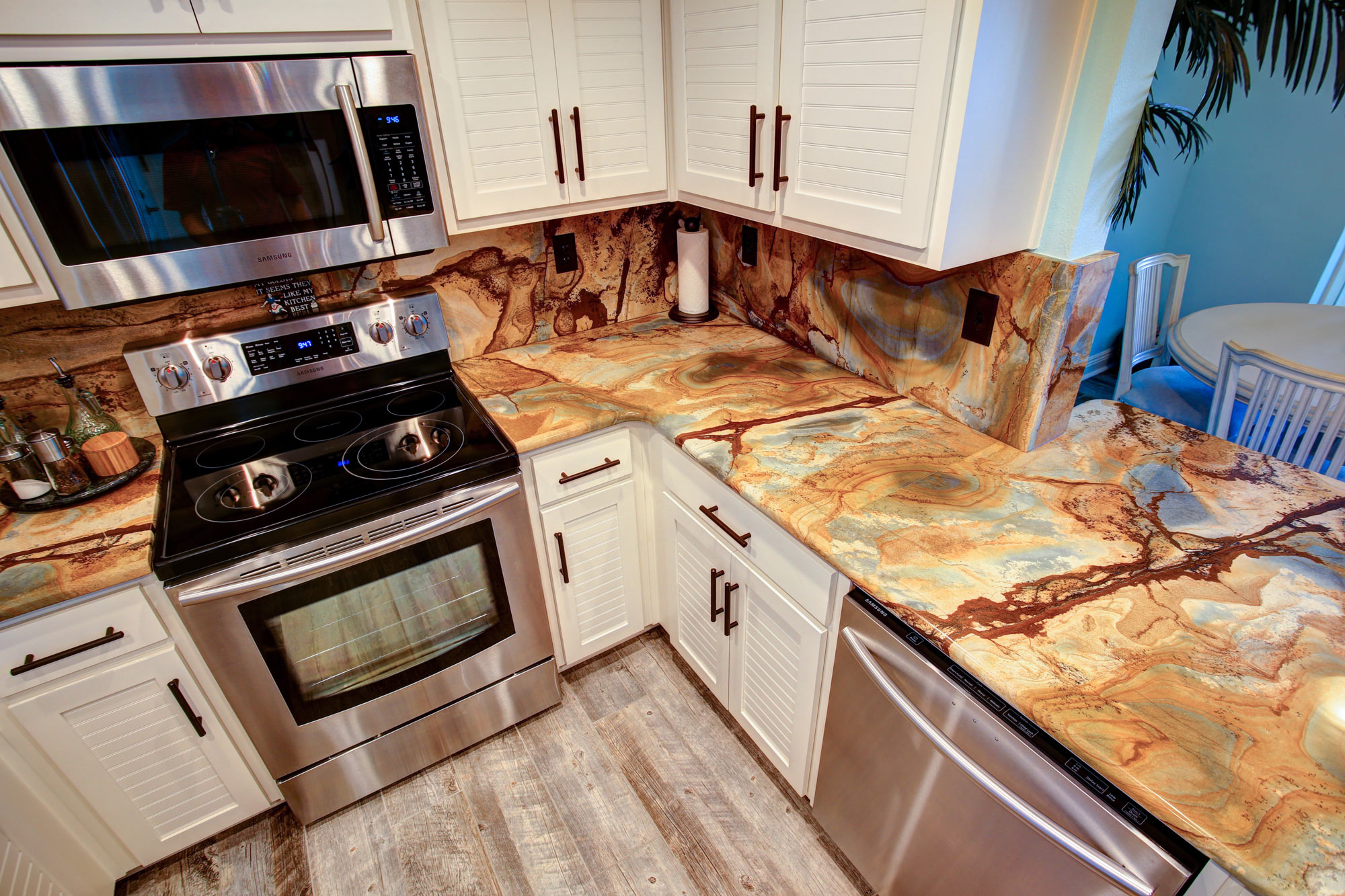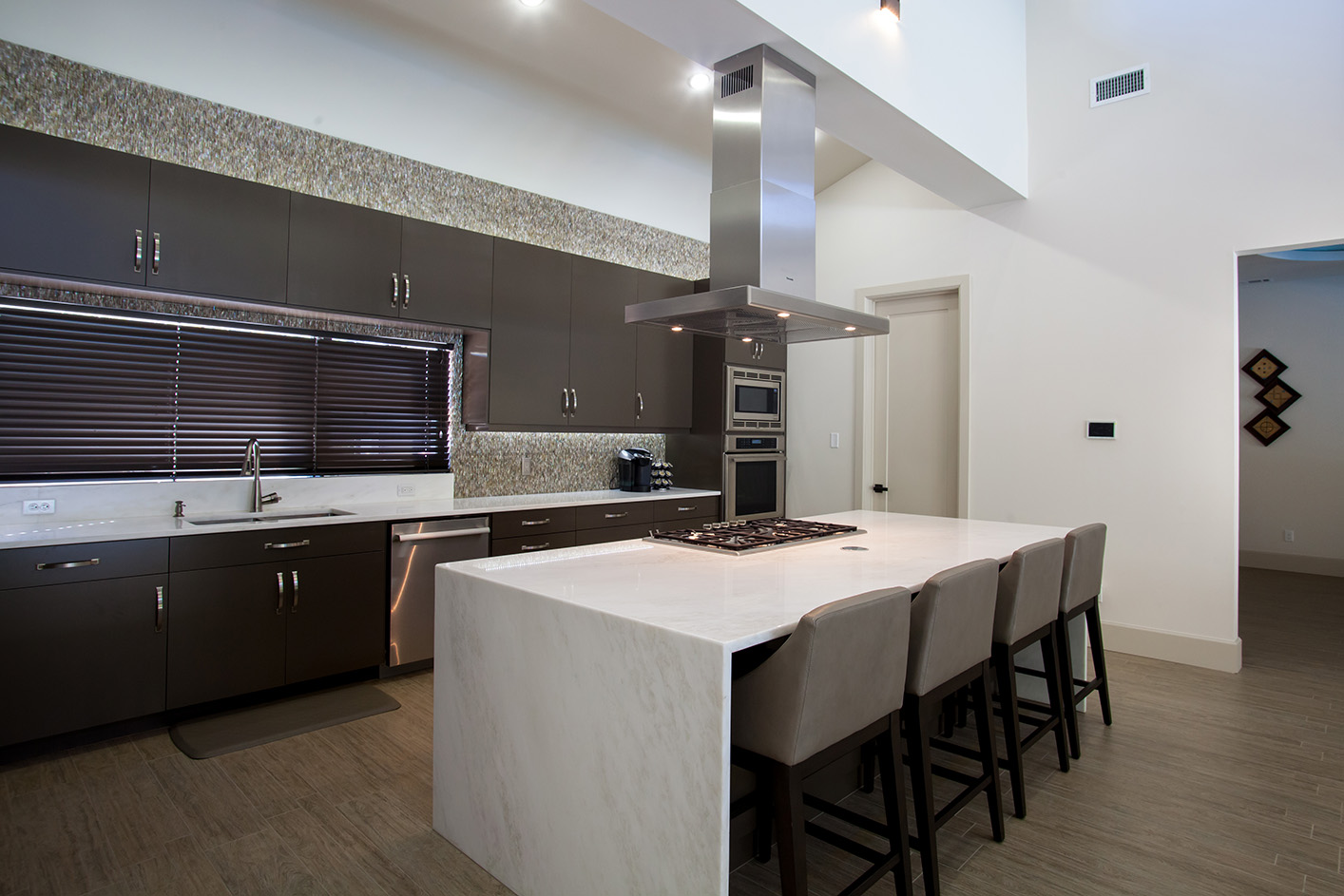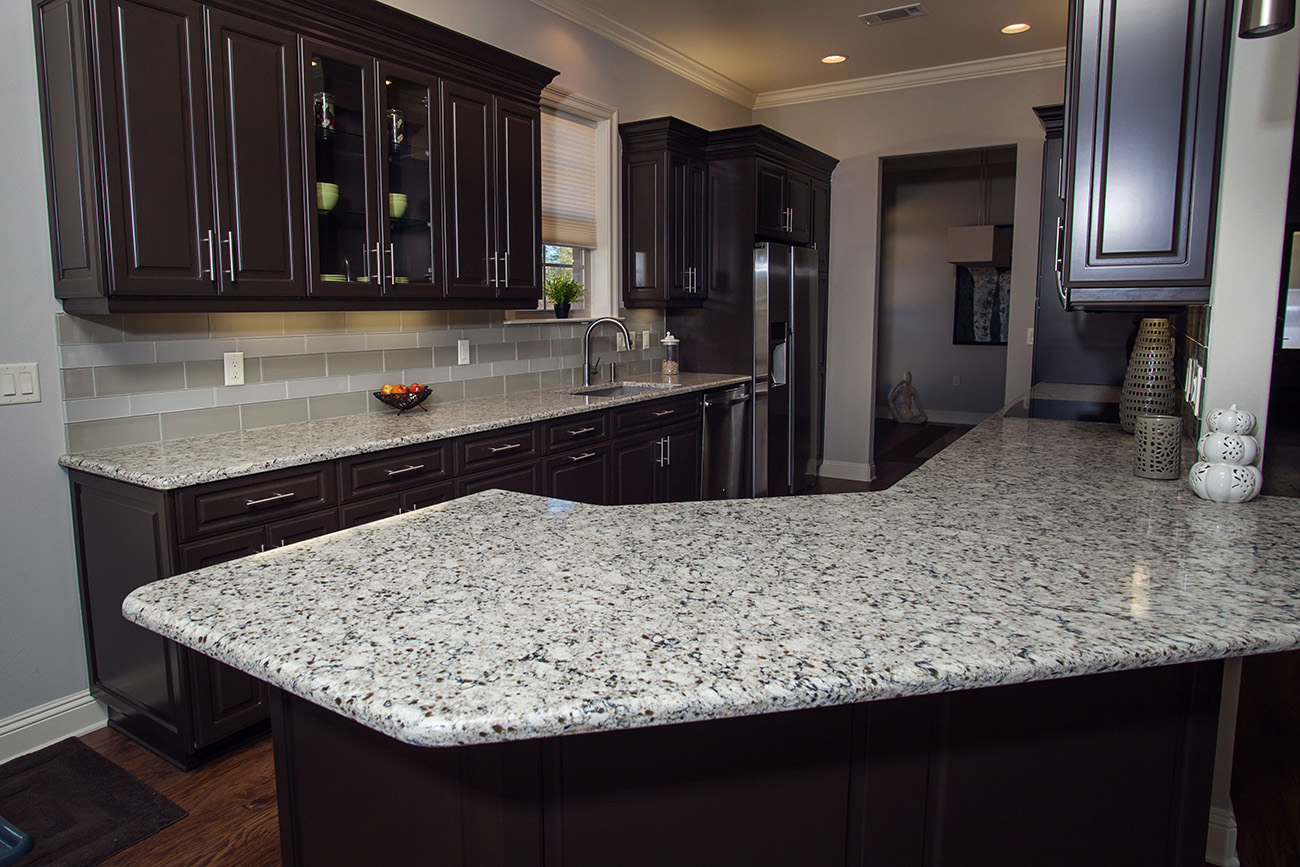
Choosing a countertop isn’t just about picking a color you like. The material you choose affects how your kitchen performs every single day and how it handles heat, scratches, spills, and daily wear. And with so many options available, it’s easy to feel overwhelmed before you even walk into a showroom.
This guide breaks down the pros and cons of countertop materials for every stone Superior Granite carries: granite, quartz, quartzite, marble, dolomite, calcite, soapstone, porcelain, and limestone. By the end, you’ll know exactly which material best fits your space, lifestyle, and maintenance preferences.
At Superior Granite, our showrooms in Pensacola, Pace, and Fort Walton Beach carry hundreds of colors across all nine materials, all first quality, all 3cm thickness. Our team is here to help you find the right fit before anything gets cut.
Countertop Material Pros and Cons at a Glance
Before diving into the details, here’s a quick comparison of all nine materials. This table gives you a fast overview of how each stone performs across the factors that matter most: hardness, sealing, heat resistance, and best use case.
Every material has its strengths. The right choice depends on how you actually use your space, not just how a stone looks in a photo.
| Stone | Mohs Hardness | Sealing Required | Heat Resistant | Best For |
|---|---|---|---|---|
| Granite | 6–6.5 | Annually | Yes | Busy kitchens |
| Quartz | 7 | No | Use trivet | Low-maintenance kitchens |
| Quartzite | 7 | Every 6 months | Yes | High-traffic kitchens |
| Marble | 3 | Every 6 months | Use trivet | Bathrooms, low-traffic |
| Dolomite | 3.5–4 | Every 6 months | Yes | Kitchens with care |
| Calcite | 3 | Every 6 months | Use trivet | Bathrooms |
| Soapstone | 1–5 | No sealing needed | Yes | Kitchen & bath |
| Porcelain | 7+ | No | Yes | Indoor & outdoor |
| Limestone | 3 | Every 6 months | Use trivet | Coastal, low-traffic |
Granite Countertops
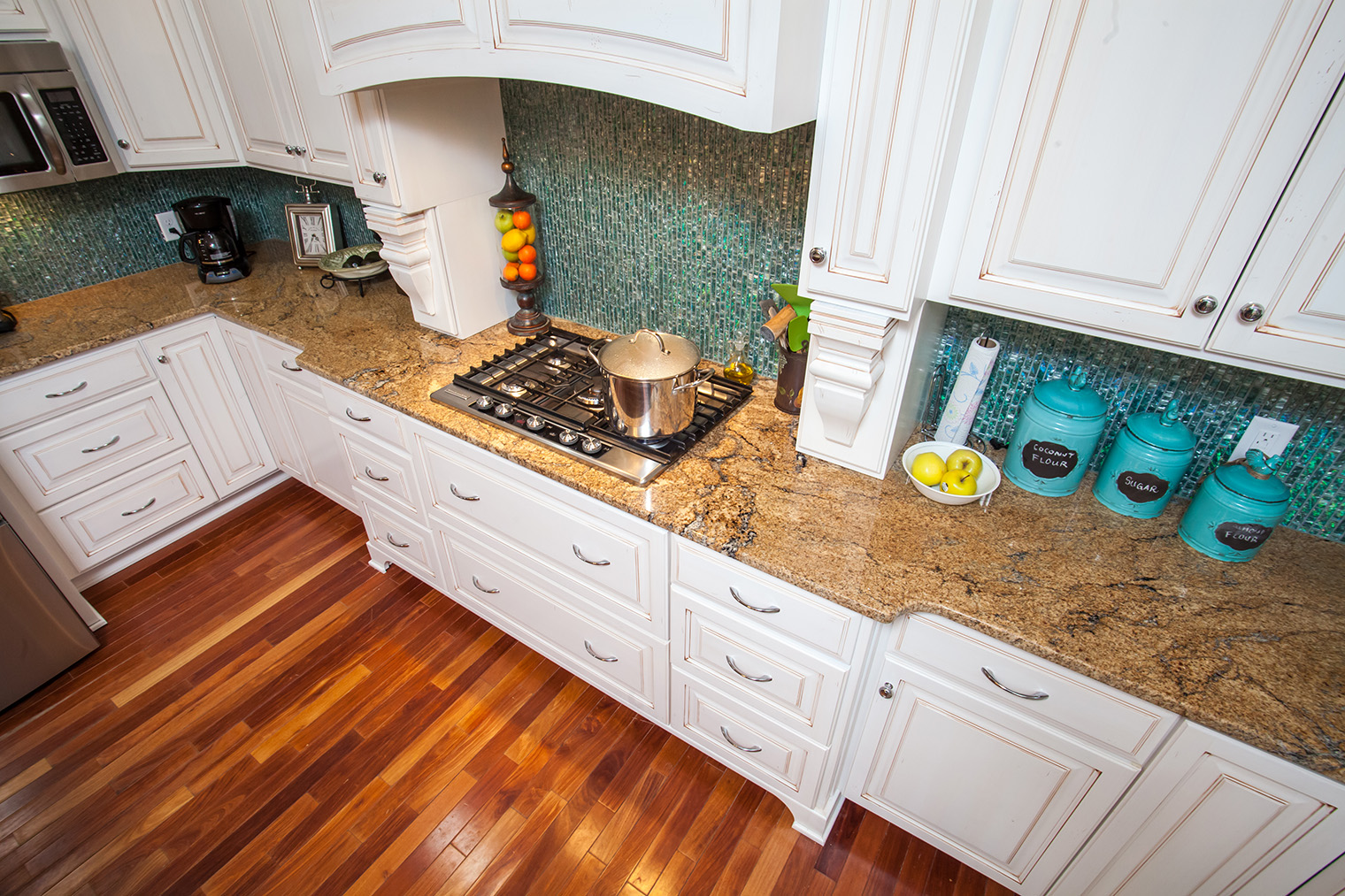
Granite is one of the hardest natural stones available, nearly impervious to scratches and heat. You can place hot pans directly on granite without a trivet. The one exception: hot glass dishes like Pyrex should always go on a trivet to avoid thermal shock. It comes in a wide range of colors and movement levels; the more movement, the more unique and often pricier the slab. Superior Granite carries one of the largest granite countertop selections in Pensacola, Pace, and Fort Walton Beach.
Pros:
- Scratch-resistant; one of the hardest natural stones available
- Heat-resistant; hot pans directly on the surface are fine
- Wide range of colors and movement levels
- Versatile for kitchens, bathrooms, fireplaces, indoor/outdoor
- Durable, great for family kitchens with heavy daily use
- Low maintenance with proper annual sealing
Cons:
- Requires annual sealing; unsealed granite can stain
- More slab movement can make seam placement tricky
- Can etch if acidic substances are left sitting too long
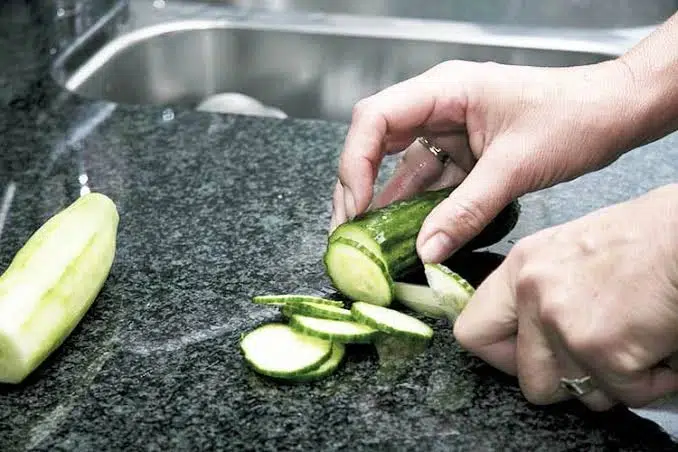
Granite is one of the few natural stones where you can cut directly on the surface, but be aware it will dull your knives. The stone itself will be left unscathed.
Quartz Countertops
Quartz countertops are engineered stone made from approximately 90–93% crushed natural quartz crystals bound with resins and pigments. They’re non-porous, never need sealing, and resist both staining and scratching. But there’s one important caveat: excessive heat can damage the surface. Trivets are always required.
Pros:
- Non-porous; no sealing required
- Stain- and scratch-resistant; low daily maintenance
- Consistent patterns; no surprises at full slab size
- Wide color range; more variety than granite
- Custom-fabricated in any shape and size
Cons:
- Scorches under heat trivets always required
- Seams in white quartz are more noticeable than darker colors
- Indoor use only; not suitable for outdoor applications or gas fireplaces
Darker quartz colors show fingerprints, dust, and watermarks more easily than lighter surfaces. Factor maintenance expectations into your color choice, not just aesthetics.
Quartzite Countertops
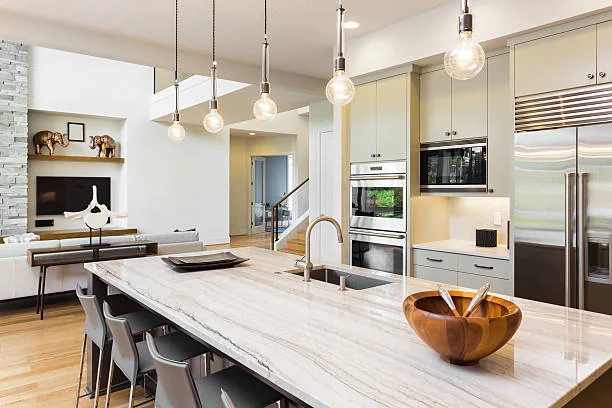
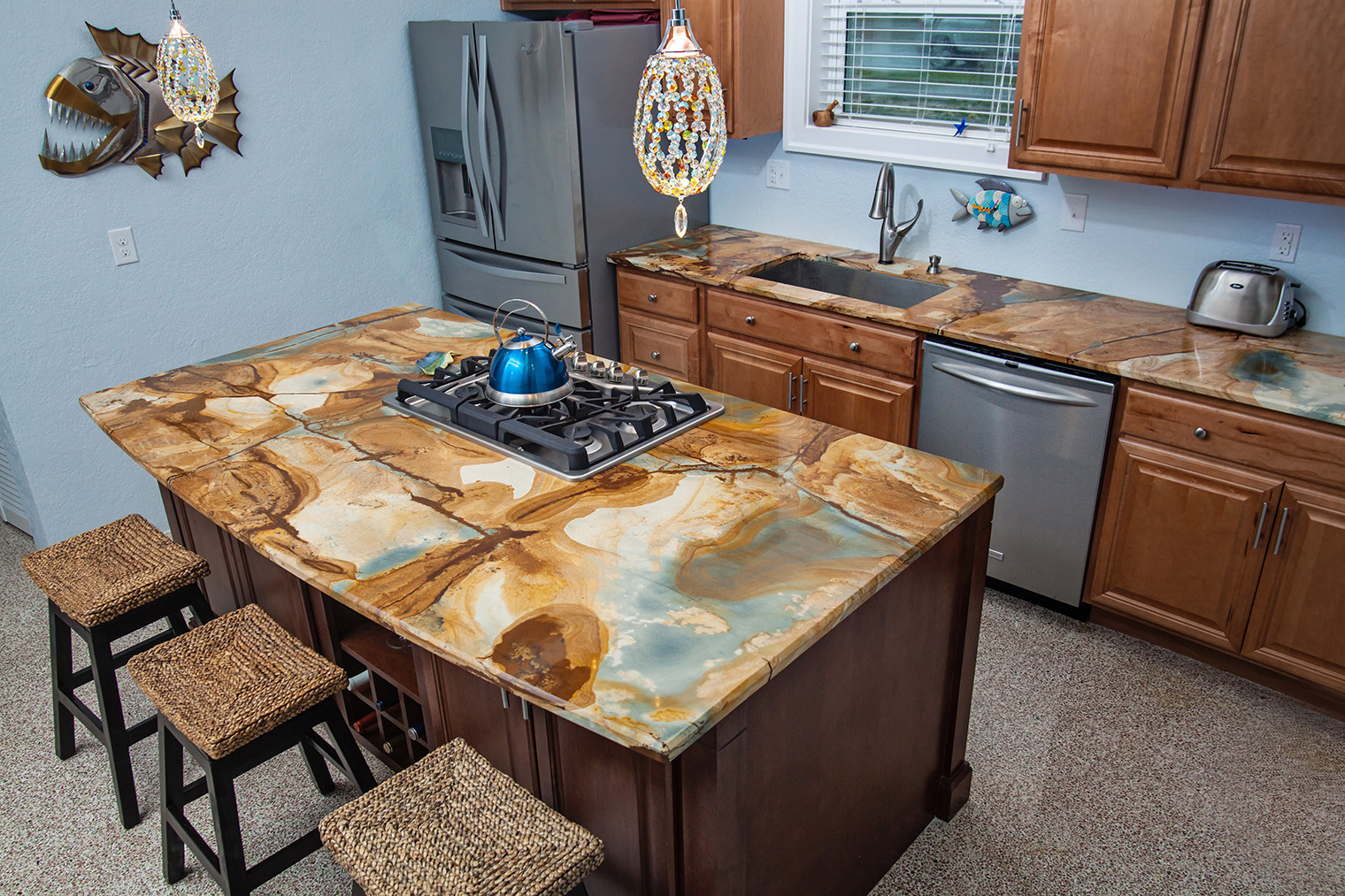
Quartzite countertop is a natural metamorphic stone, not engineered quartz. It’s harder than granite, heat-resistant, and has a marble-like appearance with more natural movement and variation than engineered quartz. It’s an excellent choice for high-traffic kitchens that need durability without sacrificing beauty.
Pros:
- Harder than granite; more durable and scratch-resistant
- Heat-resistant; more so than quartz
- Marble-like appearance with natural movement and variation
- Versatile; fireplaces, indoor/outdoor use
- Low maintenance with proper sealing
Cons:
- Higher price point than quartz
- Less stain-resistant than quartz; diligent sealing required
- Natural variation at seam joints; color and movement may differ slab to slab
- Requires monthly resealing for the first three months, then every six months
Pay special attention to sealing quartzite edges, faucet holes, and sink openings; these areas are more porous than the polished surface and need extra care to prevent staining.
Marble Countertops
Marble is the definition of timeless luxury; valued for its unique veining, cool smooth texture, and classic high-end look. No two marble slabs are identical. But marble comes with real trade-offs: it’s soft, porous, and etches quickly from acidic substances. It’s best suited for bathrooms or low-traffic areas.
Pros:
- Timeless, luxurious appearance with a wide range of veining options
- Develops a beautiful patina over time
- Good for eco-friendly builds
Cons:
- Soft and porous; scratches and stains more easily than granite
- Etches quickly from acidic substances; lemon juice, wine, tomato sauce
- Must be resealed twice per year
- Hot items must never be placed directly on the surface without a trivet
- Not ideal for high-traffic kitchens; best for bathrooms or low-traffic areas
- Can chip or crack under heavy impact
Dolomite Countertops
Dolomite sits between marble and granite in durability. It’s harder and more forgiving than marble, but more porous than granite. It offers the elegant veined look of marble with slightly greater resistance, making it popular for homeowners who want marble aesthetics without quite as much maintenance. That said, acidic substances can still etch dolomite if not wiped quickly.
Pros:
- More durable than marble; greater scratch and etch resistance
- Elegant veined appearance; often mistaken for marble
- Heat resistant; hot items can be placed directly on surface
- Wide diversity of natural colors and patterns
Cons:
- More porous than granite; requires resealing every six months
- Can etch in one to two hours when exposed to acidic substances
- Sealer prevents staining but not etching
- Potentially difficult to hide seams
Calcite Countertops
Calcite offers a luxurious, often translucent appearance similar to marble; soft, creamy white colors and delicate veining; at a lower price point. It’s often mistaken for marble. But calcite is equally soft and prone to scratching, staining, and etching. It’s generally better suited for bathrooms than busy kitchens.
Pros:
- Luxurious appearance; often mistaken for marble
- Translucent quality; beautiful when backlit
- More affordable than marble
- Wide diversity of colors; rare varieties include blue and pink
Cons:
- Soft stone; prone to scratching and chipping
- Etches easily; can etch in less than 20 minutes with acidic substances
- Less heat resistant; trivet always required
- Requires resealing every six months
- Not ideal for high-traffic kitchens
Calcite is best suited for bathroom environments; lower traffic means less exposure to the daily wear and acidic substances that cause the most damage to softer stones.
Soapstone Countertops
Soapstone is composed primarily of talc and has a naturally non-porous surface, which means no sealing is required. It’s heat-resistant, develops a rich patina over time, and has a soft, matte feel that’s unlike any other stone. It typically matures from light grey to a deeper charcoal as it ages.
Pros:
- Naturally non-porous; no sealing required
- Heat-resistant; practical for kitchen use
- Develops a beautiful patina over time
- Hygienic; doesn’t harbor bacteria
Cons:
- Soft surface; can scratch more easily than harder stones
- Natural darkening over time; not everyone’s preference
- Limited color range; primarily grey tones
- Can show wear marks from daily use over time
For a deeper dive into soapstone’s unique properties and care, see our full guide: Should You Choose Soapstone Countertops? Pros, Cons & Tips
Porcelain Countertops
Porcelain countertops are fired at temperatures ranging from 2,200 to 2,650°F, producing a surface that resists scratches, stains, heat, UV light, and etching. It’s non-porous, never needs sealing, and is one of the only countertop materials suitable for both indoor and outdoor applications. One thing to note: porcelain edges must be mitered, and the base color is slightly visible at the edge.
Pros:
- Non-porous; no sealing required, ever
- Resistant to scratches, stains, heat, and UV light
- Does not etch; safe around acidic substances
- Indoor and outdoor use; ideal for covered outdoor kitchens
- Hygienic; does not harbor bacteria
- Colors remain consistent over time; no fading
Cons:
- Higher risk of chipping at mitered edges during fabrication
- Colors and patterns are surface-deep only; vein doesn’t cross-cut
- Base color visible at mitered edge
- Can crack under heavy blunt force
If you’re planning an outdoor kitchen space on the Gulf Coast, porcelain is one of the strongest material choices; UV-resistant, weather-durable, and completely non-porous.
Limestone Countertops
Limestone is composed of sedimentary rock: calcium carbonate from compressed marine fossils and shells. It offers a warm, matte, organic aesthetic with earthy neutral tones that fit naturally with coastal and rustic design styles. For Gulf Coast homes looking for that natural, beachy feel, limestone is a visually fitting option, but it requires careful maintenance.
Pros:
- Warm, matte, organic aesthetic; perfect for coastal homes
- Natural earthy tones; unique look not easily replicated
- Every slab is unique; natural variation throughout
Cons:
- Soft and porous; prone to staining, scratching, and etching
- Requires resealing every six months
- Not ideal for high-traffic kitchens; better for low-traffic areas
- Acidic substances can damage the surface quickly if not wiped immediately
How to Choose the Right Countertop Material for Your Home
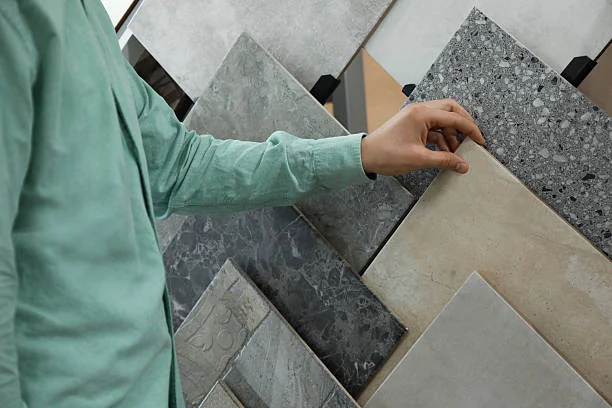
Now that you’ve seen the countertop material pros and cons for every stone, here’s a simple five-step guide to finding the right fit:
- Start with how you actually use your kitchen. High-traffic family kitchens need durable, heat-resistant materials like granite or quartzite. Bathrooms and low-traffic spaces can handle softer stones like marble or calcite.
- Be honest about maintenance. If you don’t want to think about sealing, quartz or porcelain are your best options. If you’re comfortable with annual or semi-annual sealing, natural stone opens up a much wider range.
- Consider your design goals. Want dramatic veining and natural movement? Quartzite or marble. Want consistent color and pattern? Quartz. Want a warm, coastal feel? Limestone or soapstone.
- Think about heat and cooking habits. If you cook frequently and work with hot pans, granite is one of the most forgiving options. Quartz requires trivets — always.
- See the full slab in person. Colors and veining look completely different at full slab size versus a small sample chip. Visit a showroom, bring your cabinet sample, and compare under real lighting before you commit.
Expert Tips and Common Mistakes
Expert Tips:
- Always reseal natural stone countertops on a schedule annual for granite, semi-annually for marble, dolomite, calcite, and limestone, and monthly for the first three months for quartzite.
- Wipe up spills immediately on any porous natural stone; acidic substances like lemon juice, wine, and tomato sauce can etch surfaces quickly
- Use warm soapy water and a microfiber cloth for daily cleaning; avoid bleach, ammonia, vinegar, and citrus-based cleaners
- Never use abrasive sponges or scouring pads on any countertop surface
- Always use a cutting board; even on granite and quartzite, direct cutting will dull your knives
Common Mistakes:
- Choosing based only on appearance, without understanding care requirements
- Assuming all stones perform the same way in a kitchen environment
- Using harsh chemical cleaners on natural stone; bleach and ammonia cause permanent damage
- Skipping the sealing schedule; unsealed stone stains much more easily
- Placing hot glass or Pyrex dishes directly on granite; thermal shock can crack the dish
The Right Countertop Material Starts With the Right Conversation
Understanding countertop material pros and cons is the first step, but the right choice comes down to your space, your lifestyle, and your design goals. No single material is best for everyone.
For busy kitchens, granite and quartzite offer durability and heat resistance that’s hard to beat. For low-maintenance countertop material preferences, quartz and porcelain make daily life easier. For bathrooms and lower-traffic spaces, marble, calcite, and limestone bring a level of beauty that harder stones simply can’t replicate.
Superior Granite has been helping Gulf Coast homeowners make these decisions since 2005. We carry first-quality 3cm material across all nine stone types, with hundreds of colors in stock at any given time. Visit any of our showrooms in Pensacola, Pace, or Fort Walton Beach; see the full slabs in person, bring your cabinet sample, and speak with a team that knows every material inside and out. Ready to find the right stone? Visit Superior Granite today and let’s get your project started.
Pensacola, FL
Visit Us: 7011 Pine Forest Road, Pensacola, FL 32526
Call Us: (850) 941-0270
Hours: Monday – Friday: 8 a.m. – 5 p.m., Saturday: 9 a.m. – 2 p.m.
Pace, FL
Visit Us: 4590 Jernigan Road, Pace, Florida 32571
Call Us: (850) 994-1872
Hours: Tuesday – Friday: 9 a.m. – 5 p.m., Saturday: 9 a.m. – 2 p.m.
Fort Walton Beach, FL
Visit Us: 35 Miracle Strip Pkwy SW, Fort Walton Beach, Florida 32548
Call Us: (850) 301-0716
Hours: Tuesday – Friday: 8 a.m. – 5 p.m., Saturday: 9 a.m. – 2 p.m.
Get quotes now and start your project!
FAQs
1. What are the pros and cons of granite countertops?
Granite is one of the hardest natural stones; heat resistant, scratch-resistant, and durable for busy kitchens. The main downside is that it requires annual sealing and can stain if left unsealed.
2. Is quartz or granite better for kitchen countertops?
Both are strong options. Quartz requires no sealing and offers consistent patterns, but scorches under excessive heat. Granite handles heat directly but needs annual sealing. The best choice depends on your maintenance preferences and cooking habits.
3. What is the most durable countertop material?
Quartzite and granite are among the most durable natural stone options. Porcelain is also extremely durable and adds UV and stain resistance to the mix.
4. What countertop material requires the least maintenance?
Quartz and porcelain are the lowest-maintenance options; neither requires sealing. Quartz needs trivets for heat; porcelain handles heat, UV, and acids without any special care.
5. What is the difference between quartzite and quartz?
Quartzite is a natural metamorphic stone formed underground. Quartz is an engineered product made from crushed quartz crystals and resins. Quartzite is harder and more heat-resistant but requires sealing. Quartz is non-porous and never needs sealing.
6. Which countertop material is best for bathrooms?
Marble, calcite, and limestone work beautifully in bathrooms; lower traffic means less exposure to daily wear. Quartz and porcelain are also excellent bathroom options for a lower-maintenance approach.
7. Is marble good for kitchen countertops?
Marble can work in kitchens, but it requires high maintenance. It etches easily from acidic substances and scratches more readily than harder stones. It’s better suited for low-traffic kitchen areas or bathrooms.
8. What countertop material handles heat the best?
Granite, quartzite, soapstone, and porcelain all handle heat well. Granite and quartzite can take hot pans directly, though glass dishes should still use a trivet. Quartz and marble require trivets to avoid damage.