Porcelain works best in two places: shower walls and full-height backsplashes. It’s non-porous, it comes in big slabs, and that means fewer grout lines to scrub. If you’re weighing porcelain for shower walls or a backsplash that runs up the wall, this page shows where it fits and what to plan for.
Why does that matter? Showers and cooking walls take a beating from water, steam, heat, and splatter. The right material can mean less scrubbing and fewer headaches later. This is for homeowners in Pensacola, Pace, and Fort Walton Beach planning a bathroom or kitchen update.
Where Does Porcelain Work Best?
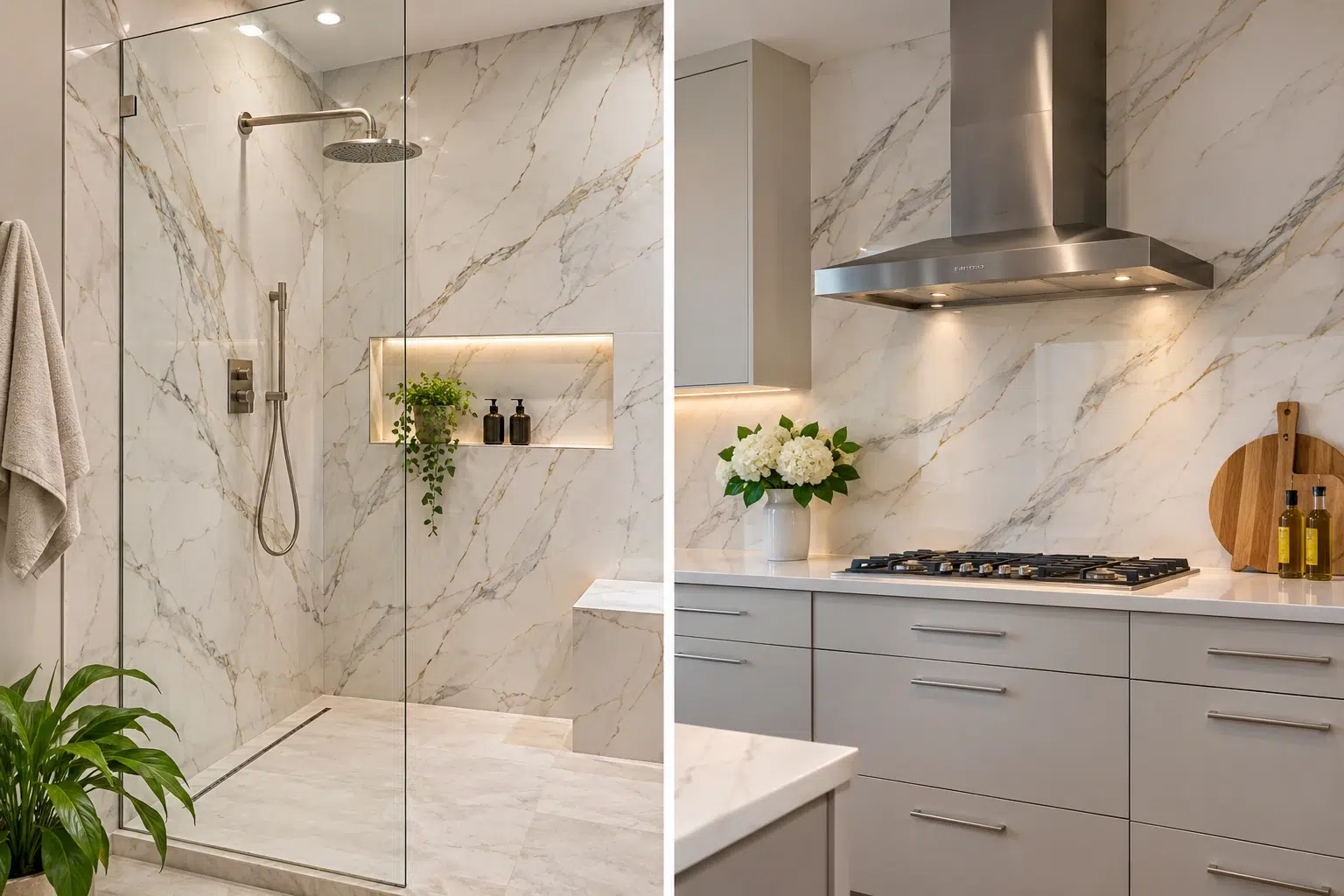
Porcelain works best on shower walls and full-height backsplashes. Both spots get wet, hot, or messy, and porcelain handles all three. Big slabs also mean fewer grout lines, so there’s less to scrub. Here’s how the two compare.
First, a quick definition. A full-height backsplash is the wall surface behind your counter and range. It runs from the counter all the way up to the upper cabinets, or even higher.
| Application | Why porcelain fits | What to plan first |
| Shower walls | Non-porous, so water and soap don’t soak in. Fewer grout lines to clean. | Where the shower head, niche, and drain will go |
| Full-height backsplash | Wipes clean easily and handles heat behind a range | Outlets, switches, and the range hood |
We use our porcelain slabs in these two spots, and we recommend them there. Want a closer look at showers? Read our guide to Why Porcelain is the Best Choice for Custom Showers.
Is Porcelain the Same as Ceramic?
No, not exactly. Porcelain is a type of ceramic, but it’s made differently. It uses a refined blend of clay, sand, and minerals, and it’s fired at very high heat. That makes it dense and non-porous, so it doesn’t absorb liquids.
Here’s how the two compare in simple terms.
| Feature | Porcelain | Ceramic in general |
| What it is | A specific, denser type of ceramic | A big family of clay-based materials |
| Made from | Clay, sand, and minerals such as kaolinite, feldspar, and silica | Clay-based mixes, which vary by product |
| Firing | Fired at temperatures over 2,000°F | Often fired at lower heat |
| Water | Non-porous. It doesn’t absorb liquids. | Some types are more porous |
So all porcelain is ceramic, but not all ceramic is porcelain. Products vary, so ask for the specifics when you compare them. Don’t go by the name alone.
Why Choose Porcelain for Shower Walls?
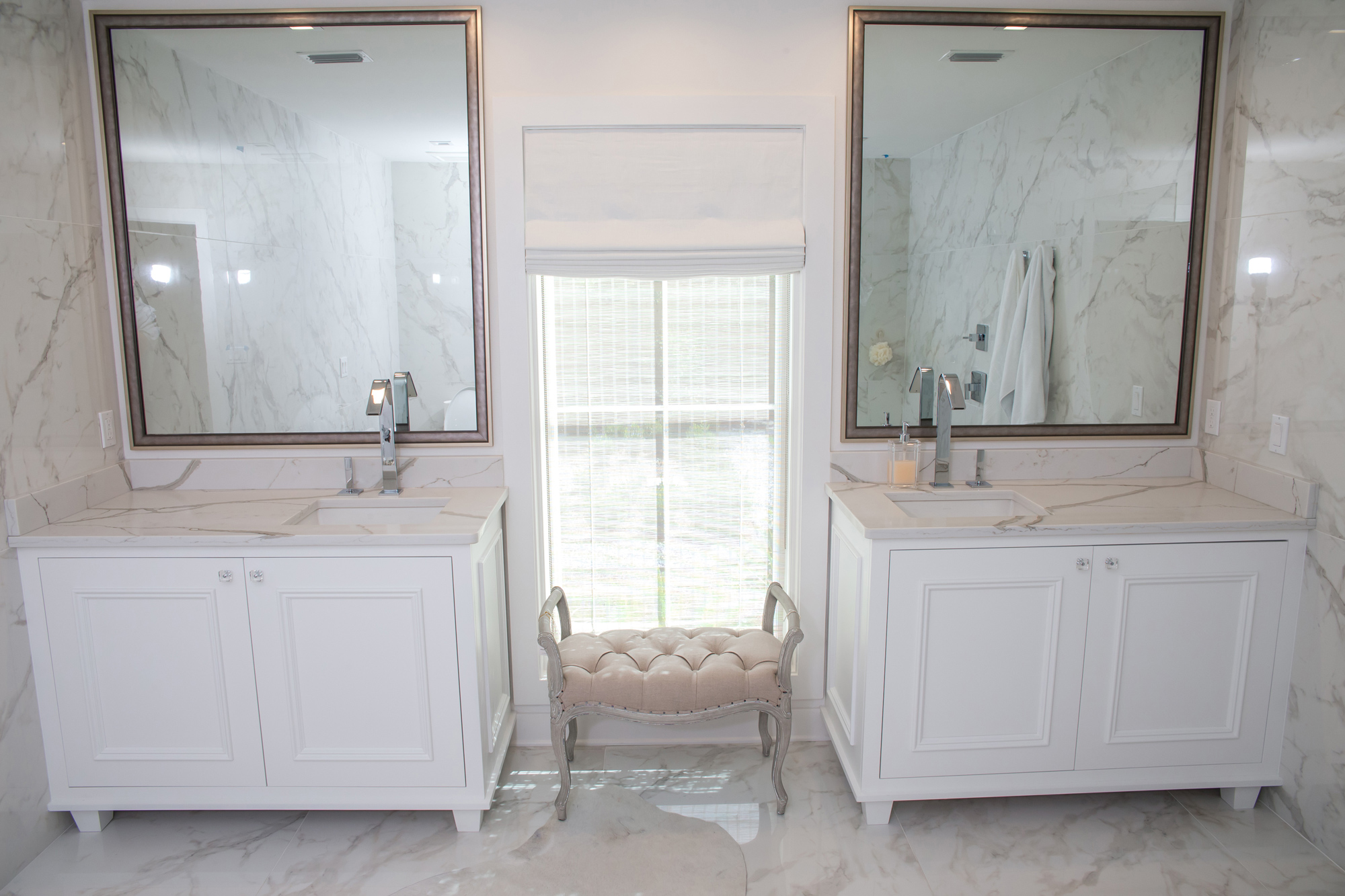
Porcelain suits shower walls because it’s non-porous. It doesn’t absorb liquids, so soap, shampoo, and water don’t soak in. It also resists heat and fading, and big slabs mean fewer grout lines to clean. That makes porcelain shower walls a good fit if you want low-maintenance shower walls.
Here’s what that looks like in daily life:
- Non-porous. Non-porous shower walls don’t absorb liquids. Porcelain won’t stain from oil, colored liquids, or household acids like lemon, wine, and vinegar.
- Easy to clean. Easy-to-clean shower walls start with fewer grout lines. There’s less space for grime to collect.
- Hygienic. The surface doesn’t harbor bacteria, so a quick wipe goes a long way.
- Heat resistant. Hot water and steam won’t damage it.
- UV resistant. Colors stay consistent over time. That helps if your shower gets daylight from a window.
A little planning goes a long way, too. Think about where the shower head, niche, drain, and any glass door will go. Your fabricator can mark the openings once the layout is set. It’s much easier to decide before the slabs are cut.
Why Choose Porcelain for a Full-Height Backsplash?
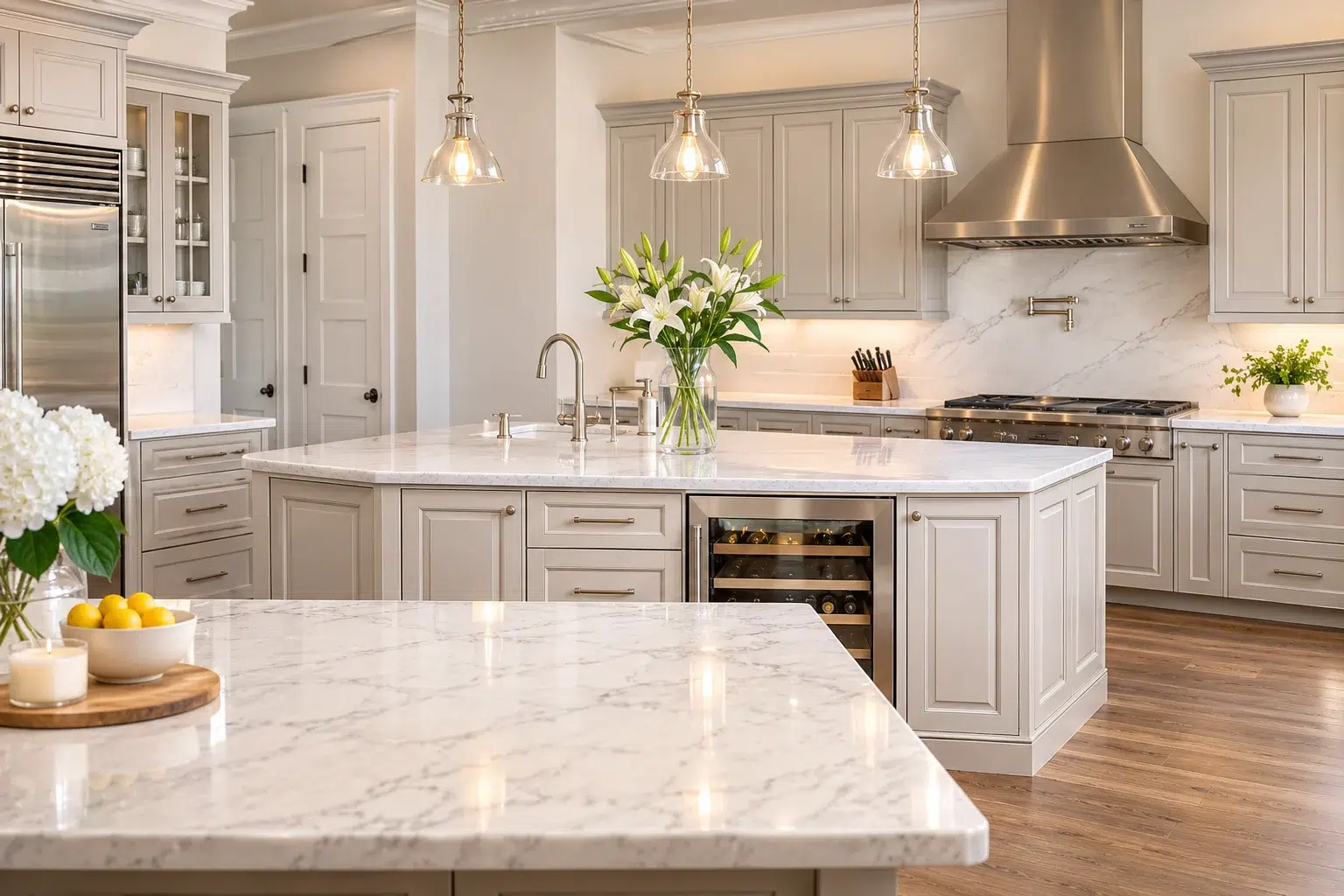
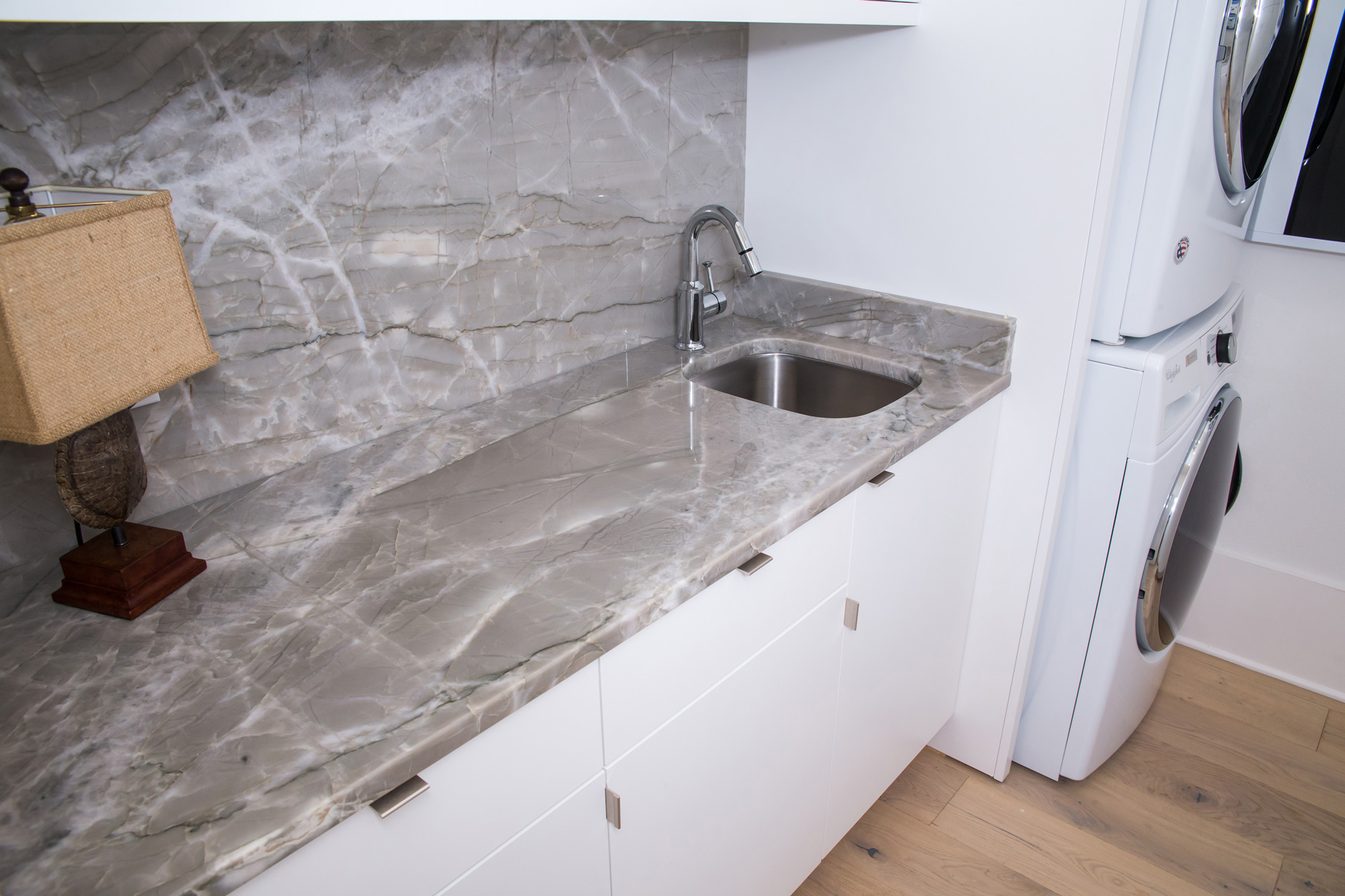
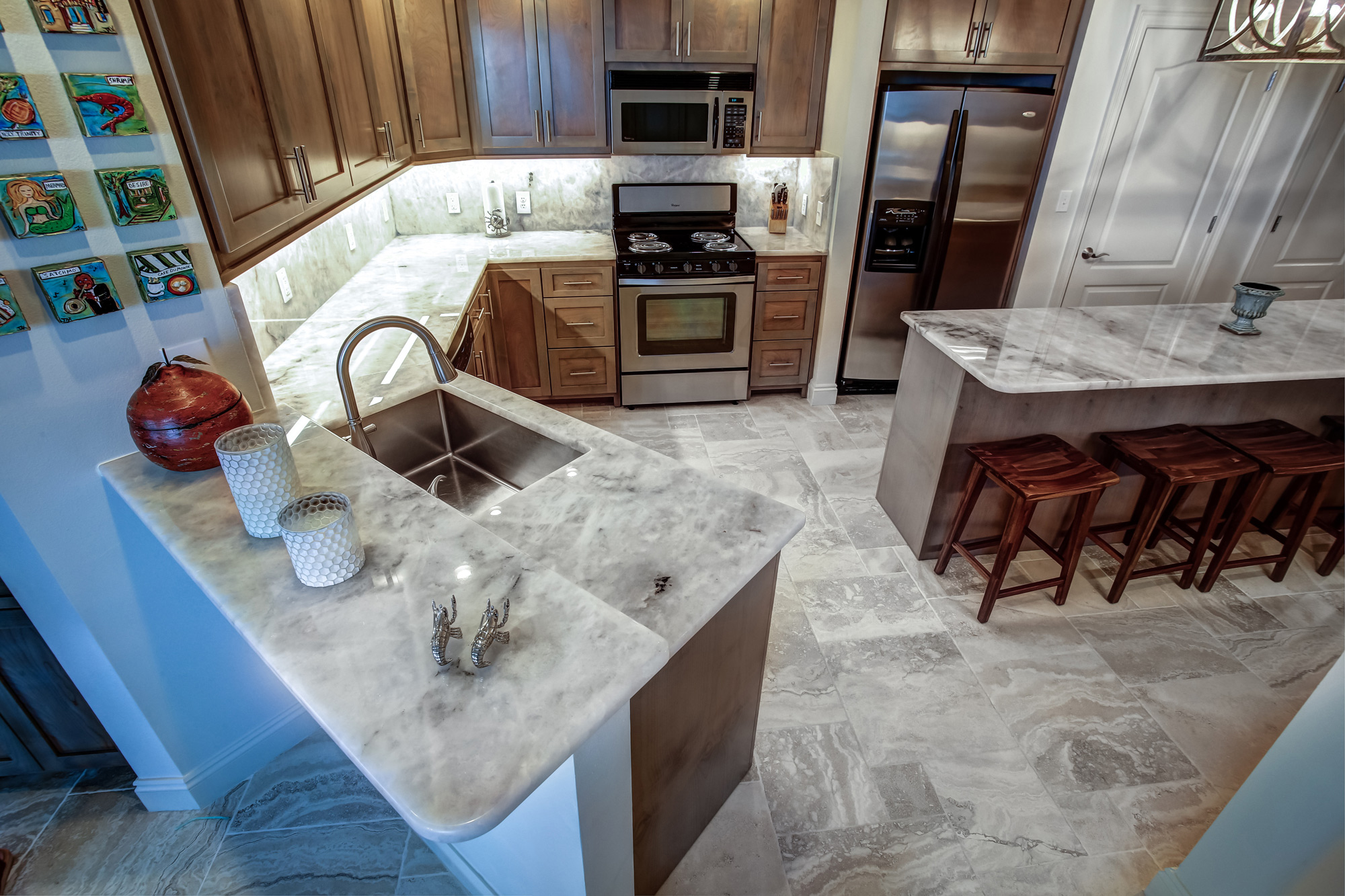
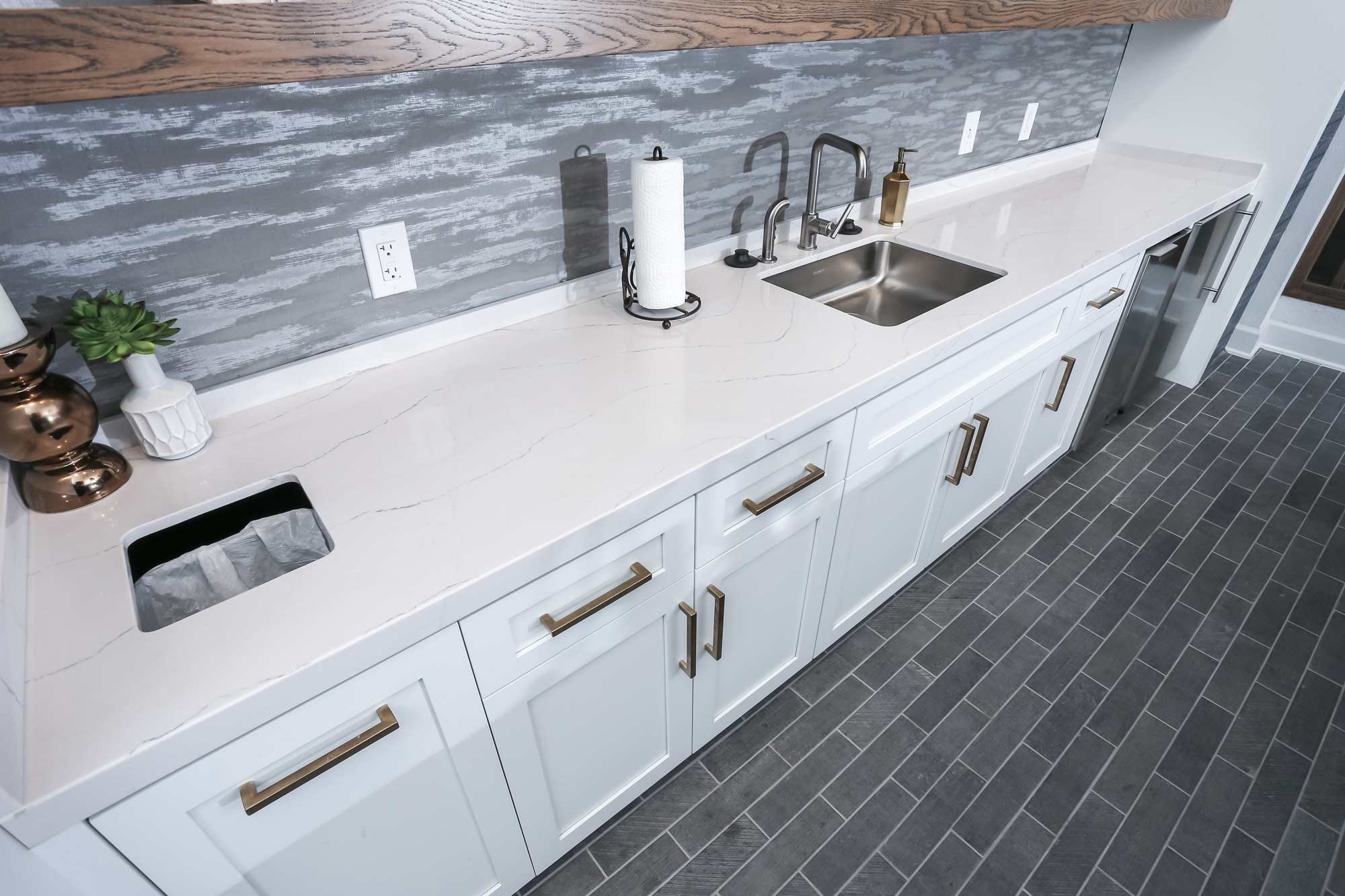
Porcelain makes a strong full-height backsplash because it wipes clean easily and handles heat behind a range. Big slabs mean fewer grout lines, so you’ll scrub less. It also resists stains and can mimic natural stone like marble. That’s why it’s one of our two go-to uses.
Picture the wall behind your range and sink. It gets splatter, steam, and heat every day. A porcelain backsplash handles that well:
- Easy to wipe. Fewer grout lines mean fewer places for grease to hide.
- Stain-resistant. It resists stains and absorbs liquids, so oil, wine, and other spills don’t soak in.
- Heat resistant. It’s a smart match for the wall behind a range.
- Stone looks. Porcelain can mimic natural stone like marble. And its colors stay consistent over time.
A porcelain slab backsplash works best when you plan it before the stone is cut. Here’s what to settle first:
- Finish any changes to plumbing, cabinetry, or walls before templating.
- Give your salesperson the model numbers for your sink, faucet, range, and cooktop ahead of time.
- Decide where outlets, switches, and the range hood sit.
- Keeping a tile splash or mirrors? A $149 charge applies for the potential of a second trip to fix fitting issues.
- Have someone there who can answer questions and make decisions.
Our professional templating process takes precise measurements of your cabinets and walls, so every piece fits.
At Superior Granite, we’re a family-owned company with showrooms in Pensacola, Pace, and Fort Walton Beach. We install porcelain in shower walls and full-height backsplashes, and our teams work together from templating to installation.
What Should You Know Before You Choose Porcelain?
Porcelain is tough, but it isn’t perfect. It’s only 12mm thick, so edges are mitered. The pattern sits only on the surface, and a chip can happen during fabrication. A heavy hit can also crack it. Knowing this up front helps you choose with open eyes.
Here’s the fair trade-off list:
- It’s thin. Large-format porcelain slabs are 12mm thick. That’s much thinner than the 3cm slabs used for natural stone and quartz.
- Edges are mitered. A mitered edge is cut at an angle so the slab can finish cleanly at its edge.
- The pattern is surface-deep. Color and pattern sit only on the surface. So you’ll see the base color slightly along a mitered edge. A showroom display shows what to expect.
- Chips can happen. Mitered edges have a higher risk of chipping during fabrication. Chips get filled, but they may still be visible up close.
- Heavy hits can crack it. Porcelain resists everyday scratches. But dropping a heavy object can crack or damage it.
None of these are deal breakers. They’re things to know. A good fabricator will walk you through each one. Want to see how we work?
How Do You Choose Where to Use Porcelain?
Start with the spot. Pick porcelain for shower walls if you want a low-maintenance, easy-to-clean wet area. Pick it for a full-height backsplash if you want a clean look behind your range and sink. Then check a sample, and plan our openings with your fabricator.
Here’s a simple order to follow:
- Pick the spot. Is it a shower or a backsplash?
- Pick the look. Do you want a marble-style pattern or a solid color?
- See a sample. Ask to see the mitered edge up close, so there are no surprises.
- Mark your openings. Fixtures in a shower. Outlets, switches, and a hood for a backsplash.
- Talk to your fabricator. Ask what to settle before templating.
Here’s our clear pick. Porcelain is best for shower walls and full-height backsplashes. Those are the two spots we use it, and the two we recommend.
Where Can You See Porcelain Slabs in Person?
You can see porcelain slabs at our showrooms in Pensacola, Pace, and Fort Walton Beach. Our team can show you samples and a mitered edge, then walk you through planning for your shower or backsplash. You don’t need to have picked a slab yet.
Superior Granite is a family-owned company that opened in 2005. We sell, fabricate, and install natural stone, quartz, and porcelain for homes and businesses along the Gulf Coast. If you’re looking for porcelain slabs in Pensacola, stop by and see them in person.
Whether you want porcelain for shower walls or a full-height backsplash, it helps to talk it through with the team that cuts and installs it. Visit Superior Granite or contact us to ask for a free consultation.
Pensacola, FL
Visit Us: 7011 Pine Forest Road, Pensacola, FL 32526
Call Us: (850) 941-0270
Hours: Monday – Friday: 8 a.m. – 5 p.m., Saturday: 9 a.m. – 2 p.m.
Pace, FL
Visit Us: 4590 Jernigan Road, Pace, Florida 32571
Call Us: (850) 994-1872
Hours: Tuesday – Friday: 9 a.m. – 5 p.m., Saturday: 9 a.m. – 2 p.m.
Fort Walton Beach, FL
Visit Us: 35 Miracle Strip Pkwy SW, Fort Walton Beach, Florida 32548
Call Us: (850) 301-0716
Hours: Tuesday – Friday: 8 a.m. – 5 p.m., Saturday: 9 a.m. – 2 p.m.
Get quotes now and start your project!
FAQs
1. Can porcelain be used for a full-height backsplash?
Yes. Porcelain wipes clean easily, resists stains, and handles heat behind a range. Big slabs also mean fewer grout lines to scrub. Plan the outlets, switches, and range hood early, so the openings are cut right the first time.
2. What is the best use for porcelain?
We use porcelain for shower walls and full-height backsplashes. Both spots face water, heat, or splatter, and porcelain’s non-porous surface handles them well. Our team can help you decide which spot suits your home.
3. Is porcelain for shower walls a good idea?
Yes, for many homeowners. It’s non-porous, so liquids don’t soak in, and it resists heat and fading. Big slabs mean fewer grout lines to clean. Just plan your fixtures early and ask to see the edge on a sample.
4. How thick are porcelain slabs?
Porcelain slabs are 12mm thick. That’s much thinner than the 3cm slabs used for natural stone and quartz. Because of that, the edges are mitered. Ask to see a sample so you know what the edge looks like.
5. Will I see the pattern on a cut edge?
Not on the cut edge itself. The color and pattern sit only on the surface, so you’ll see the base color slightly along a mitered edge. That’s normal for porcelain. A showroom display shows exactly what to expect.
6. Do outlets need special planning in a porcelain backsplash?
Yes. Outlet, switch, and range hood spots need to be set before the stone is cut. During templating, we take precise measurements of your cabinets and walls. Any plumbing, cabinet, or wall changes should be finished first.
7. Is porcelain good for steam showers?
Porcelain is heat resistant and doesn’t absorb liquids, so it often suits a steam shower. Every setup is different, though, so ask your fabricator about yours before you decide.
8. Can I get a free consultation?
Yes. We offer free consultations and estimates. Our team will look at your space, talk through your options, and give you accurate pricing before you commit. You don’t need to have chosen your slab yet.