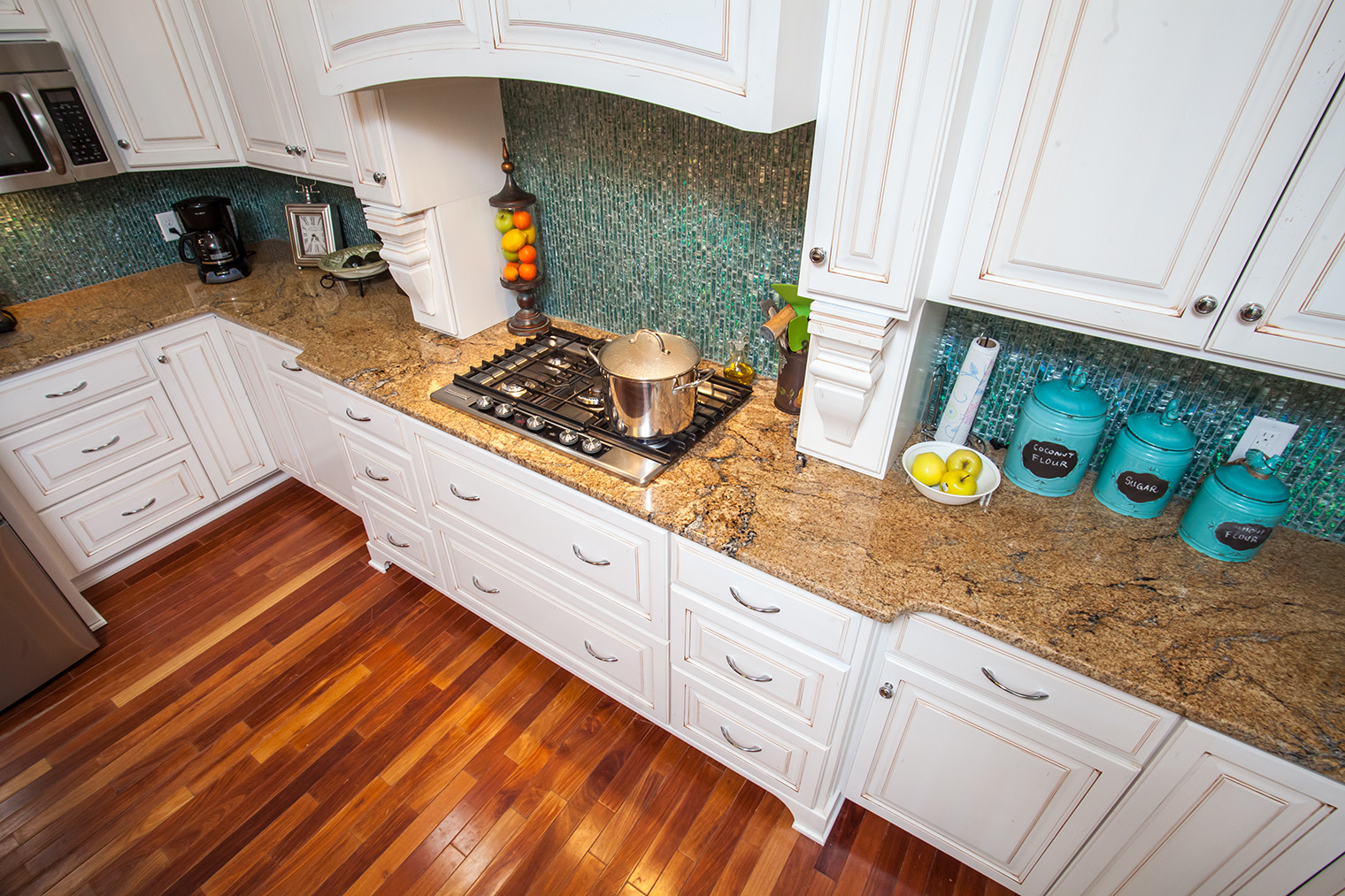
A seam is needed when your countertop is longer or more complicated than a single slab can cover. That is the short answer, and it is the main reason countertop seams show up in so many kitchens. A seam is not a flaw. When it is planned well, it is a narrow, tidy joint that most people barely notice. How visible it looks depends on where it sits, which stone you choose, and how carefully the pieces are matched. This guide explains when a seam is necessary, where it usually goes, and how to keep it as discreet as possible.
What Are Countertop Seams?
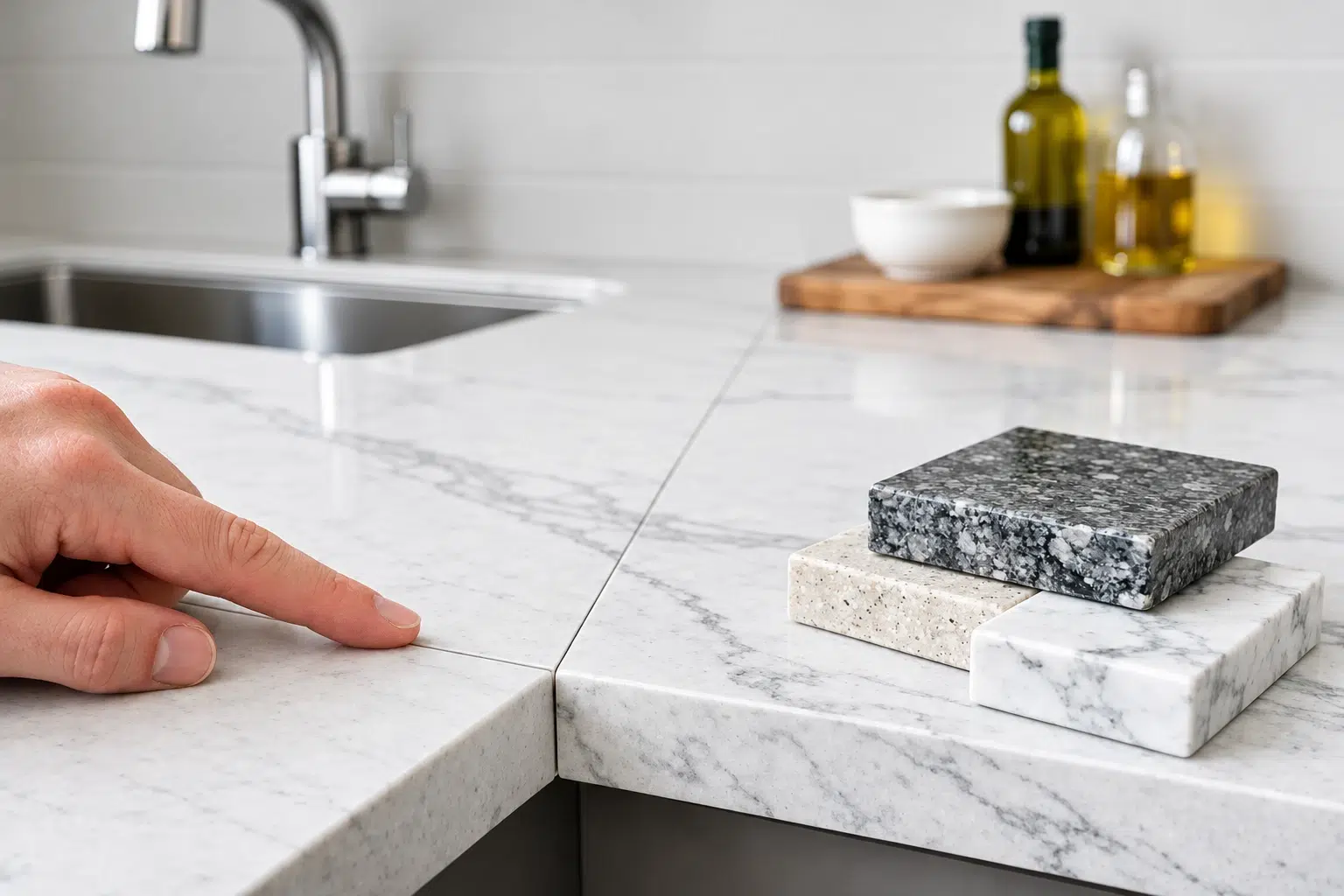
A seam is the line where two countertop pieces meet. Each piece is cut to fit your layout, the edges are joined, and a color-matched filler fills the small gap so the surface feels smooth when you run your hand across it.
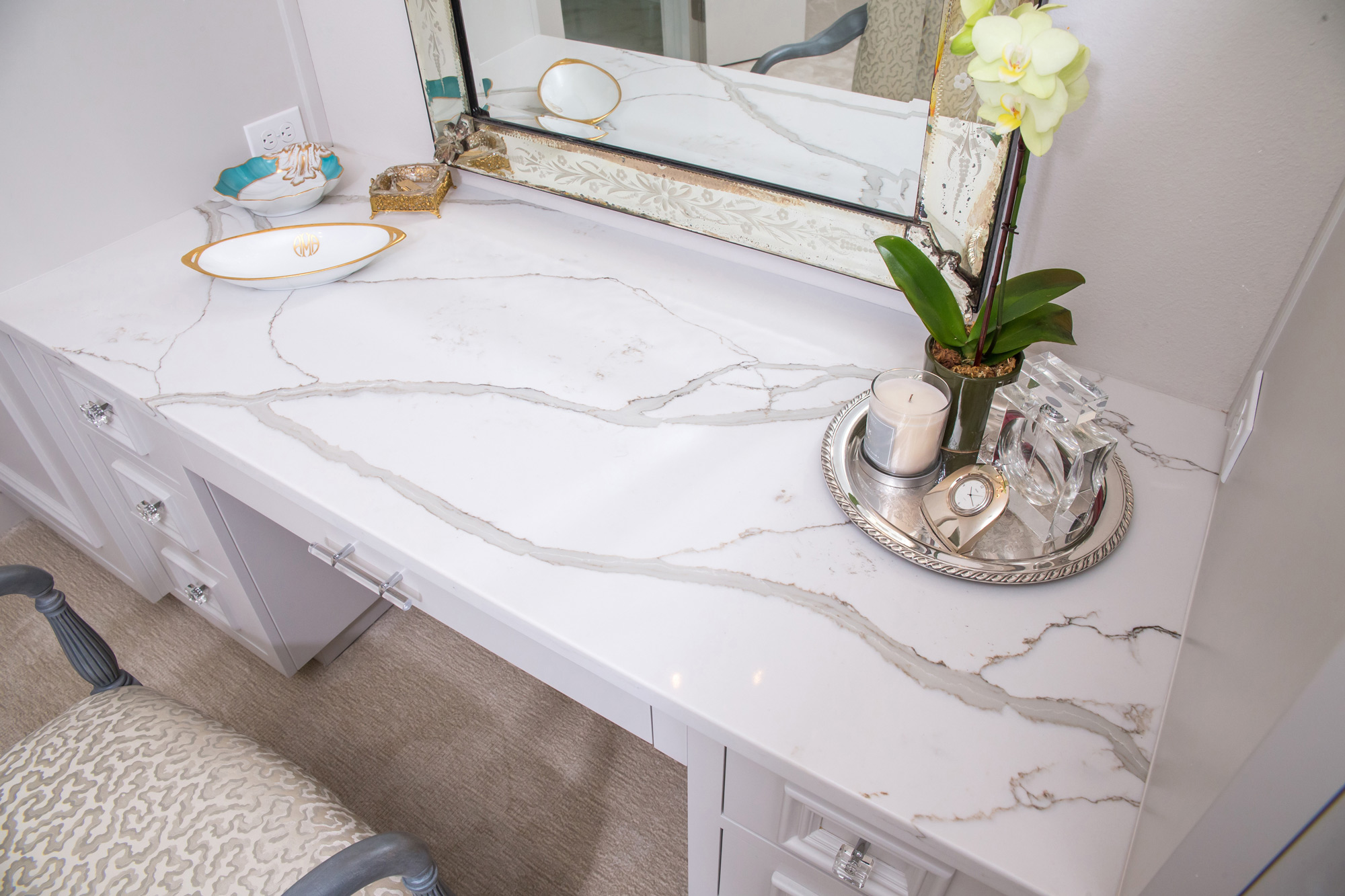
When the pieces are aligned well, the joint is thin and sits flat. Even so, a seam rarely disappears completely. You may notice it as a fine line, especially in strong light or on a plain, light-colored stone. That is normal. The goal is to make it as small and as hard to spot as the stone allows.
Why Countertops Need Seams
Stone is cut from natural slabs, and every slab has a limit. Three things usually decide whether your kitchen needs a seam.
Slab size
Many slabs measure roughly 9 to 10 feet by 5 to 6 feet, though sizes vary by stone and supplier. A standard counter is about 25 inches deep, so one slab can go a long way. But not all of a slab is usable. Fabricators also have to work around edges, cutouts, and backsplash pieces, so the usable stone is usually less than the full slab. If your layout needs more stone than one slab can supply, a seam is the practical answer.
Kitchen layout and corners
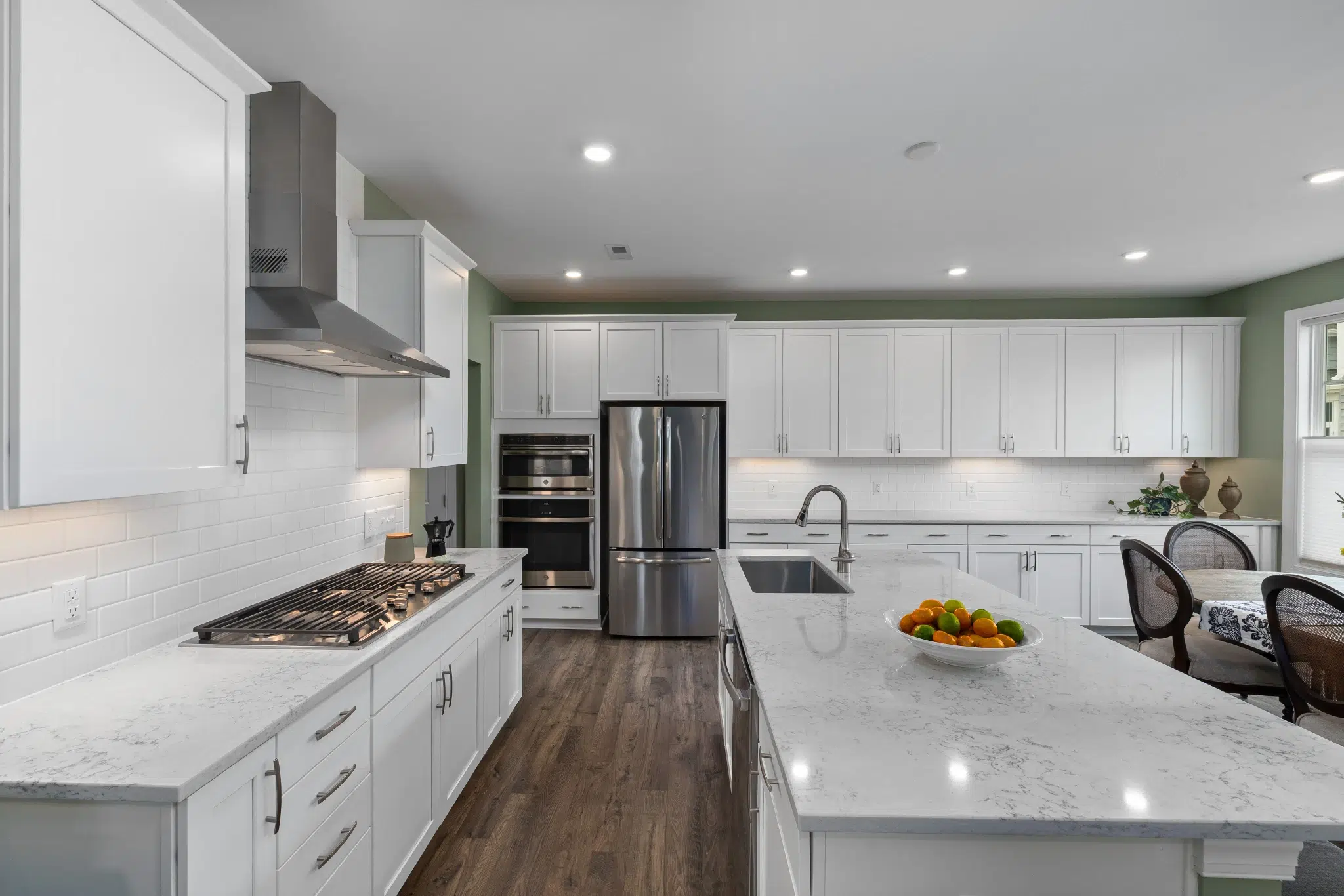
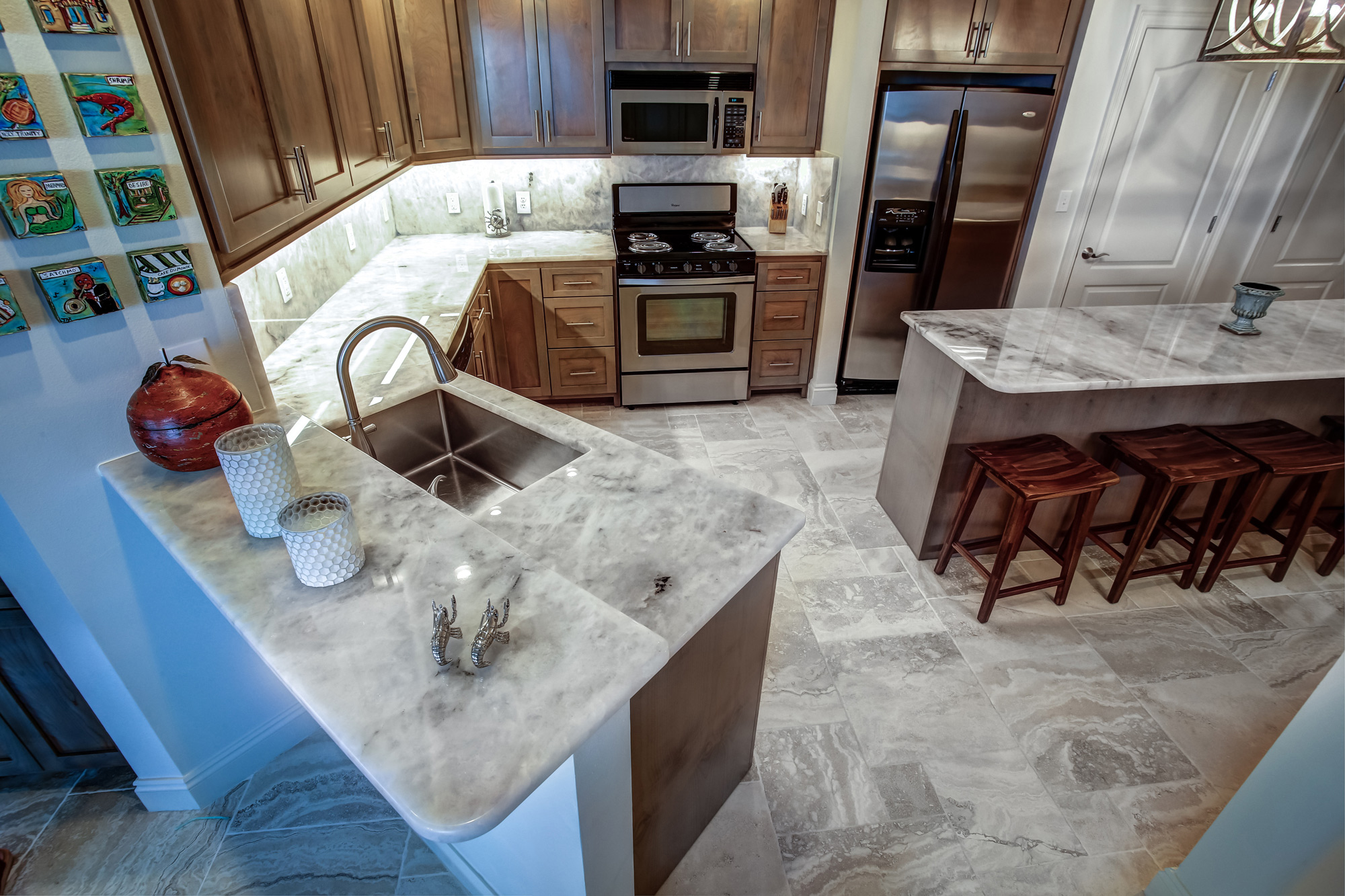
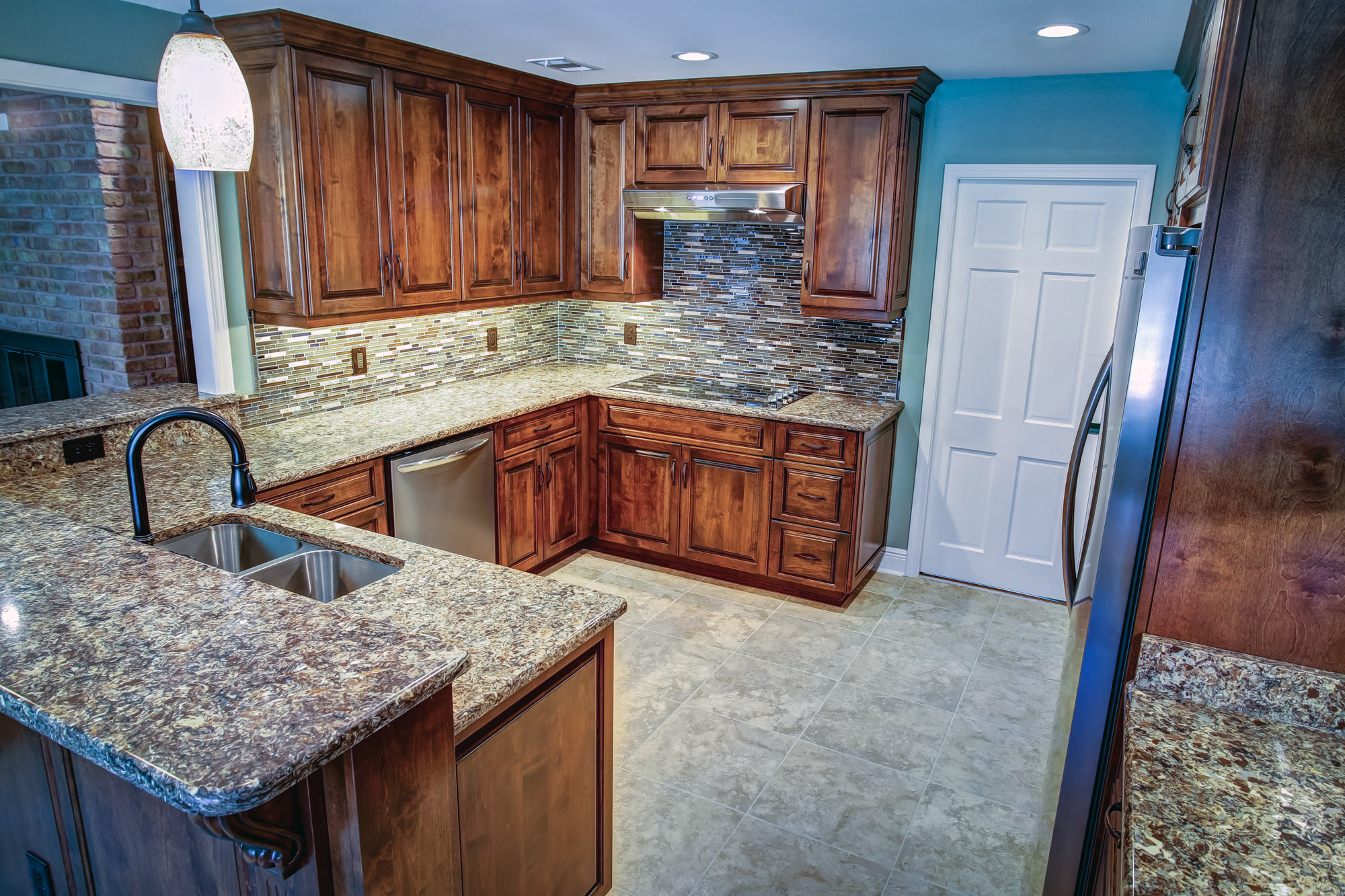
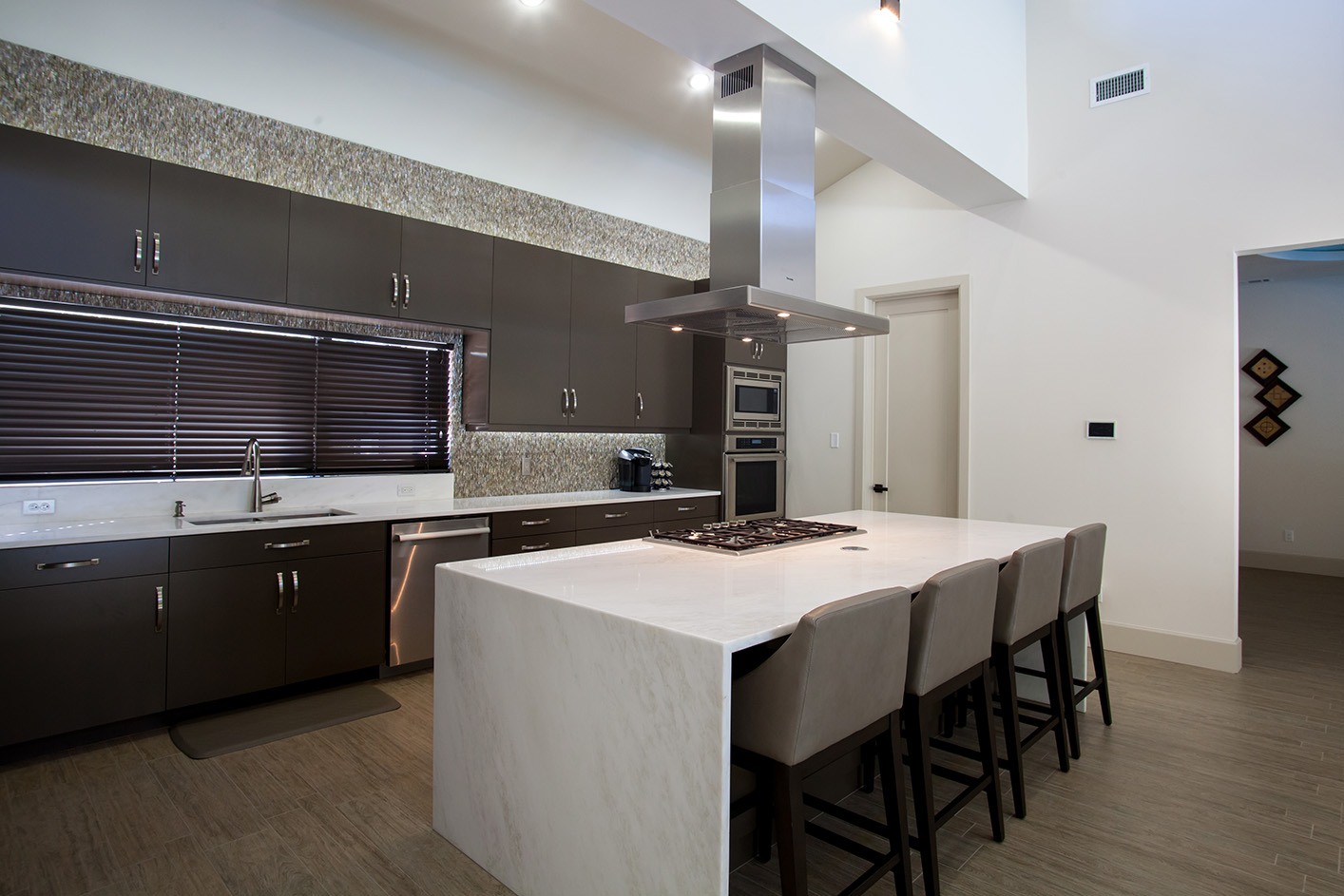
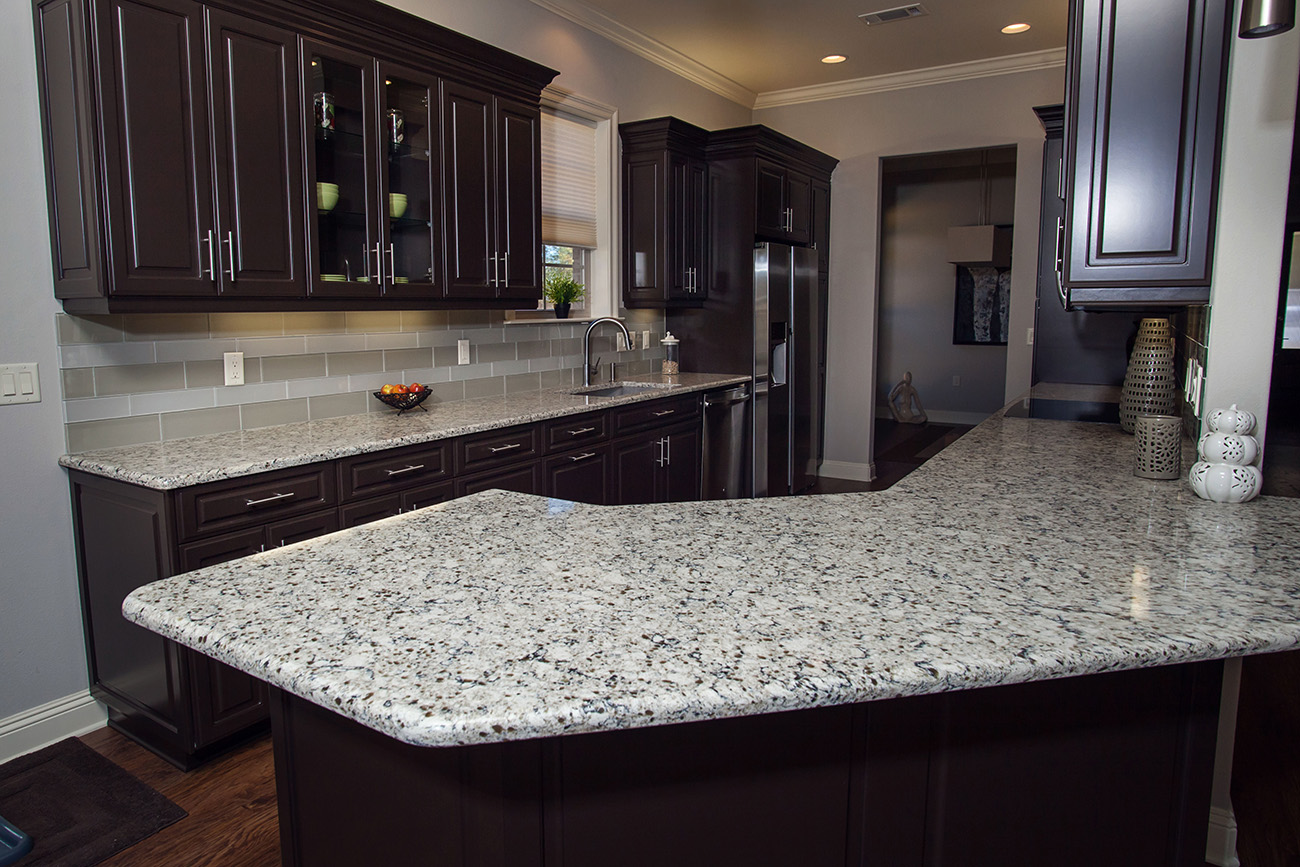
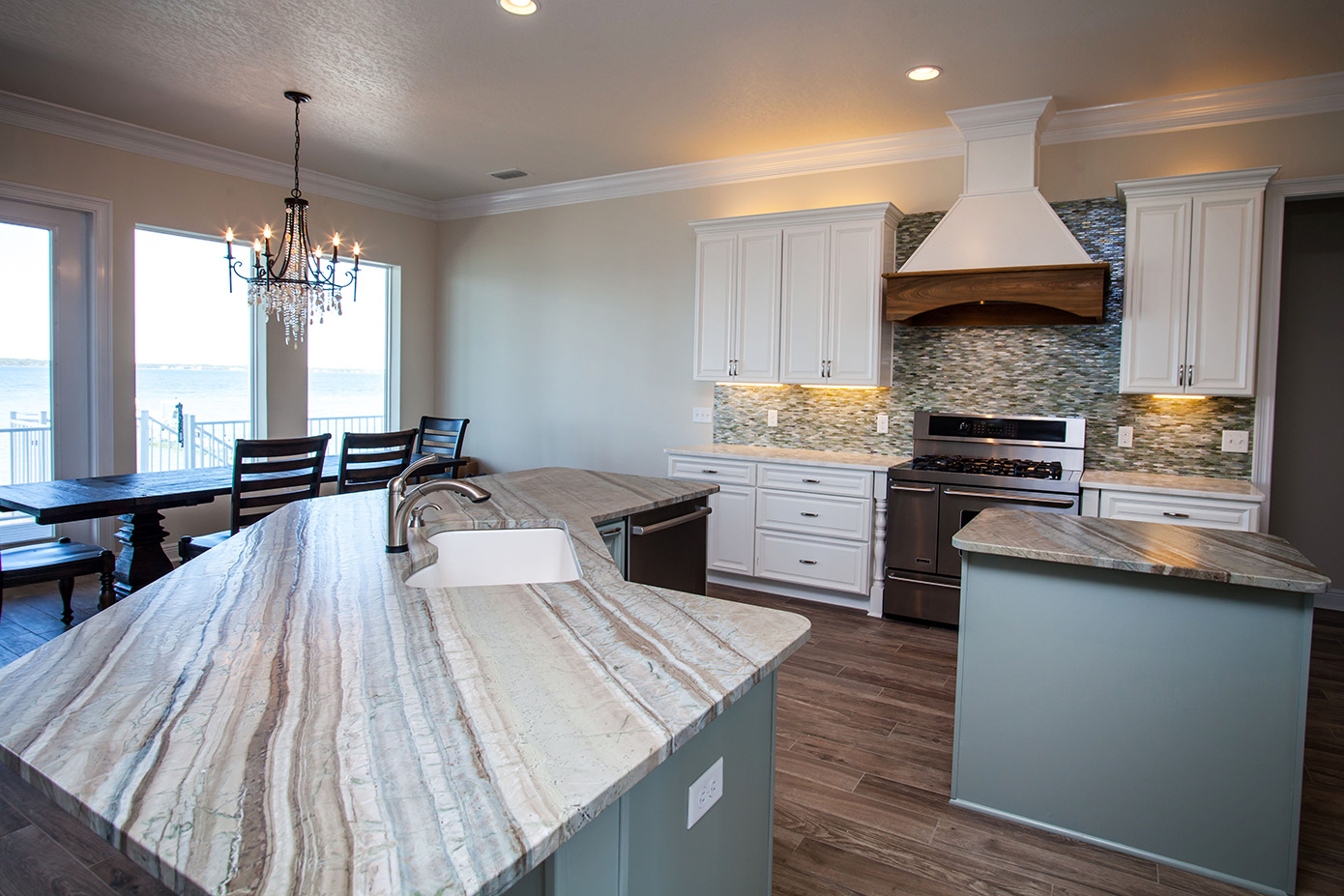
Layout matters as much as length. An L-shaped or U-shaped kitchen is built from runs that meet at corners, and many fabricators join two pieces at each corner. That is why an L-shaped countertop seam is so common, and why a U-shaped kitchen may have more than one.
Islands
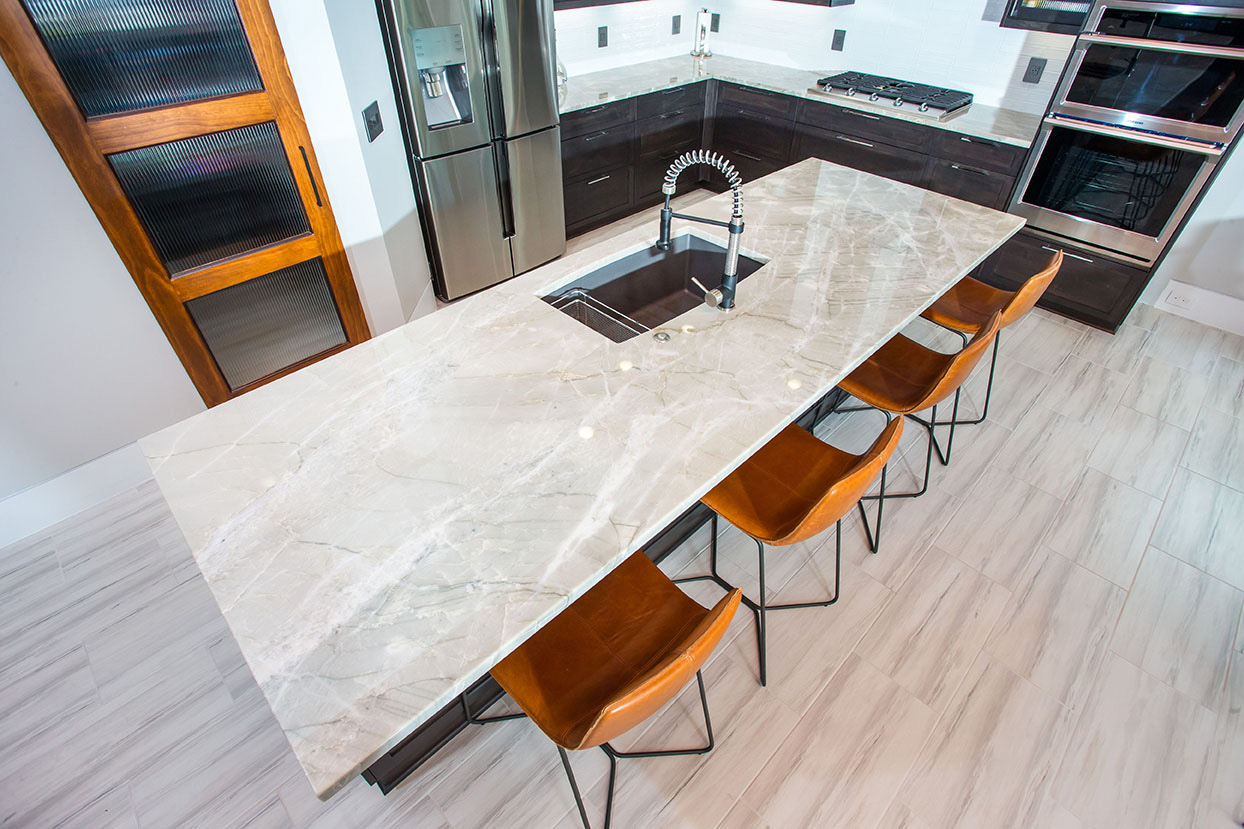
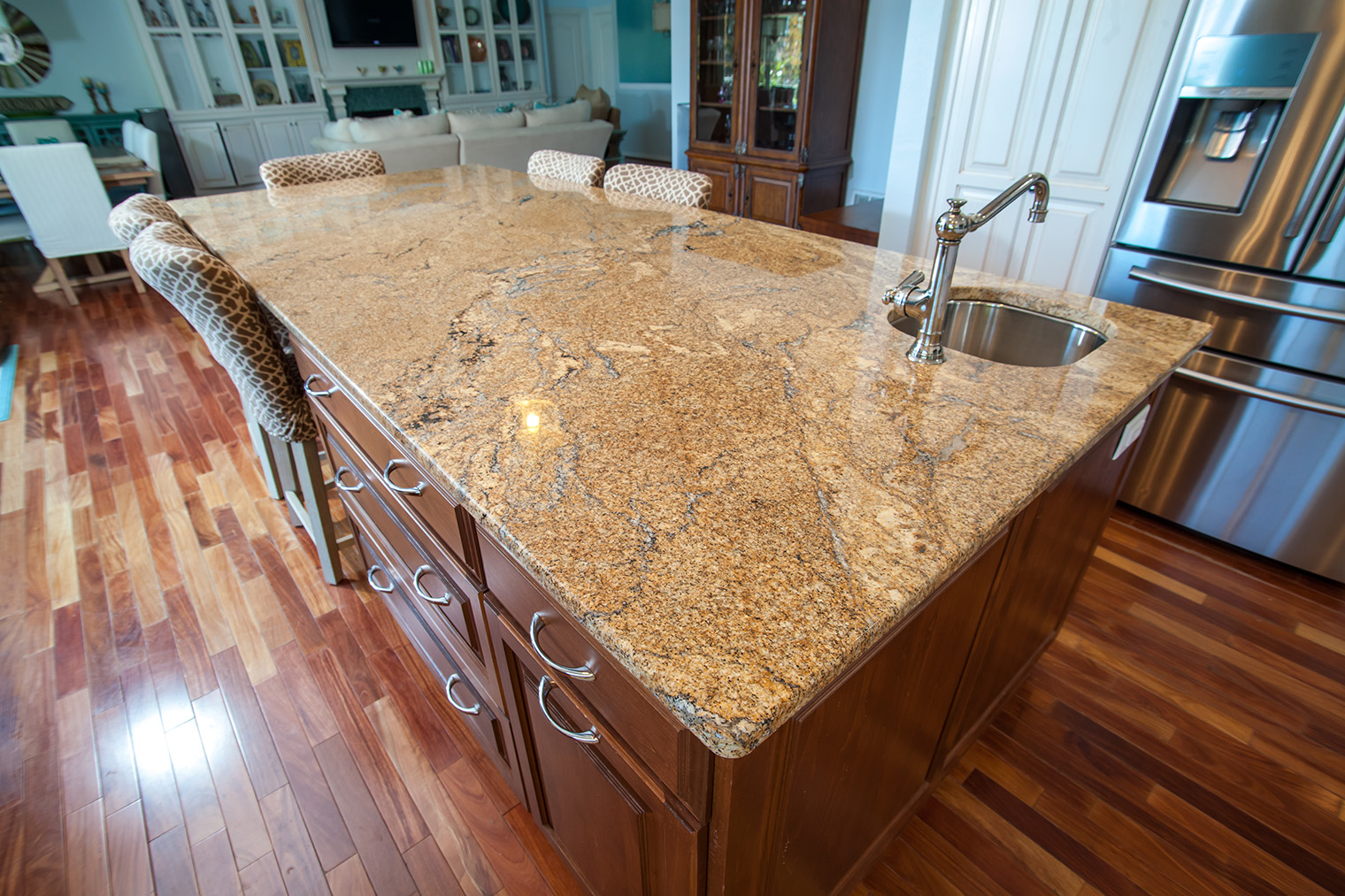
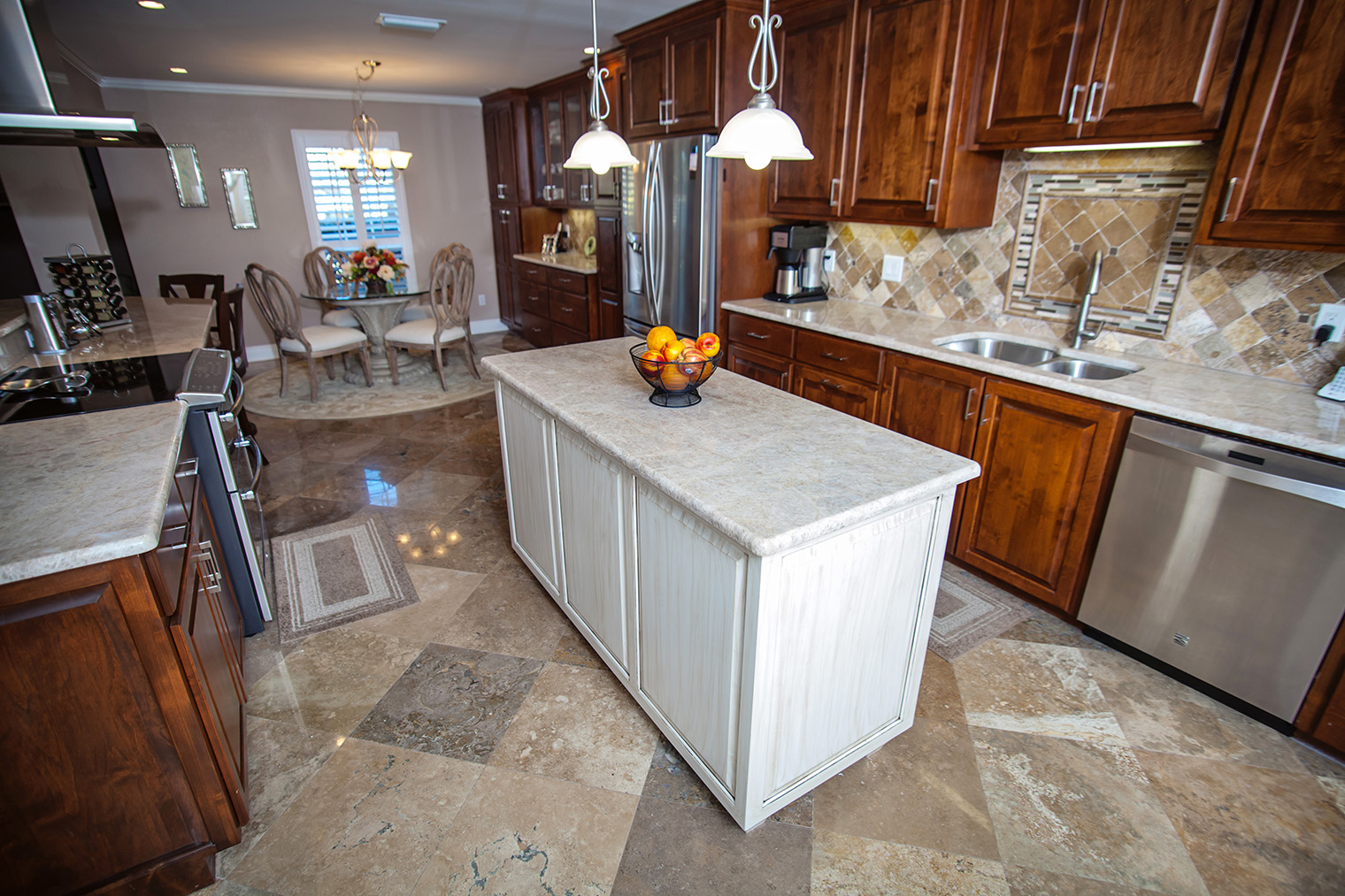
A large island is another common case. A kitchen island countertop seam is often needed when the island is longer than a single slab can cover. Overhangs, seating areas, and the pattern of the stone all affect where that joint should go, so it is planned with the layout in mind rather than added at the end.
How Many Seams in a Countertop Will You Need?
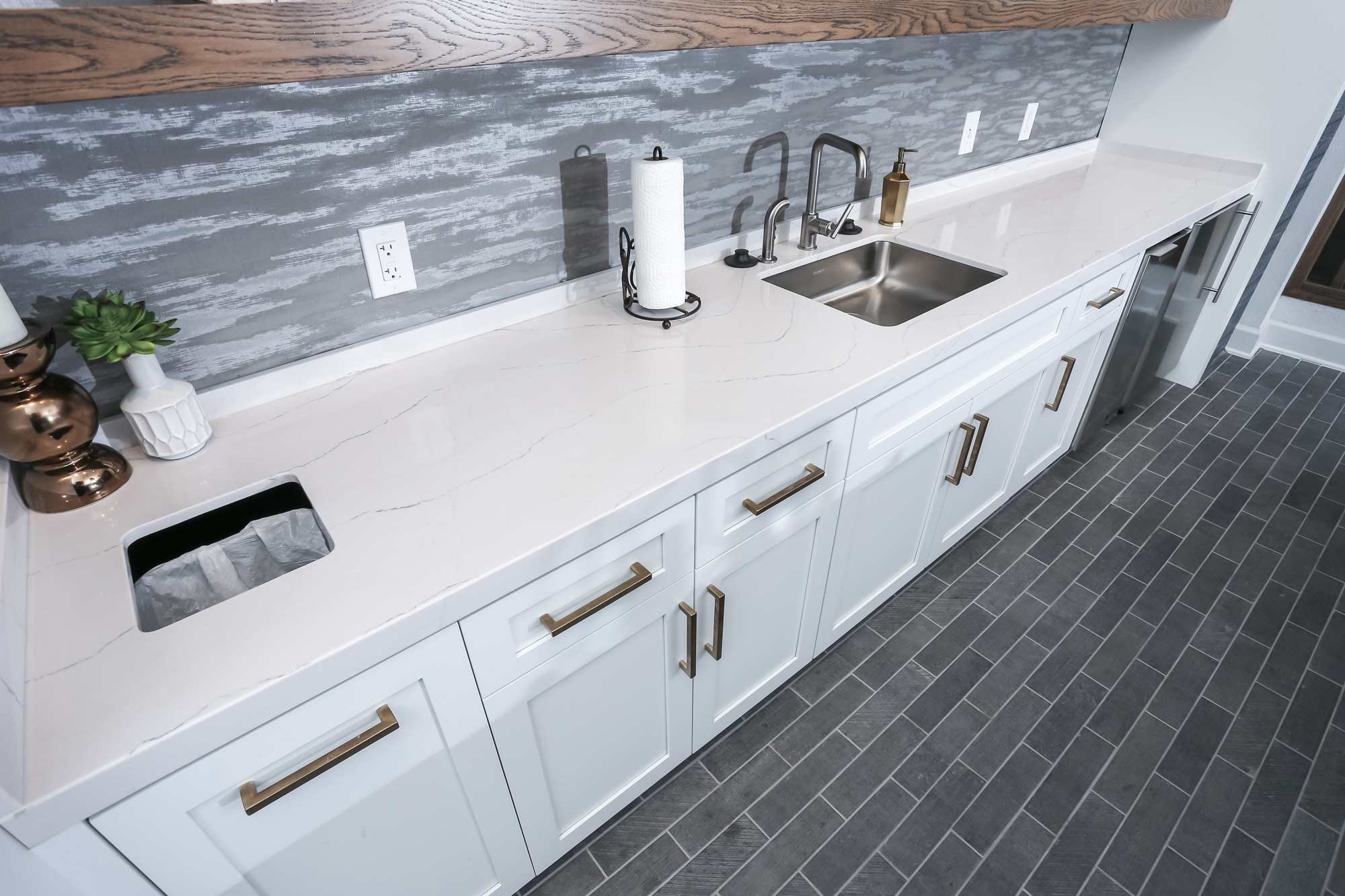
There is no fixed number, because it depends on your layout. The length of each run, the number of corners, the size of the slab, and the pattern of the stone all play a part. A short, straight run may need none, while a long wall of cabinets that meets a big island may need several.
That is also the answer to how long a countertop can be without a seam: as long as one slab and a simple shape allow. Once the run is longer than the slab, or turns a corner, a seam becomes necessary. Your fabricator can confirm this only after looking at your actual layout and the actual slab.
Where Do Countertop Seams Go?
Countertop seam placement is a balance between strength, appearance, and the stone itself. Fabricators look at the whole layout before deciding where two pieces should meet.
Over solid support
A seam should sit over something solid, such as a cabinet, not over an empty span. An unsupported joint is more likely to be stressed over time. This is also why cabinets need to be set and level before templating begins.
Around sinks and cooktops
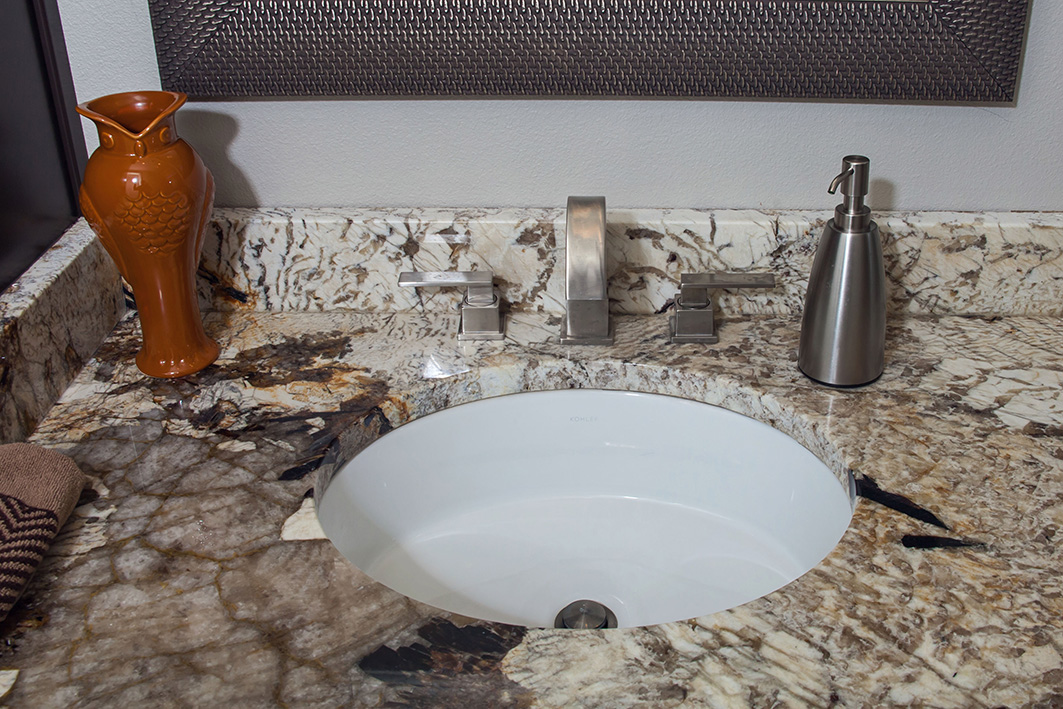
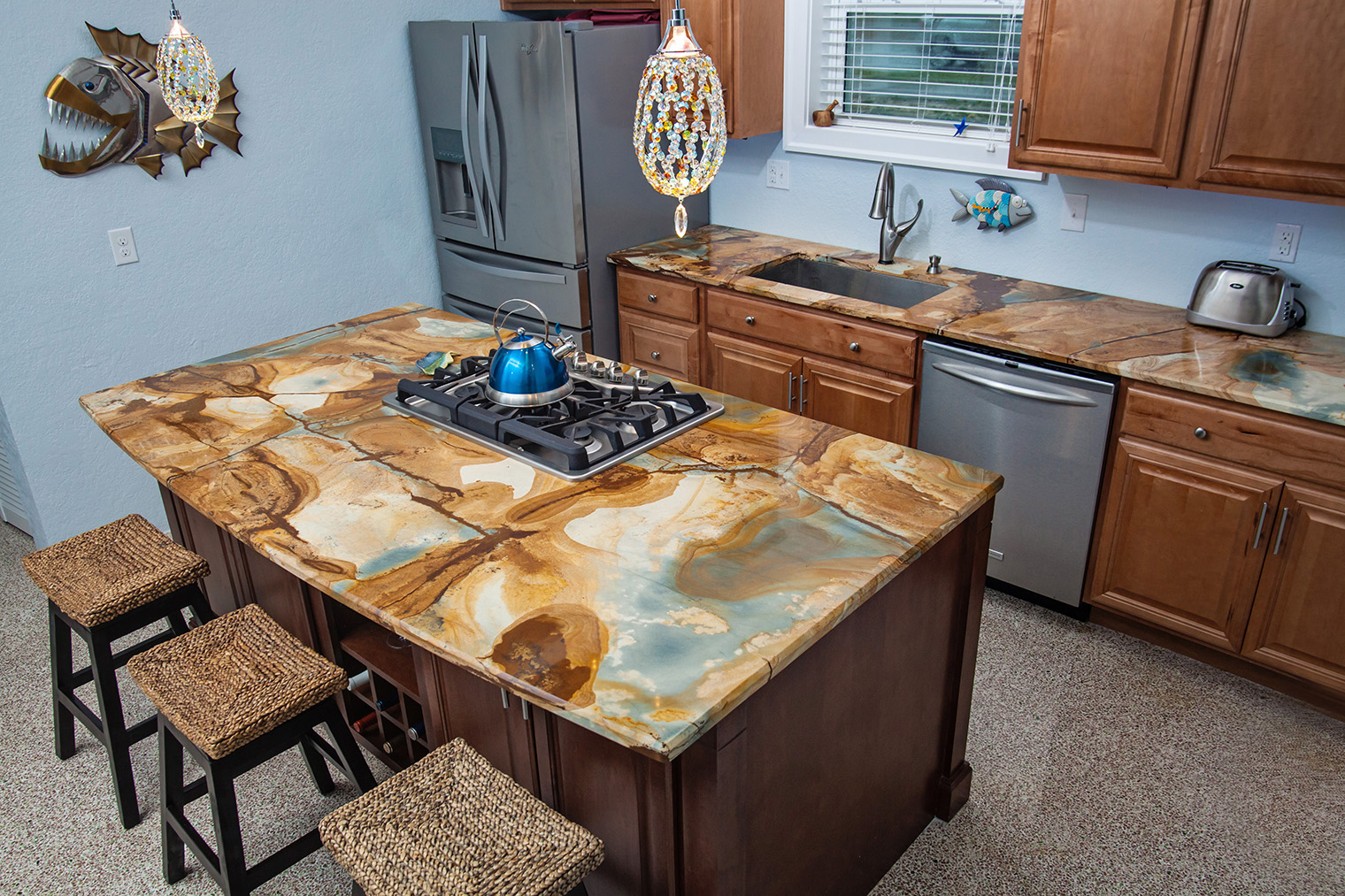
Sink and cooktop cutouts remove stone and leave narrow sections that can be weaker. Fabricators generally try to keep seams away from these spots when the layout allows it. When a seam has to be near a cutout, it calls for extra planning. The best location depends on the project, so no single rule fits every kitchen.
In less noticeable spots
Where possible, seams go in low-traffic areas or at natural breaks in the layout, such as a corner or near an appliance. The pattern matters too. A seam that follows a natural change in the stone is often less obvious than one that cuts across a bold vein. It also helps to think about where people will stand and sit. A seam at the front edge of an island is easier to spot than one near the wall.
Do Granite, Quartz and Quartzite Show Seams Differently?
A little, yes, and the reason is the stone itself.
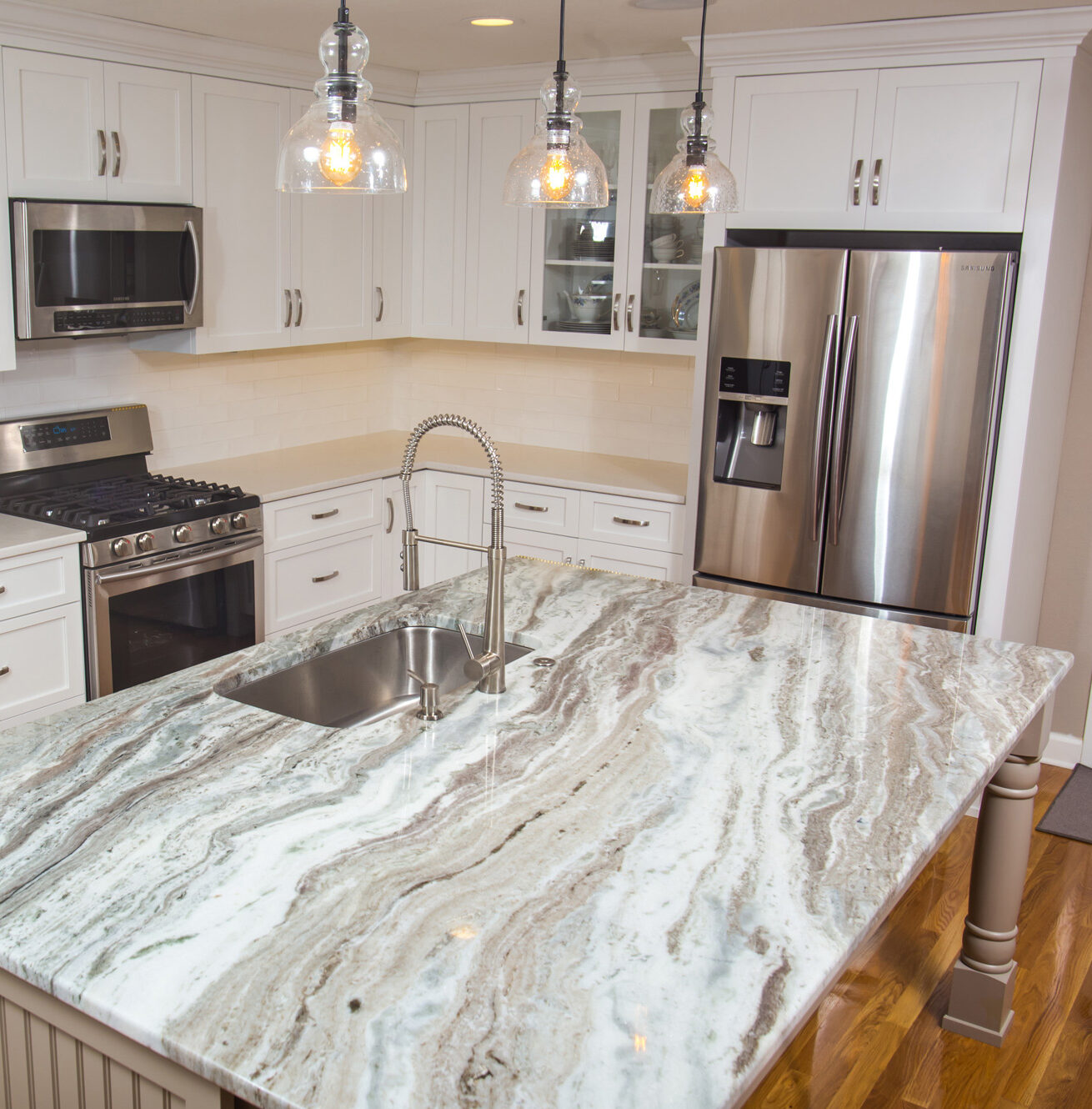
Granite is a natural stone, so its color and movement vary from slab to slab and even across a single slab. Careful matching is what keeps granite countertop seams discreet.
Quartz is engineered, so its slabs are more uniform. That helps, but quartz countertop seams can still be visible in some colors, and seams in white quartz tend to be the most noticeable.
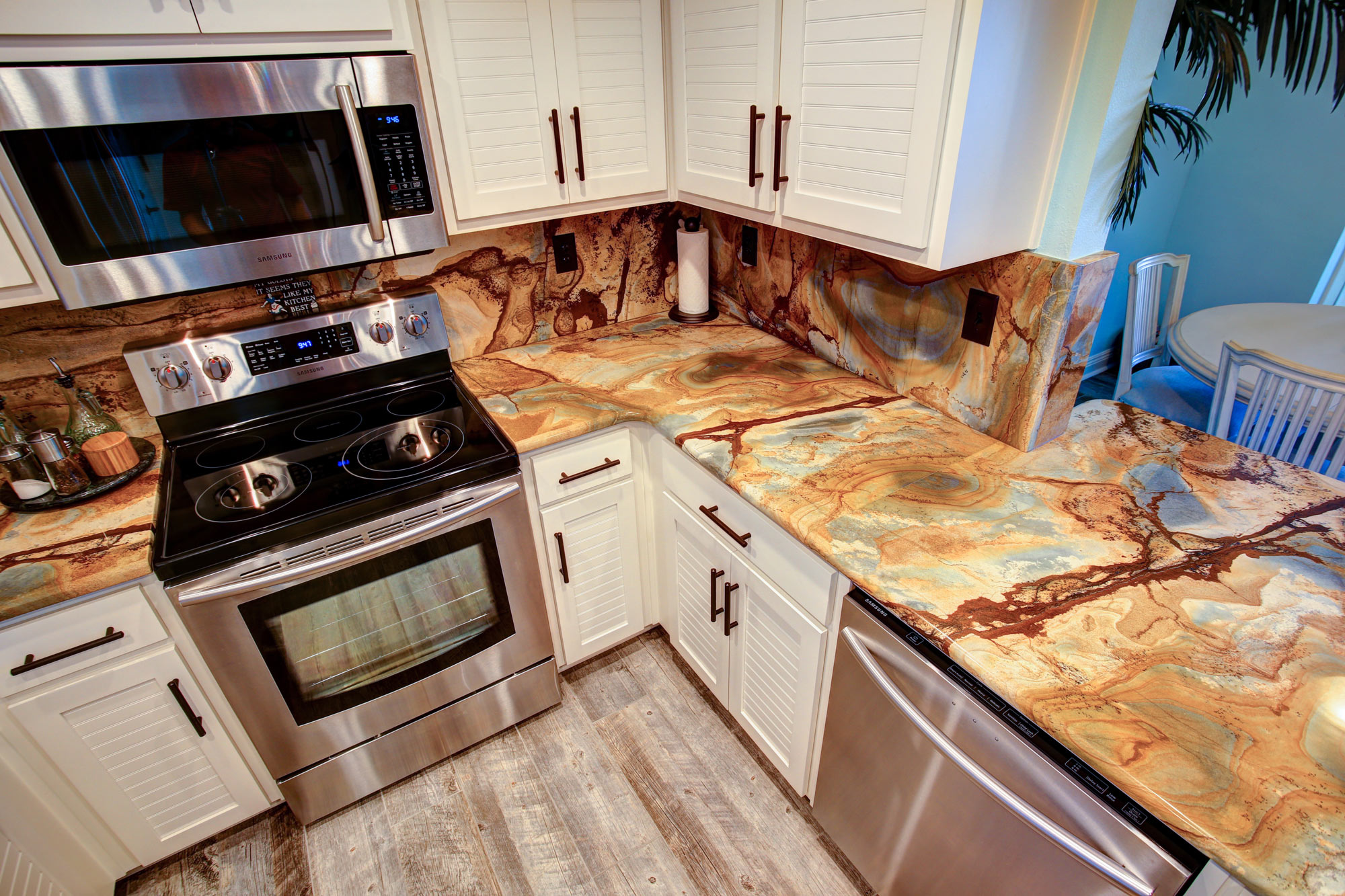
Quartzite is natural too. Because its color and movement can vary from one slab to the next, you may see slight variation at the joint. Looking at the actual slabs in person tells you far more than a small sample can.
Can You Hide Countertop Seams or Avoid Them?
You can reduce how visible a seam is, but you cannot promise it will vanish. Avoiding a seam altogether only works when the layout fits within one slab. A few things help:
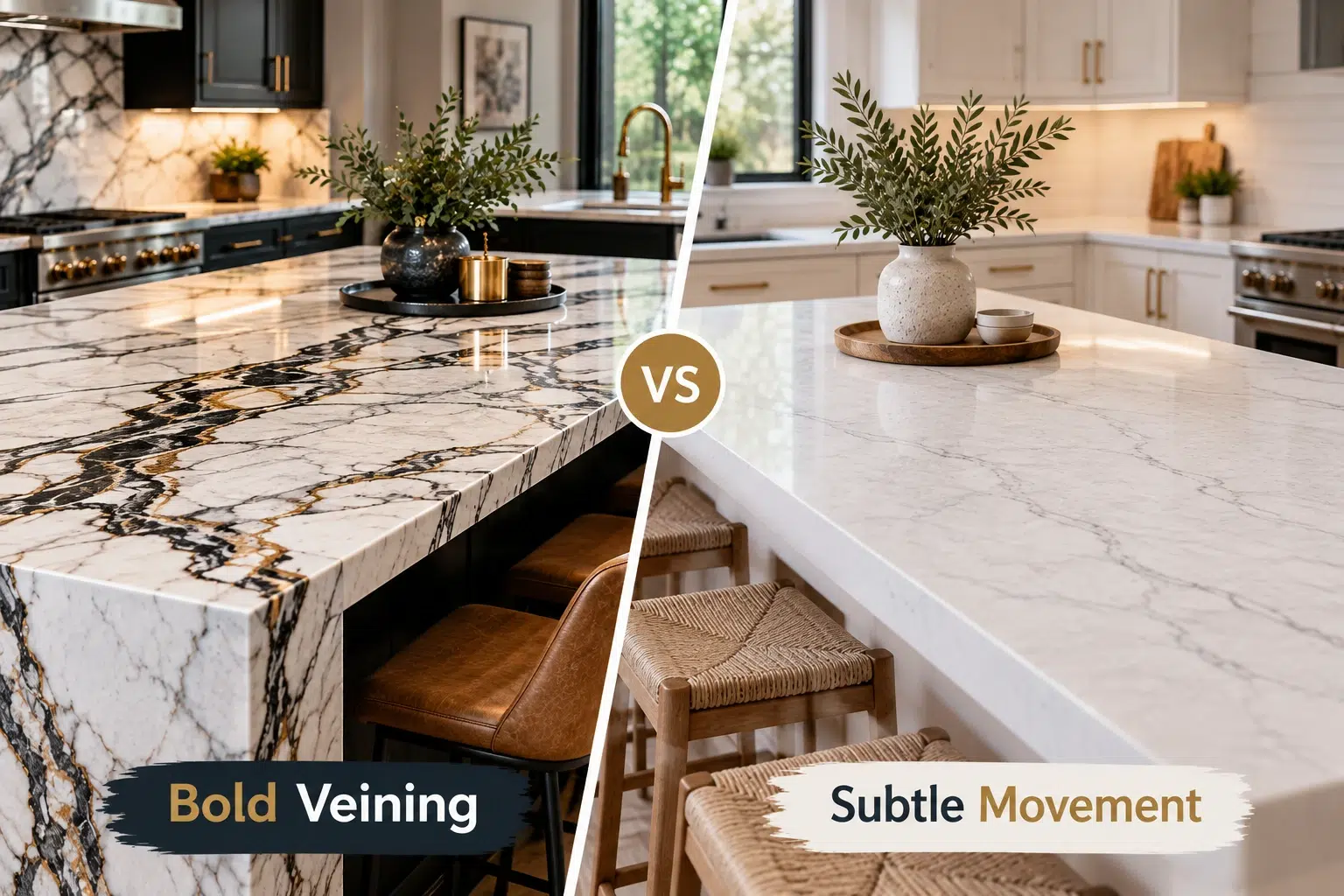
- Choose the pattern carefully. A calm, uniform pattern is easier to match than bold, dramatic movement.
- Ask about slab choice and layout. Sometimes a different slab or arrangement lets the pattern flow naturally across the joint.
- Use book-matched slabs. Book-matched slabs are cut from the same block and laid side by side so the pattern mirrors across the joint. Superior Granite uses book-matched slabs to give you a continuous look.
- Keep the surface level. Level cabinets and flat installation keep the joint from catching the light.
Still, no honest fabricator will promise an invisible seam. The aim is a joint that looks intentional and stays out of the way.
How Our Process Handles Your Countertop
Superior Granite is a family-owned company that opened in 2005, with showrooms in Pensacola, Pace, and Fort Walton Beach. Here is how your project moves from choosing a stone to installation:
- Choose your stone: Visit any of our three showrooms and pick the material you like. All of our stone is first quality and 3cm thick.
- Templating: We take precise measurements of your cabinets and walls so every piece fits properly. This matters for seams too, because joints only line up well when the pieces are cut accurately. The process is the same whether you need countertop templating in Fort Walton Beach, Pensacola, or Pace.
- Fabrication: We cut your slab using state-of-the-art machinery. This is also the stage to ask about edges, finishes, and add-ons.
- Installation: Our expert installation crew puts the counters in at your home. We aim to finish in one day, but unforeseen circumstances can sometimes mean an extra trip.
What to Ask Before Templating
Templating is the best time to settle every detail, because the layout and seam locations are decided before the stone is cut. A few good questions now can save you from surprises later.
Before you approve the layout, ask your fabricator these questions about countertop seams:
- How many seams will my layout need, and why?
- Where will each one be, and what supports it underneath?
- How noticeable will the seam be in the stone I picked?
- Would a different slab or layout make it less visible?
- Can I see examples of finished seams?
If you are planning a granite countertop in Pensacola, bring your cabinet layout and any questions about slab choice to the showroom. Seeing the stone in person and talking through the seam plan before template day is the easiest way to avoid surprises.
Final Thoughts on Countertop Seams
A seam is usually the result of simple limits: slab size, layout, and the way the stone is cut. It is not a sign of poor work. What matters is that the joint sits over solid support, the pieces are matched well, and you know where it will be before fabrication begins.
If you are planning new counters, bring your layout and stone ideas to Superior Granite. Our team can walk you through your options for selection, fabrication, and installation at any of our showrooms in Pensacola, Pace, or Fort Walton Beach. You can also get in touch to plan your visit.
Pensacola, FL
Visit Us: 7011 Pine Forest Road, Pensacola, FL 32526
Call Us: (850) 941-0270
Hours: Monday – Friday: 8 a.m. – 5 p.m., Saturday: 9 a.m. – 2 p.m.
Pace, FL
Visit Us: 4590 Jernigan Road, Pace, Florida 32571
Call Us: (850) 994-1872
Hours: Tuesday – Friday: 9 a.m. – 5 p.m., Saturday: 9 a.m. – 2 p.m.
Fort Walton Beach, FL
Visit Us: 35 Miracle Strip Pkwy SW, Fort Walton Beach, Florida 32548
Call Us: (850) 301-0716
Hours: Tuesday – Friday: 8 a.m. – 5 p.m., Saturday: 9 a.m. – 2 p.m.
Get quotes now and start your project!
FAQs
1. Will I feel the seam when I run my hand over it?
A well-finished seam should feel flat and smooth. If you can catch a fingernail on it, point it out to the installer before the crew leaves rather than waiting.
2. Can a seam crack or separate over time?
A seam that is properly supported and installed on level cabinets should hold up well. Problems usually trace back to weak support underneath, cabinets that shift, or a hard impact. If you ever notice a gap, contact the company that installed your counters.
3. Which stones show seams the most?
White quartz tends to show seams more than other quartz colors. Natural stones such as granite and quartzite can show slight variation in color and movement at the joint, because every slab is different. Viewing the slabs in person before you choose is the best way to judge.
4. Can I choose where my seam goes?
You can share your preferences, and a good team will listen. The final location still has to work with the slab size, the cabinet support, and the cutouts, so a spot that looks good on paper may not always be possible. Ask to see the proposed location before fabrication begins.
5. Do I need to be home on template day?
Yes, or someone must be there for you. A representative with job knowledge and decision authority has to be present to answer questions. If no one is there, the template is rescheduled, which can delay your job.
6. How should I prepare before templating?
Clear everything off your existing counters, finish any plumbing, cabinet, or wall changes beforehand, and make sure cabinets are set and level. Install farm or apron sinks first, provide entrance codes if needed, and put pets away. Also give your salesperson the model numbers for your sink, faucet, sink accessories, range, and cooktop before the template.
7. Will a seam add extra days to my installation?
Our goal is to complete installation in one day. Every project is unique, though, and unforeseen circumstances can sometimes require extra trips, so we cannot promise a fixed timeline. Ask your sales associate what to expect for your layout.