Most countertop myths are half-true, and that’s exactly what makes them dangerous. A homeowner who thinks granite never needs sealing ends up with a stained surface. One who thinks quartz is heatproof ends up with a scorch mark. Someone who picks a stone from a 4-inch sample ends up surprised by the full slab.
These countertop myths don’t come from nowhere. Most of them started as a grain of truth that got stretched too far. This article covers 7 of the most common ones: what’s true, what’s not, and what fabricators actually see go wrong on the job.
Superior Granite has been working with homeowners across the Gulf Coast since 2005. Here’s what the team wants you to know before you choose, order, or install a countertop.
Myth 1: Granite Is Indestructible and Needs No Care
Granite is one of the hardest, most durable natural stones available, but it is not indestructible.
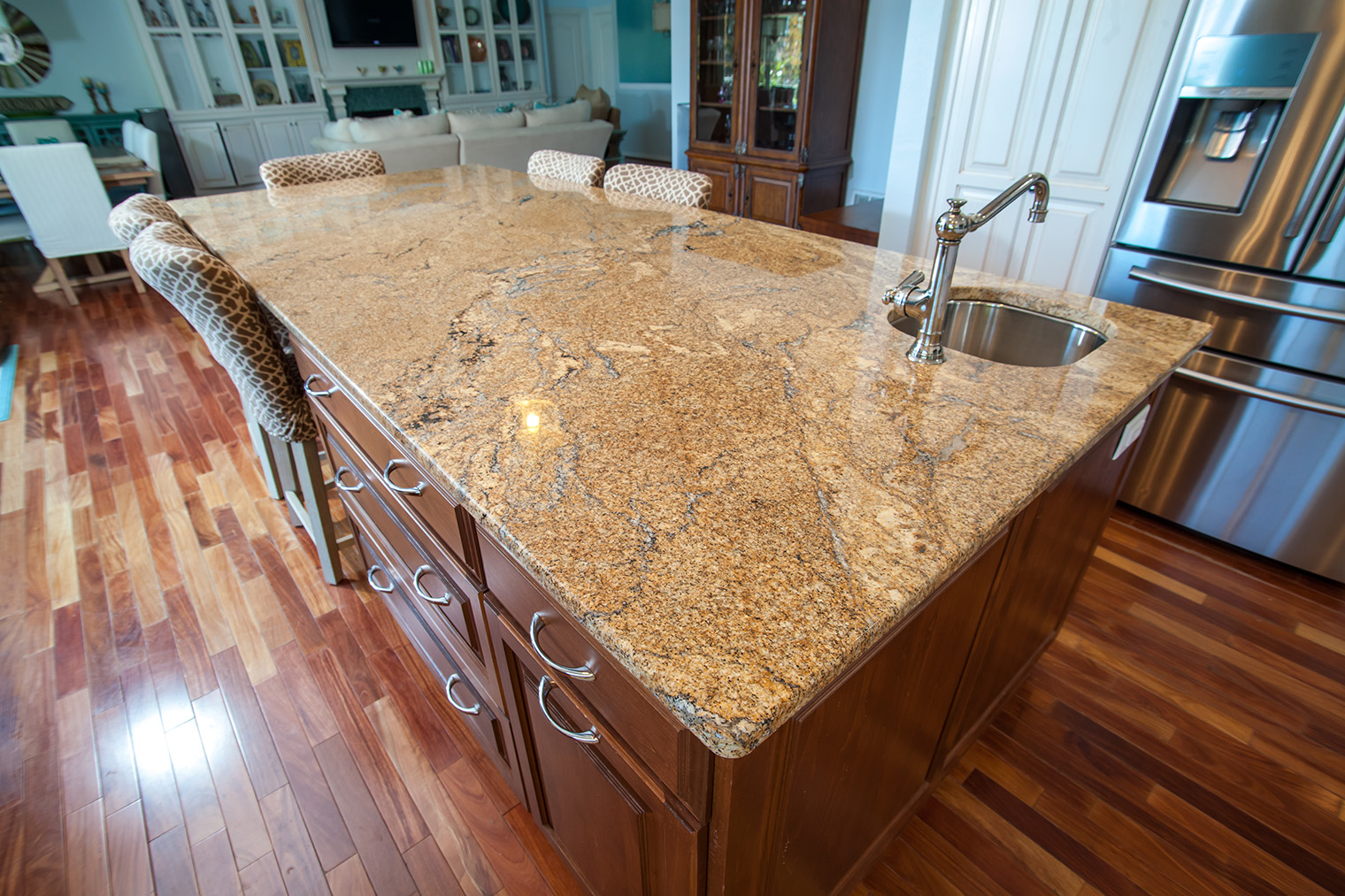
The truth: granite sits at Mohs 6 to 6.5, making it highly scratch-resistant and one of the best natural stones for heat. You can place hot items directly from the stovetop or oven on granite without damage, and you can cut directly on the surface without scratching it, though it will dull your knives over time. For a busy family kitchen, granite earns its reputation.
But granite is still porous. Without proper sealing, it can stain. Annual sealing is the standard recommendation: clean the surface, apply a silicone impregnator, wait 10 minutes, then wipe off excess. That’s all it takes, and it keeps the stone protected for the year ahead.
Common mistake: Placing hot glass dishes or Pyrex directly on granite. The stone handles heat; the glass doesn’t. When cold glass meets a hot granite surface, thermal shock can crack the dish. Pyrex and glass cookware always need a trivet.
You can cut directly on granite, but a cutting board protects your knives. The stone survives either way. Explore natural stone countertops and see granite slabs in person at any showroom location.
Myth 2: Quartz Is Heatproof and Maintenance-Free
Quartz requires no sealing and resists staining, but it is not heatproof. Quartz is an engineered stone made from roughly 90 to 93% crushed quartz crystals bound with resin and pigments. That non-porous surface means no sealing, no staining from acidic spills, and no bacteria penetrating the surface. For low-maintenance appeal, quartz delivers.
The limitation is heat. Quartz contains resin, and excessive or prolonged heat scorches the surface. Always use a trivet or hot pad between quartz and any heat source; treat it the same way you’d treat a quality laminate surface. One hot pan without protection can leave a mark that doesn’t come out.
Darker quartz colors also show fingerprints, water marks, and dust more readily than lighter options. That’s not a defect; it’s a characteristic worth knowing before you commit to a dark slab.
Common mistake: Using bleach-based products or abrasive pads to clean quartz. Both can damage the surface finish permanently.
Before trying any new cleaning product on quartz, test it on a hidden area first. Some household cleaners contain chemicals that cause permanent discoloration.
Myth 3: Quartz and Quartzite Are the Same Thing
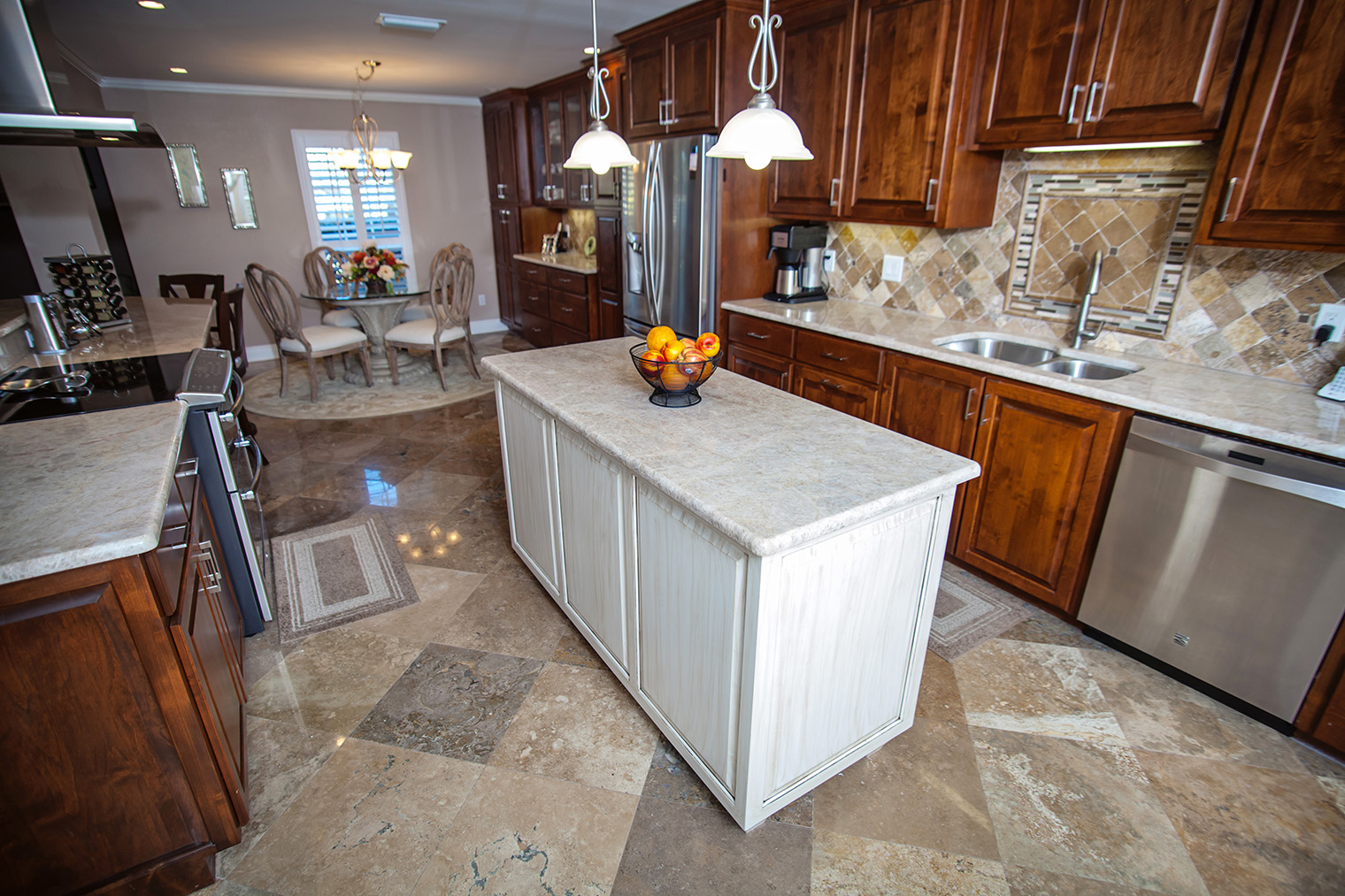
They share part of a name. That’s about all they share. This is one of the most common and most expensive mix-ups in countertop selection. Quartz is an engineered product manufactured from crushed quartz crystals (roughly 90 to 93%) combined with resin and pigments. Quartzite is a natural metamorphic stone formed from pure quartz sandstone under extreme heat and pressure. It contains 90 to 99% quartz crystals and is actually harder than granite.
| Material Type | Quartz | Quartzite |
|---|---|---|
| Origin | Engineered | Natural stone |
| Sealing | None required | Monthly x3, then semi-annually |
| Heat | Scorches; use a trivet | Highly heat resistant |
| Look | Consistent, uniform | Unique, marble-like veining |
| Best for | Low-maintenance kitchens | High-traffic, high-heat kitchens |
Common mistake: Treating quartzite like quartz and skipping the sealing schedule. Quartzite is porous and needs sealing; the first three months require monthly sealing, followed by every six months after that. Skipping it leaves the stone vulnerable to staining.
Pay special attention to quartzite edges, faucet holes, and sink openings. These areas are more porous than the polished surface and need extra sealing attention.
Myth 4: Sealing Marble Makes It Etch-Proof
Sealing protects marble from staining. It does nothing to prevent etching. These are two different problems, and confusing them is one of the most common reasons marble owners end up disappointed. Staining happens when a liquid penetrates the porous surface and leaves a mark; sealing significantly reduces that risk. Etching is a chemical reaction: when an acidic substance contacts the calcium carbonate in marble, it dissolves the surface and leaves a dull spot. No sealant stops that reaction.
Marble sits at Mohs 3, the softest end of the natural stone spectrum. Common kitchen acids, including lemon juice, wine, tomato sauce, vinegar, and citrus extracts, all cause etching. On marble, that damage can happen quickly if a spill is left sitting. Semi-annual sealing is still essential for stain protection, but it doesn’t change marble’s relationship with acids.
Common mistake: Cleaning marble with vinegar, citrus-based products, or any acidic cleaner. These etch the surface immediately and repeatedly.
Acidic spills should be wiped up immediately; every time. Marble performs best in bathrooms and low-traffic areas where kitchen acid exposure is minimal.
Myth 5: Porcelain Can’t Be Damaged
Porcelain is one of the most resistant surfaces available, but it is not damage-proof. Porcelain slabs are fired at over 2,000°F, producing a surface that resists scratches, stains, heat, etching, and UV exposure. It doesn’t etch from acids, doesn’t require sealing, and can be used indoors and outdoors.
The vulnerability is impact. Porcelain slabs are 12mm thick, thinner than the standard 3cm of natural stone or quartz. That thickness means mitered edges are standard for countertop work, and those edges carry a higher chip risk during fabrication than softer materials. Any chips that occur during fabrication will be filled and remain visible. Additionally, blunt force: a heavy cast iron skillet dropped directly on the surface can crack porcelain.
Common mistake: Dropping heavy objects like cast iron cookware, hammers, or other dense items directly onto the surface. Porcelain handles heat and daily use beautifully, but it does not absorb impact the way softer materials do.
Myth 6: Your Countertop Will Look Exactly Like the Sample
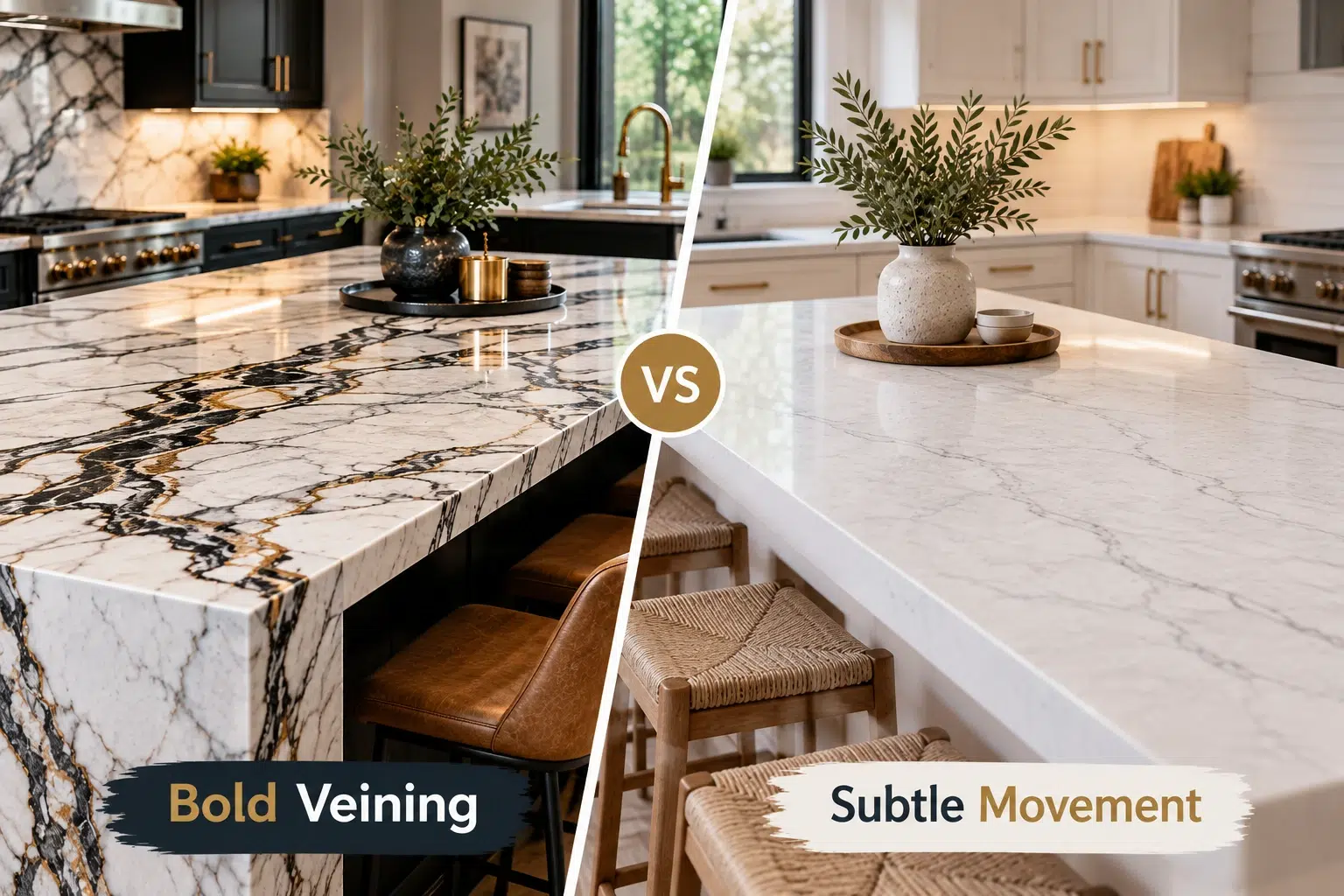
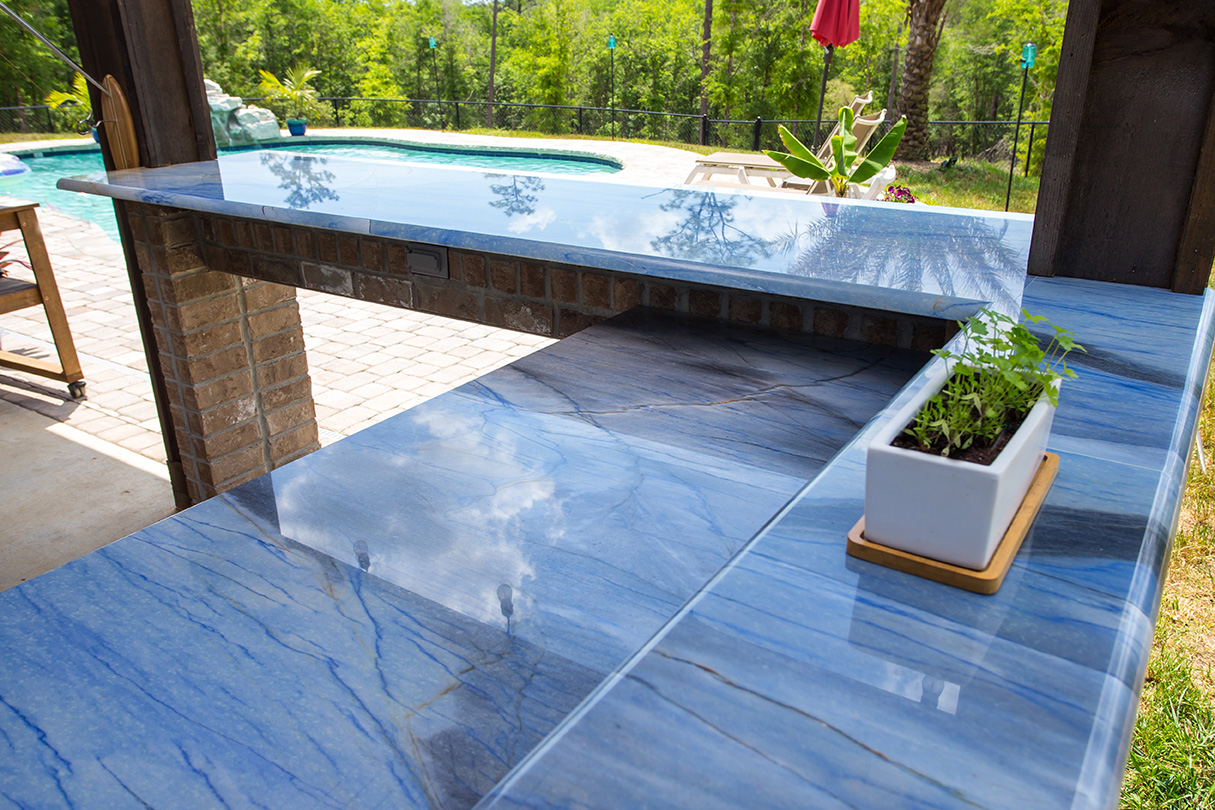
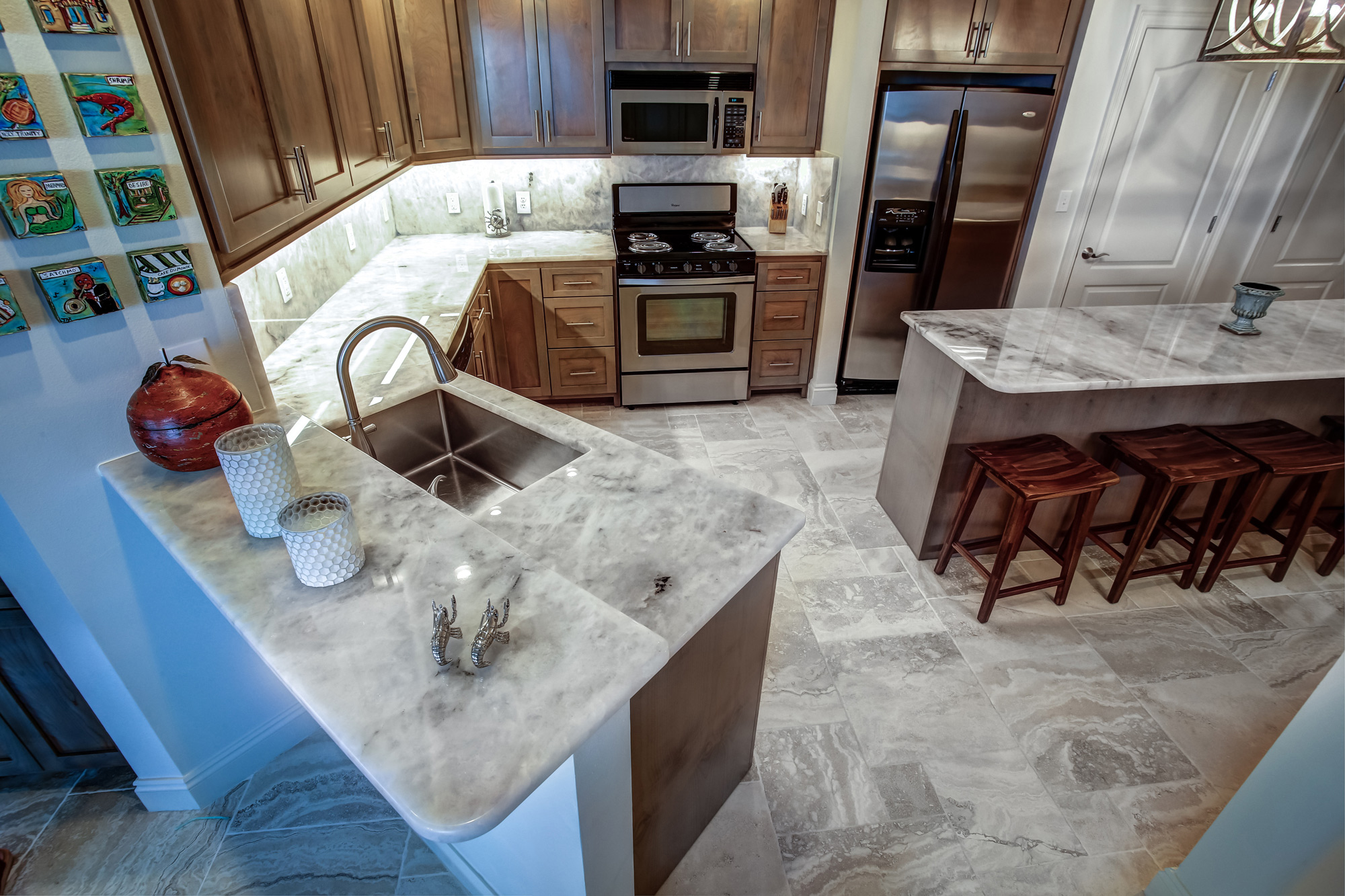
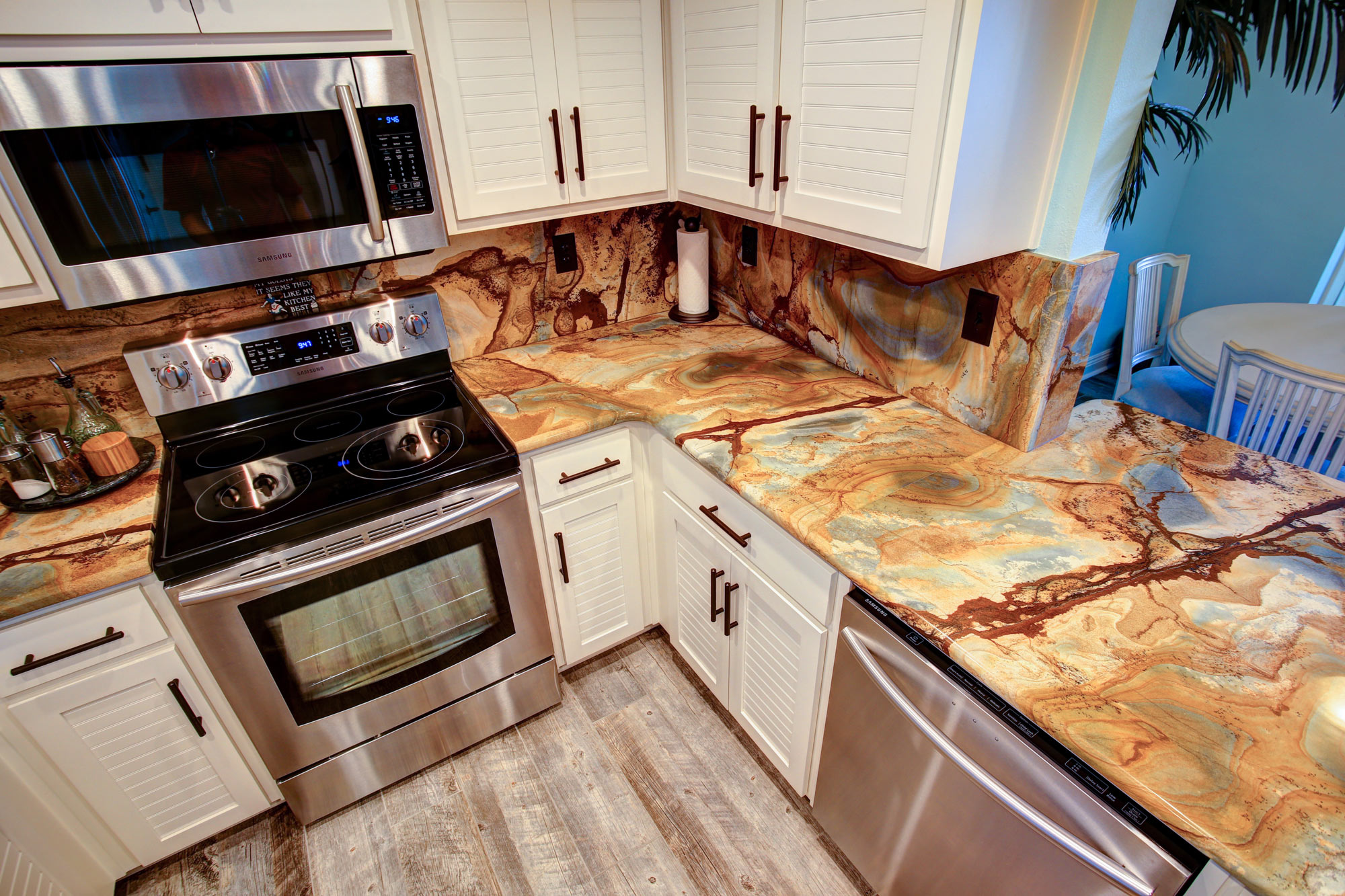
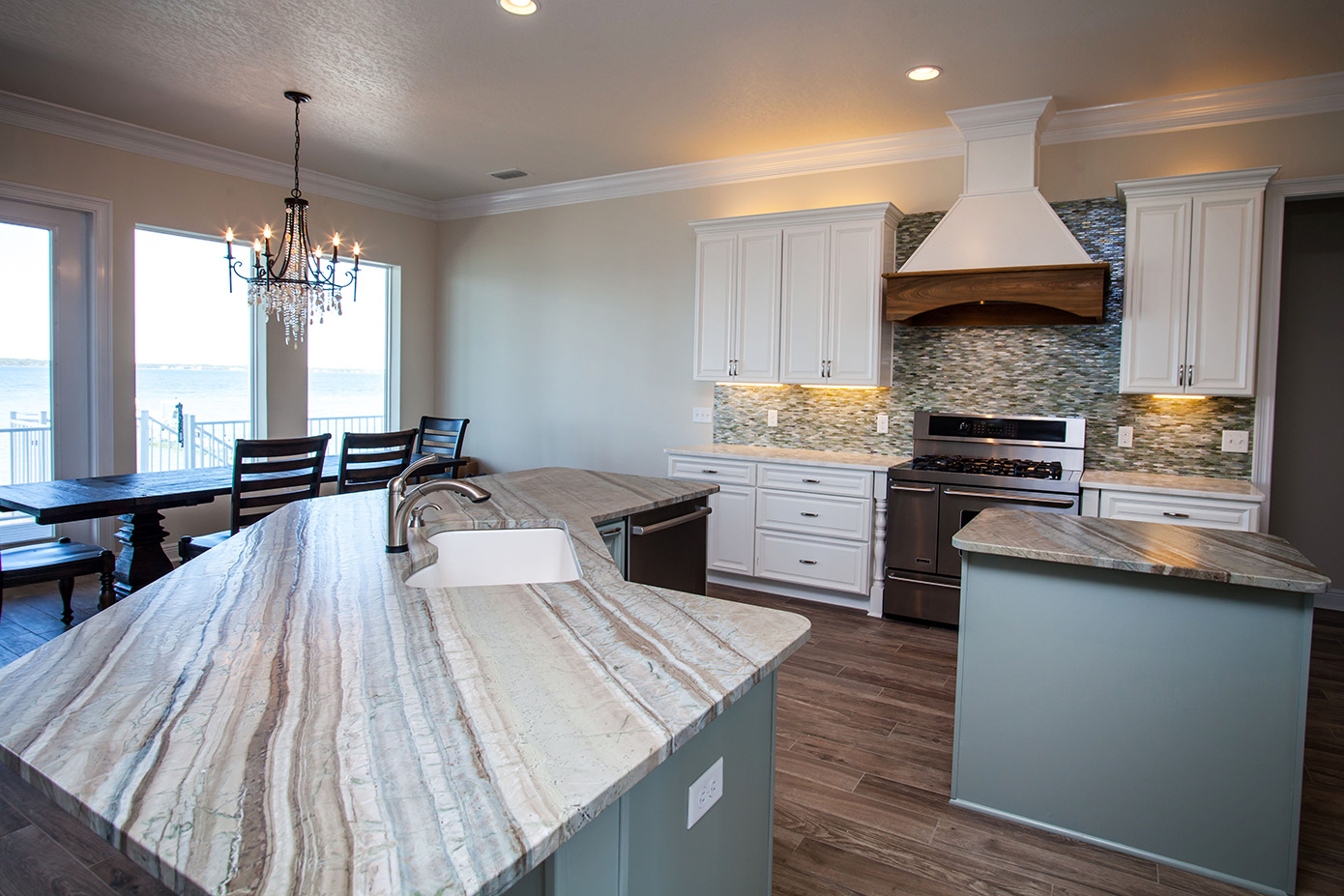
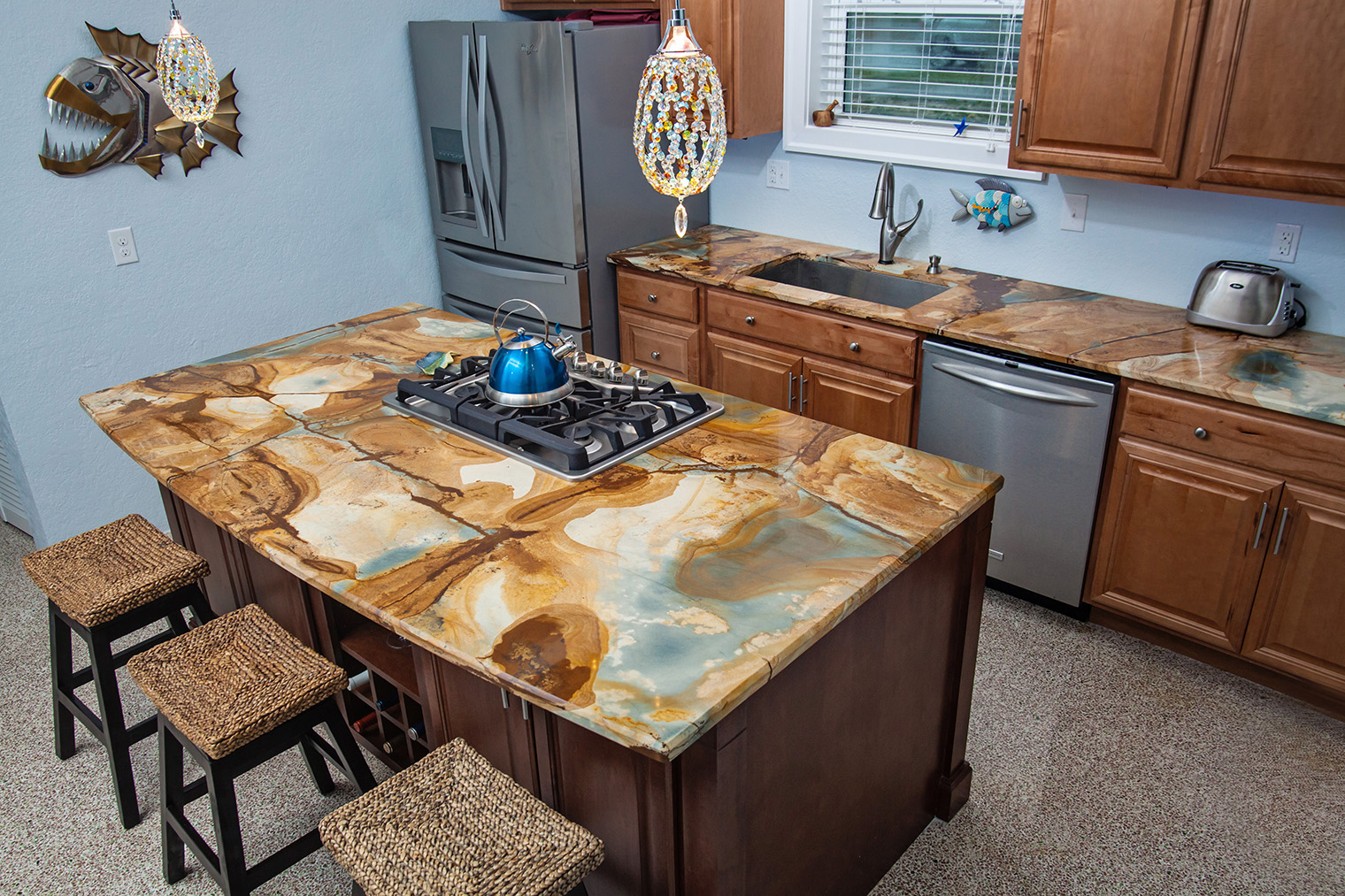
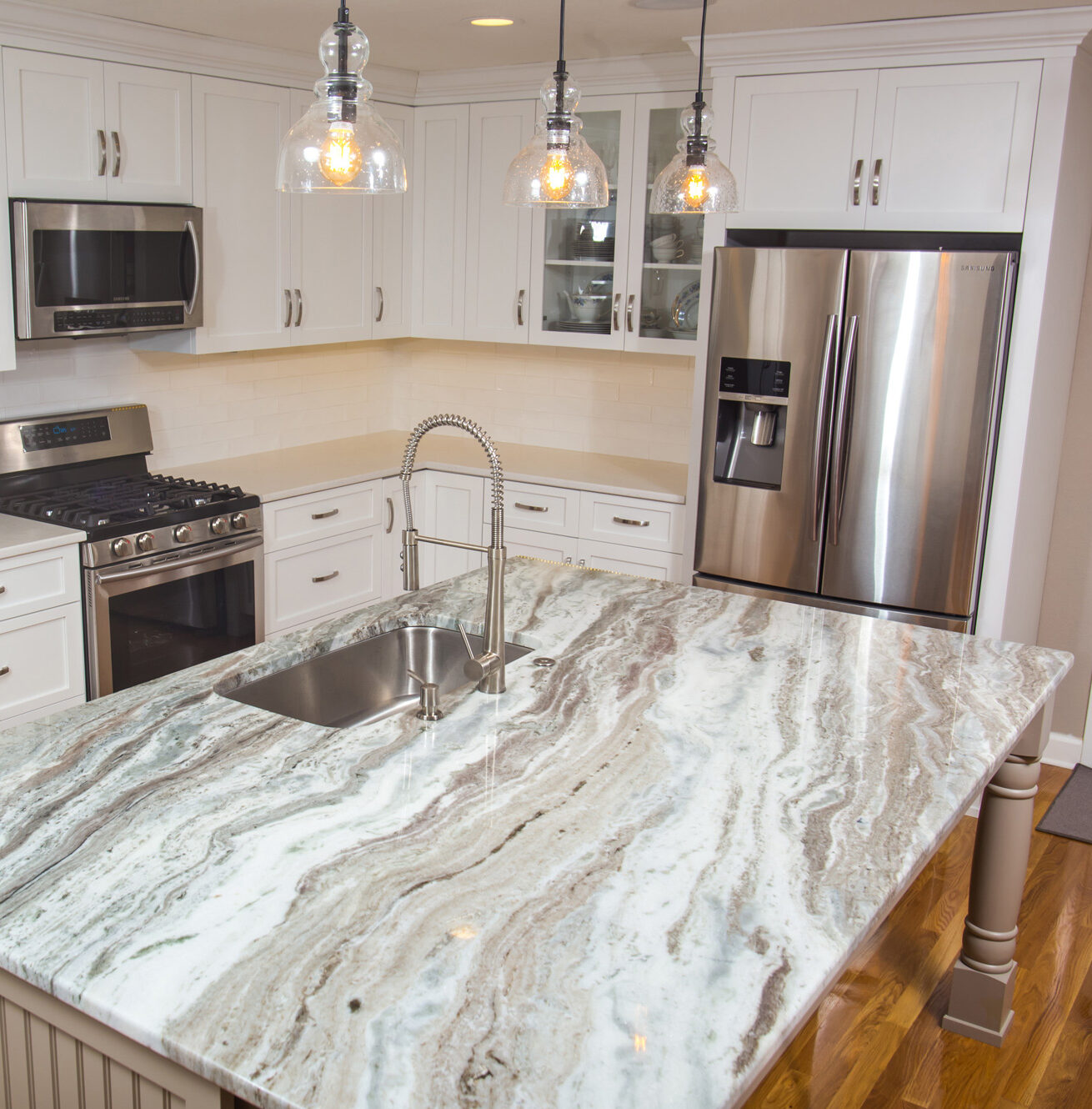
A 4-inch sample tells you almost nothing about how a full slab will look. Natural stone countertops granite, quartzite, marble, dolomite, calcite, limestone vary from slab to slab. The veining moves differently, the color shifts, and the mineral patterns are unique to each piece. What looks like a subtle grey vein on a small sample can become a dramatic sweep across 10 feet of countertop. A pattern that seems bold on a chip can look perfectly balanced at full scale.
Soft natural stones, marble, calcite, limestone, can also have natural pitting in the surface. This is a characteristic of the material, not a defect, but it’s something a small sample won’t show you clearly.
Book-matched slabs create a mirrored, continuous veining effect, but only when the two slabs are cut and positioned correctly. The book-match is only visible when you see the paired slabs together in person, not from a photo or a small sample.
Common mistake: Choosing a natural stone from a small showroom sample or an online photo, then being surprised when the full installation looks different.
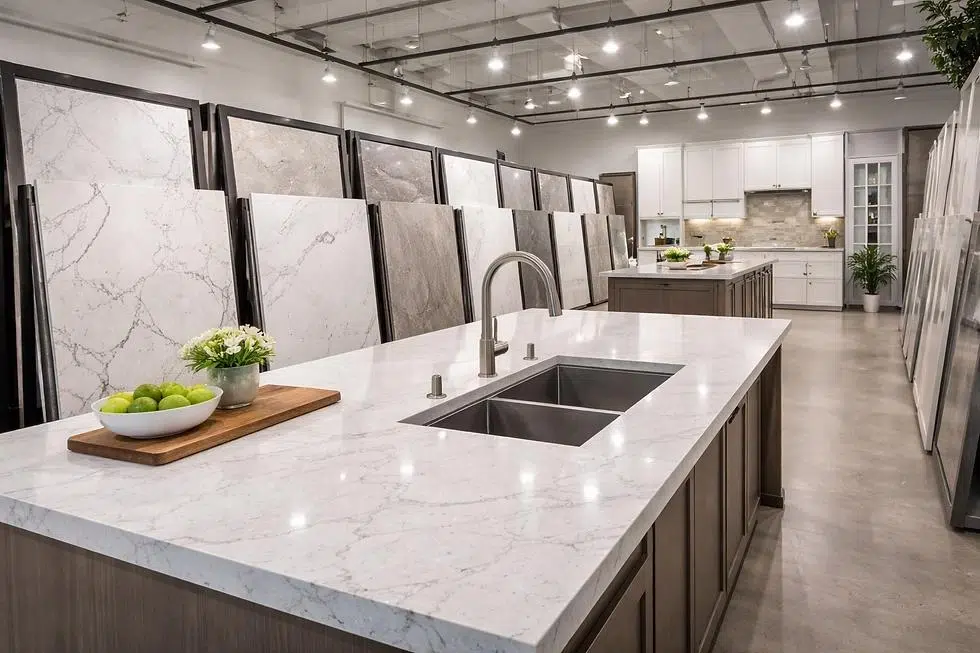
See the full slab before committing. Whether you’re looking for a granite countertop in Pensacola or any other natural stone, bring your cabinet door sample and flooring material so you can compare them against the actual stone, not a photograph of it.
Myth 7: Any Crew Can Fit a Countertop to Any Kitchen
A great installation starts long before the crew arrives, and most problems trace back to preparation, not the installer. The fit of a countertop depends on templating, and templating depends on the kitchen being ready. Cabinets must be set and level before the template team arrives ; if they’re not, measurements can’t be taken accurately. Any plumbing, cabinetry, or wall changes need to be completed before the appointment, not after. A decision-maker with authority needs to be present to answer questions and approve details on the spot.
Here’s how the process actually works: pick the stone → template → fabrication → installation. Each step depends on the previous one being done correctly. Rush or skip any part of that sequence, and the result shows up in the finished countertop. A few things homeowners don’t always anticipate: the 48-hour wait after an undermount sink installation before the plumber reconnects the plumbing; the adhesive needs time to cure fully.
Common mistake: Skipping preparation steps, calling the plumber before the 48-hour window, or not having sink, faucet, range, cooktop, and accessory model numbers ready before the template appointment.
Provide all model numbers to your sales associate before the template day. The size and placement of every cutout and hole depends on the exact models being installed; having that information confirmed early keeps the project on schedule.
Quick Comparison: Granite, Quartz, Quartzite, Marble, Porcelain
| Stone | Mohs | Sealing | Hot Pans | Cut Directly | Best For |
|---|---|---|---|---|---|
| Granite | 6–6.5 | Annually | Yes (not glass) | Yes (dulls knives) | High-traffic kitchens |
| Quartz | 7 | None | Use trivet | Use cutting board | Low-maintenance kitchens |
| Quartzite | 7 | Monthly x3, then semi-annually | Yes | Yes (dulls knives) | High-traffic, high-heat |
| Marble | 3 | Twice yearly | Use trivet | Scratches | Bathrooms, low traffic |
| Porcelain | N/A | None | Yes | Use cutting board | Shower walls |
How to Seal Natural Stone: Step by Step
- Clean the surface thoroughly. Warm, soapy water; fully dry before sealing
- Apply sealant to a soft, dry cloth. A little goes a long way
- Wipe onto the counter surface. Work in sections
- Wait 10 minutes. Let the stone absorb what it needs
- Wipe off with a dry cloth. Remove all excess
Sealing schedule:
- Granite. Annually
- Quartzite. Once a month for the first three months, then every six months
- Marble, Dolomite, Calcite. Twice per year
- Quartz and Porcelain. No sealing required
Conclusion
Most countertop problems are avoidable. Fewer stains, fewer scorch marks, fewer installation delays, and a countertop that lasts for decades; all of it comes down to choosing the right stone for the right space and understanding how to care for it. These countertop myths don’t require expert knowledge to correct. They just require the right information before you commit.
Superior Granite’s showrooms in Pensacola, Pace, and Fort Walton Beach carry full slabs across the complete range of natural stone and quartz options, with a team that can walk you through every material, every maintenance requirement, and every step of the installation process. Visit a showroom, see the stone at full scale, and ask the questions this article raised. That conversation is worth having before anything is measured or cut.
Pensacola, FL
Visit Us: 7011 Pine Forest Road, Pensacola, FL 32526
Call Us: (850) 941-0270
Hours: Monday – Friday: 8 a.m. – 5 p.m., Saturday: 9 a.m. – 2 p.m.
Pace, FL
Visit Us: 4590 Jernigan Road, Pace, Florida 32571
Call Us: (850) 994-1872
Hours: Tuesday – Friday: 9 a.m. – 5 p.m., Saturday: 9 a.m. – 2 p.m.
Fort Walton Beach, FL
Visit Us: 35 Miracle Strip Pkwy SW, Fort Walton Beach, Florida 32548
Call Us: (850) 301-0716
Hours: Tuesday – Friday: 8 a.m. – 5 p.m., Saturday: 9 a.m. – 2 p.m.
Get quotes now and start your project!
FAQs
1. Do granite countertops need sealing?
Yes. Granite is porous and should be sealed once per year to protect against staining. The process takes about 30 minutes and can be done at home.
2. Can you put hot pans on quartz countertops?
No. Quartz contains resin that can scorch under prolonged heat. Always use a trivet or hot pad; treat quartz the same way you’d treat a quality laminate as far as heat is concerned.
3. Can you cut directly on granite countertops?
Yes, without damaging the stone. However, cutting directly on granite will dull your knives faster. A cutting board protects the knives without any risk to the granite.
4. Is quartzite the same as quartz?
No. Quartz is an engineered stone made with resin and crushed quartz crystals. Quartzite is a natural metamorphic stone. They look similar but perform very differently; quartzite requires regular sealing and handles heat directly; quartz requires no sealing but scorches from heat.
5. Does sealing marble prevent etching?
No. Sealing protects marble from staining, but etching is a chemical reaction caused by acidic substances. Acids dissolve the calcium carbonate in marble regardless of whether it has been sealed. Wipe acidic spills immediately.
6. Can porcelain countertops chip?
Yes; particularly at the mitered edges during fabrication, and from blunt impact forces like dropping a heavy object directly on the surface. The surface itself resists everyday scratching and heat extremely well.
7. Are countertop seams visible?
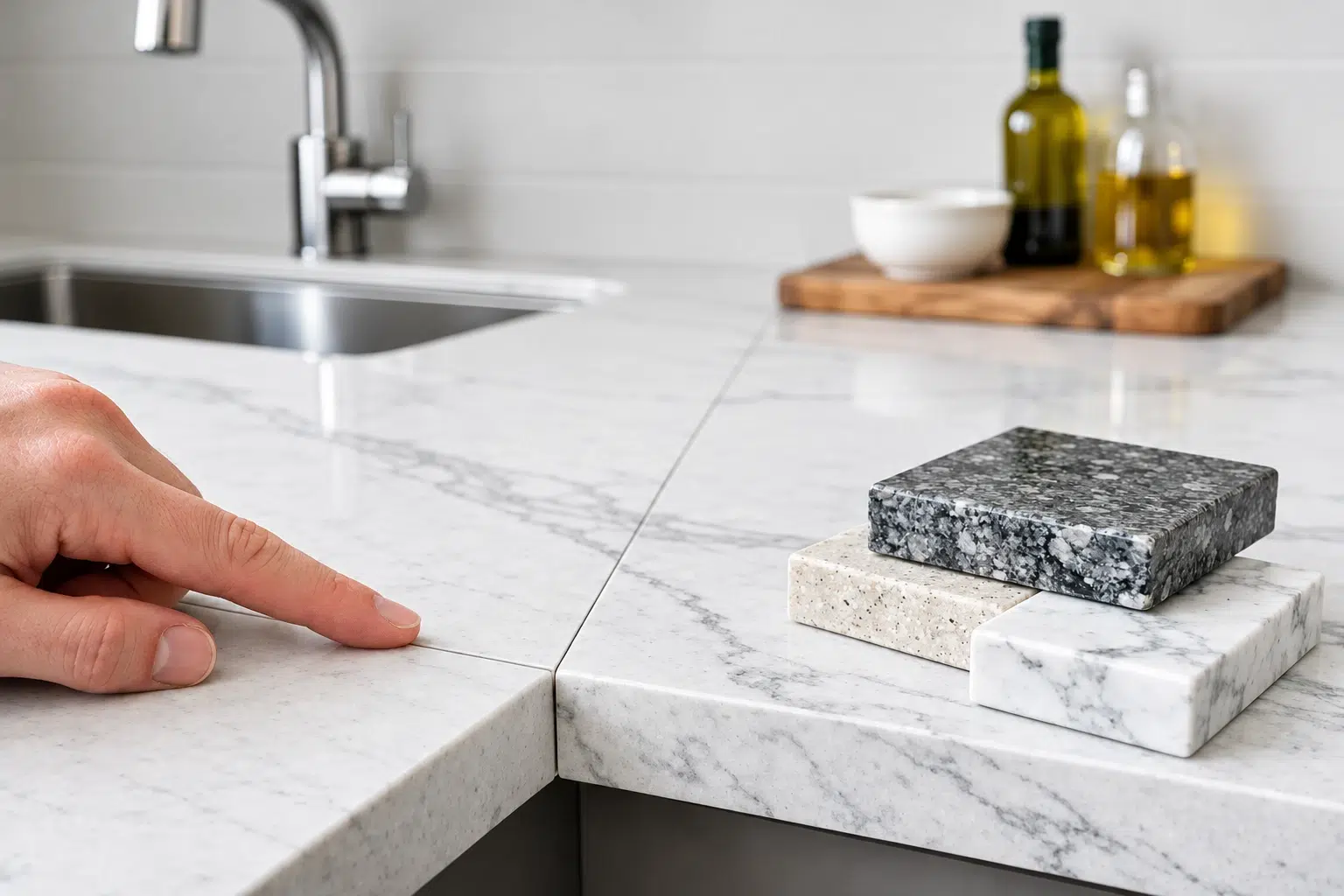
It depends on the stone and the installation. Natural stone seams are always visible to some degree; the goal is to minimize them through careful placement. In white or very light quartz, seams can be more noticeable than in darker or more patterned options.
8. Can I use marble in a kitchen?
Yes, but it requires consistent care. Marble etches from acidic kitchen spills and needs semi-annual sealing. It performs best in bathrooms and low-traffic areas. For a kitchen that sees heavy daily use, granite or quartzite are more practical choices.
9. How do I clean natural stone countertops?
Use warm, soapy water with a non-citrus dish soap and a soft microfiber cloth for daily cleaning. Avoid bleach, ammonia, vinegar, citrus-based cleaners, and abrasive scrubs; all of these damage both the stone and the sealant.