countertop supplier sells the slab. Next, a fabricator cuts and shapes it into your countertop. Last, an installer sets it in your home. That’s the quick answer to the countertop fabricator vs. installer question.
Sounds simple. But do you need three separate companies, or can one team handle everything? Before you hire, it helps to understand what each service includes. At Superior Granite, we handle all three jobs. So we know how confusing the words can get. This guide shows who does what, where the roles overlap, and what to ask before you hire anyone.
What Does a Countertop Supplier Do?

A countertop supplier buys slabs in bulk, stores them, and sells them to homeowners and fabricators. Think of it as the showroom or stone yard where your project begins.
That sounds like a small job. It isn’t. The supplier decides what stone you can even choose from. So range matters. Our showrooms carry granite, quartz, quartzite, marble, dolomite, porcelain, calcite, soapstone, and limestone, with hundreds of colors in stock at a time.
Quality counts too. We only sell first-quality material, and our natural stone and quartz slabs are 3cm thick. Our selection is one of the largest in the area. Why not see it in person? Photos and tiny samples can’t show the full movement and veining of a slab. Care is another thing a good supplier explains. Natural stone needs sealing, and the schedule depends on the stone. Quartz, on the other hand, doesn’t need regular sealing.
What Does a Countertop Fabricator Do?
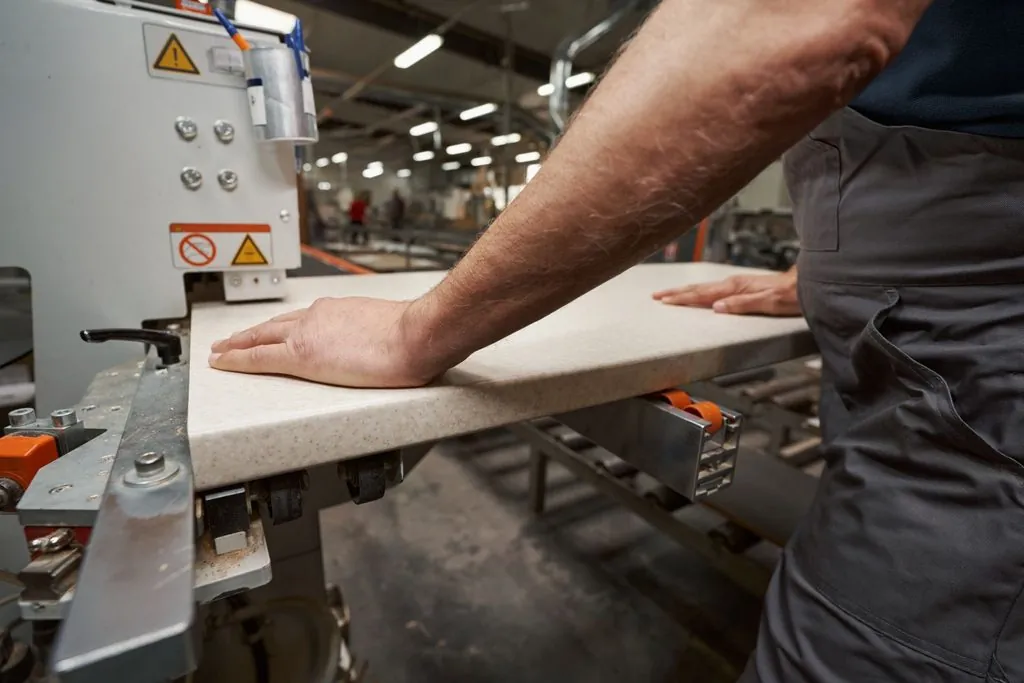
A countertop fabricator turns a raw slab into a finished countertop. The shop takes exact measurements, cuts the stone to fit your cabinets, and shapes the edges.
This is where the real craft happens. And it’s the step that decides how your kitchen looks for years.
Templating: Measuring Your Space
Templating means taking precise measurements of your cabinets and walls. The goal is simple: every piece should fit perfectly. Why does that matter so much? Because a small error here turns into a gap or a bad seam later.
Someone with job knowledge and decision authority must be present during templating. If no representative is available, we will reschedule, which may delay your project.
Cutting, Edges, and Finishes
Once the template is done, the shop gets to work on your slab. Here’s what happens in this step:
- Next, the shop cuts your slab with state-of-the-art machinery.
- Then come the choices. You can pick your edges and finishes, plus any extra add-ons.
- Ask your sales associate about each one. This is where your countertop gets its personality.
- Book-matched slabs can create a mirrored pattern in suitable countertop designs.
- Seams may still be visible, and natural variations can affect how adjoining pieces match.
Take your time with these choices. They shape how your countertop looks and feels for years.
For countertop fabrication, Superior Granite takes precise measurements before cutting your selected slab and preparing the edges and finishes. Our templating, fabrication, and installation teams work together throughout your project.
What Does a Countertop Installer Do?
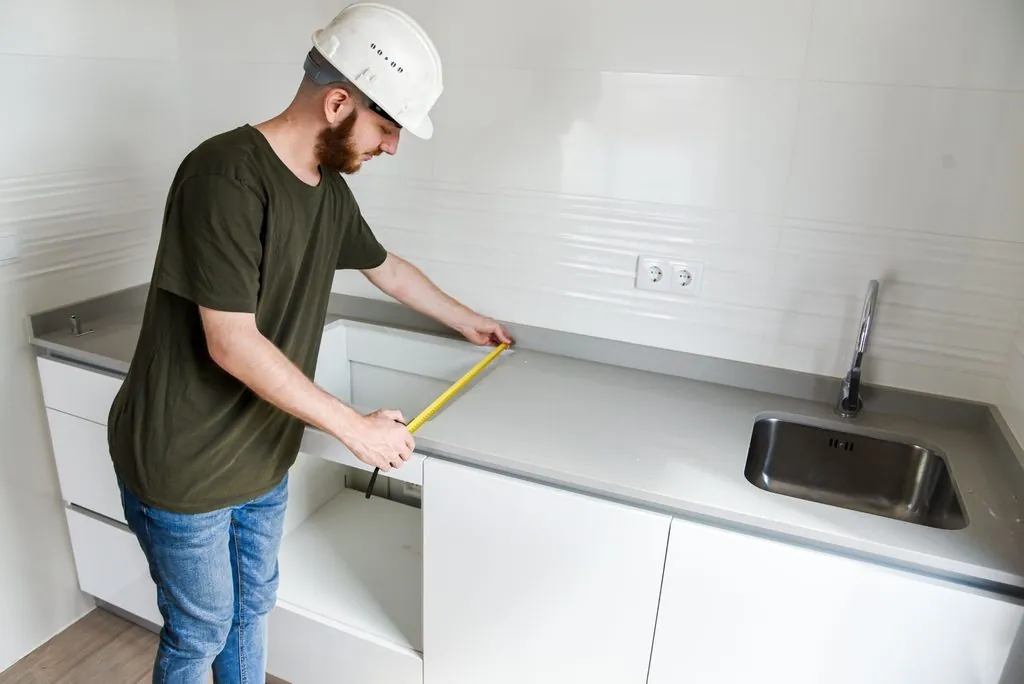
A countertop installer carries the finished pieces into your home and fits them onto your cabinets. The job includes checking the fit, setting each piece in place, and joining the seams.
Here’s what that work looks like on install day:
- Checking that the cabinets are set and level.
- Carrying heavy slabs safely into your home.
- Setting each piece in place on your cabinets.
- Joining the seams and doing a final fit check.
Our expert install crew handles this step. The goal is to finish in one day. But surprises can pop up, and a project may need extra trips. We’d rather tell you that now.
Measurement or cutting errors may require adjustments or remaking a piece before installation can be completed. That’s why the earlier steps matter so much.
Countertop Fabricator vs Installer: Where the Line Gets Blurry
A fabricator works in the shop with the raw stone. An installer works in your home with the finished pieces. That’s the simplest way to tell them apart.
Plenty of companies use the two words as if they mean the same thing. They don’t. When you weigh countertop fabricator vs installer, think shaping versus setting. And don’t forget the supplier, who comes first.
Here’s how all three roles compare side by side:
| Role | Main job | Where it happens | When you meet them |
| Supplier | Stocks and sells the slabs | Showroom or stone yard | First, when you pick your stone |
| Fabricator | Templates, cuts, and finishes the slab | The shop, plus a template visit at your home | After you choose, before install |
| Installer | Sets and joins the finished pieces | Your kitchen or bathroom | Last, on install day |
They depend on each other. A great installer can’t save a poor template. And a great fabricator can’t fix a messy install. So the handoff between them is where jobs win or lose.
How a Countertop Project Works: Step by Step
Most projects run in four steps: choose the stone, template the space, fabricate the pieces, and install them. Here’s the full path from slab to kitchen:
- Pick your stone. Visit a showroom and choose the color and material you love.
- Template your space. Once your cabinets are set and level and any plumbing, cabinetry, or wall changes are complete, the team takes precise measurements of your cabinets and walls.
- Fabricate your countertop. The shop cuts the slab and adds your edges, finishes, and add-ons.
- Install it. Our expert install crew sets the pieces in your home.
Every project is different, so the total time can vary. We promise high-quality results within a reasonable time frame. Need the old counters out first? We also handle countertop removal and disposal.
What Happens When You Hire Three Separate Companies?
It can work, but clear coordination matters. Someone needs to manage slab delivery, fabrication, and installation schedules. That might be you, your contractor, or the company coordinating the project.
Picture it. You buy a slab from one place. A different shop cuts it. Then a third crew arrives to install. Before work begins, confirm who handles each stage and who to contact if an edge looks off or a piece doesn’t fit. A delay at one stage may affect the next. Agreeing on responsibilities and scheduling upfront helps everyone understand what needs to happen before the project moves forward.
Why One Team Makes the Job Easier
One team means fewer handoffs, one point of contact, and one company responsible for the finished result.
When one company covers both sides of the countertop fabricator vs. installer divide, things run smoother. Here are the key benefits:
- Fewer handoffs, so fewer chances for mistakes.
- Clear responsibility if something needs fixing.
- One schedule instead of three.
- Slab selection, templating, fabrication, installation, and removal all under one name.
We’re family-owned and opened our doors in 2005. With over 20 years of experience, we’re known as the best in the area. Our showrooms in Pensacola, Pace, and Fort Walton Beach serve the areas around them. And yes, we can travel to you.
Questions to Ask Before You Hire
Before choosing a countertop company, ask these questions to understand who handles each part of your project:
- Can I see the actual slab in person before fabrication begins?
- Who handles templating, fabrication, and installation?
- Does your own crew install the countertops, or do you use subcontractors?
- What happens if a countertop piece does not fit?
- Does the quote include old countertop removal and disposal?
- Which model numbers do you need for my sink, faucet, sink accessories, range, and cooktop?
Conclusion
So, who does what? Suppliers sell the slab. Fabricators shape it. Installers set it. Knowing the countertop fabricator vs. installer difference helps you ask better questions and dodge costly surprises. And when one company handles every step, you get fewer handoffs and fewer headaches.
Ready to start? Stop by Superior Granite, pick your stone in person, and let’s talk about your project.
Pensacola, FL
Visit Us: 7011 Pine Forest Road, Pensacola, FL 32526
Call Us: (850) 941-0270
Hours: Monday – Friday: 8 a.m. – 5 p.m., Saturday: 9 a.m. – 2 p.m.
Pace, FL
Visit Us: 4590 Jernigan Road, Pace, Florida 32571
Call Us: (850) 994-1872
Hours: Tuesday – Friday: 9 a.m. – 5 p.m., Saturday: 9 a.m. – 2 p.m.
Fort Walton Beach, FL
Visit Us: 35 Miracle Strip Pkwy SW, Fort Walton Beach, Florida 32548
Call Us: (850) 301-0716
Hours: Tuesday – Friday: 8 a.m. – 5 p.m., Saturday: 9 a.m. – 2 p.m.
Get quotes now and start your project!
FAQs
1. Countertop fabricator vs installer: which one do I need?
You need both, and many companies offer both. The fabricator makes the countertop, and the installer sets it in your home. When one company handles both, you deal with one team.
2. Is a countertop supplier the same as a fabricator?
No. Suppliers sell slabs. Fabricators turn those slabs into countertops. Some companies, like ours, do both.
3. Who takes the measurements for my countertops?
That happens during templating. The team takes precise measurements of your cabinets and walls so every piece fits. Someone with decision-making authority should be there to answer questions.
4. Can I choose my edge and finish?
Yes. You’ll have plenty of customization options during fabrication, including edges, finishes, and extra add-ons. Your sales associate can walk you through each one.
5. Who removes my old countertops?
We do. Countertop removal and disposal is one of our services. Ask your sales associate to add it to your project.
6. Do I need to be home for templating and installation?
Someone with job knowledge and decision authority must be there for templating. We prefer the same for installation, so the team can answer questions on the spot.
7. What happens if my cabinets aren’t level?
Cabinets need to be set and level before we arrive. Why? Because the countertop rests right on them. So fix any problems first, and finish any plumbing, cabinet, or wall changes too.