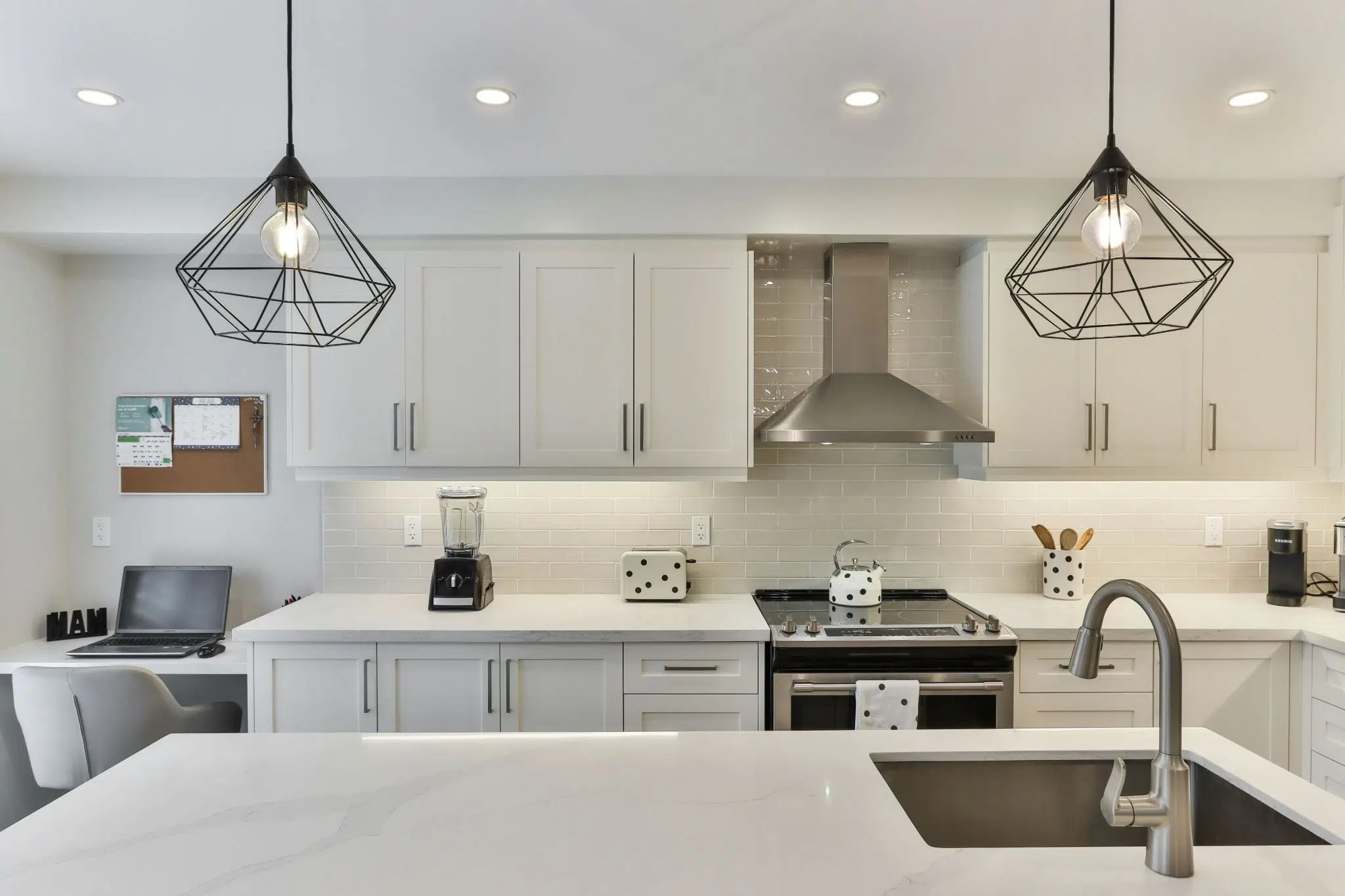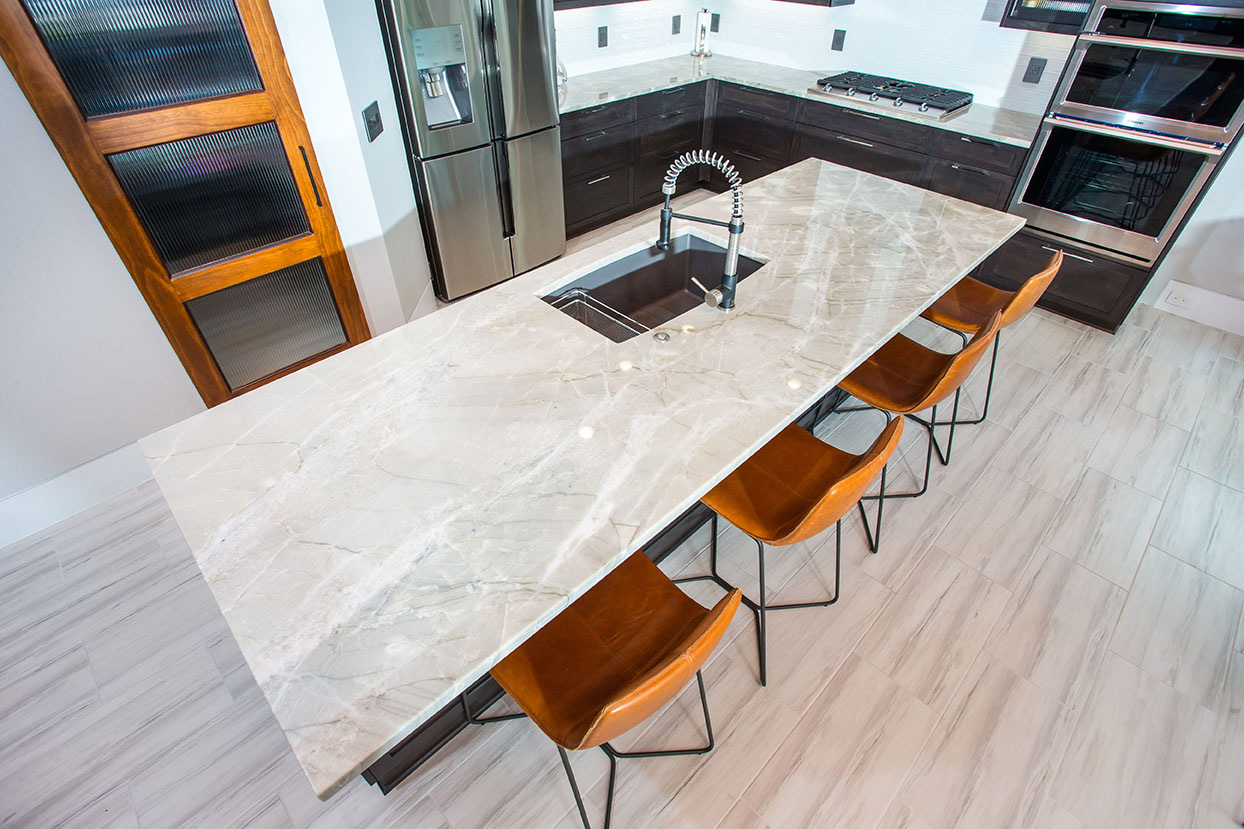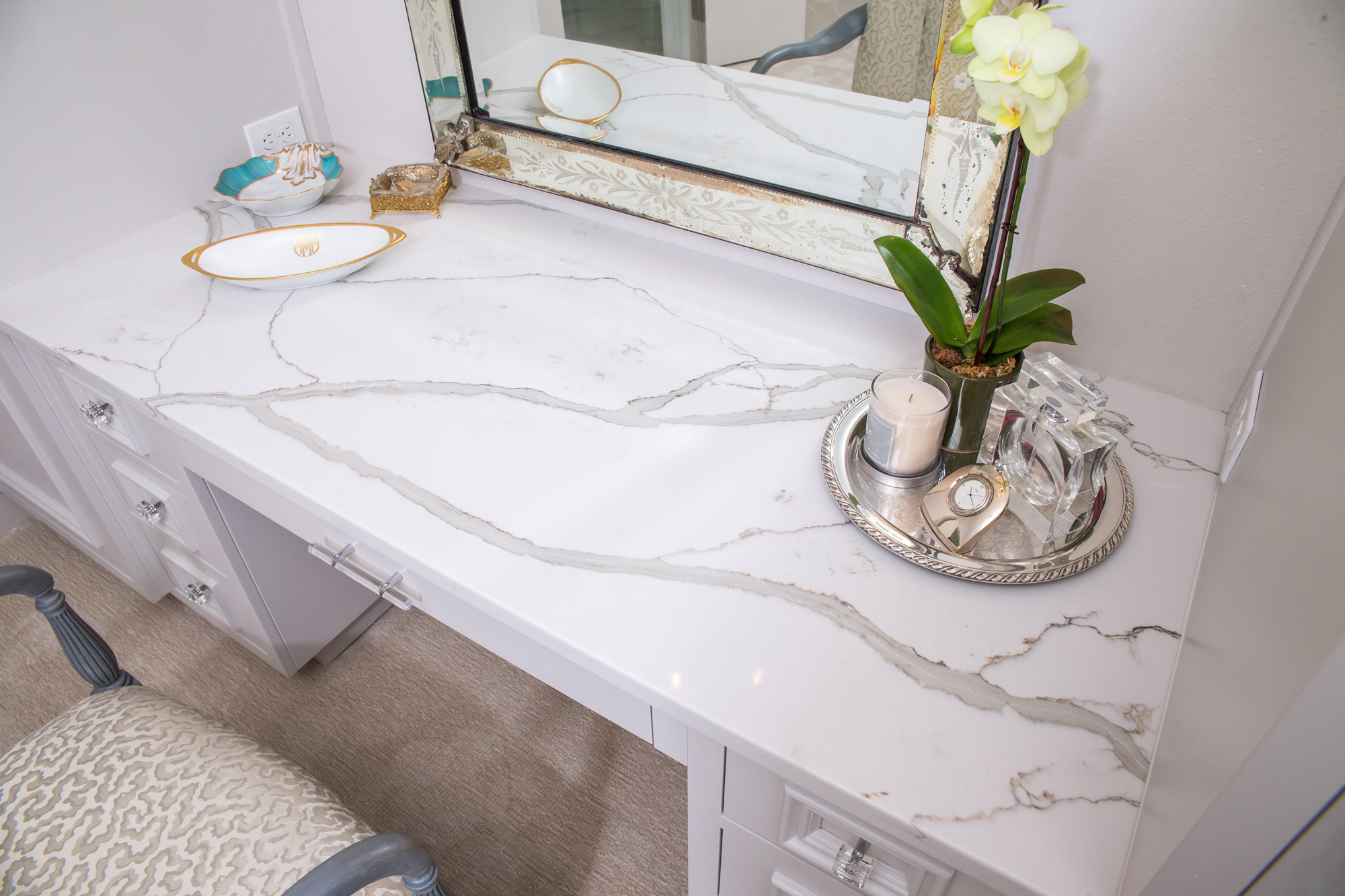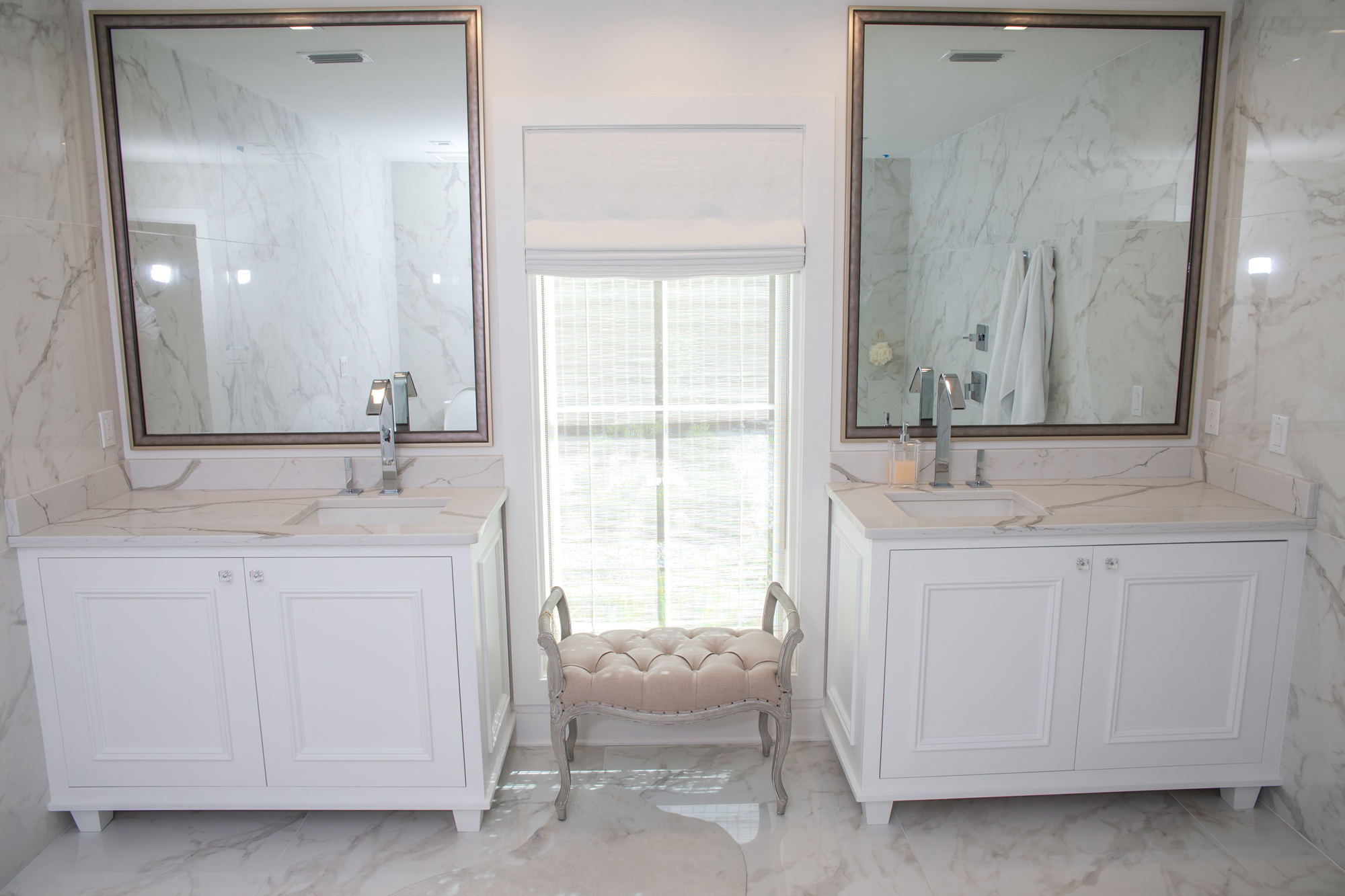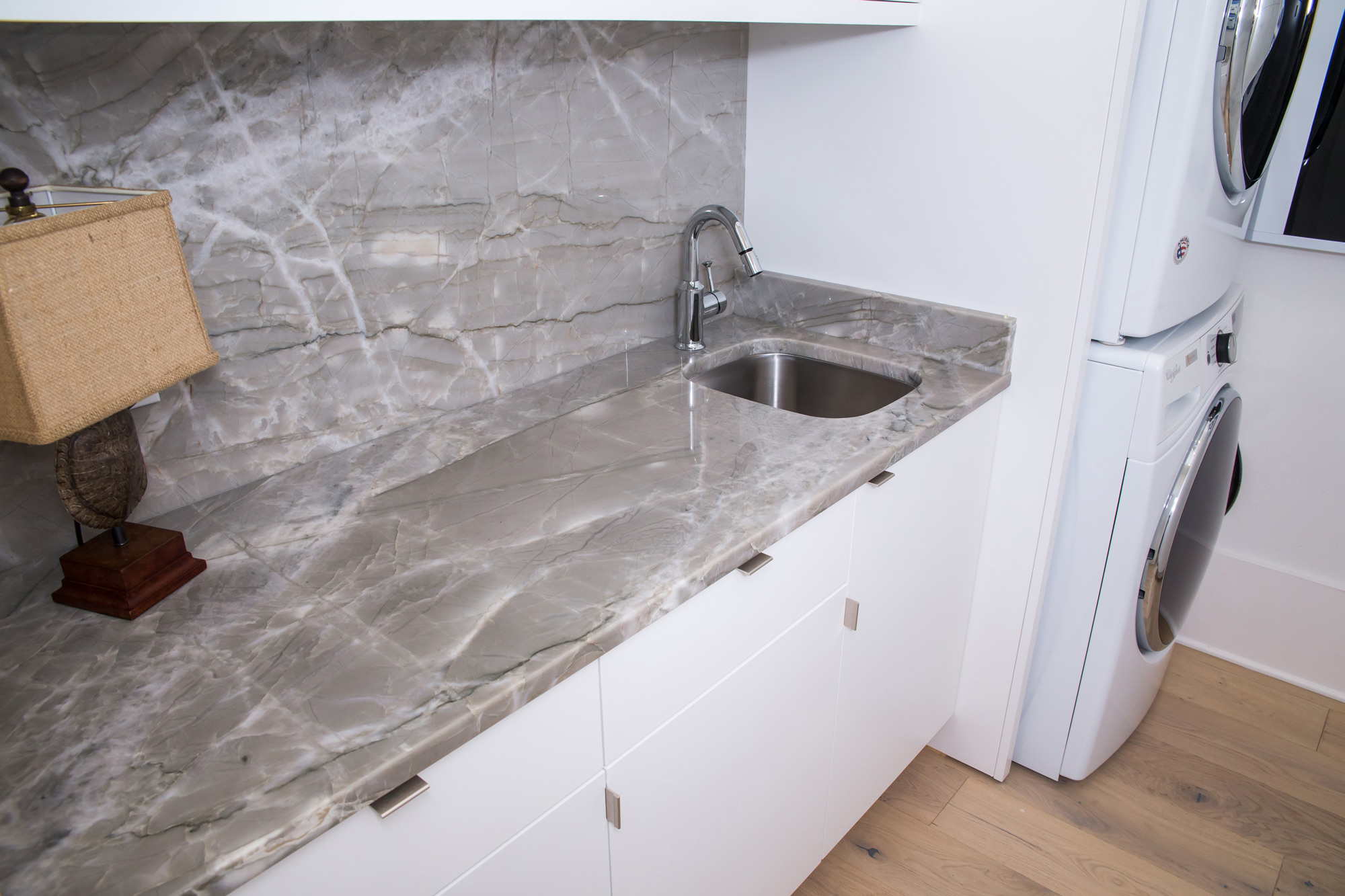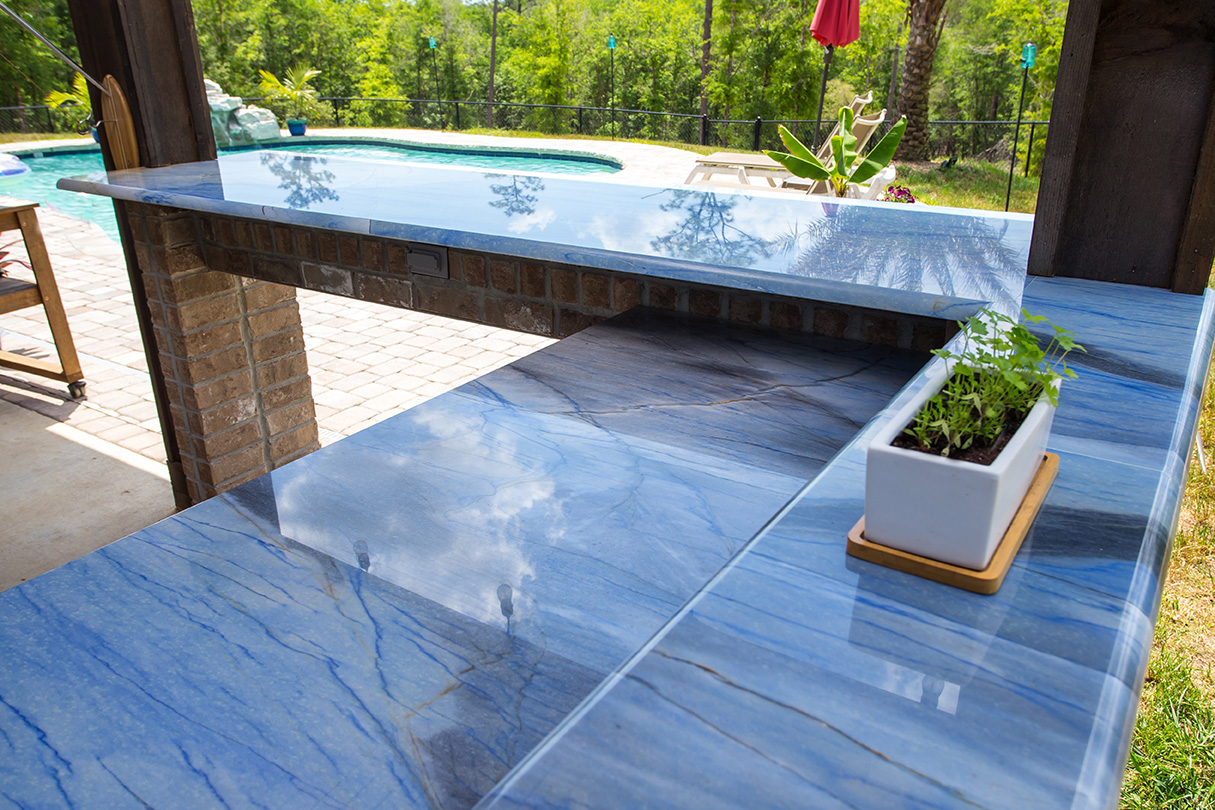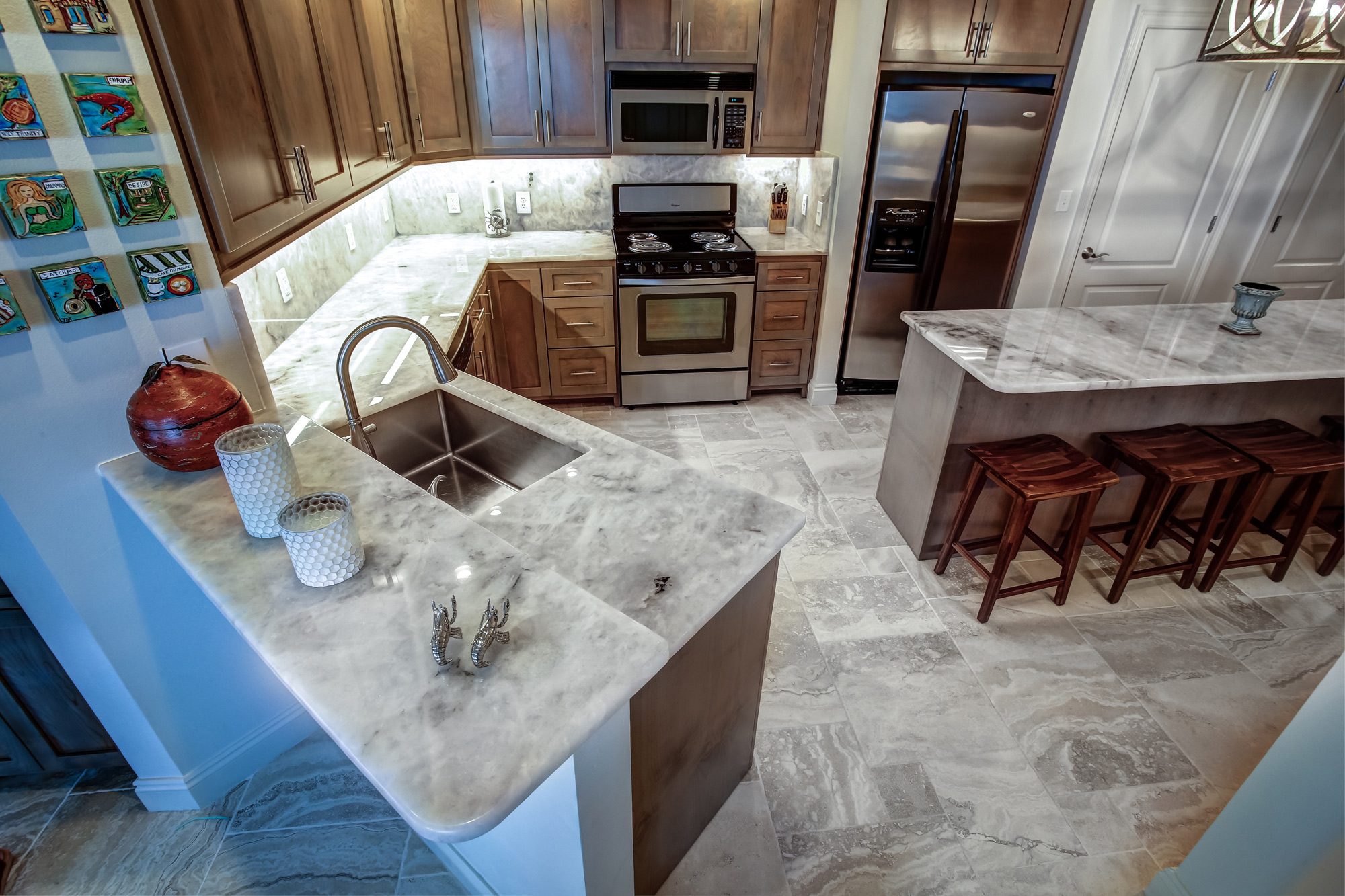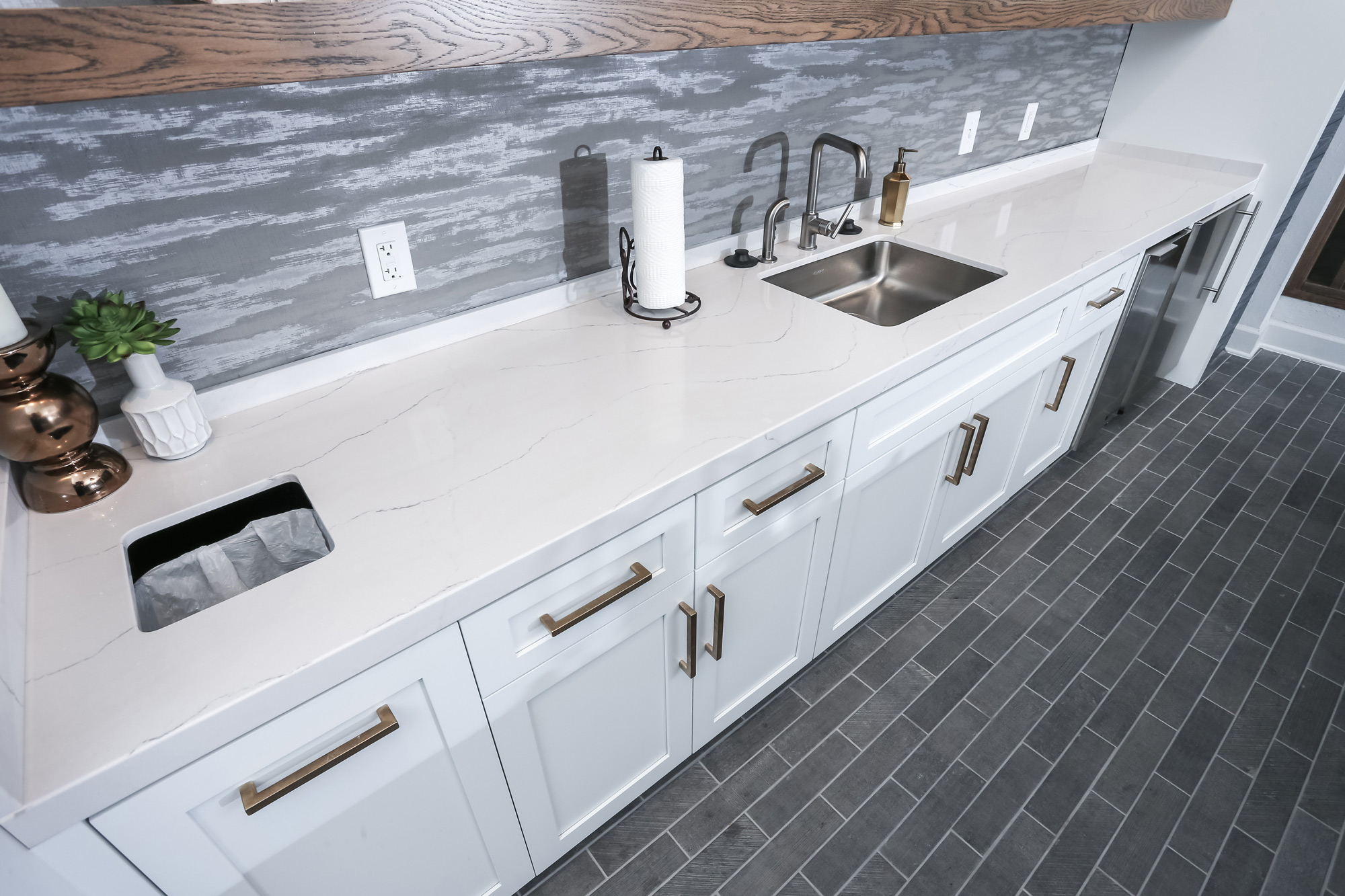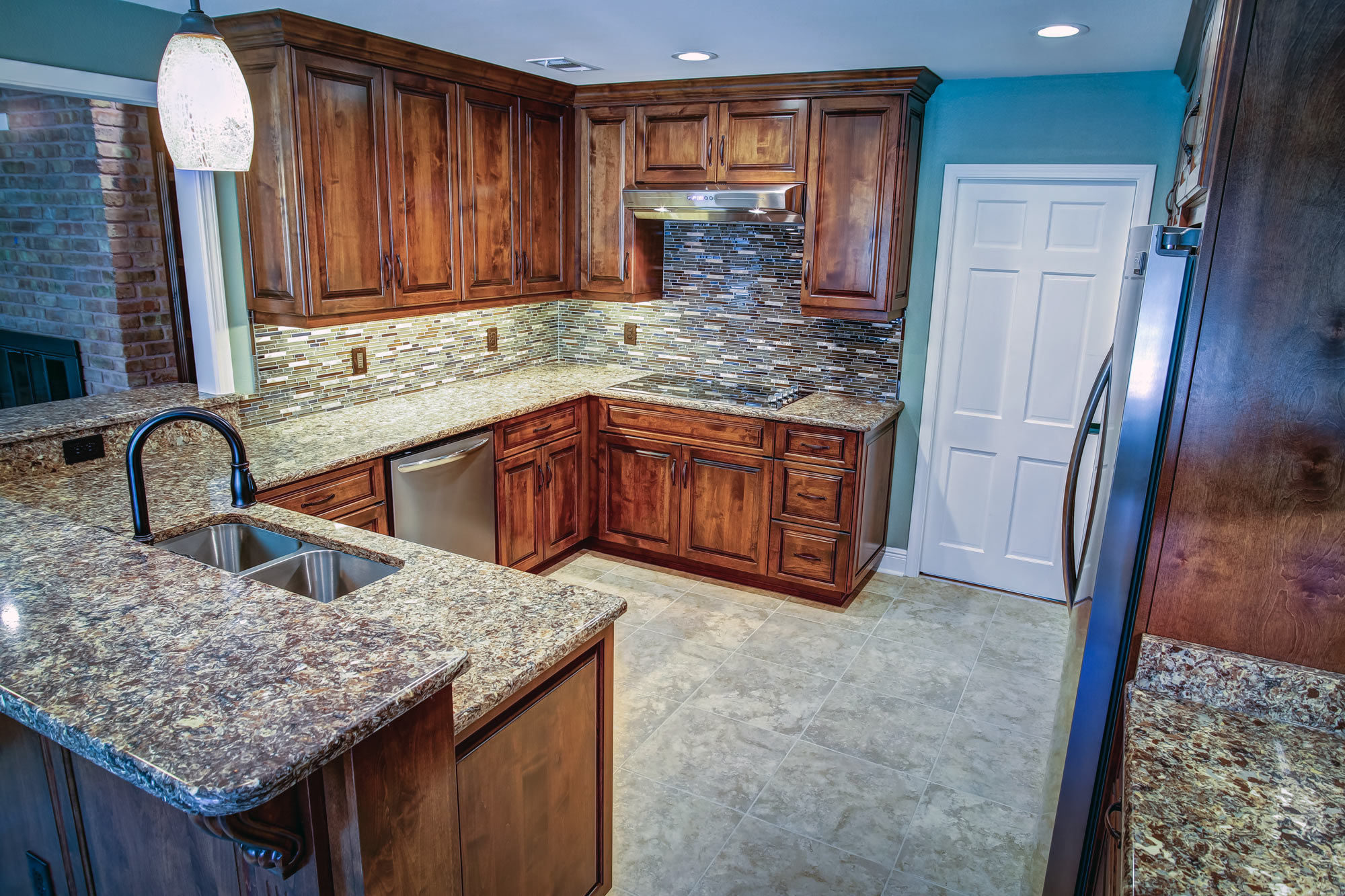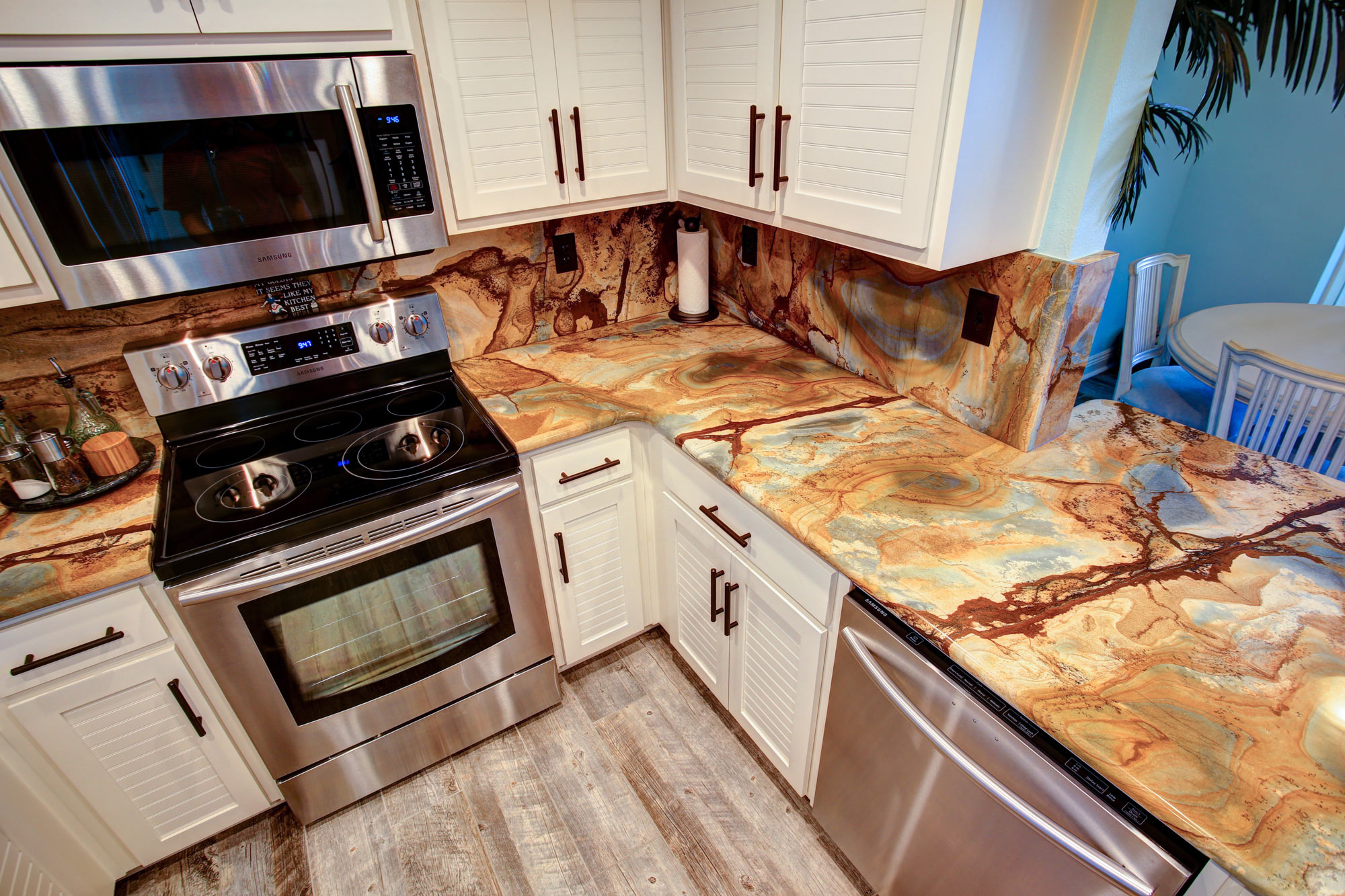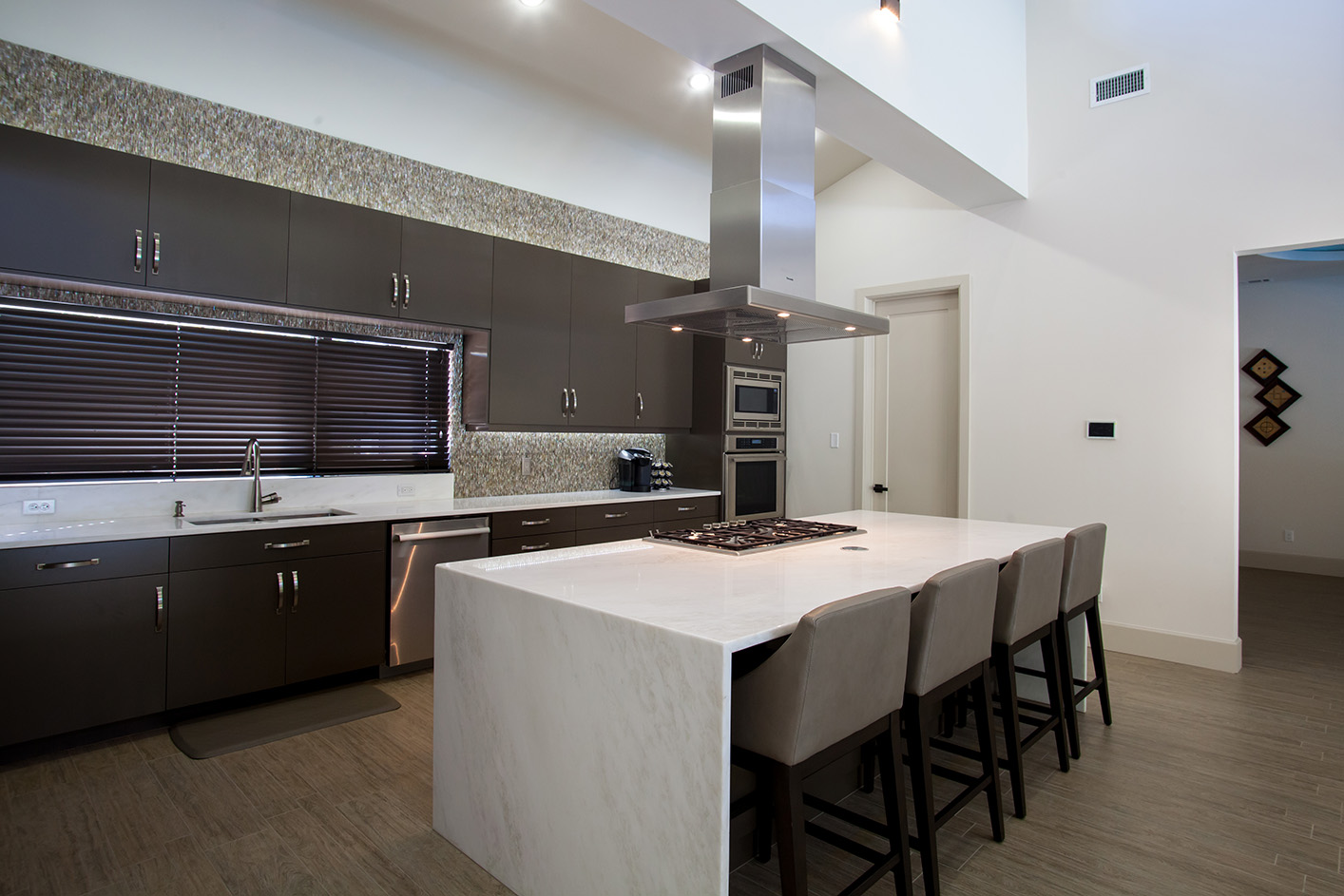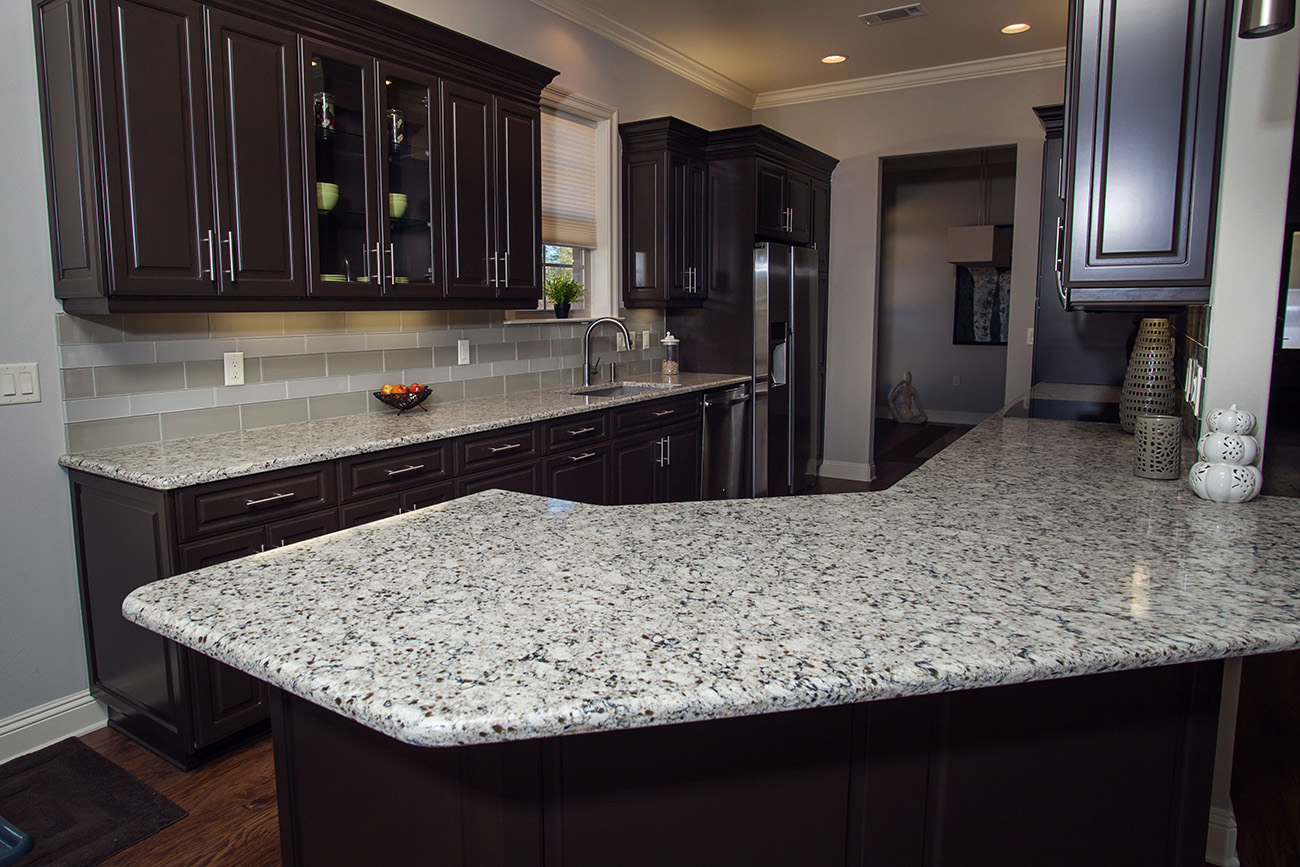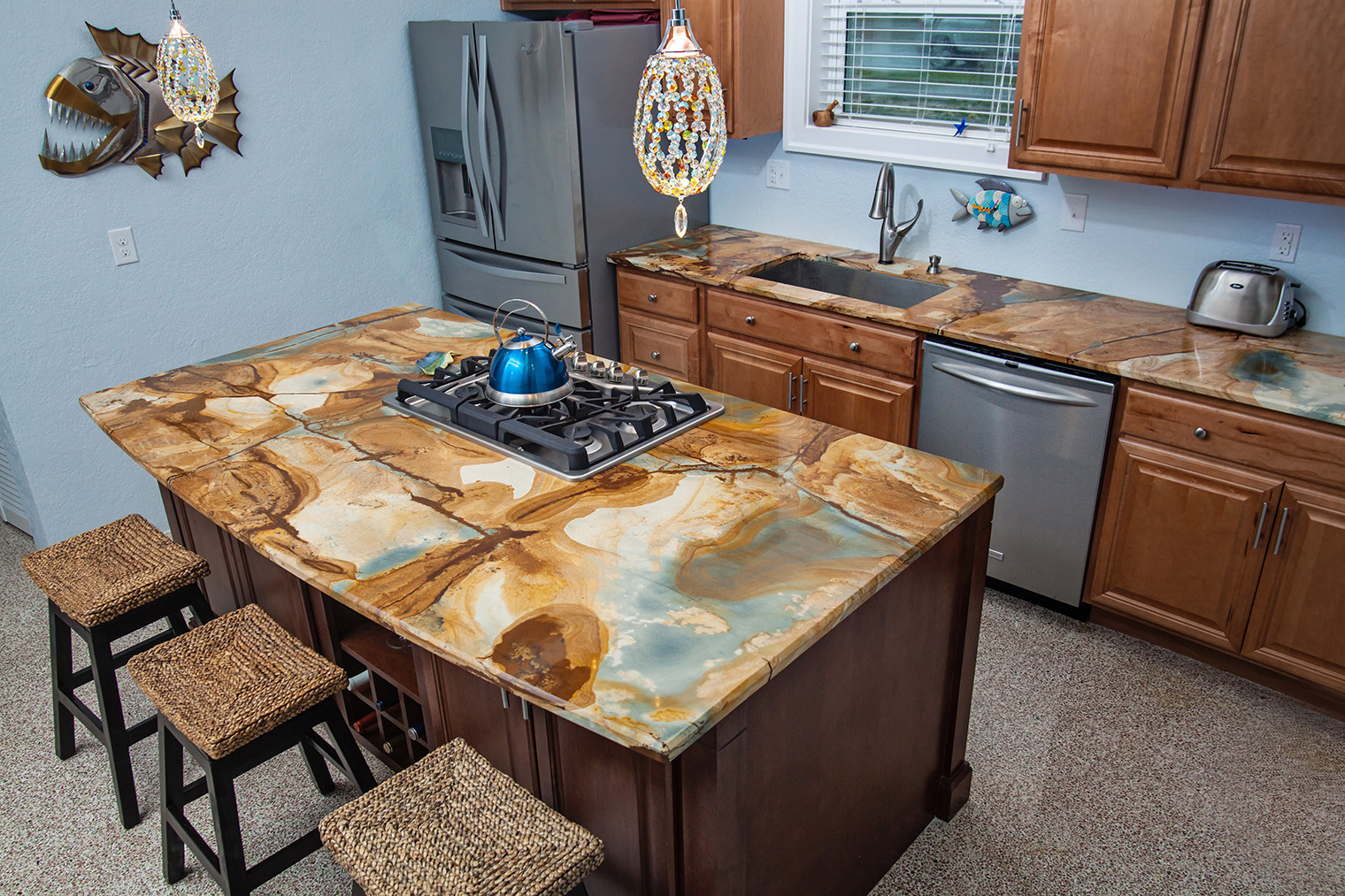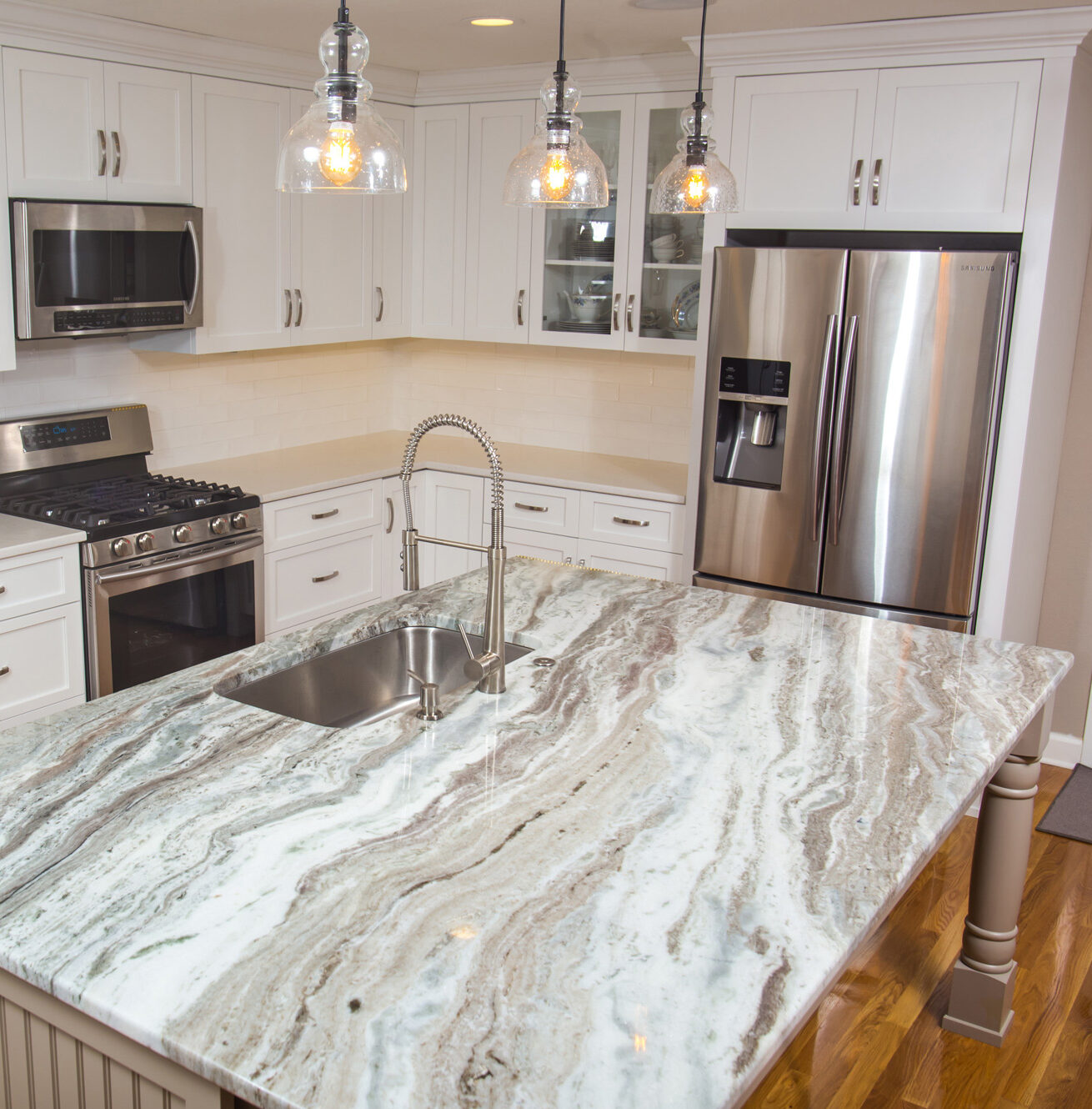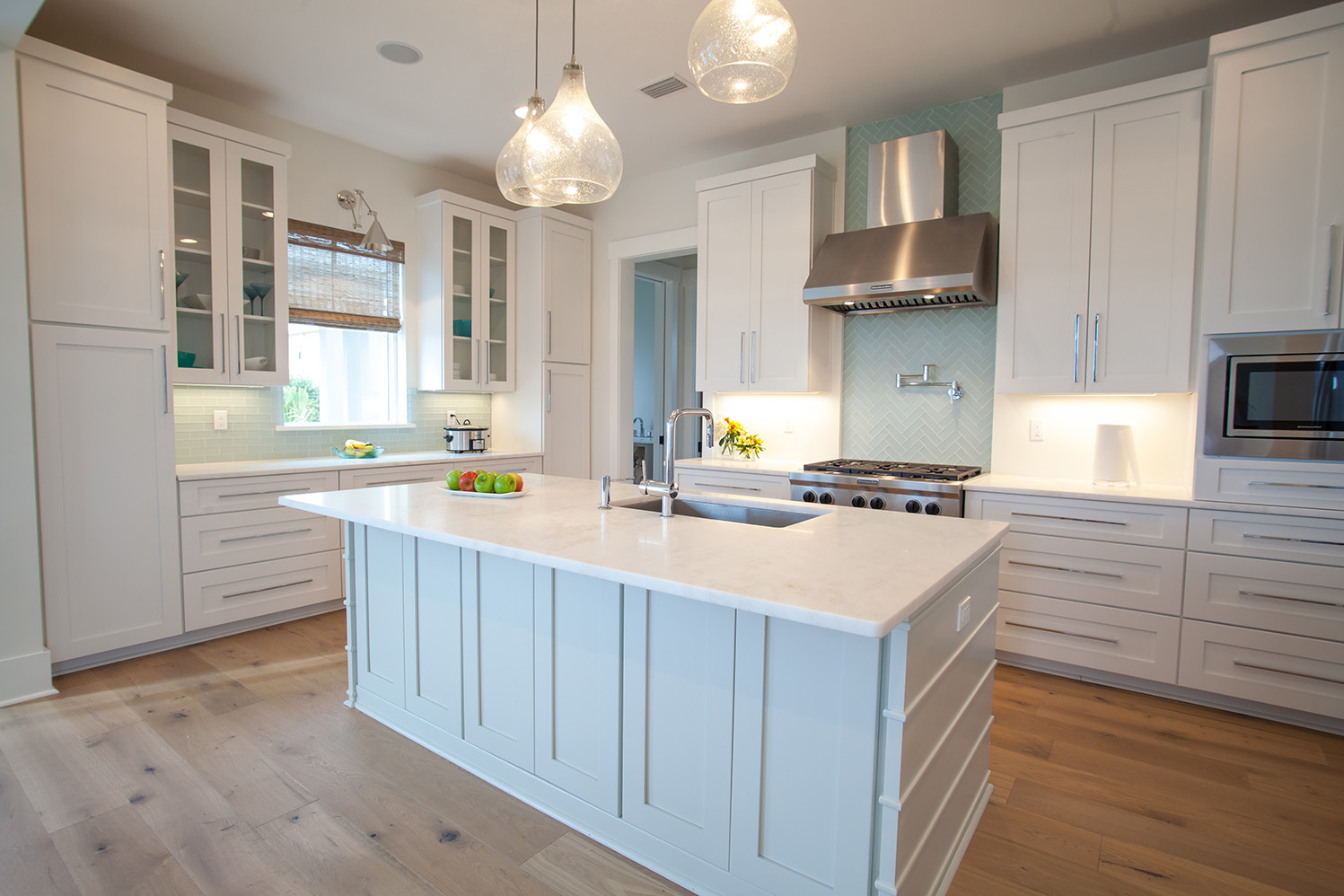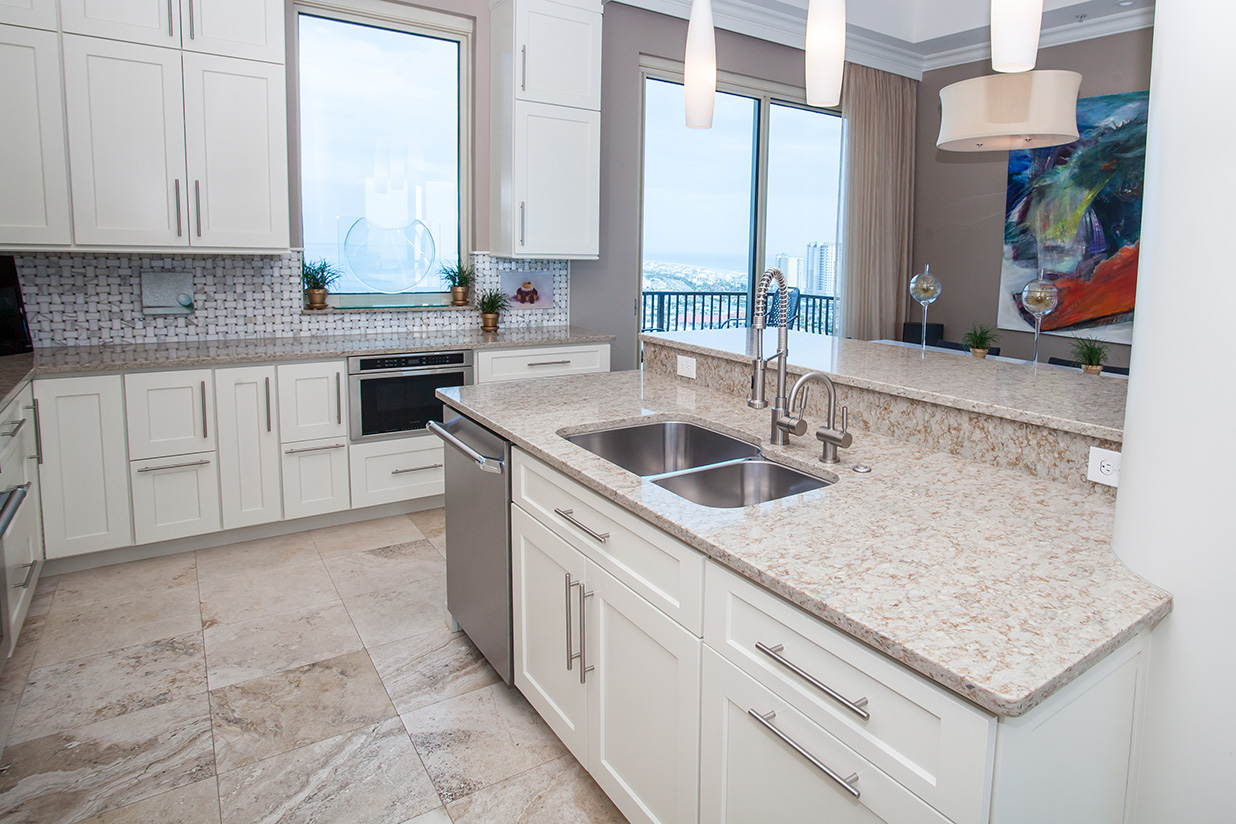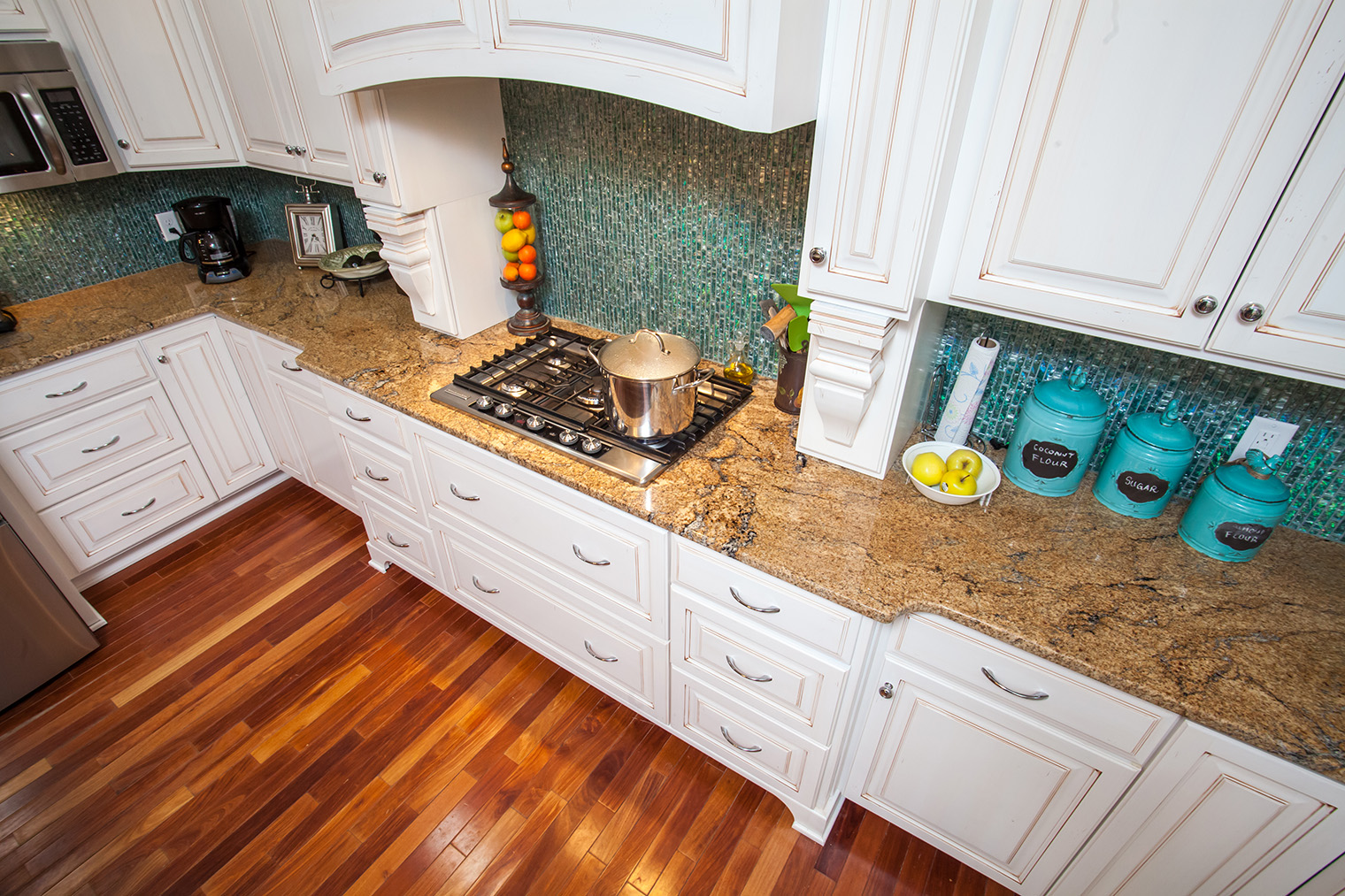
Limestone countertops work best in low-traffic spaces: bathrooms, decorative surfaces, and rustic kitchens where the stone’s warm, organic character can be appreciated without constant heavy wear.
But understanding why, and knowing exactly which spaces suit limestone and which don’t, is what helps homeowners make a decision they won’t regret. Limestone is one of the most visually distinctive natural stones available. It’s also one of the most misapplied. The homes that get it right understand what this stone is built for before they commit to it.
What Are Limestone Countertops?
Limestone countertops are natural stone surfaces made from sedimentary rock; specifically, calcium carbonate formed from compressed marine fossils and shells over millions of years. That geological history is part of what gives limestone its character: warm, matte, organic, and full of subtle natural detail that no engineered material can replicate.
The aesthetic is distinctly earthy. Neutral tones- beige, cream, soft grey, and warm tan- are the most common, and the matte finish gives surfaces a quiet, understated quality that suits rustic, farmhouse, and coastal design styles. Limestone is popular for achieving a “beachy” or rustic look, and that description fits perfectly. No two limestone slabs are identical. The fossil patterns, color shifts, and natural texture vary from piece to piece.
Where Do Limestone Countertops Work Best?
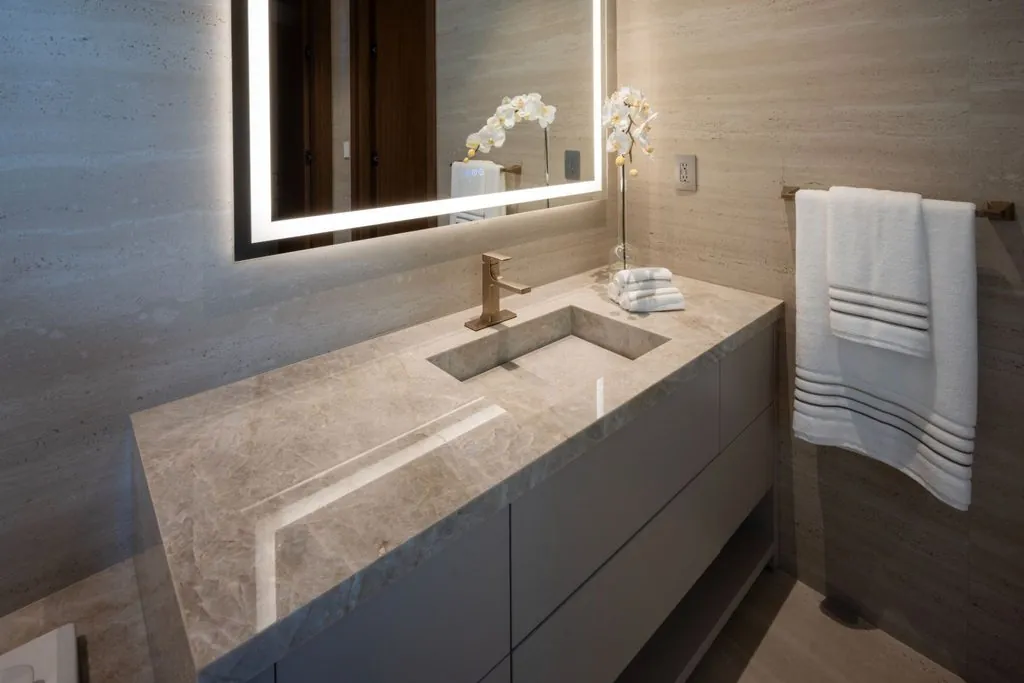
Limestone thrives in spaces where its warm, natural character can shine, without the demands of heavy daily use.
Bathroom Vanities
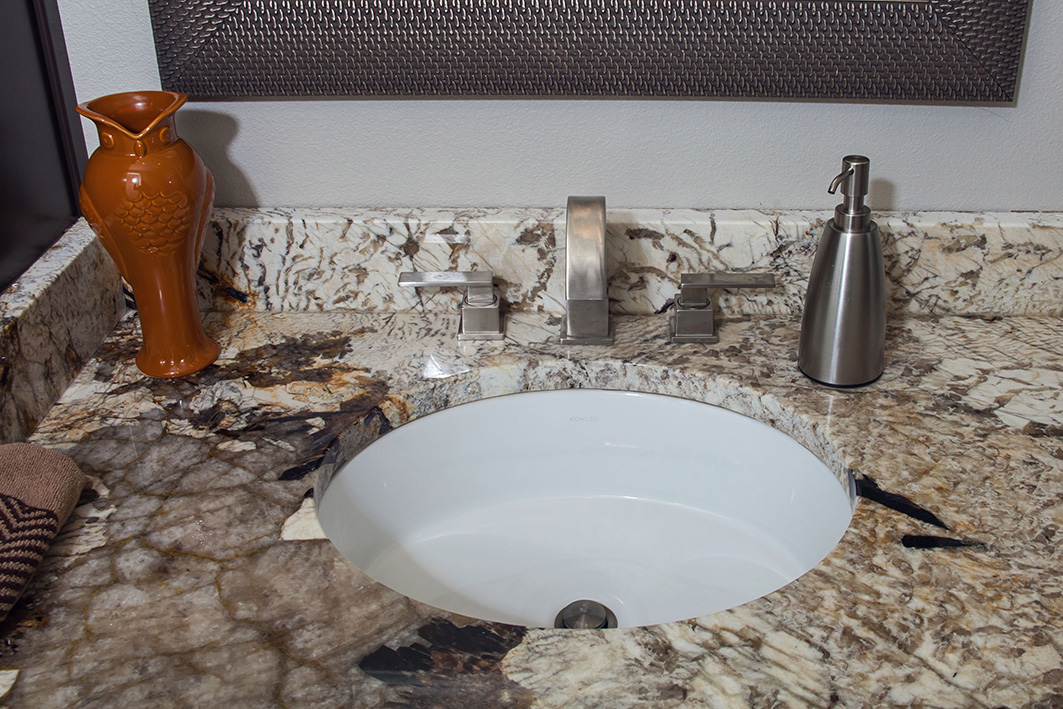
Bathrooms are where limestone countertops genuinely shine. Lower traffic, minimal exposure to acidic kitchen spills, and a design context where the stone’s warm, organic character can be the focal point; it’s the ideal environment for this material.
A limestone bathroom vanity in a powder room or primary bath is beautiful and practical when properly sealed and maintained. The earthy tones pair naturally with wood cabinetry, neutral tile, and organic textures. And because bathroom vanities don’t take the constant daily punishment of a kitchen countertop, the stone’s limitations become far less relevant.
Rustic and Farmhouse Kitchens
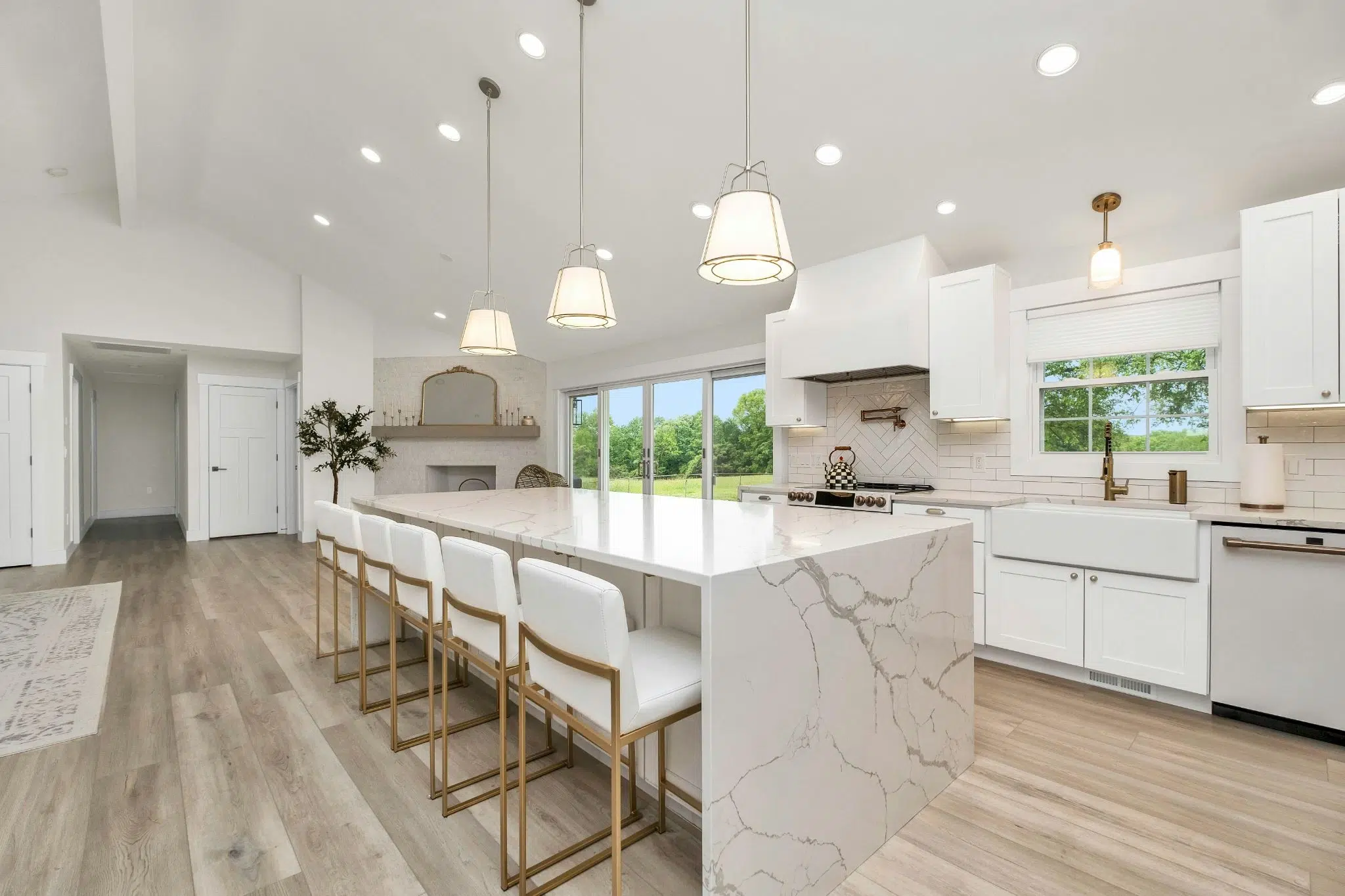
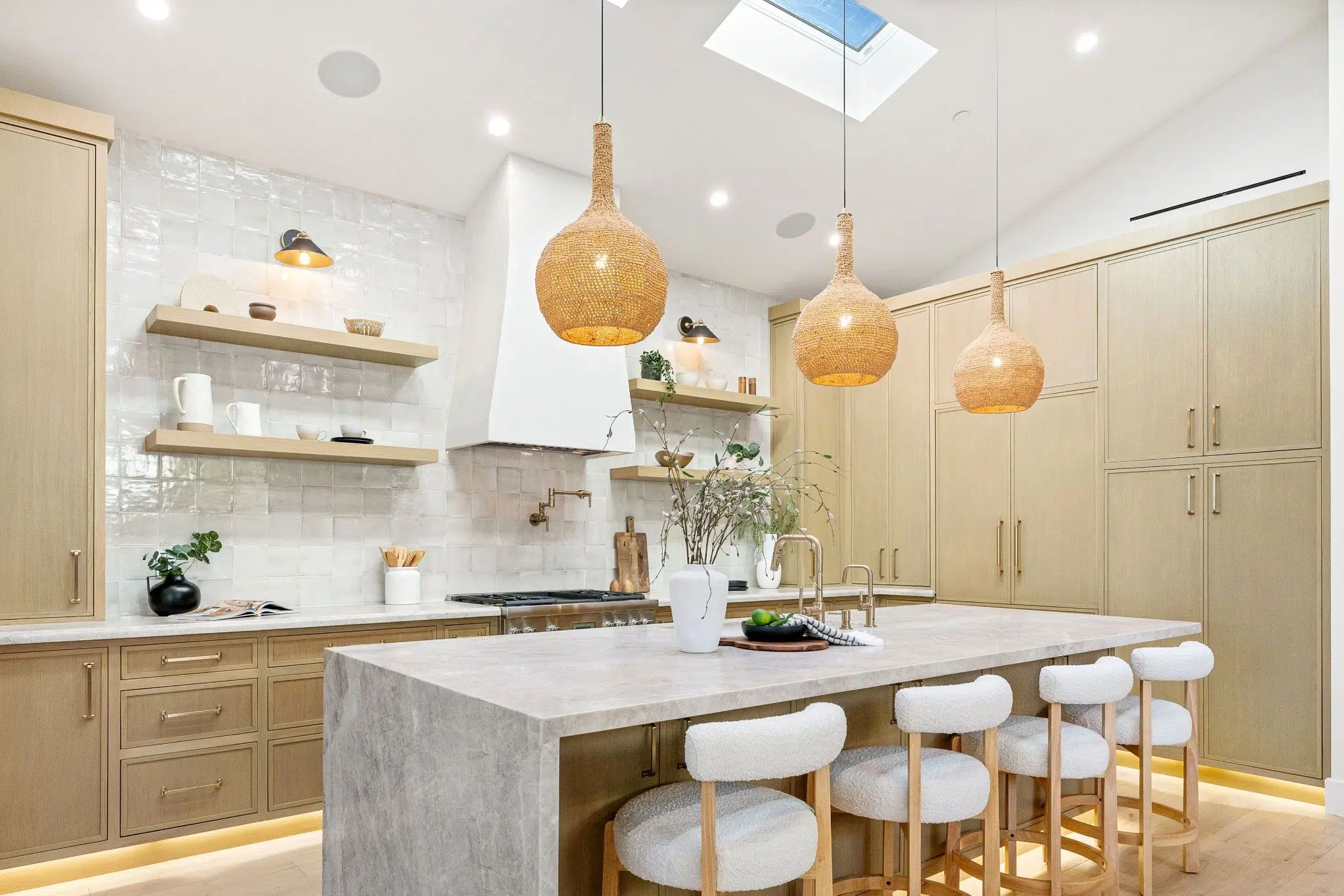
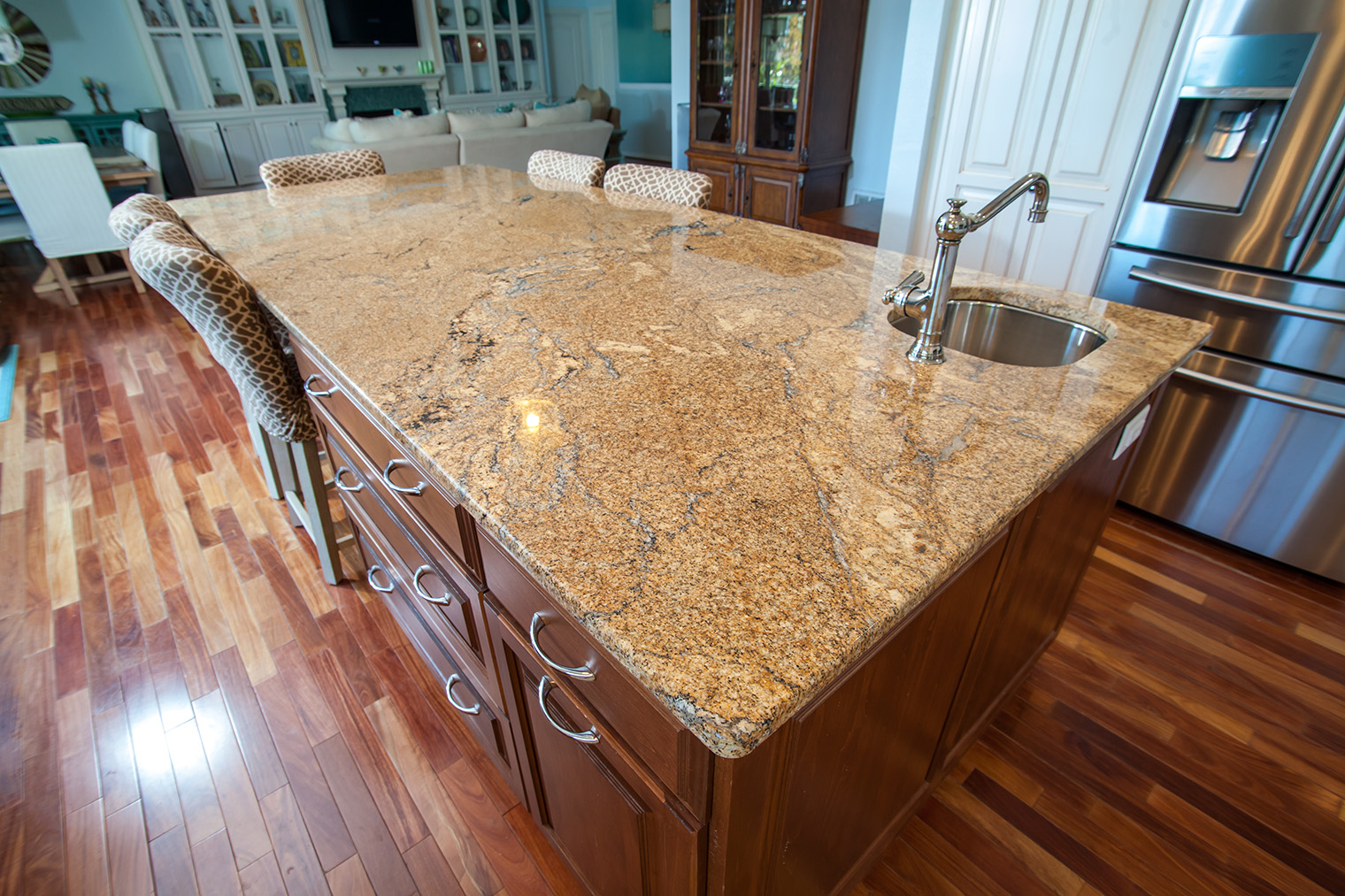
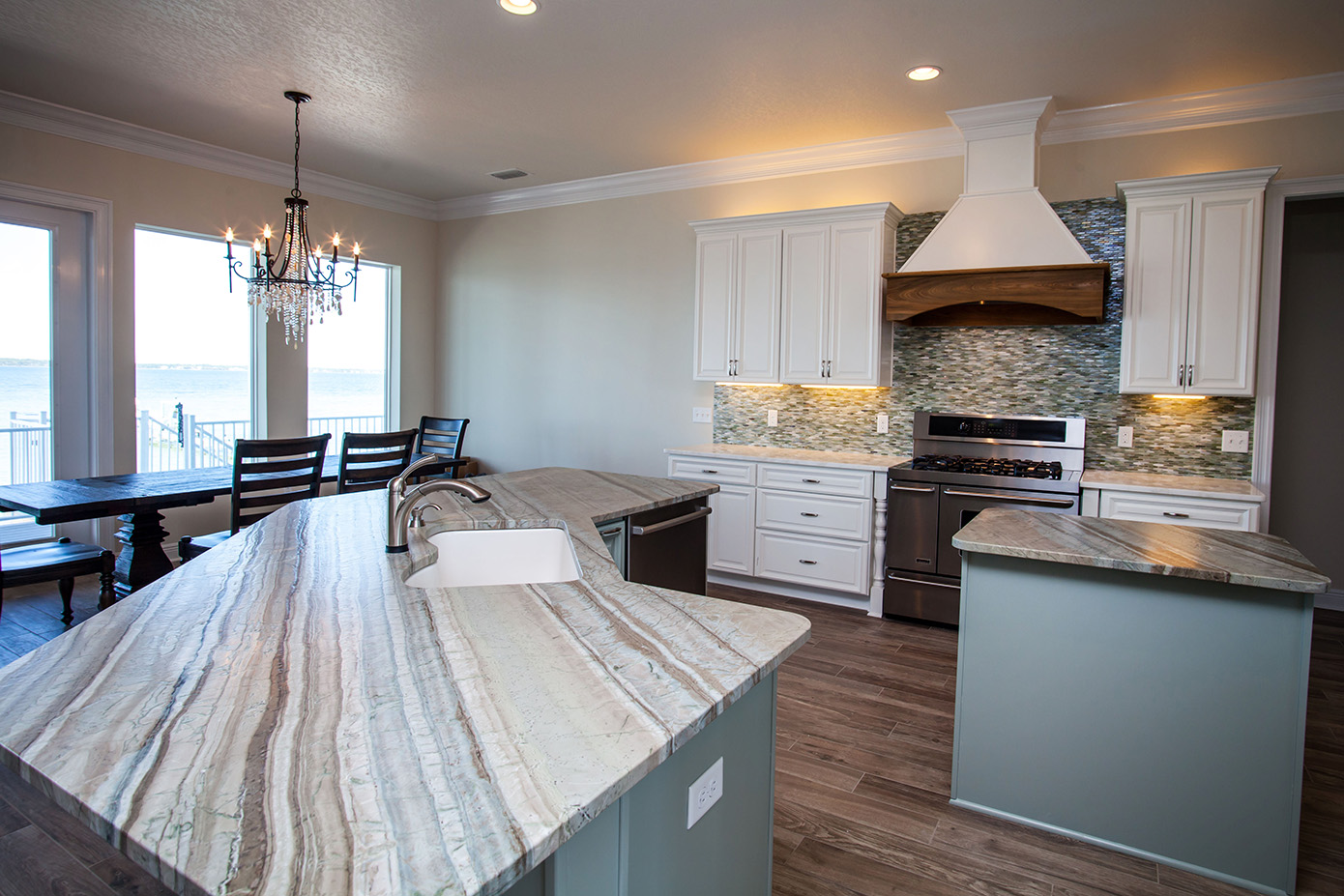
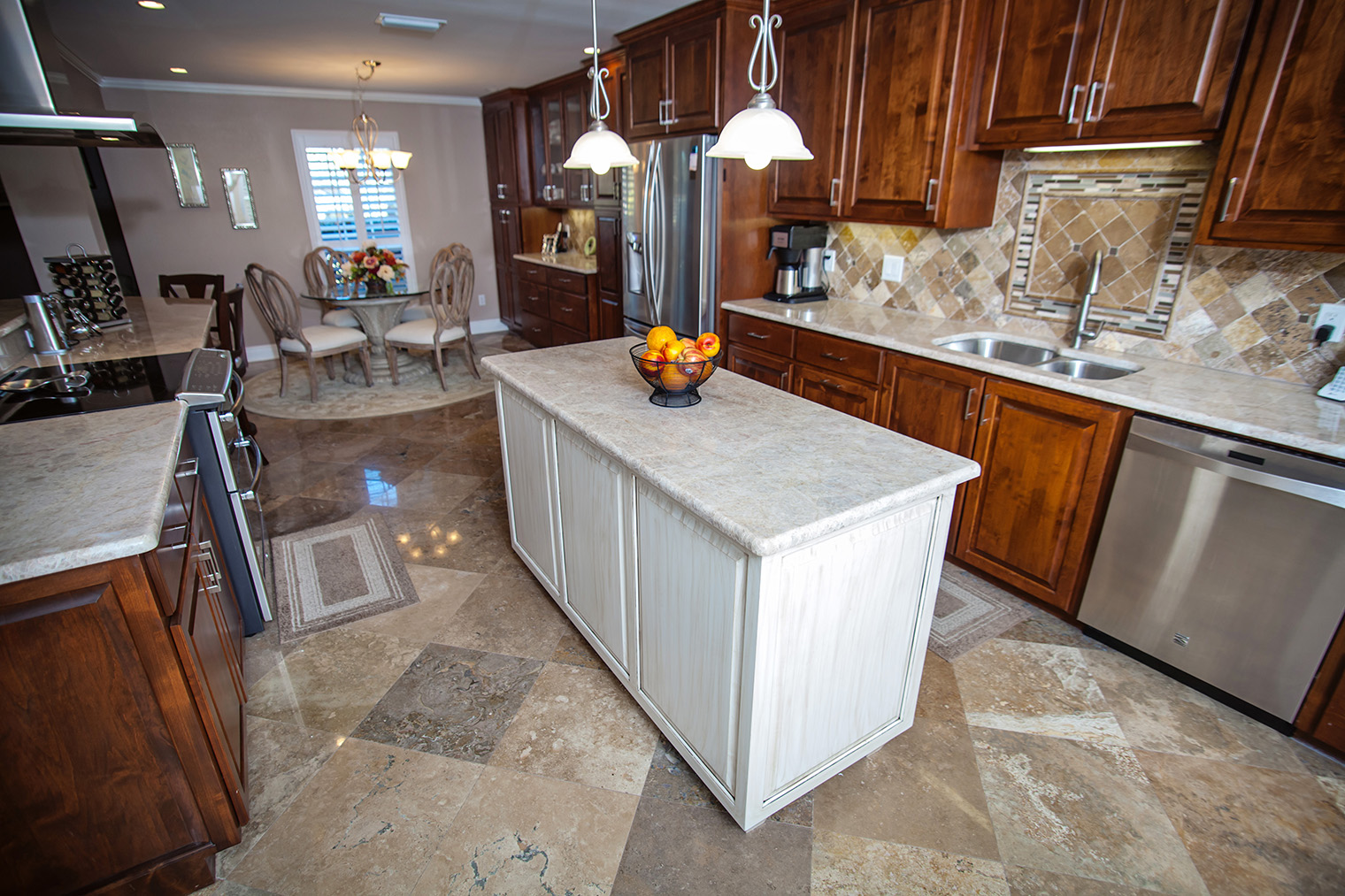
For homeowners who love the beachy or rustic aesthetic, limestone kitchen countertops can absolutely be part of the design, with the right expectations in place. Kitchen islands used primarily for serving and display, rather than active food prep, are a practical application. Perimeter counters in a kitchen with lighter daily use can also work well when the homeowner is committed to proper sealing and immediate spill cleanup.
What limestone delivers in a rustic kitchen is something no quartz countertop or engineered surface can match: a surface that looks and feels like it belongs in a centuries-old farmhouse. That warmth and character is real, and for the right homeowner in the right kitchen, it’s worth the extra care.
Decorative and Accent Surfaces
Some of the best applications for limestone countertops aren’t countertops at all; they’re accent pieces. Bar tops in lower-use entertaining spaces, display islands, fireplace surrounds, and feature walls let limestone showcase its natural character without exposure to the acids and constant wear of a working kitchen.
Where Limestone Is Not the Right Choice
The limitations are worth stating clearly. High-traffic family kitchens where cooking happens daily are not the right environment for limestone. The stone is porous, softens when exposed to acids, and requires a level of daily attention that most busy kitchen users find impractical. For those spaces, granite or quartzite is far more forgiving.
Outdoor applications are not suitable for limestone. Unlike granite and quartzite, which can handle outdoor conditions when properly maintained, limestone is too porous and too soft for outdoor kitchens, grill stations, or any exterior surface exposed to the elements. Areas with constant water or moisture exposure are also problematic; the porous nature of the stone makes sustained moisture a risk.
And any space where acidic spills are common; a kitchen where lemon juice, wine, and tomato sauce are regular features requires a harder stone that doesn’t etch.
What Are the Benefits of Limestone Countertops?
Limestone countertops offer a warm, organic aesthetic that few natural stones can match; here’s what makes them worth considering.
- Warm, matte, organic aesthetic: a natural look that no engineered material fully replicates
- “Beachy” or rustic character: the go-to stone for coastal, farmhouse, and traditional design styles
- Neutral earthy tones: cream, beige, soft grey, warm tan; versatile across cabinet colors and flooring
- Unique natural detail: fossil patterns and natural texture that vary from slab to slab
- More affordable than granite or marble: one of the more accessible natural stone options
- Works beautifully in low-traffic spaces: bathrooms, decorative islands, accent surfaces
What Are the Drawbacks of Limestone Countertops?
Limestone is beautiful, but it comes with real limitations that every homeowner should understand before choosing it.
- Porous surface: stains and etches from acidic spills if not sealed and maintained
- Requires sealing twice per year: consistent maintenance is non-negotiable
- Softer than granite and quartzite: more susceptible to scratching and surface damage
- Not suitable for outdoor use: too porous to handle outdoor conditions
- Not ideal for high-traffic kitchens: demanding maintenance requirements in heavy-use spaces
- Spills must be wiped immediately: especially anything acidic like lemon juice, wine, or vinegar
Limestone vs Granite Countertops
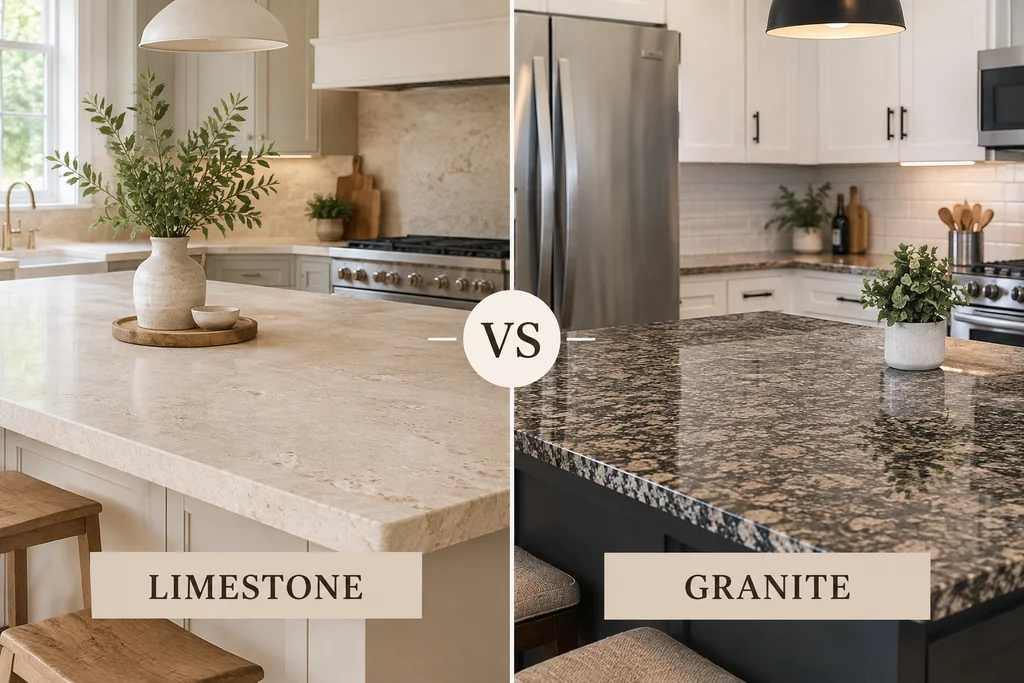
These two stones serve completely different purposes, and the comparison makes that clear.
| Feature | Limestone | Granite |
|---|---|---|
| Hardness | Soft, porous | Mohs 6–6.5 |
| Heat Resistance | Use trivet | Hot items directly; no trivet needed |
| Etching | Yes; acids cause damage | Does not etch |
| Sealing | Twice per year | Annually |
| Outdoor Use | Not suitable | Suitable with covering |
| Aesthetic | Warm, rustic, matte | Bold, varied, speckled |
| Best For | Bathrooms, low-traffic spaces | High-traffic kitchens |
For homeowners choosing between limestone and granite, the decision usually comes down to use and aesthetic. If the priority is durability and low maintenance in a working kitchen, granite countertops in Pace and across our Gulf Coast showrooms are the stronger choice by a clear margin. If the priority is a warm, rustic, organic aesthetic for a lower-traffic space, limestone delivers something granite simply doesn’t.
How to Care for Limestone Countertops
Limestone countertop care is consistent and straightforward; the key is doing it regularly, not waiting for problems to appear.
- Cleaning: Warm soapy water with a non-citrus dish soap and a soft microfiber cloth handles daily cleaning. Safe products include Method Granite and Marble Cleaner, Pledge Multi-Surface (non-citrus), and ammonia-free glass cleaner. Never use bleach, ammonia, vinegar, citrus-based cleaners, or abrasive scrubs; these damage both the stone and its sealant.
- Sealing: Reseal limestone twice per year. Clean the surface thoroughly and let it dry completely. Apply a silicone impregnator or appropriate stone sealer to a soft, dry cloth, wipe it onto the surface, wait 10 minutes, then wipe off with a dry cloth. The stone absorbs what it needs; the rest wipes away cleanly.
- Daily habits: Wipe up spills immediately, especially anything acidic. Use cutting boards for food prep; never cut directly on limestone. Use trivets or hot pads under any heat source. Never use abrasive sponges on the surface.
Limestone Countertops Cost
Limestone is one of the more affordable natural stone options available. According to Superior Granite’s website, limestone countertops typically cost from $55 to $150 per square foot installed, making it accessible compared to premium granite or marble.
That range varies depending on several factors: the slab’s grade and veining complexity, project size, edge profile selection, number of cutouts for sinks and appliances, and installation requirements. More movement and unusual color in a slab generally means a higher price; this applies across all natural stones.
The total project cost includes material, fabrication, and installation. Getting a complete estimate- not just a per-square-foot figure- gives a much more accurate picture of what the project will actually cost. Every kitchen and bathroom layout is different, and the only way to get a precise number is to discuss the specifics of your project directly with the fabrication team.
Is Limestone the Right Choice for Your Home?
Limestone may be right for you if you want a warm, beachy, or rustic natural stone aesthetic that no engineered material can replicate, you’re designing a bathroom vanity or a lower-traffic decorative surface, and you’re committed to sealing twice per year and wiping up spills promptly.
Consider other stones if you need maximum durability for a high-traffic family kitchen; granite or quartzite will serve you far better. If you want a countertop for outdoor use, limestone is not the right material. And if low maintenance is the priority, quartz handles everyday use without any sealing schedule.
Limestone rewards careful ownership. In the right space, with the right habits, it’s one of the most distinctive and characterful natural stones available.
Visit Superior Granite to See Limestone Slabs in Person
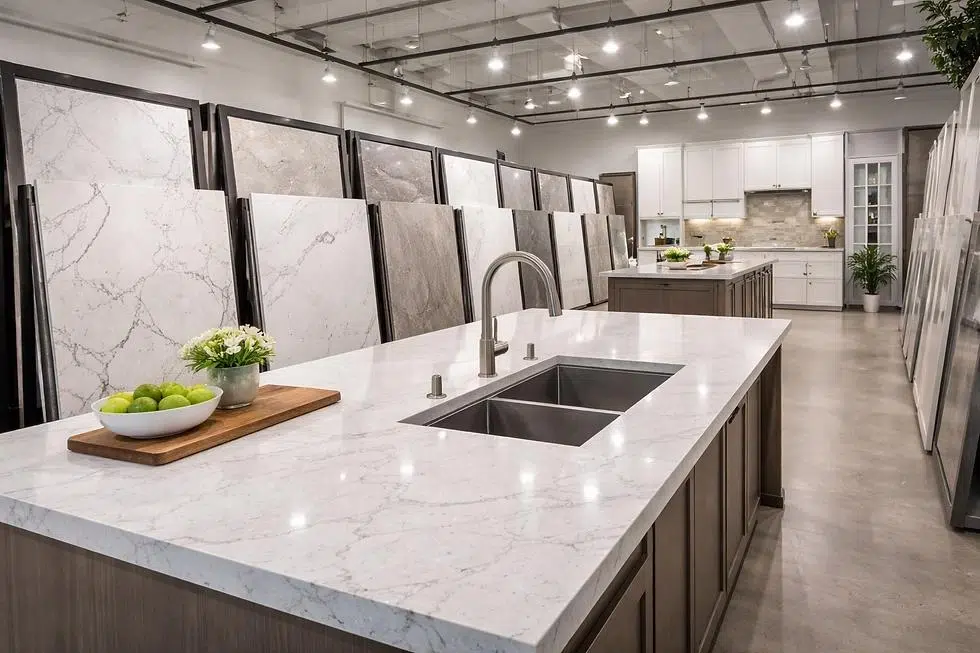
A small sample won’t show you what limestone really looks like; you need to see a full slab. Superior Granite carries one of the largest selections of natural stone countertops in Pensacola and across the Gulf Coast, with limestone slabs available to view in person at all three showroom locations.
Bring your cabinet door and flooring sample when you visit. From there, the team handles everything: templating, fabrication, and installation, before anything is measured or cut.
Conclusion
Limestone countertops are beautiful, distinctive, and well-suited to the homeowners who understand what they’re choosing. The warm, matte, organic character this stone delivers- that beachy, rustic quality- is genuinely unique. No quartz or engineered surface replicates it. But limestone asks something in return: consistent sealing, prompt spill cleanup, and placement in spaces that suit its nature. Put it in the right room with the right habits, and it looks stunning for years.
Put it in the wrong space without the right care, and it becomes a maintenance burden. Whether you’re planning a bathroom vanity in Pensacola, a rustic kitchen island in Pace, or a decorative accent surface in Fort Walton Beach, the key is knowing which side of that line your project falls on before you commit.
Pensacola, FL
Visit Us: 7011 Pine Forest Road, Pensacola, FL 32526
Call Us: (850) 941-0270
Hours: Monday – Friday: 8 a.m. – 5 p.m., Saturday: 9 a.m. – 2 p.m.
Pace, FL
Visit Us: 4590 Jernigan Road, Pace, Florida 32571
Call Us: (850) 994-1872
Hours: Tuesday – Friday: 9 a.m. – 5 p.m., Saturday: 9 a.m. – 2 p.m.
Fort Walton Beach, FL
Visit Us: 35 Miracle Strip Pkwy SW, Fort Walton Beach, Florida 32548
Call Us: (850) 301-0716
Hours: Tuesday – Friday: 8 a.m. – 5 p.m., Saturday: 9 a.m. – 2 p.m.
Get quotes now and start your project!
FAQs
1. What are limestone countertops?
Limestone countertops are natural stone surfaces made from sedimentary calcium carbonate rock. They feature warm, earthy tones with a matte finish and are popular for achieving a beachy or rustic aesthetic in kitchens and bathrooms.
2. Where do limestone countertops work best?
Limestone works best in bathroom vanities, decorative islands, and lower-traffic kitchen surfaces where the stone’s warm character can be appreciated without constant heavy use. It is not well suited to high-traffic kitchens or outdoor applications.
3. Are limestone countertops good for kitchens?
Limestone can work in kitchens but requires consistent attention: immediate spill cleanup, regular sealing, and careful daily habits. For high-traffic family kitchens, granite or quartzite are more practical choices.
4. How do you care for limestone countertops?
Clean with warm soapy water and a soft cloth daily. Reseal twice per year using a silicone impregnator. Wipe spills immediately. Avoid bleach, ammonia, vinegar, citrus cleaners, and abrasive scrubs.
5. Is limestone more durable than marble? Both are soft natural stones that require careful maintenance. Limestone and marble have similar care requirements; both are porous, both etch from acidic spills, and both require semi-annual sealing.
6. Do limestone countertops need sealing?
Yes; twice per year. Sealing protects against staining but not etching. Wipe spills immediately regardless.
7. Can limestone countertops be used outdoors?
No. Limestone is not suitable for outdoor countertop applications. For outdoor kitchens and entertaining surfaces, granite or quartzite are the appropriate choices.