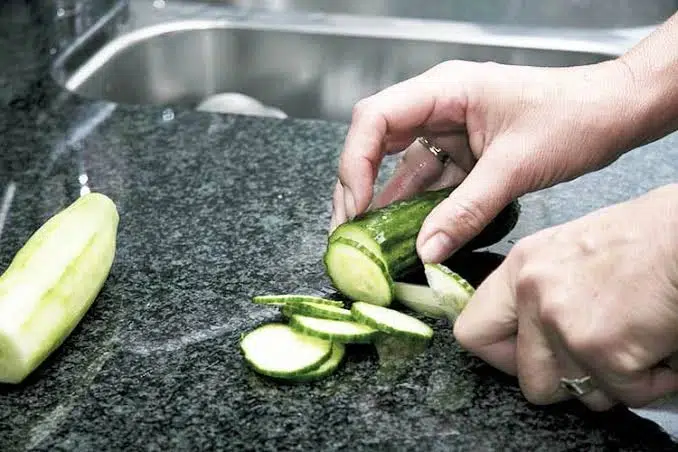
Here’s a question almost every homeowner asks at some point: can you just cut directly on your countertop? It feels convenient. The surface is hard, it’s right there, and grabbing a cutting board seems like an extra step. But cutting on stone countertops isn’t as simple as it looks. The answer depends entirely on which stone you have, and even when the stone can handle it, a cutting board is still the smarter choice.
Some stones are more resistant than others, but no countertop material, however durable, was designed to replace a cutting board. Using one protects both your surface and your knives at the same time.
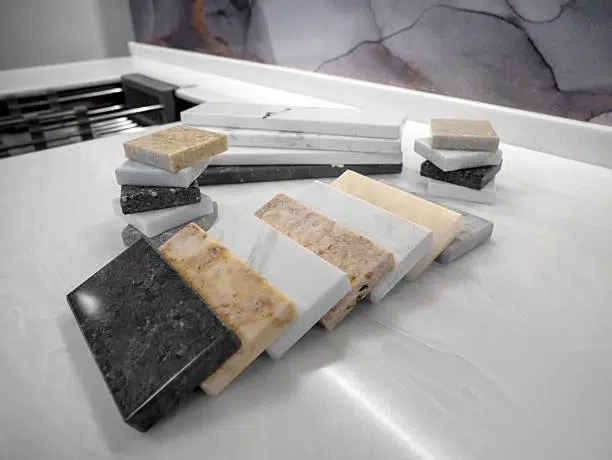
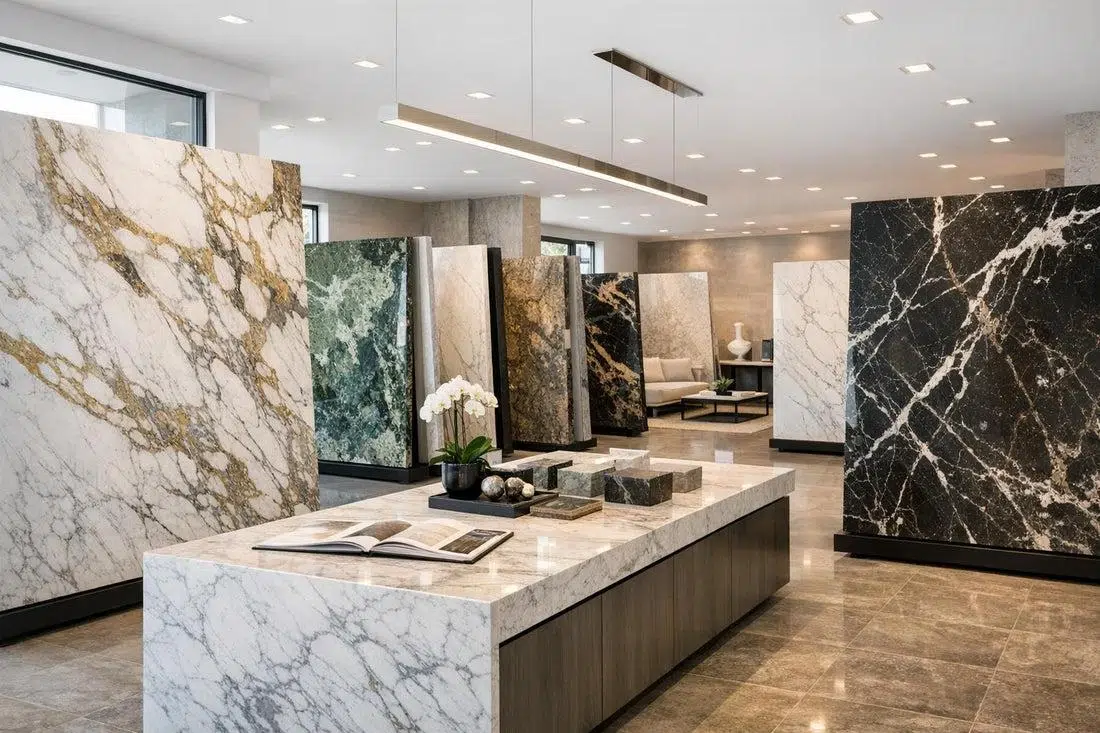
At Superior Granite, our showrooms in Pensacola, Pace, and Fort Walton Beach carry nine different stone materials. Each one behaves differently when a knife meets the surface. Here’s exactly what happens, and what you should do about it.
Can You Cut Directly on Stone Countertops?
It depends on the stone. Some materials, like granite and quartzite, are hard enough that a knife blade won’t scratch the surface. Others, like marble, calcite, and limestone, are much softer and will show damage immediately.
But here’s the important part: even on the stones that can handle direct cutting, your knives will dull faster. The stone is harder than the blade. That means the blade wears down, not the stone. So whether your countertop is granite, quartz, marble, or anything in between, cutting on stone countertops without a board is never the best habit, regardless of which material you have.
What Happens When You Cut on Stone Countertops?
When a knife blade meets a stone surface, one of two things happens; it depends entirely on which material is harder.
Hard stones: granite and quartzite. The stone is harder than the knife. The blade drags across a surface it can’t scratch. The countertop stays in good shape. But the knife edge takes a beating; it dulls faster than it would on wood or plastic. You’re protecting the stone. You’re wearing down your knives.
Softer stones: marble, calcite, dolomite, limestone. The knife is harder than the stone. The blade leaves marks: scratches, gouges, surface damage that doesn’t buff out easily. These surfaces weren’t designed for direct cutting contact, and it shows quickly.
Engineered and manufactured surfaces quartz and porcelain: Both are durable and resistant, but countertop professionals recommend avoiding direct cutting to help protect the finish. Although highly resistant, repeated contact over time can affect the surface appearance.
Which Stone Countertops Are More Resistant to Cutting Damage?
Granite
Granite is one of the hardest natural stones available; a knife blade simply isn’t tough enough to mark it. That’s what makes granite countertops in Pensacola such a popular choice for busy family kitchens. That said, using a cutting board is still recommended to protect both the surface finish and your knife edges. The stone holds up. The knives don’t.
Granite can technically be cut directly, but your knife’s sharpness will suffer as a result. A cutting board is always the better habit, even on the hardest stone.
Quartzite
Quartzite works similarly. It’s a natural metamorphic stone that’s actually harder than granite, and like granite, it’s more resistant to knife contact than softer stones. The surface generally holds up well. But cutting on stone countertops made from quartzite still dulls blades faster than softer cutting surfaces.
There’s also a sealing consideration. Quartzite is porous and requires regular sealing, particularly around edges, sink openings, and faucet holes where the surface is more vulnerable. A cutting board removes that risk entirely.
Which Stone Countertops Require Extra Care When Cutting?
Quartz
Quartz countertops are made from approximately 90–93% crushed quartz crystals bound with resins. Highly durable and scratch-resistant, but scratch-resistant doesn’t mean scratch-proof. Countertop professionals recommend avoiding direct cutting to help protect the finish over time.
Always use a cutting board on quartz. It’s one of the simplest habits that keeps a premium surface looking its best.
Marble
Marble is where direct cutting on stone countertops causes real, visible damage. It’s naturally soft; much softer than granite or quartzite, and a knife blade will scratch the surface. Those scratches don’t disappear. On a polished marble finish, they catch the light and are immediately noticeable.
Beyond scratching, marble is porous and etches when exposed to acidic substances. Cutting citrus, tomatoes, or other acidic foods directly on marble creates two problems at once: knife marks and acid etching. Neither is easily reversible. Do not cut directly on marble countertops.
Calcite
Calcite shares marble’s vulnerability. It’s a soft, porous stone that scratches easily and etches quickly when exposed to acid, in less than 20 minutes in some cases. The combination of knife contact and food acids makes direct cutting particularly damaging. Do not cut directly on calcite countertops.
Dolomite
Dolomite is harder than marble but more porous than granite. It offers greater scratch resistance than marble, but it’s still not designed for direct knife contact. Common kitchen substances like tomato sauce and lemon juice can etch the surface quickly, adding cutting stress on top of that isn’t worth the risk. Always use a cutting board on dolomite.
Porcelain
Porcelain is fired at extremely high temperatures and is highly resistant to everyday scratches, but surface scratches can still occur with normal wear and tear over time. Using a cutting board prevents direct contact between the knife and the porcelain surface. This is especially important because porcelain’s colors and patterns are surface-deep only; any visible scratching affects the appearance in a way that can’t be buffed out.
Limestone and Soapstone
Both limestone and soapstone are softer natural stones. If you’re considering natural stone countertops in Pace, keep in mind that limestone is porous and prone to surface damage from sharp objects. Soapstone is composed primarily of talc, one of the softest minerals available. Sharp objects should be kept off these surfaces to maintain their appearance and integrity over time.
Stone Countertop Cutting Guide: Quick Comparison
Now that you understand how each stone behaves, here’s a quick reference guide for cutting on stone countertops across all nine materials:
Use this as your at-a-glance reminder whenever you’re unsure.
| Material | Direct Cutting Recommended? | Main Reason |
|---|---|---|
| Granite | Not recommended (more resistant) | Protects knives and surface finish |
| Quartzite | Not recommended (more resistant) | Protects knives and sealing integrity |
| Quartz | No | Avoid surface scratches over time |
| Marble | No | Soft surface; scratches and etches easily |
| Calcite | No | Soft surface; etches in under 20 minutes |
| Dolomite | No | More porous; surface damage risk |
| Porcelain | No | Protects surface-deep finish |
| Limestone | No | Soft stone; surface damage risk |
| Soapstone | No | Soft stone; scratches easily |
Why a Cutting Board Always Makes Sense
Even on the stones that can technically handle direct cutting, a cutting board is always the smarter choice. Here’s why:
- Your knives stay sharper longer: cutting on hard stone dulls blades faster than any other kitchen surface. Wood and plastic are far gentler on knife edges
- Your countertop stays protected: even on hard stones, repeated cutting near edges, faucet holes, and seams puts stress on areas more vulnerable than the main surface
- Your surface looks newer for longer: good cutting board habits consistently result in countertops that look better after years of use
- It protects your investment: stone countertops are significant. A cutting board costs almost nothing compared to a repair or replacement
- It’s the right daily habit: every stone type, every kitchen, every cook benefits from one simple change
The math is simple: a cutting board protects both the stone and the knives at the same time. There’s no downside.
Stone Countertop Care: Other Things That Damage Surfaces
Cutting on stone countertops is one of the most common ways homeowners accidentally cause damage, but it’s not the only one. Here are the other habits that cause the most problems
- Sharp objects left on the surface: knives, scissors, and metal tools resting on stone cause scratching over time
- Abrasive sponges and scrubbing pads: green 3M pads and similar products dull the finish and create surface marks. Always use a soft microfiber cloth
- Harsh chemical cleaners: bleach, ammonia, vinegar, and citrus-based cleaners damage stone surfaces. Warm soapy water is always the safest choice
- Hot glass dishes on granite: while granite handles heat well, placing hot glass directly on a cool stone surface can cause thermal shock and crack the dish. Use a trivet
- Acidic spills left sitting: lemon juice, wine, and tomato sauce etch porous natural stones quickly. Wipe up immediately every time
- Skipping the sealing schedule: unsealed or poorly sealed natural stone absorbs liquids and stains. Seal granite annually, marble and dolomite semi-annually, quartzite monthly for the first three months, then every six months after
Most countertop problems aren’t caused by bad stone; they’re caused by avoidable daily habits. Get the basics right, and the stone takes care of itself.
Expert Tips for Protecting Your Stone Countertops
A few simple habits make a dramatic difference in how your countertop looks five or ten years from now:
- Always use a cutting board; every time, on every stone
- Wipe spills immediately, especially acidic substances like lemon juice, wine, and tomato sauce
- Clean daily with warm soapy water and a soft microfiber cloth; avoid bleach, ammonia, vinegar, and citrus cleaners
- Never use abrasive scrubs or scouring pads on any stone surface
- Keep sharp objects off the countertop surface when not in use
- Follow the sealing schedule for your specific stone; consistency matters more than perfection
- Use trivets or hot pads under hot cookware on quartz, marble, and calcite; never place hot glass directly on any stone
The homeowners whose countertops still look brand new after ten years aren’t using a different stone; they’re using better daily habits. A cutting board and a microfiber cloth are the two most important countertop care tools you own. Everything else follows from those two habits.
Choosing the Right Countertop Material With Superior Granite
Choosing the right stone comes down to how you actually use your kitchen. Heavy cooks do best with granite or quartzite — both are hard, heat-resistant, and hold up well under daily use. If low maintenance is the priority, quartz is non-porous and never needs sealing — just keep a cutting board and trivet handy. Want the marble look with better durability? Quartzite gives you natural beauty without marble’s vulnerability. And if you need a surface that handles heat, UV, acids, and outdoor use all at once, porcelain is the most resilient option in the collection.
A Cutting Board Is the Easiest Way to Protect What You’ve Invested In
Cutting on stone countertops is one of those habits that seem harmless until you see what it does to your knives, your surface, or both. The stones that can handle it still don’t benefit from it. The stones that can’t handle it show the damage fast. The fix is simple. Use a cutting board. Every time. On every stone. It costs almost nothing, takes zero extra effort, and makes a real difference in how your countertop looks and performs over the years.
Superior Granite has been helping Gulf Coast homeowners choose and care for their countertops since 2005. Whether you’re still deciding on a material or looking after a surface you already have, our team in Pensacola, Pace, and Fort Walton Beach is ready to help.
Ready to find the right stone for your kitchen? Visit Superior Granite today; see the full slab selection in person and speak with a team that knows every material inside and out.
Pensacola, FL
Visit Us: 7011 Pine Forest Road, Pensacola, FL 32526
Call Us: (850) 941-0270
Hours: Monday – Friday: 8 a.m. – 5 p.m., Saturday: 9 a.m. – 2 p.m.
Pace, FL
Visit Us: 4590 Jernigan Road, Pace, Florida 32571
Call Us: (850) 994-1872
Hours: Tuesday – Friday: 9 a.m. – 5 p.m., Saturday: 9 a.m. – 2 p.m.
Fort Walton Beach, FL
Visit Us: 35 Miracle Strip Pkwy SW, Fort Walton Beach, Florida 32548
Call Us: (850) 301-0716
Hours: Tuesday – Friday: 8 a.m. – 5 p.m., Saturday: 9 a.m. – 2 p.m.
Get quotes now and start your project!
FAQs
1. Can you cut directly on stone countertops?
It depends on the stone. Granite and quartzite are more resistant to knife contact and generally hold up better than softer stones. However, even on these harder materials, cutting on stone countertops is not recommended; it dulls knife blades faster and adds unnecessary wear. Marble, calcite, dolomite, limestone, and soapstone should never be cut on directly as they scratch and damage easily.
2. Will cutting on granite damage the surface?
Granite is harder than knife blades, so it generally holds up well to direct cutting without visible scratching. But it will dull your knives significantly faster than a wooden or plastic cutting board. Using a cutting board is still the recommended practice; it protects both the surface finish and your knives.
3. Can you cut on quartz countertops?
It’s not recommended. Although quartz is durable and highly scratch-resistant, countertop professionals advise against direct cutting to help protect the finish over time. Always use a cutting board on quartz countertops.
4. Why does cutting on stone dull your knives?
Hard stones like granite and quartzite are harder than knife blades. When the blade drags across the surface, the stone wins; the knife edge wears down faster than it would on softer cutting board materials like wood or plastic.
5. What is the best way to protect stone countertops from scratches?
Always use a cutting board. Keep sharp objects off the surface. Clean with a soft microfiber cloth and warm, soapy water. Avoid abrasive sponges and harsh chemical cleaners. Follow the sealing schedule for your specific stone type.