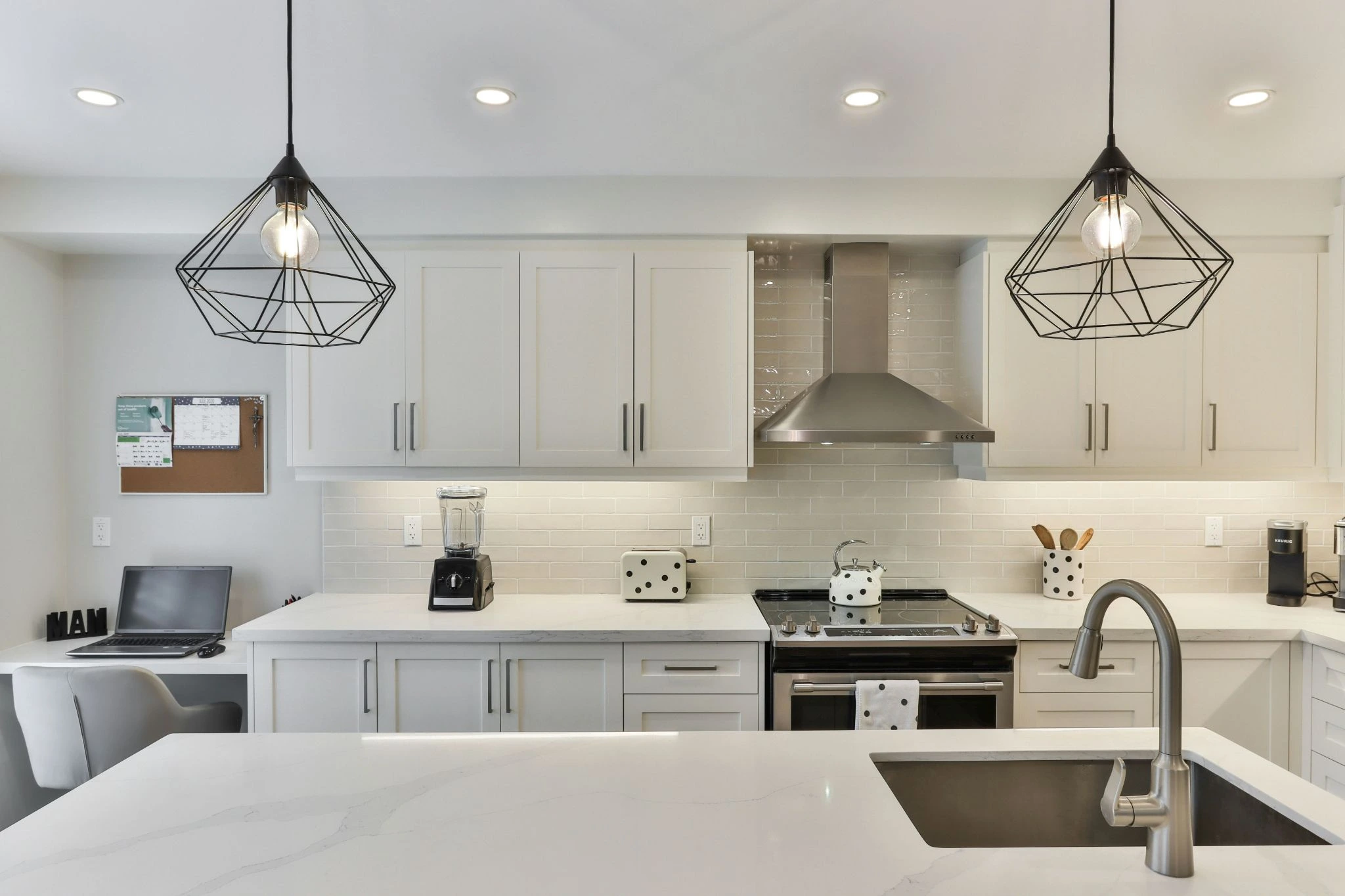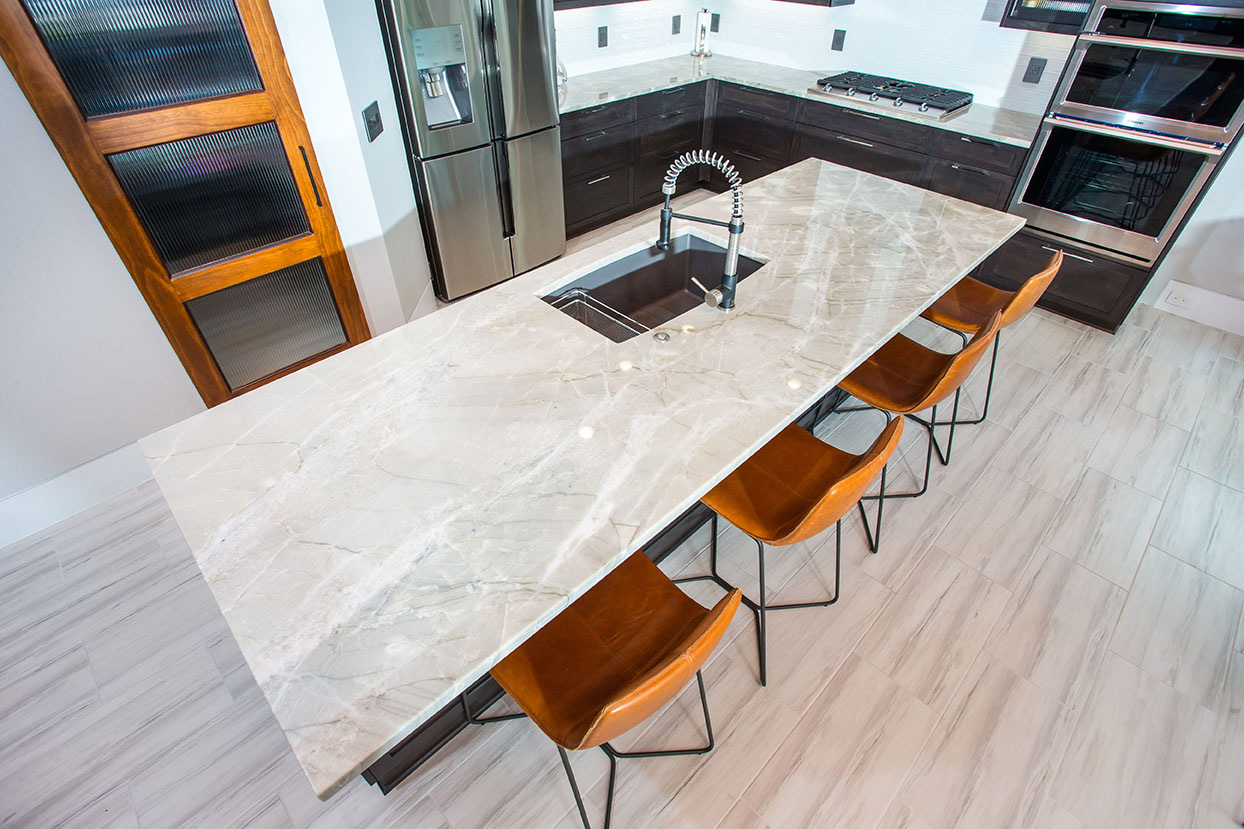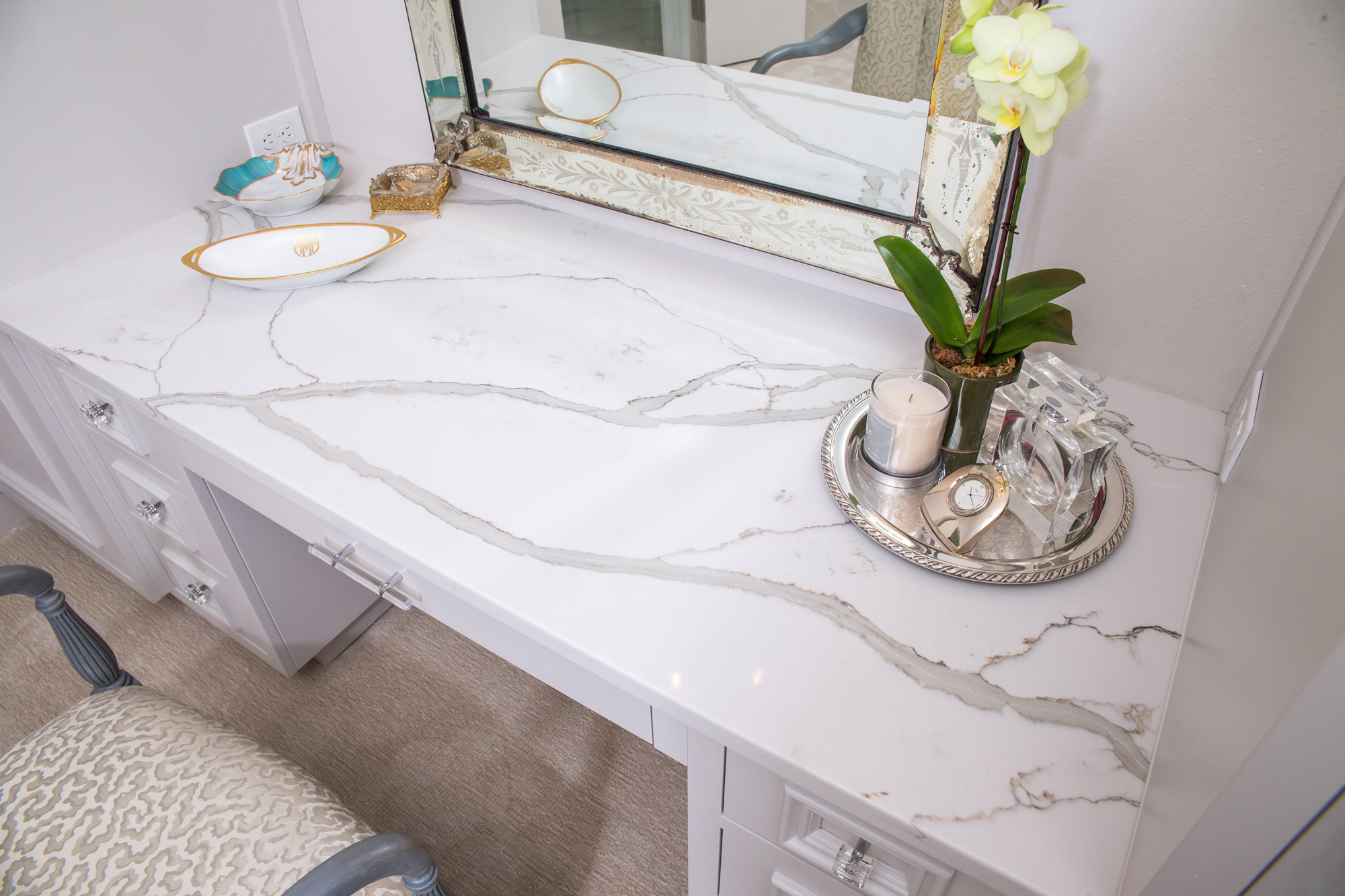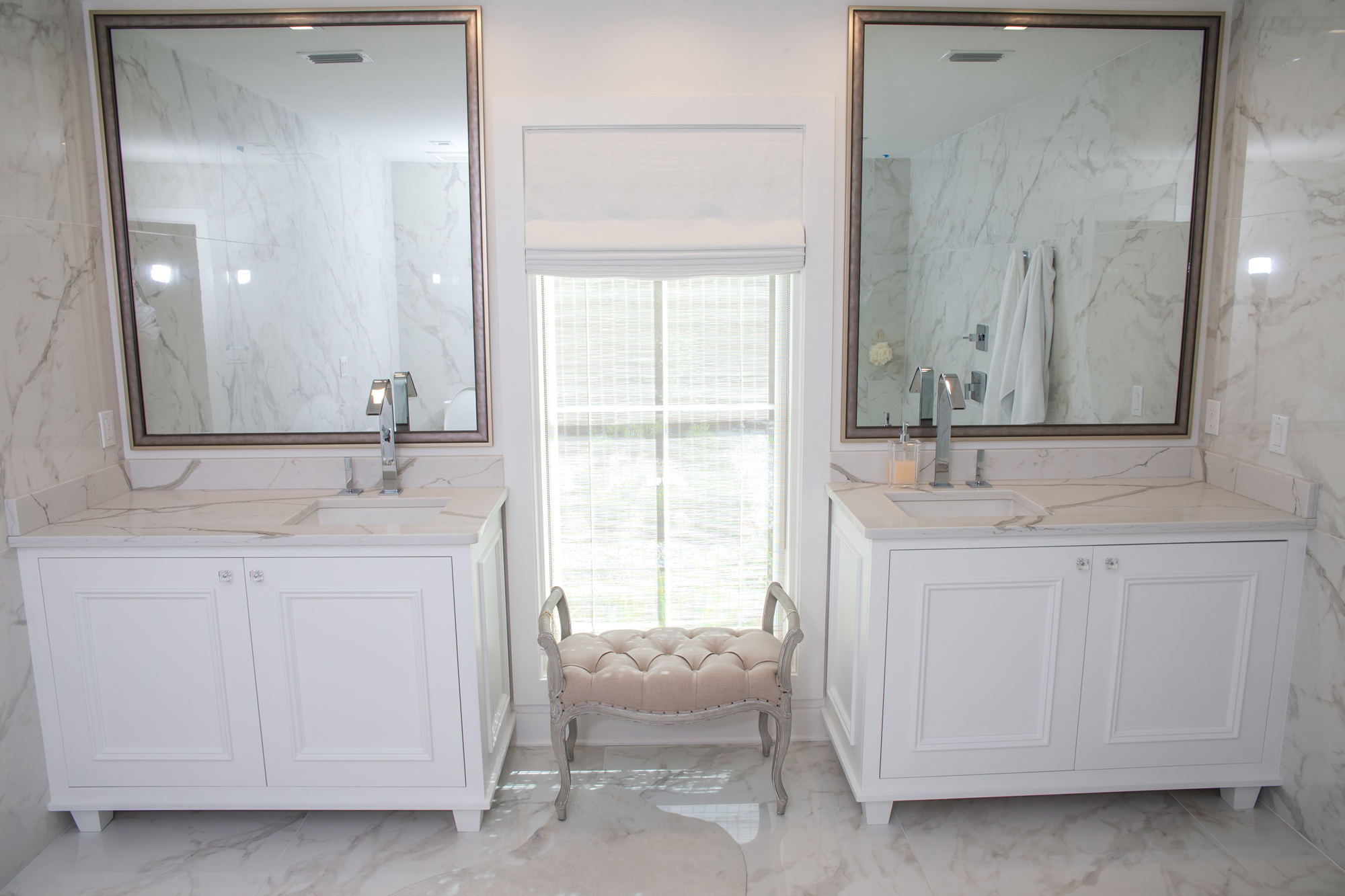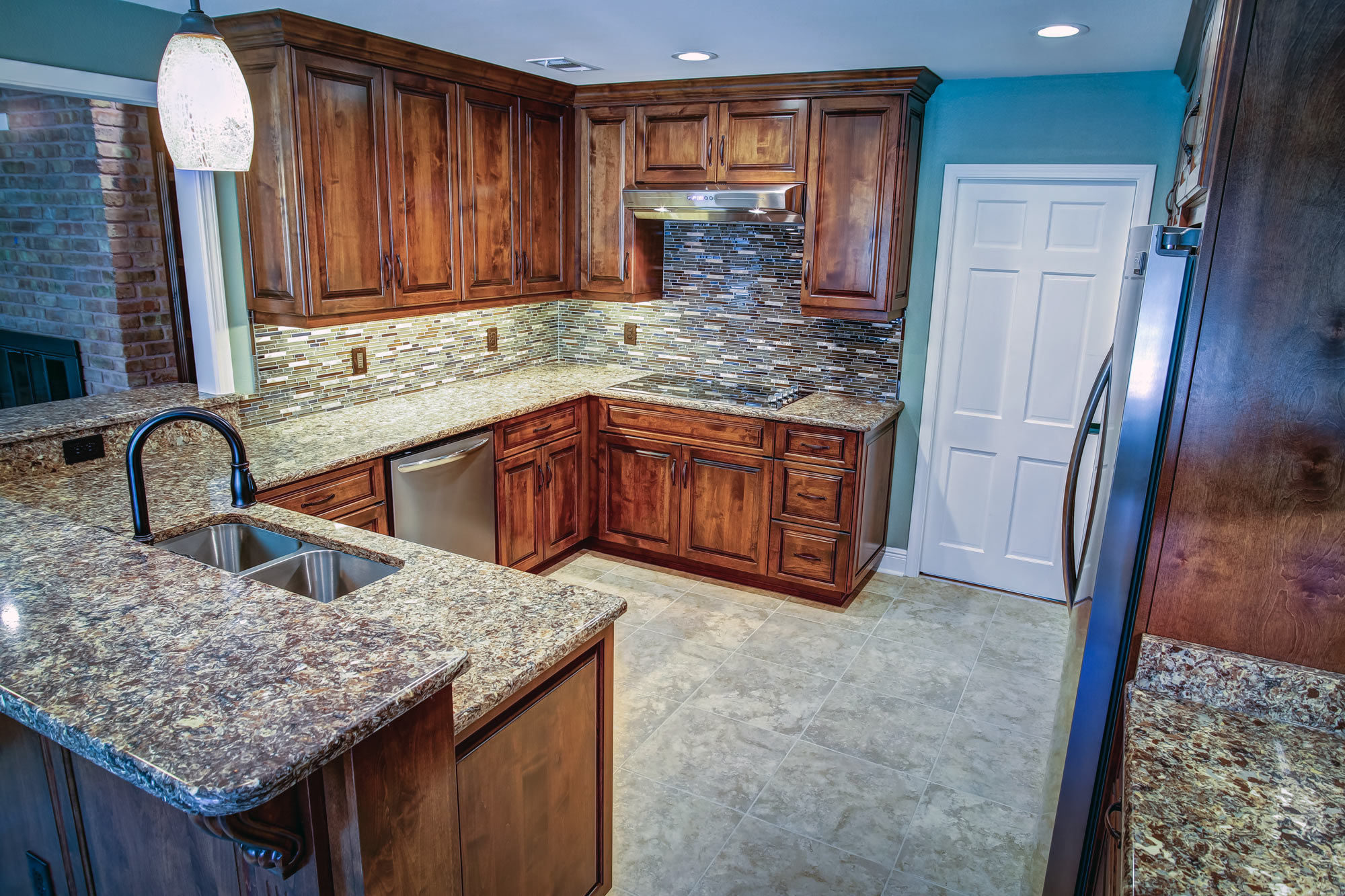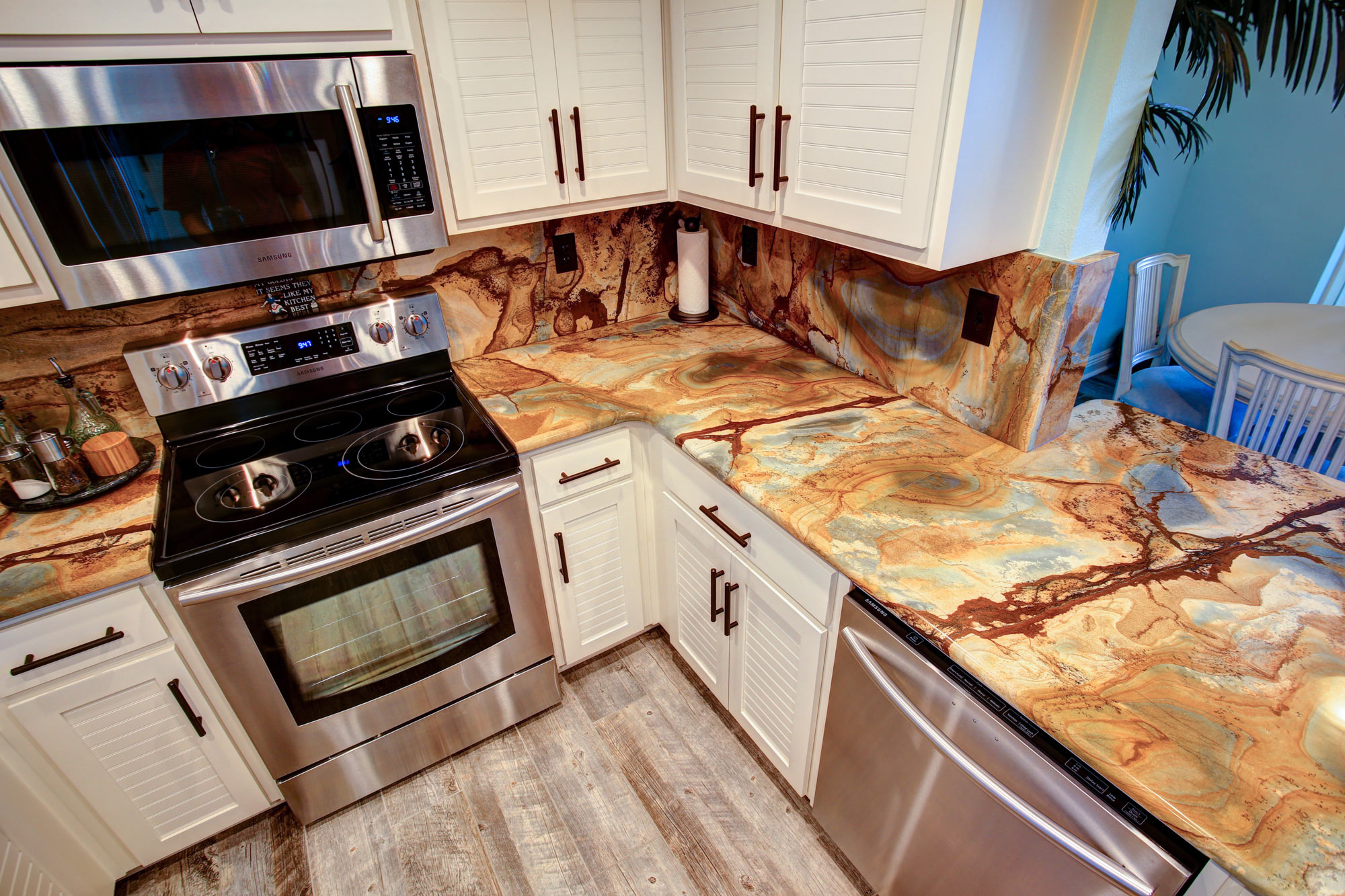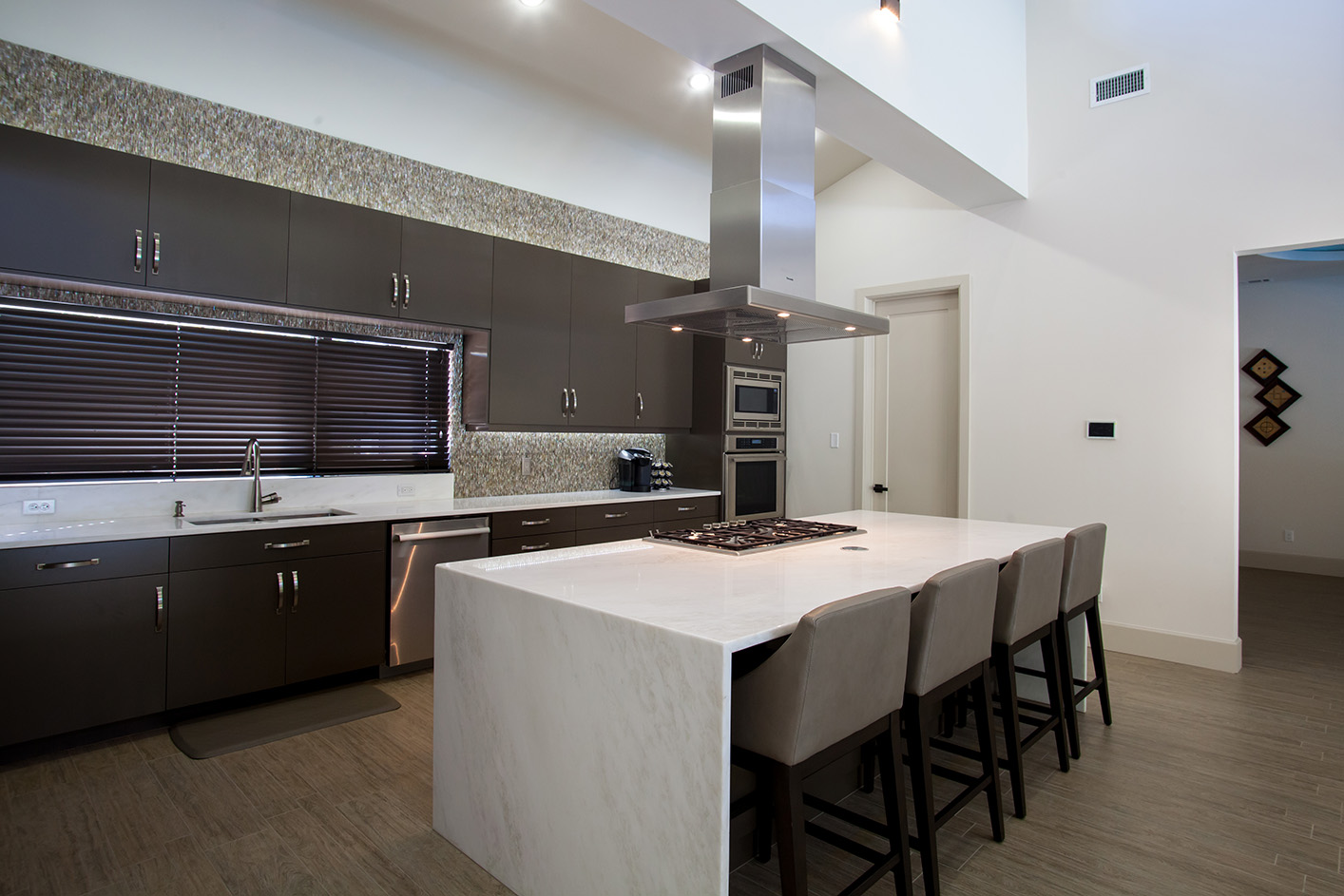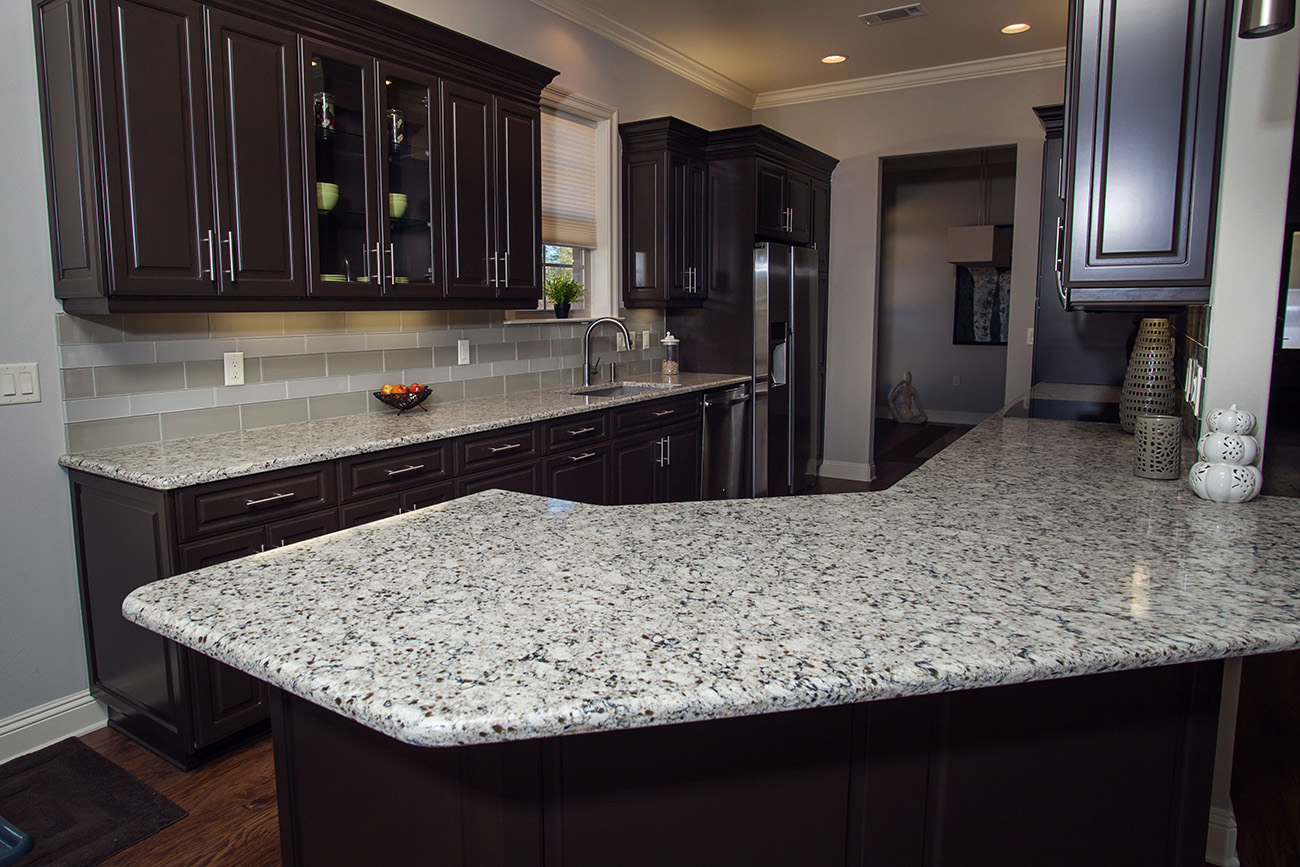
Most homeowners walk into a store, pick up a four-inch sample tile, hold it under fluorescent lighting, and make a decision they’ll live with for the next decade. But that small chip doesn’t show you what your countertop will actually look like. Not even close.
When you see the entire slab before choosing, you get the full picture: the real color, the actual veining, the true pattern scale. And that changes everything about how you make this decision.
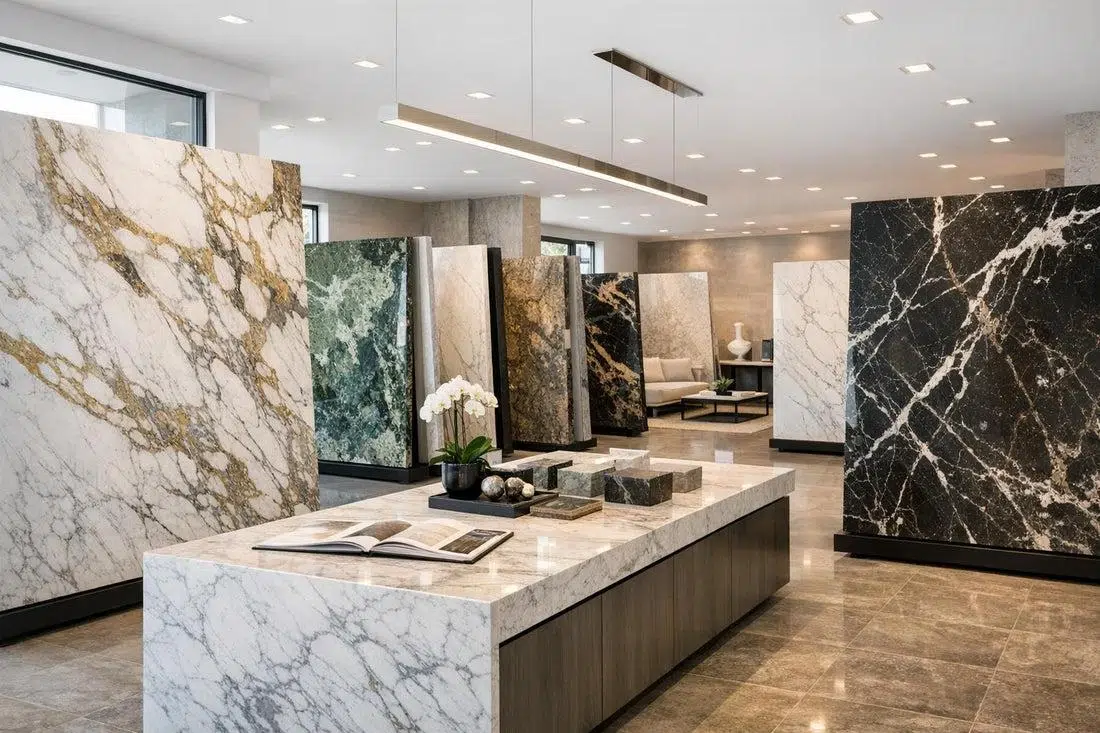
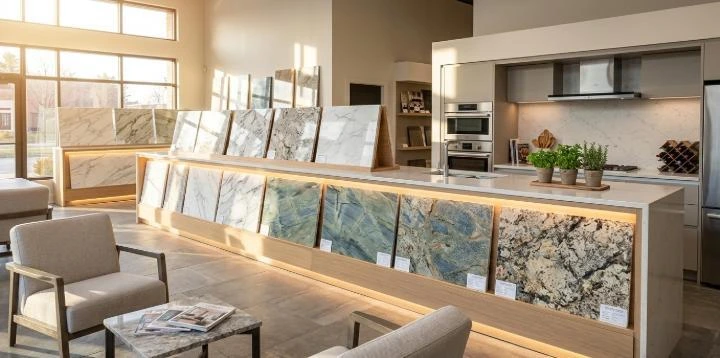
At Superior Granite, our showrooms in Pensacola, Pace, and Fort Walton Beach carry hundreds of colors in stock at any given time. Every slab is available to view in person, so you know exactly what you’re choosing before anything gets cut.
What Is a Countertop Slab: And What Is a Sample?
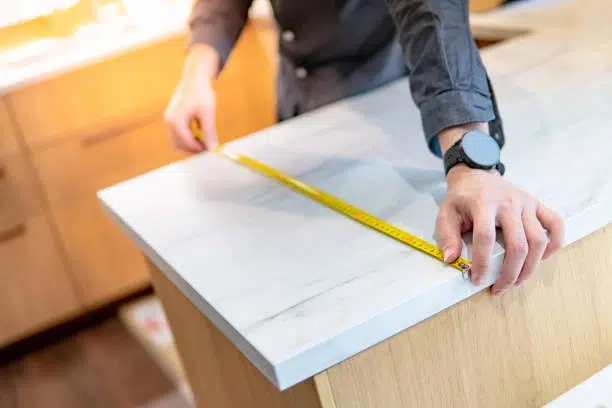
A countertop slab is the full-size piece of stone your countertop will actually be cut from. Standard slabs are large; typically over 100 inches long and 50 inches wide; and every countertop piece is templated and fabricated directly from that slab.
A sample chip is a small cut, usually three to four inches, taken from one section of that slab. It shows one small corner of the stone. Nothing more.
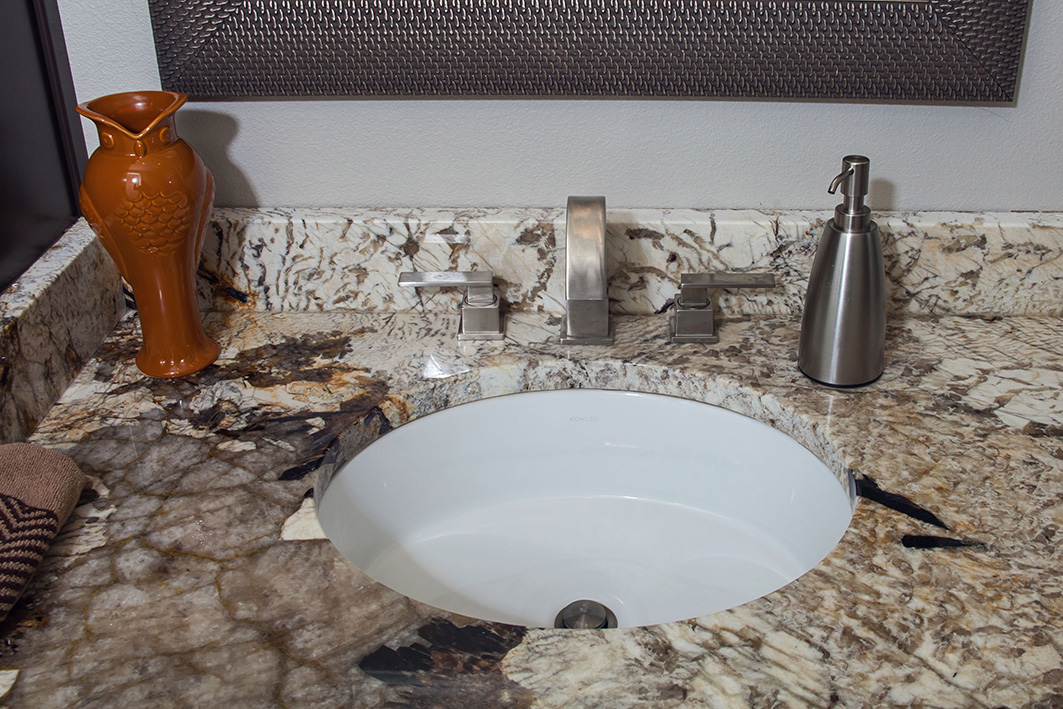
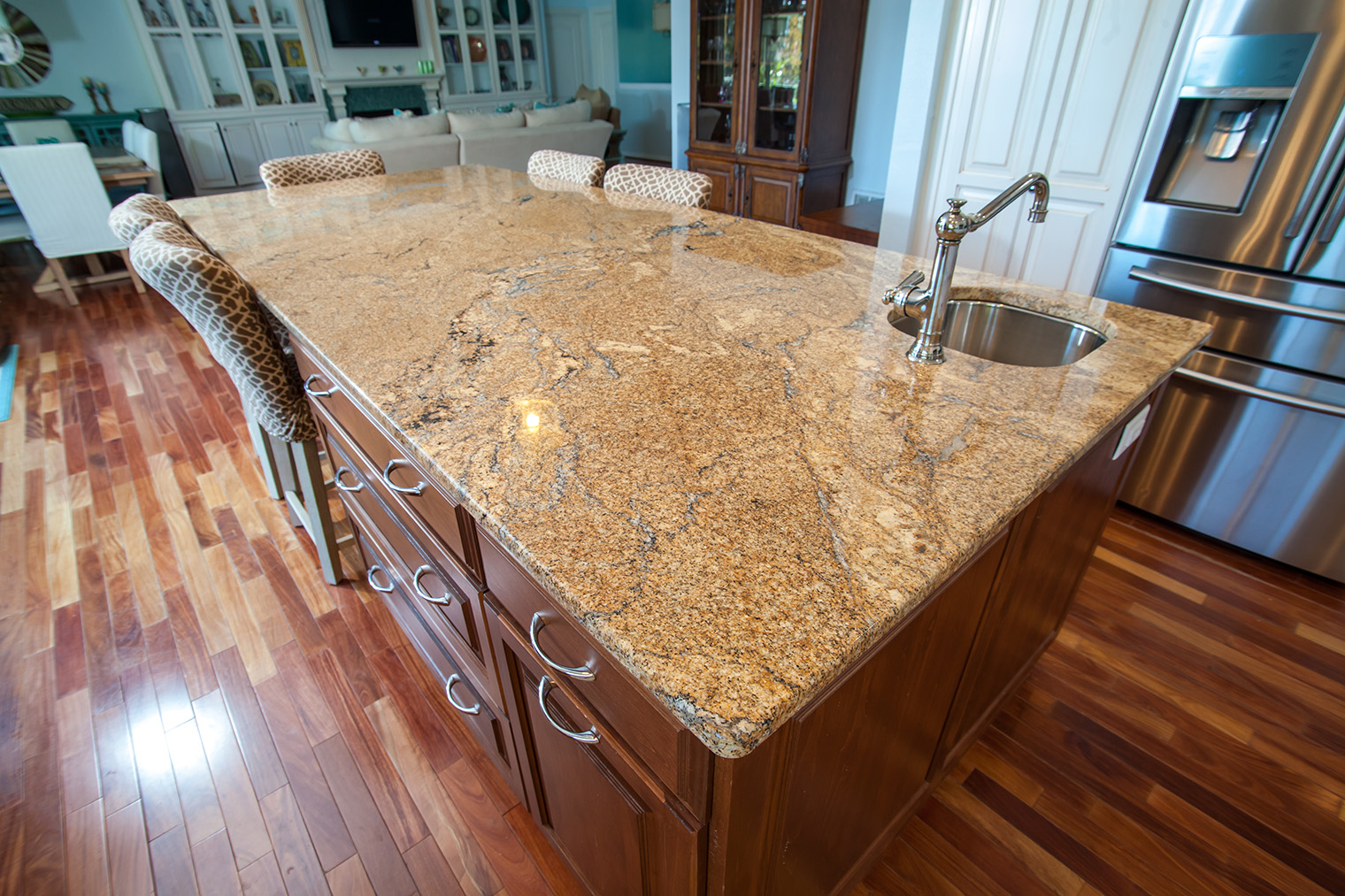
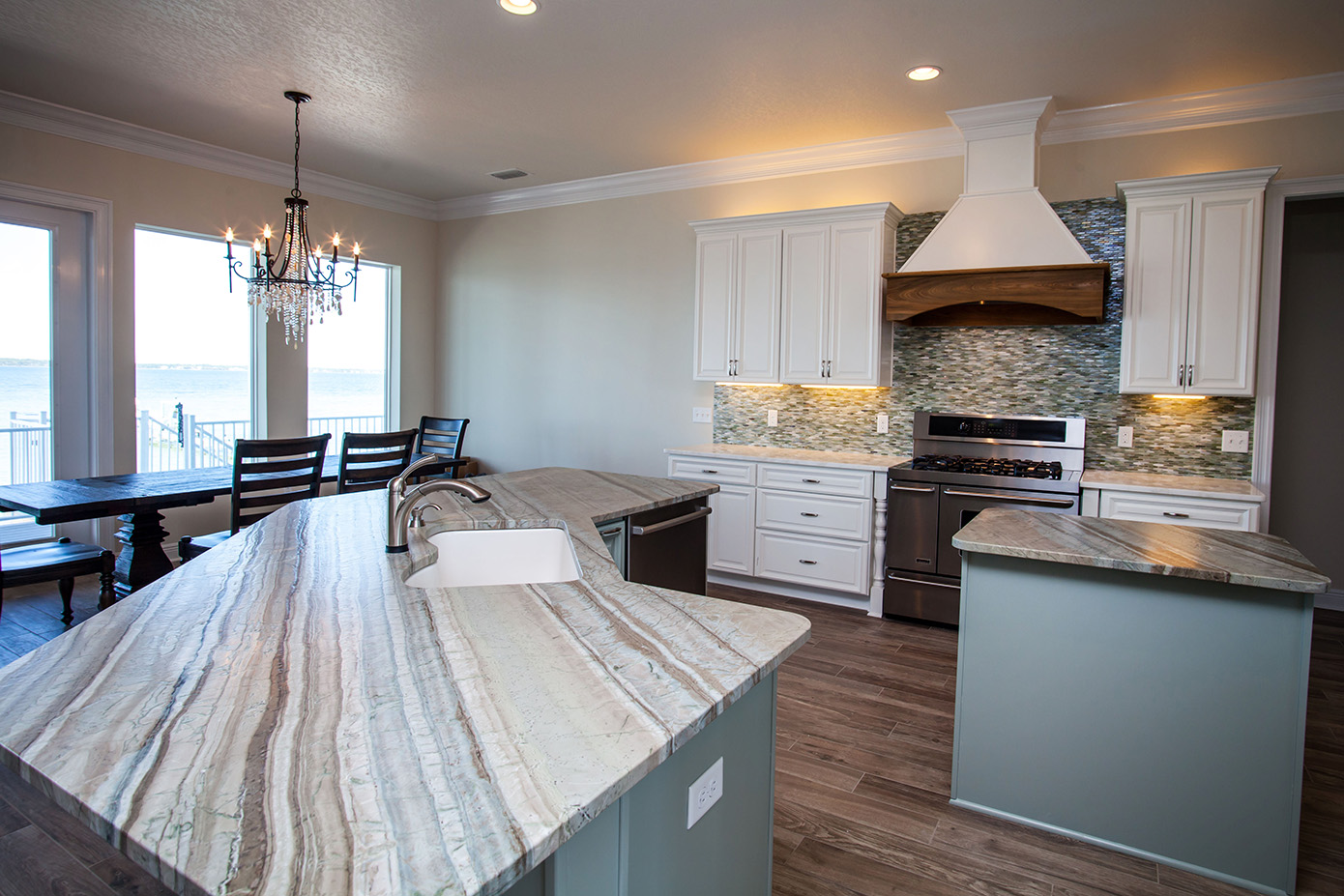
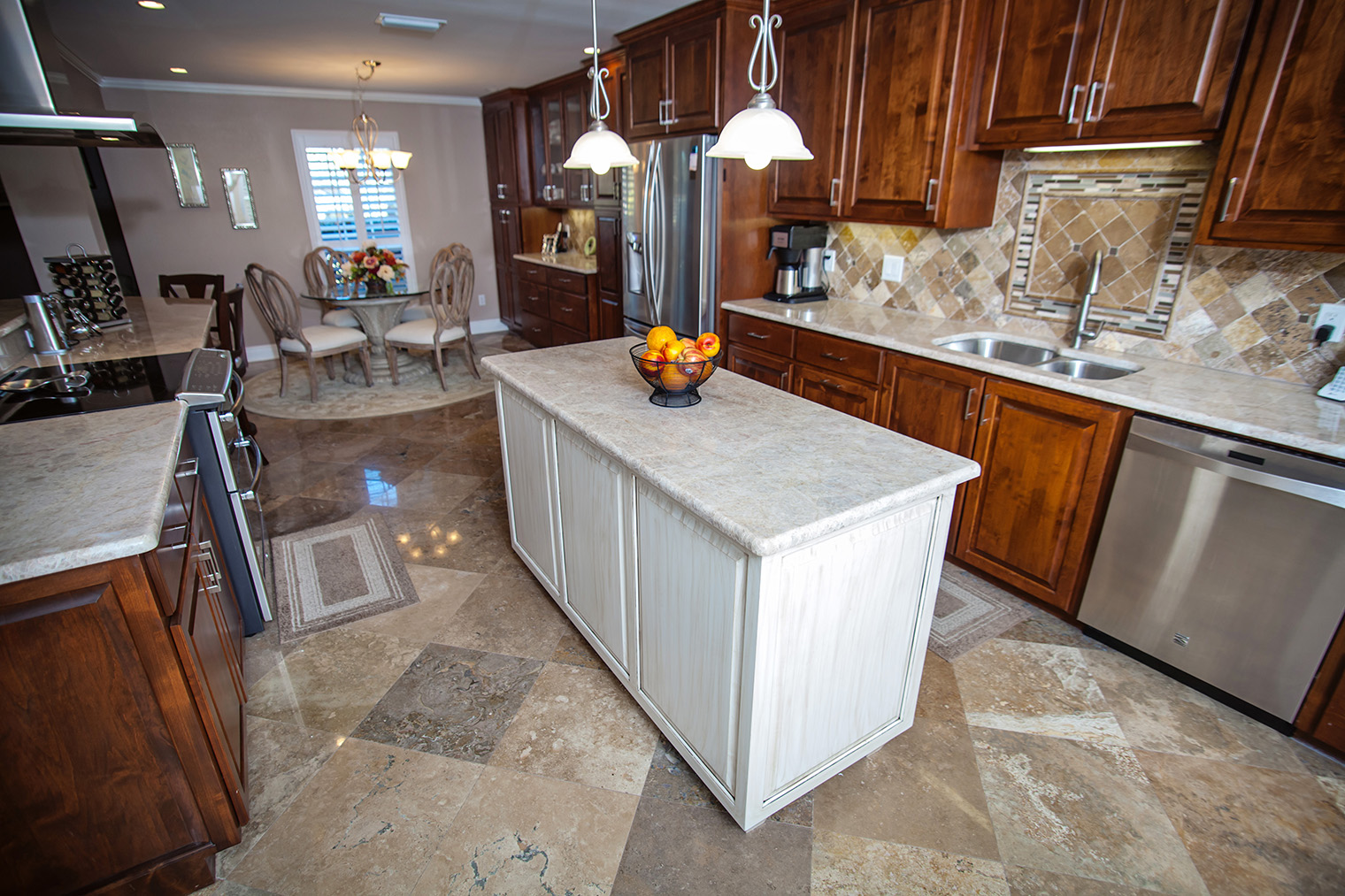
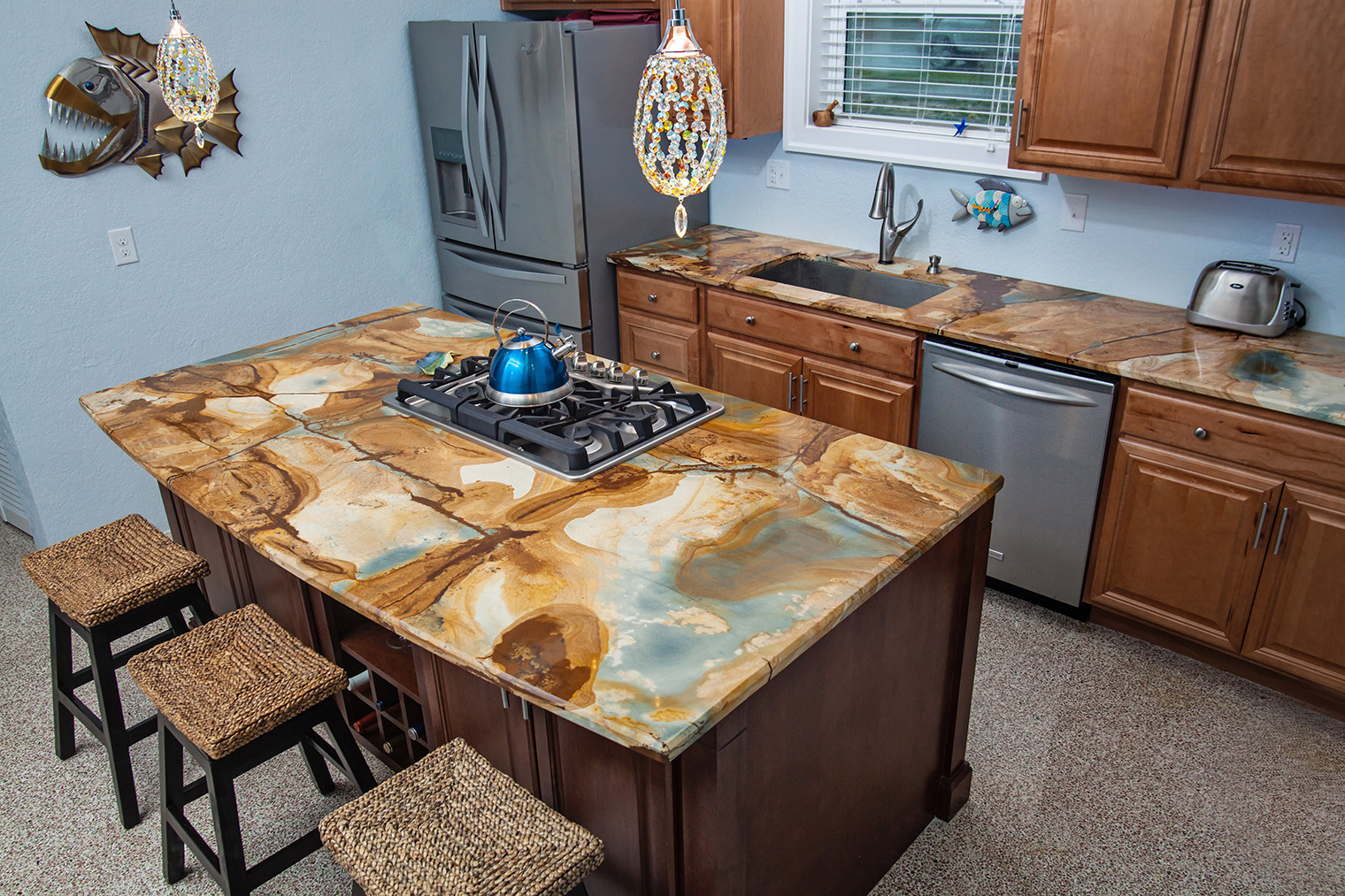
The problem is that stone is not uniform. Granite, quartzite, marble, and other natural stones have movement, variation, and veining that shifts dramatically across the full surface. What looks subtle on a sample chip can be bold and dramatic at full slab size. What looks light in a small piece can read completely different across a twelve-foot kitchen island. A sample gives you a starting point. But to actually choose your stone, you need to see the entire slab.
Why a Small Sample Can Be Misleading
So why do so many homeowners rely on sample chips? Because it feels convenient. You grab a few tiles, take them home, hold them against the cabinet; done.
But here’s what a small sample can’t show you:
- The full veining pattern: natural stones like marble, quartzite, and granite have veining that runs across the whole slab. A four-inch chip shows one tiny section of that pattern; not how it flows across your entire countertop
- True color at scale: lighter stones often look more dramatic at full size. Darker stones can show more variation than the sample suggests
- Movement and depth
- Pattern continuity: where the veining falls across seams, how the stone reads from one end of the kitchen to the other; none of that is visible on a chip
- Real lighting effect: a sample chip under store lighting looks nothing like a full slab under the natural light in your kitchen
This is why visiting a professional countertop showroom in Pensacola, FL, and viewing full slabs in person is always the better move.
What Changes When You See the Entire Slab
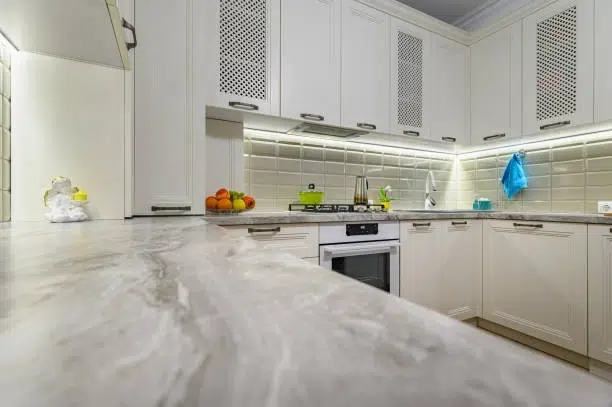
When you see the entire slab in person at a showroom, you get information that no sample, photo, or website can give you. You see the true color; not a snapshot of it. You see the full veining from edge to edge. You see how the movement flows across the stone. You understand where seams will naturally fall and how the pattern will read across your whole kitchen or bathroom.
And you can do something no online shopping experience allows: hold your cabinet door sample directly against the full slab, under real lighting, in real time. That comparison alone changes how most homeowners make their final decision. A stone they were certain about from a sample chip suddenly looks different at full size. And a stone they hadn’t considered becomes the obvious choice once they see the entire slab.
For projects where veining continuity matters, book-matched slabs are also available, where two slabs from the same block are mirrored so the veining flows seamlessly from one piece to the next. That kind of detail is only meaningful when you’ve seen the full slabs side by side in person.
How Each Stone Looks Different at Full Size
Every material in the Superior Granite collection reads differently at full slab size. Here’s what to expect when you view a granite slab before buying, and every other stone in the range:
Granite
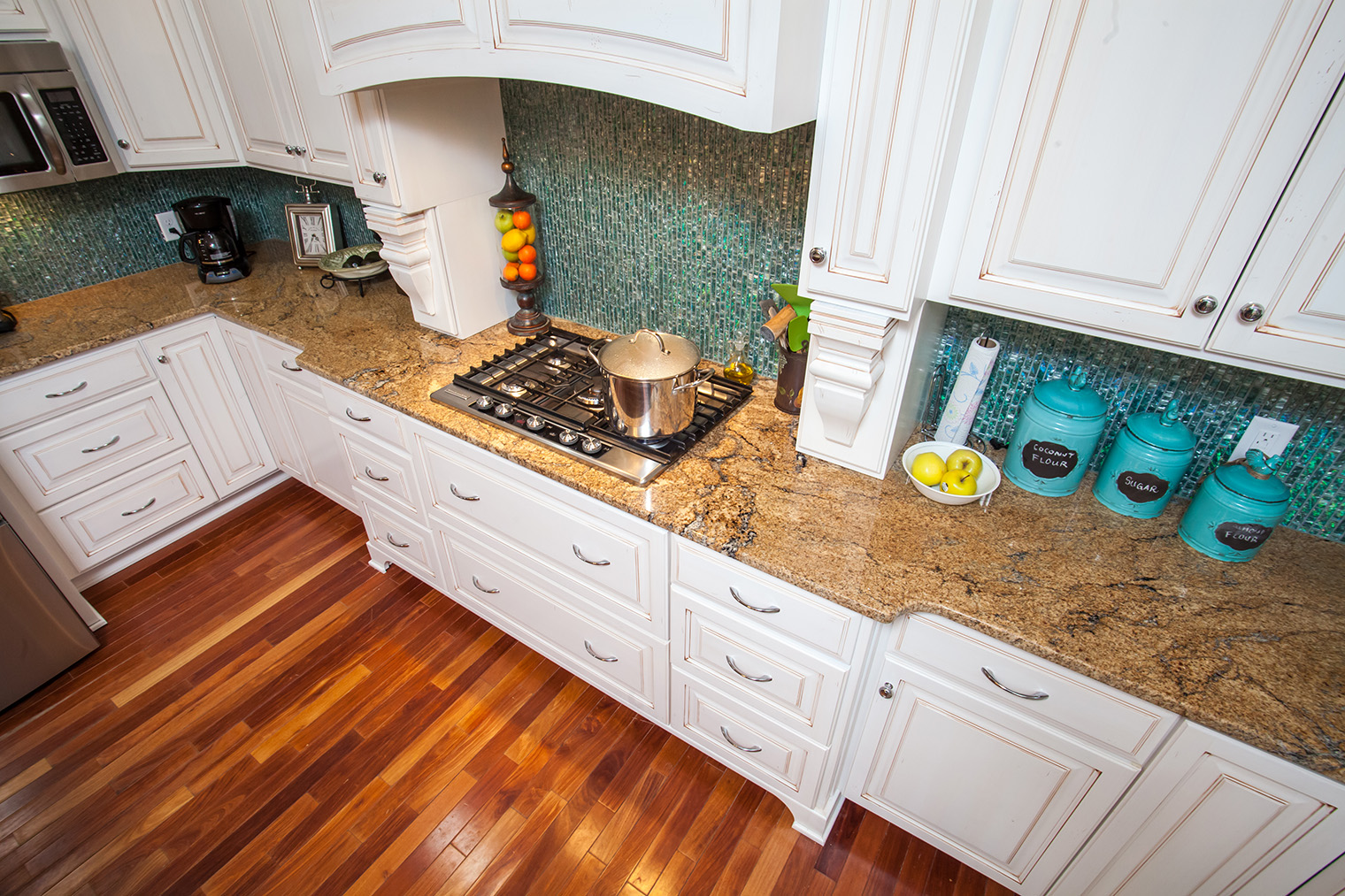
Granite comes in a wide range of colors and movement levels. The more movement you see in a granite slab, the swirling, flowing pattern across the surface; the more unique and often pricier the stone. That movement is almost impossible to judge from a small sample. You need to see the entire slab to understand what you’re actually getting.
Quartz
Quartz is an engineered surface made from approximately 90–93% crushed natural quartz crystals along with resins and pigments. Coarse ground quartz produces a flecked appearance across the slab. Finely ground quartz produces a smoother, more consistent look. White quartz seams are also more noticeable at full size; something worth understanding before you commit.
Quartzite
Quartzite is a natural metamorphic stone with more varied veining, coloring, and patterns than engineered quartz. It registers at a 7 on the Mohs hardness scale; it’s harder than granite; and it has a marble-like appearance with lots of natural movement. That movement is one of quartzite’s strongest selling points, and it’s one you can only fully appreciate when you see the entire slab laid out in person.
Marble
Marble varies significantly depending on where the stone was quarried. Fine-grained marble tends to be more consistent in color. Heavier-grained marble produces more variation; more dramatic veining, more movement. Two slabs of the same marble variety from different quarries can look completely different. Visiting a stone slab showroom and comparing full slabs side by side is the only way to know what you’re actually choosing.
Dolomite
Dolomite typically features white, gray, or cream tones with an elegant veined look similar to marble. At full slab size, the veining pattern and depth of color become much clearer. It’s a stone that often surprises homeowners, looking more subtle on a small sample than it does at full scale.
Porcelain
Porcelain countertops are manufactured from clay, sand, and mineral products, fired at temperatures over 2,000°F. One important detail: the colors and patterns of porcelain are surface-deep only. The vein does not cross-cut through the slab, and the base color will be visible in the mitered edge. That’s something worth seeing in person at a showroom display before you decide.
Calcite
Calcite is a natural stone countertop near me known for its soft, creamy white colors and translucent appearance. Under real lighting at full slab size, that translucency becomes visible in a way a small sample simply can’t capture. It’s one of the most visually striking stones to see the entire slab of in person.
Soapstone
Soapstone has a soft, matte finish that deepens in color over time, typically maturing from light grey to a deeper charcoal. At full slab size, the matte surface and natural variation become much more apparent. It’s a stone that rewards an in-person visit.
Limestone
Limestone is a natural stone countertop composed of sedimentary rock; specifically, calcium carbonate from compressed marine fossils and shells. It offers a warm, matte, organic aesthetic with earthy neutral tones. For Gulf Coast homes looking for a natural, coastal feel, limestone countertops are worth seeing at full slab size. The warmth and texture of the stone read very differently in person than on a small sample.
Ask your sales associate to walk you through how each stone’s pattern and movement changes across the full slab, not just the section closest to you. The difference can be dramatic.
What Is a Book-Matched Slab?
Book-matching is when two slabs from the same block of stone are opened like a book, mirrored against each other so the veining flows continuously from one piece to the next. The result is a seamless, symmetrical pattern across a large surface: an island, a full kitchen run, or a statement wall. It’s one of the most visually striking effects available in natural stone.
Book-matching only makes sense when you’ve seen the full slabs in person. You need to understand the veining, the movement, and the pattern flow before deciding whether book-matching is right for your project. Book-matched slabs are available at Superior Granite for projects where this look is desired.
How Lighting Affects Stone Selection
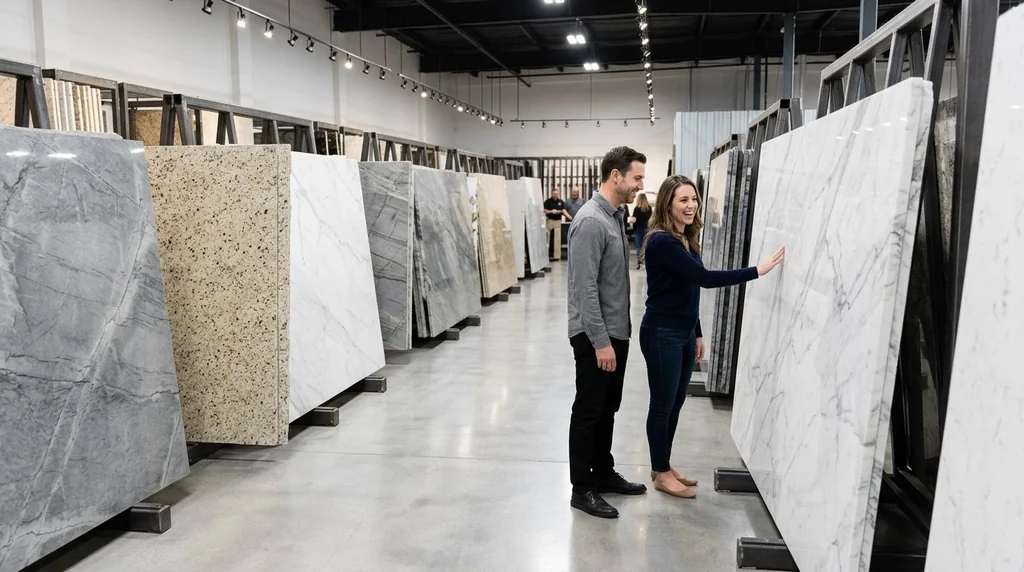
This is one of the most overlooked parts of choosing a countertop, and one of the strongest reasons to see a countertop slab in person rather than relying on photos or samples.
Stone reads differently under different light sources. A slab that looks warm and golden under showroom lighting may look cooler and grayer under the natural light in your kitchen. A stone that seems bold under artificial light can soften dramatically in a room with large windows.
When you visit a showroom, you can hold your cabinet sample and flooring sample directly against the full slab. You can see how the stone responds to the lighting in the room. And you can ask the team to walk you through how different lighting conditions affect each material.
That’s a conversation you can’t have with a sample chip.
Visit the showroom at a time of day when natural light is similar to your kitchen’s light. Morning visit for east-facing kitchens, afternoon for west-facing. It makes a real difference in how the stone reads.
What to Bring When You Visit a Countertop Showroom
Getting the most out of your showroom visit means coming prepared. Here’s what to bring:
- A cabinet door sample: hold it directly against the full slab in person
- A flooring sample: see how the stone coordinates with what’s already in the space
- Photos of your kitchen or bathroom: helps the team understand your space
- Model numbers for your sink, faucet, cooktop, and range: your sales associate needs these before the template appointment
- A list of questions: the team is there to help, so come ready to ask questions!
What to Ask When You View a Slab in Person
When you’re standing in front of a full slab, these are the questions worth asking:
- Is this slab first quality?
- What thickness is this material?
- How will the veining look across my full countertop?
- Where will seams naturally fall?
- Are book-matched slabs available for this stone?
- How does this material perform in my specific application: kitchen or bathroom?
- What care and sealing does this stone require?
- What edge profiles, finishes, and customization options are available?
A knowledgeable team at a local countertop fabricator can answer every one of these questions while you’re standing in front of the actual slab.
See Full Slabs at Superior Granite’s Gulf Coast Showrooms
Seeing is believing, and that’s especially true with stone. Homeowners in Pensacola, Pace, and Fort Walton Beach can walk into any Superior Granite showroom and see hundreds of colors in stock as full slabs, right in front of them. Every material is available to view in person: granite, quartz, quartzite, marble, dolomite, porcelain, calcite, soapstone, and limestone. All first quality, all 3cm thickness.
Not sure which stone suits a Gulf Coast home? Limestone’s warm, matte finish feels naturally coastal. Porcelain is UV-resistant; great for outdoor kitchen spaces along the Gulf. Granite handles heat and scratches without complaint. Superior Granite services all areas around our showrooms and can travel to you when needed.
The Right Stone Starts With Seeing It in Person
A sample chip is a starting point. It’s not a decision.
When you see the entire slab; the full color, the real veining, the true pattern at scale; you make a choice you’ll be confident in. Not one you’re guessing at.
Superior Granite has been helping Gulf Coast homeowners find the right stone since 2005. We carry first-quality 3cm material across the full range of natural and engineered stones, with hundreds of colors in stock at any given time. Book-matched slabs are available for projects where a seamless, mirrored look is desired.
Visit any of our Superior Granite showrooms in Pensacola, Pace, or Fort Walton Beach. See the full slabs in person, bring your cabinet sample, and speak with a team that knows stone inside and out. Visit a Superior Granite showroom today; see the entire slab, find the right stone, and make a decision you’ll love.
Pensacola, FL
Visit Us: 7011 Pine Forest Road, Pensacola, FL 32526
Call Us: (850) 941-0270
Hours: Monday – Friday: 8 a.m. – 5 p.m., Saturday: 9 a.m. – 2 p.m.
Pace, FL
Visit Us: 4590 Jernigan Road, Pace, Florida 32571
Call Us: (850) 994-1872
Hours: Tuesday – Friday: 9 a.m. – 5 p.m., Saturday: 9 a.m. – 2 p.m.
Fort Walton Beach, FL
Visit Us: 35 Miracle Strip Pkwy SW, Fort Walton Beach, Florida 32548
Call Us: (850) 301-0716
Hours: Tuesday – Friday: 8 a.m. – 5 p.m., Saturday: 9 a.m. – 2 p.m.
Get quotes now and start your project!
FAQs
1. Why is it better to see the entire slab before choosing? A small sample shows one tiny section of the stone. Color, veining, and pattern scale all look very different at full size. Seeing the entire slab in person means no surprises after installation.
2. What is the difference between a countertop slab and a sample?
A slab is the full-size piece of stone your countertop is cut from. A sample is a small chip, usually three to four inches, from one section of that slab. Natural stones vary significantly across the full surface.
3. What is a book-matched slab?
Book-matching is when two slabs from the same block of stone are mirrored so the veining flows continuously from one piece to the next. Book-matched slabs are available at Superior Granite for projects where this look is desired.
4. How does lighting affect countertop color selection?
Stone reads differently under different light sources. A slab can look warmer under showroom lighting and cooler under natural light at home. Seeing the full slab under real lighting gives you the most accurate read.
5. Where can I see full countertop slabs in Pensacola?
Superior Granite’s Pensacola showroom carries hundreds of colors in stock granite, quartz, quartzite, marble, dolomite, porcelain, calcite, soapstone, and limestone. Visit us at 7011 Pine Forest Rd, Pensacola.