You picked a stone sample. It looked perfect in the showroom. Then the real slab showed up, and it looked nothing like what you chose.
This happens more often than most homeowners think. Stone samples are a great starting point. But they only show you a tiny piece of a much bigger story. In this guide, we’ll show you what your sample doesn’t tell you and how to avoid a costly surprise. Superior Granite has helped thousands of Gulf Coast homeowners pick the right slab, and we want to help you do the same.
What Stone Samples Actually Show You
Stone samples are useful, so don’t skip this step. A good sample gives you a first look at what you might bring into your home. It shows the general color family, the basic veining style, and the finish type: polished, honed, or leathered. Each finish changes how the stone looks and performs. A honed finish gives a soft, matte feel, while a leathered finish adds texture and works especially well outdoors, since it hides water spots and fingerprints better than a glossy polish. A sample also gives you a rough feel for the stone’s texture in your hand, before you commit to anything bigger.
Use your sample to compare it with your cabinets, flooring, or paint color at home. Hold it under your own kitchen lights, not just the bright showroom lights, since this gives you a truer sense of the stone’s real color. This step helps you narrow down your options fast, and it’s a smart first move. But a sample is only a starting point; it should never be your last step before choosing the full slab.
What Stone Samples Don’t Show You
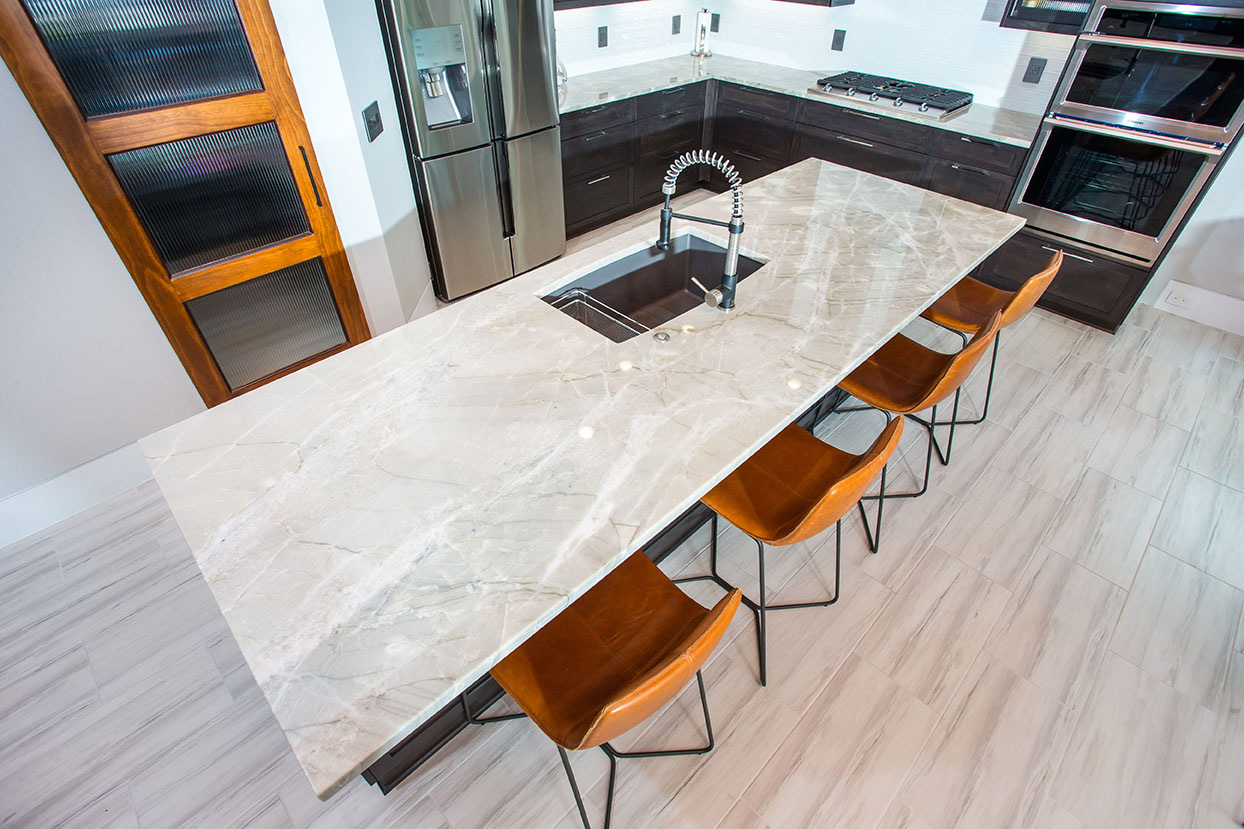
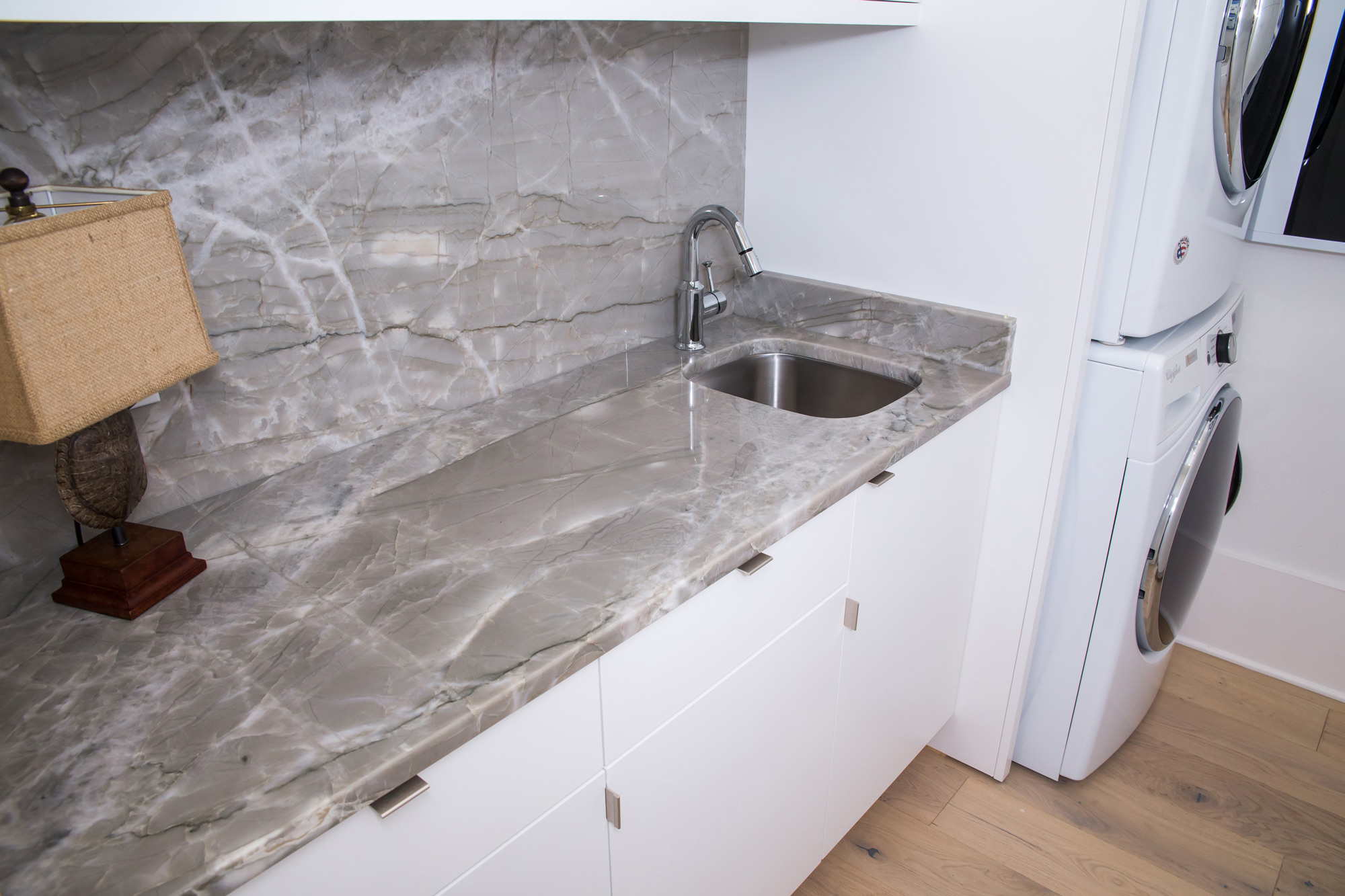
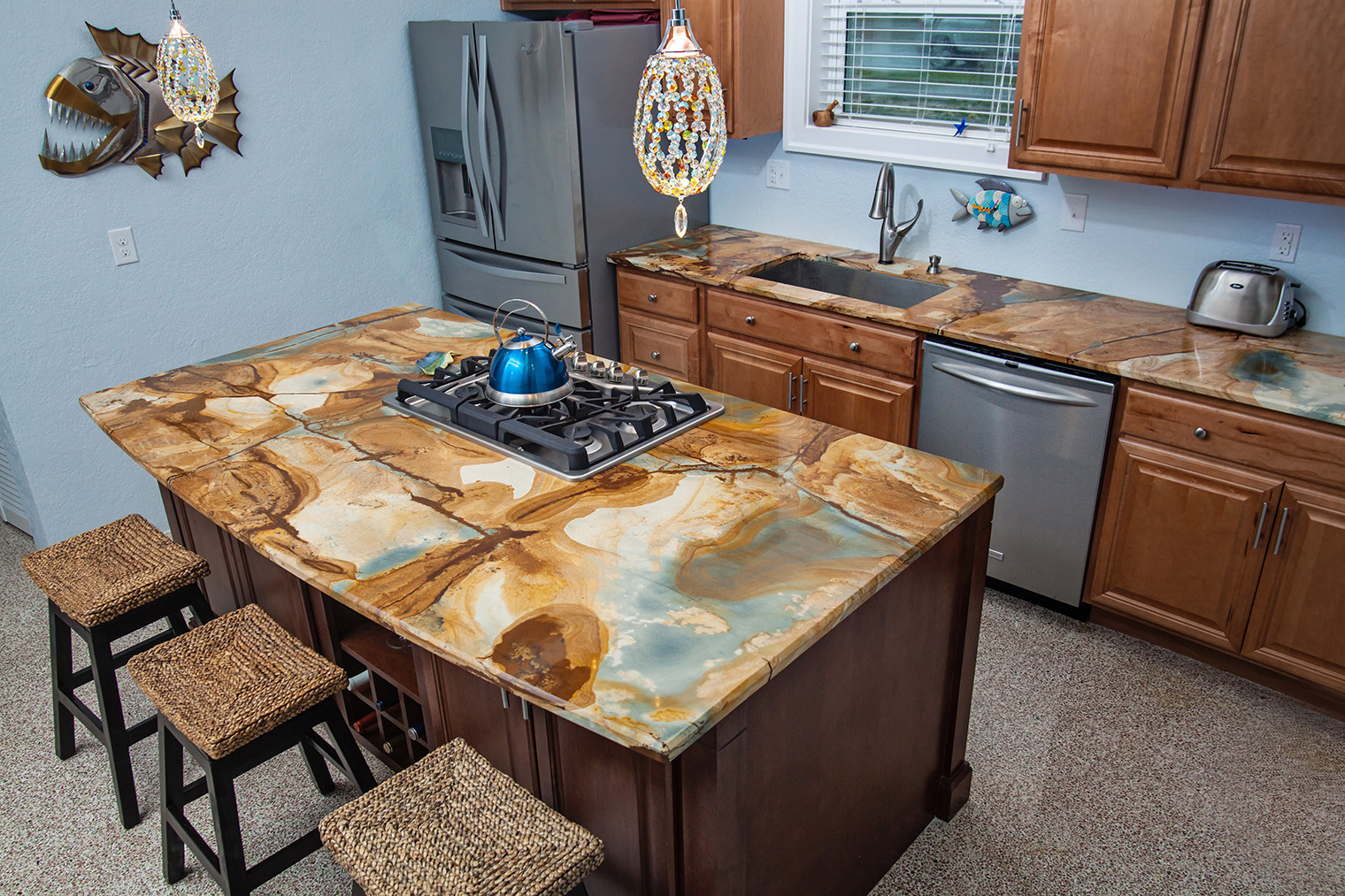
This is where stone samples fall short. A small sample, often just a few inches wide, cannot show you the whole slab. Real slabs stretch nine feet long or more. Here’s what gets left out:
- The full color range across the entire slab
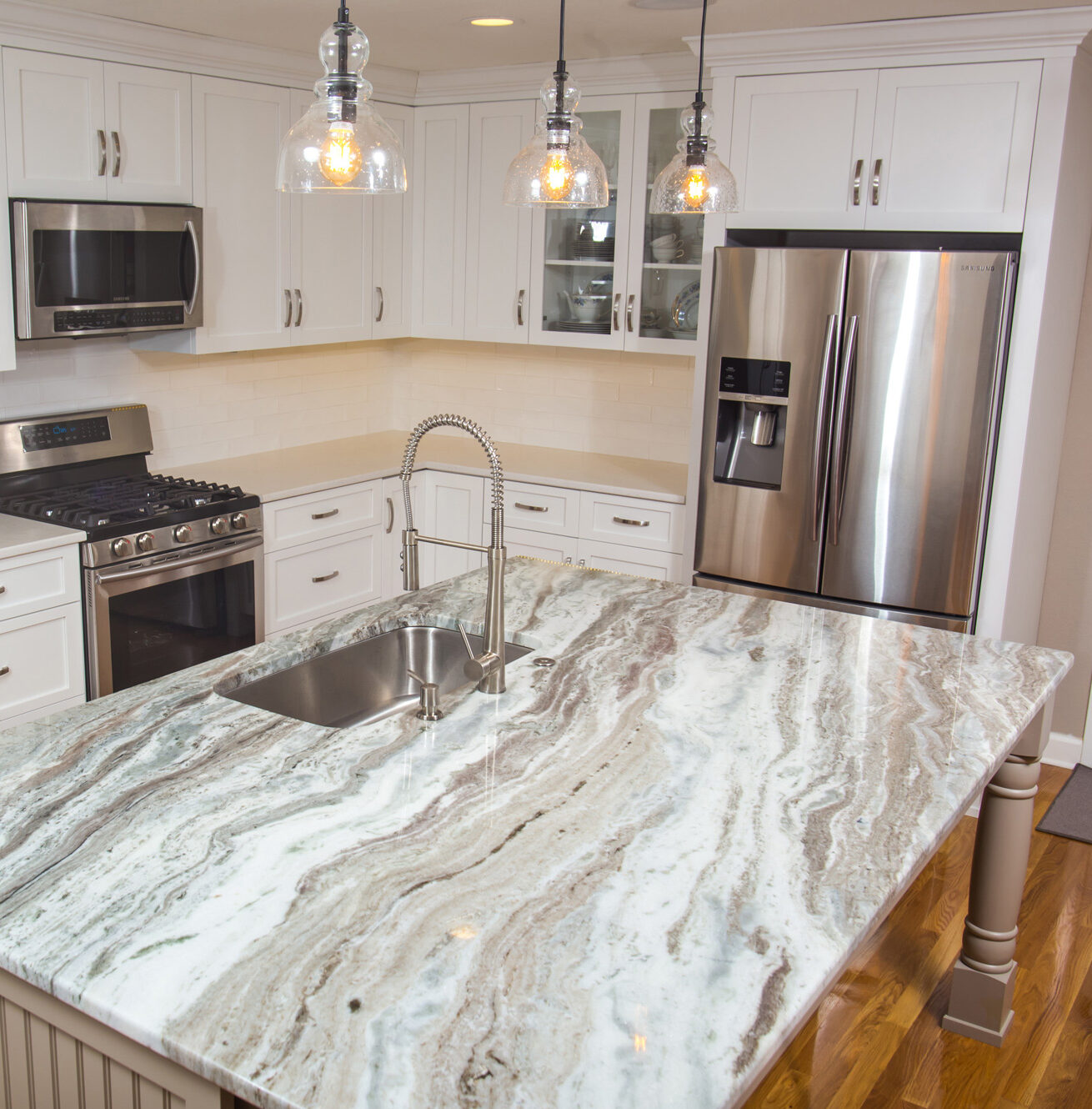
- Where the veining concentrates (it may bunch up in one spot)
- Natural fissures and movement across the stone
- How the pattern scale changes at full size
- Natural pitting, which only shows up on a full slab
Softer natural stones show even more of this difference. Calcite, marble, dolomite, and limestone can vary in thickness by up to 0.635 cm across one slab. These stones are more porous, too, so small texture changes are normal. A sample simply can’t capture any of that.
How Lighting Changes Everything
Showroom lights are bright and even, but your kitchen light is not. A sample that looked perfect under store lighting can shift once it’s at home. A few things to keep in mind:
- Natural daylight brings out undertones your sample never showed
- LED, fluorescent, and incandescent bulbs each change how a stone reads
- A dry, unsealed sample often looks lighter than a sealed, finished slab
- Warm Gulf Coast daylight can turn a cool gray granite warm and golden
- The same stone can look different in the morning versus the evening
This is especially important when choosing the best countertop in Pensacola, where big windows can bring strong natural light into the kitchen all day.
Why does the Same Stone Look Different Slab to Slab?
No two natural stone slabs are exactly alike. That’s part of what makes them beautiful. A few reasons why:
- Mineral concentration changes across the quarry
- Slabs cut from different depths look different
- The direction of the cut changes the pattern
- Slabs from different bundles, even with the same name, can look different
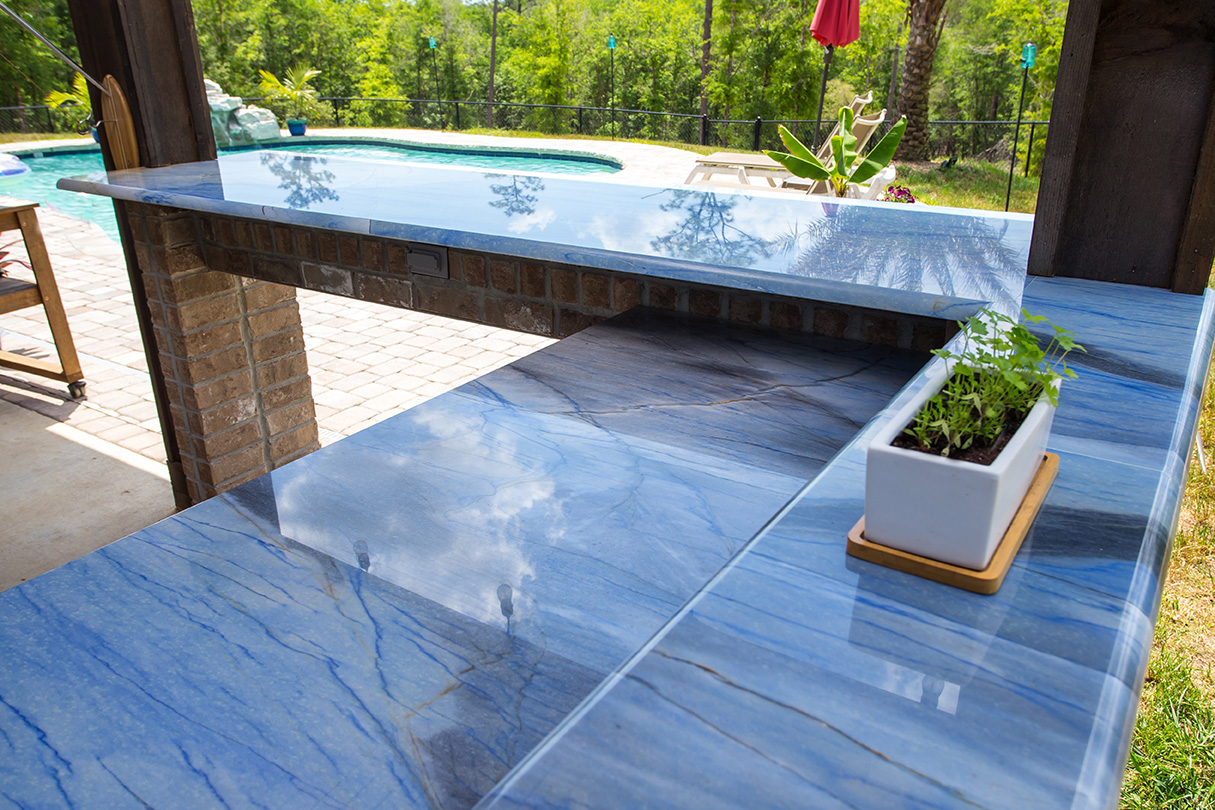
Quartzite is a good example. Because it’s a natural stone, color and movement can shift from one slab to the next, even at the seams. Your sample might be months or even years old. The slab in the yard today may not match it at all.
The Quartz vs Quartzite Sample Problem
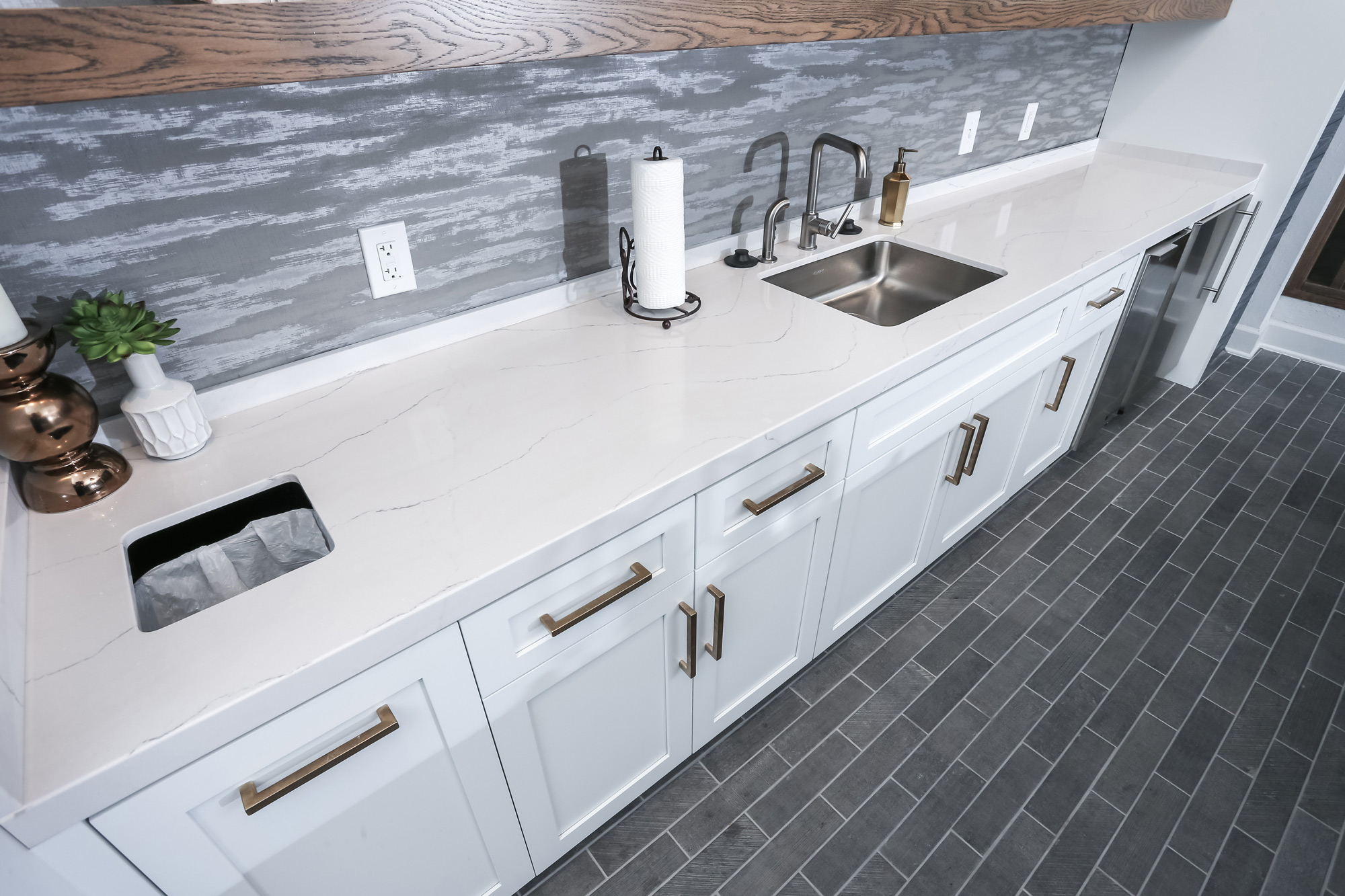
This mix-up costs homeowners real money. Quartz countertop and quartzite sound alike. Their samples can look almost the same. But they are two very different materials.
| Feature | Quartz | Quartzite |
| Type | Engineered (resin + crushed crystals) | Natural, metamorphic stone |
| Mohs Hardness | 7 | 7 |
| Pattern | Consistent, uniform | Unique, varies slab to slab |
| Sealing | Not required | Needed monthly for 3 months, then every 6 months |
| Best For | Uniform, low-maintenance look | Natural movement, marble-like beauty |
Always ask which one you’re looking at before you buy. This matters even more when you’re comparing a granite countertop in Fort Walton Beach kitchens, where humidity and heat make material choice count.
Not sure which one is right for your home? Compare Quartz vs Quartzite: Which Countertop Is Right for You? to understand the key differences before choosing your slab.
The Problem With Picking Color From a Sample Alone
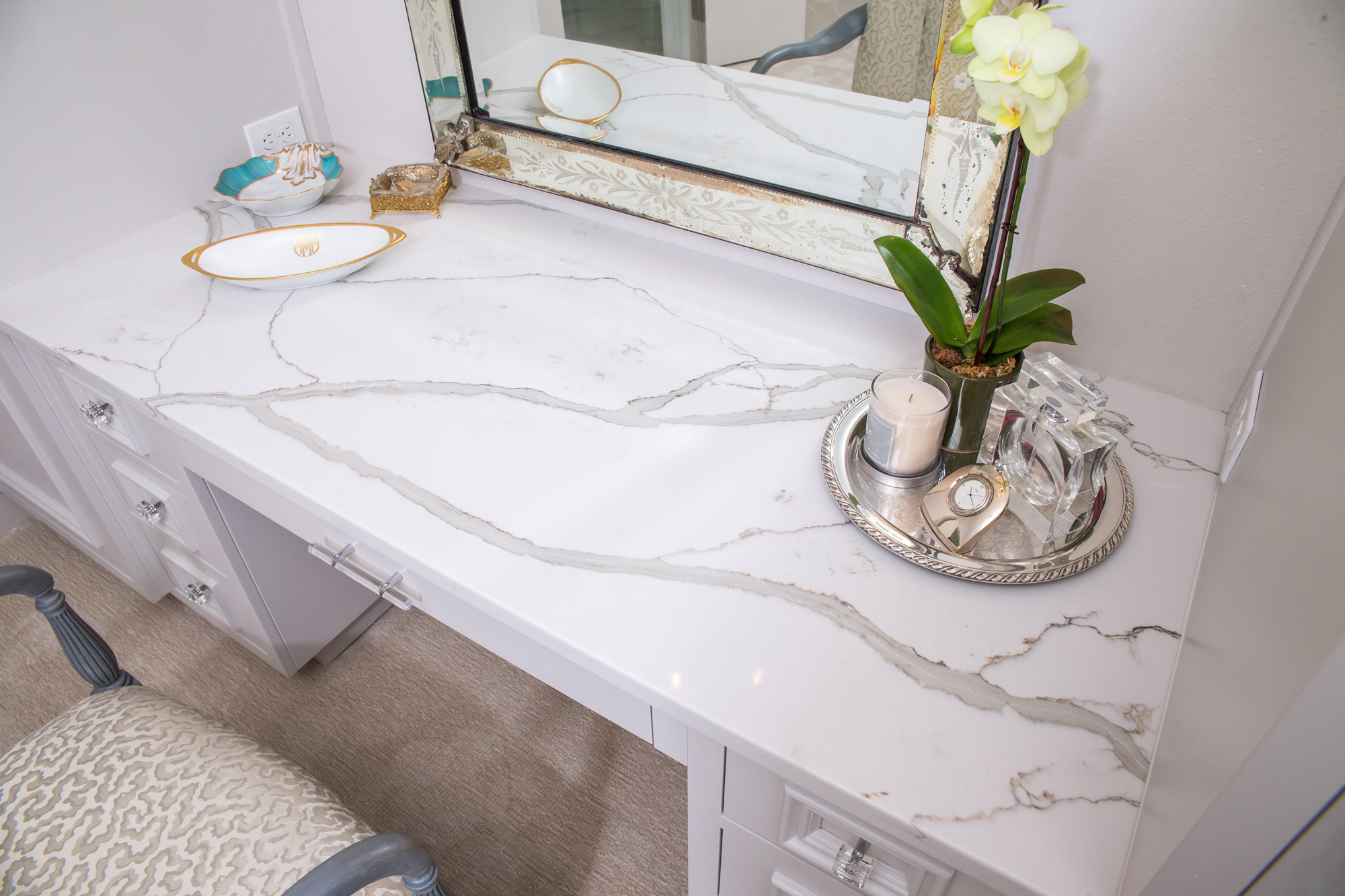
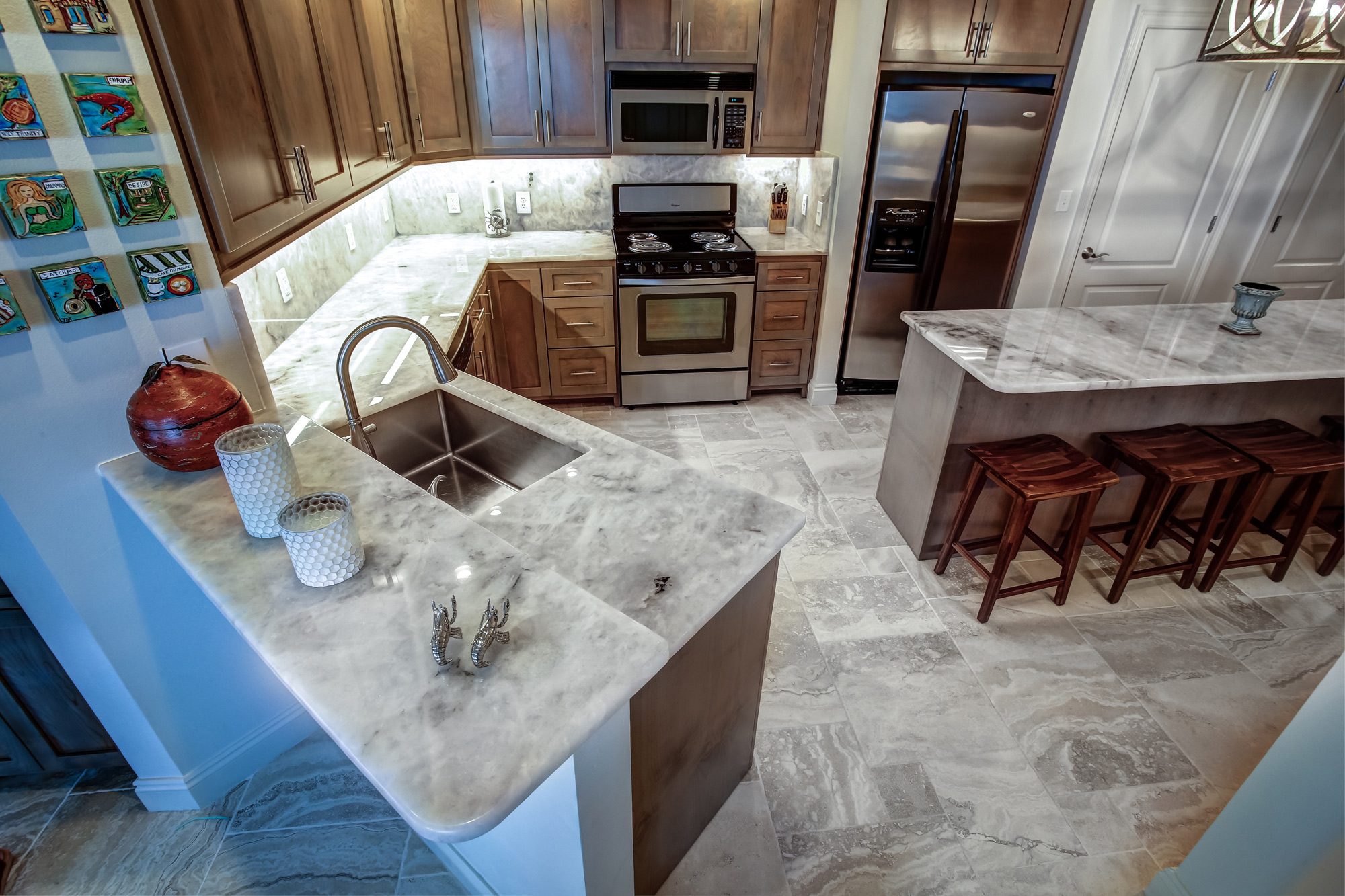
A sample shows you a few inches. Your countertop will stretch across many feet. Colors that look bold in a small sample can fade into the background at full size. Veining that looks soft and pretty in your hand can look busy across nine feet.
Some stones change the most:
- Calcite can look almost see-through when backlit, something no sample shows
- Marble veining looks completely different at full scale
- Limestone’s warm, matte tones shift across a full slab
Ordering based on a sample alone is one of the most expensive mistakes a homeowner can make.
Common Mistakes to Avoid
Even careful buyers fall into these traps. A few small mistakes can lead to a countertop that doesn’t match what you pictured.
- Choosing a stone based on a sample without ever seeing the full slab
- Assuming all slabs with the same stone name look the same
- Skipping the sealing conversation before buying a soft, natural stone countertop
- Not checking both ends of the slab before it’s cut
- Mixing up quartz and quartzite because the samples looked similar
- Ordering multiple slabs from different bundles without checking they match
The good news is, every one of these mistakes is easy to avoid once you know what to look for.
Benefits of Seeing the Full Slab First
A little extra time at the stone yard pays off in a big way. Here’s what seeing the full slab first delivers:
- Fewer surprises: No costly surprises after installation
- True colors: A real look at the actual color, veining, and movement
- Better planning: Clear sense of exactly where the seams will fall
- Better match: A slab that truly matches the cabinets and floors
- Real confidence: Peace of mind with the final choice
That small extra step is what turns a good countertop into the right one for the home. It also saves time down the road, since fewer surprises mean fewer change requests once natural stone fabrication begins. A slab picked with care tends to hold its charm for years, not just the first few weeks after countertop installation. In the end, a few extra minutes at the stone yard are a small price for getting it right the first time.
How to Use Stone Samples the Right Way
Stone samples still have a job to do, so use them the right way. A sample is a helpful tool, not a final decision-maker. Use it to:
- Match your sample against cabinet colors at home
- Compare it with your flooring and wall colors
- Use it to narrow down the type of stone you want
- Get a feel for the finish
Just don’t lean on it too hard. Don’t make your final color decision from a sample alone, approve a veining pattern based only on a small piece, or assume the full slab will look just like your sample. Bring your cabinet and flooring samples with you to the stone yard, and always ask about sealing before you buy. Some stones, like quartzite, need sealing once a month for the first three months, then every six months after. Others, like granite, only need sealing once a year. Dolomite, calcite, and marble fall in between, needing a fresh seal about twice a year to stay protected.
What to Look For When You See the Full Slab
Once you’re standing in front of the actual slab, use this checklist to make sure you’re covering everything a small sample could never show you. Check both ends of the slab, not just the middle, and take a look at the edges and corners too. View the slab under different lighting if you can, and look for natural pitting, especially on softer stones like calcite, marble, dolomite, and limestone. Picture the veining flowing across your full kitchen before you approve anything.
Ask about book matching for a seamless look, and always ask about the sealing schedule for that specific stone. If you need more than one slab, confirm they’re from the same bundle so the color and movement match. Take a few photos before you give final approval. It only takes a few extra minutes, but it can save you from a costly surprise later.
Expert Tips for Choosing the Right Stone
Choosing the right slab comes down to a few smart habits. Keep these tips in mind before you make your final call.
- Never finalize your choice from a sample alone
- Bring your cabinet and flooring samples with you
- View the slab under more than one light source
- Confirm multiple slabs come from the same bundle
- Ask about book matching before you decide
- Walk around and check both ends of the slab
- Take photos of the full slab before you approve it
- Ask about hardness and sealing needs for your chosen stone
- Trust what you see in person, not just a photo or a small sample
Our team is happy to walk you through every one of these steps in person.
Why Visiting the Stone Yard Changes Everything
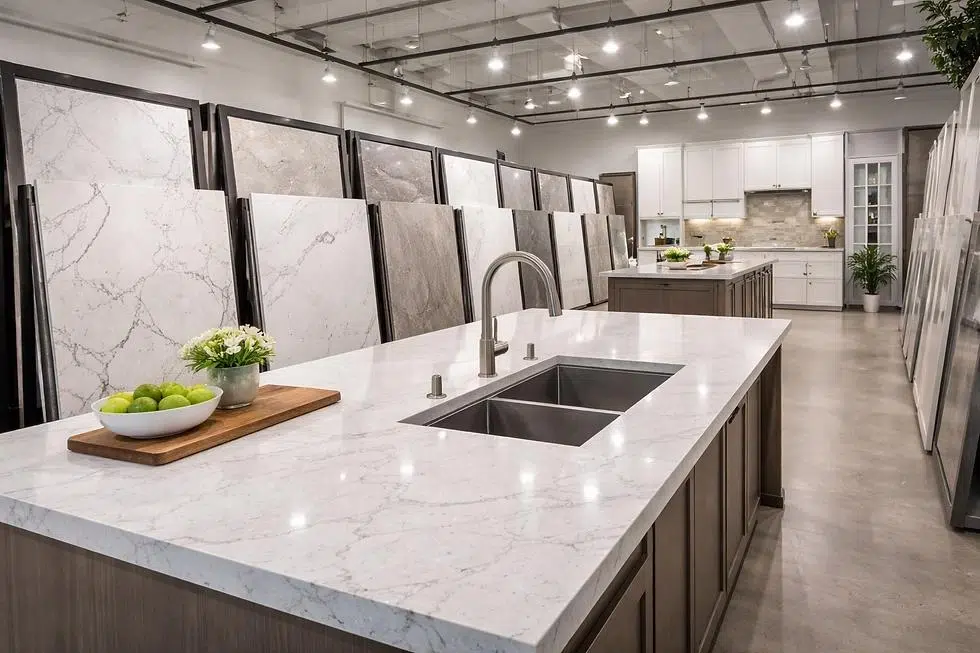
Seeing the full slab in person changes everything. You get to see the real color range, the true veining, and how the stone reads at full size. Walk to both ends of the slab. They often look different from each other.
At Superior Granite, we’ve been helping Gulf Coast families in Pensacola, Pace, FL, and Fort Walton Beach pick the right stone since 2005. As a professional stone installer in Pace, FL, we use first-quality 3cm material and know exactly which slabs will match a sample and which ones may surprise you. We carry one of the largest stone selections in the area, with hundreds of colors in stock and book-matched slabs that create a seamless look.
Conclusion
Stone samples are a helpful starting point. But they’re not the finishing line. The only way to really know what you’re getting is to see the full slab in person. Superior Granite offers one of the largest stone selections on the Gulf Coast, with first-quality material and book-matched slabs that create a truly seamless look.
Stop by one of our three showrooms and see it for yourself before you make your final decision. Superior Granite is here to help across Pensacola, Pace, and Fort Walton Beach, with a team ready to guide you through every stone in the yard. Visit our website to browse the full color selection and find the showroom closest to home before your visit.
Pensacola, FL
Visit Us: 7011 Pine Forest Road, Pensacola, FL 32526
Call Us: (850) 941-0270
Hours: Monday – Friday: 8 a.m. – 5 p.m., Saturday: 9 a.m. – 2 p.m.
Pace, FL
Visit Us: 4590 Jernigan Road, Pace, Florida 32571
Call Us: (850) 994-1872
Hours: Tuesday – Friday: 9 a.m. – 5 p.m., Saturday: 9 a.m. – 2 p.m.
Fort Walton Beach, FL
Visit Us: 35 Miracle Strip Pkwy SW, Fort Walton Beach, Florida 32548
Call Us: (850) 301-0716
Hours: Tuesday – Friday: 8 a.m. – 5 p.m., Saturday: 9 a.m. – 2 p.m.
Contact us today to schedule a free consultation!
FAQs
Q1: Why does my countertop look different from the sample I approved?
Your sample only showed a small section. The full slab has more color range, more veining, and more natural movement than a few inches can capture.
Q2: Are stone samples accurate representations of the full slab?
They give you a general idea, but they are not a full picture. Always view the complete slab before making a final decision.
Q3: Why do two slabs of the same stone look different?
Natural stone varies by quarry depth, mineral zones, and cutting direction. Even slabs with the same name can look different from bundle to bundle.
Q4: Is quartzite the same as quartz?
No. Quartz is engineered from crushed crystals and resin. Quartzite is a natural stone formed underground. Their samples can look alike, but the stones are very different.
Q5: Is it worth visiting a stone yard in person before buying?
Yes. Seeing the full slab in person is the only way to know exactly what you’re getting before it’s cut and installed.