Most homeowners wait too long. By the time the damage is impossible to ignore, it’s already cost them more than it should have. A cracked surface that started as a chip. A stain that spread because the stone wasn’t sealed. Water damage near the sink that went unnoticed for months.
Your countertops give you clear signals when something’s wrong. The problem is most people don’t know what to look for, or they look the other way, hoping it’ll work itself out. It won’t.
This guide covers exactly how to know when it’s time to replace your countertops, whether you have laminate, Formica, or natural stone. And if the damage turns out to be minor, we’ll tell you that too. At Superior Granite, we’ve been helping Gulf Coast families make the right call since 2005.
How Long Do Countertops Actually Last?
The first thing to understand is that not all countertops age the same way. Material matters, and the gap between a laminate countertop and a granite one isn’t just about looks. It’s about how many years you get before the surface starts failing.
Here’s how the most common materials stack up:
| Material | Lifespan | Sealing Required |
|---|---|---|
| Laminate / Formica | 10–20 years | None |
| Quartz | 15–25 years | None |
| Granite | 50+ years | 1x per year |
| Quartzite | 50+ years | Monthly x3, then 2x/year |
| Porcelain | 100+ years | None |
Laminate and Formica have a real expiration date, typically 10 to 20 years with heavy daily use. A granite countertop in Pensacola homes, on the other hand, can outlast the home itself when properly maintained. If you’re still working with laminate from the 80s or 90s, the timeline alone is reason enough to take a closer look.
Warning Signs Your Countertop Needs Replacing
Some signs are obvious. Others sneak up on you over years of daily use. Here’s what to watch for regardless of which material you have.
- Persistent stains that won’t lift no matter what cleaner you use the surface has absorbed the damage permanently
- Deep chips and cracks that go beyond the surface layer trap bacteria and get worse over time
- The surface feels rough or uneven underhand pitting and irregularities that weren’t there before
- Water marks or soft spots near the sink are a sign that moisture has penetrated the material
- Outdated material that dates the entire kitchen; Formica from decades ago drags down the whole room
- Structural instability, any sagging, wobbling, or countertop that’s no longer sitting level
- Hygiene concerns, visible mold, bacteria trapped in cracks, or areas that can’t be properly cleaned
Any one of these on its own might be manageable. Several together? It’s time to seriously consider whether to replace your countertops rather than keep patching the problem.
Laminate vs Natural Stone: Different Signs to Watch For
Laminate and natural stone fail in completely different ways. Knowing which signs belong to which material helps you assess the situation accurately.
Laminate and Formica Warning Signs
Laminate is a layered product, and once moisture gets between those layers, the damage spreads fast. Here’s what failure looks like:
- Bubbling or peeling at the edges: moisture has worked its way under the surface
- Warping or sagging: the particleboard substrate underneath has absorbed water and swollen
- Burns that won’t sand out: unlike stone, laminate can’t be refinished once burned
- Delamination: the layers are literally separating and can’t be pressed back together
- Swelling near the sink: water has penetrated the core, and the damage is spreading
- Surface scratches exposing the core layer: once the wear layer is gone, the countertop is compromised
Laminate that’s reaching or past the 10-to-20-year mark with any of these signs is not worth repairing. The material simply can’t be restored the way natural stone can.
Natural Stone Warning Signs
Natural stone countertops in Pensacola are far more durable, but it still shows age, especially when it hasn’t been properly maintained. Watch for these:
- Chips and cracks: check the surface carefully, especially near edges and the sink area
- Persistent etching: on softer stones like marble, calcite, and dolomite, acid exposure leaves permanent marks
- Stains that won’t lift: stone that hasn’t been properly sealed absorbs stains deeply
- Surface pitting that’s gotten worse: natural pitting is normal, but worsening pitting signals deterioration
- Seams pulling apart: a structural issue that needs professional attention immediately
Alcoholic drinks, essential oils, and citrus extracts can permanently etch naturally porous stone even from brief contact. If your stone shows extensive etching throughout, the surface may be beyond what resealing or polishing can fix.
The Simple Water Test Every Homeowner Should Do
Before you decide anything, do this test. It takes about 30 seconds and tells you exactly where your natural stone countertop stands. Pour a small amount of water, about the size of a quarter, directly onto the stone surface and wait 3 to 5 minutes without wiping it. If the water beads up, your stone is sealed and protected. If it absorbs slowly and darkens the stone, resealing is overdue. If it absorbs quickly and darkens significantly, the seal has been gone too long; staining may already be happening beneath the surface.
Not sure what your results mean? Visit Superior Granite showrooms to explore high-quality countertops in Pace, Pensacola, and Fort Walton Beach. Our team can tell you exactly what your stone needs.
Step-by-Step Countertop Assessment
Don’t make any decisions before you’ve done a proper walkthrough. This seven-step process gives you a clear picture of what you’re actually dealing with and whether you need a professional or just a reseal.
Step 1: Deep clean first. Use warm soapy water and a microfiber cloth. Never use bleach, ammonia, or abrasive cleaners on natural stone. You can’t accurately assess a dirty surface.
Step 2: Check for visual damage. Go slowly across the entire surface, chips, cracks, etching, stains, discoloration. Use good lighting and take your time. Don’t rush this part.
Step 3: Perform the water test. Follow the steps above. Test multiple areas, especially near the sink and along edges where the seal wears first.
Step 4: Feel the surface. Run your hand slowly across the countertop. Rough patches, pitting, or uneven areas that weren’t there before are a sign that the surface is degrading.
Step 5: Check by the sink. Look for watermarks, swelling, soft spots, or discoloration around the base. This is where laminate fails first and where natural stone is most vulnerable.
Step 6: Document your findings. Take clear photos of every issue you find. It helps you track whether damage is getting worse and gives a professional a clear picture when you call.
Step 7: Decide whether to call a professional. If you’re unsure about what you found, or the damage seems structural, don’t guess. A professional assessment costs far less than replacing a countertop; you could have saved.
Repair or Replace: How to Decide
Not every sign of damage means you need to replace your countertops immediately. Some issues are completely fixable. Others aren’t. Here’s how to tell the difference.
Repair is likely fine when:
- Small chips: these can be filled and repaired by a professional without replacing the slab
- Minor surface cracks: hairline cracks caught early can often be stabilized and sealed
- Light etching: on some stones, a professional polish can reduce or remove surface etching
- Resealing needed: if the water test shows absorption but no deep staining, resealing may be all you need
Replacement is the right call when:
- Structural damage: any sagging, unstable, or compromised countertop needs full replacement
- Laminate delamination: once the layers separate, the product can’t be meaningfully restored
- Stains that have penetrated deeply: some stains in improperly sealed stone are permanent
- Extensive etching throughout the surface: beyond what polishing can address
- Age plus heavy damage: laminate past 15-20 years with multiple issues isn’t worth repairing
A good rule of thumb: when the cost of repair exceeds 50% of what replacement would cost, replace. You’ll get a fresh start with a material that actually lasts. Homeowners across Pensacola who’ve made that call consistently say it was worth it.
Best Countertop Upgrades That Last a Lifetime
If you’ve decided it’s time to replace your countertops, the most important question is what to replace them with. The goal isn’t just a fresh look; it’s choosing a material that won’t put you back in this same situation in 10 years.
Here’s the honest comparison:
- Granite: nearly impervious to heat and scratches, seal once a year, lasts 50+ years. The most practical choice for a family kitchen that sees real daily use.
- Quartzite: harder than granite at a 7 on the Mohs scale, heat resistant, stunning natural appearance. Seal monthly for the first three months, then twice a year. Built for decades.
- Quartz: engineered, non-porous, no sealing required. Consistent patterns and colors. Avoid high-heat resin scorches. Lifespan of 15-25 years with proper care.
- Soapstone: naturally non-porous, never needs sealing, heat resistant. Develops a rich patina from light grey to dark charcoal over time. One of the most underrated options available.
- Porcelain: fired at over 2,000°F, non-porous, scratch-resistant, UV-resistant. Works indoors and outdoors. Essentially zero maintenance. 100+ year lifespan.
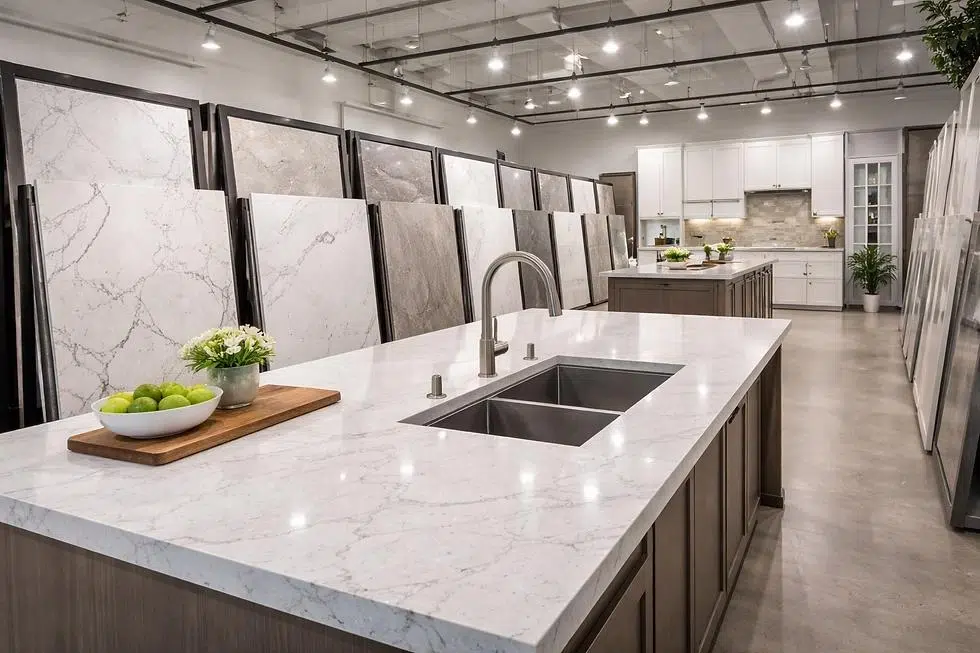
At Superior Granite, we carry only first-quality 3cm material, with every slab book-matched for a completely seamless finish. Our team across Pace and Fort Walton Beach is ready to help you find the right upgrade for your space and your lifestyle.
Conclusion
If you’re reading this and nodding at more than a couple of these signs, the answer is probably yes. It’s time to replace your countertops. The longer you wait, the more the damage spreads, and the fewer options you have.
Start with the assessment. Do the water test. Document what you find. If the damage is minor, a professional can likely fix it. If it’s not, natural stone is the upgrade that makes the most sense long term. It lasts decades, handles real daily use, and adds genuine value to your home.
Stop by any of our Superior Granite showrooms in Pensacola, Pace, or Fort Walton Beach. See the stones in person, talk to our team, and find out exactly what makes sense for your kitchen and your budget.
Pensacola, FL
Visit Us: 7011 Pine Forest Road, Pensacola, FL 32526
Call Us: (850) 941-0270
Hours: Monday – Friday: 8 a.m. – 5 p.m., Saturday: 9 a.m. – 2 p.m.
Pace, FL
Visit Us: 4590 Jernigan Road, Pace, Florida 32571
Call Us: (850) 994-1872
Hours: Tuesday – Friday: 9 a.m. – 5 p.m., Saturday: 9 a.m. – 2 p.m.
Fort Walton Beach, FL
Visit Us: 35 Miracle Strip Pkwy SW, Fort Walton Beach, Florida 32548
Call Us: (850) 301-0716
Hours: Tuesday – Friday: 8 a.m. – 5 p.m., Saturday: 9 a.m. – 2 p.m.
Contact us today to schedule a free consultation!
FAQs
1. How do I know if my countertops need replacing or just resealing?
Do the water test first. If water has been absorbed but there’s no deep staining or structural damage, resealing is likely all you need. Extensive etching or deep stains that won’t lift mean professional assessment time.
2. Can chips and cracks in natural stone be repaired?
Small chips and hairline cracks can usually be filled without replacing the slab. Larger cracks near edges or seams may require replacement. When in doubt, call a professional first.
3. What are the signs that laminate countertops need replacing?
Bubbling, peeling, warping, burns, swelling near the sink, and delamination. Laminate can’t be restored like natural stone; once these signs appear, replace it.
4. Is it worth repairing old countertops or just replacing them?
If repair cost exceeds 50% of replacement cost, replace. Minor chips on natural stone are worth fixing. Extensive laminate damage isn’t.
5. What is the longest-lasting countertop material?
Porcelain lasts 100+ years with zero maintenance. Granite and quartzite both last 50+ years. All three outlast laminate by decades.