Does your countertop need resealing? There’s an easy way to find out, and it takes about two minutes. No guesswork, no professional visit required. Just water, your counter, and a little patience.
Sealant doesn’t fail all at once. It wears down slowly, edge by edge, spill by spill, until one day a stain that used to wipe right off leaves a mark. Knowing whether your countertop needs resealing before that happens saves you a permanent stain and a bigger repair bill later.
Homeowners across Pensacola, Pace, and Fort Walton Beach ask us this question constantly, usually right before a stain shows up. So at Superior Granite, we put together the simple diagnostic steps that actually tell you when to reseal your countertop, before you spend money on a sealer you might not need.
The Simple Water Test
This is the fastest way to check whether your countertop needs resealing, and it works on granite, quartzite, and most other natural stone countertops. It’s the same first step our team walks customers through across Pensacola, Pace, and Fort Walton Beach.
How to Run It
Pour a small amount of water onto your countertop, about the size of a quarter. Let it sit for 10 to 15 minutes without touching it. That’s the entire check. No special tools, no products, nothing to buy.
Pick a spot near the sink or stove if you can. Those high-use zones wear down faster than the rest of the slab, so testing there gives you the clearest read on whether your countertop actually needs attention. If you have a few minutes, test two or three different spots instead of just one. A single test tells you about a single square inch of stone, not the whole surface.
Set a timer if you can. It’s easy to get distracted and forget you left water sitting on the counter, and checking too early or too late can throw off your results either way.
How to Read the Results
Beading water means your seal is still doing its job. If it soaks in and starts to darken the stone, that’s your answer: does your countertop need resealing? Yes, and soon.
Timing matters here too. A countertop that absorbs water in under five minutes needs attention more urgently than one that takes the full fifteen. The faster it soaks in, the more porous the surface has become.
The Mineral Oil Test: A Second Check Worth Running
Water isn’t the only thing your seal needs to block. Granite countertops can resist water just fine while still soaking up cooking oil, butter, or dressing. Kitchens see oil spills constantly, so a stone that passes the water check can still stain the very next week from a splash of olive oil near the stove.
Run a second check with a few drops of mineral oil in a separate spot on the counter.
If the oil darkens the surface faster than the water did, your seal is wearing thin on the oil-resistance side, even if the first check looked fine. This one small extra step catches problems the water alone can miss, and it only adds a few more minutes to the process. It’s a small habit that answers does your countertop need resealing more precisely than either test alone.
Beyond the Basics: Other Signs of Wear
Testing isn’t the only way to tell. Your countertop often tells you before you even grab a cup.
- Dullness that wasn’t there before: A properly sealed surface holds its shine. If yours looks flat or hazy compared to when it was installed, the seal may be breaking down.
- Stains that take more effort to wipe away: Coffee rings or wine drips that used to lift off easily but now leave a faint mark are an early warning.
- A rough or dry feel to the touch: Sealed stone should feel smooth. A slightly gritty or dry texture, especially near the sink or stove, often means the sealant has worn thin in that spot.
- Color that looks slightly different when wet versus dry: A big contrast between the two often means the stone is absorbing more moisture than it should.
None of these on their own is a certainty. Together with a water check, though, they paint a pretty clear picture. Most homeowners notice two or three of these signs before they ever think to run an actual test, since the visual and textural changes tend to show up gradually in daily use.
How Often Different Stones Typically Need Attention
Not every countertop wears at the same rate, and porosity is the reason why. The more porous the stone, the more often it needs a fresh coat.
| Stone | Relative Porosity | Typical Resealing Frequency |
|---|---|---|
| Granite | Low to medium | Once a year |
| Quartzite | Medium | Twice a year |
| Marble | High | Twice a year |
| Dolomite | Medium to high | Twice a year |
| Soapstone | None | Never |
| Quartz (engineered) | None | Never |
This table gives you a general starting point, not a fixed schedule. Usage, sink location, and daily habits all shift the timeline in either direction. A busy family kitchen wears faster than a guest bathroom, regardless of what stone is involved. That’s exactly why a quick check matters more than any calendar reminder. Does your countertop need resealing on schedule, or is it holding up longer than average? The only way to know for sure is to test it yourself rather than guess based on the table alone.
Climate plays a role too. Homes across the Gulf Coast deal with more humidity than drier parts of the country, and that extra moisture in the air can shorten the interval between resealing sessions slightly, especially for the more porous stones on this list.
Countertops That Do Not Need Sealing
Not every stone on your counter needs this kind of attention. Soapstone and engineered quartz are the two big exceptions.
Both are naturally non-porous, so they never absorb water or oil the way granite or marble can. There’s no sealant layer to wear down in the first place.
Not sure which category yours falls into? Run the water test once. Zero absorption, even after fifteen minutes, means it’s behaving exactly as it should.
What to Do If Your Countertop Fails the Test
If your countertop failed either check above, or you’re noticing dullness or a rougher texture, don’t panic. This is a normal, expected part of owning natural stone, not a sign anything went wrong with your installation. It happens to every homeowner eventually, no matter how careful they are day to day.
The next step is applying a fresh coat of countertop sealer, and getting that part right matters just as much as knowing when to start. Rather than repeat all of that here, follow our step-by-step guide on how to seal granite countertops for the full process, from cleaning through curing.
Good granite countertop care really comes down to catching these moments early, before a stain sets in permanently. A quick check every few months costs nothing and takes less time than making coffee. Our team across Pensacola, Pace, and Fort Walton Beach walks customers through this exact process every week, and it never takes more than a few minutes to explain.
Why Guessing Costs More Than Testing
It’s tempting to just reseal on a calendar reminder and skip the testing altogether. Some homeowners do exactly that, and it’s not necessarily wrong. But there are two ways it can go sideways.
Resealing too early wastes product and time on a surface that didn’t need it yet. Doing it too late means you’ve already missed the window, and a stain has had a chance to set into the stone before the new sealant goes on. Neither outcome is disastrous, but both are avoidable with a two-minute check.
Testing also catches problems calendar-based schedules miss entirely. A countertop near a window that gets more sun exposure, or one right next to a sink that sees constant splashing, wears differently than the rest of the kitchen. Treating every inch of stone the same way, on a fixed yearly schedule, doesn’t reflect how unevenly a countertop actually wears.
Long-Term Countertop Care and Maintenance After Sealing
A fresh seal isn’t a permanent fix, it’s a reset. The daily habits that protect your countertop matter just as much afterward as the sealing itself.
- Wipe up spills quickly, especially wine, coffee, and anything acidic.
- Stick to gentle, stone-safe cleaners instead of anything abrasive.
- Use cutting boards and trivets so the surface doesn’t take unnecessary wear right after a fresh seal goes on.
- Don’t assume a new seal means you’re done testing for another year. Run the water test again in a few months to see how your specific countertop is holding up under your specific routine.
It’s the same two-minute check as before, just repeated on a schedule that fits how you actually use your kitchen.
Wrapping It Up
Does your countertop need resealing? Now you know exactly how to check, without guessing or paying for a service call you might not need. Run the water check, try the oil version if you want extra certainty, and watch for dullness or rougher spots between tests.
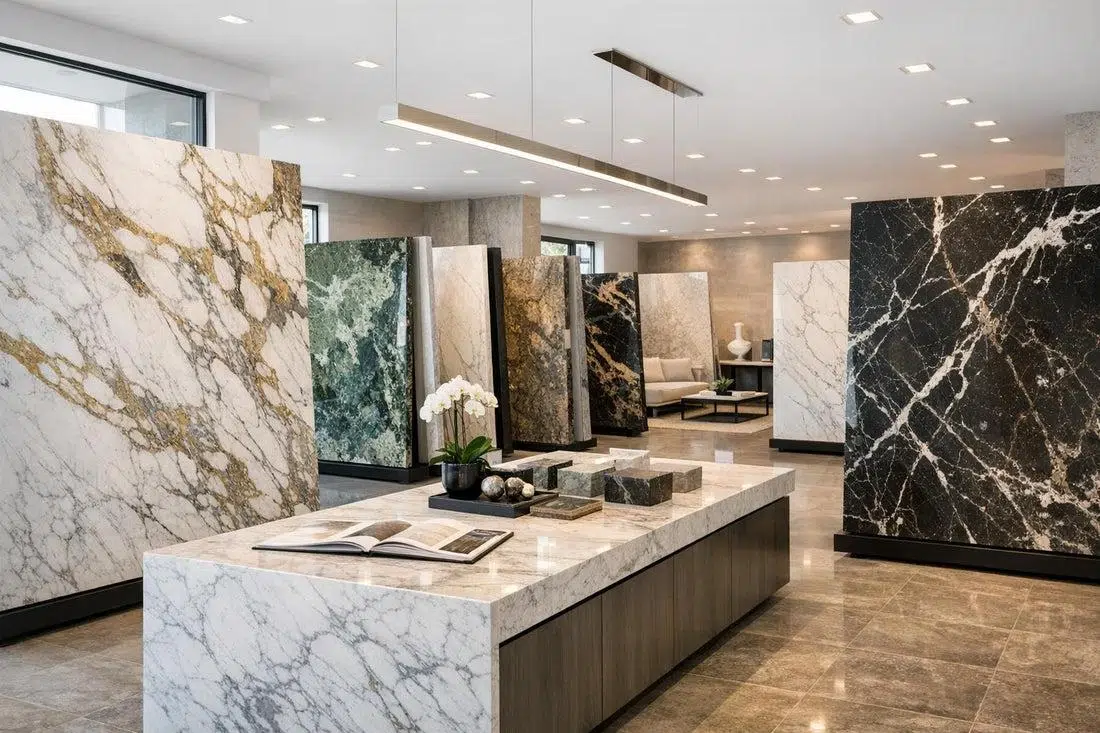
Still unsure after checking? Visit a Superior Granite showroom in Pensacola, Pace, or Fort Walton Beach, and our team can take a look and point you in the right direction. Answering whether your countertop needs resealing shouldn’t take more than a couple of minutes and a glass of water.
Pensacola, FL
Visit Us: 7011 Pine Forest Road, Pensacola, FL 32526
Call Us: (850) 941-0270
Hours: Monday – Friday: 8 a.m. – 5 p.m., Saturday: 9 a.m. – 2 p.m.
Pace, FL
Visit Us: 4590 Jernigan Road, Pace, Florida 32571
Call Us: (850) 994-1872
Hours: Tuesday – Friday: 9 a.m. – 5 p.m., Saturday: 9 a.m. – 2 p.m.
Fort Walton Beach, FL
Visit Us: 35 Miracle Strip Pkwy SW, Fort Walton Beach, Florida 32548
Call Us: (850) 301-0716
Hours: Tuesday – Friday: 8 a.m. – 5 p.m., Saturday: 9 a.m. – 2 p.m.
Contact us today to schedule a free consultation!
FAQs
1. What if only part of my countertop absorbs water during the test?
That’s common, especially near sinks, edges, and cooktops, since those areas see more moisture and wear. Test a few different spots rather than relying on just one, and reseal the whole surface even if only part of it fails.
2. Can I test engineered quartz the same way?
You can run the check, but quartz is non-porous by design and should never absorb water regardless of age. If quartz does absorb water, that likely points to a manufacturing issue or damage rather than normal wear.
3. Does a passing water check mean my countertop is fully protected?
Not necessarily. Some stones resist water better than oil, which is why the mineral oil version matters too. A countertop can pass one test and still show problems on the other.
4. How long should I wait before checking the results?
Ten to fifteen minutes gives an accurate read for most natural stone. Checking too early can make a countertop that needs resealing look fine when it isn’t.
5. Is it normal for different areas of the same countertop to test differently?
Yes. High-use zones like the sink and stove wear faster than low-traffic sections, so uneven results across one slab are common and expected.