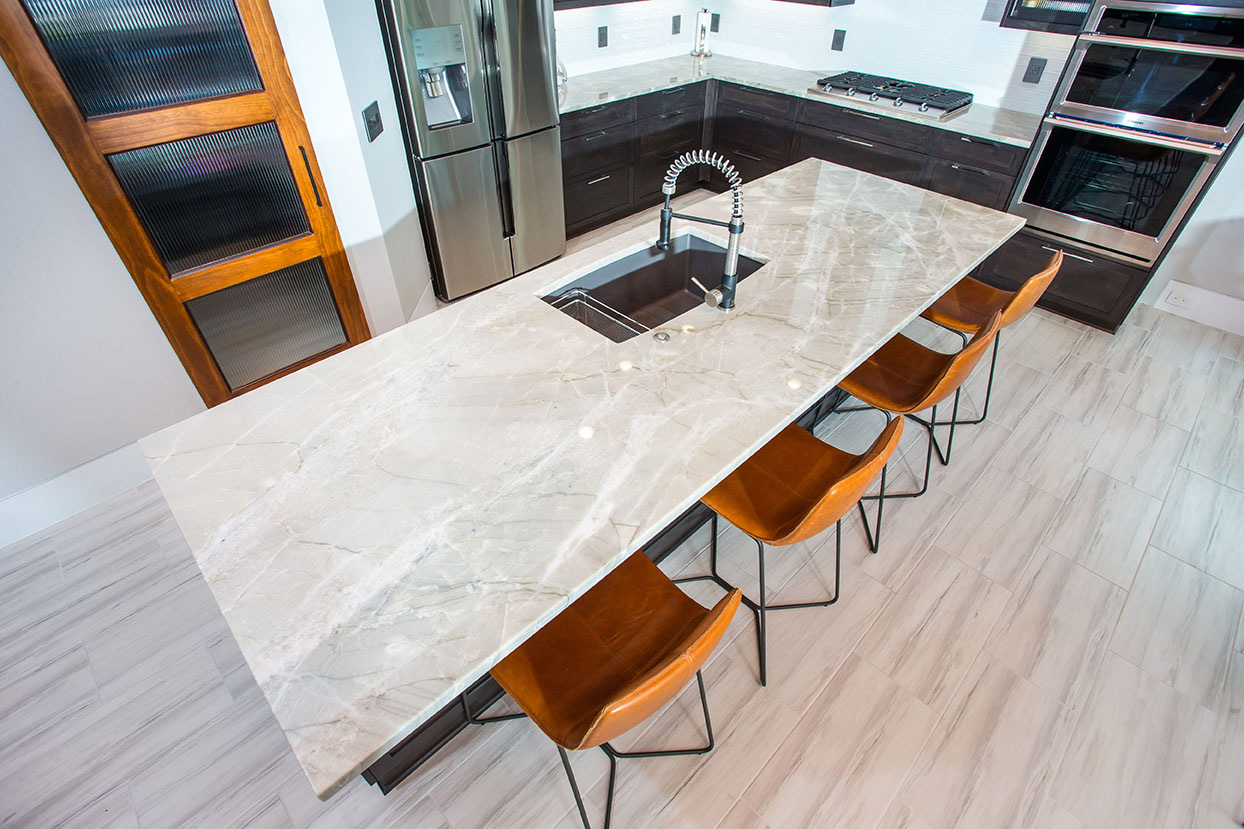
Waterfall countertops are stone slabs that wrap straight down the side of an island. The material runs from the counter to the floor in one continuous piece. No wood panel showing, no seam where the stone stops. It’s one of the boldest choices you can make in a kitchen remodel, and once you’ve seen one in person, a plain flat island starts to look unfinished by comparison.
Homeowners across Pensacola, Pace, and Fort Walton Beach keep asking for this look. And it makes sense: a waterfall island turns a functional piece of furniture into the room’s main event. This post walks through where waterfall countertops work best, why people choose them, which stones handle the style well, and what to think through before you commit.
Where Waterfall Countertops Get Installed
Kitchen islands are the obvious spot. But they’re not the only one.
- Kitchen islands (the most common by far)
- Bar tops and home entertainment areas
- Peninsula counters in open-concept kitchens
- Built-in cabinetry near a range or sink wall
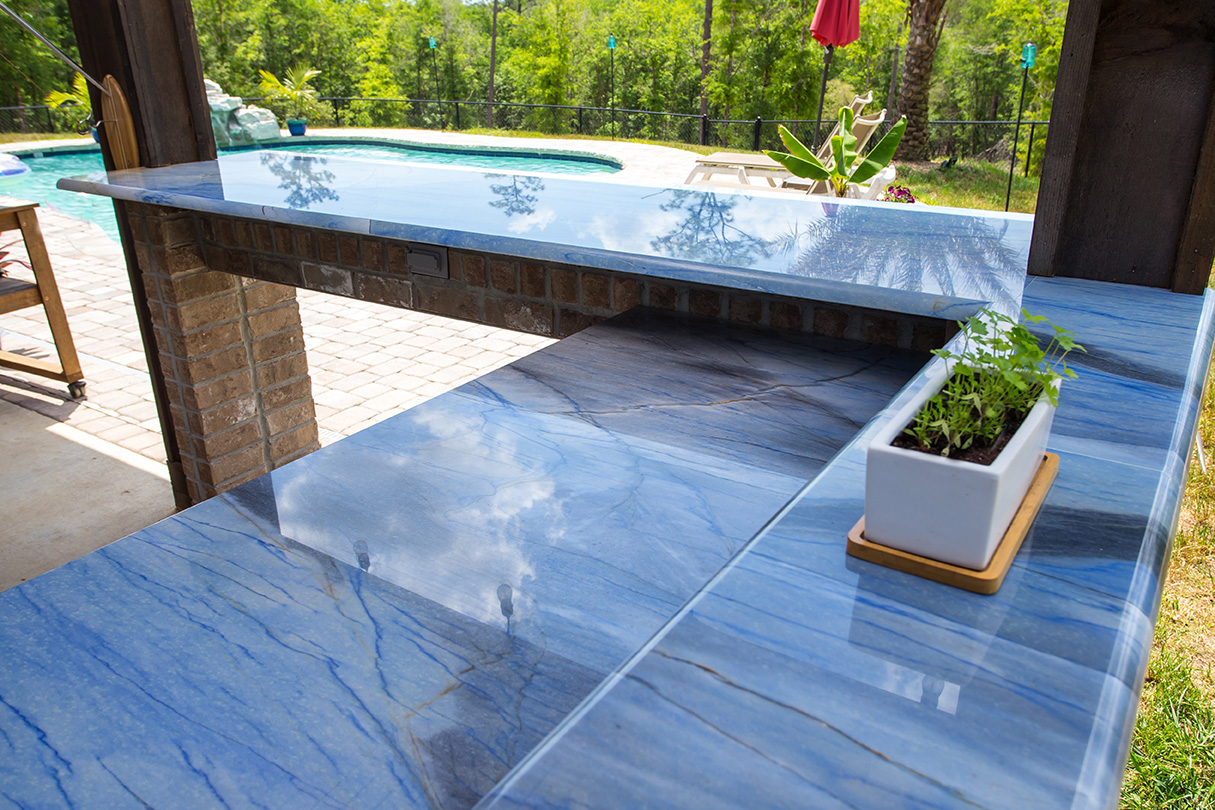
- Outdoor kitchen islands, for homeowners extending their living space outside
Open-concept homes are where this trend really shows off. When your kitchen flows straight into the living room, the island isn’t hidden anymore; everyone sees it from the couch. So the piece has to earn its spot in the room, not just sit there holding a sink.
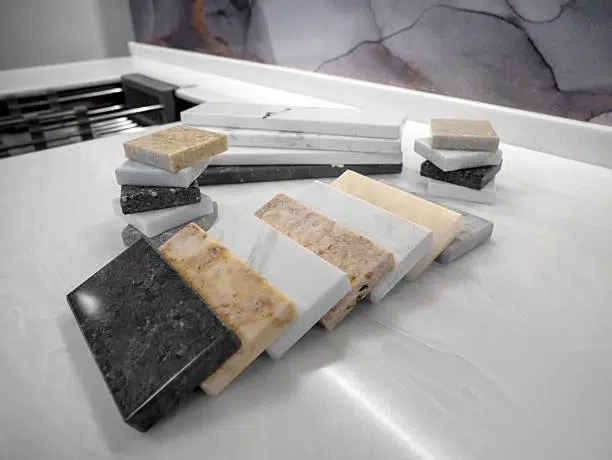
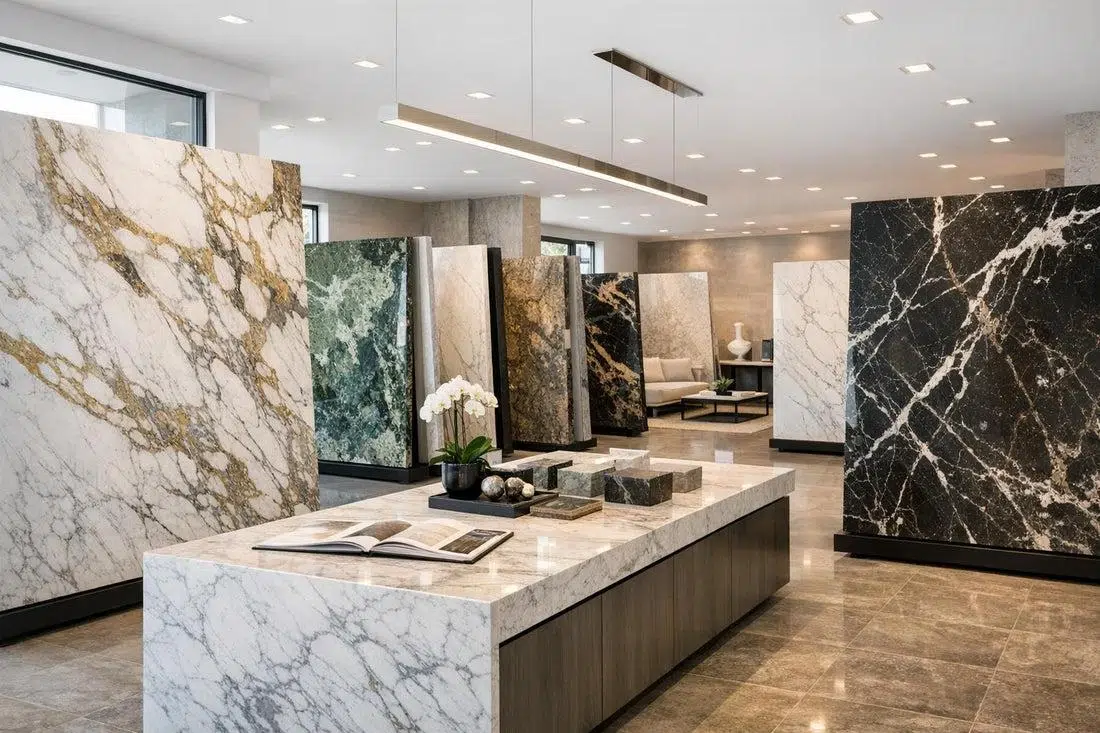
We hear this a lot from customers: they didn’t plan on a waterfall island until they stood in the showroom and saw a slab with the right movement. Once you picture that veining wrapping around a corner instead of stopping flat, it’s hard to unsee.
Why Homeowners Choose This Style
Ask ten people why they wanted this look and you’ll get ten different answers. But a few reasons come up again and again.
It Makes the Island the Centerpiece
A flat countertop with a wood cabinet base looks fine. A continuous stone drop looks finished. The stone becomes the star instead of just sitting on top of one. Guests notice it. Realtors photograph it. It’s the kind of detail that makes a kitchen feel custom-built instead of standard-issue.
It Protects the Cabinet Sides
Wood panels take a beating over the years: bumps from chairs, scuffs from shoes, water damage near the sink. Stone doesn’t care about any of that. Wrapping it around the island’s exposed side means less wear where it actually matters. Ten years from now, that side panel still looks like day one.
It Shows Off the Stone’s Natural Movement
This is the one people don’t expect. When a slab is cut and matched correctly, the veining continues around the corner instead of stopping abruptly. That’s called book-matching, and it’s what makes the design look like one continuous piece of stone instead of two slabs glued together. Skip this step and the whole effect falls apart; the eye catches the mismatch immediately.
It Photographs Well
Not a small thing anymore. Kitchens sell homes, and buyers scroll through listing photos before they ever walk through the door. A dramatic stone drop reads well in a photo in a way a flat counter never will.
Best Stones for a Waterfall Countertop
Not every material handles the style the same way. Here’s what actually matters, stone by stone.
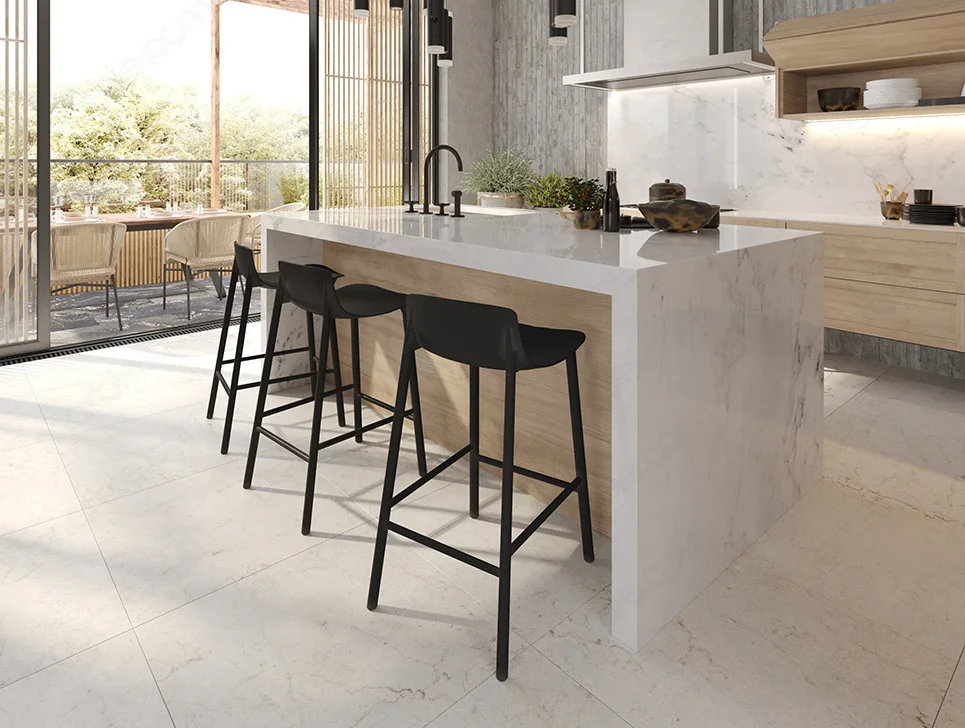
Granite Waterfall Countertop
Granite is heavy, and that’s a good thing here. It holds its shape well through the mitered corner cut, and it’s nearly impossible to scratch. You can set a hot pan right on it without worrying; no trivet needed. The tradeoff: granite needs sealing about once a year to keep the porous surface from staining. But once it’s sealed properly, day-to-day care is simple soap and water.
Quartz Waterfall Countertop
Quartz gives you the most consistent look, slab to slab, which matters a lot when you’re trying to match veining down a corner. Since it’s engineered, there’s no sealing required, ever. One thing to watch: white quartz shows seams more than darker colors, so ask your fabricator about seam placement before you commit to a lighter shade. Quartz also scorches if you set something too hot on it directly, so trivets still matter here.
Quartzite
Quartzite brings dramatic, marble-like veining and outstanding hardness; it’s actually harder than granite on the Mohs scale. That makes it a strong pick if you want serious visual movement flowing down the drop. It does need sealing more often than granite, especially in the first few months after install. Pay attention to the edges and any faucet cutouts, since those spots are more porous than the polished face.
Porcelain
Porcelain is a different animal entirely. Because the slab is only 12mm thick instead of the usual 3cm, the edge has to be mitered rather than solid. It’s completely heat and stain resistant once installed; you can set a cast iron skillet straight off the stove onto it. But there’s a real risk of chipping at the mitered corner during fabrication, and any chip that happens gets filled and stays slightly visible. Ask to see a finished sample edge before you decide.
Marble
Marble isn’t the most practical choice for a busy kitchen island, but it’s still requested constantly for its veining alone. It’s soft, porous, and will etch if lemon juice or wine sits on it too long. Homeowners who choose marble for this application usually know the tradeoffs going in and accept the maintenance for the look.
Homeowners across Pensacola, Pace, and Fort Walton Beach ask about this decision constantly, and the right pick usually comes down to how the kitchen actually gets used day to day.
Waterfall Countertops in Action
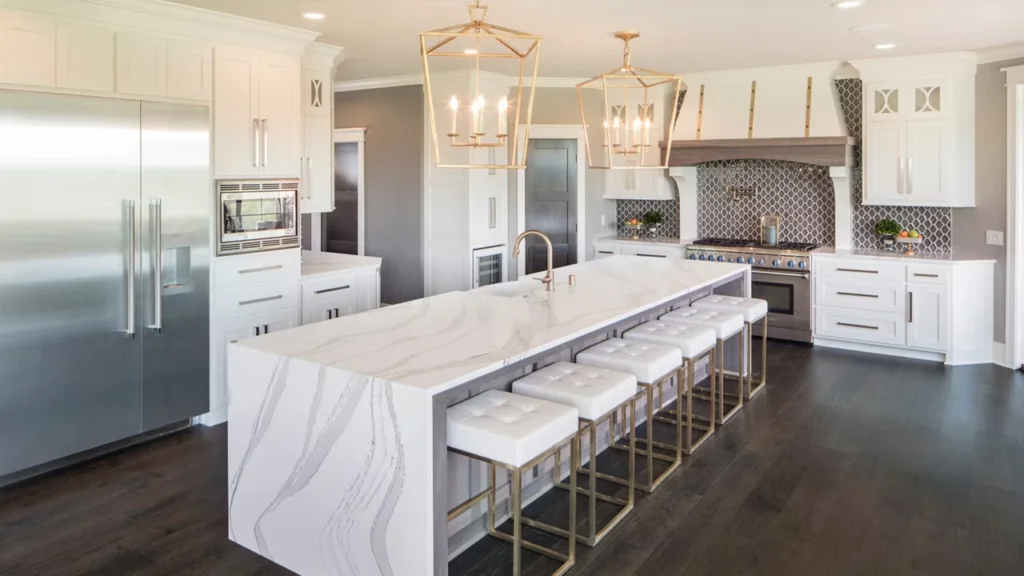
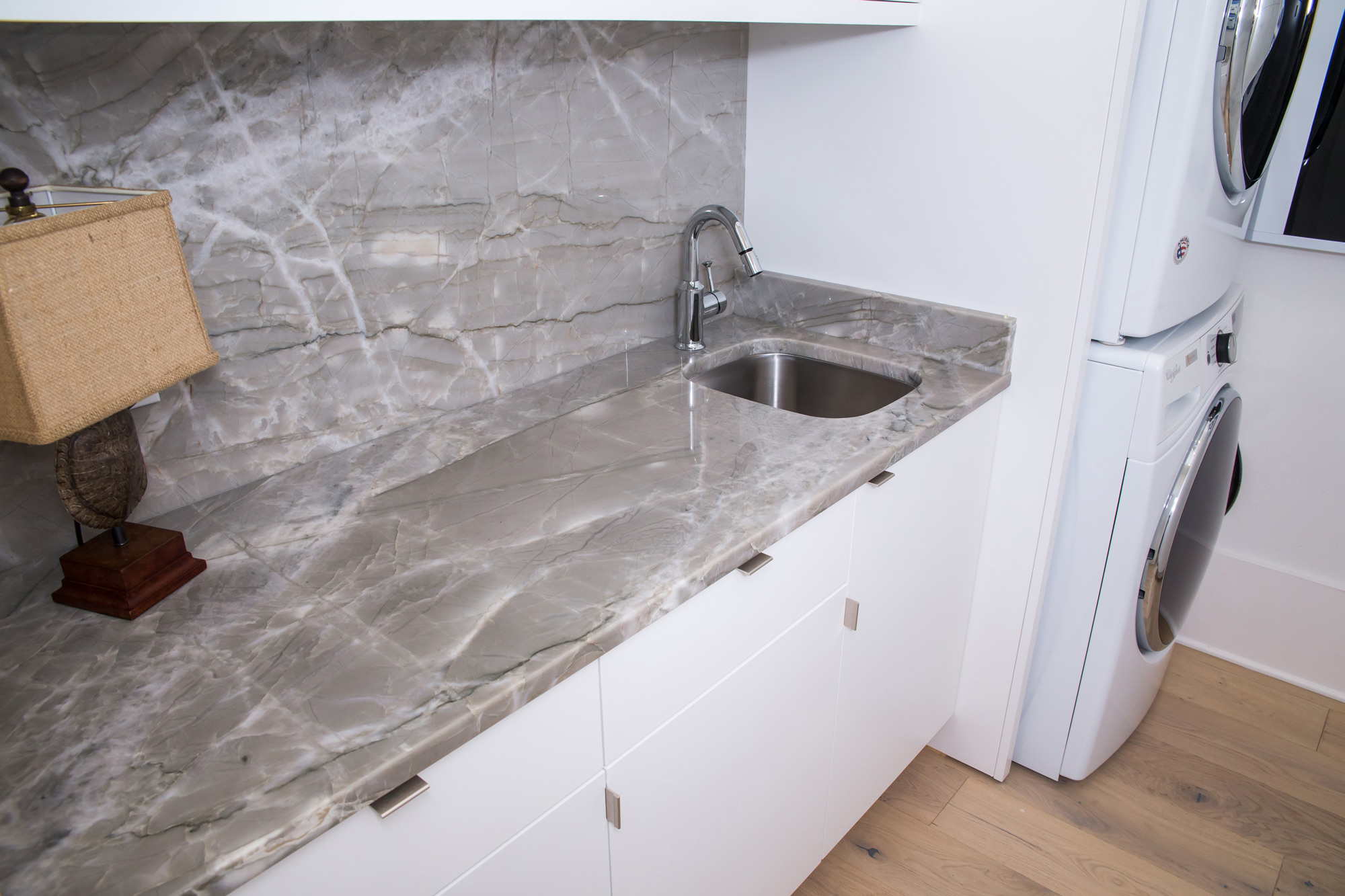
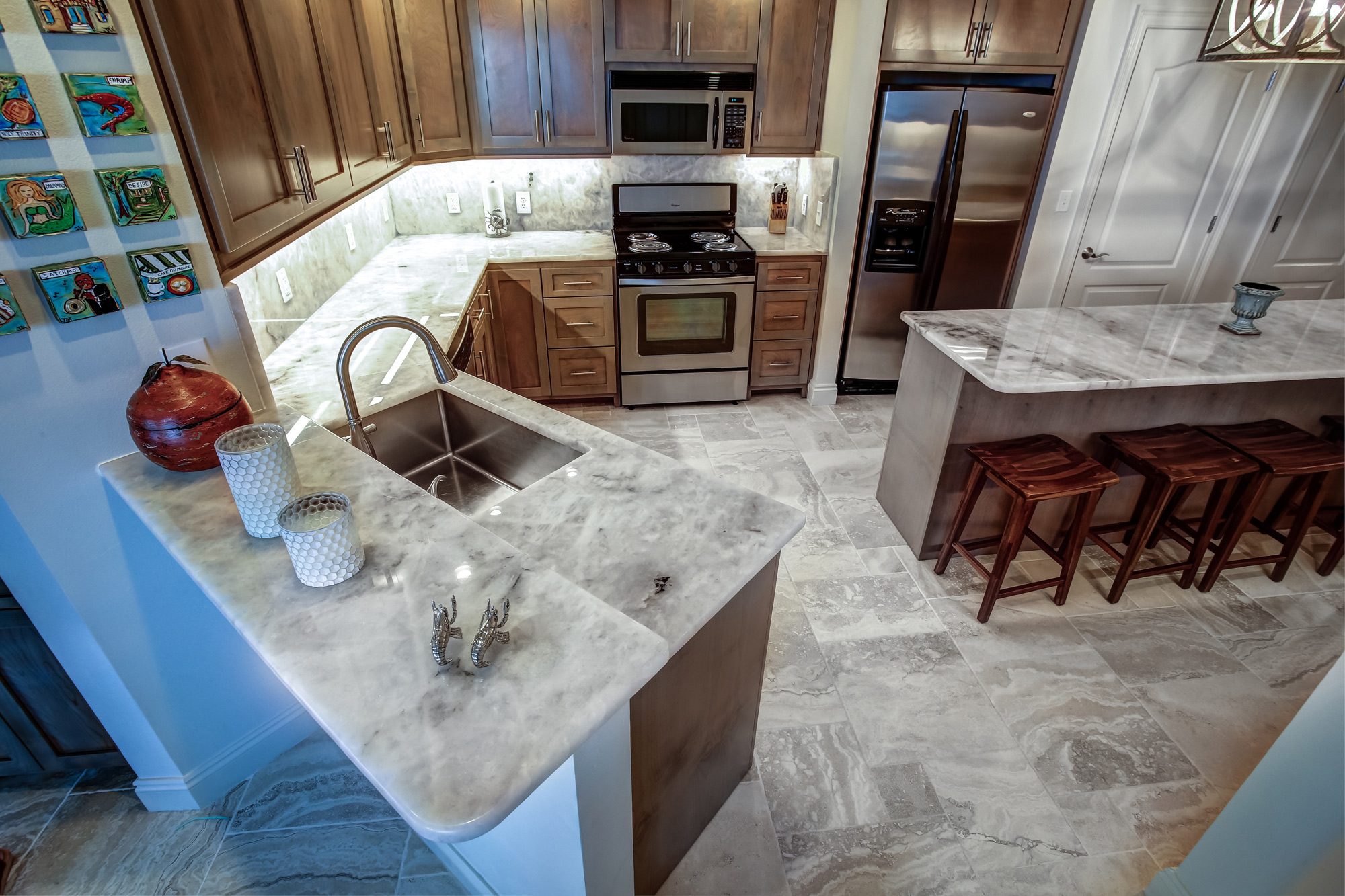
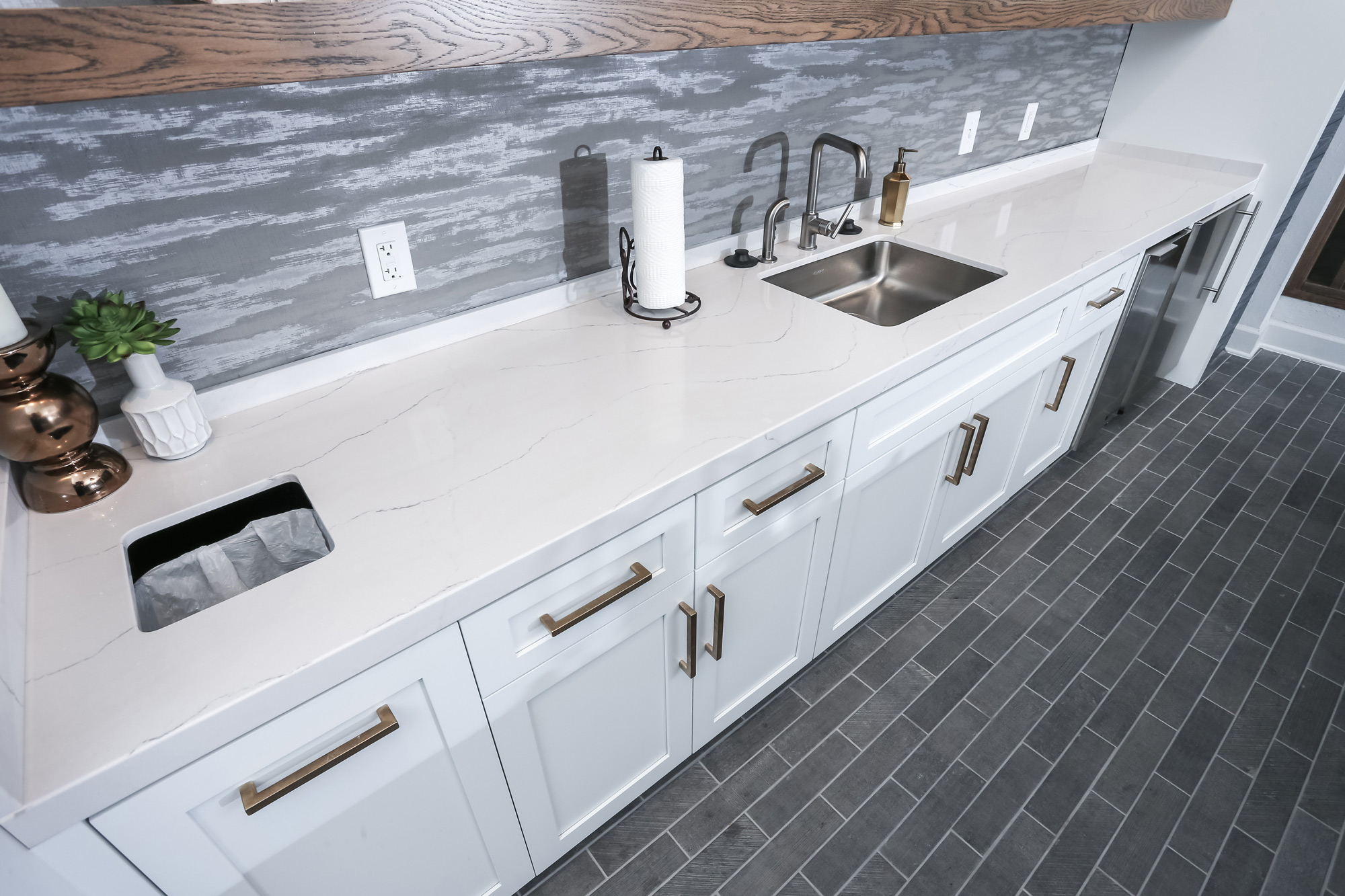
Sometimes the easiest way to picture a design is to see it. Here’s what a few different stone choices look like once they’re wrapped around an island.
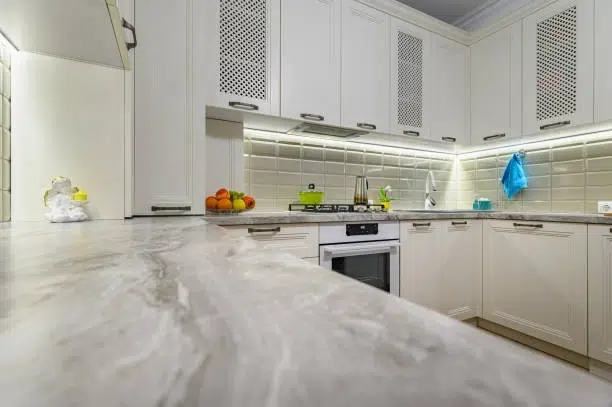
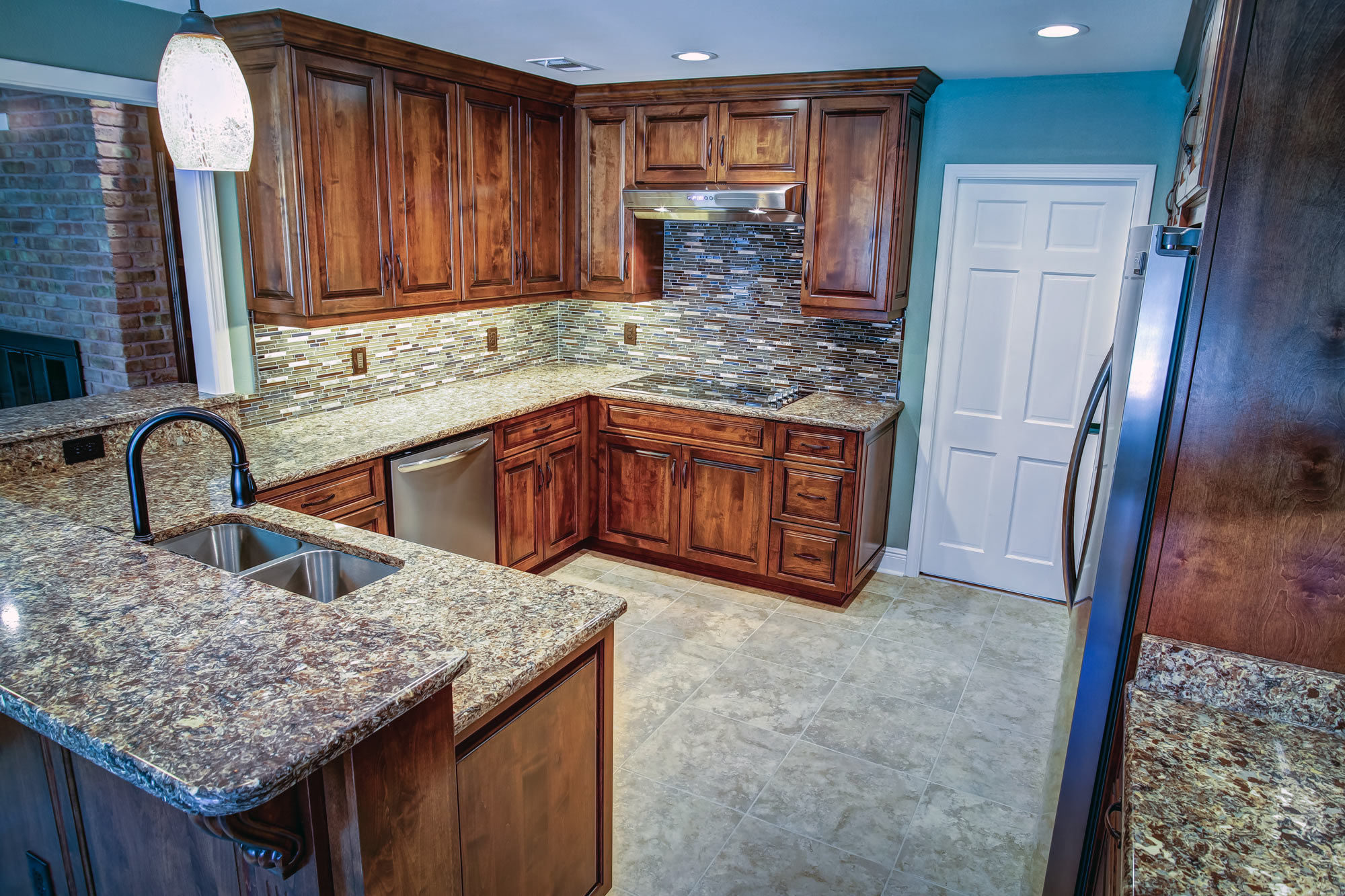
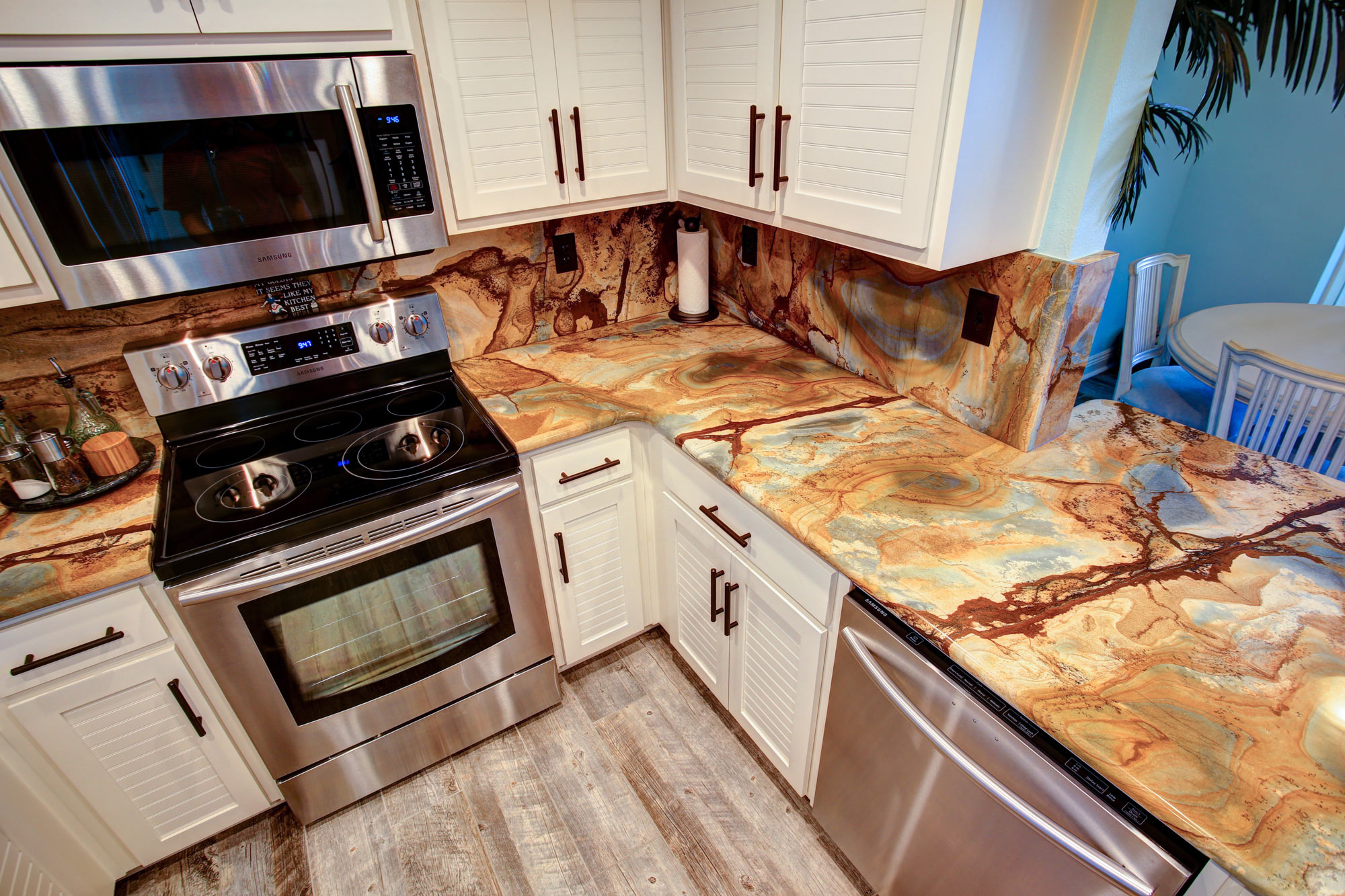
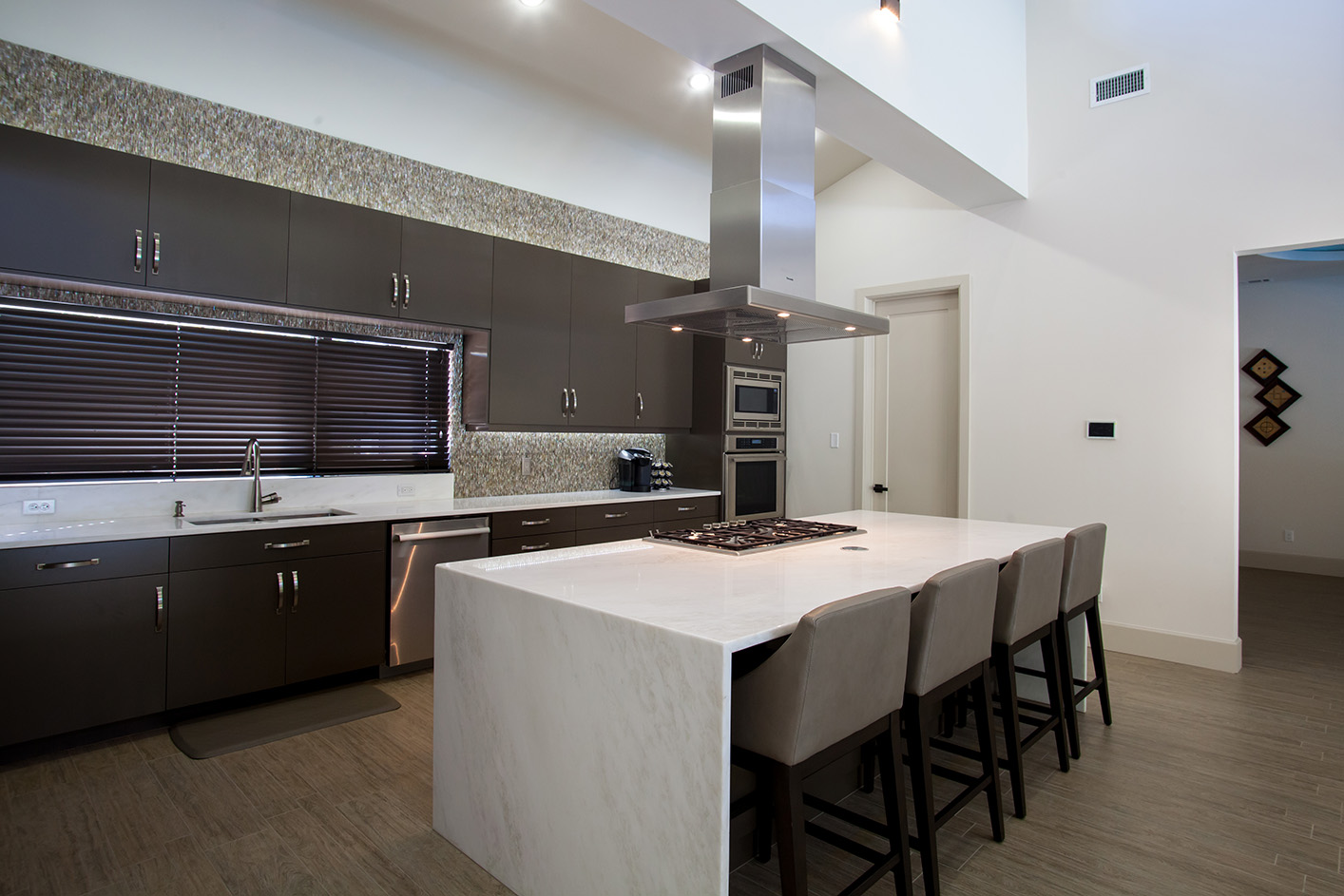
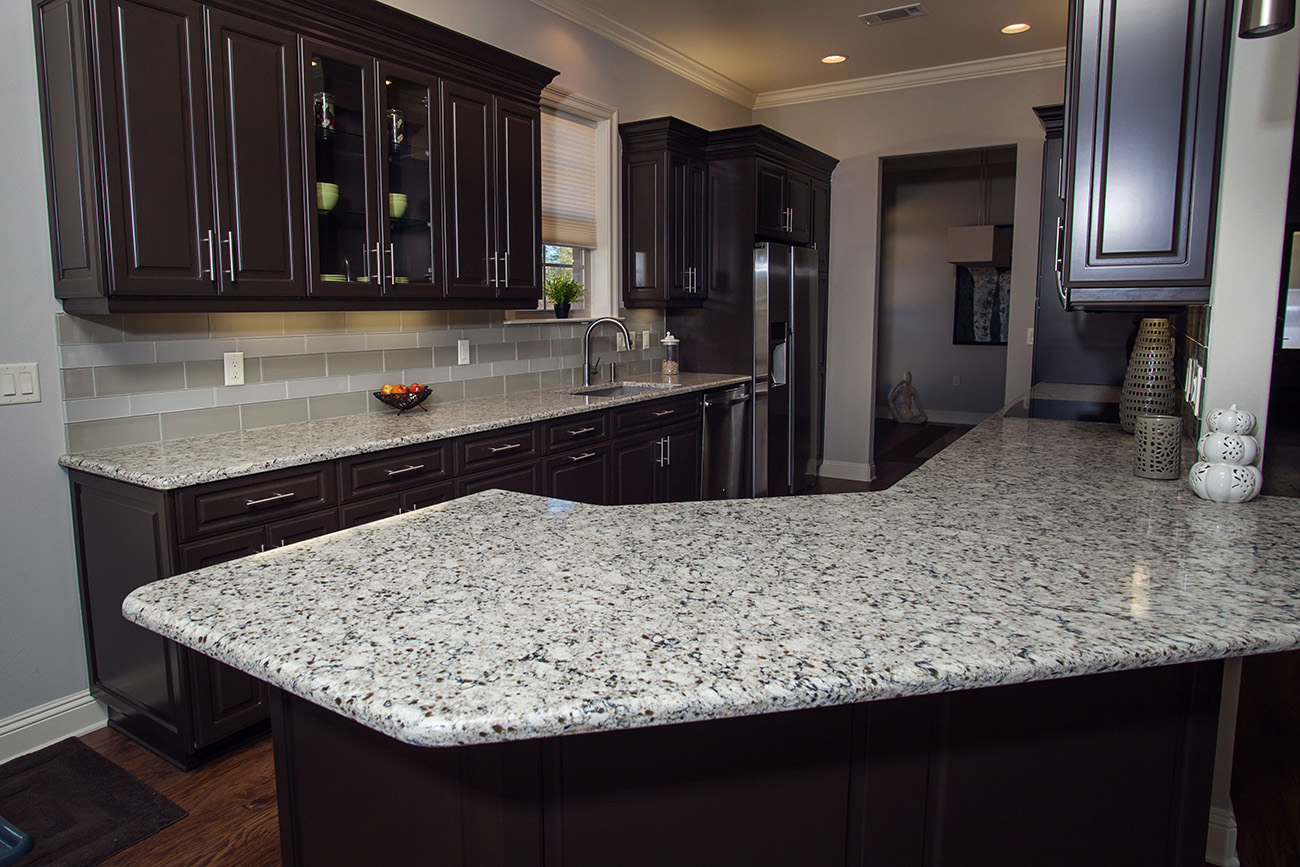
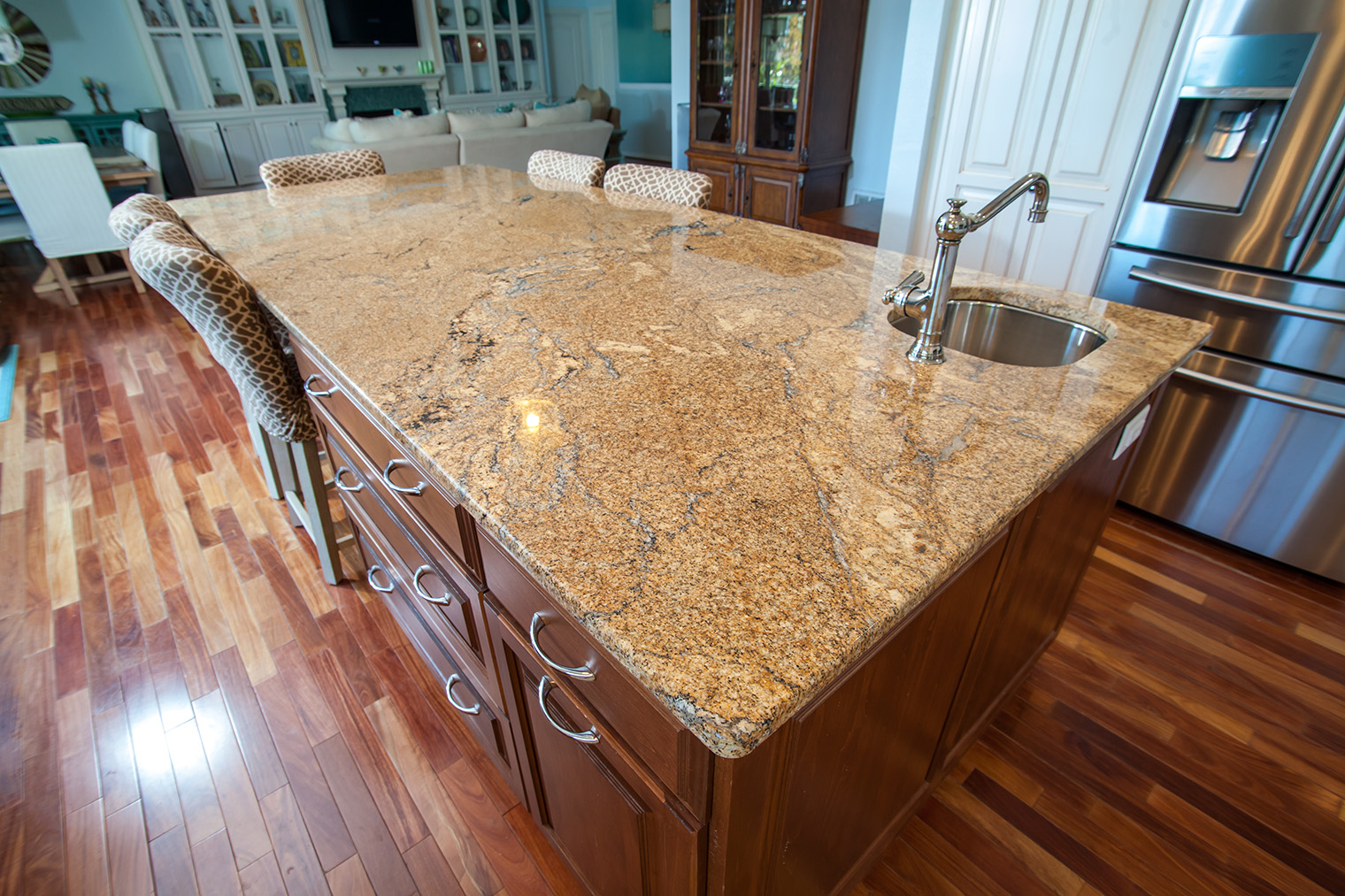
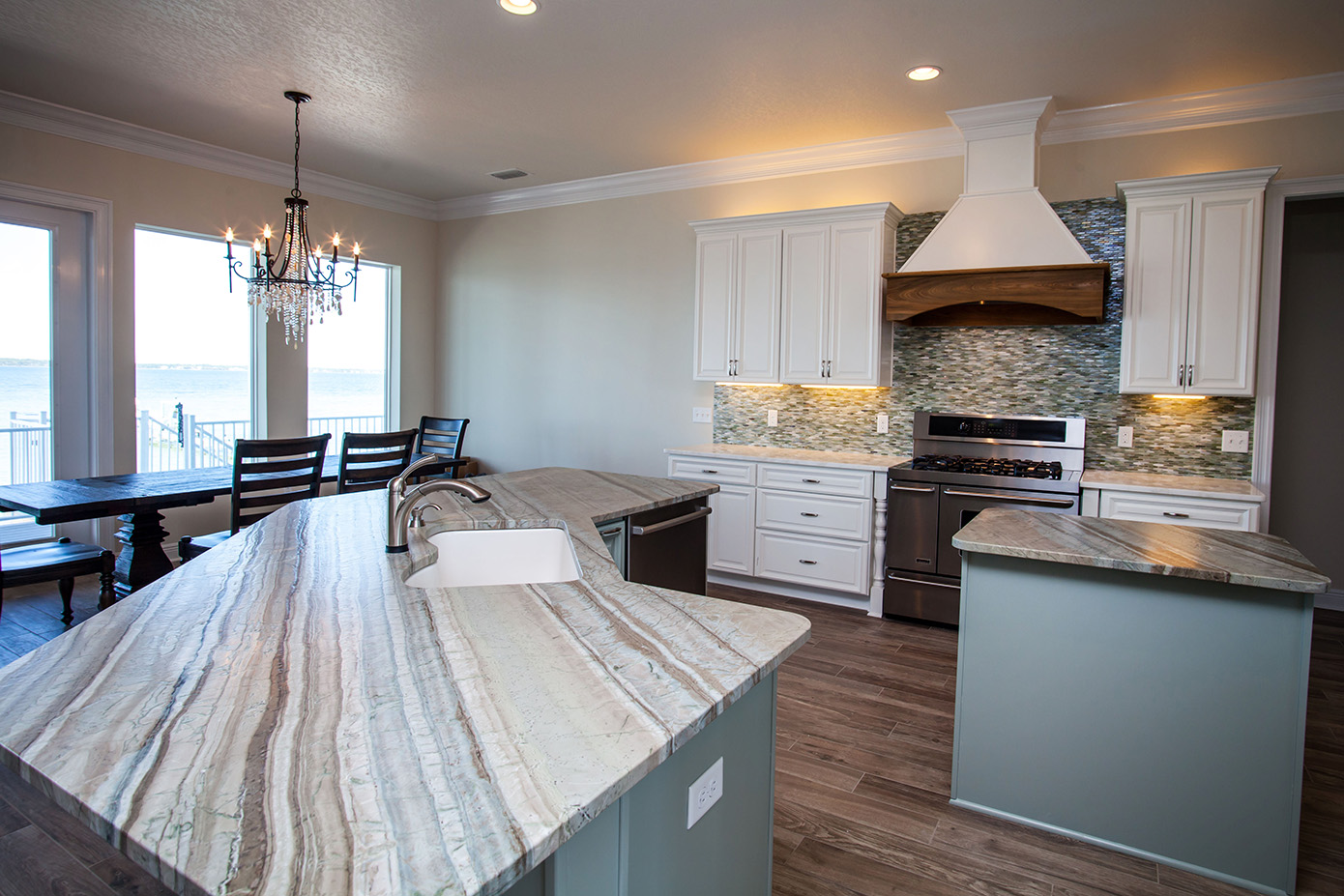
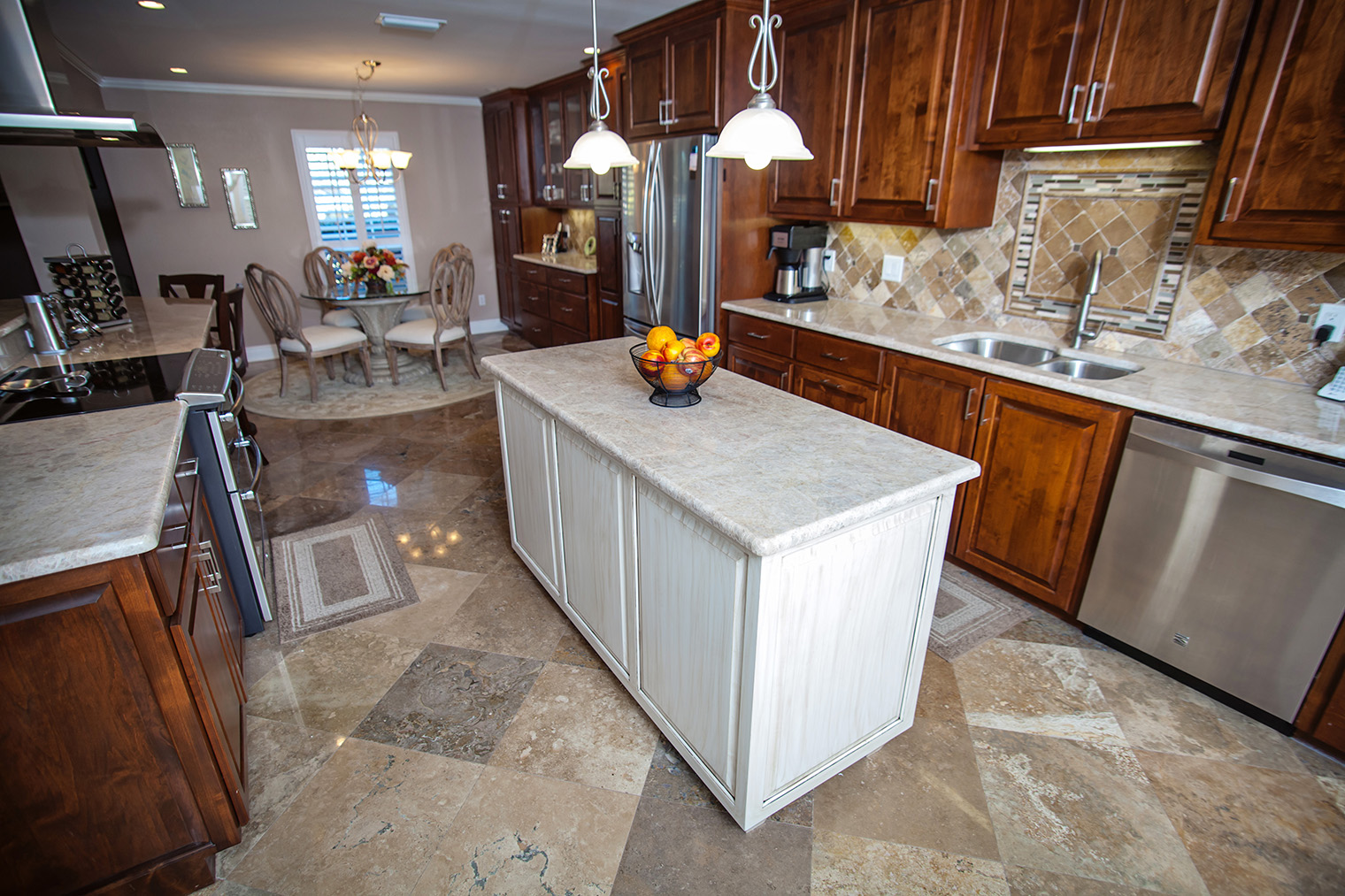
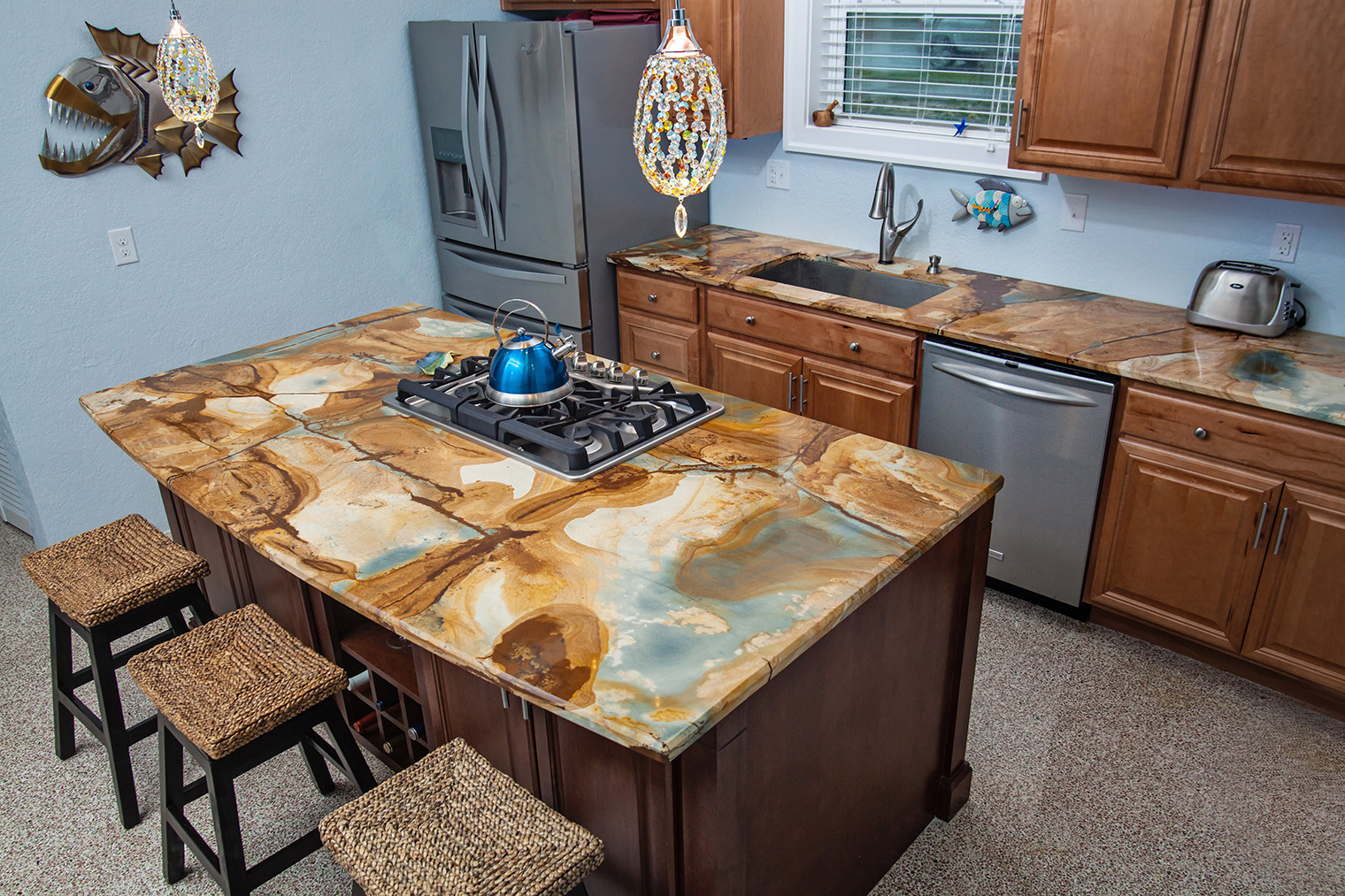
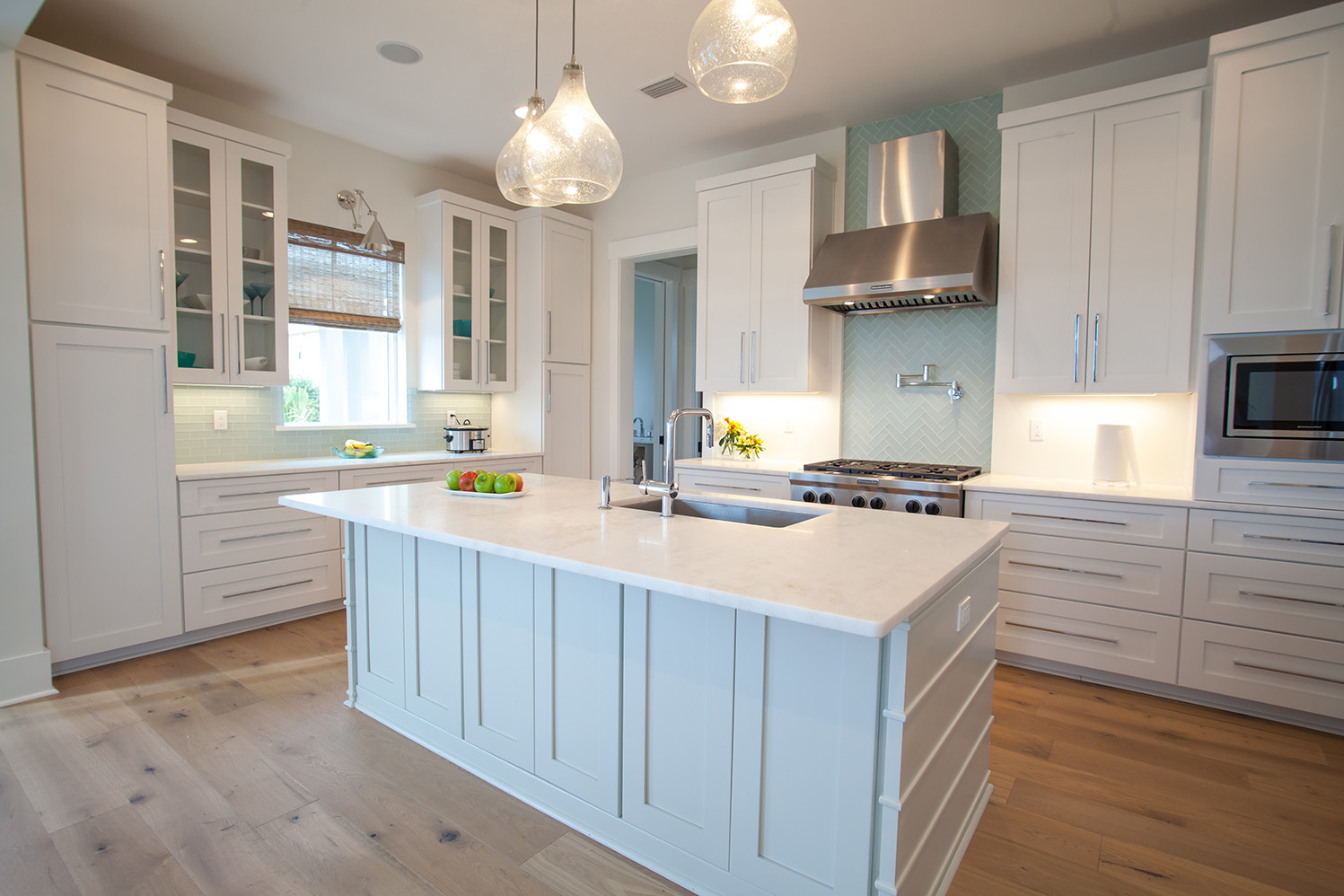
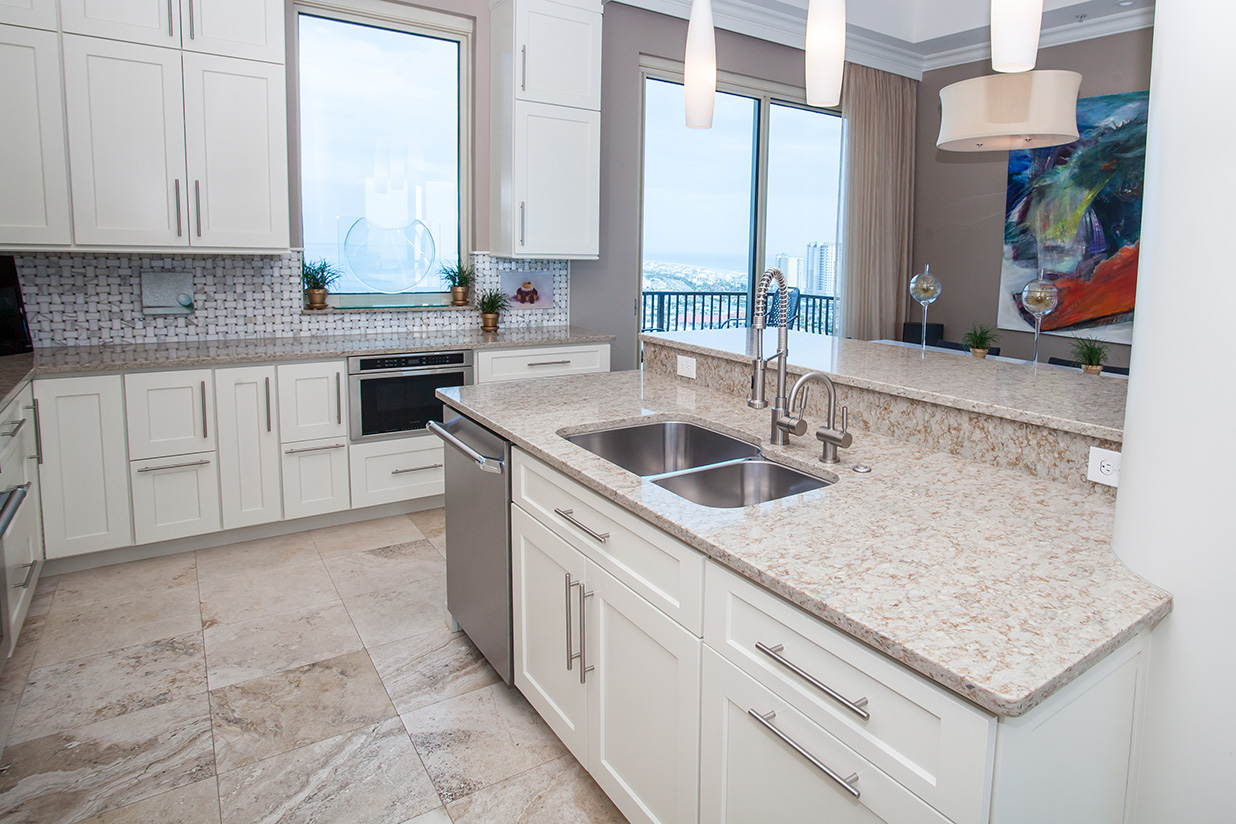
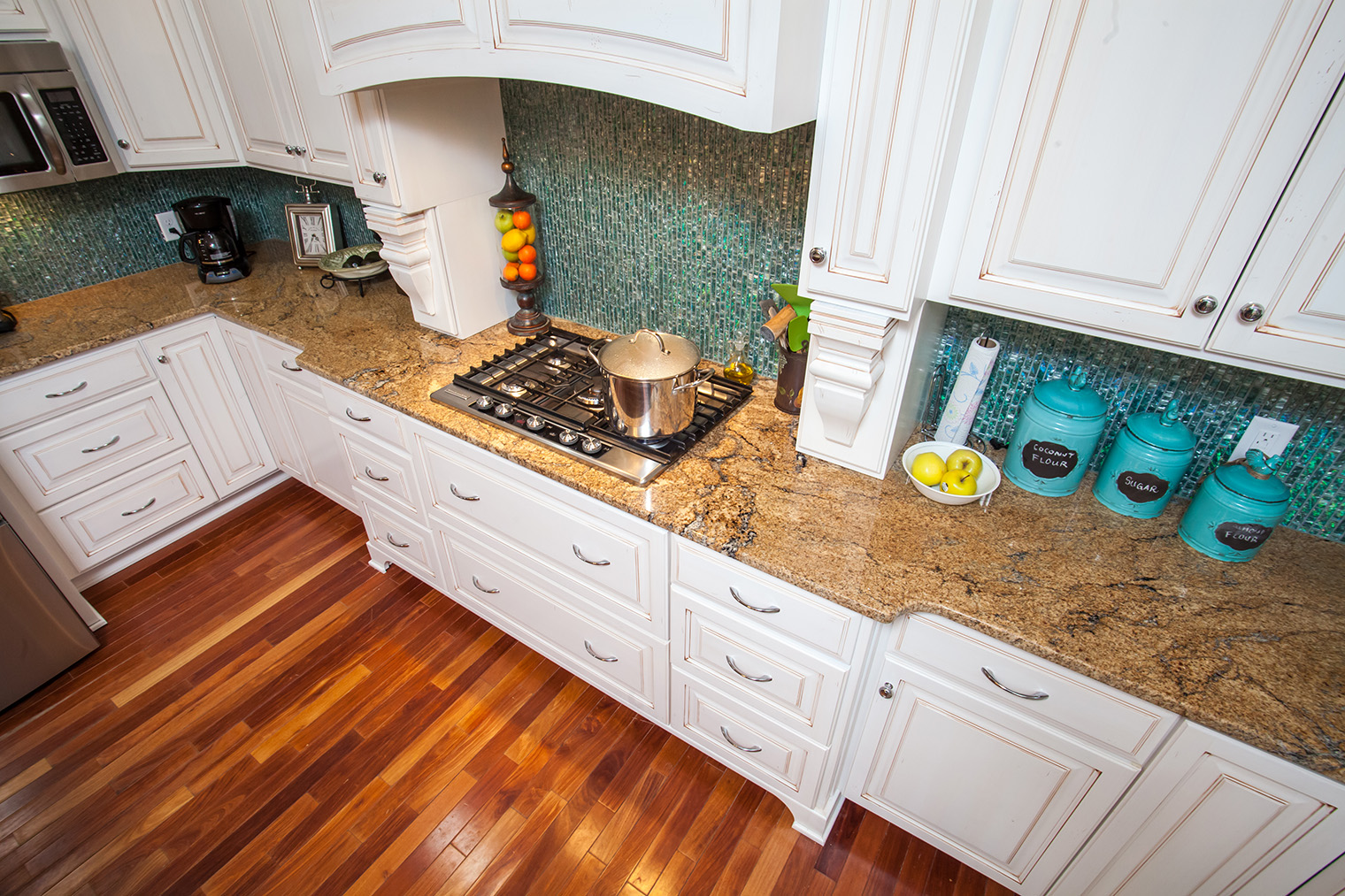
A white quartz island against dark cabinetry creates sharp contrast, the kind that photographs well and holds up daily without much fuss. A granite drop with warm, earthy movement pairs naturally with wood cabinets for a look that feels grounded rather than showroom-sterile. And a quartzite island, with heavy veining running floor to counter, tends to be the piece guests actually stop and comment on when they walk in.
Darker stones tend to disappear into a room with dim lighting, so if your kitchen doesn’t get much natural light, lean toward a lighter slab. Lighter stones do the opposite; they bounce light around and make a small kitchen read bigger than it is.
Cabinet hardware makes a bigger difference here than most people plan for. Matte black pulls against a bright white quartz island read modern and clean. Brushed brass against a warm granite drop leans more traditional, almost like something out of an older Gulf Coast beach house. Even flooring plays a role; dark hardwood under a light stone island creates a grounded contrast, while light tile under a dark stone can make the whole kitchen feel airier than it actually is.
None of these pairings are rules carved in stone, pun intended. They’re starting points. The best way to know if a combination works is to stand in front of a full slab next to an actual cabinet sample, not a swatch on a screen.
How This Design Changes the Whole Kitchen
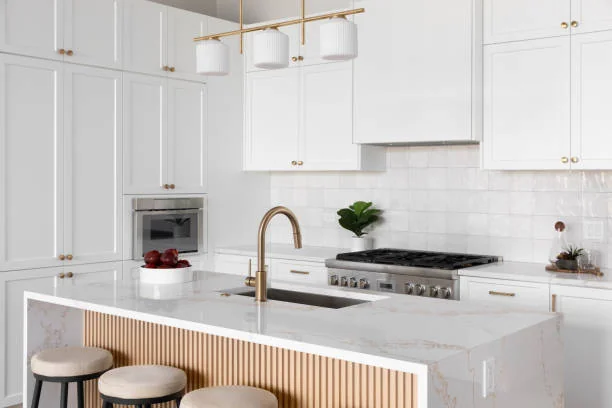
A plain island reads as furniture. An island with this treatment reads as architecture.
That’s not an exaggeration. The eye follows a continuous vertical line differently than it follows a flat surface with a cabinet underneath. Islands built this way tend to look larger, heavier, and more permanent, even when the actual footprint hasn’t changed at all.
So does that mean every kitchen needs one? Not necessarily. Small kitchens with tight walkways can feel more closed-in with a heavy island like this, since the visual weight adds up fast in a compact room. Open, larger kitchens handle the look best. Lighting matters too; a corner near a window catches natural light differently throughout the day, which is worth considering before you finalize a stone color.
But there’s also a functional upside people forget about. That extra stone panel on the side doubles as a spot to lean a barstool or tuck in a trash pull-out without exposing raw wood. Function and looks, working together for once.
What Goes Into the Fabrication
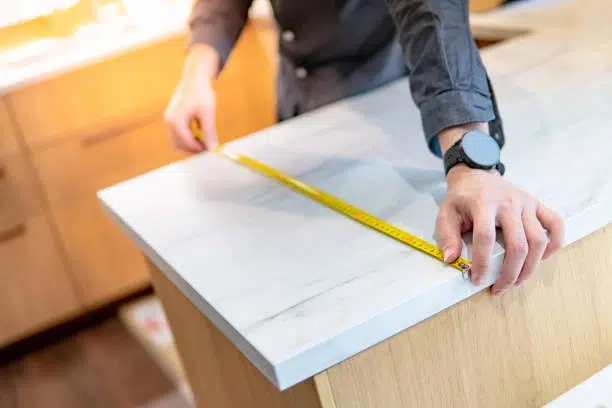
This isn’t a simple cut-and-glue job. First, the team finds a slab with enough length and the right veining to wrap the corner. Then comes precise templating; a mitered waterfall edge leaves no room for error. Machinery cuts the pieces at a 45-degree angle, and the seam gets fitted tight enough to nearly disappear.
Heavier stones like granite and quartzite need extra structural support underneath, since that vertical panel isn’t held up by cabinetry. Your fabricator should walk you through this before installation day.
Between selecting, templating, fabricating, and installing, expect several distinct stages; rushing any of them is how you end up with a seam you’ll notice every day.
Is a Waterfall Countertop Right for Your Kitchen?
A few practical things to think through before committing to a kitchen island upgrade like this one:
- Cabinet layout: this style works best on islands with clean, straight sides. Ornate cabinet panels don’t pair well with a continuous stone drop.
- Slab matching: ask your fabricator how they plan to match veining around the corner. This is where book-matched slabs earn their reputation.
- Material weight: heavier stones like granite and quartzite need solid structural support underneath.
- Maintenance habits: if you’re not going to reseal natural stone on schedule, quartz might be the safer long-term pick.
- Room size: bigger, open kitchens handle the visual weight better than tight, closed-off ones.
None of this is a dealbreaker. It’s just worth working through with someone who fabricates these edges every week. Before you fall for a slab that won’t work for your layout, our teams across Pensacola, Pace, and Fort Walton Beach handle this exact conversation daily.
If you’re also weighing backsplash height or edge profiles alongside the waterfall itself, this guide on countertop upgrades breaks those down in more detail.
Wrapping It Up
Waterfall countertops aren’t a fad; this countertop design trend has stuck around because it changes how a kitchen feels, not just how it looks in photos. Whether you’re planning a full Gulf Coast kitchen remodel or just upgrading one island, it’s worth seeing a few slabs in person before you decide.
Ready to see what this look could do for your kitchen? Visit a Superior Granite showroom in Pensacola, Pace, or Fort Walton Beach and talk it through with someone who builds these every week.
Pensacola, FL
Visit Us: 7011 Pine Forest Road, Pensacola, FL 32526
Call Us: (850) 941-0270
Hours: Monday – Friday: 8 a.m. – 5 p.m., Saturday: 9 a.m. – 2 p.m.GMB
Pace, FL
Visit Us: 4590 Jernigan Road, Pace, Florida 32571
Call Us: (850) 994-1872
Hours: Tuesday – Friday: 9 a.m. – 5 p.m., Saturday: 9 a.m. – 2 p.m.
Fort Walton Beach, FL
Visit Us: 35 Miracle Strip Pkwy SW, Fort Walton Beach, Florida 32548
Call Us: (850) 301-0716
Hours: Tuesday – Friday: 8 a.m. – 5 p.m., Saturday: 9 a.m. – 2 p.m
Get quotes now and start your project!
FAQs
1. What is a waterfall countertop?
It’s a countertop where the stone wraps continuously down the side of an island or cabinet, instead of stopping at the counter’s edge.
2. Are waterfall countertops expensive?
They cost more than a standard flat countertop because they use more material and require precise mitered cuts. Ask your fabricator for a quote based on your specific stone and layout.
3. Which stone is best for this style?
Granite and quartzite hold up well structurally, quartz offers the most consistent look with zero sealing, and porcelain works but carries more fabrication risk at the mitered corner.
4. Do waterfall countertops work in small kitchens?
They can, but the visual weight adds up fast in a tight space. They tend to look best in open, larger kitchens.
5. How long does it take to install a waterfall countertop?
Timelines vary by project, but the process follows the same steps as any countertop: selection, templating, fabrication, then installation.