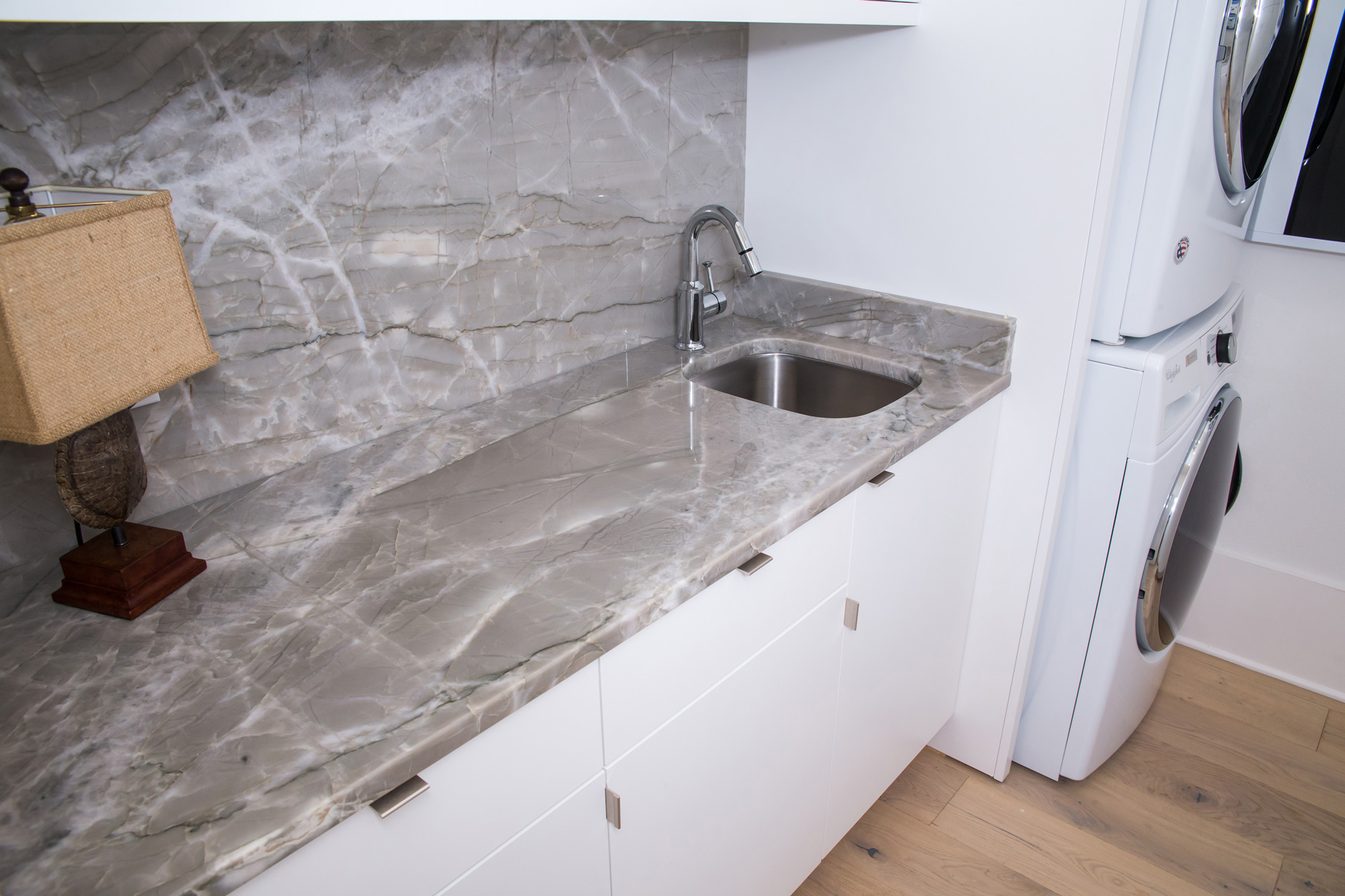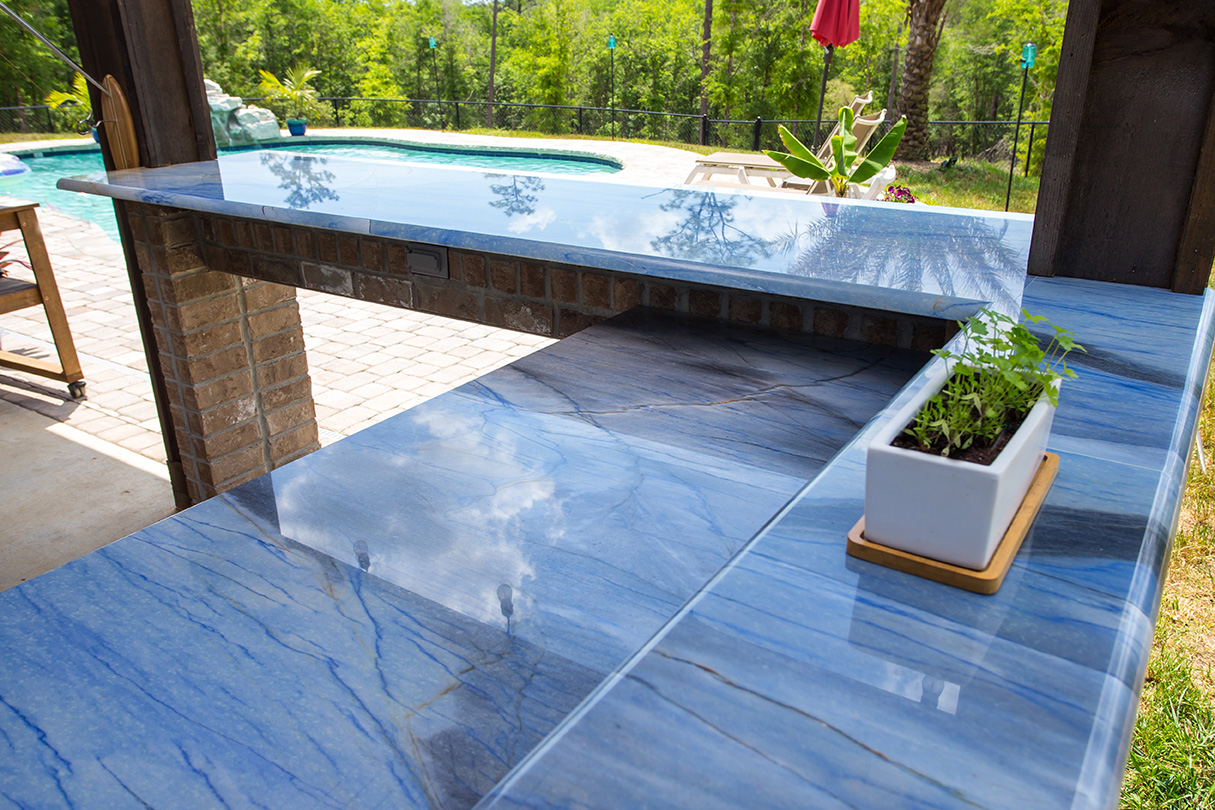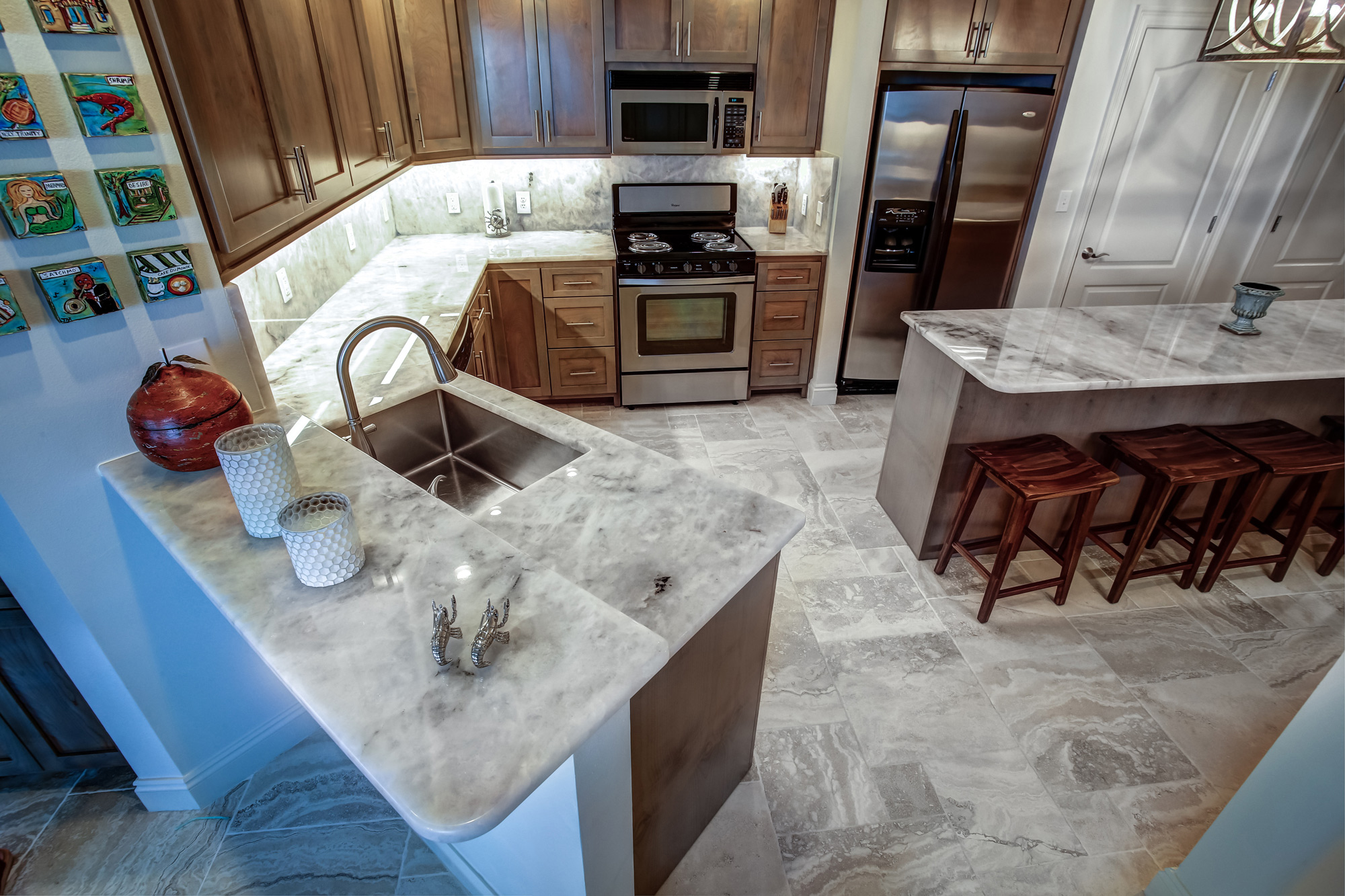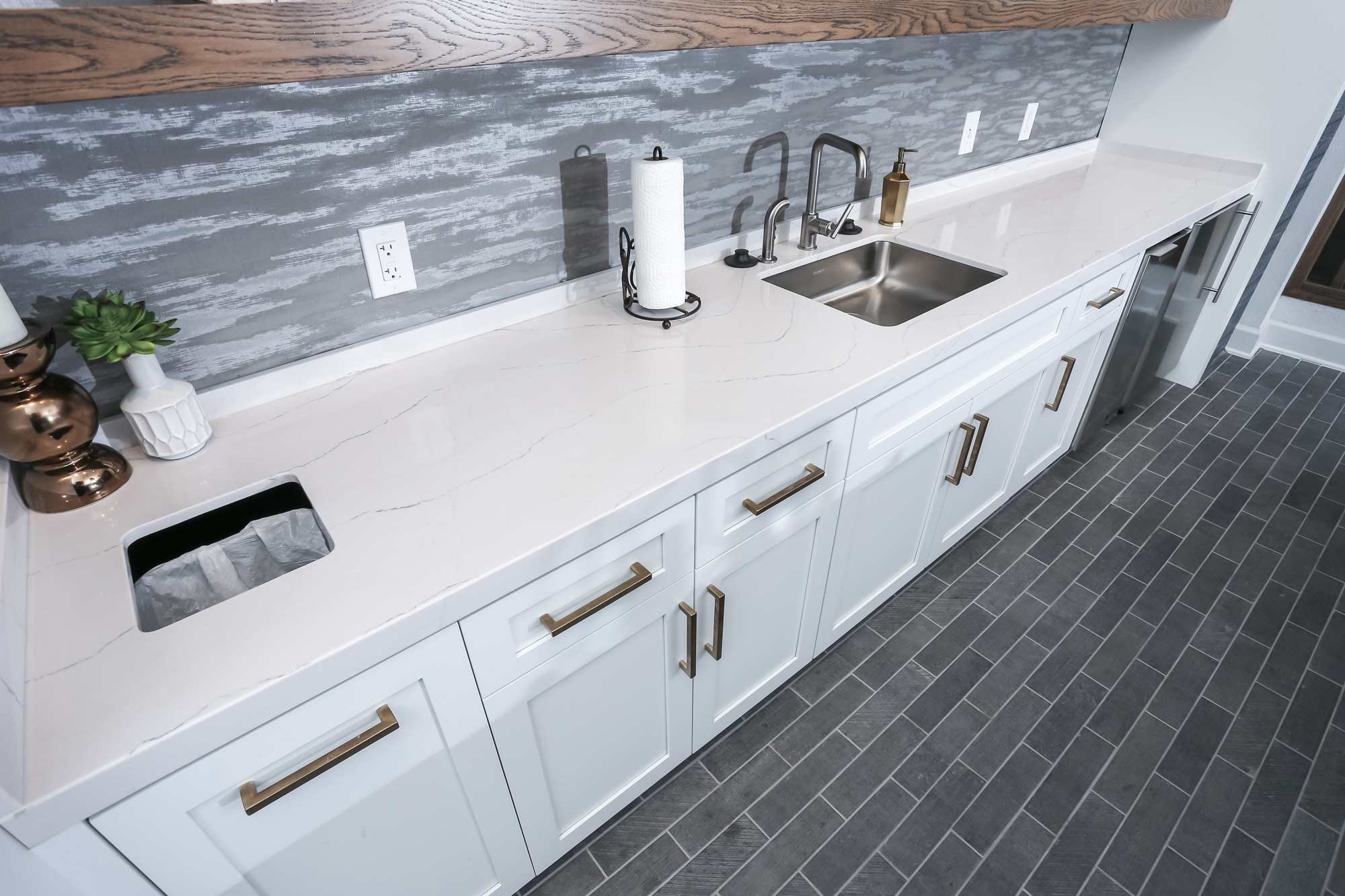
Pink quartz countertops are having a moment — and unlike some colour trends, this one has staying power. A soft blush or dusty rose countertop brings warmth to a kitchen or bathroom without shouting, and because quartz is engineered, the colour is consistent from slab to slab: what you see in the showroom is what arrives in your home. This guide covers what pink quartz actually is, the shades available, how to pair it, what it costs, and how to care for it.
What is pink quartz?
Most pink quartz countertops are engineered quartz: crushed quartz crystals (around 90–95% of the slab) bound with resin and pigments. The pink comes from the pigment, not from a pink mineral — which is why engineered pink quartz is available in a controlled range of shades, from barely-there blush to a confident rose, with or without veining.
There is also a real natural stone called rose quartz — a pale pink crystalline quartz mined from the earth. Natural rose quartz is rare as a countertop material, costs more, and behaves like a natural stone (it can need sealing and gentler care). When most people say “pink quartz countertops”, they mean the engineered version — and that is what this guide covers unless stated otherwise.
Pink quartz colour range
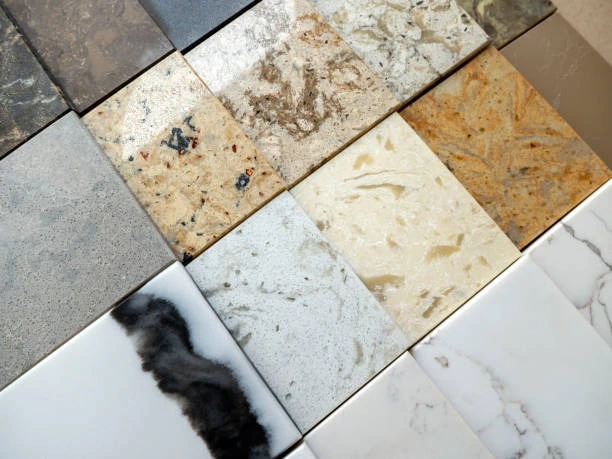
Pink quartz is not one colour. The shades most homeowners choose fall into four groups:
- Blush: the palest pink, almost white in some lights. Works like a neutral — safe, bright, and easy to live with.
- Dusty rose: a muted, warm pink with grey or beige undertones. The most popular shade for kitchens — it reads as warm rather than pink.
- Rose: a clear, confident pink. A statement shade that suits islands and feature vanities.
- Veined pink: blush or rose bases with white, grey, or gold veining, often styled to echo marble. The veining adds movement and hides everyday marks.
Because engineered quartz is consistent, your slab will match the sample closely — but always view a full slab before buying, as the veining pattern varies.
Benefits of pink quartz
Pink quartz shares all the practical benefits of engineered quartz: it is non-porous, so it resists stains from wine, coffee, and makeup without sealing; it never needs sealing at all; it is hard and scratch-resistant for everyday use; and its colour does not fade or vary unpredictably between slabs. It is also easy to clean — warm water and mild dish soap are enough for daily care. For a bathroom vanity or a kitchen island that needs to look good with little effort, pink quartz is one of the lowest-maintenance colourful options available.
Pink quartz vs other countertops
| Feature | Pink quartz (engineered) | Granite | Marble | White quartz |
|---|---|---|---|---|
| Colour | Consistent blush-to-rose shades | Natural variation, wide palette | Soft veining, mostly white/grey | Consistent whites and greys |
| Sealing | Never needs sealing | Once a year | Frequent sealing | Never needs sealing |
| Stain resistance | High (non-porous) | Good when sealed | Low — stains easily | High (non-porous) |
| Heat | Use trivets (resin can mark) | Handles heat well | Handles heat well | Use trivets |
| Maintenance | Low | Medium | High | Low |
| Best for | Colourful kitchens and baths | Busy kitchens | Low-traffic luxury spaces | Bright, neutral kitchens |
Pink quartz colour palettes and style matchups
- Soft and romantic: blush quartz with white or cream cabinets, brushed brass hardware, and warm wood floors. The pink reads as a warm neutral — calm, light, and timeless.
- Modern contrast: dusty rose quartz with dark cabinets (charcoal, forest green, or black) and matte black or gold hardware. The dark cabinets make the pink the focal point without overwhelming the room.
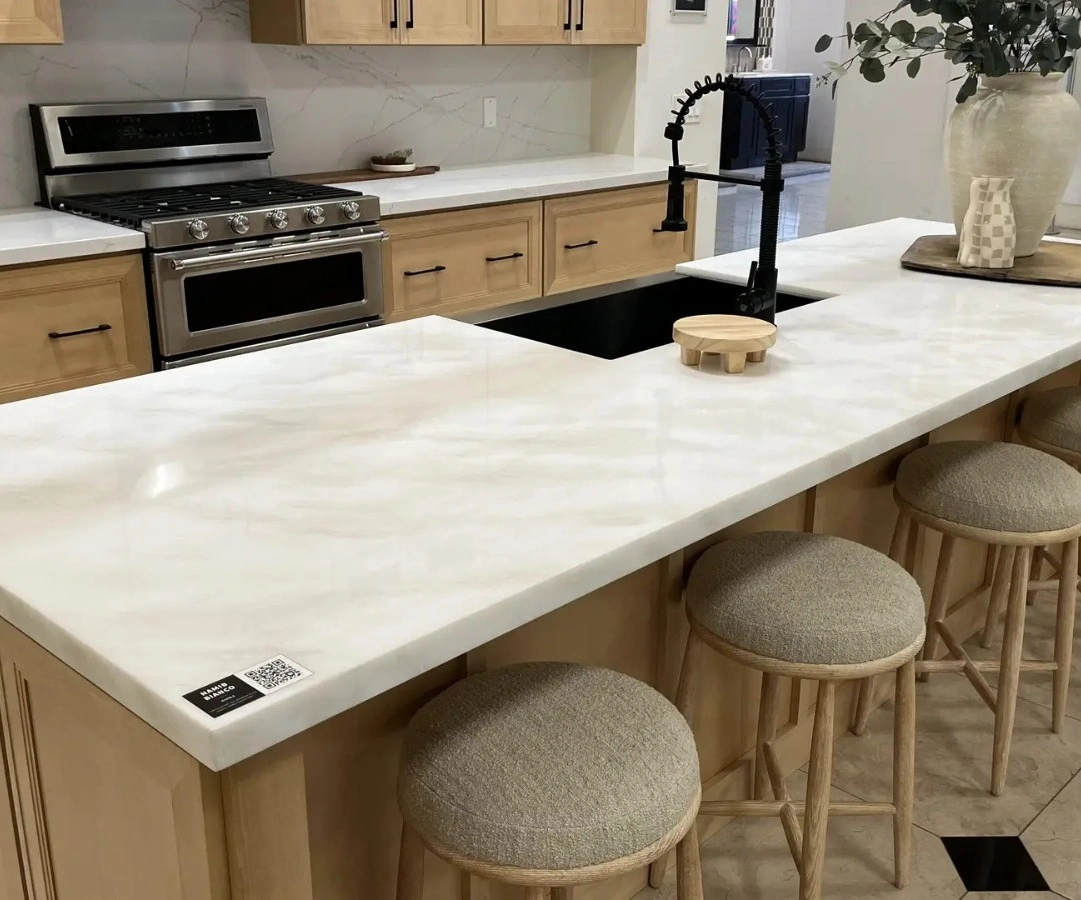
- Coastal and fresh: blush or veined pink quartz with light oak or whitewashed cabinets, chrome or brushed nickel hardware, and pale walls. The pink warms up an otherwise cool palette.
Design tips & trends
- Cabinet pairings: white, cream, light grey, and natural wood are the safest partners for pink quartz. Dark green and charcoal work for a bolder look. Avoid pairing pink quartz with strongly pink or red walls — the room should have one pink statement, not three.
- Hardware: brushed brass and gold warm up blush and dusty rose; chrome and brushed nickel suit cooler rose shades; matte black adds contrast in modern kitchens.
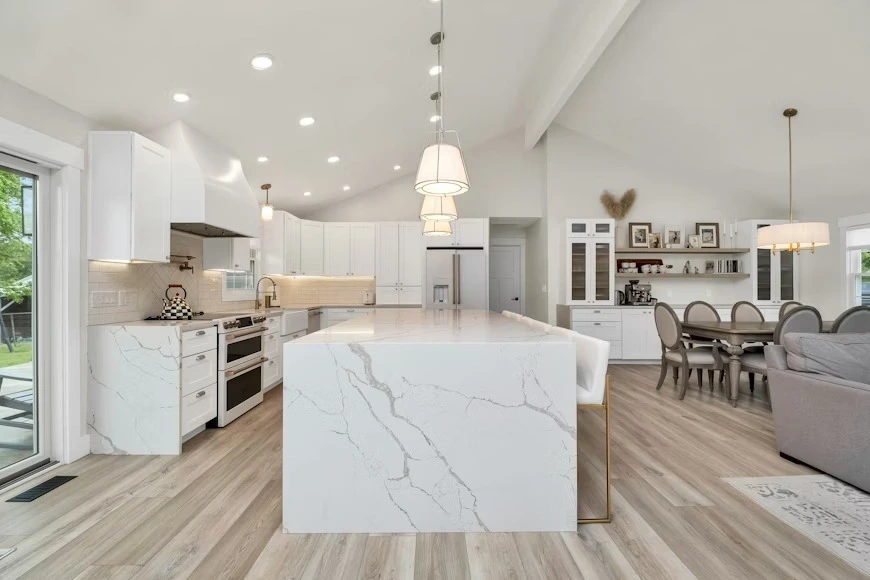
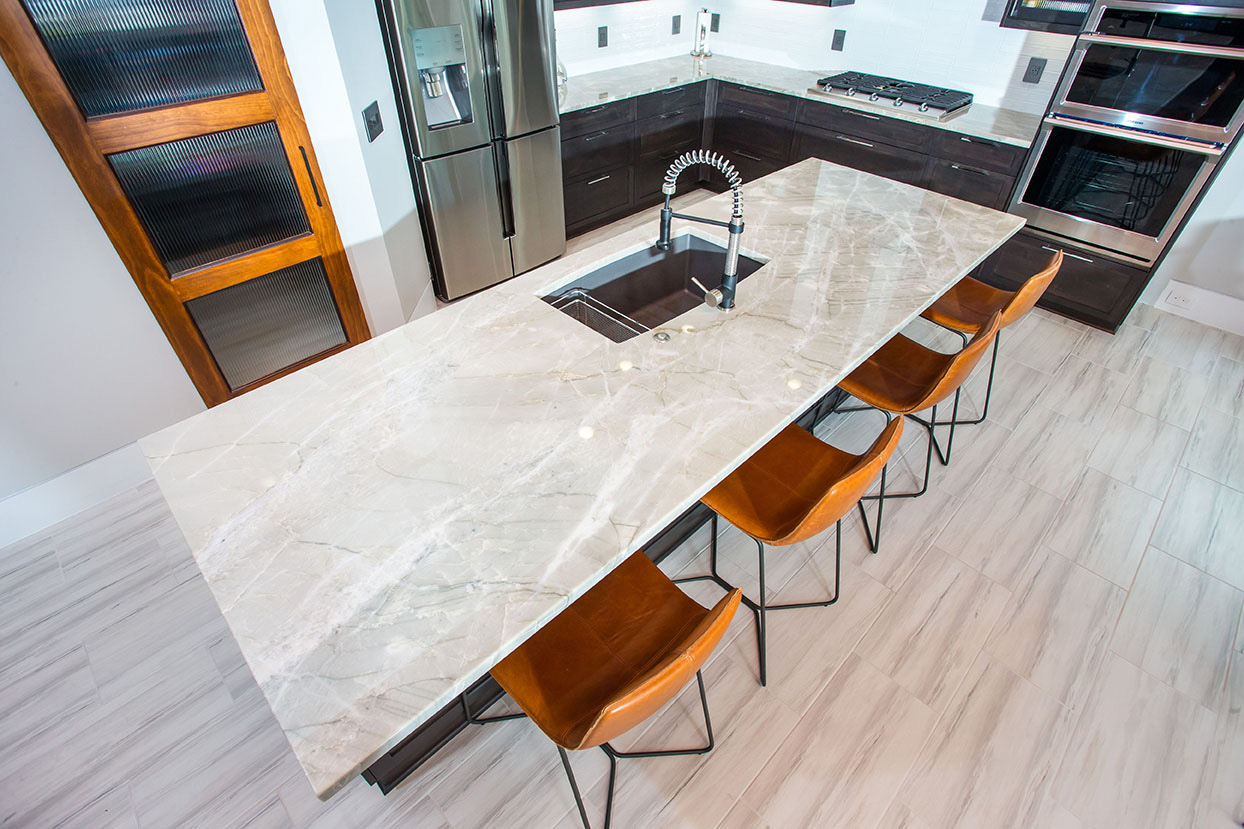
- Waterfall edges: a pink quartz waterfall island — the slab continuing down the side of the island — is the most requested pink quartz feature. It shows off the colour and veining at full scale.
- Finishes: polished is the standard finish and the easiest to clean. Honed (matte) pink quartz is softer to the touch and hides fingerprints, but shows marks more readily — ask to see both finishes in the showroom before deciding.
- Thickness: quartz is available in 2 cm and 3 cm. 3 cm is the standard for kitchen worktops; 2 cm suits bathrooms and vanity tops.
Pink quartz in different rooms
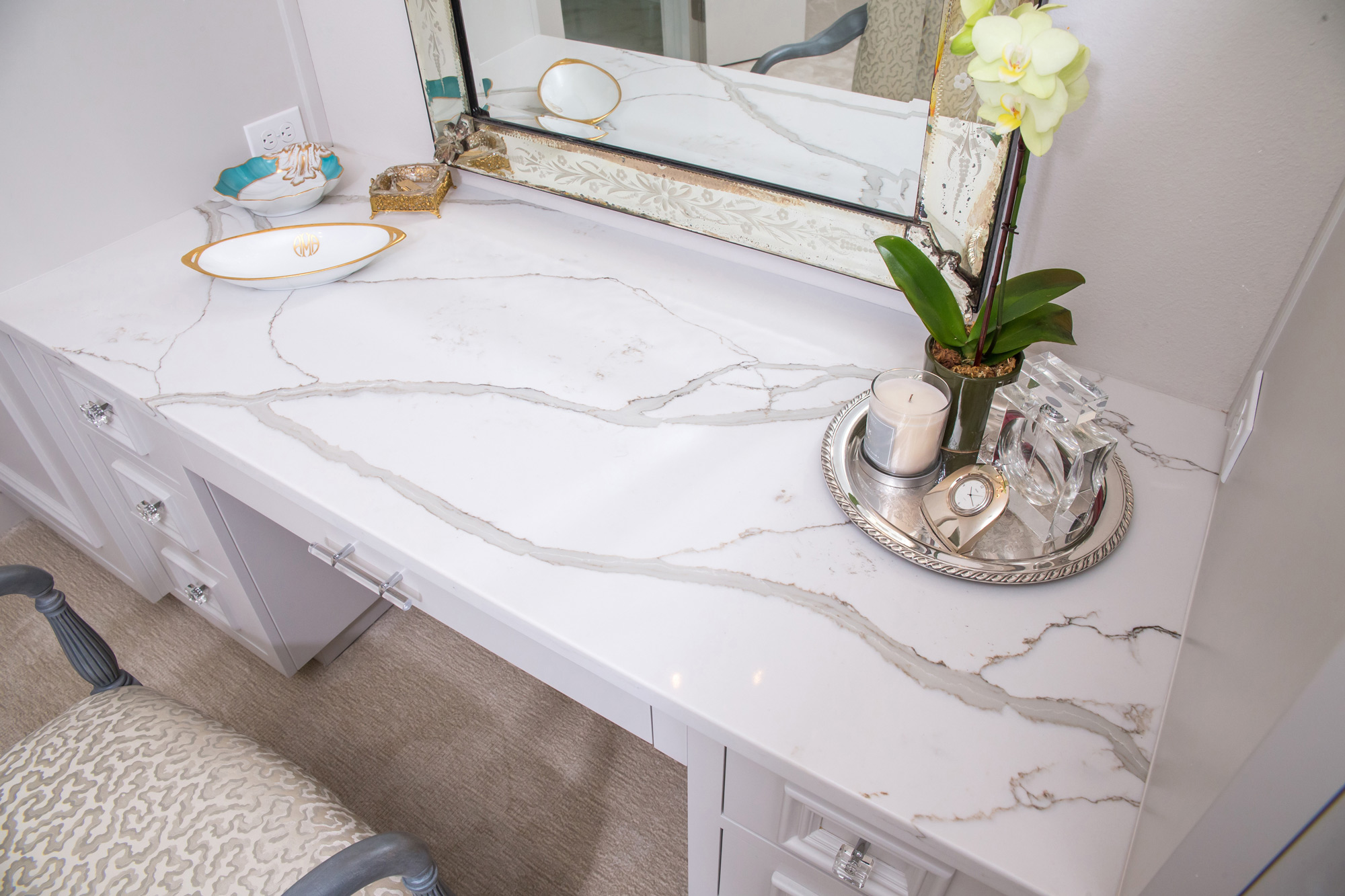
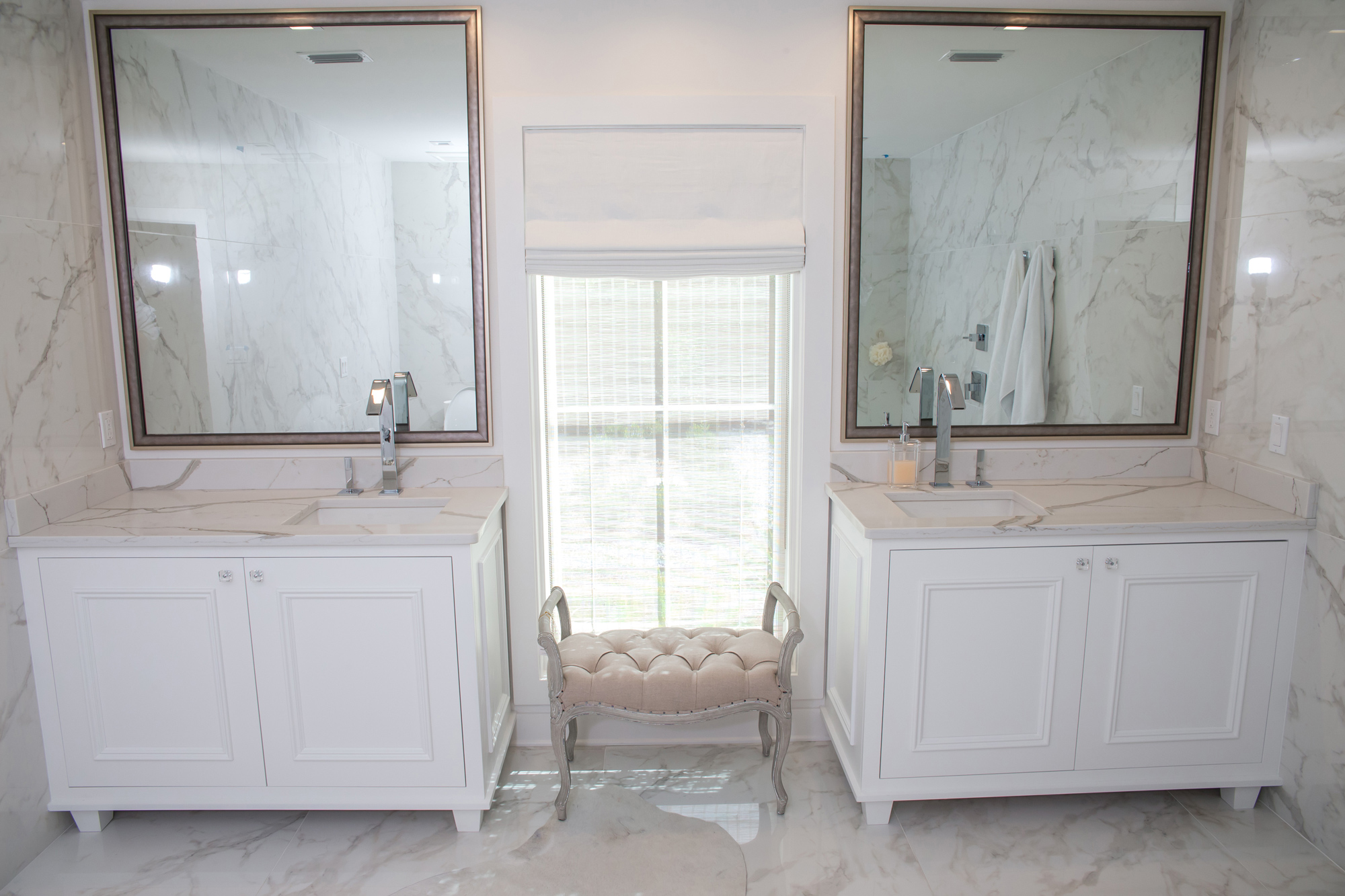
Kitchens: pink quartz works as a full worktop, an island feature, or a backsplash-height splashback. In a busy family kitchen, dusty rose hides marks better than pale blush. Bathrooms: pink quartz vanities are the classic use — the colour flatters skin tones in mirror light and the non-porous surface handles makeup and toiletries. Laundry rooms and bars: smaller surfaces are a low-risk way to try the colour before committing to a full kitchen.
Pink quartz countertop cost
Pink quartz sits within Superior Granite’s installed range of $49–$119+ per square foot (A Class to G Class), depending on the colour range, grade, and project size. As a guide, a typical 35 sq ft kitchen runs around $1,700 to $4,200 installed. Natural rose quartz — the rare real stone, not engineered quartz — sits toward the top of the range. Your exact price depends on the quartz, its grade, and your project size — get a free estimate and we’ll price your exact project.
What affects the price? Colour range and rarity (deeper and veined pinks cost more than pale blush); slab size and thickness (3 cm costs more than 2 cm); edge style (waterfall and mitred edges add labour); cutouts (sinks, cooktops, and faucet holes); and location (local fabrication and installation — buying from a local fabricator avoids long-distance shipping). For the full per-material breakdown, see our cost-per-square-foot guide.
Care and maintenance
Daily cleaning: warm water and mild dish soap with a soft cloth. Wipe spills promptly — quartz resists stains, but dried-on food is harder to remove. Harsh chemicals: do not use bleach, oven cleaner, abrasive pads, or strong solvents on quartz — they can dull the surface and damage the resin. Heat: quartz handles warm cookware, but sustained high heat can mark the resin, so use trivets or hot pads under hot pans. Sealing: none needed — quartz never needs sealing.
Pros and cons
| Pros | Cons |
|---|---|
| Consistent colour from slab to slab | Limited natural variation — it will not look like real stone up close |
| Non-porous — stain-resistant, no sealing | Heat-sensitive — trivets needed for hot pans |
| Low maintenance, easy daily cleaning | Deeper pinks can date faster than neutrals |
| Wide shade range, from blush to rose | Natural rose quartz (the real stone) is rare and expensive |
| Works in kitchens, bathrooms, and bars | Bold shades suit some homes better than others |
Installation steps
1. Measure and template — digital templating captures your exact layout, including sink and cooktop cutouts. 2. Choose your slab — view full slabs in the showroom; check the shade and veining in natural light. 3. Fabrication — the slab is cut, edged, and polished to your template. 4. Installation — professional installation is usually completed in a day for a standard kitchen. 5. Inspection — check seams, edges, and cutouts before the project is finalised.
Our showrooms
Visit our Pensacola, Pace, or Fort Walton Beach showroom to see pink quartz slabs in person. Pensacola: 7011 Pine Forest Road, (850) 941-0270, Mon–Fri 8 a.m.–5 p.m., Sat 9 a.m.–2 p.m. Pace: 4590 Jernigan Road, (850) 994-1872, Mon–Fri 9 a.m.–5 p.m., Sat 9 a.m.–2 p.m. Fort Walton Beach: 35 Miracle Strip Pkwy SW, (850) 301-0716, Tue–Fri 8 a.m.–5 p.m., Sat 9 a.m.–2 p.m. Sunday closed everywhere.
Ready to see pink quartz in person? Visit our Pensacola, Pace, or Fort Walton Beach showroom to see full slabs — or get a free estimate and we’ll price your exact project.
Pink quartz is usually engineered quartz — crushed quartz crystals bound with resin and pink pigment. It is also the name of a rare natural stone (rose quartz), but most pink quartz countertops are the engineered version.
No. Engineered quartz is non-porous, so it resists stains from wine, coffee, and makeup. Wipe spills promptly and clean daily with warm water and mild dish soap.
No — engineered quartz never needs sealing. Natural rose quartz (the real stone) does need sealing, like other natural stones.
Yes. It is hard, stain-resistant, and low-maintenance. Dusty rose hides everyday marks better than pale blush in a busy kitchen. Use trivets under hot pans.
Pink quartz sits within Superior Granite’s installed range of $49–$119+ per square foot (A Class to G Class). A typical 35 sq ft kitchen runs around $1,700 to $4,200 installed. Get a free estimate for your exact project.
White, cream, light grey, and natural wood are the safest partners. Dark green or charcoal cabinets make a bolder statement. Brushed brass or gold hardware warms up blush and dusty rose shades.
Updated: 23 November 2026