How to care for marble countertops comes down to three habits. Clean them with warm, soapy water. Seal them about twice a year. And keep acids, heat, and knives away from the stone. That’s most of the job.
Marble is beautiful, but it’s softer and more porous than granite. So it stains, scratches, and etches more easily. A little routine care keeps it looking good for years. Below, you’ll see what to do, what to skip, and how to tell if marble fits your home.
What Makes Marble Different From Other Countertops?
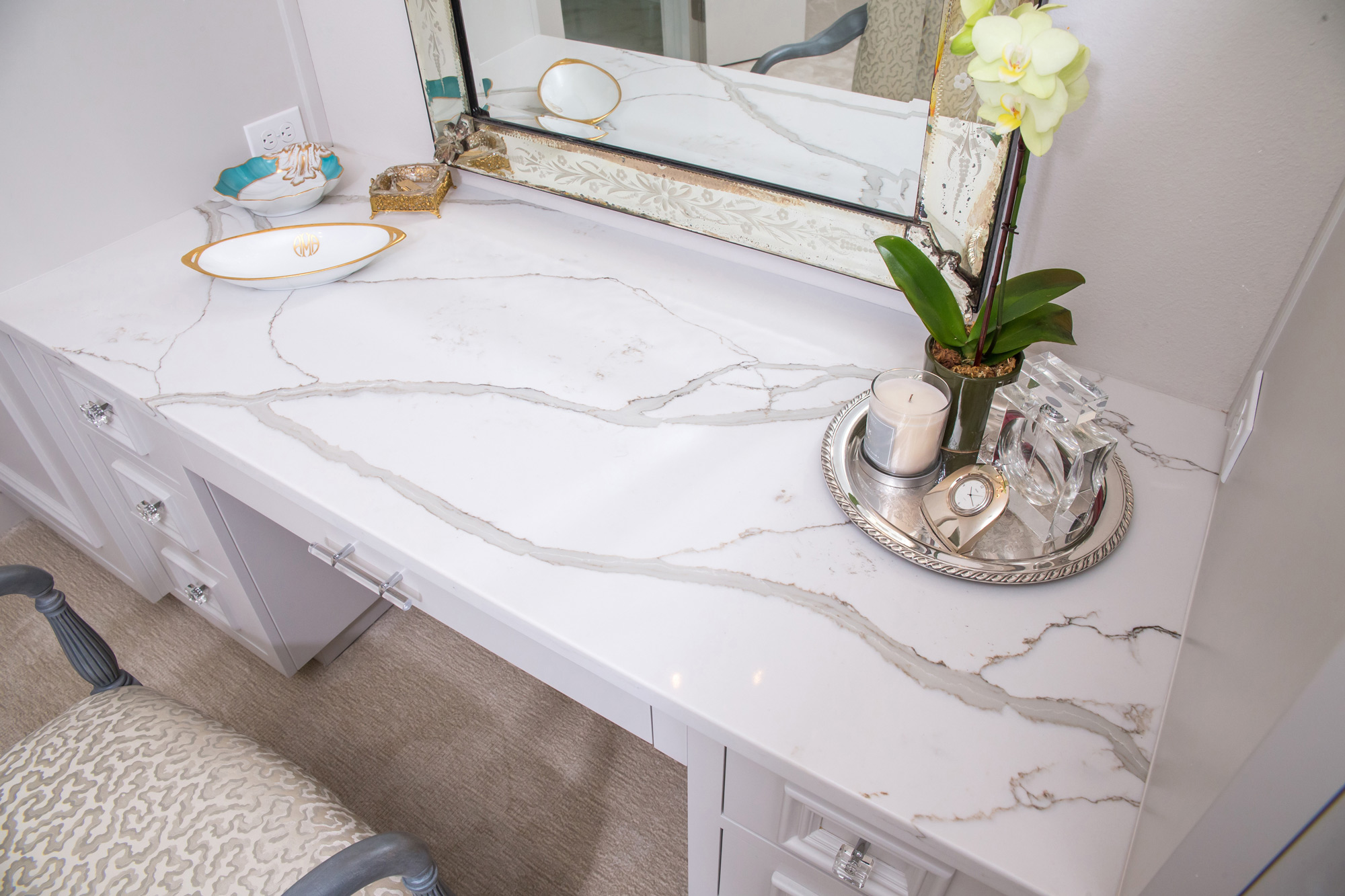
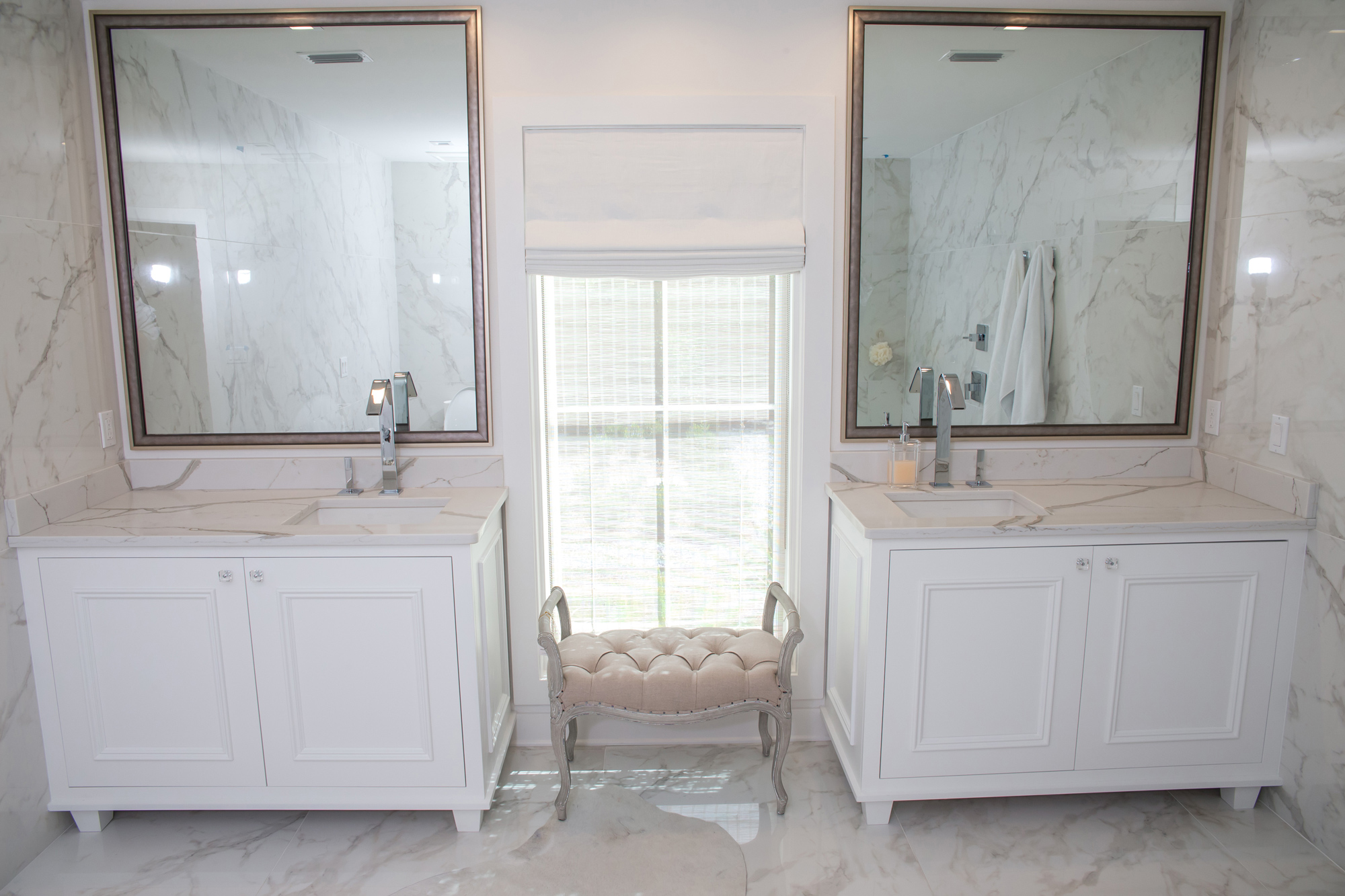
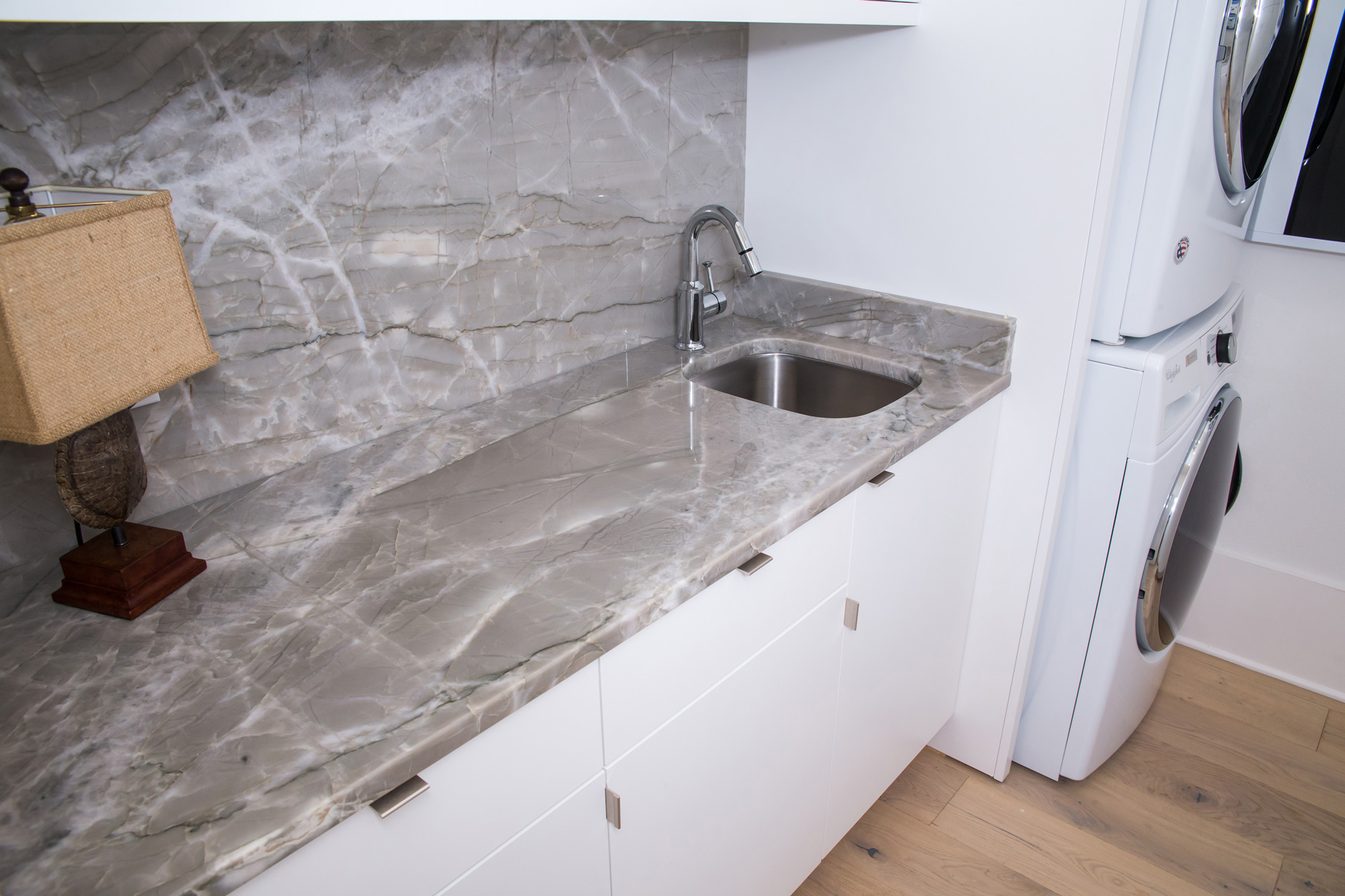
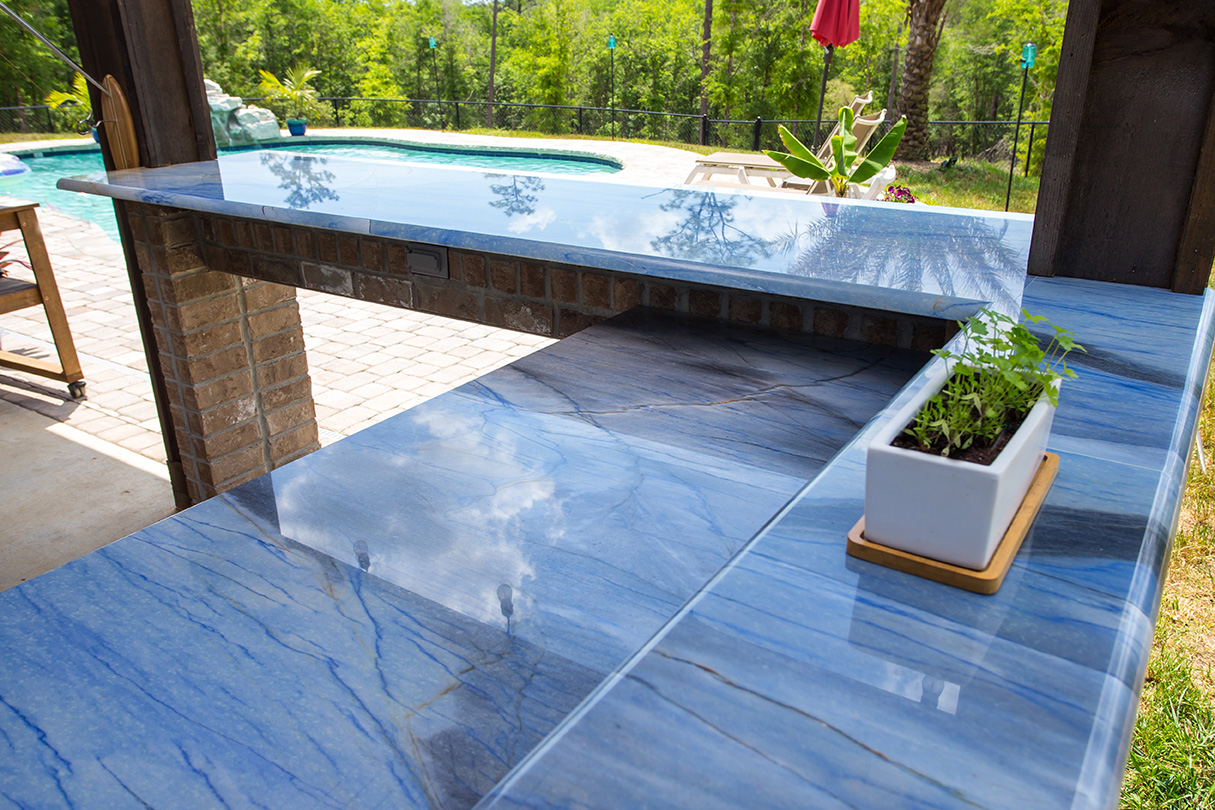
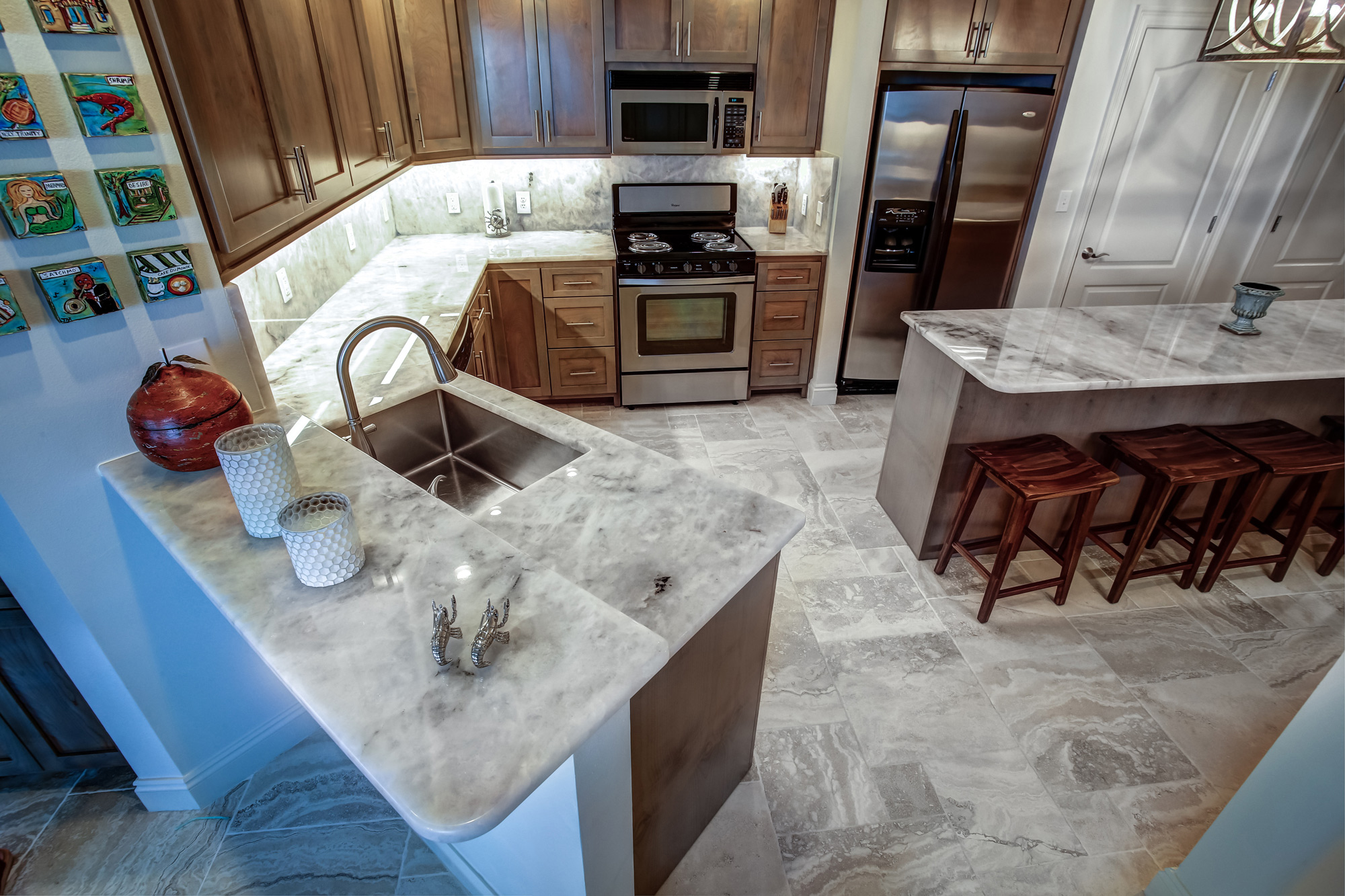
Marble is a natural stone countertop with one-of-a-kind veining and a cool, smooth feel. It’s also softer and more porous than granite. That’s why it needs more care. Without it, marble stains, scratches, and etches more easily.
Marble forms from metamorphic rock. On the Mohs hardness scale, it rates about 3. Granite sits around 6 to 6.5. So a knife, a heavy pan, or a splash of lemon juice can damage marble more easily.
Here’s the trade-off in plain terms:
- What people love: unique veining, a wide range of colors, and a classic, high-end look.
- What to watch for: stains, acid etching, scratches, and chips.
Marble also changes with age. It can develop a light patina that gives it an aged, antique look. Some people love that. Others don’t. Decide which camp you’re in before you buy.
How to Care for Marble Countertops Every Day: A 5-Step Method
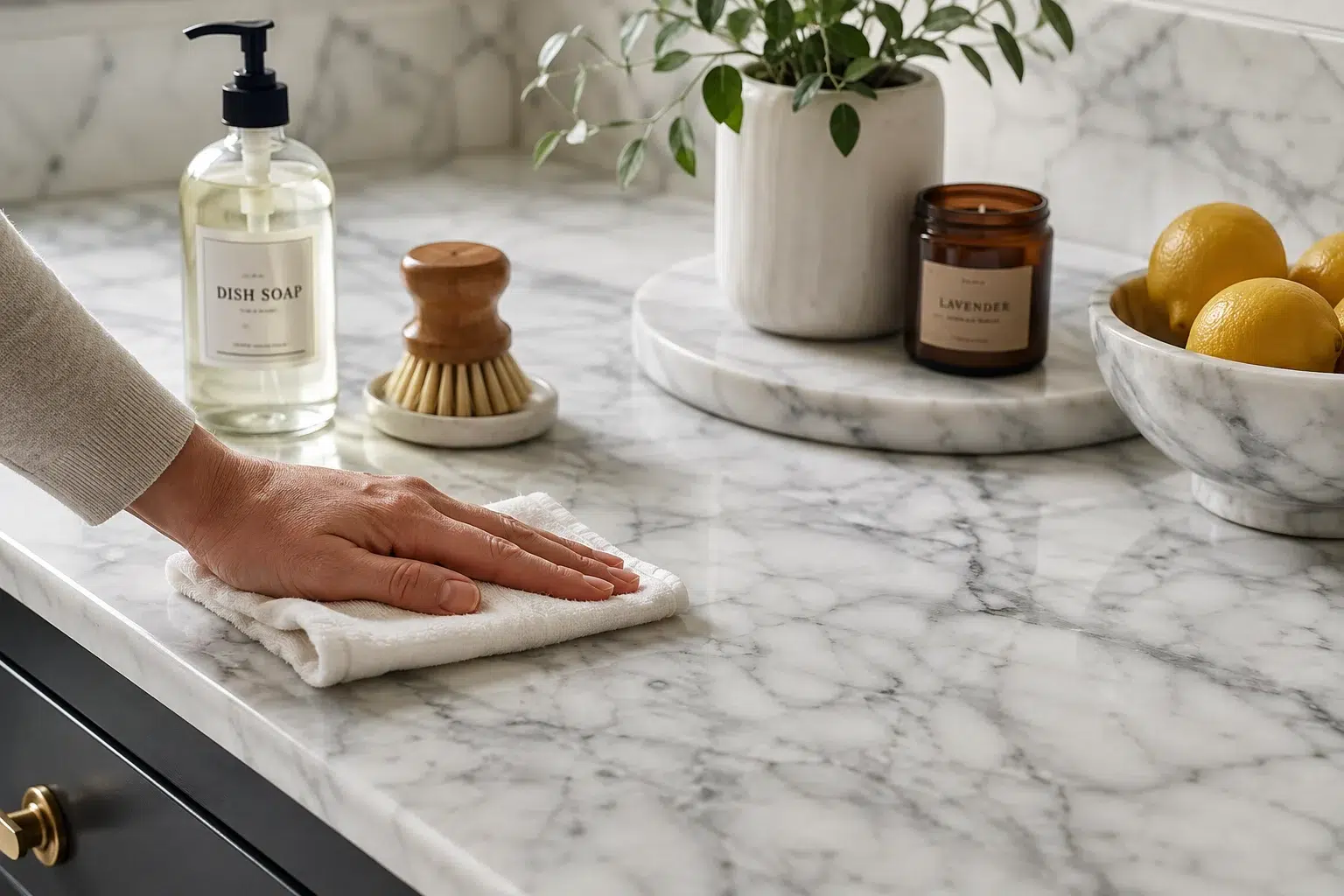
Daily marble care takes about a minute. Wipe up spills right away, clean with warm soapy water and a microfiber cloth, dry the surface, and skip harsh cleaners. That simple routine does most of the work.
Here’s the five-step method:
- Wipe spills fast. Acidic ones matter most: lemon juice, tomato sauce, and wine.
- Mix warm, soapy water. Plain dish soap works. Pick one without a citrus scent or essential oils.
- Wipe with a microfiber cloth. Keep a gentle touch. No scrubbing.
- Dry the surface. A soft, clean cloth is enough, and drying can help prevent water spots.
- Skip the harsh stuff. No bleach, ammonia, vinegar, or abrasive pads.
Prefer a spray? Choose carefully. Here’s what’s safe and what to avoid.
| Safe to use | Skip these |
| Warm, soapy water (no citrus or essential oils) | Bleach |
| Method Granite & Marble Cleaner | Ammonia |
| Pledge Multi-Surface (non-citrus) | Vinegar |
| Ammonia-free glass cleaner | Citrus and essential oil cleaners |
| Soft microfiber cloth | Scouring pads, Brillo, and S.O.S. pads |
Why Does Marble Etch, and Can You Prevent It?
Marble etches when acid touches the surface. Lemon juice, tomato sauce, and wine can all do it. Alcohol, essential oils, and citrus extracts can too. You can’t make marble etch-proof, but wiping up spills fast gives you the best protection.
So what’s an etch? It’s a dull spot where acid has eaten into the surface. A stain is different. That’s a mark from a liquid that soaked into the stone. A sealer helps with stains. But it won’t stop an etch.
Here’s what usually causes trouble:
- Lemon, lime, and other citrus
- Tomato sauce and ketchup
- Wine and cocktails
- Essential oils and some cleaners
Use coasters. Wipe up splashes the moment they happen. Surface etching after installation isn’t something we’re responsible for, so catching spills fast really does matter.
Finish can change how visible etching looks, so ask your sales associate about finish options for your marble. And if an etch does show up, ask your fabricator or a stone pro what fits your stone. Harsh fixes can make it worse.
How Do You Seal Marble Countertops?
Marble needs sealing about twice a year. Sealer fills the stone’s tiny pores so liquids can’t soak in as easily. It helps stop stains. It won’t stop etching, so you still need to wipe up acids fast.
Sealing is a big part of how to care for marble countertops. Here’s the method:
- Clean the counter well. Use warm, soapy water.
- Let it dry fully. Don’t seal a damp surface.
- Put the sealer on a soft, dry cloth. Use a sealant from us or a silicone impregnator.
- Wipe it onto the counter. A little goes a long way.
- Wait 10 minutes. Then wipe off the extra with a dry cloth.
The stone takes in what it needs, and you wipe away the rest. Plan to repeat this about every six months. Marking a date on your calendar makes it easy to remember.
How Do You Remove Stains From Marble?
Start gently. For many stains, a safe method like baking soda and hydrogen peroxide can help. Test a small, hidden spot first, and don’t scrub hard. Skip bleach, ammonia, and abrasive pads, since they can damage the stone. Go slowly, and give it time.
Remember the difference. A stain sits in the stone. An etch is a dull patch where acid has worn the surface. Baking soda and peroxide are for stains. They usually won’t fix an etch.
What if a stain is old or deep? Ask a stone pro before you try anything stronger. It’s easier to get help early than to fix a mistake later.
How Do You Protect Marble From Heat, Scratches, and Chips?
Use a trivet or hot pad under anything hot, a cutting board for every cut, and a gentle hand with heavy pots. Marble scratches more easily than granite, and a hard hit can chip or crack it.
A few habits go a long way:
- Heat: Set pots, pans, and baking dishes on a trivet or hot pad. Don’t put hot items straight from the oven, stove, or grill onto marble.
- Cutting: Don’t cut directly on the stone. It can scratch or damage the surface. Want the full story? Read our guide on Are Stone Countertops Safe for Cutting? A Complete Guide.
- Heavy items: Lift, don’t drag. A dropped cast iron pan can chip or crack marble.
- Finish: Scratches can show more on high-gloss finishes.
Is Marble Worth It for Your Kitchen or Bathroom?
Marble is worth it if you love the look and you’re okay with a little care. It’s a great fit for bathrooms and low-traffic spots. In a busy kitchen, it asks for more attention. So think about how you live before you decide.
Here’s how the pros and cons stack up.
Pros
- Unmatched beauty, with a wide range of colors and veining
- A light patina over time, which some people love
- A classic, high-end look
Cons
- Needs more care than most countertops
- Stains unless it’s sealed and cleaned well
- Scratches more easily than granite
- Etches from acids like lemon juice, tomato sauce, and wine
- Costs more than most countertops
Do you cook a lot? Do you have kids who spill? If so, a harder stone may suit you better. Dolomite gives you the veined look of marble with more resistance to scratching and etching. You can also compare our natural stone options side by side.
Superior Granite is a family-owned company with showrooms in Pensacola, Pace, and Fort Walton Beach. We sell, fabricate, and install natural stone and quartz for homes and businesses. If you’re looking at marble countertops in Pensacola, come see the slabs in person. Our dedicated staff can help you decide if marble fits your space.
Need Help With Your Marble Countertops?
Knowing how to care for marble countertops makes owning them much easier. Clean gently, seal twice a year, wipe up acids fast, and protect the stone from heat and knives. That’s the whole routine.
Superior Granite is a family-owned company with showrooms in Pensacola, Pace, and Fort Walton Beach. We help homeowners and businesses across the area choose, fabricate, and install natural stone and quartz. Want to see marble up close or ask about sealing? Visit Superior Granite or contact us to ask for a free estimate.
Pensacola, FL
Visit Us: 7011 Pine Forest Road, Pensacola, FL 32526
Call Us: (850) 941-0270
Hours: Monday – Friday: 8 a.m. – 5 p.m., Saturday: 9 a.m. – 2 p.m.
Pace, FL
Visit Us: 4590 Jernigan Road, Pace, Florida 32571
Call Us: (850) 994-1872
Hours: Tuesday – Friday: 9 a.m. – 5 p.m., Saturday: 9 a.m. – 2 p.m.
Fort Walton Beach, FL
Visit Us: 35 Miracle Strip Pkwy SW, Fort Walton Beach, Florida 32548
Call Us: (850) 301-0716
Hours: Tuesday – Friday: 8 a.m. – 5 p.m., Saturday: 9 a.m. – 2 p.m.
Get quotes now and start your project!
FAQs
1. How often should I seal marble countertops?
Seal marble about twice a year. Marble is porous, so regular sealing helps stop stains from soaking in. A sealer won’t stop etching from acids, though, so keep wiping up spills right away.
2. Can I use vinegar or lemon cleaners on marble?
No. Vinegar, citrus, and essential oil cleaners can etch marble. Stick with warm, soapy water, or a cleaner made for granite and marble that has no citrus. Skip bleach, ammonia, and abrasive pads too.
3. What’s the difference between etching and staining?
A stain is a mark from liquid that soaks into the stone. An etch is a dull spot where acid has eaten into the surface. Sealing helps with stains, but it won’t stop etching, so wipe spills up fast.
4. Can I put hot pans on marble?
Use a trivet or hot pad for anything hot. Marble can’t take direct heat the way granite can, so don’t set pots, pans, or baking dishes straight on the surface.
5. Can I cut directly on my marble countertop?
No. Cutting directly on marble can scratch or damage the surface. Always use a cutting board. Marble is softer than granite, so it marks more easily, especially with a high-gloss finish.
6. What should I do right after a spill?
Wipe it up right away, especially anything acidic like lemon juice, tomato sauce, or wine. Use a soft cloth and warm, soapy water. The longer a spill sits, the more likely it’ll stain or etch.
7. Is there a simple routine for how to care for marble countertops?
Yes. Wipe spills fast, clean with warm soapy water, and seal twice a year. Use trivets and cutting boards, and skip harsh cleaners. That short routine covers most of what marble needs day to day.