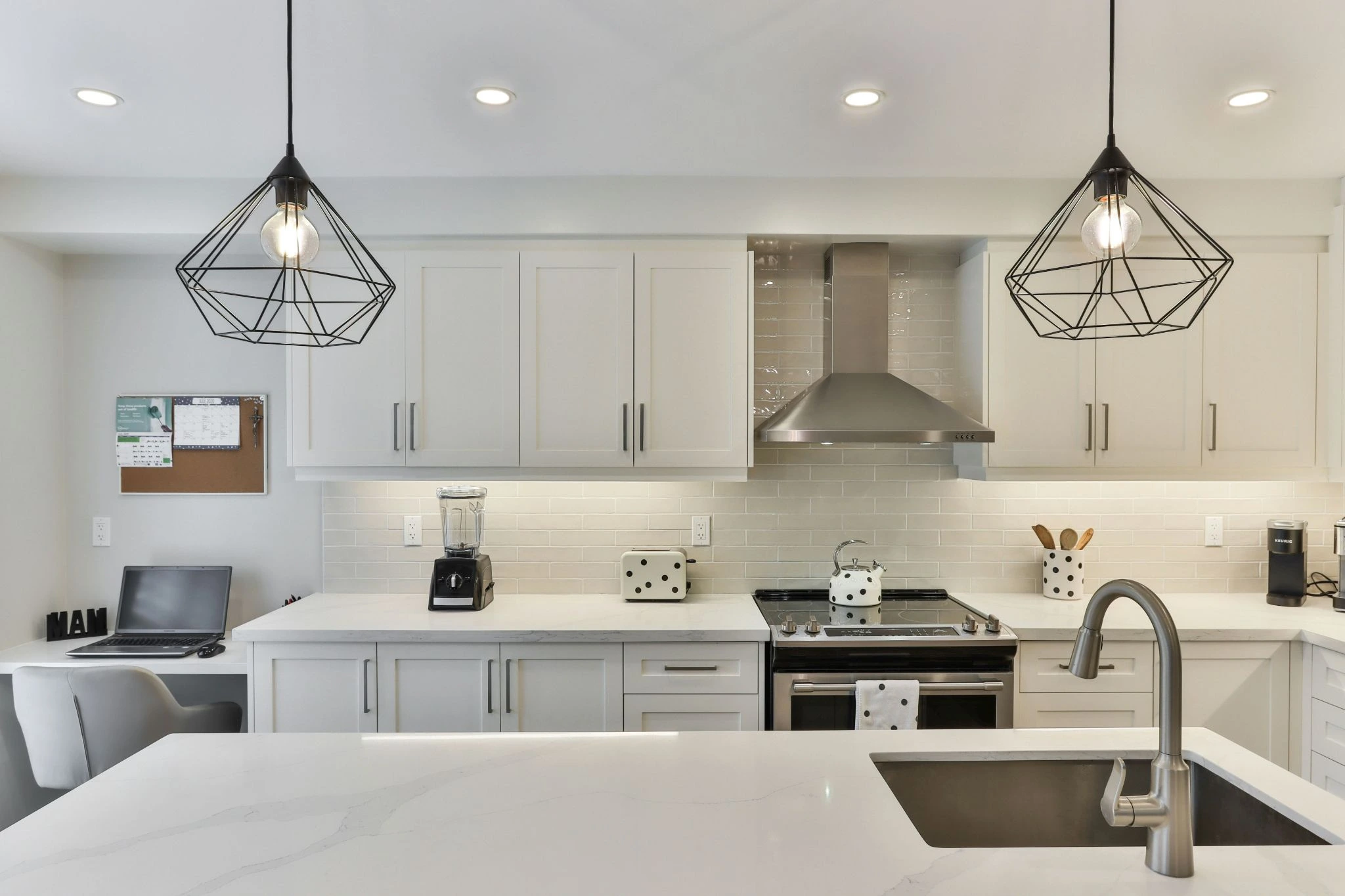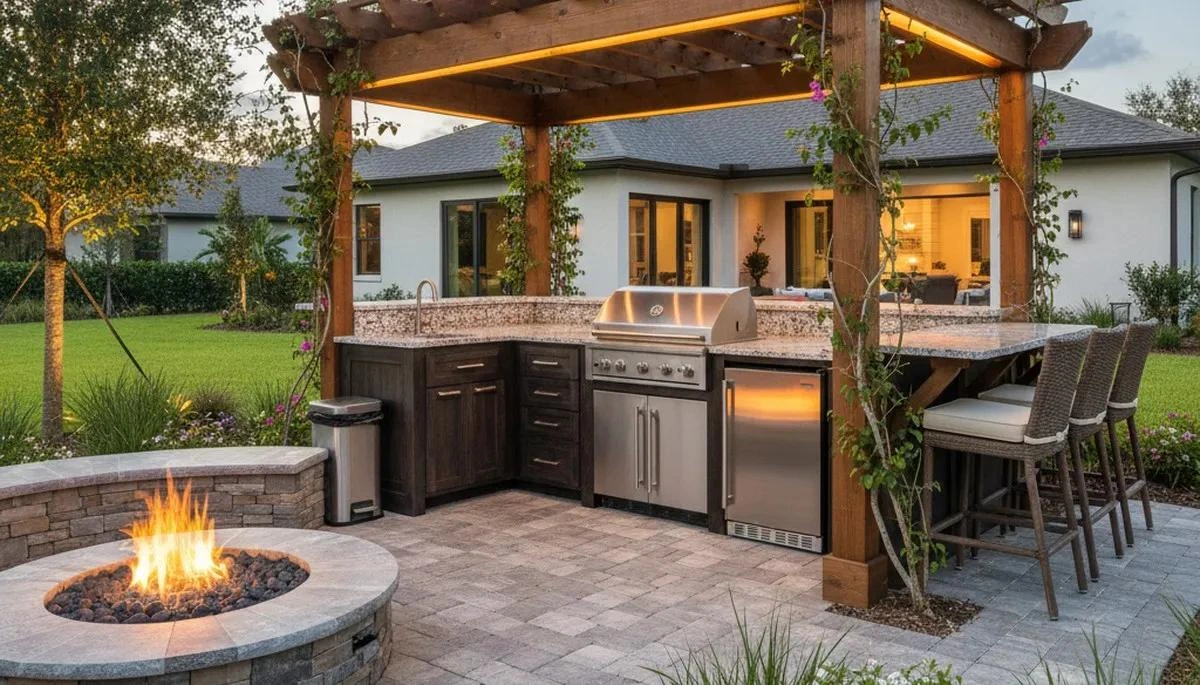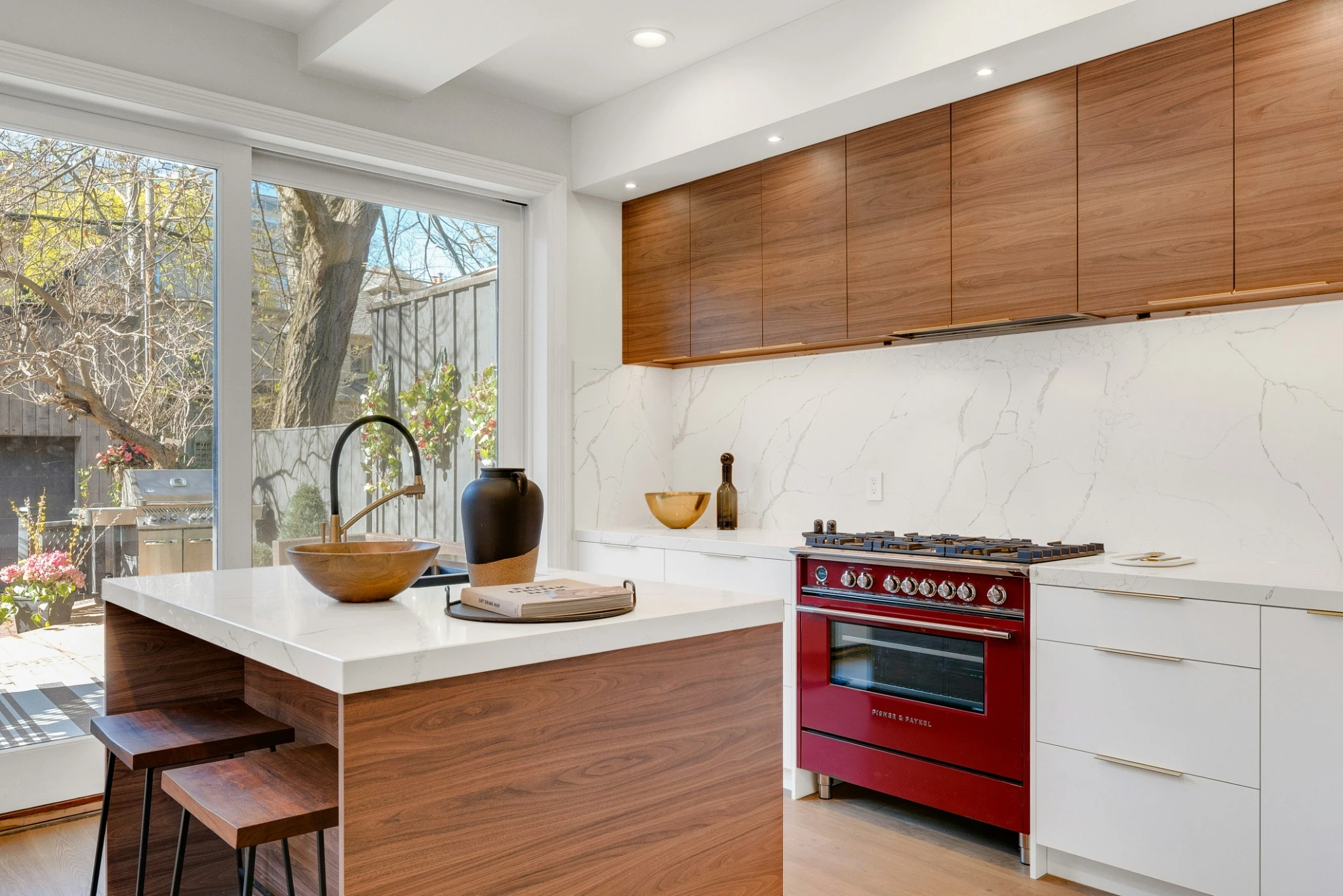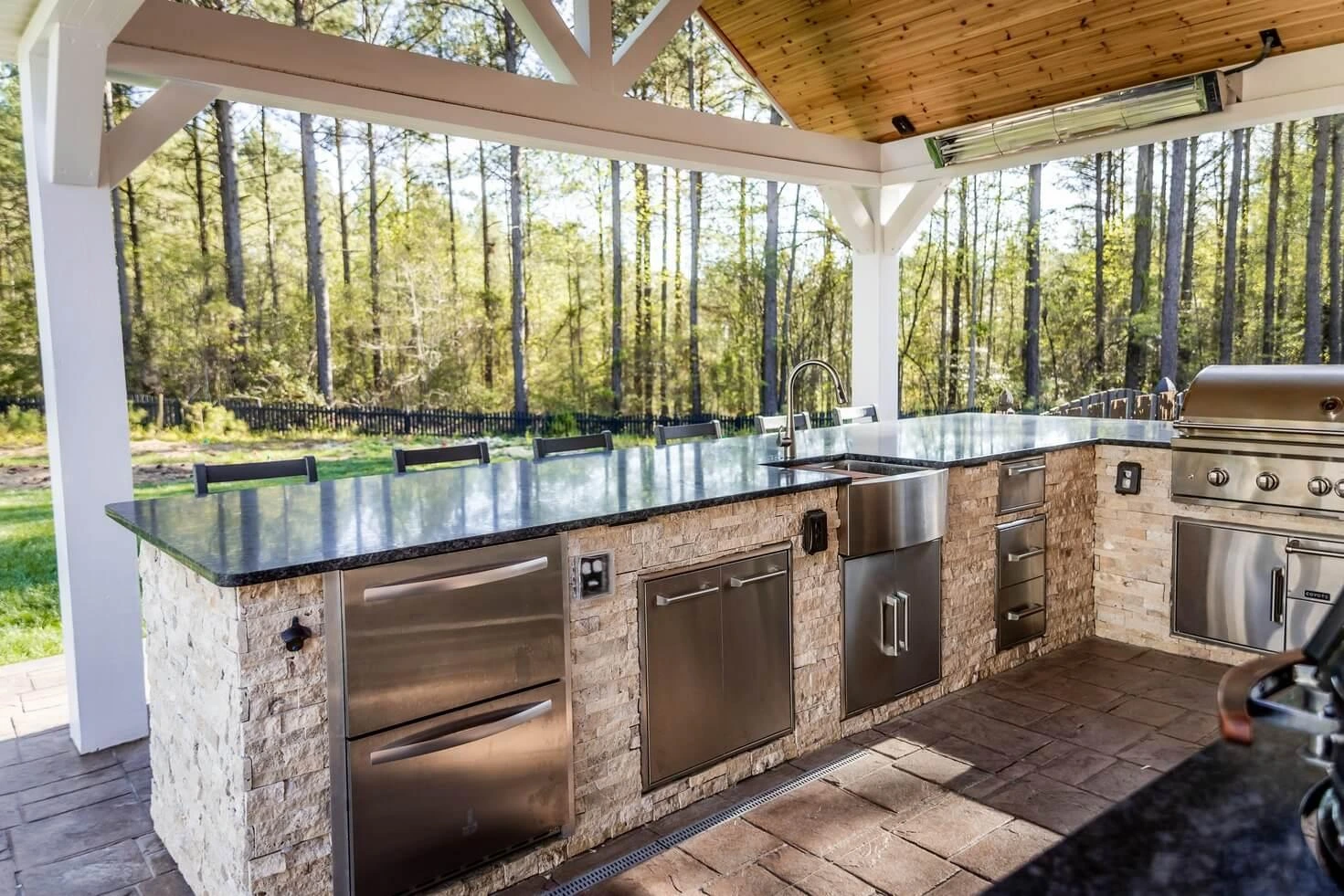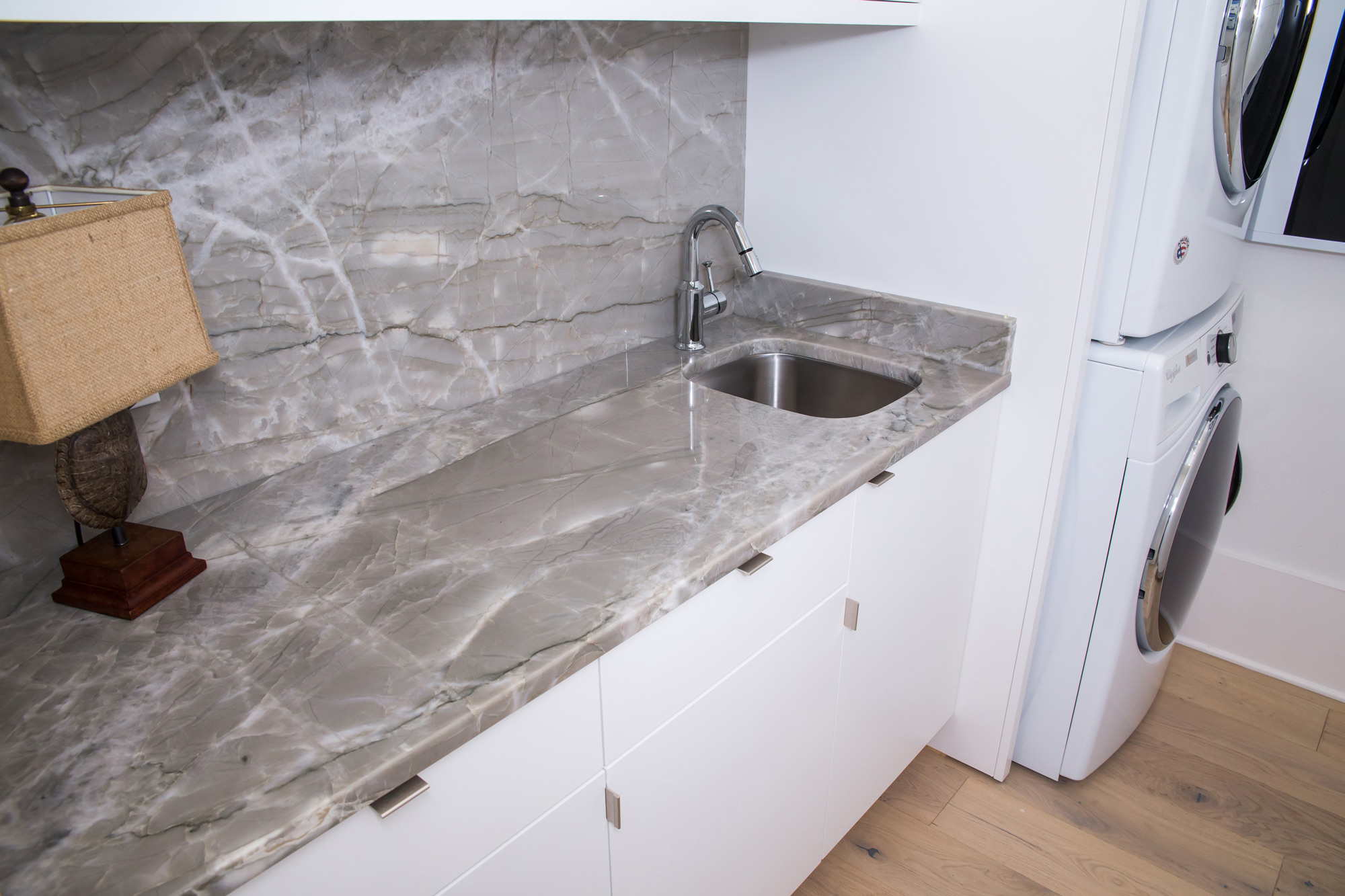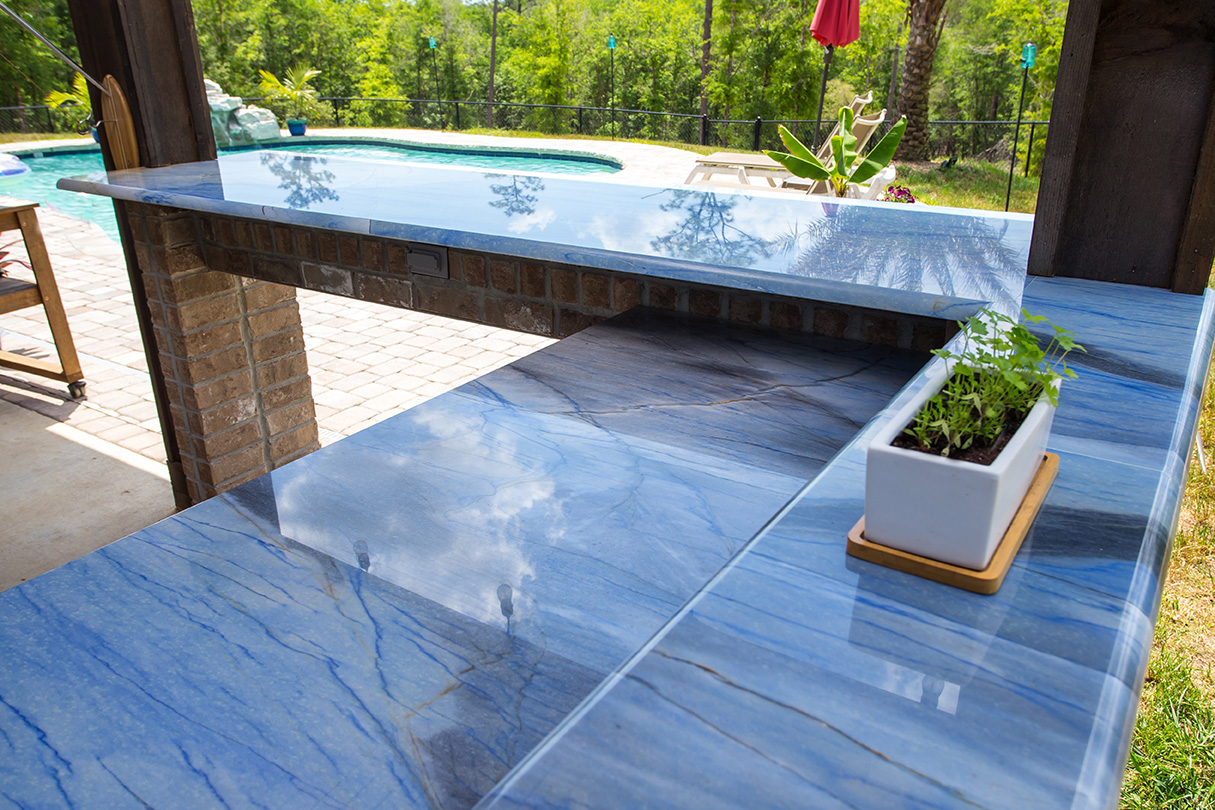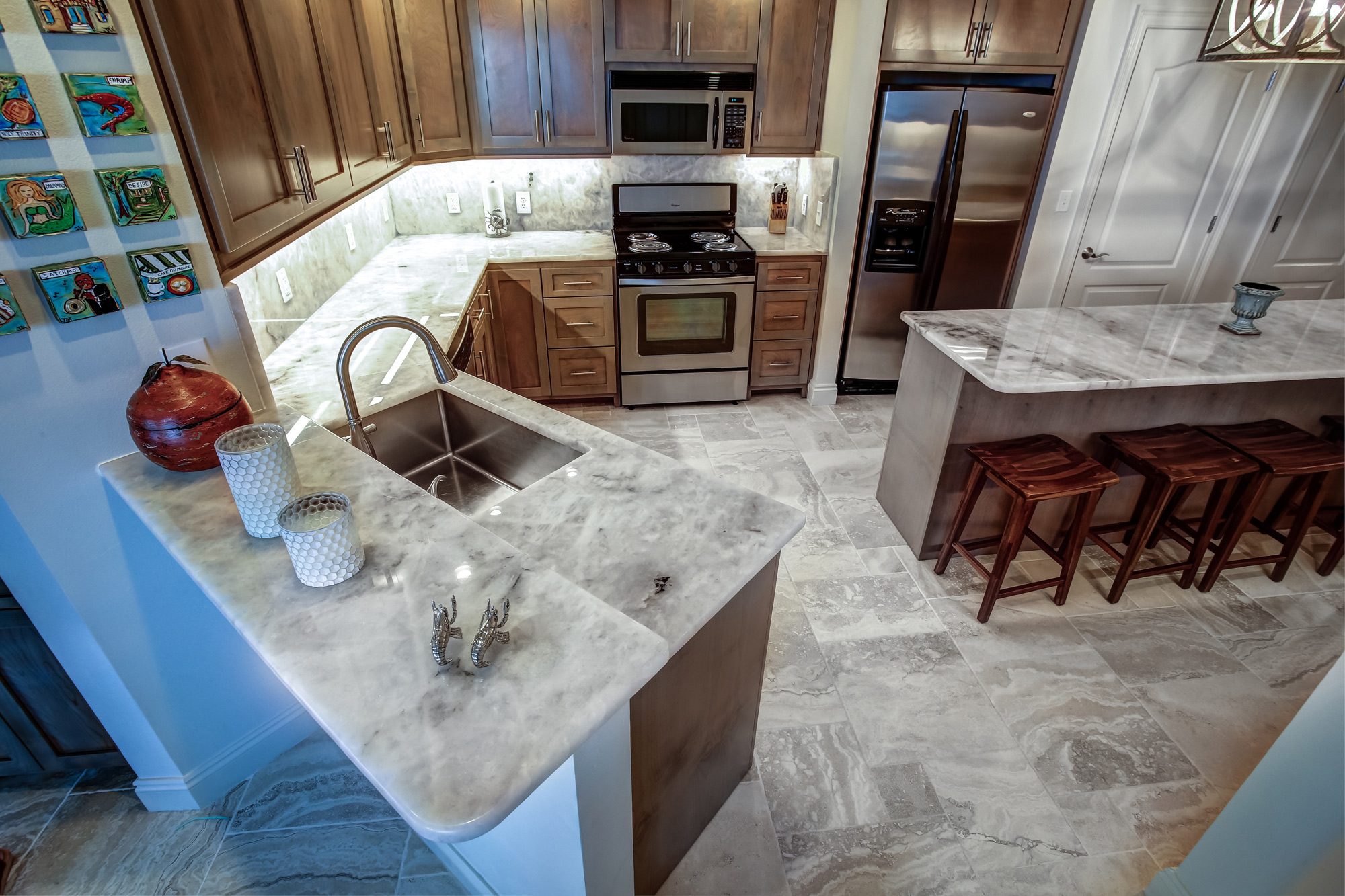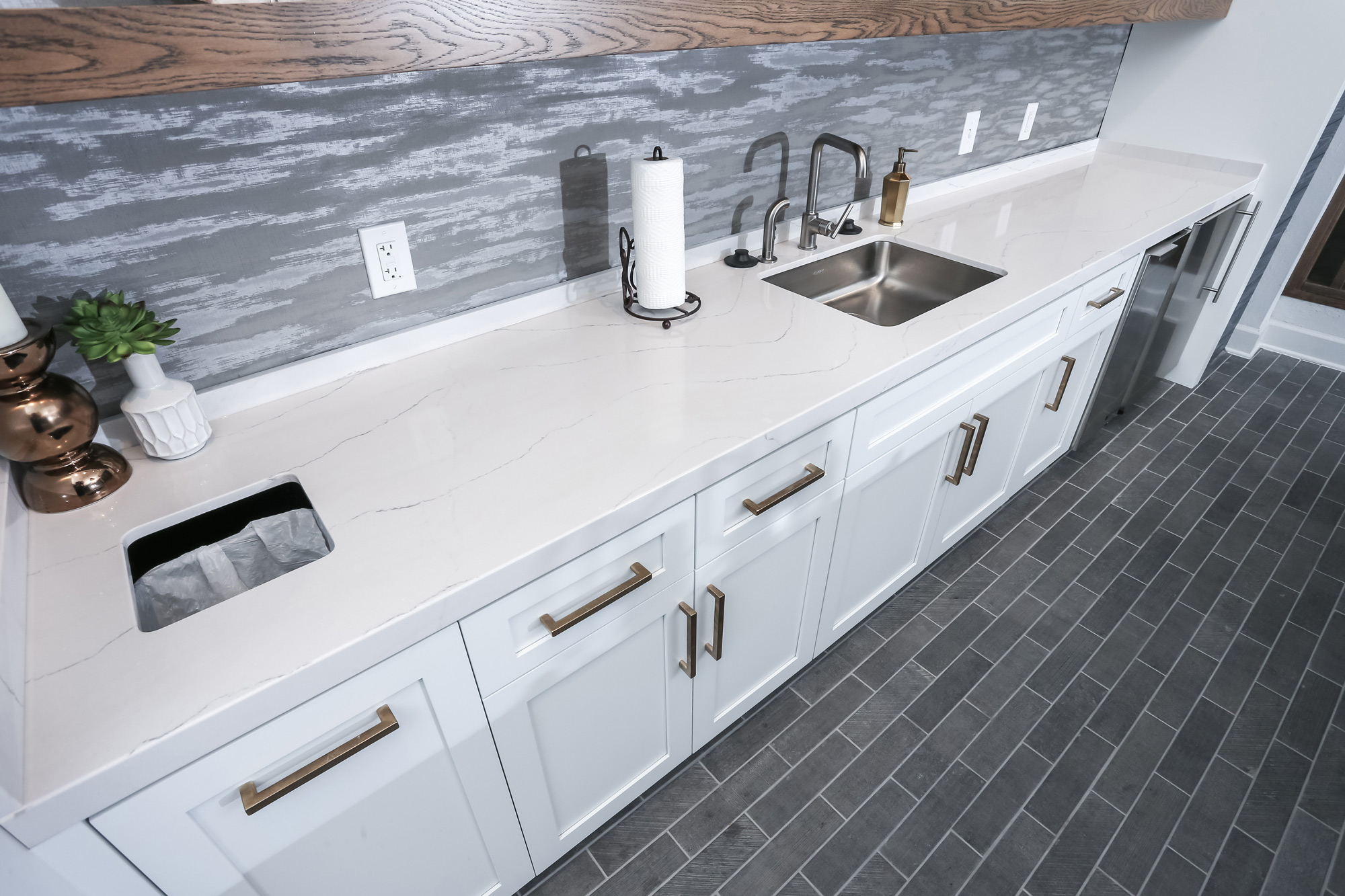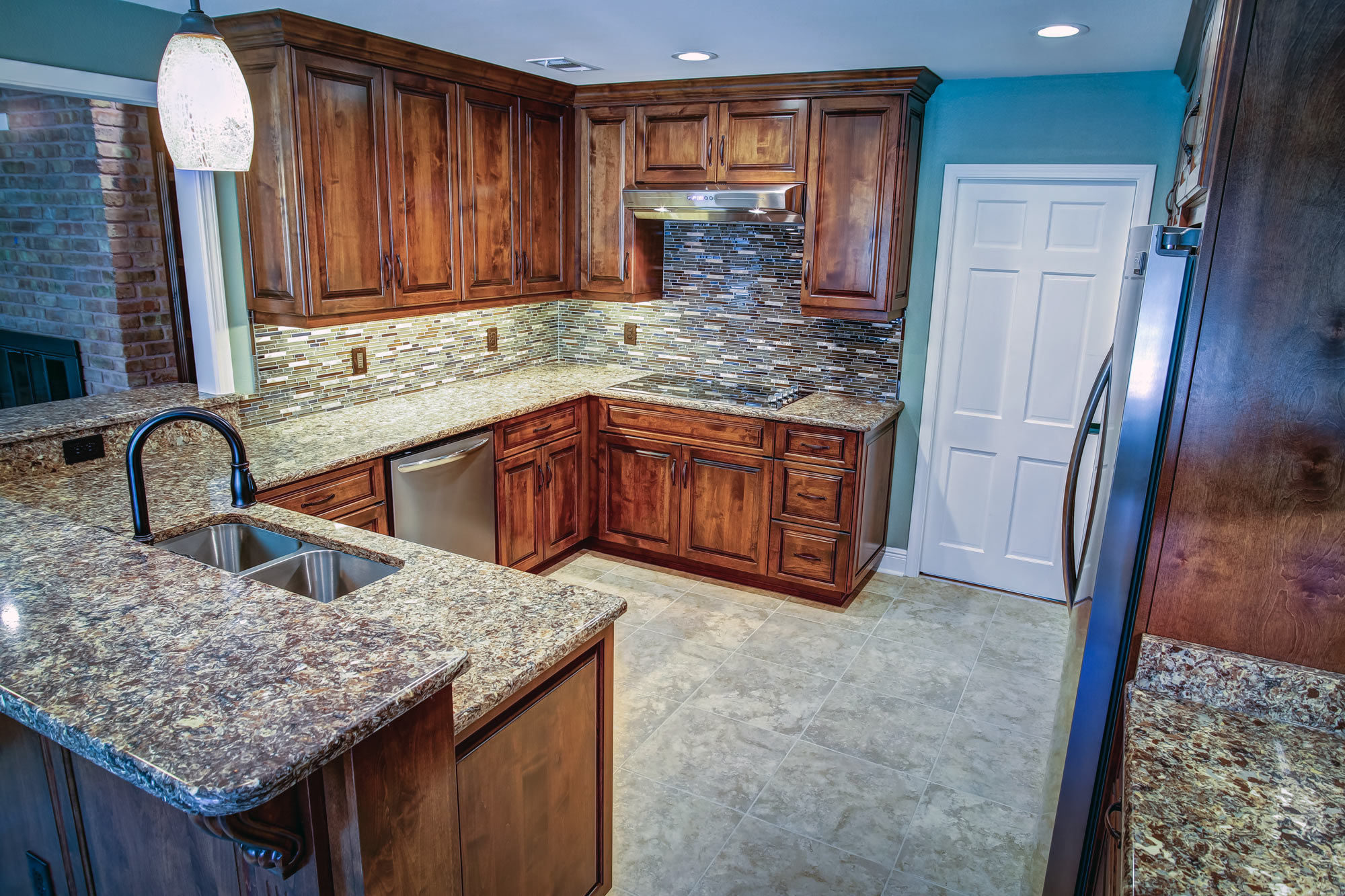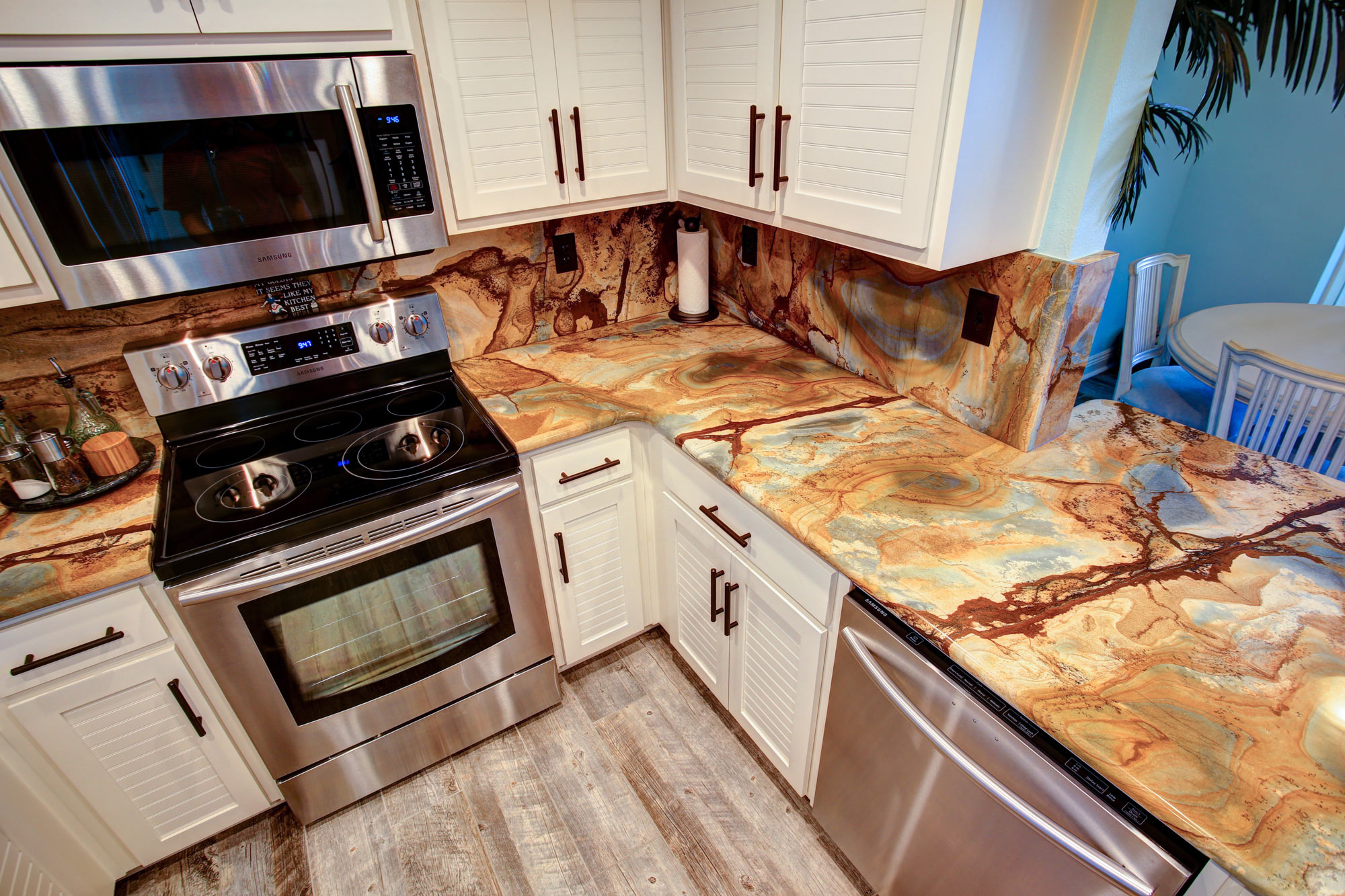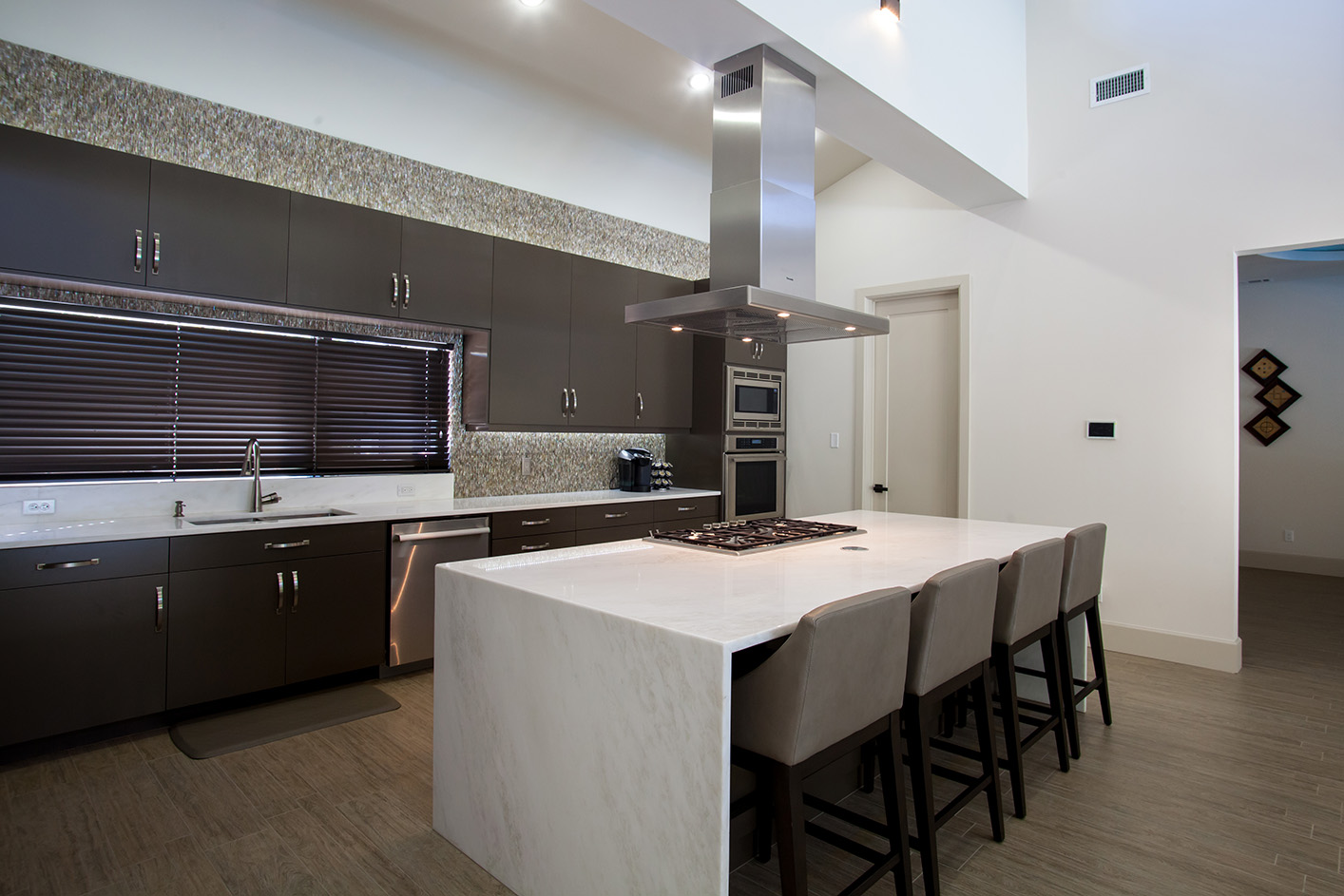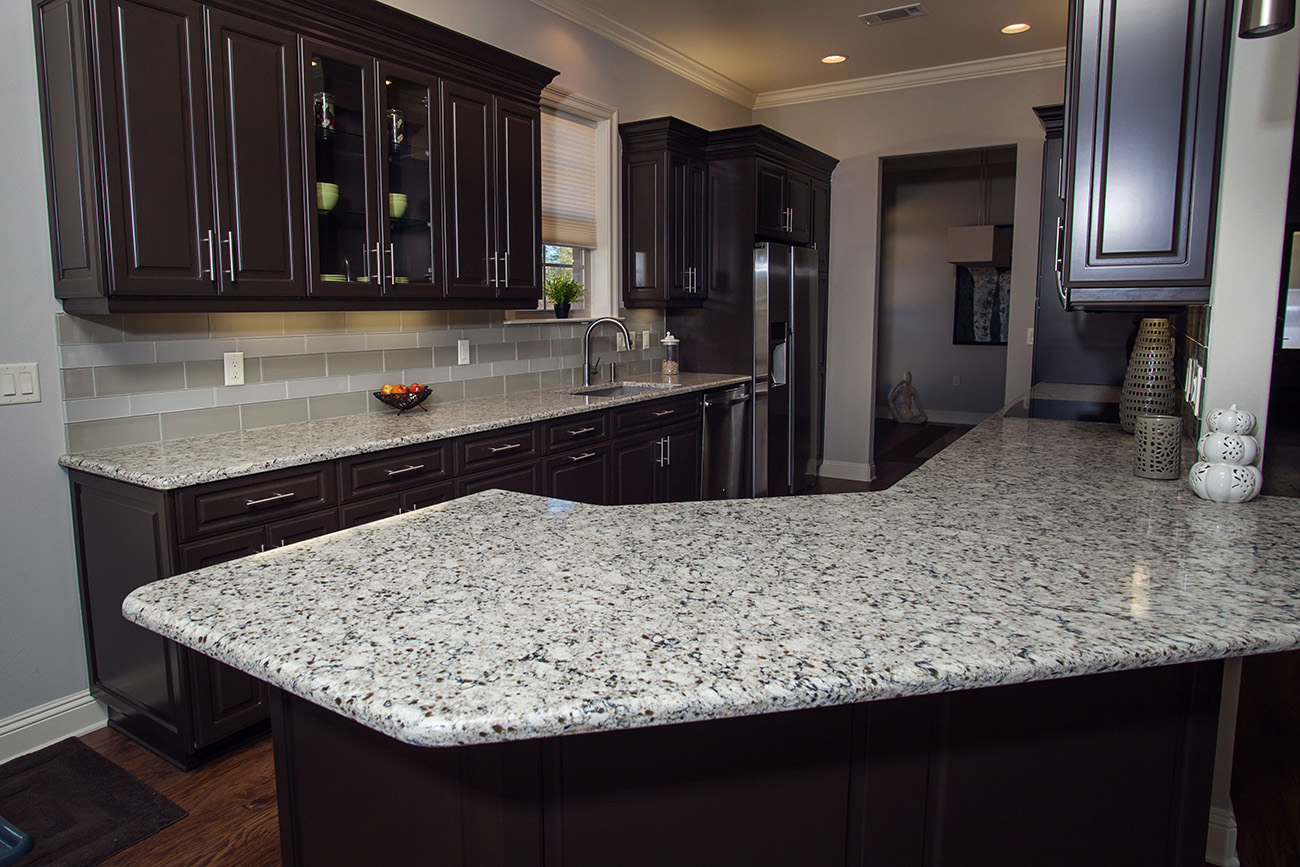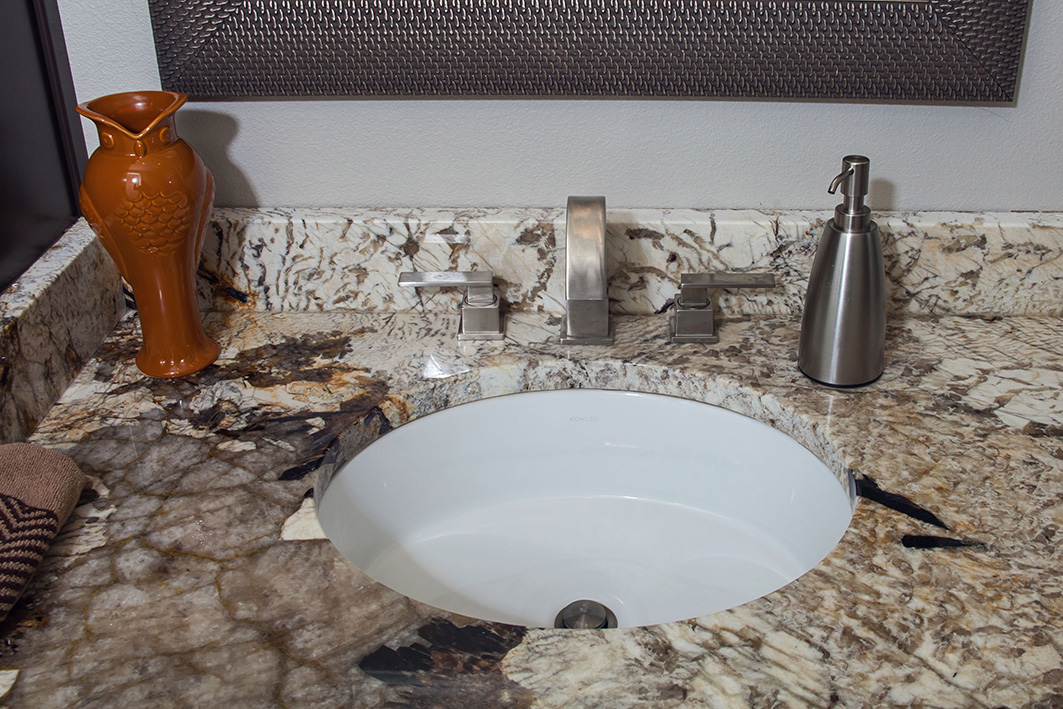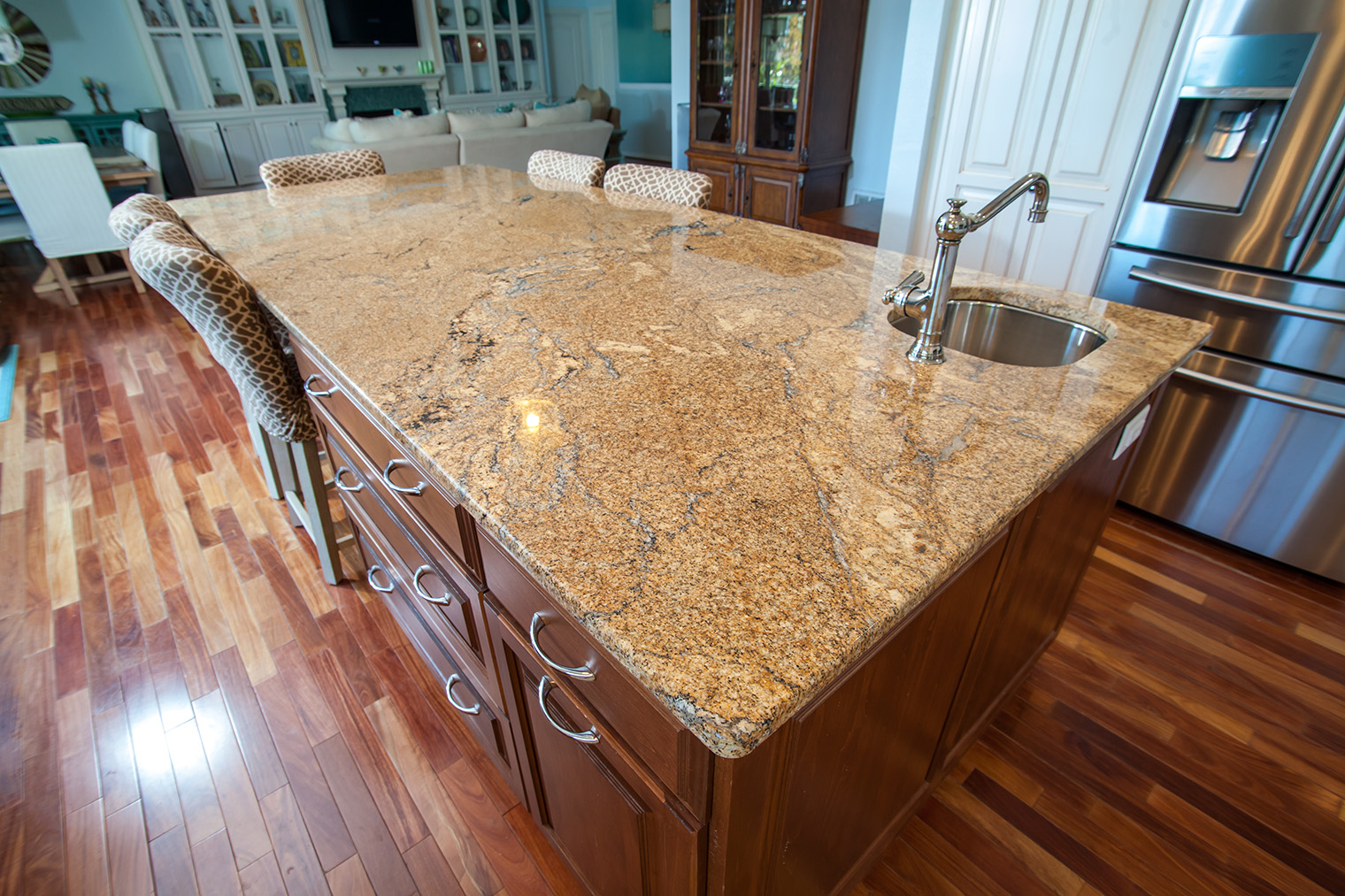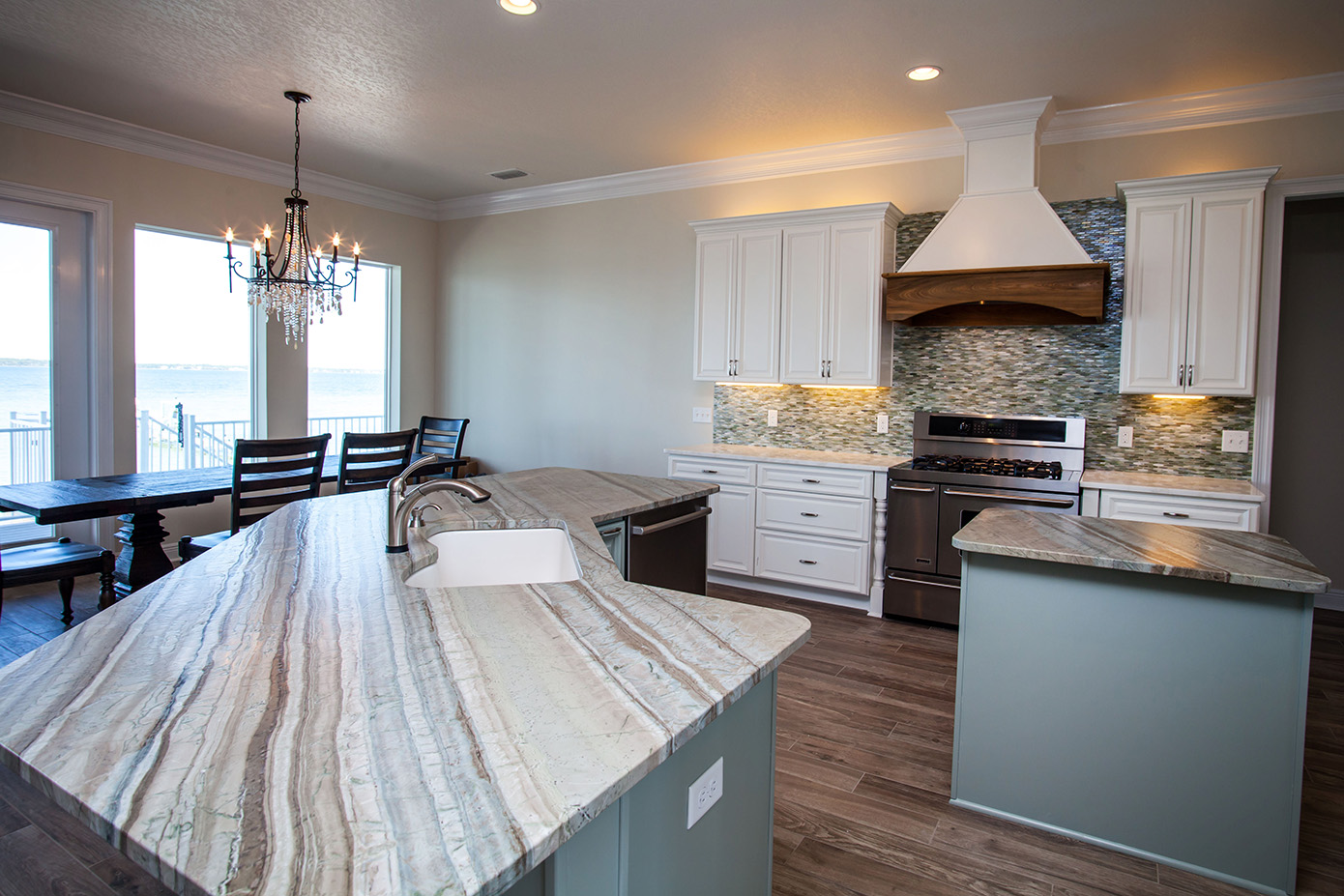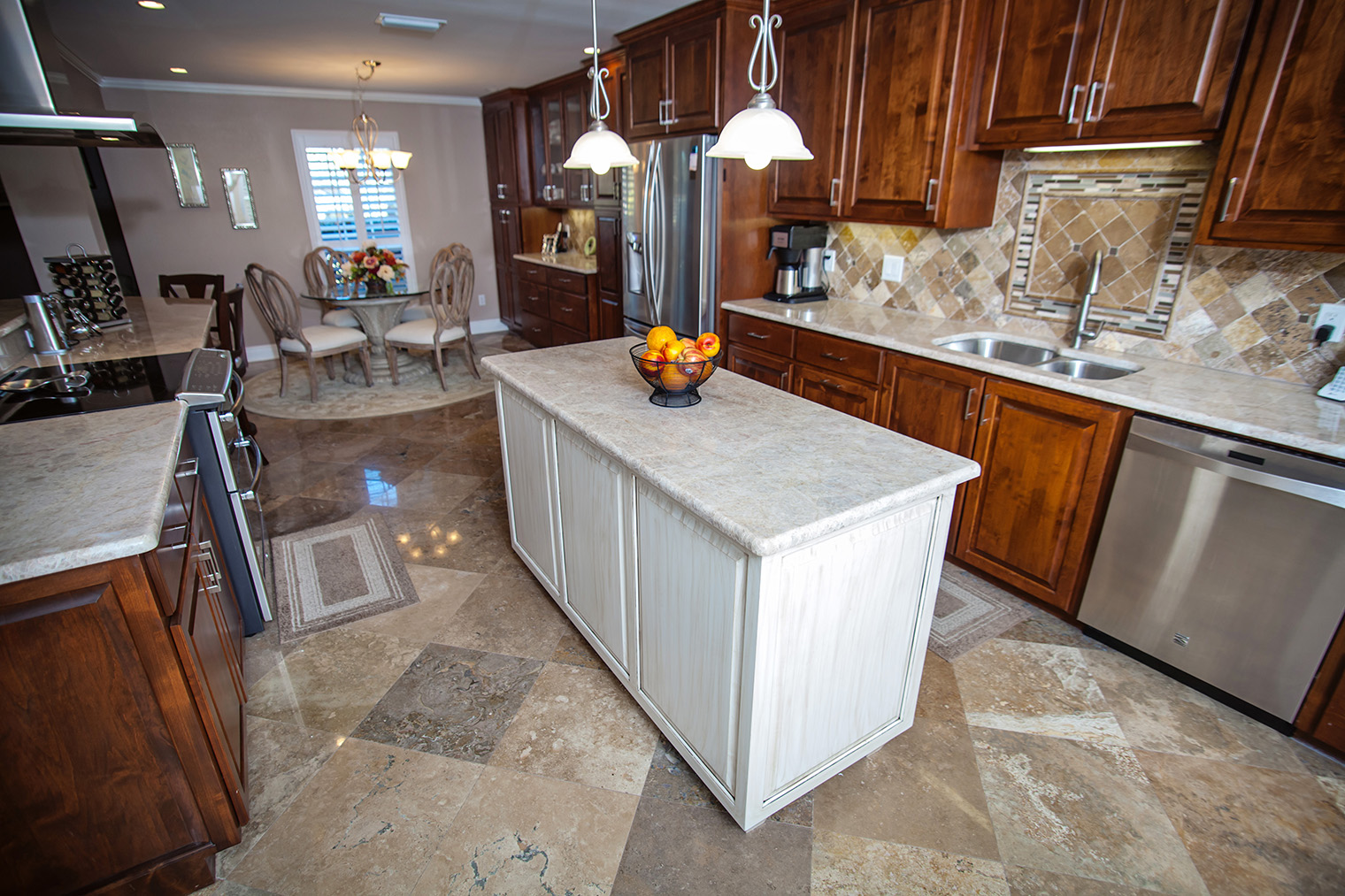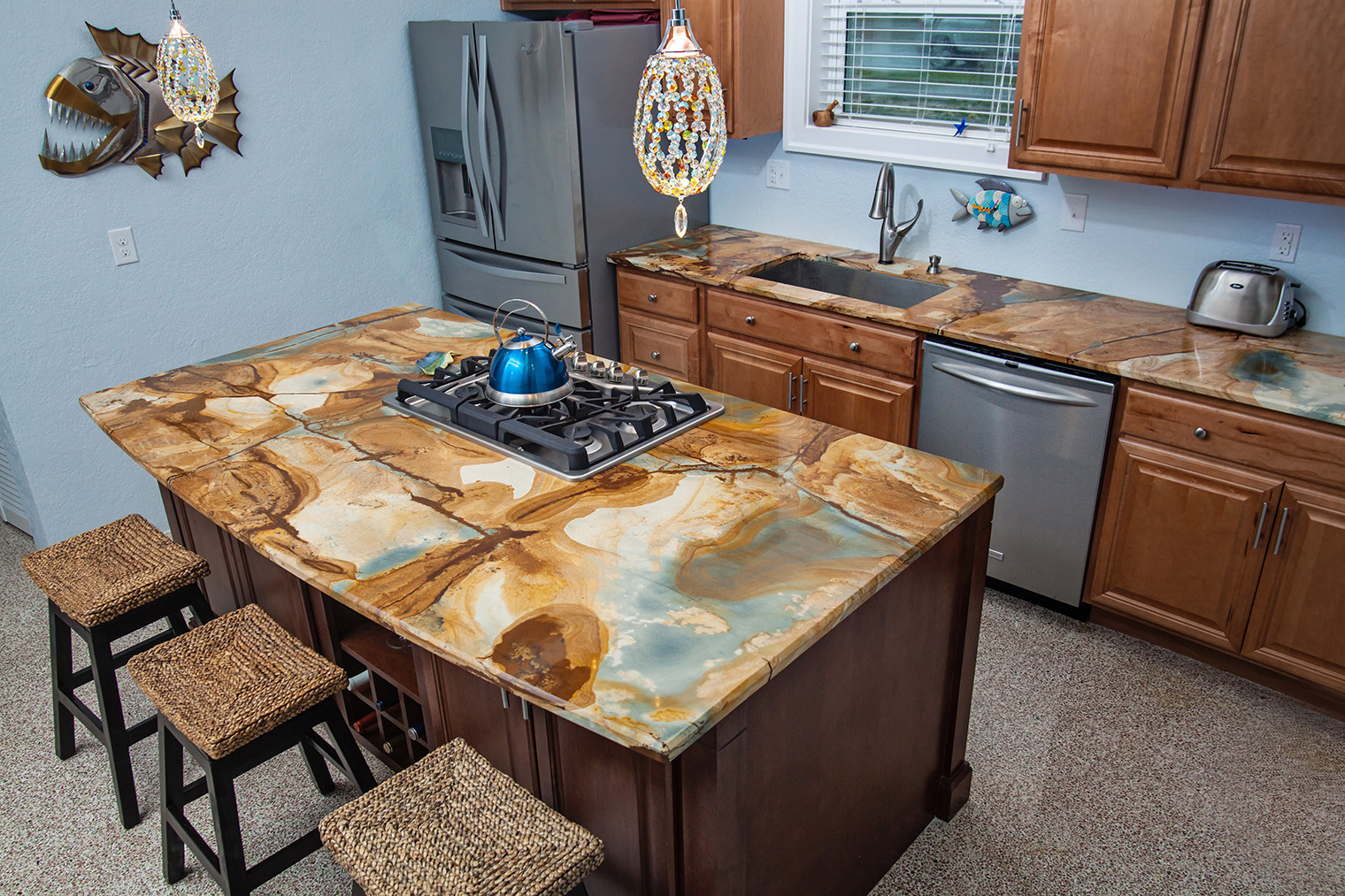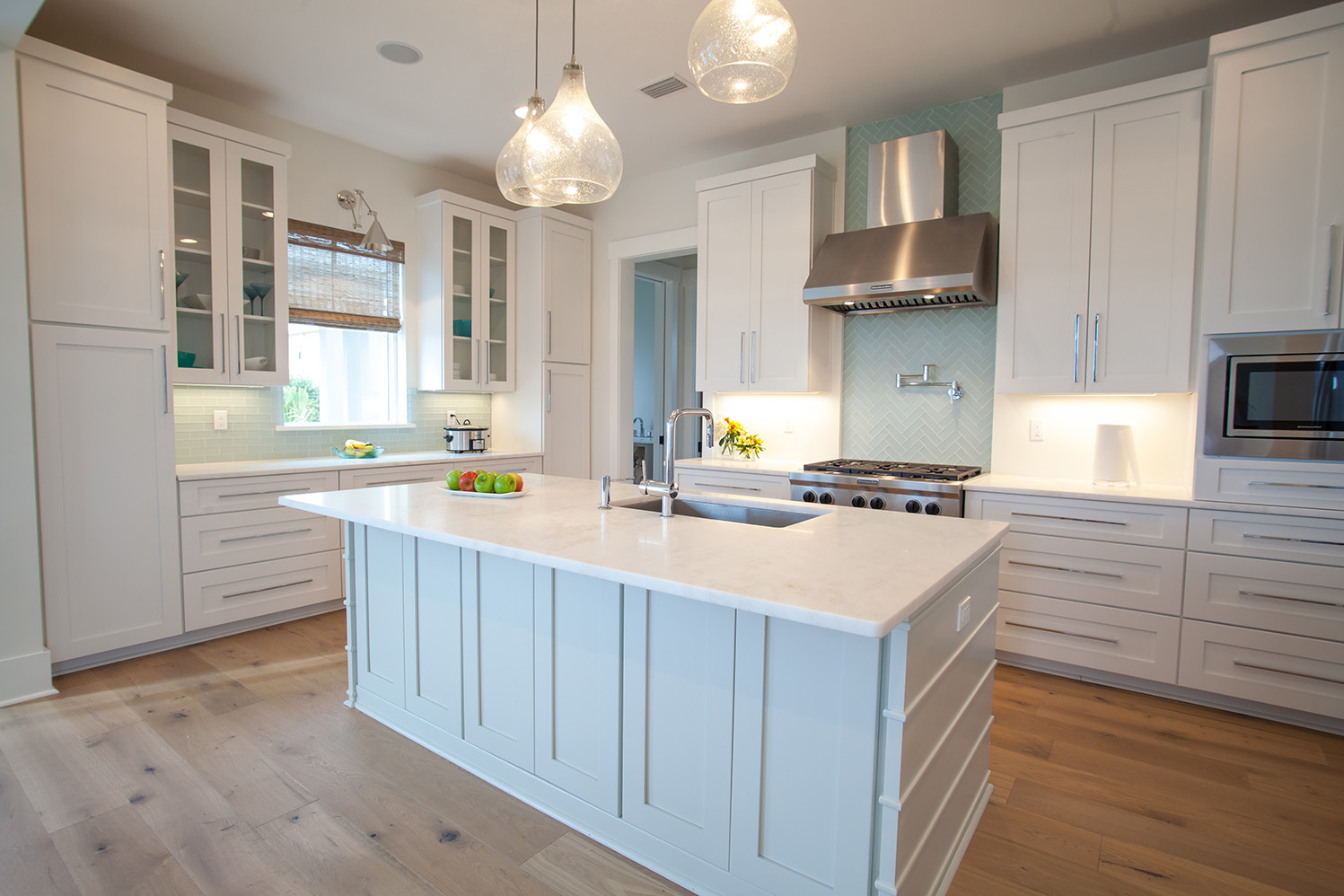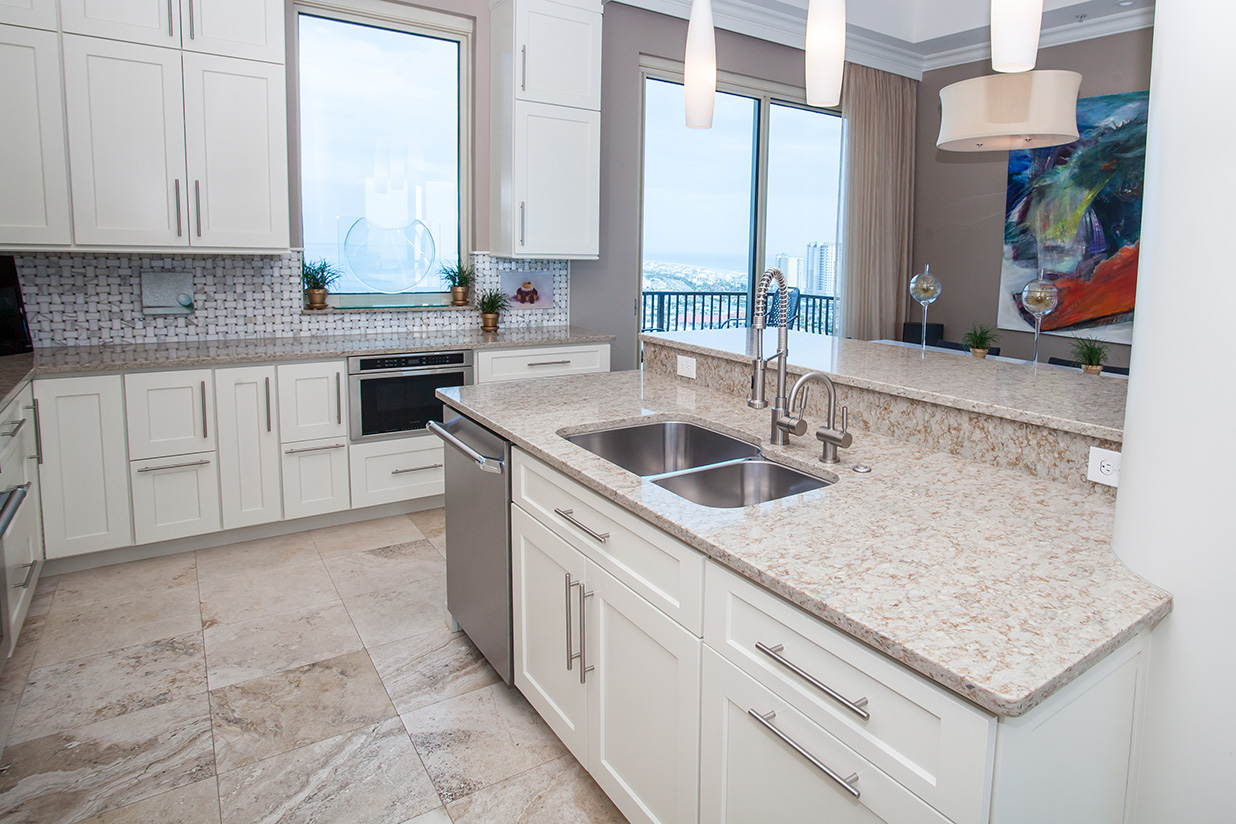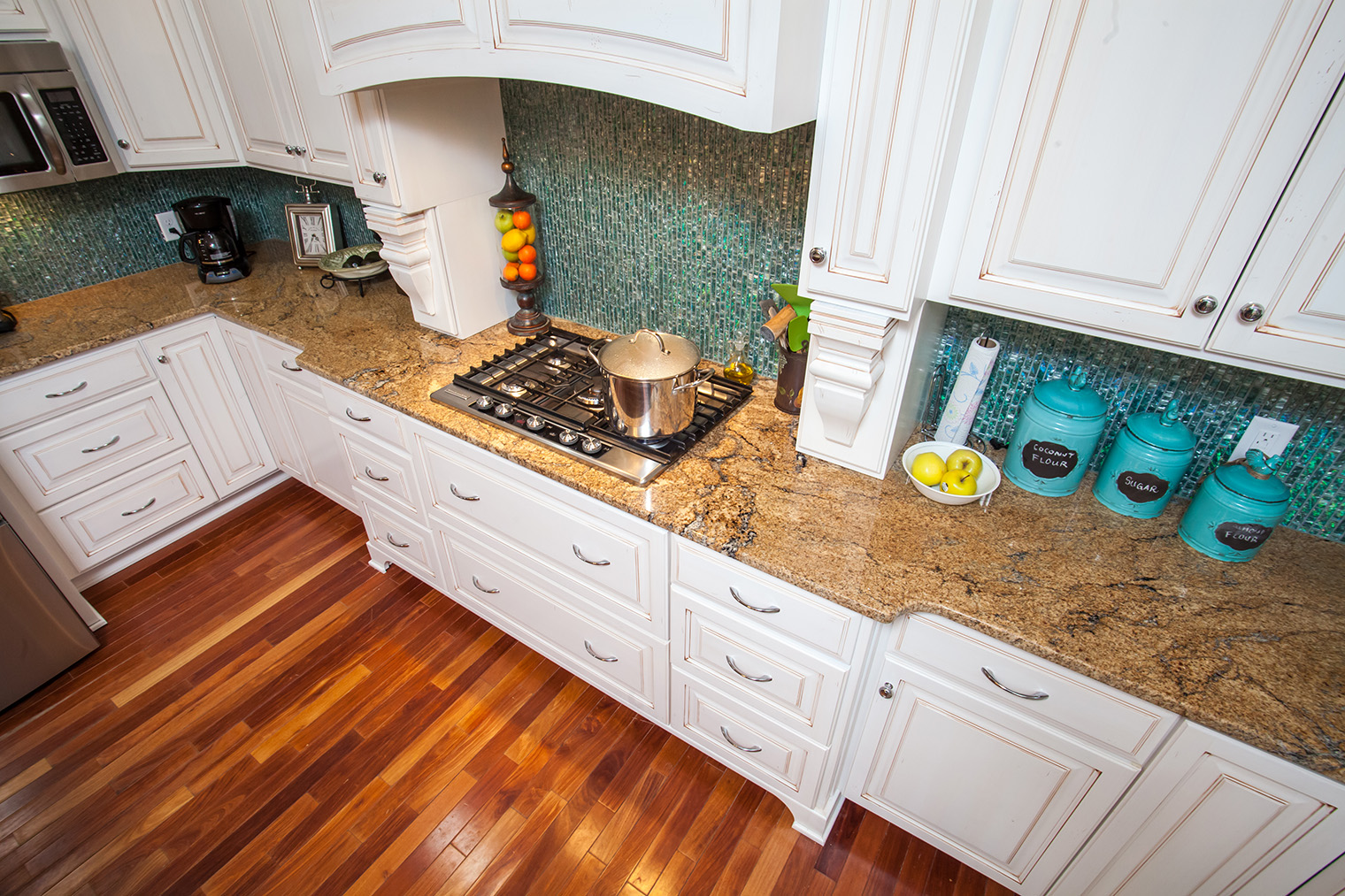
Mixing stone textures means combining different countertop finishes, such as polished, honed, and leathered, to create contrast, depth, and a custom kitchen design. Instead of using the same finish throughout your kitchen, you can pair complementary textures to highlight specific areas while maintaining a cohesive look. When done thoughtfully, this design approach adds personality, improves visual balance, and gives your kitchen a high-end appearance.
Today’s homeowners want kitchens that feel unique rather than predictable. As a result, many designers now recommend mixing countertop textures instead of relying on a single finish. Whether you’re updating your entire kitchen or replacing existing countertops, combining different finishes allows you to create subtle contrast without overwhelming the space.
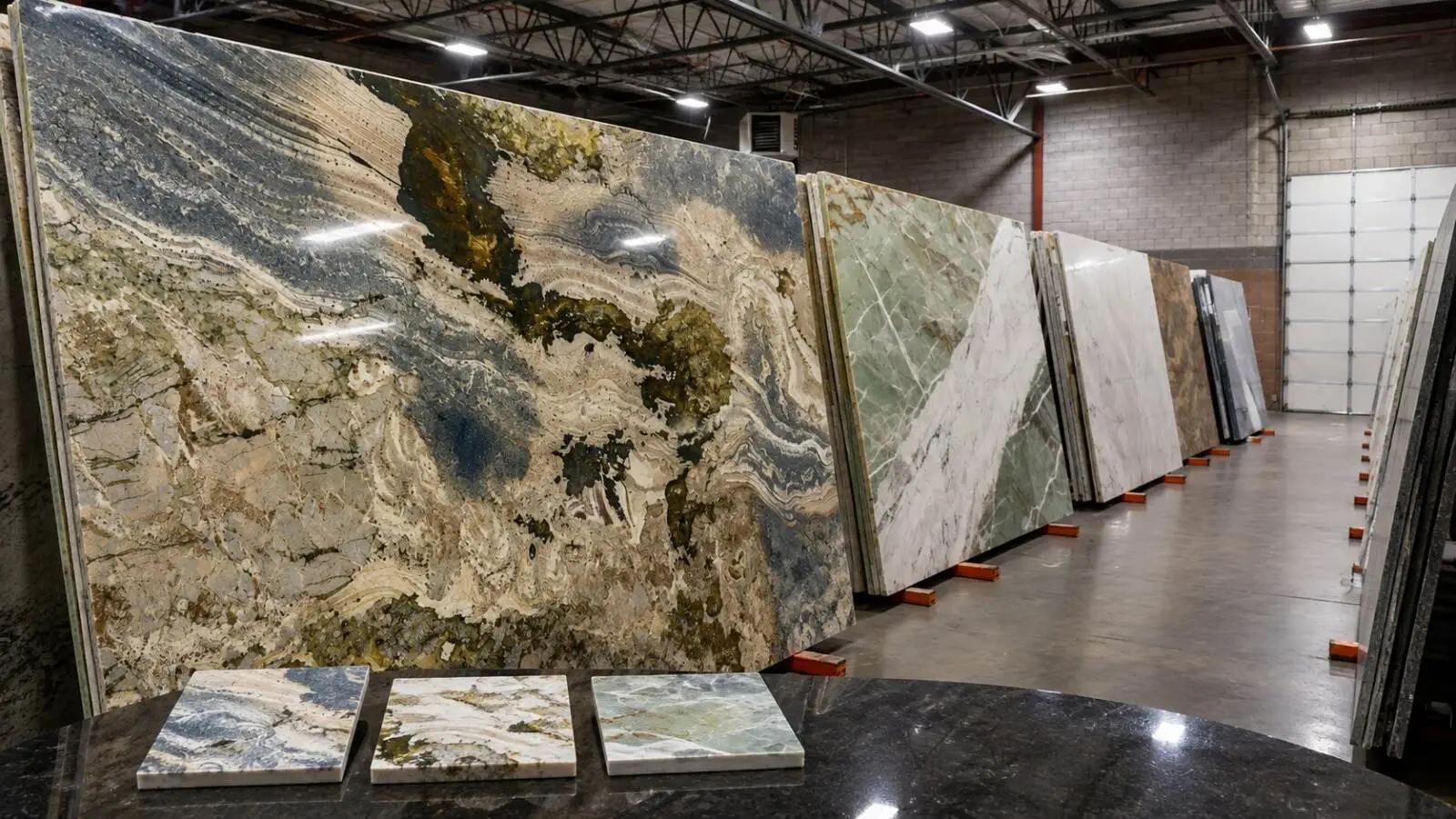
At Superior Granite, homeowners can explore a wide selection of premium natural and engineered stone surfaces in different finishes. Comparing full slabs helps you understand how each texture reflects light, highlights natural patterns, and complements the rest of your kitchen before fabrication and installation begin.
What Does Mixing Stone Textures Mean?
Mixing stone textures involves using two or more countertop finishes within the same kitchen to create visual interest and balance. Rather than installing one finish across every surface, homeowners often choose a polished countertop for one area and a honed or leathered finish for another.
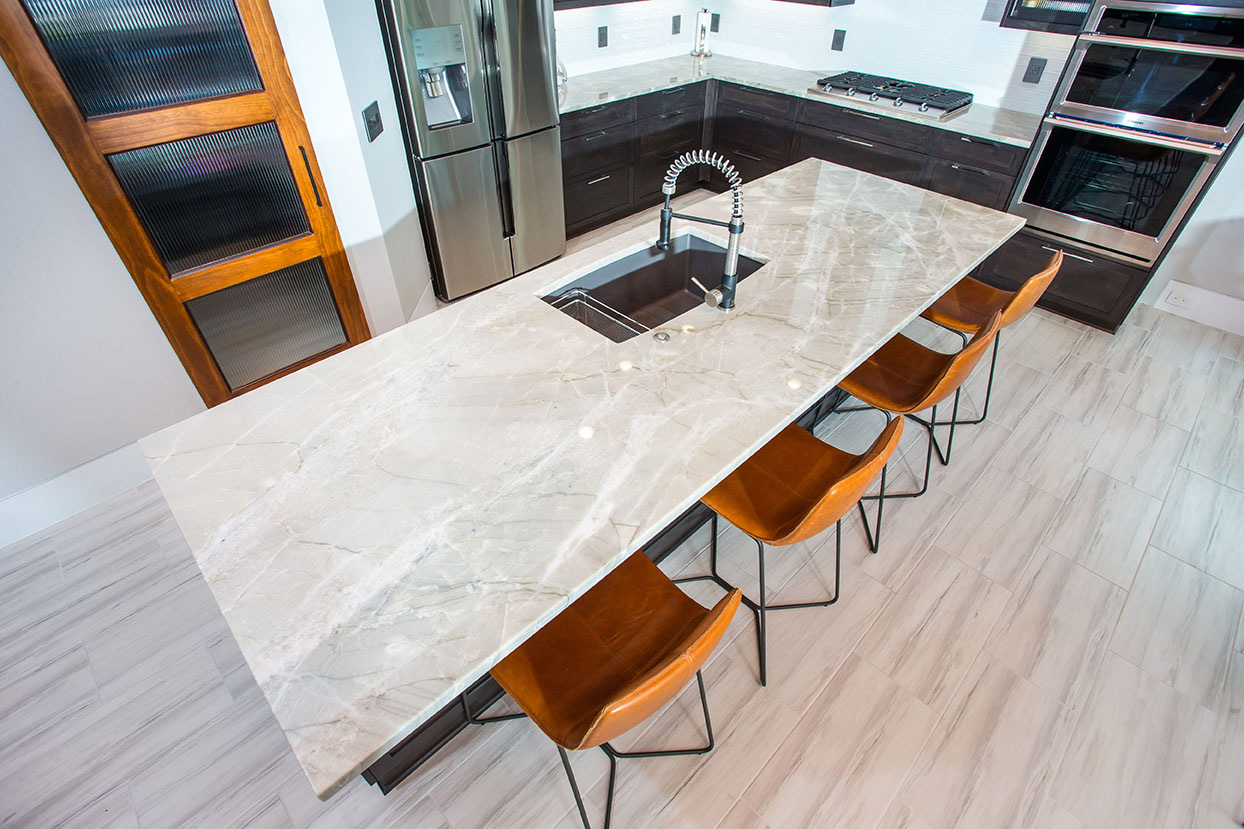
A popular example is using a polished quartz countertop on the kitchen island while installing leathered granite around the perimeter cabinets. Others may prefer a honed marble island paired with polished quartz countertops for a timeless yet modern appearance.
This design technique works because each finish interacts with light differently. Some finishes reflect light and brighten the room, while others soften the overall appearance by reducing glare. Together, these contrasting textures create a layered design that feels intentional instead of repetitive.
Why Homeowners Are Mixing Different Countertop Textures
Kitchen design has moved beyond matching every surface. Today, homeowners prefer personalized spaces that combine different materials, colors, and finishes while maintaining a balanced appearance.
For example, a polished countertop reflects natural and artificial light, making the room appear brighter and more spacious. In contrast, a leathered surface introduces subtle texture that adds warmth and depth. Meanwhile, a honed finish creates a smooth matte appearance that works beautifully in calm, contemporary spaces.
This design approach also complements many kitchen styles, including:
- Modern kitchens
- Transitional kitchens
- Farmhouse kitchens
- Coastal homes
- Contemporary designs
- Luxury custom kitchens
Whether your design leans traditional or modern, mixing stone textures creates a custom look that feels sophisticated without appearing overly complicated.
Understanding the Three Most Popular Countertop Finishes
Although countertop materials vary widely, three finishes remain the most popular among homeowners: polished, honed, and leathered. Each finish creates a completely different appearance, even when applied to the same slab of stone.
Polished Finish
A polished finish creates the glossy, reflective appearance most homeowners recognize. The surface is mechanically polished until it becomes smooth and highly reflective, allowing the stone’s natural colors and veining to stand out.
Many homeowners choose polished finishes because they:
- Showcase natural stone patterns beautifully.
- Create a luxurious appearance.
- Reflect natural and artificial light.
- Pair well with modern and traditional kitchens.
- Are easy to wipe clean during everyday use.
Polished finishes work especially well on granite, quartz, quartzite, marble, and porcelain countertops.
Honed Finish
A honed finish offers a smooth surface without the glossy shine of polished stone. Instead, it produces a soft matte appearance that feels understated and elegant.
Many people also appreciate honed finishes because they:
- Reduce glare from natural lighting.
- Create a warm, inviting appearance.
- Highlight subtle stone movement.
- Complement neutral color palettes.
- Blend beautifully with natural wood cabinetry.
Marble and dolomite frequently look stunning with honed finishes, while some granite and quartzite colors also perform exceptionally well with this treatment.
Leathered Finish
A leathered finish combines the natural beauty of stone with a lightly textured surface. Unlike polished countertops, leathered stone has very little shine. However, it still highlights the stone’s character while adding noticeable depth and texture.
Homeowners often choose leathered finishes because they:
- Add texture without feeling rough.
- Create excellent visual contrast.
- Produce a warm, natural appearance.
- Hide fingerprints more effectively.
- Pair beautifully with wood cabinetry and matte fixtures.
Leathered finishes are especially popular for granite and quartzite, where the natural movement and mineral patterns become even more pronounced.
Polished vs. Honed vs. Leathered Countertops
Choosing the right finish becomes much easier when you compare their key characteristics side by side.
| Feature | Polished | Honed | Leathered |
| Appearance | Glossy and reflective | Smooth matte | Lightly textured with low sheen |
| Light Reflection | High | Low | Medium to low |
| Surface Feel | Smooth | Smooth | Soft, textured |
| Visual Style | Elegant and classic | Modern and understated | Natural and distinctive |
| Best Kitchen Styles | Traditional, modern, luxury | Contemporary, Scandinavian, transitional | Rustic, farmhouse, modern luxury |
| Popular Stones | Granite, Quartz, Quartzite, Marble, Porcelain | Marble, Dolomite, Granite | Granite, Quartzite |
| Daily Appearance | Brightens the space | Softens the space | Adds depth and character |
| Best Feature | Enhances color and veining | Creates a subtle, refined look | Adds texture and hides fingerprints |
When Does Mixing Stone Textures Work Best?
Mixing stone textures works best when every finish has a clear purpose instead of competing for attention. Rather than combining multiple finishes randomly, create balance by letting one texture become the focal point while the other supports the overall design. This thoughtful approach makes the kitchen feel cohesive, elegant, and professionally designed.
Pair a Statement Island with Simpler Perimeter Countertops
One of the most effective ways to mix countertop textures is by giving the kitchen island a different finish than the surrounding countertops.
For example, a leathered granite island instantly draws attention because of its rich texture, while polished quartz perimeter countertops brighten the workspace and create visual balance. Likewise, a honed marble island paired with polished granite around the perimeter creates an elegant contrast without overwhelming the room.
Create Contrast in Open-Concept Kitchens
Open-concept kitchens benefit from layered design because the kitchen connects directly with living and dining spaces.
Instead of relying only on color, different countertop textures help separate the kitchen visually while maintaining an open, inviting atmosphere. A polished surface reflects more natural light, whereas a honed or leathered finish introduces warmth and depth.
As a result, the kitchen feels more dynamic while still blending seamlessly with the surrounding spaces.
Add Character to Large Kitchens
Large kitchens sometimes feel repetitive when every surface has the same finish.
Mixing polished, honed, and leathered countertops breaks up large expanses of stone and introduces subtle variation throughout the room. Even when the countertop colors remain similar, changing the texture creates enough contrast to keep the design visually interesting.
This technique works especially well on oversized islands, coffee bars, and secondary prep areas.
Complement Modern and Transitional Designs
Modern and transitional kitchens often combine different materials, finishes, and textures to create depth.
For example, polished quartz pairs beautifully with matte cabinetry, while leathered granite complements natural wood finishes and black hardware. Honed marble also blends effortlessly into minimalist kitchens where clean lines and soft textures create a relaxed atmosphere.
Choosing finishes that support your overall design style helps every element feel intentional.
Match Texture to Function
Each area of your kitchen serves a different purpose, so selecting finishes based on daily use creates a smarter design.
Polished countertops often work well in food preparation areas because they provide a smooth surface that’s easy to clean. Leathered finishes help disguise fingerprints and everyday smudges, making them popular for busy family kitchens. Meanwhile, honed finishes create a softer appearance in spaces designed for entertaining.
Matching texture to function allows your kitchen to remain both beautiful and practical.
Best Stone Combinations with Different Textures
Choosing the right stone combination is just as important as selecting the right finish. The best pairings balance color, movement, and texture while complementing the overall kitchen design.
Below are several combinations that work exceptionally well together.
Polished Quartz + Leathered Granite
This pairing combines modern elegance with natural character.
The polished quartz reflects light and creates a bright, clean workspace, while leathered granite adds warmth and texture without making the kitchen feel too dark. Together, they create a balanced design that works beautifully in contemporary, transitional, and coastal homes.
This combination pairs especially well with:
- White shaker cabinets
- Matte black hardware
- Stainless steel appliances
- Light oak flooring
Honed Marble + Polished Quartz
Homeowners who appreciate timeless elegance often choose this sophisticated pairing.
The honed marble island offers a soft matte appearance that highlights natural veining without excessive shine. Meanwhile, polished quartz perimeter countertops provide a durable, low-maintenance surface for everyday cooking.
This combination creates a luxurious kitchen while balancing beauty with practicality.
Leathered Granite + Polished Quartzite
Leathered granite introduces subtle texture and depth, while polished quartzite showcases dramatic natural movement.
Together, these finishes create a striking focal point without overwhelming the kitchen. This pairing works particularly well in larger kitchens where bold design elements have room to stand out.
Honed Dolomite + Polished Granite
Dolomite provides a refined appearance similar to marble while offering improved scratch resistance. Pairing a honed dolomite island with polished granite perimeter countertops creates gentle contrast that feels sophisticated and inviting.
This combination complements both traditional and transitional kitchens.
Leathered Soapstone + Polished Quartz
Soapstone naturally develops character over time, making it an excellent choice for homeowners who appreciate authentic materials.
Combining leathered soapstone with polished quartz creates a beautiful balance between rustic texture and contemporary simplicity. The result feels warm, welcoming, and distinctive.
Polished Quartzite + Leathered Granite
Quartzite’s dramatic veining becomes even more impressive when paired with the understated texture of leathered granite.
This combination creates a luxury kitchen that feels elegant without appearing overly formal. It also works well in open-concept homes where the island serves as the main gathering space.
Which Countertop Materials Work Best with Different Finishes?
While many countertop materials are available, some stones naturally perform better with specific finishes. Understanding these combinations helps you create a kitchen that’s both beautiful and functional.
Granite
Granite is one of the most versatile countertop materials because it looks stunning in polished and leathered finishes. A polished finish enhances the stone’s natural colors and movement, while a leathered finish adds texture and reduces the appearance of fingerprints.
Because granite offers excellent durability and heat resistance, it remains an outstanding choice for busy kitchens.
Quartz
Quartz is most commonly available with a polished finish, although some manufacturers also offer honed options.
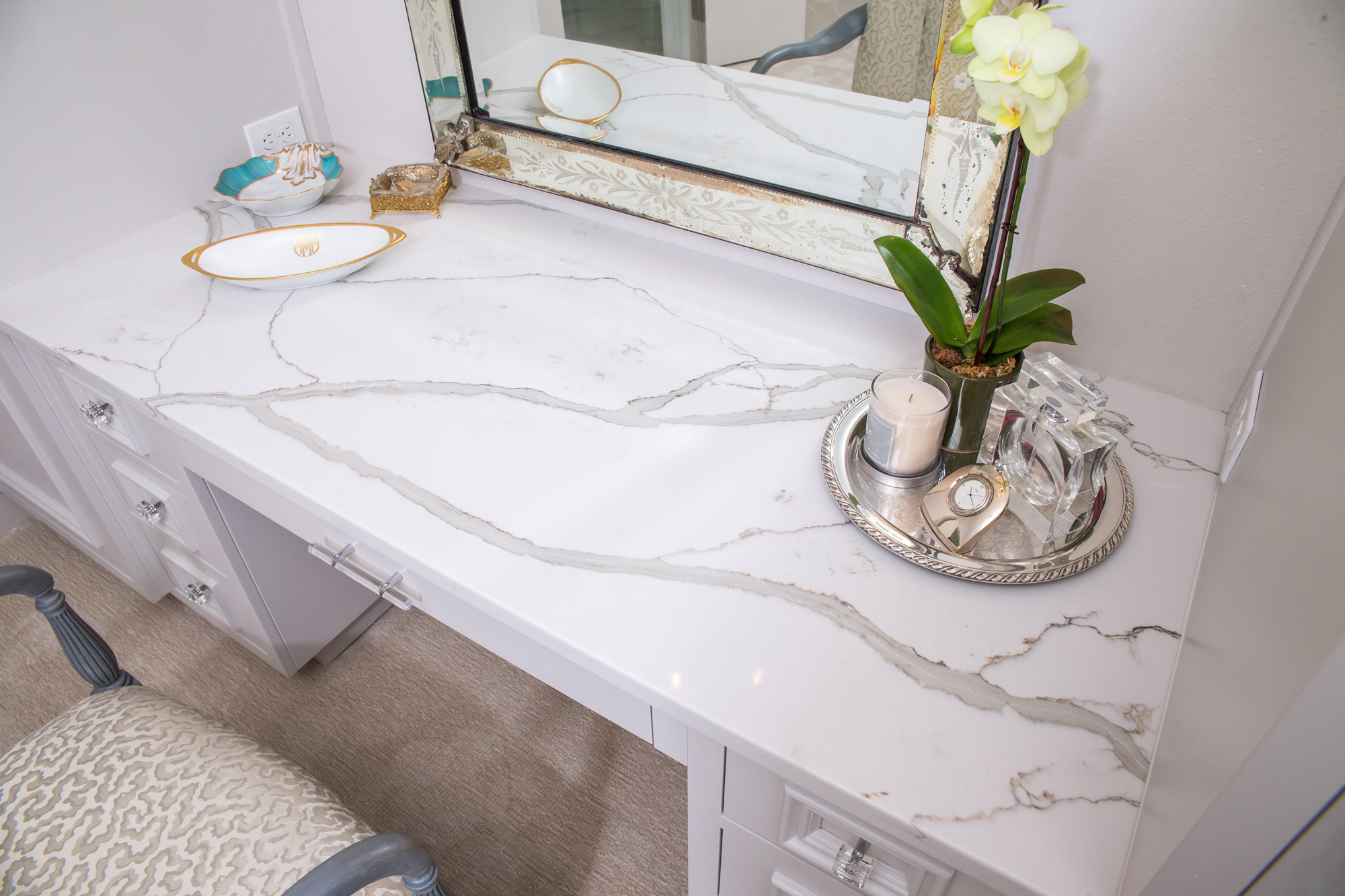
Its non-porous surface does not require sealing, making it ideal for homeowners who want a beautiful countertop with minimal maintenance. Polished quartz pairs exceptionally well with textured natural stones like leathered granite or honed marble.
Quartzite
Quartzite combines remarkable durability with dramatic natural veining.
Both polished and leathered finishes showcase its beauty in different ways. A polished finish highlights the stone’s vibrant colors, while a leathered finish creates a softer, more organic appearance that works beautifully in luxury kitchens.
Marble
Marble remains one of the most elegant natural stones available.
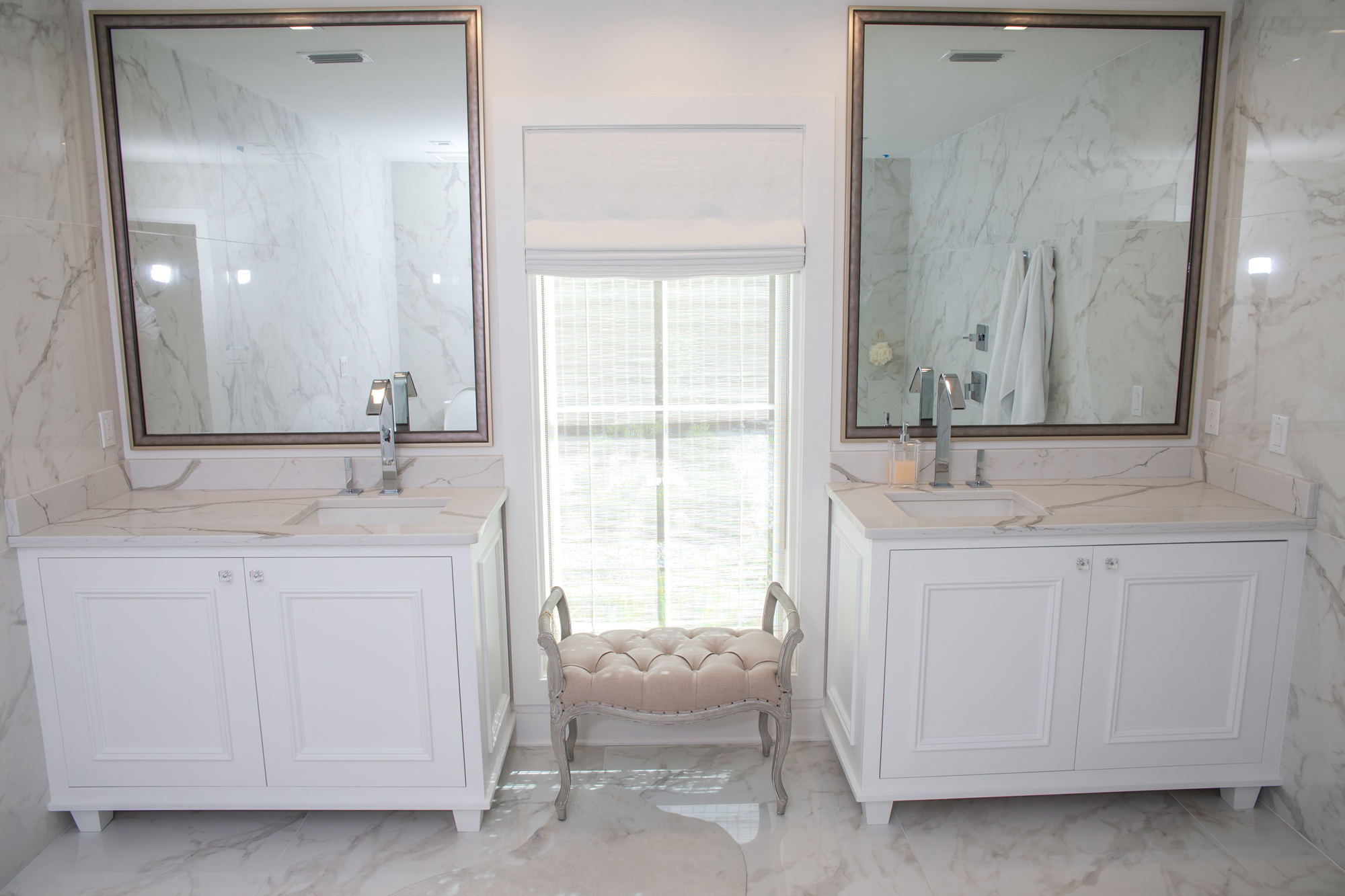
Although polished marble creates a classic appearance, many homeowners now prefer honed marble because its matte finish offers a softer, more contemporary look. Since marble requires regular sealing, proper care helps preserve its beauty over time.
Dolomite
Dolomite performs exceptionally well with honed finishes because the soft matte appearance complements its natural elegance.
When paired with polished granite or quartz, honed dolomite creates subtle contrast that feels refined rather than dramatic.
Soapstone
Soapstone naturally features a soft appearance that pairs beautifully with leathered or honed finishes.
Its rich texture makes it an excellent companion for polished quartz or polished granite, allowing each material to showcase its own unique character.
How to Choose the Right Texture for Your Kitchen
Selecting the right countertop texture involves more than choosing the finish you like most. Your kitchen’s layout, lighting, lifestyle, and maintenance preferences all influence which finish will work best. Taking time to evaluate these factors helps you create a design that looks beautiful today and continues to perform well for years.
Consider Your Daily Lifestyle
Think about how you use your kitchen every day. If you cook frequently, entertain guests, or have children, choose finishes that complement your routine.
For example, polished quartz offers a smooth, low-maintenance surface that’s easy to clean after meal preparation. Leathered granite helps disguise fingerprints and light smudges, making it a practical choice for busy households. Honed finishes also provide a softer appearance for homeowners who prefer a relaxed, understated design.
Choosing a finish that supports your daily activities allows your countertops to remain both attractive and functional.
Think About Maintenance Requirements
Every countertop material has different care needs, so understanding them before making your decision is important.
Natural stones such as granite, marble, quartzite, and dolomite benefit from periodic sealing to help protect against staining. Quartz and porcelain, however, are non-porous surfaces that do not require sealing, making them excellent options for homeowners seeking lower maintenance.
Matching the finish to your maintenance expectations ensures you’ll continue enjoying your countertops long after installation.
Match the Finish with Your Kitchen Style
Your countertop finish should enhance the overall design rather than compete with it.
Polished finishes complement elegant, traditional, and modern kitchens by reflecting light and highlighting natural stone patterns. Honed finishes create a softer, contemporary appearance that works beautifully in minimalist and transitional spaces. Leathered finishes add warmth, texture, and character, making them ideal for farmhouse, rustic, and luxury-inspired kitchens.
When every design element works together, your kitchen feels balanced and intentional.
Evaluate Your Kitchen Lighting
Lighting significantly affects how countertop finishes appear throughout the day.
If your kitchen receives plenty of natural sunlight, polished surfaces can brighten the room and showcase the stone’s color and movement. Conversely, if your kitchen has limited natural light, combining polished and textured finishes can create depth without making the space feel dark.
Viewing full slabs under different lighting conditions helps you understand how each finish will look after installation.
Visit a Showroom Before Making Your Final Decision
Online photos provide inspiration, but they rarely capture the true beauty of natural stone.
Visiting a Superior Granite showroom allows you to compare polished, honed, and leathered finishes side by side. You can also view full slabs, examine natural veining, and receive professional guidance on selecting finishes that complement your cabinets, flooring, and overall kitchen design.
This hands-on experience gives homeowners greater confidence before fabrication begins.
Common Mistakes to Avoid When Mixing Stone Textures
Mixing countertop textures can transform your kitchen, but poor planning may prevent you from achieving the balanced look you’re hoping for. Fortunately, avoiding a few common mistakes can make the design process much smoother.
Using Too Many Different Finishes
Adding every available finish to one kitchen often creates visual clutter.
Instead, limit your design to two complementary textures that work together naturally. This approach keeps the space cohesive while still providing enough contrast to make the design interesting.
Ignoring the Stone’s Natural Characteristics
Not every finish suits every material equally well.
Granite and quartzite often look stunning with leathered finishes, while marble and dolomite frequently shine with honed surfaces. Understanding how each stone responds to different finishes helps you create combinations that highlight the material’s natural beauty.
Focusing Only on Appearance
Beautiful countertops should also support your lifestyle.
For example, polished quartz offers excellent everyday convenience, while granite provides outstanding durability for active cooking spaces. Selecting finishes based on both appearance and performance leads to better long-term satisfaction.
Forgetting About Lighting
A finish that looks perfect under showroom lighting may appear different in your home.
Always consider your kitchen’s natural and artificial lighting before making a final decision. This simple step helps you avoid unexpected results after installation.
Skipping Professional Guidance
Choosing countertop materials, finishes, and colors involves many decisions.
Working with experienced countertop professionals helps you compare options, understand maintenance requirements, and select combinations that fit your kitchen’s layout and style. Expert guidance also reduces the risk of costly design mistakes.
Explore Countertop Finishes at Superior Granite
Seeing countertop finishes in person is one of the best ways to choose the right combination for your kitchen. While online galleries provide inspiration, viewing full slabs allows you to appreciate each stone’s natural movement, color variation, and surface texture.
At Superior Granite, homeowners can explore an extensive selection of premium granite, quartz, quartzite, marble, dolomite, porcelain, soapstone, and other quality surfaces. Experienced team members help you compare polished, honed, and leathered finishes while recommending combinations that complement your design goals.
Once you’ve selected your materials, the process continues with precise digital templating, expert fabrication, and professional installation. This attention to detail helps ensure your finished countertops fit beautifully and perform reliably for years to come.
Whether you’re remodeling a kitchen in Pensacola, Pace, or Fort Walton Beach, Superior Granite provides the expertise and craftsmanship needed to bring your vision to life.
Conclusion
Mixing stone textures is an excellent way to create a kitchen that feels custom, balanced, and visually engaging. By thoughtfully combining polished, honed, and leathered finishes, you can highlight key areas, introduce subtle contrast, and enhance the natural beauty of your chosen countertop materials.
The most successful designs balance appearance with functionality. Selecting finishes that complement your lifestyle, lighting, and overall kitchen style helps create a space that’s as practical as it is beautiful. Likewise, choosing the right stone for each finish ensures long-lasting performance and timeless appeal.
Visit Us: 7011 Pine Forest Road, Pensacola, FL 32526
Call Us: (850) 941-0270
Hours: Monday – Friday: 8 a.m. – 5 p.m., Saturday: 9 a.m. – 2 p.m.
Pace, FL
Visit Us: 4590 Jernigan Road, Pace, Florida 32571
Call Us: (850) 994-1872
Hours: Tuesday – Friday: 9 a.m. – 5 p.m., Saturday: 9 a.m. – 2 p.m.
Fort Walton Beach, FL
Visit Us: 35 Miracle Strip Pkwy SW, Fort Walton Beach, Florida 32548
Call Us: (850) 301-0716
Hours: Tuesday – Friday: 8 a.m. – 5 p.m., Saturday: 9 a.m. – 2 p.m
Get quotes now and start your project!
Frequently Asked Questions
1. What is the difference between polished, honed, and leathered countertops?
Polished countertops have a glossy, reflective surface that enhances color and veining. Honed countertops offer a smooth matte finish with a softer appearance. Leathered countertops feature a lightly textured surface that adds depth and character while reducing visible fingerprints.
2. Can I mix polished and leathered countertops in the same kitchen?
Yes. Mixing polished and leathered finishes creates visual contrast while maintaining a cohesive design. Many homeowners choose a polished countertop for the island and leathered granite for the perimeter to add texture without overwhelming the space.
3. Which countertop finish is easiest to maintain?
Maintenance depends on the countertop material as well as the finish. Quartz offers one of the easiest surfaces to maintain because it is non-porous and doesn’t require sealing. Natural stones may need periodic sealing, but proper care keeps them looking beautiful.
4. Is leathered granite better than polished granite?
Neither finish is better because each serves a different purpose. Polished granite creates a brighter, more reflective appearance, while leathered granite offers a textured look that hides fingerprints and adds warmth. The best choice depends on your design preferences and lifestyle.
5. Do honed countertops stain more easily?
A honed finish doesn’t automatically cause staining, but natural stones with a honed finish still require proper sealing and routine care. Cleaning spills promptly and following the recommended maintenance schedule helps protect the surface.
6. Which stones look best with a leathered finish?
Granite and quartzite are two of the most popular materials for leathered finishes because the texture highlights their natural movement and mineral patterns. These stones create a distinctive appearance that works well in both modern and rustic kitchens.
7. Can quartz countertops have different finishes?
Yes. Although polished quartz is the most common option, some manufacturers also offer honed finishes for selected colors. Available finishes vary by product, so it’s helpful to compare samples before making your decision.
8. Should the kitchen island have a different texture than the perimeter countertops?
Using a different texture on the island is a popular design choice because it naturally creates a focal point. Pairing complementary finishes also adds depth while helping different areas of the kitchen stand out without disrupting the overall design.
9. Does mixing countertop textures increase a home’s appeal?
A thoughtfully designed kitchen often leaves a strong impression on potential buyers. Mixing countertop textures creates a custom, designer-inspired appearance that adds character and visual interest, making the kitchen feel more inviting.
10. Where can I compare different countertop finishes before choosing one?
Visiting a Superior Granite showroom allows you to compare polished, honed, and leathered finishes on full stone slabs. Seeing the materials in person makes it easier to evaluate texture, color, and natural movement before fabrication and installation begin.