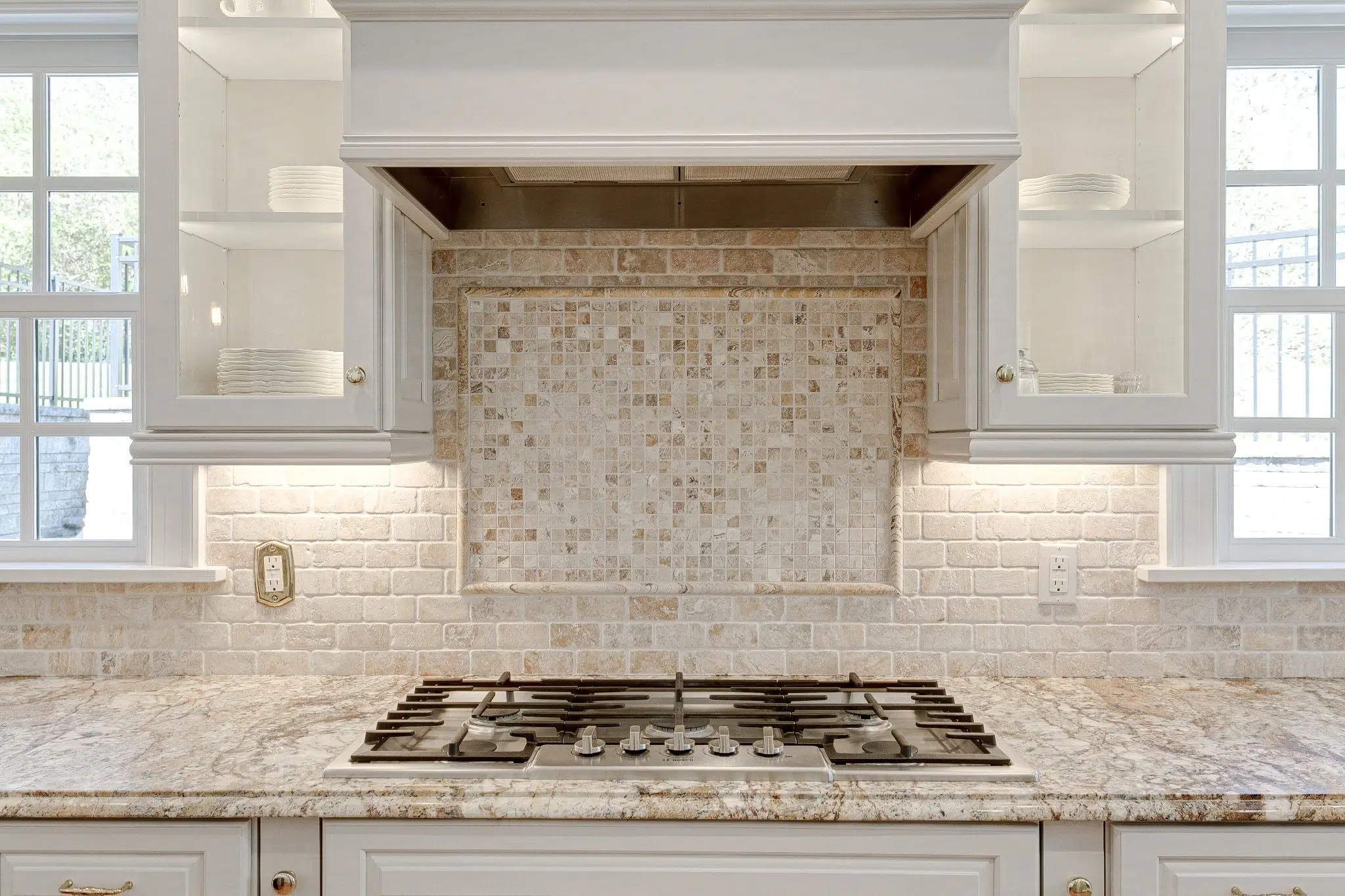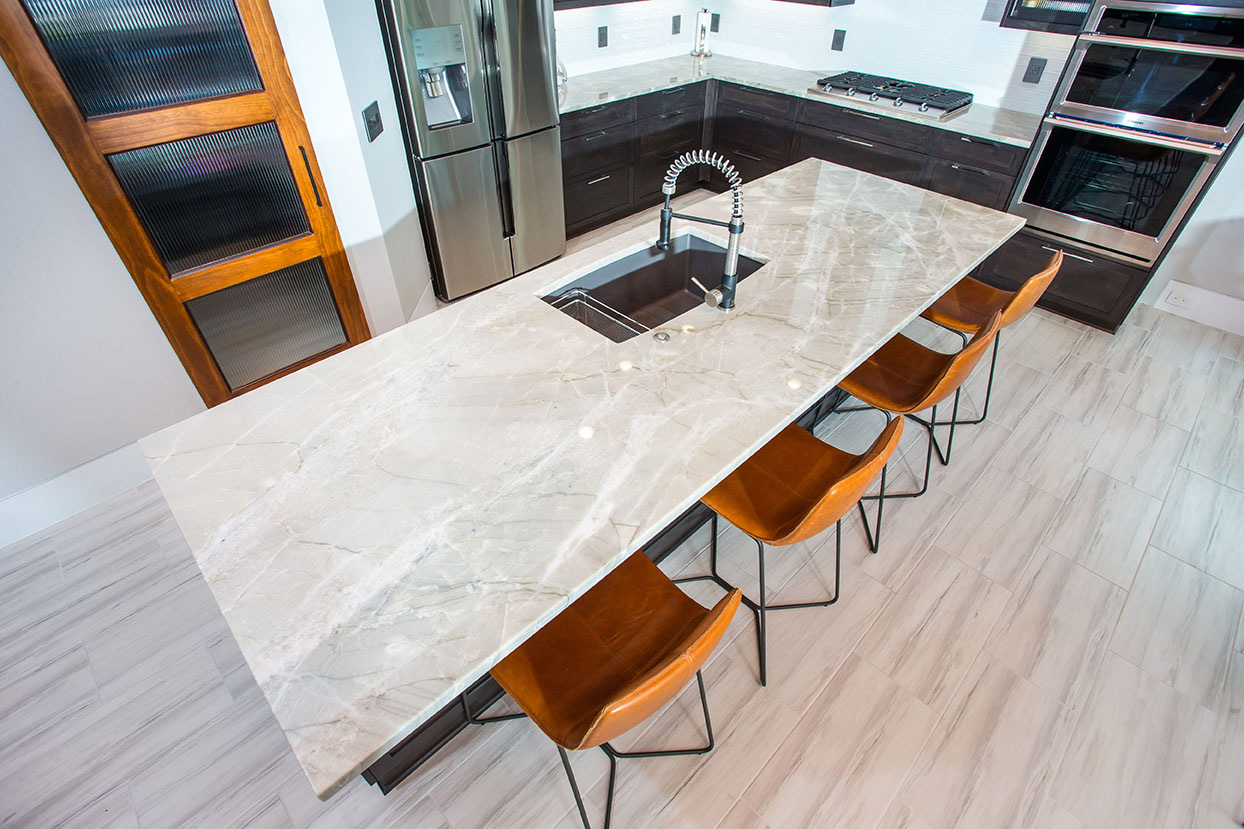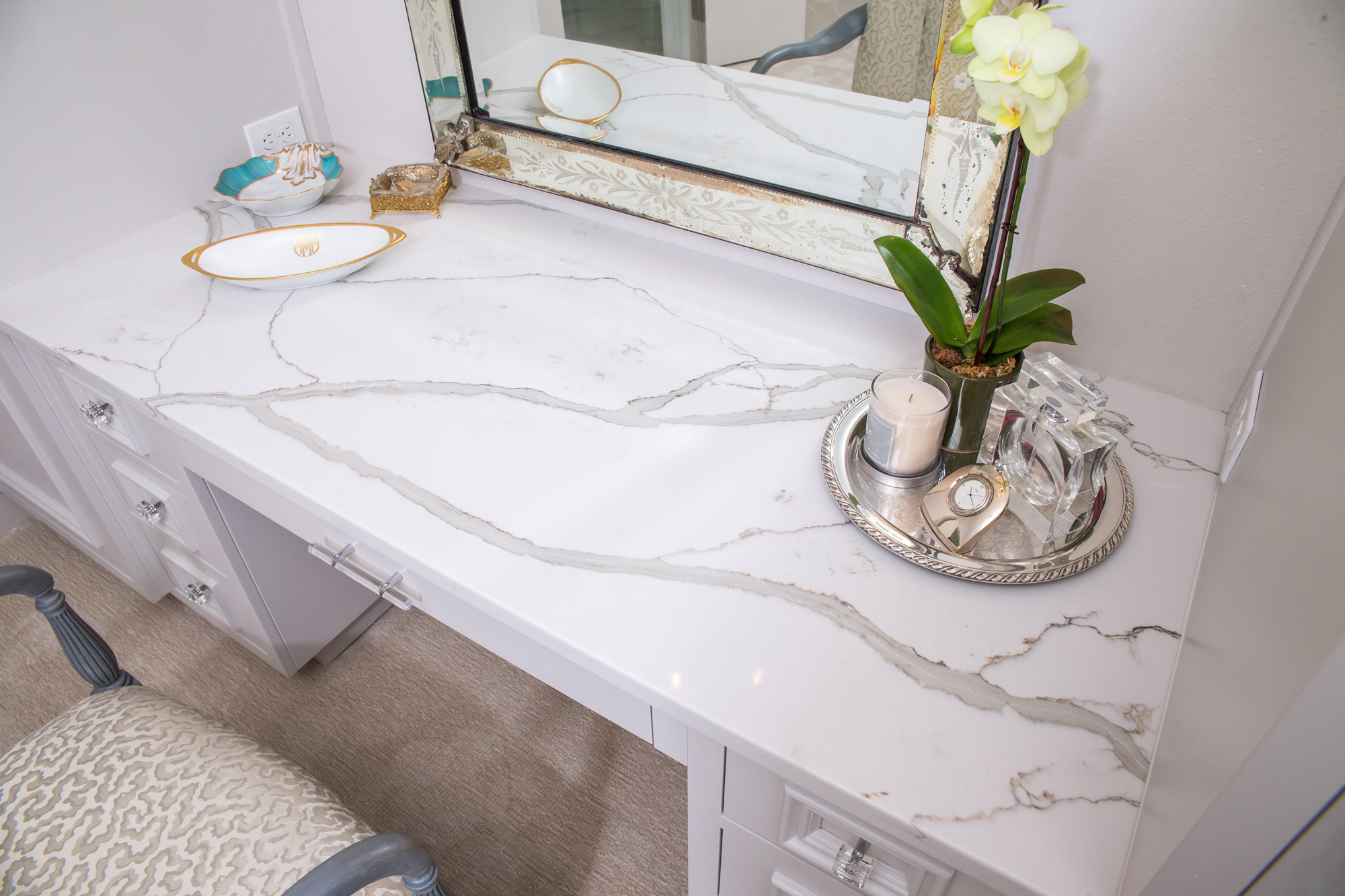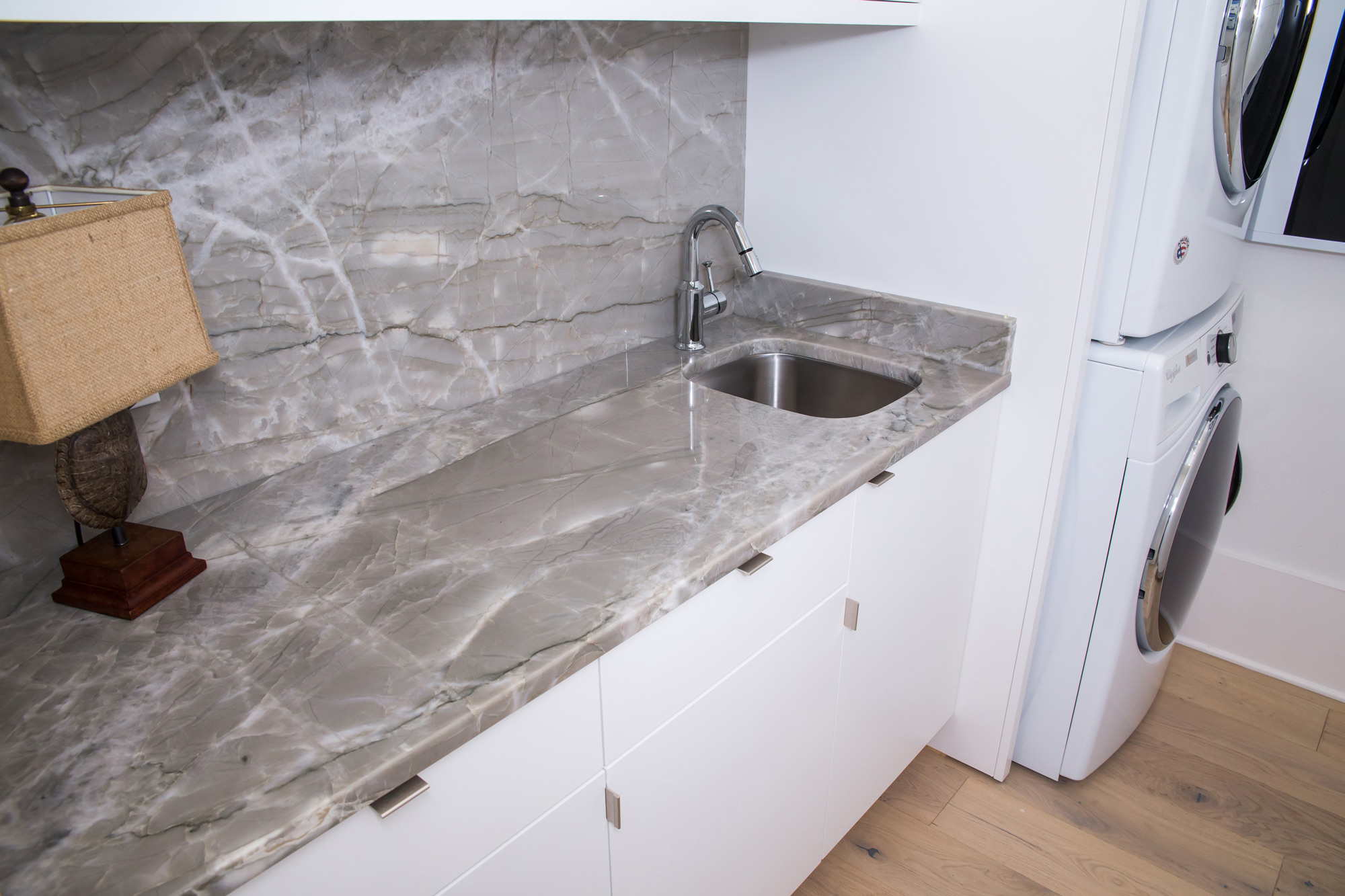
Granite countertop stain removal is easier than you think when you know the right method. For oil-based stains, mix baking soda with water to make a thick paste. For organic stains like wine or coffee, use hydrogen peroxide instead. Apply the paste to the stain, cover it with plastic wrap, and let it sit for 24 hours. Then remove the wrap and wipe the area clean with a soft cloth.
This simple technique is safe, effective, and doesn’t require harsh chemicals. With just a few household items, you can keep your granite countertops looking shiny and spotless for years. For those, finding trusted granite countertop suppliers ensures you get quality materials and professional installation to protect your investment while keeping your countertops stain-free.
Why Granite Countertops Get Stains?
Granite is a natural stone, and although it is very strong, it has tiny pores that can absorb liquids. This is why spills like coffee, wine, or cooking oil can leave stains if not cleaned immediately. Lighter granite shades often show stains more easily, while darker granite can hide them but still gets damaged over time.
How to Seal Granite Countertops: A Simple Step-by-Step Guide
Identifying the Type of Stain
Before removing a stain, it’s important to identify what type it is. Different stains require different methods.
| Stain Type | Cause | Quick Tip |
| Oil-Based | Cooking oil, grease, cosmetics | Baking soda poultice |
| Organic | Coffee, tea, wine, and food spills | Hydrogen peroxide paste |
| Ink/Marker | Pen or marker stains | Acetone + baking soda |
| Hard Water / Etching | Faucet splashes, mineral deposits | Isopropyl alcohol spray |
DIY Stain Removal Methods
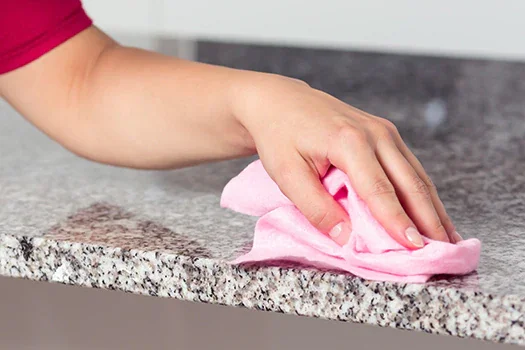
Here are simple, safe, and effective methods to remove different types of stains from your granite countertops.
Baking Soda Poultice for Oil Stains
Oil stains are very common in kitchens, especially from cooking oils or grease. A baking soda poultice is an easy and safe way to draw the oil out of your granite countertop without damaging the stone. This method works gently but effectively, keeping your countertops looking clean and shiny.
To make the poultice, you will need a few simple items: baking soda, water, plastic wrap, painter’s tape, and a soft microfiber cloth. These house
Steps:
- Mix baking soda with water to form a thick paste, like peanut butter.
- Spread the paste over the stain about ¼ inch thick.
- Cover with plastic wrap and tape down the edges.
- Let it sit for 24 hours.
- Remove the wrap and wipe clean with a soft cloth.
- Repeat if necessary, as granite absorbs oil deeply.
Hydrogen Peroxide Paste for Organic Stains
Organic stains like coffee, tea, or wine can leave marks on your granite countertops. A poultice made with hydrogen peroxide safely lifts these stains without harming the stone.
You will need hydrogen peroxide (3%), a soft cloth, plastic wrap, and painter’s tape. Mix a small amount of peroxide to form a paste, apply it over the stain, cover with plastic wrap, and let it sit for 10–15 minutes.
Steps:
- Mix hydrogen peroxide with baking soda to make a thick paste.
- Apply it to the stain and let it sit for 10–15 minutes.
- Gently wipe with a soft cloth.
- Rinse with warm water and dry.
Cornstarch Method for Fresh Grease
Fresh grease stains are best treated immediately, and cornstarch works like a sponge to pull the oil out of the granite pores. Using cornstarch is a simple and natural technique for granite countertop stain removal, especially for minor kitchen spills.
To use, sprinkle cornstarch directly over the grease spot. Let it sit for 15 minutes to absorb the oil, then wipe clean with a damp cloth. Repeat if necessary.
Steps:
- Wipe the area gently to remove excess grease.
- Sprinkle cornstarch over the stain until it forms a thick layer.
- Mist lightly with distilled water.
- Cover with plastic wrap for 24 hours.
- Remove and clean the area with mild soap and warm water.
Hard Water and Etching Spots
Hard water spots often appear around sinks and faucets, leaving cloudy marks on your granite countertops. For safe granite countertop stain removal, mix equal parts isopropyl alcohol and water in a spray bottle. Spray the solution directly on the spots and wipe gently with a microfiber cloth. Repeat the process as needed until the marks are gone. Avoid using vinegar or lemon juice, as acids can etch or damage your granite surface.
Steps:
- Mix water and isopropyl alcohol in equal parts in a spray bottle.
- Spray directly on the hard water spots.
- Wipe gently with a microfiber cloth.
- Repeat as necessary until the spots disappear.
Acetone for Ink or Marker Stains
Ink or marker stains can be stubborn, especially on light-colored granite. A careful acetone treatment is a reliable method for granite countertop stain removal, keeping your stone polished and clean. Mix a small amount of acetone with baking soda to form a thick paste, apply it directly to the stain, and cover it with plastic wrap. Secure the edges with painter’s tape and let it sit for 24 hours, then gently wipe it clean with a soft microfiber cloth.
Steps:
- Mix acetone with baking soda to make a thick paste.
- Apply the paste to the stain.
- Cover with plastic wrap and tape down the edges.
- Let it sit for 24 hours.
- Remove the wrap and wipe clean with a microfiber cloth.
- Repeat if needed, testing first in a hidden spot.
Step-by-Step Poultice Application
| Step | Action | Notes |
| 1 | Clean the area | Mild soap & water |
| 2 | Mix paste | Baking soda + water/hydrogen peroxide |
| 3 | Apply | ¼ inch thick |
| 4 | Cover | Plastic wrap + tape |
| 5 | Wait | 24–48 hours |
| 6 | Remove & rinse | Microfiber cloth |
Choosing the Right Tools for Granite Cleaning
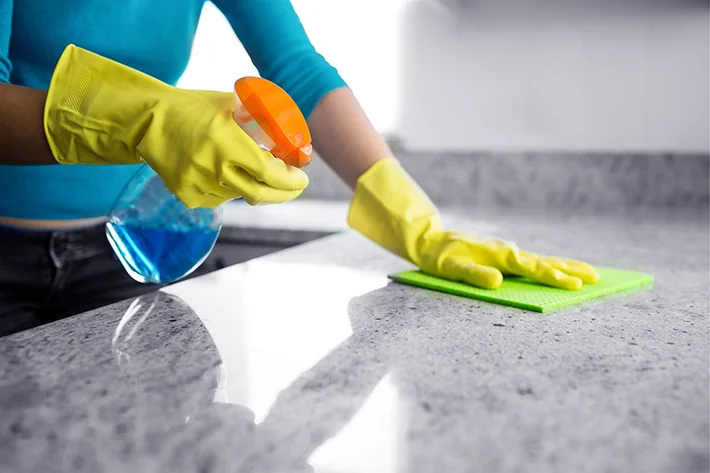
Using the right tools is key to safe and effective granite countertop stain removal and helps your granite last for many years. Choosing gentle and non-abrasive tools ensures you clean thoroughly without scratching or damaging the stone.
For the best results, consider these tools:
- Soft microfiber cloths: gentle yet effective for wiping stains and spills
- Plastic scrapers: safe for removing stuck-on residue without scratching
- Non-abrasive sponges: clean your granite without harming the surface
- Spray bottles: for evenly applying cleaning solutions
Common Mistakes to Avoid When Cleaning Granite
When it comes to granite stain removal, avoiding common mistakes is just as important as using the right cleaning methods. Small errors can damage your stone, dull its shine, or even make stains permanent. Knowing what not to do will keep your granite looking its best for years.
Some mistakes to watch out for include:
- Using vinegar, lemon juice, or bleach, acids can etch and damage granite
- Using abrasive scrubbers can scratch the surface
- Not testing cleaners on a hidden area first, some solutions may discolor the stone
- Ignoring spills, letting them sit can make stains permanent
- Overusing chemical cleaners can wear down the sealer
- For expert help or professional guidance, consider Superior Granite to keep your surfaces looking flawless and well-maintained.
Pro Tips for Safe Granite Cleaning
Keeping your granite countertops looking great means following simple steps. Safe habits help your stone stay shiny and protected.
Here are some pro tips:
- Test a small hidden area before using any cleaner.
- Repeat treatments carefully. Don’t scrub too hard.
- Check if your countertop is sealed. Water should bead on the surface.
- For tough stains, call a professional stone restorer.
- Keep your countertop dry and clean every day.
How to Prevent Stains in the Future?
Preventing stains on your granite countertops is easier than dealing with them afterward. One key step is to seal your granite twice a year. This creates a protective barrier that stops liquids from soaking into the stone. Always wipe spills immediately, especially oils, wine, or coffee, to avoid stains forming.
You can also use coasters under drinks and heat pads under hot pans to protect the surface. Clean your countertops daily with mild soap and water to keep them shiny and well-maintained. Following these simple steps helps your granite stay beautiful and stain-free for years to come.
Conclusion
Granite countertops are a beautiful and durable addition to any kitchen, but they do require proper care to stay stain-free and shiny. By following safe granite countertop stain removal methods like baking soda poultices, hydrogen peroxide, acetone treatments, and isopropyl alcohol for hard water spots, you can tackle almost any stain without damaging your stone. Regular sealing, immediate spill cleanup, and using the right tools will ensure your countertops continue to look pristine for years.
Investing a little time in maintenance not only protects your granite but also preserves the value and elegance of your kitchen. Remember, when in doubt or dealing with stubborn stains, calling a professional stone restorer is always the safest choice.
Pensacola, FL
Visit Us: 7011 Pine Forest Road, Pensacola, FL 32526
Call Us: (850) 941-0270
Hours: Monday – Friday: 8 a.m. – 5 p.m., Saturday: 9 a.m. – 2 p.m.
Pace, FL
Visit Us: 4590 Jernigan Road, Pace, Florida 32571
Call Us: (850) 994-1872
Hours: Tuesday – Friday: 9 a.m. – 5 p.m., Saturday: 9 a.m. – 2 p.m.
Fort Walton Beach, FL
Visit Us: 35 Miracle Strip Pkwy SW, Fort Walton Beach, Florida 32548
Call Us: (850) 301-0716
Hours: Tuesday – Friday: 8 a.m. – 5 p.m., Saturday: 9 a.m. – 2 p.m.
Get quotes now and start your project!
FAQs
1. How do I remove oil stains from granite countertops?
Oil stains are common in kitchens and can penetrate granite pores. Use a baking soda poultice by mixing baking soda with water, applying it to the stain, covering it with plastic wrap, and letting it sit for 24 hours before wiping clean. Repeat if necessary for deep stains.
2. Can I use vinegar or lemon juice on granite?
No. Vinegar, lemon juice, and other acids can etch and damage granite surfaces. Stick to gentle solutions like baking soda, hydrogen peroxide, or isopropyl alcohol for safe granite countertop stain removal.
3. How often should I seal my granite countertops?
Granite should be sealed twice a year depending on usage and stone type. Regular sealing protects your countertops from stains and makes cleaning much easier.
4. What is the best way to clean daily spills?
Wipe spills immediately with a soft microfiber cloth and mild soap mixed with water. Prompt cleaning prevents stains from setting into the granite and keeps the surface shiny.
5. How do I remove wine or coffee stains from granite?
Use a hydrogen peroxide poultice for light-colored granite. Mix hydrogen peroxide with baking soda into a paste, apply to the stain, cover with plastic wrap, and leave for 24 hours before cleaning.
6. Can I remove ink or marker stains from granite?
Yes. Use a small amount of acetone mixed with baking soda to make a paste. Apply to the stain, cover with plastic wrap, wait 24 hours, then wipe clean. Always test in a hidden area first.
7. How do I remove hard water spots from granite?
Mix equal parts water and isopropyl alcohol in a spray bottle, spray directly on the spots, and wipe gently with a microfiber cloth. Repeat until the spots disappear. Avoid vinegar or lemon juice.
8. What tools are safe for cleaning granite?
Use soft microfiber cloths, non-abrasive sponges, plastic scrapers, and spray bottles. Avoid harsh scrubbers, steel wool, or strong chemicals that can damage the granite or its sealer.
9. How do I prevent future stains on granite countertops?
Seal your granite regularly, wipe spills immediately, use coasters under drinks, and heat pads under hot pans. Daily cleaning with mild soap and water also keeps the surface protected.
10. When should I call a professional for granite cleaning?
If a stain is stubborn or deep, or if you’re unsure how to safely clean the stone, call a professional stone restorer. They have the tools and expertise to remove stains without damaging your granite.