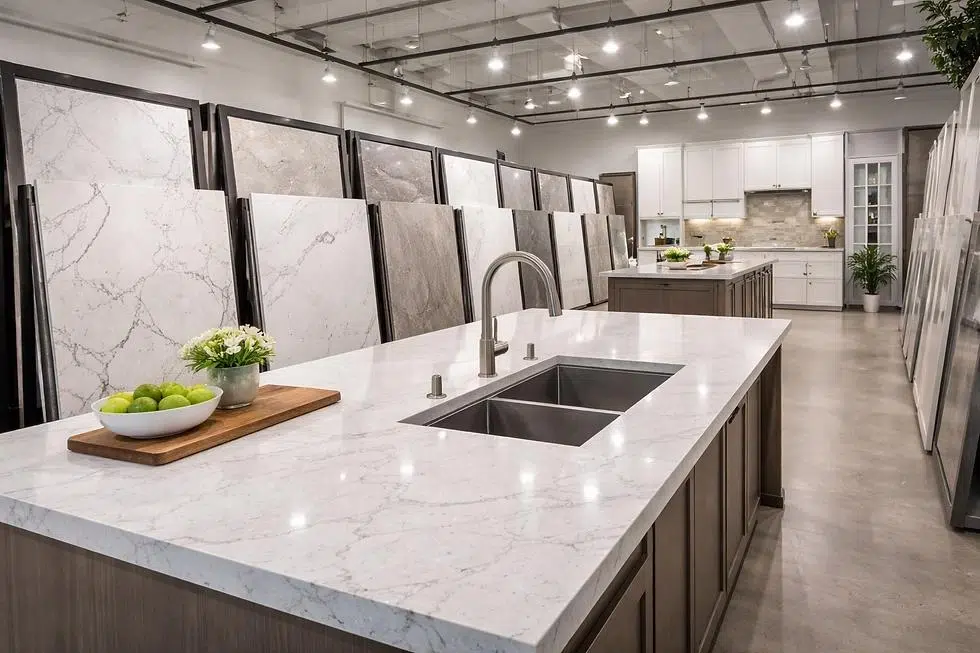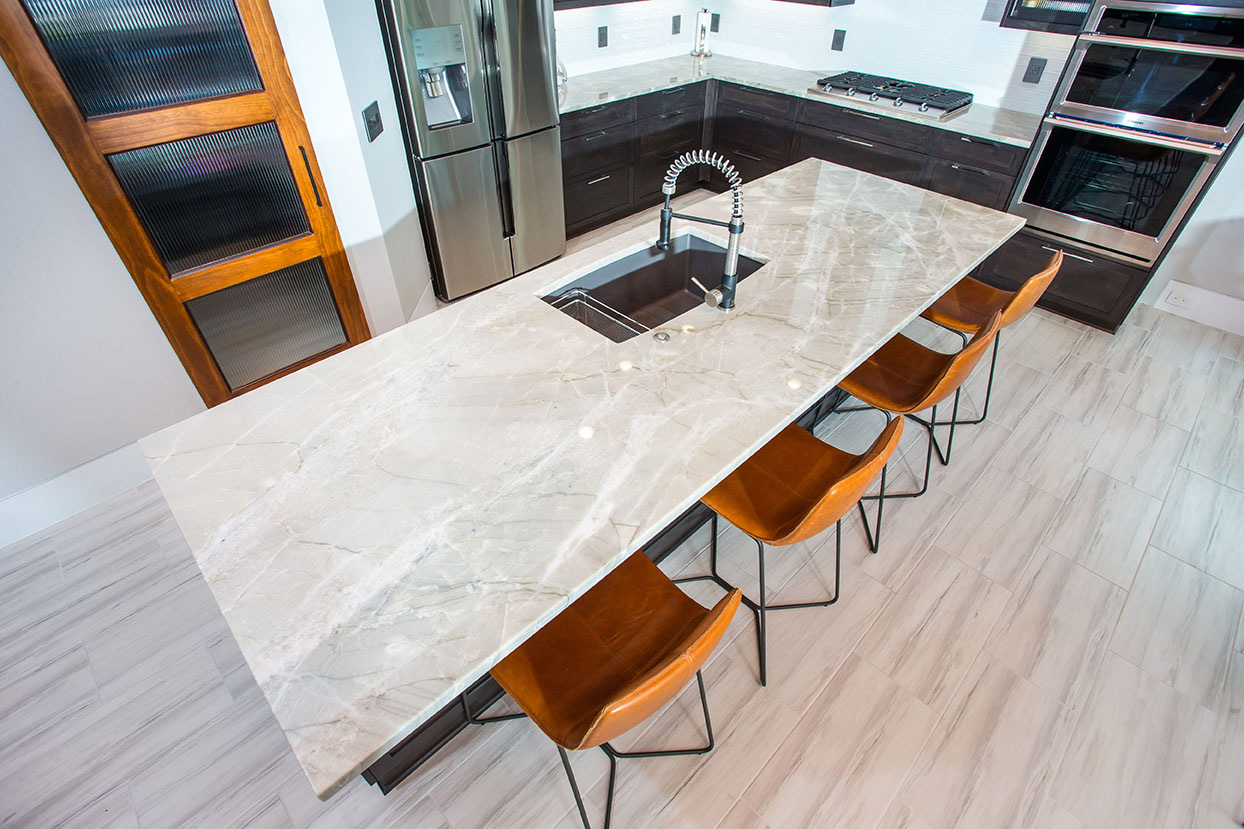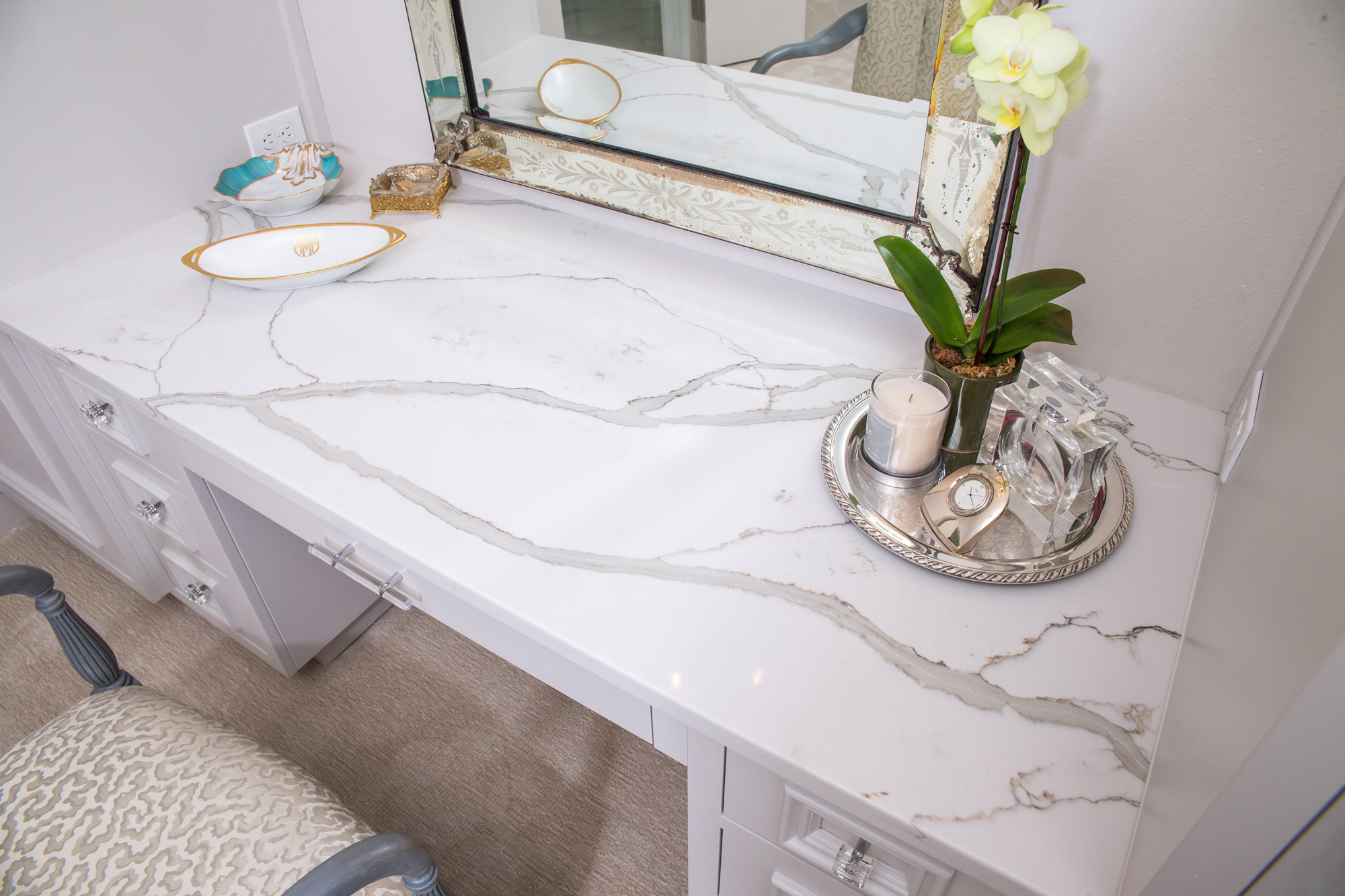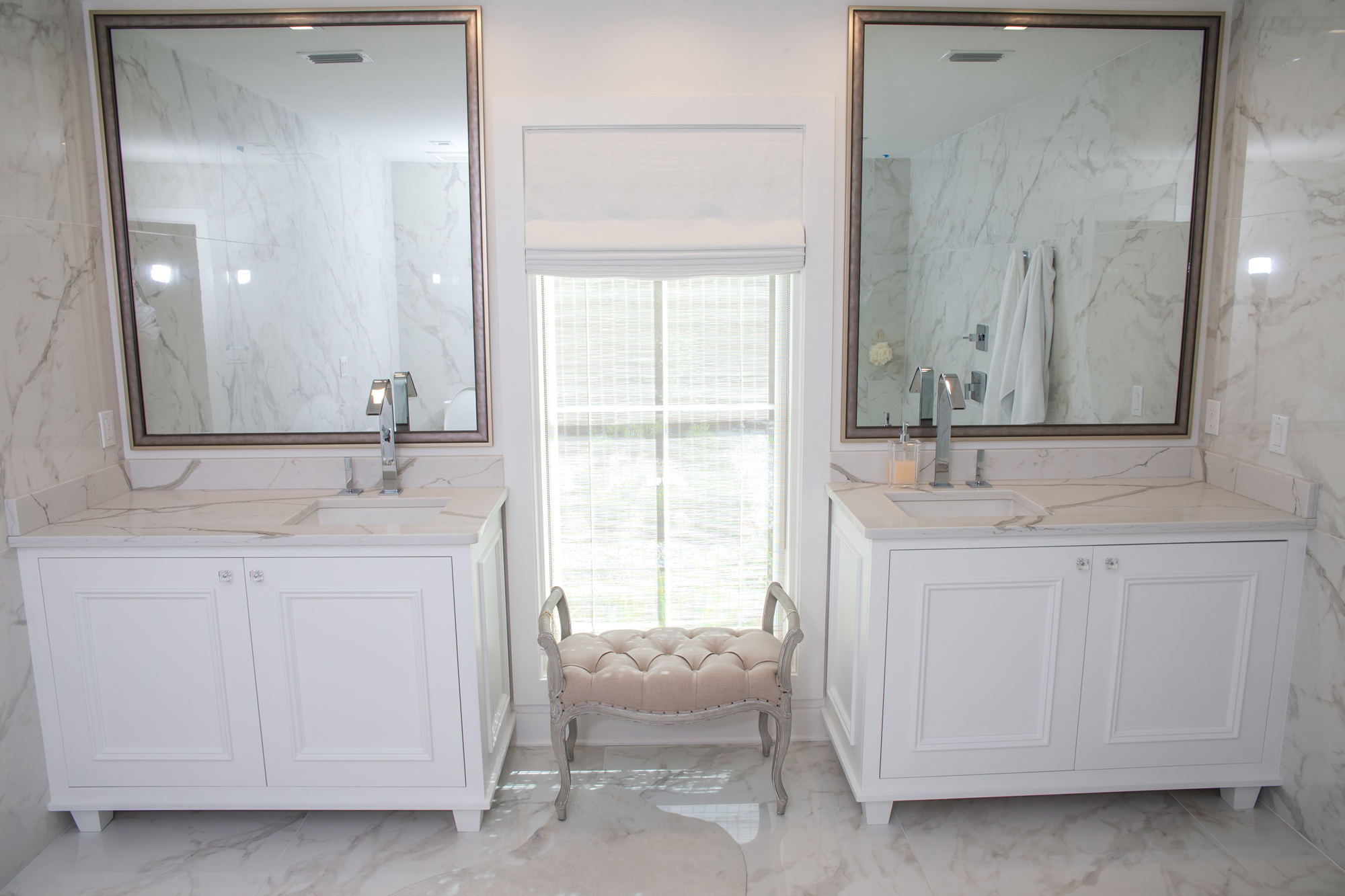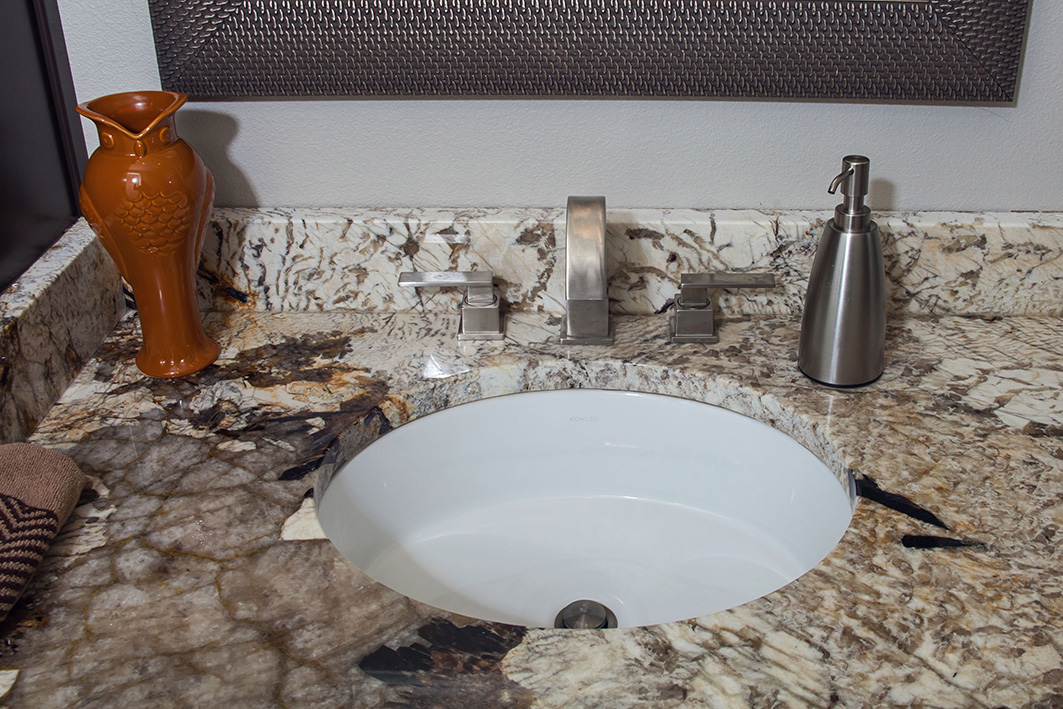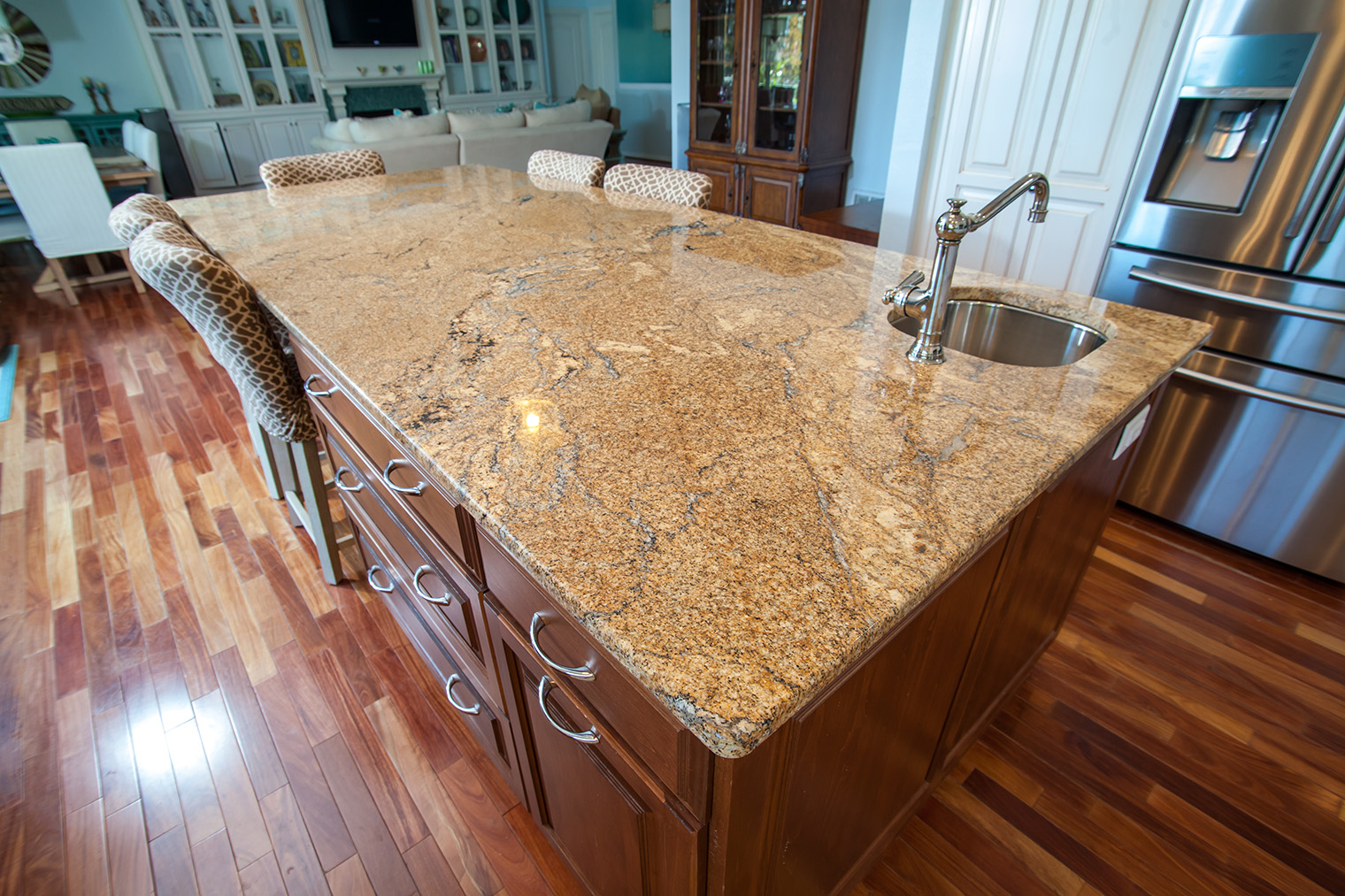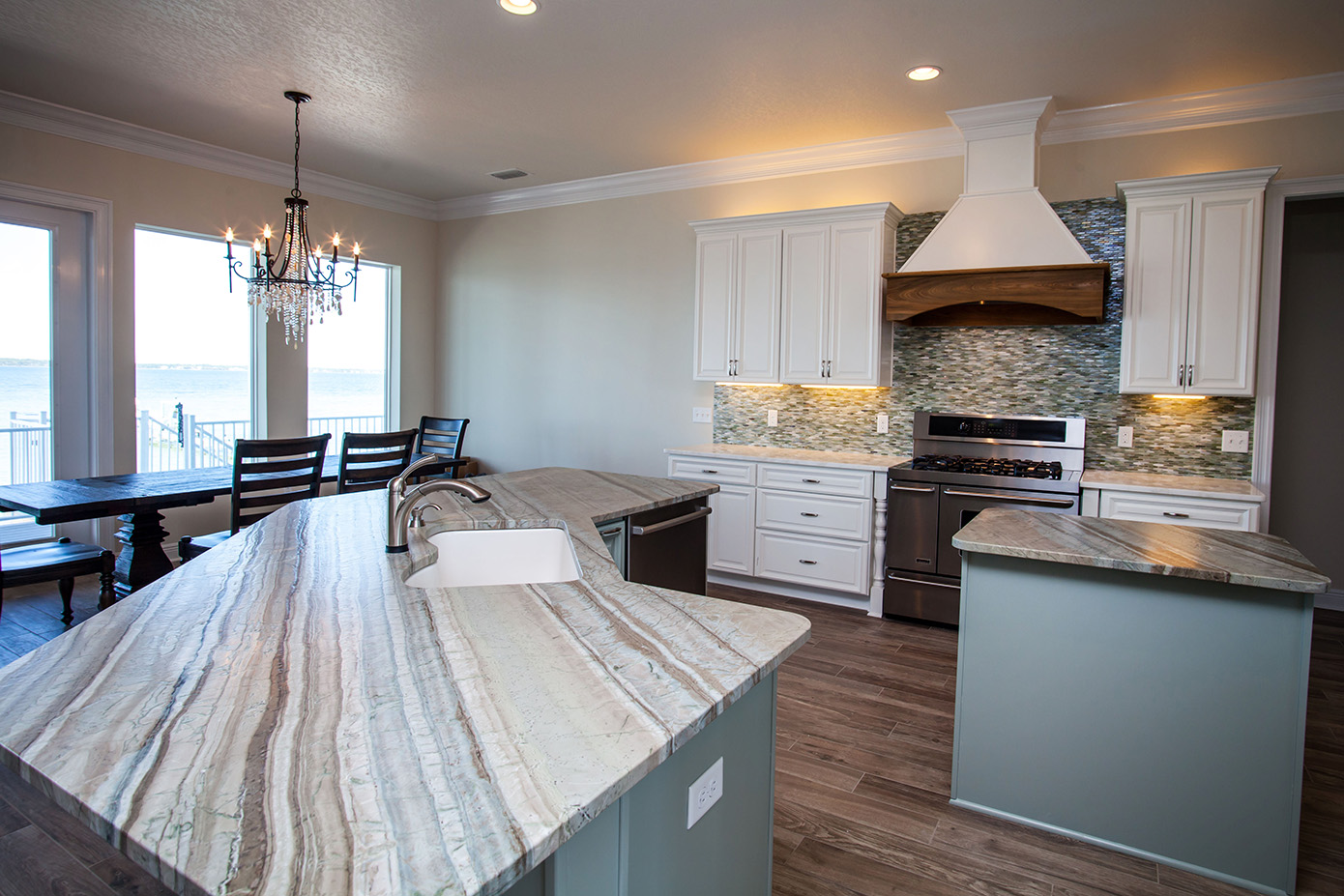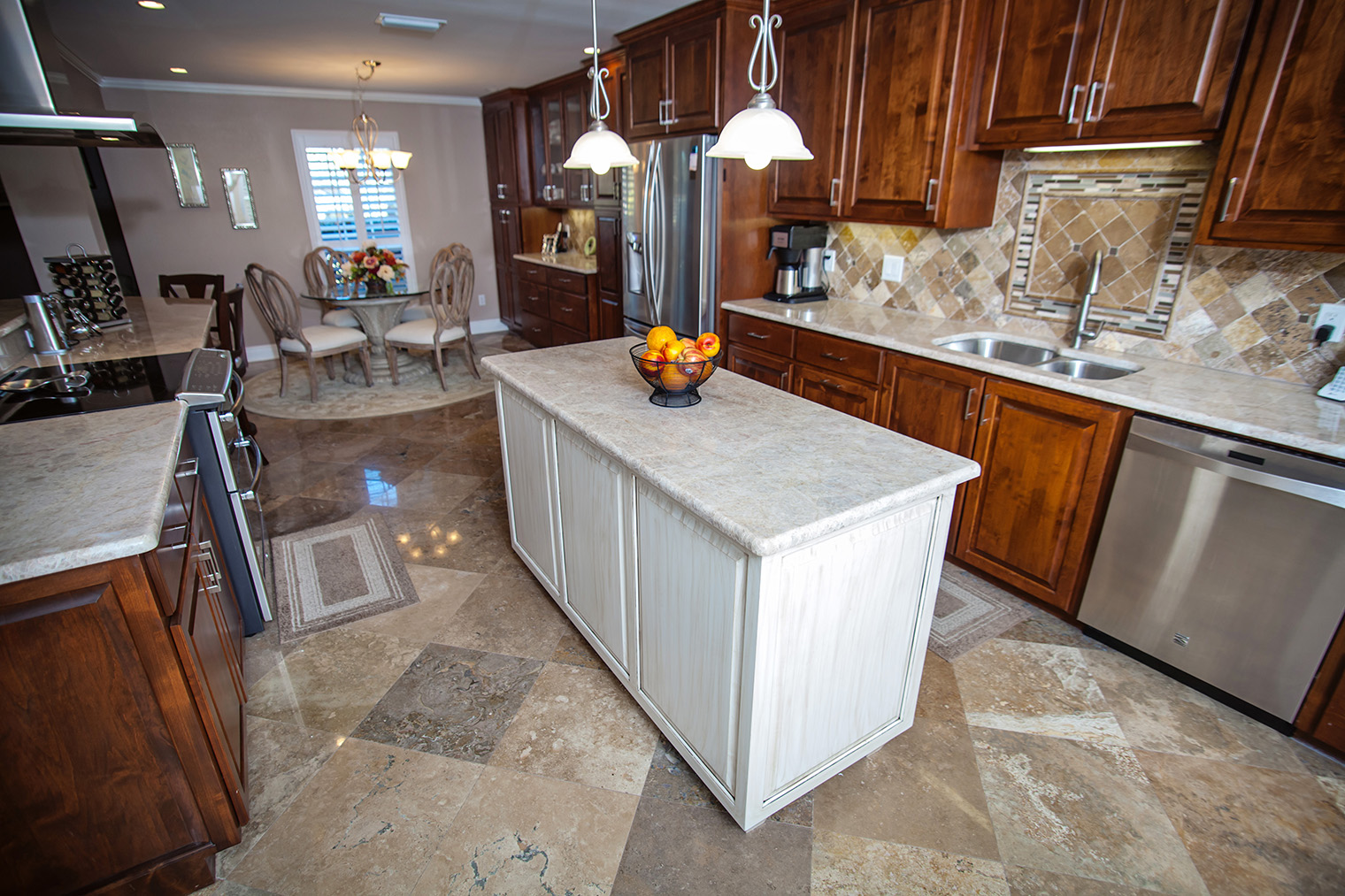
Quartz countertops are very popular. We will look at a very common comparison. Quartz countertops vs granite countertops. Do quartz countertops have advantages over granite countertops? Yes, they do. Do granite countertops have advantages over quartz countertops? Absolutely!
Quartz Countertops vs Granite Countertops
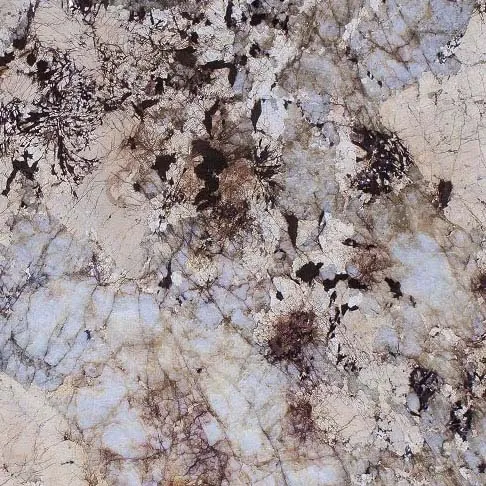
Granite countertops are made from granite. Granite is a natural stone. It is created by processes taking place deep under the surface of the earth. Molten rock, containing specific minerals, slowly cools and hardens. It takes several hundreds of thousands of years, if not millions, for granite to come into existence. Sometimes the internal processes of the earth pushes the granite to the surface. One of the major components of granite is the mineral quartz.
Quartz is a mineral composed of oxygen and silcon. Quartz is abundant. In fact, it is the second most abundant mineral in the Earth’s crust. There are many different varieties of quartz. Some of which, are semi-precious gemstones, such as Amethyst.
Quartz Countertops vs Granite Countertops
How Quartz Countertops Are Made
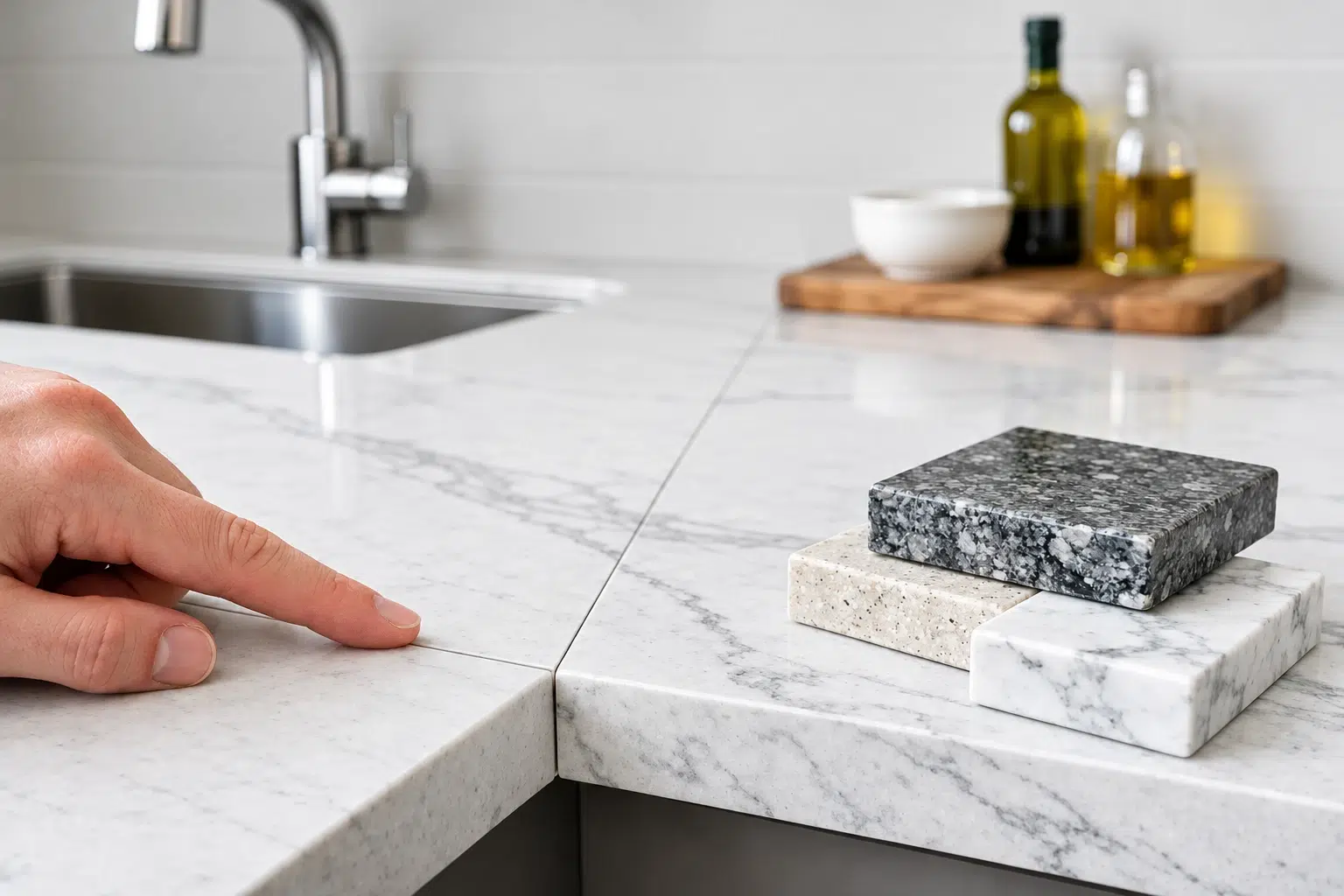
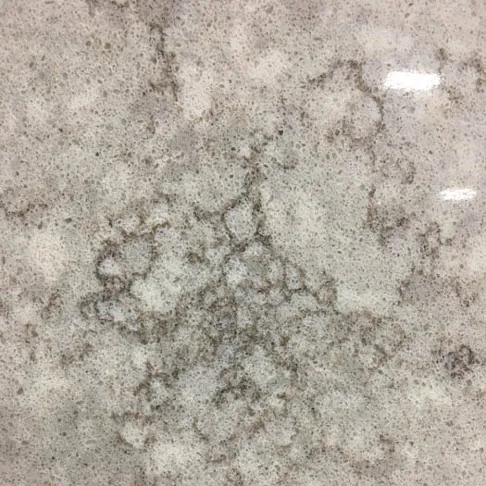
According to the Kitchn.com, quartz countertops are engineered stone. They are formed by combining around 90% ground quartz with 8-10% resins, pigments and polymers. The surface appearance depends on how the quartz is ground. Coarse ground quartz produces a flecked appearence. Finely ground quartz, on the other hand, produces a smooth, more consistent look.
Quartz countertops have a non-porus surface. Granite, on the other hand, has many small fissures and cracks. A non-poris surface is more hygenic. For one thing, there is fewer places for bateria and other contaminates to hide. Granite is heat-resistant and scratch-resistant. Quartz is scratch-resistent, in fact, quartz is a major component of granite. In contrast to granite, quartz countertops are not as heat-resistent. Quartz itself is as heat-resistent as granite. However, the epoxy resins used to produce quartz countertops will discolor at high temperatures. Quartz is also less prone to staining. Quartz is less of a worry, in other words. Durability is equally important. Quartz, in fact, is one of the hardest minerals in nature.